
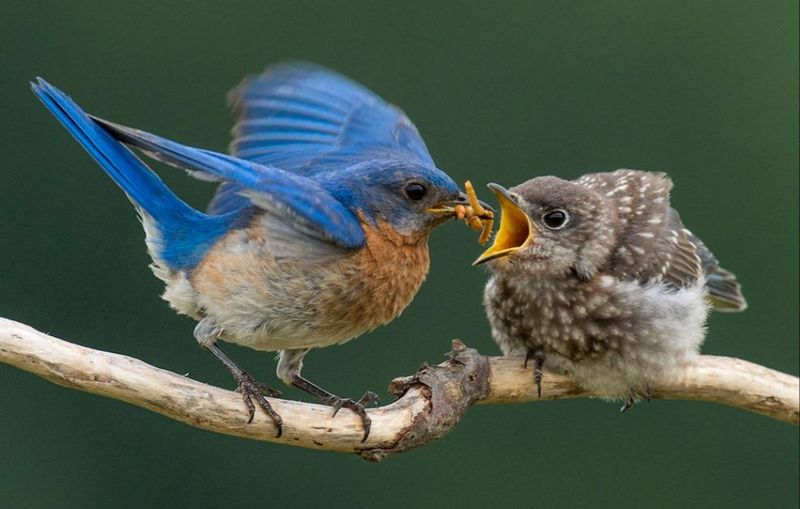
If your garden feels like an all-you-can-eat buffet for aphids, grubs, and mosquitoes, help might already be flying overhead. Plenty of common backyard birds spend their days hunting the exact bugs chewing through your tomatoes and lawn, and they do it for free. Learning to spot these feathered helpers can change how you see your yard, turning frustration into a partnership. Here are 20 birds that quietly clean up the pests you would rather not deal with.
1. Eastern Bluebird
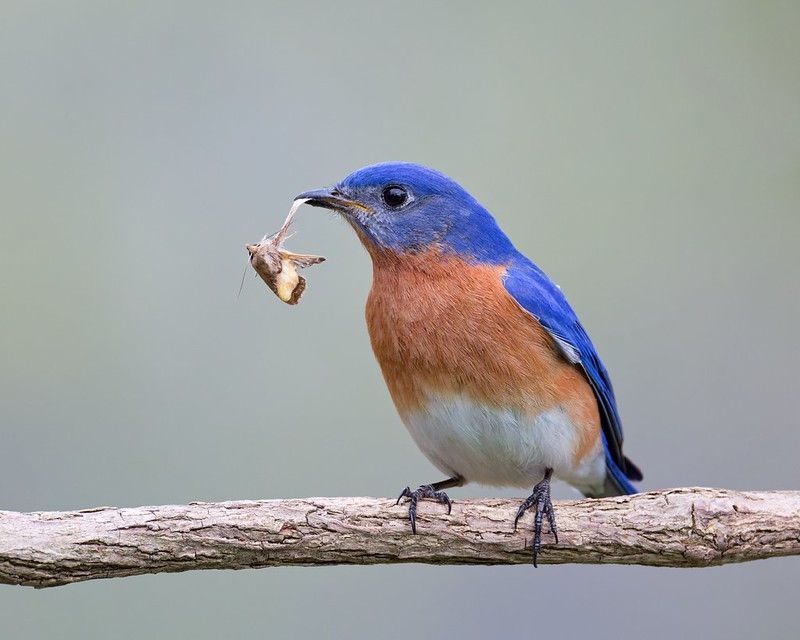
Flash of blue drops from a fence post, and a grasshopper never sees it coming. Eastern Bluebirds are ground-hunting specialists, perching low and swooping onto insects crawling through your grass.
A single bluebird can gobble down grasshoppers, crickets, beetles, and caterpillars all day long during nesting season. When they have hungry chicks to feed, the numbers climb fast, which means fewer pests munching your vegetable beds.
What sets them apart is their love of open lawns with scattered perches, exactly the setup most suburban yards already have. Add a nest box facing an open area, and you may attract a pair that returns year after year.
Their appetite for cutworms and armyworms can really help protect young seedlings in spring. They also eat spiders and the occasional beetle grub near the soil surface.
Fun bit of history: bluebird numbers dropped sharply last century, and backyard nest boxes played a big role in bringing them back. Hosting one is a small win for your garden and for the species itself.
2. House Wren
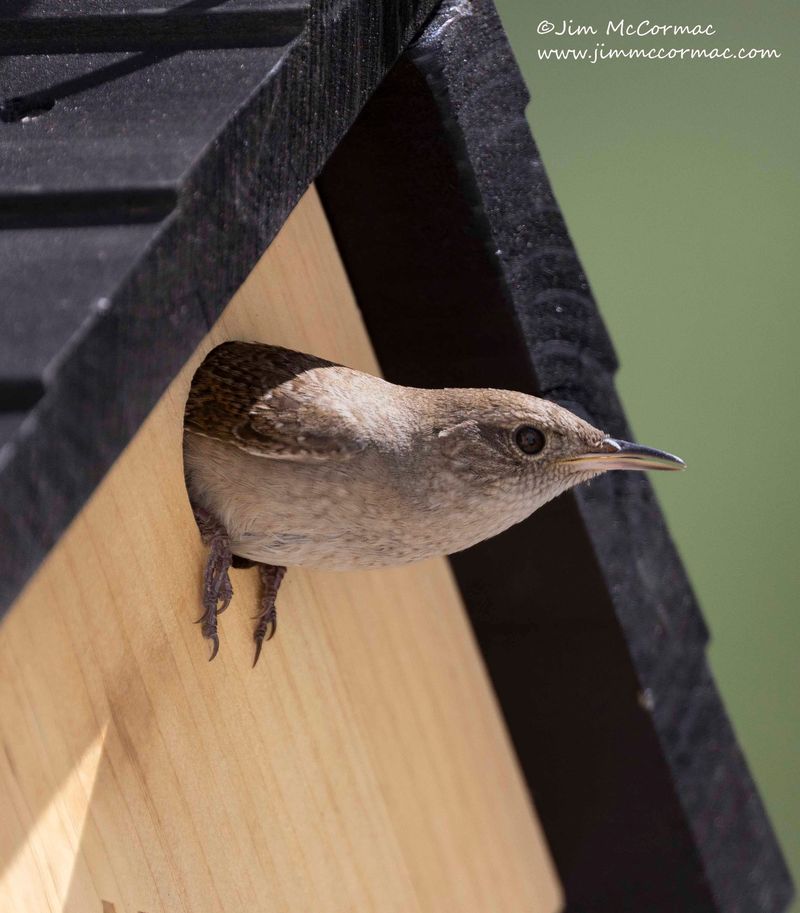
Small, brown, and impossibly busy, the House Wren treats your garden like a personal hunting ground it refuses to share. What it lacks in flashy color it makes up for with a bottomless appetite for insects.
These tiny birds work through shrubs, brush piles, and flower beds, snapping up beetles, caterpillars, aphids, and even ticks tucked into leaf litter. A nesting pair can haul hundreds of bugs to their chicks in a single day.
Their knack for slipping into dense, tangled spots means they reach pests other birds skip. If you have an overgrown corner or a woodpile, that is prime wren territory.
They readily nest in boxes, hanging plants, and even old boots or mailboxes, so hosting them takes almost no effort. Once settled, they patrol the same area relentlessly.
Their loud, bubbling song is a bonus, filling your yard with cheerful noise while the pest control happens quietly beneath the leaves. For gardeners fighting cabbage worms and beetle larvae, a resident wren can genuinely lighten the load.
3. Purple Martin
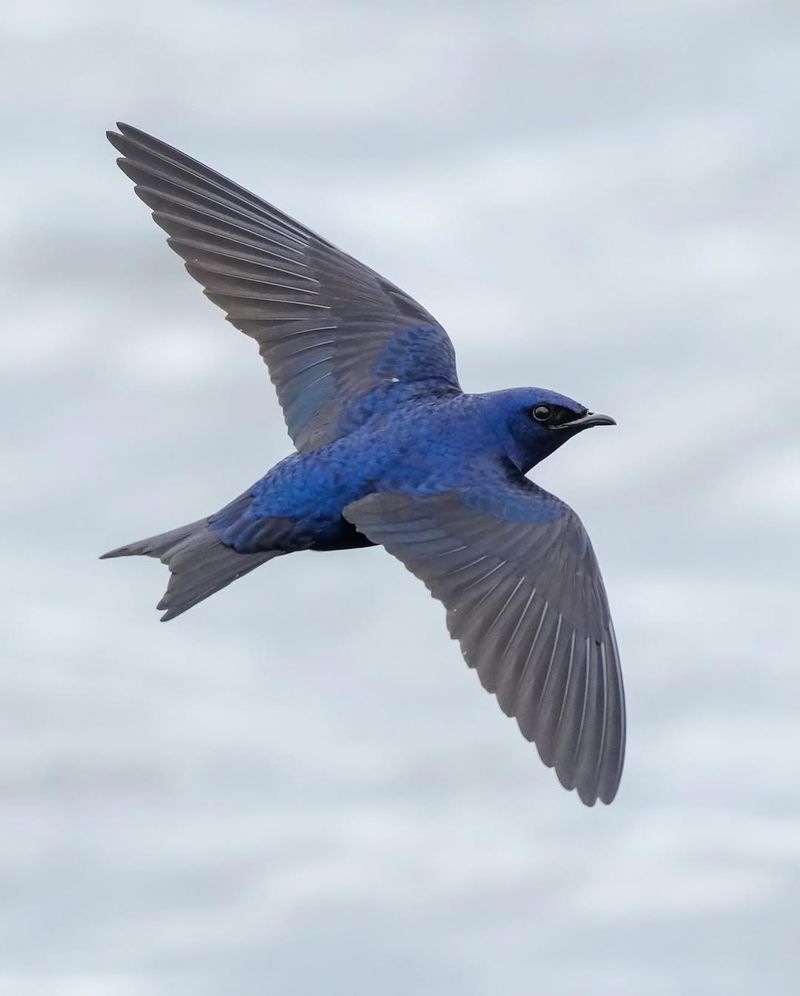
Legend says a Purple Martin colony can wipe out clouds of mosquitoes, and while that claim is exaggerated, these graceful fliers do feast on flying insects all day long. Watching them swoop and dive over open yards is pure summer.
Martins catch their food entirely on the wing, snapping up flies, beetles, moths, dragonflies, and winged ants high above the ground. Their aerial hunting covers a lot of airspace around your property.
Because they nest in colonies, attracting them means putting up specialized multi-room houses on tall poles in open areas. Once a colony settles in, they often return every spring.
Their sheer numbers can noticeably reduce flying pest activity around patios and gardens, especially during peak insect season. They also entertain with their gurgling chatter and constant acrobatics.
Eastern populations depend almost completely on human-provided housing, so hosting martins directly supports the species. If you have the open space and a bit of patience, a martin house may reward you with both bug control and a lively backyard show.
4. Black-capped Chickadee
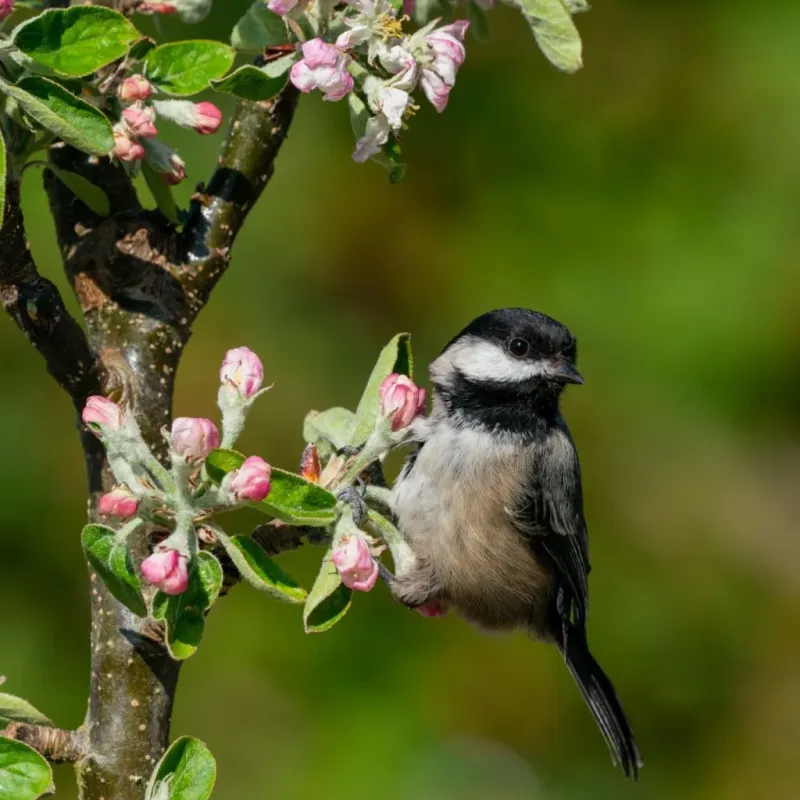
Bold enough to land on your hand, the Black-capped Chickadee brings big personality in a tiny package, along with a serious appetite for garden pests. These acrobats hang upside down from branches to reach hidden bugs.
During breeding season, a single chickadee family can devour thousands of caterpillars, aphids, and insect eggs while raising their young. They pick pests off bark, buds, and the undersides of leaves where damage often starts.
Their winter habit of scouring twigs for dormant insect eggs sets them apart, meaning they help control next spring’s pest boom before it even begins. Few birds work your trees so thoroughly year-round.
They visit feeders eagerly, so keeping seed and suet out encourages them to stick around and patrol your yard between snacks. Add a nest box, and a pair may raise chicks right beside your garden.
Curious and fearless, chickadees often investigate anything new in the yard. That same boldness makes them tireless hunters, quietly trimming the aphid and spider populations you never want to see multiply.
5. American Robin
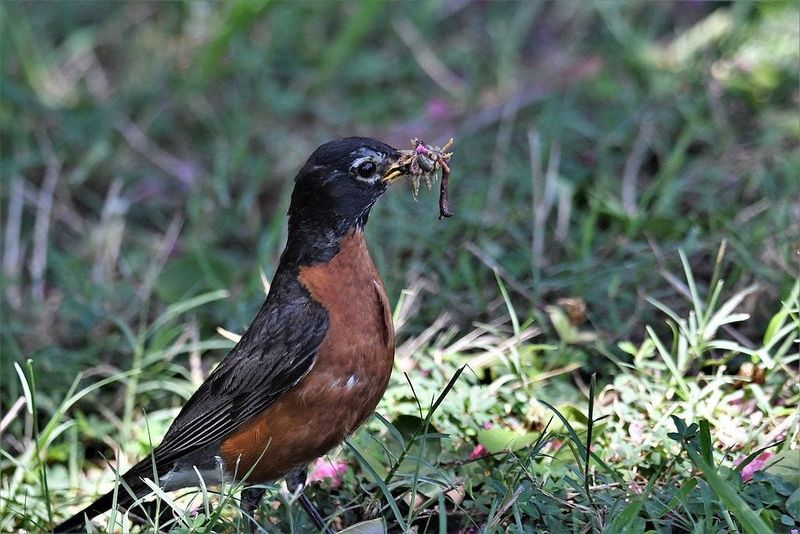
That classic sight of a robin cocking its head on the lawn is actually a hunter zeroing in on prey beneath the grass. Robins are among the most familiar pest fighters in American yards.
They pull earthworms, sure, but they also devour cutworms, grubs, beetles, and grasshoppers that damage roots and foliage. During spring and summer, insects and larvae make up a big share of their diet.
Their preference for open lawns puts them right where grub problems tend to start, giving your turf natural protection. A yard full of foraging robins often means fewer beetle larvae chewing at your grass roots.
Robins tolerate people well and nest close to homes, in gutters, porch lights, and low tree forks. That comfort around us keeps them working your property daily.
Come fall, they switch to berries, but their warm-season bug hunting has already done real damage to local pest populations. If robins are patrolling your lawn each morning, they may be quietly protecting your grass from destructive grubs.
6. Downy Woodpecker
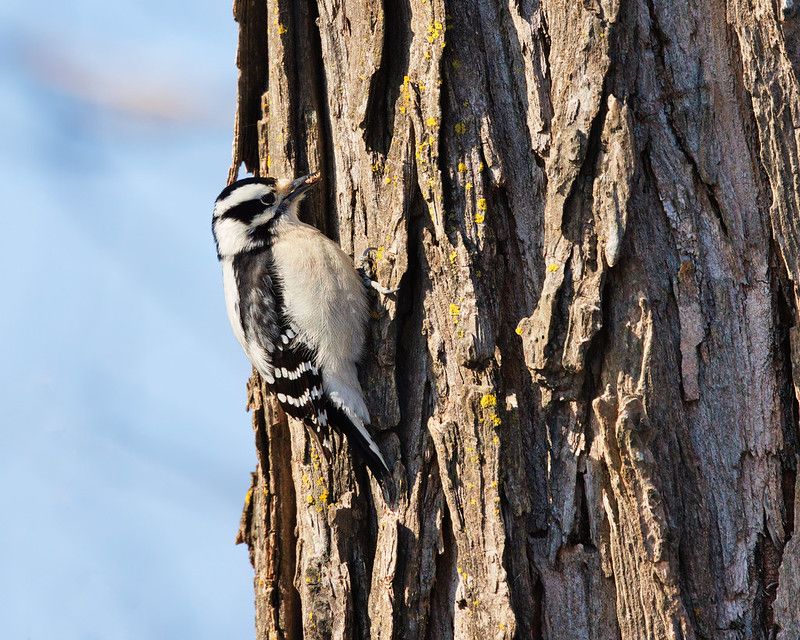
Tap-tap-tap on a tree trunk usually means a Downy Woodpecker is drilling straight toward a hidden pest. North America’s smallest woodpecker packs a punch against wood-boring bugs.
Using its chisel bill and long tongue, the Downy digs out beetle larvae, ants, and boring insects tucked deep inside bark and dead wood. These are pests most birds simply cannot reach.
Its taste for corn borers, bark beetles, and codling moth larvae makes it a valuable ally for anyone with fruit or shade trees. It targets the exact bugs that quietly weaken and kill trees.
Downies come readily to suet feeders, so hanging one keeps them nearby and hunting your trees between visits. They also probe stems of tall weeds for gall-making insects.
Compact enough to cling to slender branches, the Downy reaches spots larger woodpeckers cannot. Its persistent probing can help reduce the wood-boring insects that threaten your landscape trees, working steadily while you barely notice it is there.
7. Barn Swallow
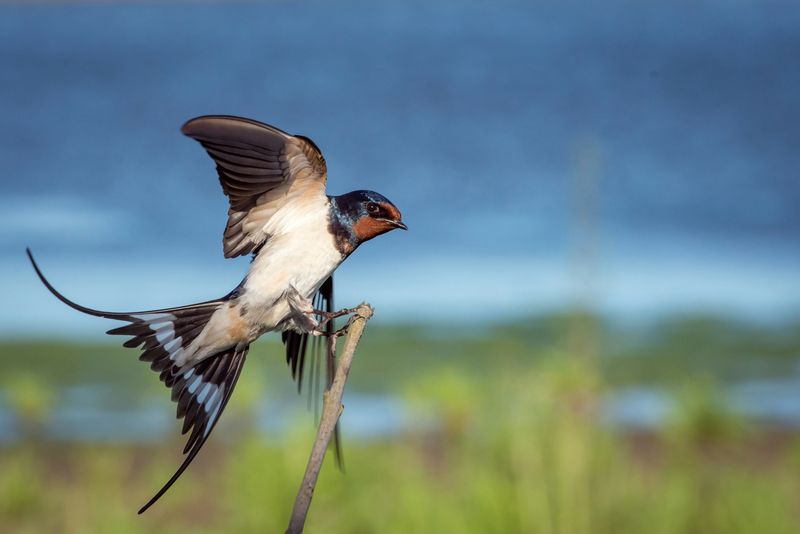
Watch a Barn Swallow skim inches above your lawn at dusk and you are watching a mosquito’s worst nightmare in action. These sleek, forked-tail fliers are built for catching bugs in midair.
They spend nearly all their feeding time on the wing, sweeping up flies, mosquitoes, gnats, moths, and flying beetles by the hundreds. A busy swallow can eat huge numbers of flying insects daily.
Their low, looping flight over fields and yards targets the exact flying pests that make summer evenings miserable. Where swallows patrol, the air often feels noticeably clearer of biters.
Barn Swallows famously nest under eaves, in barns, and on porch ledges, building cup-shaped mud nests close to people. Tolerating a nest can pay off in serious insect control.
They cover a lot of ground, ranging widely to feed, so a nesting pair works far beyond your fence line. If you spot swallows dancing over your yard at sunset, they are almost certainly thinning out the flies and mosquitoes you dread.
8. Northern Cardinal
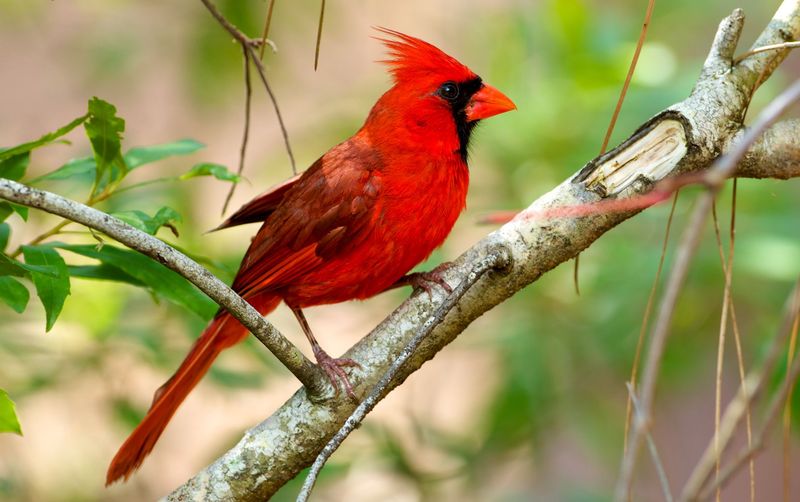
Everyone loves the flash of a red cardinal at the feeder, but few realize how much bug-hunting these birds do behind the scenes. Beneath that showy color hides a determined pest eater.
While cardinals enjoy seeds, they feed their nestlings a protein-rich diet of insects, working through beetles, caterpillars, grasshoppers, and stink bugs. During breeding season, bugs dominate the menu.
Their fondness for stink bugs and leaf-eating beetles is especially handy for vegetable gardeners fighting these stubborn crop pests. Not many backyard birds tackle stink bugs so willingly.
Cardinals stick around all year in much of the country, so they keep patrolling shrubs and garden edges even in colder months. Dense hedges and evergreens encourage a pair to nest nearby.
They forage low, hopping through thick cover where many pests hide from the sun. That habit puts them right where cabbage loopers and beetles lurk.
Keep sunflower seed available and plant some sheltering shrubs, and you may earn a resident cardinal family that trims your pest load while brightening every window view.
9. Carolina Wren
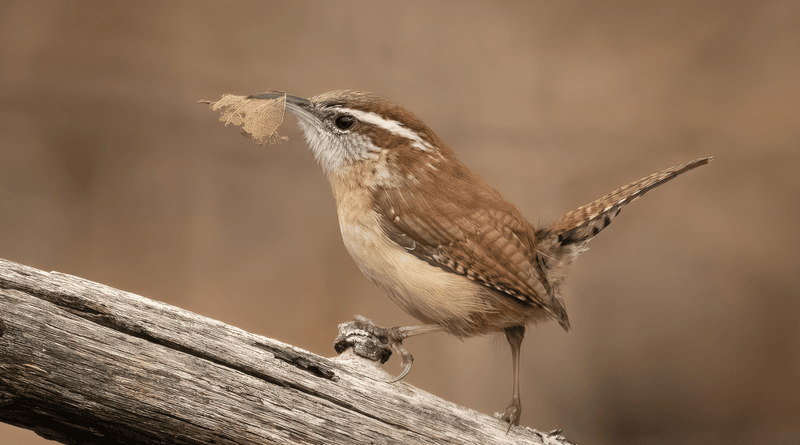
Loud, rusty, and fearless, the Carolina Wren announces itself with a ringing song far bigger than its body, then gets back to devouring your garden pests. Few small birds hunt so relentlessly.
They rummage through leaf litter, wood piles, and dense plantings for spiders, beetles, caterpillars, cockroaches, and even snails. Their reach into cluttered ground level makes them uniquely useful.
Their taste for cockroaches and other creepers that hide near foundations sets them apart from feeder-focused birds. They poke into crevices and corners most birds ignore entirely.
Carolina Wrens stay year-round in warmer regions and nest in the oddest places, from hanging baskets to garage shelves and flowerpots. Their comfort near homes keeps them working close by.
They rarely stop moving, flipping bark and probing mulch throughout the day. That constant activity means steady pest removal from your beds and borders.
Leaving a brush pile or a bit of natural litter gives them the cover they crave. In return, a resident wren pair may help keep your garden’s ground-dwelling insect population in check all season long.
10. Tree Swallow
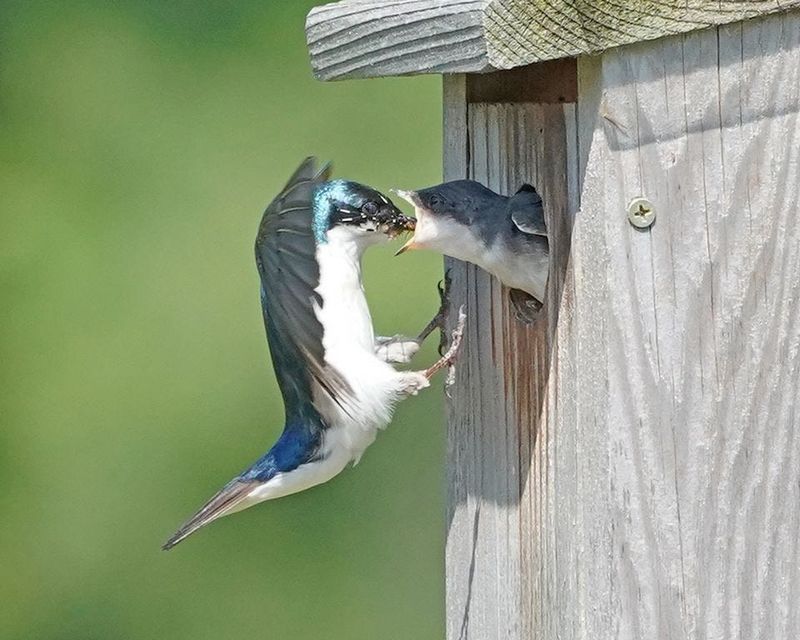
Shimmering blue-green backs catch the light as Tree Swallows wheel over ponds and lawns, cleaning the air of insects with every pass. They bring beauty and appetite in equal measure.
Feeding almost entirely in flight, they snatch flies, mosquitoes, midges, flying ants, and beetles from the air. Their aerial diet targets the swarming bugs that gather near water and gardens.
Unlike some swallows, Tree Swallows readily use nest boxes, making them easy to invite into yards with open space nearby. Put up a box near a field or pond, and you may host a pair.
Their willingness to nest close to bluebird boxes means you can support two pest fighters at once with the right spacing. Both benefit your garden while raising young.
They gather in big flocks during migration, and those swirling groups devour astonishing quantities of flying insects. Even a few nesting pairs make a difference locally.
For yards plagued by gnats and mosquitoes near standing water, Tree Swallows can help thin the flying pests while adding a flash of iridescent color overhead.
11. Chipping Sparrow
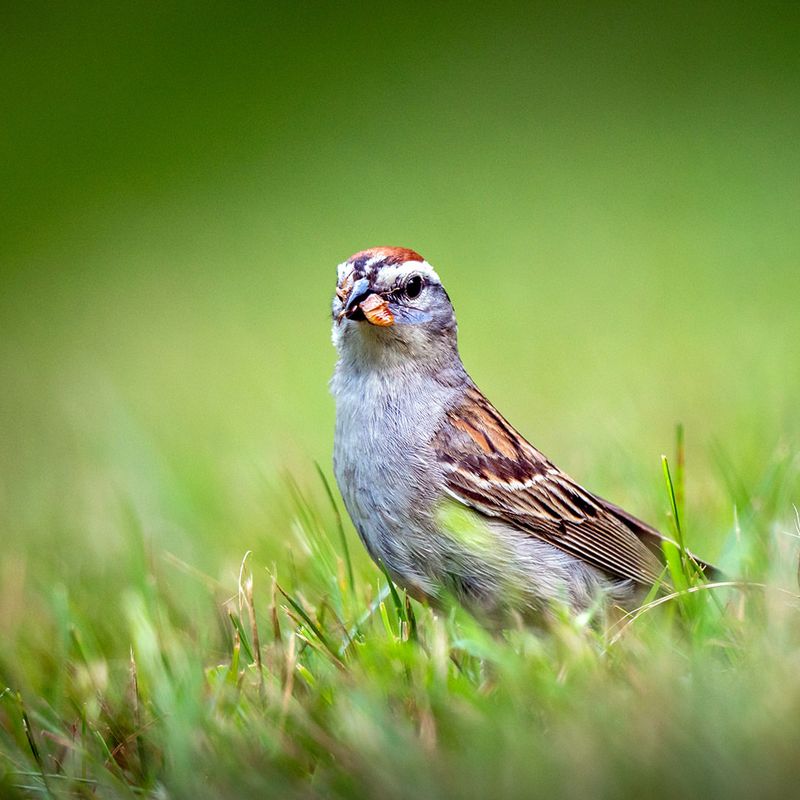
Small and streaky with a neat rusty cap, the Chipping Sparrow blends into the lawn while quietly picking off pests you would rather not host. It is easy to overlook and easy to appreciate.
Though known for eating seeds, these sparrows switch heavily to insects in warm months, gathering caterpillars, aphids, grasshoppers, and beetles for themselves and their chicks. Bugs fuel their nesting season.
Their habit of foraging right on open grass and garden edges targets the crawling pests threatening your plants. They cover the ground methodically, hopping and pecking as they go.
Chipping Sparrows nest in shrubs, evergreens, and vines close to homes, so they often set up shop in ordinary yards. A few nearby conifers can convince a pair to stay.
They tolerate people and lawns well, making them one of the more common insect eaters in suburban settings. Their steady presence adds up over a season.
By working the same beds day after day, a resident pair helps keep aphid and caterpillar numbers from exploding. For gardeners fighting soft-bodied pests, that quiet help is worth welcoming.
12. Baltimore Oriole
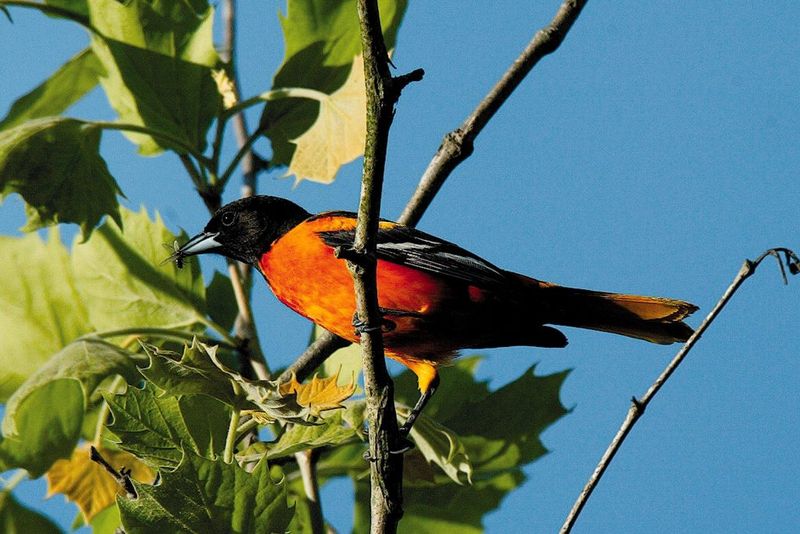
Brilliant orange and black, the Baltimore Oriole looks like a tropical visitor dropping into your trees, and it earns its keep by devouring pests other birds avoid. Its beauty is only half the story.
Orioles have a special appetite for hairy caterpillars, including tent caterpillars and gypsy moth larvae that many birds refuse to eat. They also take beetles, grasshoppers, and crickets.
That willingness to tackle fuzzy, unappealing caterpillars makes them standout defenders of shade and fruit trees. Where tent caterpillars threaten, an oriole can be a real asset.
You can lure them with orange halves, grape jelly, and nectar feeders, keeping them around while they hunt your canopy. They weave hanging basket nests high in leafy trees.
Their long, pointed bills let them probe into curled leaves and blossoms where pests hide from other hunters. Little escapes their careful searching.
Orioles arrive in spring right as caterpillar season peaks, timing their visit perfectly for gardeners. Offer a bit of fruit, and you may enjoy both dazzling color and meaningful help against destructive tree caterpillars.
13. Tufted Titmouse
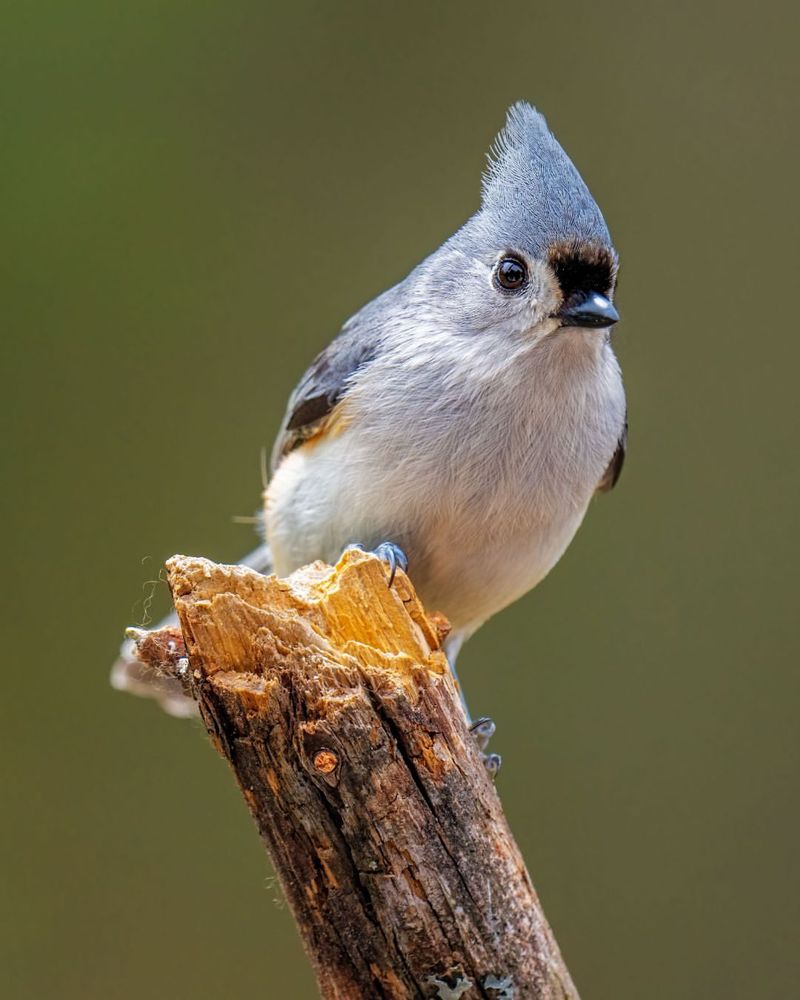
With a jaunty gray crest and big dark eyes, the Tufted Titmouse looks perpetually curious, and that curiosity keeps it hunting insects across your trees all day. It never seems to sit still.
Caterpillars top its warm-season menu, alongside beetles, wasps, ants, stink bugs, and insect eggs plucked from bark and buds. During nesting, it feeds chicks a nearly all-insect diet.
Its knack for finding overwintering insect eggs and pupae means it disrupts pest populations before spring even arrives. That off-season work gives your garden a head start.
Titmice visit feeders often, grabbing a seed and flying off to hammer it open, then returning to patrol the branches. Suet and sunflower seed keep them nearby.
They readily use nest boxes and even line their nests with hair, sometimes plucked boldly from living animals. That fearless streak carries into their tireless foraging.
Working the same trees as chickadees, titmice add another layer of pest control to your yard’s canopy. For anyone battling caterpillars and bark insects, a resident titmouse pair quietly earns its place.
14. Northern Flicker
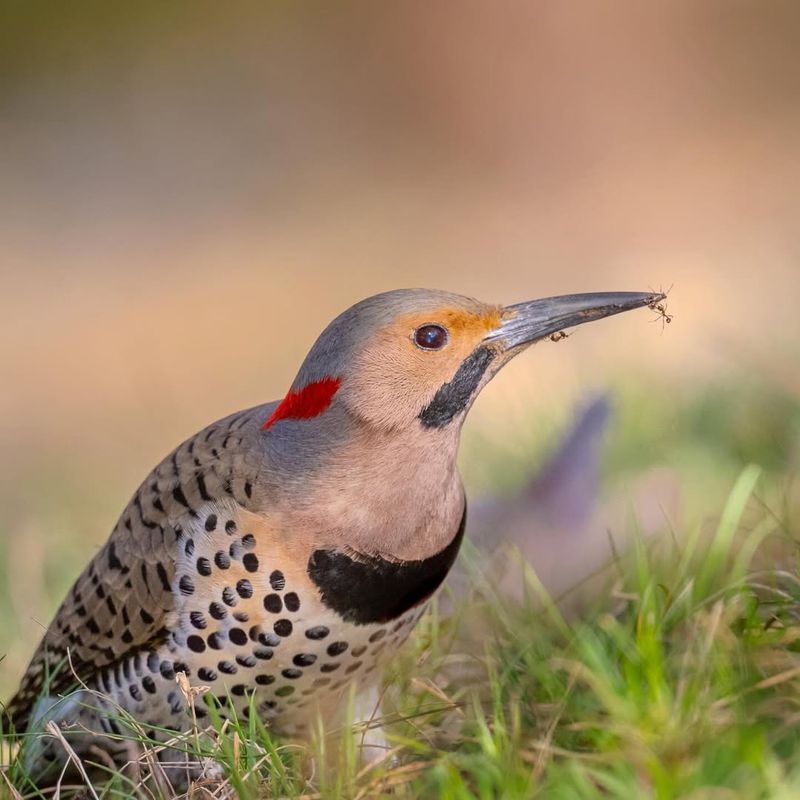
Spot a woodpecker hopping around on the ground instead of a tree, and you have probably found a Northern Flicker on an ant hunt. This oddball woodpecker breaks all the usual rules.
Ants are its obsession, and a single flicker can eat thousands in one sitting, using its long sticky tongue to slurp them from soil and nests. It also takes beetles, grubs, and grasshoppers.
Its focus on ground-dwelling ants and beetle larvae targets pests that damage lawns and invade patios. Few birds attack ant colonies with such dedication.
Flickers probe soft soil and mulch, digging out grubs that harm grass roots and chew through garden beds. Their ground foraging complements the tree work of other woodpeckers.
They will use large nest boxes and often drum on metal surfaces in spring, announcing their presence loudly. That racket means a serious ant eater has moved in.
If ants and lawn grubs plague your yard, a visiting flicker can help knock those numbers down while giving you a chance to admire its striking spotted plumage up close.
15. Gray Catbird
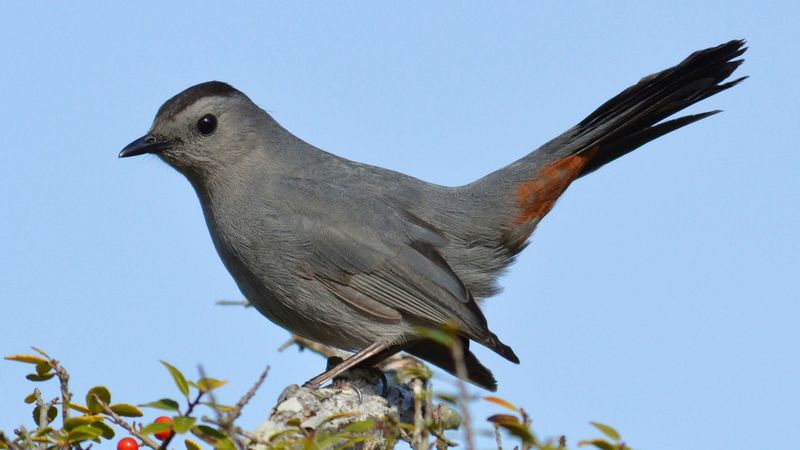
Hear a cat-like mew from a thicket and you have met the Gray Catbird, a sleek slate-colored bird with a big appetite for garden pests. Its odd call is just the introduction.
Catbirds work through shrubs and hedges hunting beetles, ants, caterpillars, grasshoppers, and moths. In summer, insects make up a large part of what they eat.
Their preference for dense, brushy plantings puts them right among the pests hiding in your hedges and berry bushes. They patrol the tangled spots many birds avoid.
They are bold and inquisitive, often approaching gardeners at work and investigating disturbed soil for exposed bugs. That nosiness keeps them close to the action.
Catbirds nest in thick shrubs and thickets, so a hedgerow or berry patch invites them to stay for the season. They repay the shelter with steady insect control.
Beyond bugs, they can be tremendous mimics, stringing together dozens of borrowed sounds. While they entertain with their varied song, they quietly trim the beetle and caterpillar populations troubling your garden beds.
16. Eastern Phoebe
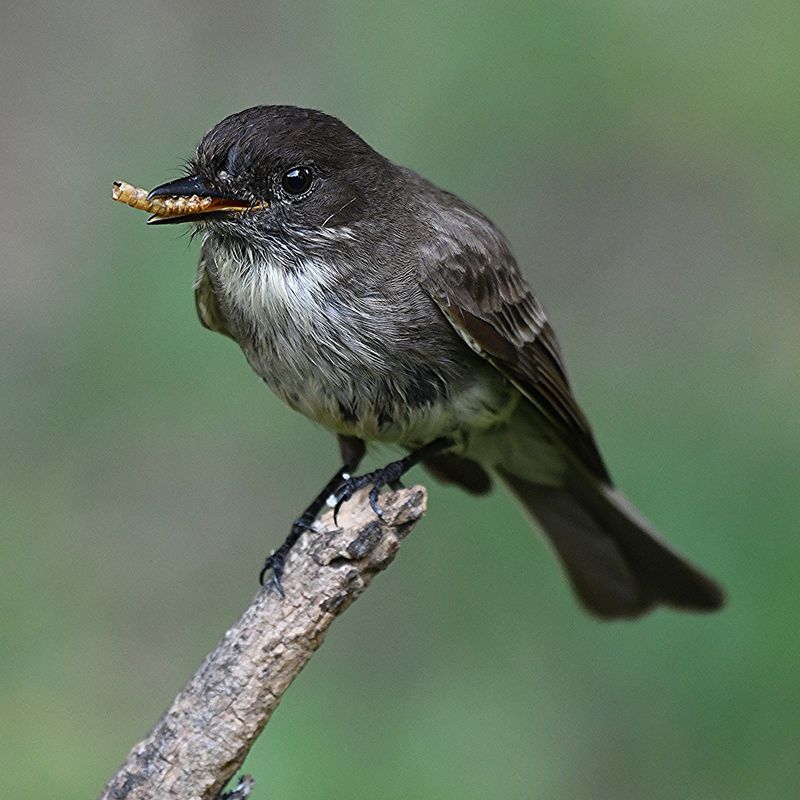
Bobbing its tail from a low perch, the Eastern Phoebe waits patiently, then darts out to snatch a flying insect from midair before returning to the same spot. That tail-wag is its signature move.
Phoebes are flycatchers at heart, catching flies, wasps, beetles, moths, and mosquitoes on quick aerial sallies. Flying pests around your porch and garden are their specialty.
Their hunting style, launching from a perch to grab bugs and coming right back, lets them clear the air near patios and doorways. Few birds guard your sitting spots so reliably.
They famously nest on ledges, under eaves, and beneath bridges, building mud-and-moss nests close to people. Tolerating a phoebe nest brings free flying-insect control.
Phoebes arrive early in spring and linger late into fall, extending their pest patrol across most of the growing season. They are among the first flycatchers to show up.
Set up a small ledge under an overhang, and you may host a pair right where you relax outdoors. In exchange, they help thin the flies and wasps buzzing around your favorite backyard spaces.
17. American Goldfinch
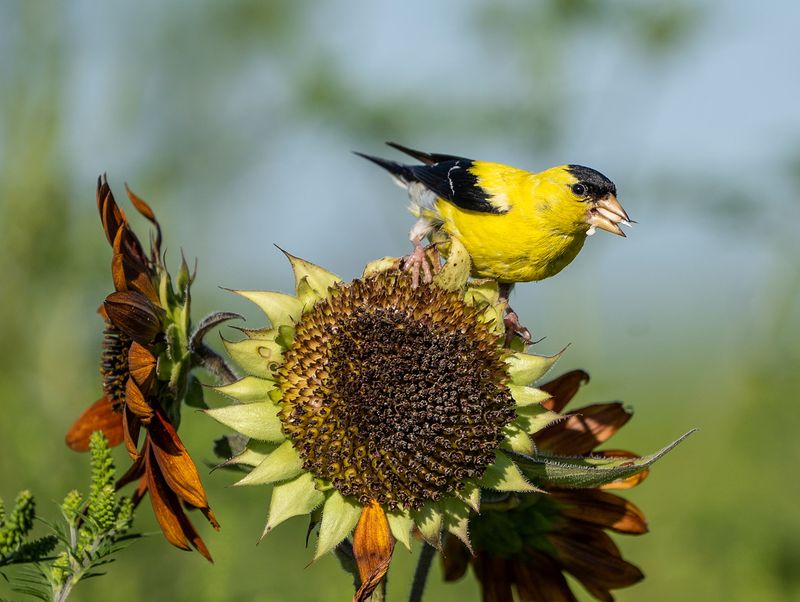
Bright as a lemon in summer, the American Goldfinch is best known for loving seeds, yet it still lends a hand against certain garden pests. There is more to this cheerful bird than thistle.
While mostly vegetarian, goldfinches pick off aphids and small insects, and they gobble the seeds of weeds like thistle and ragweed before those plants spread. That weed control matters too.
Their appetite for weed seeds sets them apart, since fewer weeds means fewer hiding spots and food sources for many crawling pests. They tackle a problem most birds ignore.
Goldfinches flock to nyjer and sunflower feeders, keeping them around your yard where they nibble aphids off plant stems along the way. Their presence adds a splash of gold to any garden.
They nest late in summer, timing their broods to thistle seed availability, and forage in cheerful bouncing flocks. That timing keeps them active well into the season.
For gardeners fighting aphids and unwanted weeds, welcoming goldfinches offers a modest but genuine boost. Fill a feeder with nyjer seed, and you may attract a bright, busy flock that helps keep both bugs and weeds a little more manageable.
18. Brown Thrasher
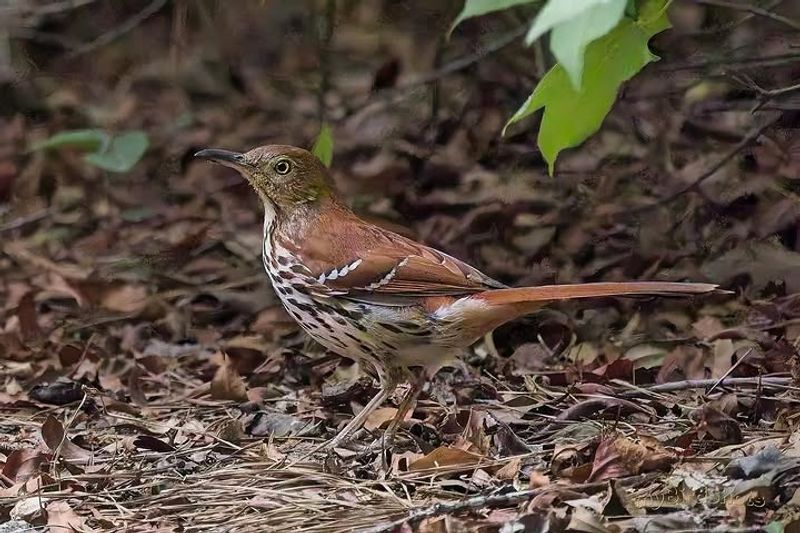
Rustling loudly through the leaf litter, the Brown Thrasher looks like it is making a mess, but it is actually flushing out a feast of hidden garden pests. That racket has a purpose.
Using its long curved bill, the thrasher sweeps and tosses ground debris to uncover beetles, grubs, caterpillars, ants, and even the occasional larva burrowed in the soil. Its digging reaches deep pests.
Its vigorous ground-sweeping technique sets it apart, exposing bugs that stay safely buried from most other birds. Few backyard visitors work the soil surface so thoroughly.
Brown Thrashers favor dense shrubs and hedgerows for nesting and cover, so a brushy border encourages them to stay. They dart into the open to feed, then retreat to safety.
They are accomplished singers with an enormous repertoire, but they tend to stay hidden while foraging. Their preference for cover keeps them near the ground-level pests you want gone.
If beetle grubs and soil-dwelling larvae trouble your beds, a thrasher’s constant leaf-flipping can help reduce their numbers. Give it a bit of brushy habitat, and it will quietly turn over your problem pests.
19. Cedar Waxwing
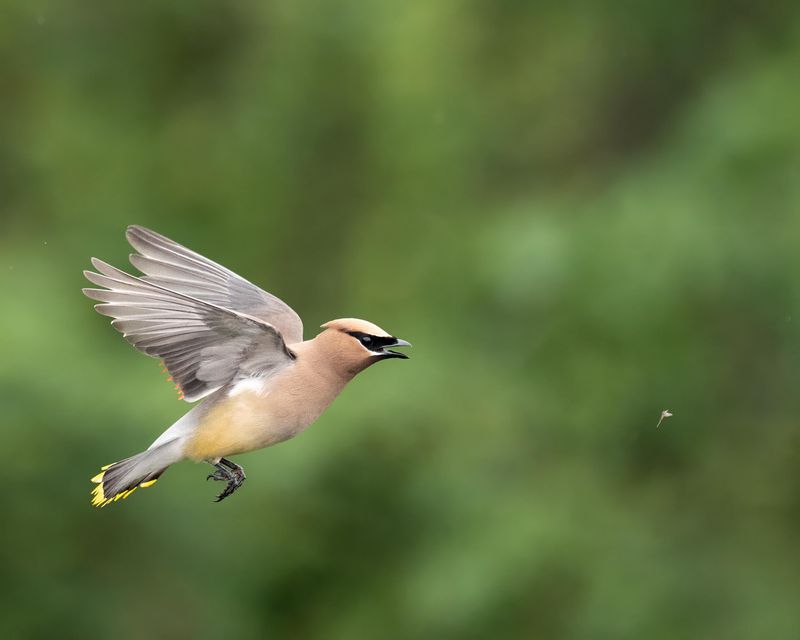
Sleek and masked like tiny bandits, Cedar Waxwings arrive in chattering flocks and put on an unexpected show of aerial bug catching. Their smooth plumage hides a surprising hunter.
Famous for eating berries, waxwings switch to flying insects in summer, snatching beetles, flies, and caterpillars from the air and foliage. During warm months, bugs fuel their busy days.
Their flycatching over water and open areas targets swarming insects like midges and mayflies that gather near ponds. Watching a flock hawk bugs midair is a real treat.
Waxwings move in tight, social groups, so when they descend on your yard, many mouths get to work at once. A single visit can clear a lot of insects fast.
They love fruiting shrubs and trees, so planting berry producers invites them to linger through the seasons. In summer they mix fruit with a healthy dose of pest eating.
For yards near water dealing with clouds of small flying insects, a passing waxwing flock can help thin the swarm. Their combination of elegance and appetite makes them welcome guests whenever they arrive.
20. Common Grackle
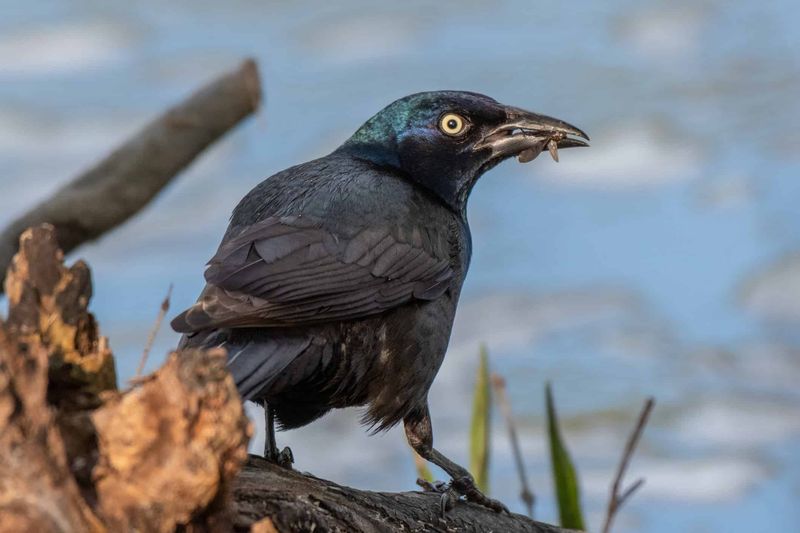
Glossy and a little cocky, the Common Grackle struts across lawns with an iridescent sheen and a serious appetite for pests hiding in your turf. It is often underrated as a garden helper.
Grackles hunt beetles, grubs, grasshoppers, caterpillars, and Japanese beetle larvae, probing soil and grass for the bugs that damage roots and leaves. Lawn grubs are a favorite target.
Their willingness to dig into turf for beetle larvae sets them apart, tackling one of the most destructive lawn pests head-on. Where grubs threaten your grass, grackles may lend real help.
They forage in bold flocks, covering large lawn areas quickly and turning up plenty of hidden insects in the process. Their numbers make short work of grub patches.
Grackles adapt easily to yards, parks, and gardens, so they need little encouragement to show up. Open lawns and scattered trees suit them fine.
Some gardeners find them pushy at feeders, but their pest control earns them a friend-or-foe reputation worth reconsidering. Before shooing them off, remember that a grackle flock may be quietly thinning the beetle grubs chewing at your lawn’s roots.