
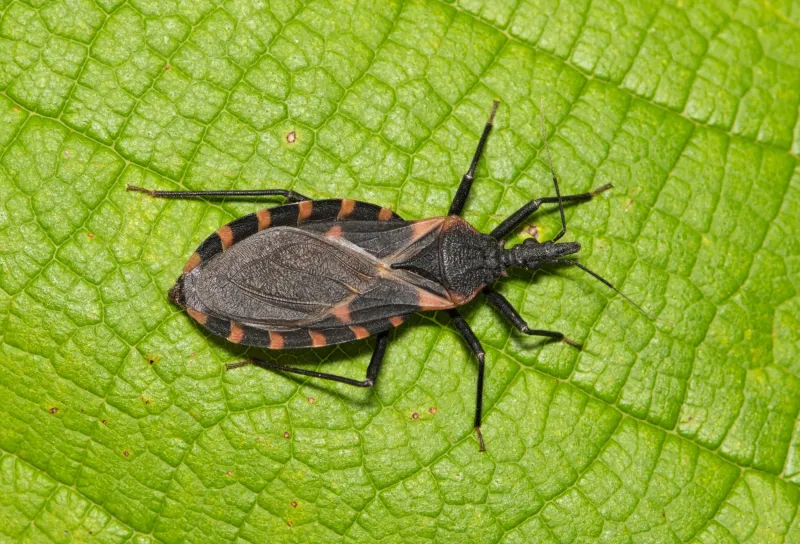
A dark, narrow insect with folded wings and a long pointed head might show up near your porch light on a warm California evening, and most people’s first instinct is to squash it. That instinct is exactly what you want to avoid if the bug turns out to be a suspected kissing bug, also called a conenose or triatomine bug.
Knowing how to recognize one, and why crushing it creates more risk than leaving it alone, can make a real difference for you and your family.
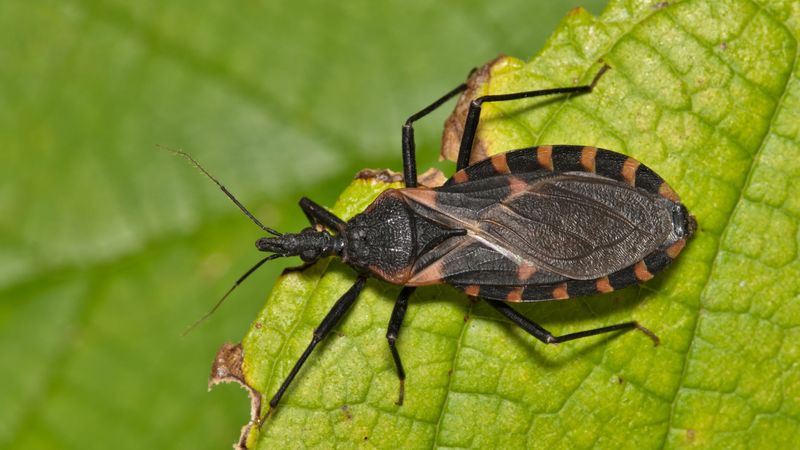
What a California kissing bug may look like
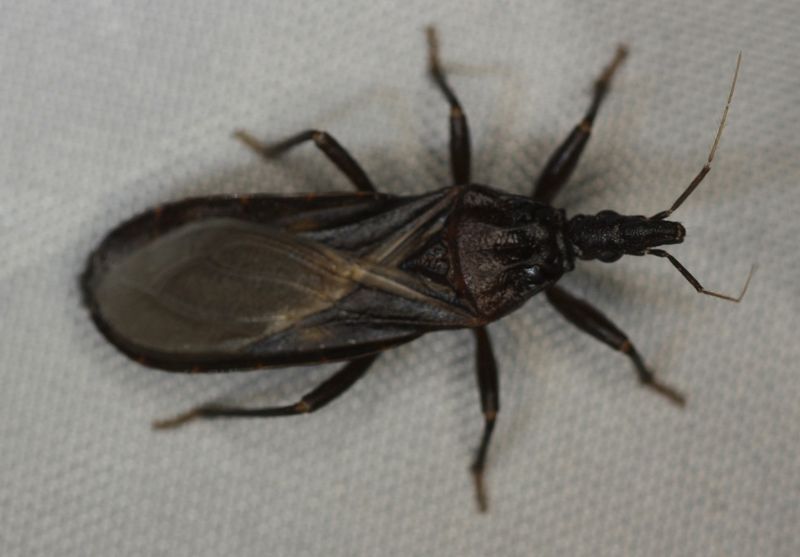
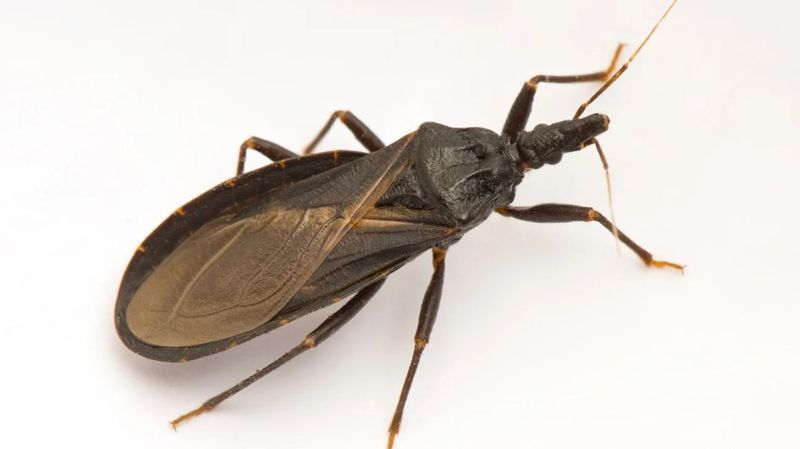
Across California’s foothill communities, desert edges, and rural mountain zones, the insect most likely to match the “kissing bug” description is Triatoma protracta, the western bloodsucking conenose bug and the state’s most commonly reported triatomine species. UC IPM’s conenose bug profile describes adults as dark brown or black, with an elongated body, a distinctively long cone-shaped head, and folded wings that lay flat across the back.
Adults typically measure about one-half to three-quarters of an inch long, though a related California species, Triatoma rubidaParatriatoma hirsuta, can reach roughly one inch. A third species, , also occurs in the state.
Adults are mostly active at night and are drawn to lights, particularly on warm evenings from spring into autumn. Biting is most commonly reported in late spring and early summer, but the bugs can appear around homes across a broader seasonal window.
Encounters are most plausible in foothill, mountainous, desert, rural, and natural-edge areas, especially near woodrat or rodent habitat, woodpiles, brush piles, doghouses, chicken coops, or other sheltered outdoor structures.
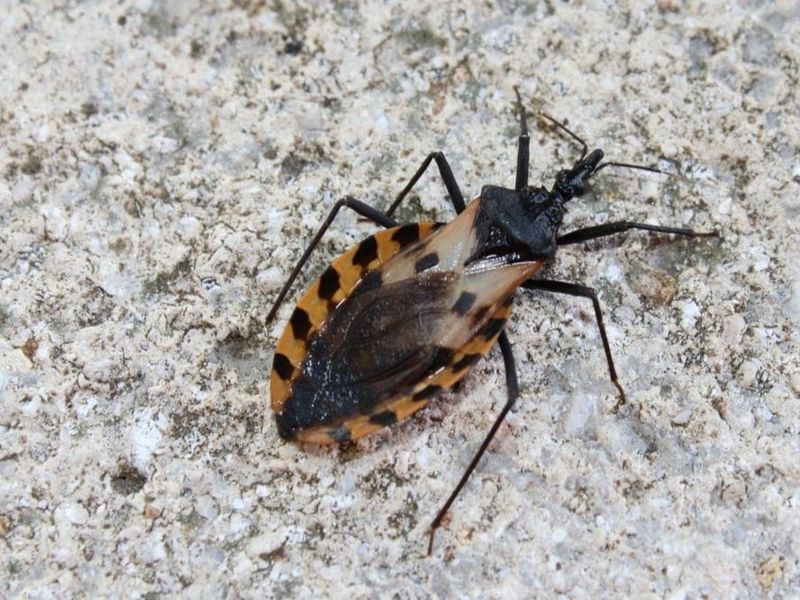
A single yard sighting does not signal a statewide problem. California Department of Public Health guidance for vector-control professionals makes clear that harmless insects can look very similar to conenose bugs, so appearance alone cannot confirm what you have found.
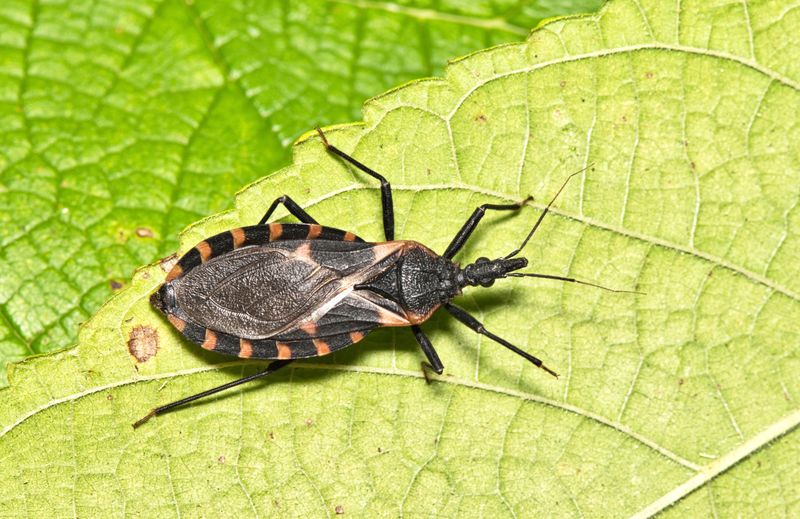
Other assassin bugs and unrelated true bugs are common look-alikes in California yards. Photographs and general body shape can narrow the possibilities but cannot establish a firm identification on their own, which is why containing or submitting a specimen for professional review is the most reliable next step when identification matters.
Why you should not crush a suspected specimen
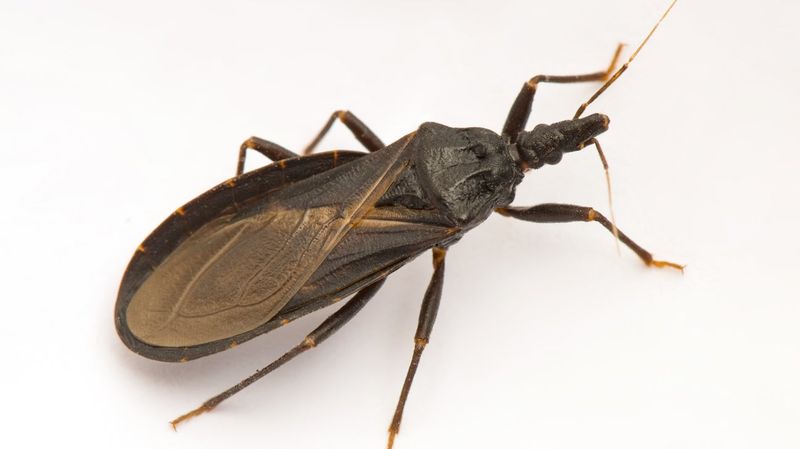
Crushing a suspected kissing bug is the most common mistake people make, and the reason to avoid it comes down to what happens when the insect’s body breaks open. California Department of Public Health guidance specifically advises against smashing or squishing a suspected conenose bug because doing so can spread feces or contaminate nearby surfaces, increasing the chance of contact with potentially contaminated material.
The health concern tied to that material involves Chagas disease, caused by the parasite Trypanosoma cruzi. CDC guidance on how Chagas disease spreads explains that transmission primarily occurs when feces from an infected triatomine bug enter a bite wound, the eyes, nose, mouth, or another break in the skin.
The bite itself does not directly deliver the parasite. Crushing a bug onto your hand or a surface where a wound or mucous membrane might later make contact is what creates the exposure pathway, not the act of being bitten.
California’s local transmission rate is very low, and one important reason is a behavioral quirk of the state’s kissing bugs. CDPH notes that California triatomines typically do not defecate while they are actively feeding.
They tend to defecate later, often away from the bite site, which limits the window during which infected feces could reach a fresh wound. That behavioral detail helps explain why locally acquired Chagas disease remains rare here.
None of that changes the practical rule: do not crush a suspected kissing bug with bare hands. The precaution is simple and the downside of skipping it is not worth testing.
Leaving the insect undisturbed outdoors, or carefully containing it for identification, keeps any potentially contaminated material away from skin and surfaces entirely.
How to handle one without bare-hand contact
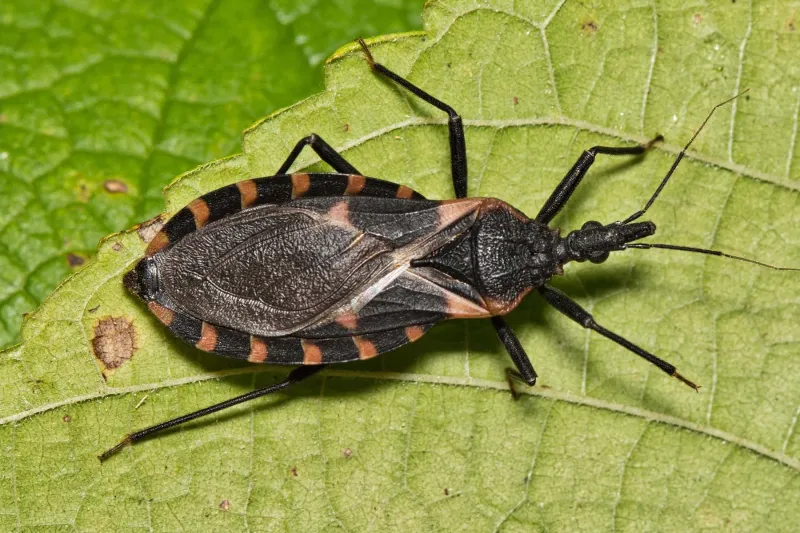
Finding a suspected kissing bug outdoors does not automatically require action. If the insect is outside and not creating an immediate problem, the lowest-risk response is simply to leave it alone.
Kissing bugs are nocturnal and will generally move on before morning. Unnecessary handling is the main thing to avoid.
When identification matters, or when the bug is somewhere it cannot be left, a photograph is the easiest first step. A clear, close photo showing the head shape, body outline, and wing position gives a pest professional or county vector-control program something to work with.
San Diego County public health guidance recommends using a glove or small plastic bag as a barrier if physical collection is needed, then placing the specimen in a sealed bag, vial, or container. The goal is to avoid any direct skin contact and to avoid squeezing the insect during the transfer.
For a bug found indoors or on a person, the same no-smashing rule applies. Slide a piece of stiff paper or cardboard under it, guide it into a container, and seal the container without pressing down on the bug.
UC Agriculture and Natural Resources reinforces that careful containment, rather than swatting or squeezing, is the right approach for a suspected conenose bug found anywhere in or around the home.
Reaching for a pesticide spray as a first move is not recommended. Identification should come before any chemical response, and many encounters do not require pesticides at all.
County vector-control programs can often help confirm whether the insect is actually a kissing bug and advise on next steps based on your specific situation.
What the health risk really means in California
A bite from a suspected kissing bug often goes unnoticed at first because the insect feeds painlessly, usually at night while a person is asleep. Hours later, the bite site may develop itching, redness, swelling, tenderness, or a noticeable welt.
For most people bitten in California, that local skin reaction is the full extent of what happens.
The more urgent concern for some individuals is an allergic reaction. UC IPM’s conenose bug resource describes rare severe reactions that can include difficulty breathing, facial swelling, widespread hives, low blood pressure, or a rapid heart rate.
Those symptoms are a medical emergency and require immediate care, not a wait-and-see approach. If any of those signs appear after a suspected bite, call 911 or go to an emergency room right away.
Chagas disease is a separate and distinct concern. CDPH characterizes locally acquired Chagas disease in California as very rare and states that there is no evidence the risk is increasing.
That said, the risk is not zero. A 2025 CDC Emerging Infectious Diseases review identified documented locally acquired Chagas infections in California and other U.S. states, while also noting that case counts are incomplete and local transmission remains uncommon.
A recent California-focused review covering 2013 to 2023 similarly concluded that the risk of local transmission is low.
Anyone who has had a specific suspected kissing-bug exposure, or who has lived in or spent meaningful time in Mexico, Central America, or South America and has symptoms they cannot explain, should speak with a healthcare professional. Chagas disease can be mild or produce no obvious symptoms early on, and only a provider can order the right tests and interpret the results accurately.
What to do if you already crushed the bug
Accidents happen, and if a suspected kissing bug was already crushed before you read this, the practical response is straightforward. Start by washing your hands and any affected skin with soap and water right away.
These steps reduce contact with potentially contaminated material and are the most important immediate actions you can take.
After handling skin, move to surfaces. CDPH guidance recommends disinfecting any hard surfaces where the bug was crushed.
If clothing, bedding, or other fabric was involved, launder it with normal detergent. UC Agriculture and Natural Resources supports the same cleanup approach as a sensible exposure-reduction measure, not as a sign that infection has occurred.
Cleanup reduces the chance of contact with contaminated material, but it does not diagnose Chagas disease and does not tell you whether transmission happened. Those are two different things.
Most accidental crushings do not lead to any health consequence, especially given the very low local transmission rate in California.
Medical triage is a separate question from cleanup. If breathing difficulty, facial swelling, widespread hives, or other serious allergic symptoms develop after a suspected bite, seek emergency care immediately.
For anyone with a specific Chagas exposure concern, including a bite from a confirmed or strongly suspected kissing bug combined with a meaningful exposure history, talking to a healthcare professional is the right move. Self-diagnosing based on a crushed insect alone is not reliable or necessary.
Reduce encounters with exclusion, lighting, and careful yard management
Keeping kissing bugs from reaching living spaces starts with the home’s exterior. Seal cracks and gaps around doors, windows, rooflines, walls, vents, and pet doors using caulk, weatherstripping, or appropriate mesh.
UC IPM’s conenose bug guidance identifies tight-fitting screens and door sweeps as practical barriers that reduce the chance of a bug making it inside. Pay particular attention to gaps around pipes, utility lines, and any opening near the ground, since triatomines can squeeze through surprisingly small spaces.
Lighting is a factor that many homeowners overlook. Kissing bugs are attracted to bright lights, particularly on warm evenings.
A 2025 UC IPM home and garden pest newsletter recommends reducing bright outdoor lighting and switching to warm-tone, yellow, or low-UV bulbs, which are less attractive to night-flying insects. Moving lights away from entryways or using motion-activated fixtures can also limit how long the light draws insects toward the door.
The yard itself matters too. Piles of lumber, firewood, debris, animal bedding, and rodent nests can all serve as harborages for kissing bugs, which are closely associated with woodrat and rodent habitat.
Moving firewood away from the house, keeping brush and debris piles cleared, and storing animal bedding in sealed containers all reduce the sheltered spots where these insects can rest and breed.
Rodent nests and wildlife habitat near the home deserve separate attention. Removing them without care can disturb other wildlife or expose you to additional hazards.
Treat any nest or debris cleanup as a sanitation and wildlife task, using gloves and appropriate protective measures rather than bare-hand removal. When encounters persist despite these changes, contacting your county vector-control program or a licensed pest professional is a better step than reaching for broad insecticide sprays, which are not the strongest first recommendation and may not address the underlying harborage.
Use a calm decision rule for the next sighting
A clear decision rule makes the next encounter much less stressful. If you spot a suspected kissing bug outdoors and it is not causing an immediate problem, leave it alone.
If you need to identify it or move it, photograph it first, then use a glove or plastic bag to gently place it in a sealed container, without squeezing or smashing it. After any accidental crushing, wash skin with soap and water, disinfect hard surfaces, and launder any affected fabric.
For bite reactions that go beyond a local welt, including breathing trouble, facial swelling, widespread hives, or a rapid heart rate, seek emergency care without delay. Anyone with a specific suspected kissing-bug exposure or a history of living or spending meaningful time in Mexico, Central America, or South America should discuss that situation with a healthcare professional rather than trying to self-diagnose.
CDPH confirms that locally acquired Chagas disease in California is very rare and that there is no evidence the risk is growing. Look-alikes are common across California yards, and UC IPM notes that activity is geographically concentrated, not a statewide constant.
The most durable protection comes from identification, good exclusion, smarter lighting, and careful habitat management. County vector-control programs can help confirm a specimen and advise on next steps.
A bug you treat with calm, informed caution is far less of a problem than one you panic over.