
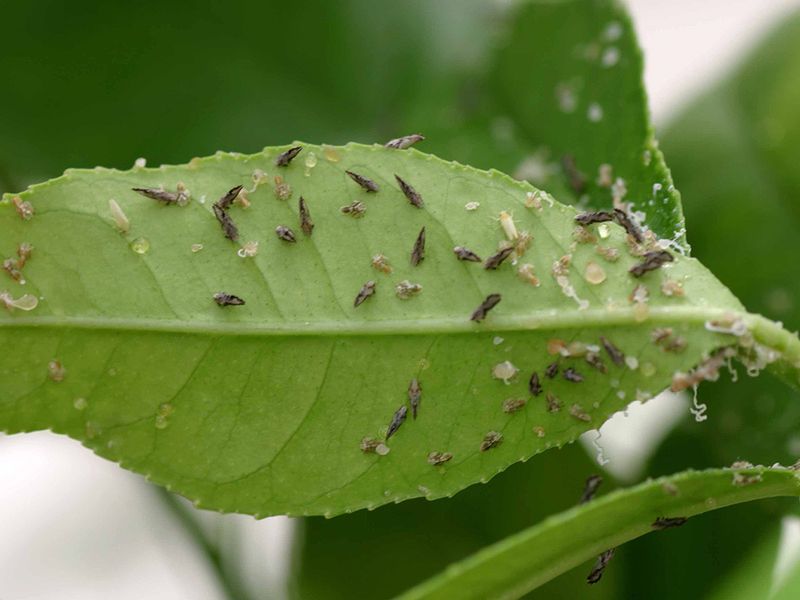
Something smaller than a watermelon seed could be quietly threatening your backyard citrus tree right now. The Asian citrus psyllid is a tiny, mottled-brown insect that feeds on tender new growth and can spread a deadly plant disease called huanglongbing, or citrus greening, for which there is no cure.
Fall is a smart time to take a closer look at your trees, because citrus commonly pushes out fresh, soft leaves in autumn and that new growth is exactly where this pest likes to hide. Knowing what to look for, and who to call, can make a real difference for your tree and your neighbors’ trees too.
Why fall’s new citrus growth deserves a closer look
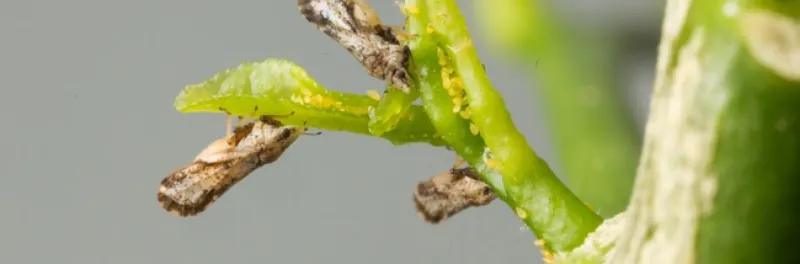
Autumn pushes citrus trees into a familiar rhythm. Many varieties, including oranges, lemons, mandarins, and grapefruit, produce a flush of tender new leaves in both spring and fall, and that soft, pale growth is exactly the stage the Asian citrus psyllid targets.
UC IPM guidance on ACP and HLB explains that eggs and nymphs concentrate on newly developing shoots, so inspecting the newest growth gives you the best chance of catching the pest early.
Fall is a useful window, but it is not the only one. Lemons and young trees can push new growth repeatedly during warm weather, and UC ANR area-wide management research notes that ACP can appear whenever tender flush is present.
Making inspection a habit throughout the growing season, rather than treating fall as the only opportunity, keeps you ahead of the pest’s timing.
The real stakes here are worth understanding clearly. ACP feeding can twist and distort young leaves on its own, but its more serious threat is the potential to transmit the bacterium associated with huanglongbing.
USDA APHIS describes HLB as a bacterial disease with no known cure; infected trees decline over time and eventually die. All major citrus types grown in California yards are considered susceptible, which is why catching a suspected infestation early matters so much.
Focus your attention on the newest, softest leaves at branch tips rather than older, hardened foliage where the insect is far less likely to feed or lay eggs.
Use the psyllid’s posture and life stages to identify it
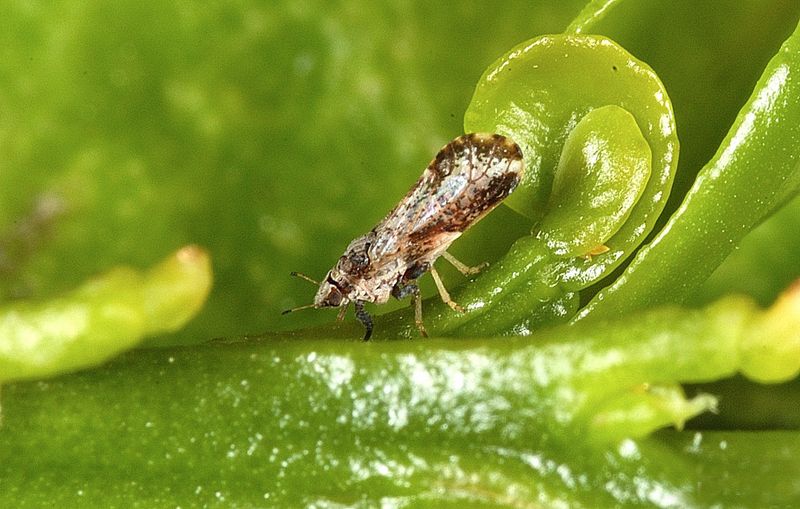
Plenty of tiny insects land on citrus leaves, and not every one of them is a threat. Accurate identification matters before you take any action, so start by learning the specific traits that set the Asian citrus psyllid apart from the many other small bugs that visit citrus trees in California.
UC IPM’s psyllid identification page notes that California is home to more than 160 psyllid species, most of which are harmless or associated with other plants entirely.
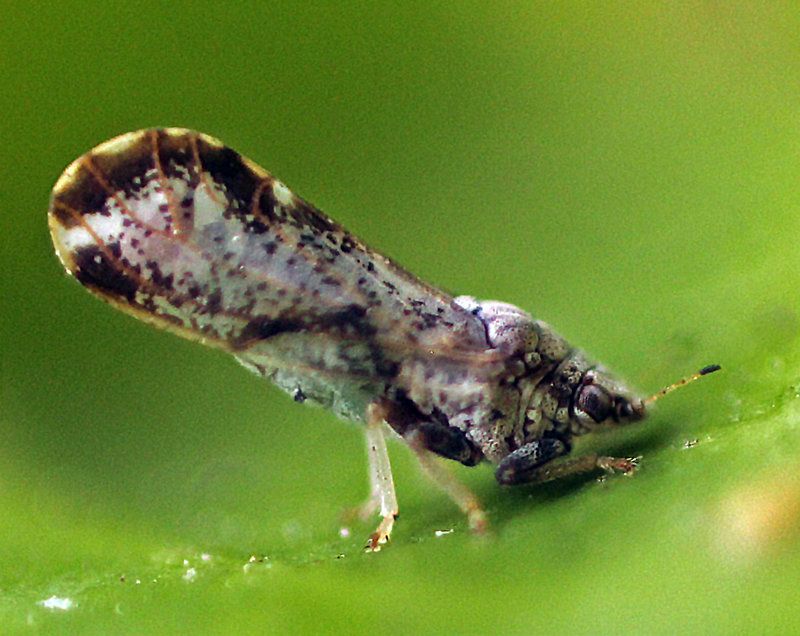
Adult ACPs are roughly 1/8 inch long, about the size of a sesame seed, with a mottled brown body and wings that show faint banding. The posture is the single most recognizable field clue: the insect feeds with its head angled down toward the leaf surface and its rear end raised at roughly a 45-degree angle.
California Citrus Threat’s pest identification resource highlights this tilted stance as a reliable distinguishing feature. When disturbed, adults jump or fly away quickly, so approach the foliage slowly.
The immature stages look quite different from the adult. Eggs are yellow-orange, almond-shaped, and typically tucked into the folds of unfurling leaf buds.
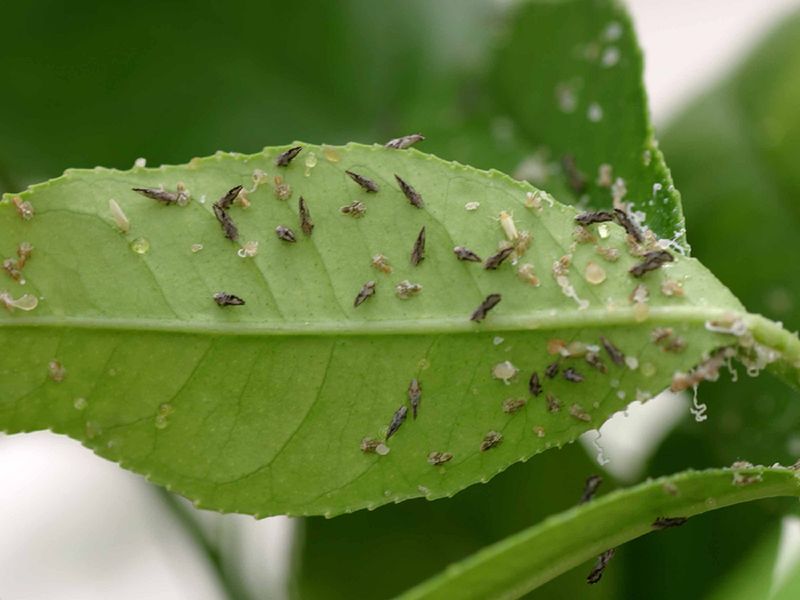
Nymphs are tiny, wingless, and range from yellowish to orange-brown; their most distinctive calling card is the white, waxy tubules they excrete around themselves as they feed. USDA APHIS identification guidance describes these waxy deposits as a key sign that nymphs are present even before you spot the insects themselves.
A 10x hand lens makes a significant difference during inspection. Hold it steady over the newest leaf buds and the underside of the softest leaves at branch tips.
Combining host plant, body posture, life stage, and location on new flush gives you a much more reliable picture than size or color alone.
A suspected psyllid does not diagnose citrus greening
Finding what looks like an ACP on your tree is genuinely worth reporting, but it does not mean your tree has citrus greening. ACP is a vector, meaning it can carry and transmit the bacterium associated with HLB, but not every psyllid carries the pathogen and not every tree an ACP visits becomes infected.
Only official diagnostic testing can establish whether the disease is actually present.
ACP feeding by itself causes visible damage. Nymphs clustered on new flush can twist or notch young leaves as they grow, and their waxy secretions attract honeydew, which in turn draws ants and encourages black sooty mold to develop on leaf surfaces.
These signs, combined with the presence of the insect itself, justify a closer look and a call to your local agricultural authority, but they are not proof of HLB.
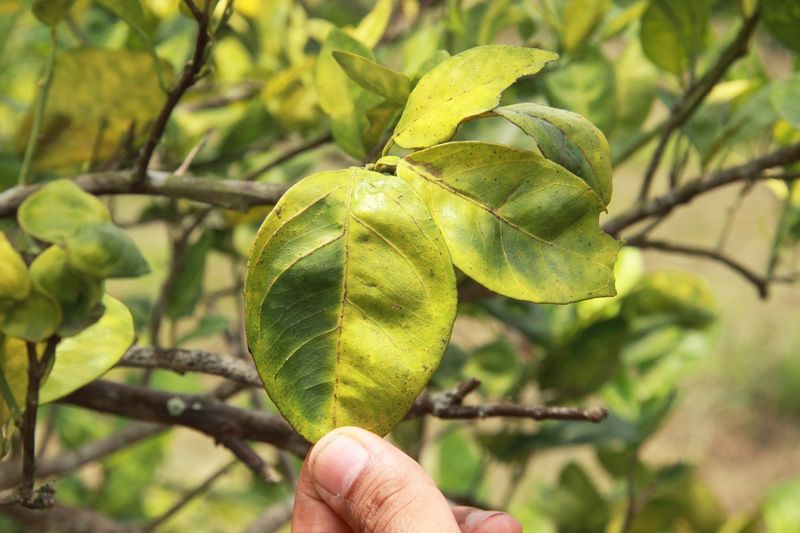
The symptoms associated with huanglongbing are more dramatic and tend to appear much later in the course of infection. CDFA’s HLB pest profile describes the disease as producing asymmetrical, blotchy yellow mottling on leaves, yellow shoots, twig dieback, premature fruit drop, and fruit that is small, lopsided, poorly colored, or bitter.
Critically, symptoms can take months or even years to appear after a tree is first infected, so a tree can look healthy and still be carrying the disease.
Leaf yellowing alone is not a reliable indicator. Nutrient deficiencies, irrigation problems, environmental stress, and other sap-feeding insects can all produce similar discoloration.
USDA APHIS notes that HLB mottling is characteristically blotchy and asymmetrical across the leaf midrib, which can help distinguish it from uniform nutrient yellowing, but confirmation still requires laboratory testing. Report what you see and let the experts run the diagnostics rather than drawing conclusions from symptoms alone.
Your county determines how urgently to report
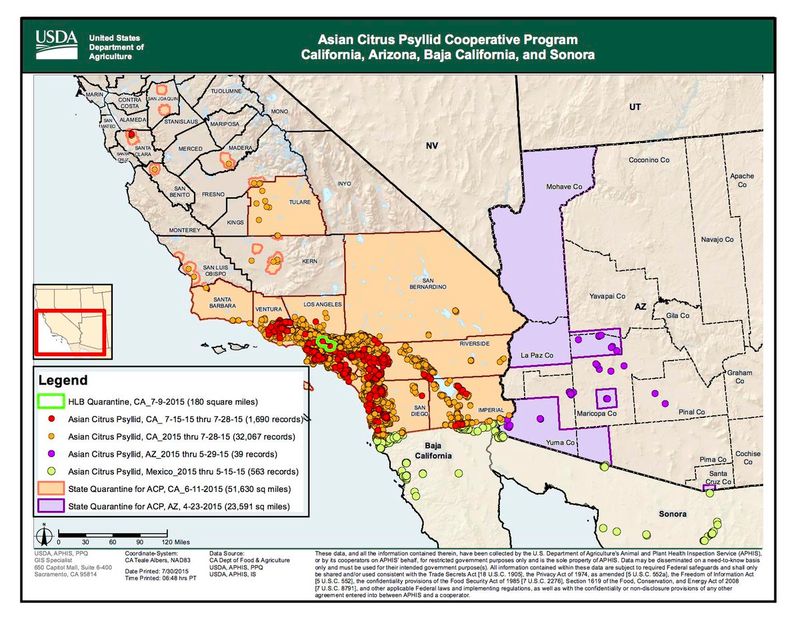
Where you live in California shapes how your report will be received and how quickly authorities may respond. ACP is well established across most of Southern California, where the pest has been present for years and ongoing monitoring and management programs are in place.
CDFA’s ACP regulation and quarantine page outlines the current quarantine boundaries and explains how different counties are classified based on ACP distribution and detection history.
Central and Northern California present a different picture. ACP occurs periodically in these regions but is not as broadly established, which means a suspected detection there carries a higher urgency.
A find in an area where the psyllid is not known to be present could represent a new introduction, and early reporting gives agencies the best chance to respond before the pest spreads further. UC IPM’s citrus pest management guidelines reinforce that prompt reporting is especially valuable in counties where ACP has not been confirmed.
Southern California residents should not assume that their region’s established ACP status makes reporting pointless. Contacting CDFA or your county agricultural commissioner still supports coordinated identification, confirms the pest is actually ACP and not a look-alike species, and helps track any new detections of HLB in the area.
One sighting in a backyard in Los Angeles or San Diego does not signal a new statewide outbreak, but it does deserve a call.
Your county agricultural commissioner’s office and UC Cooperative Extension are both equipped to help with identification and can connect you with the right agency resources. Do not try to diagnose the pest or manage it independently before making that contact, regardless of which part of the state you are in.
Photograph the insect and contain the situation
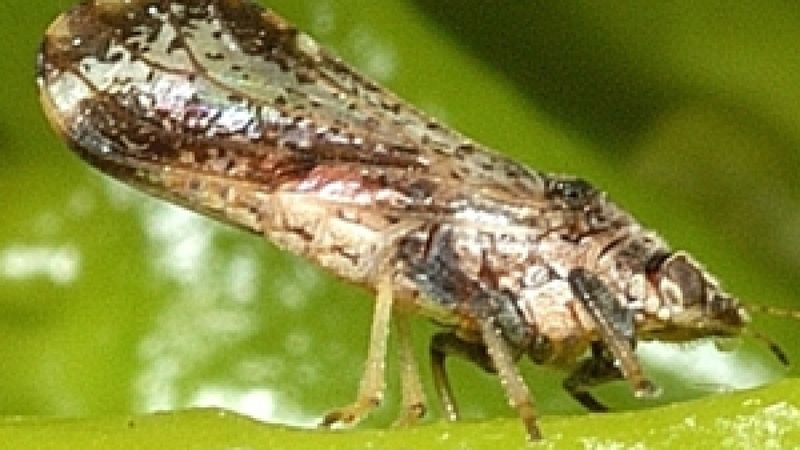
Before you do anything else, take a clear photograph of the suspected insect while it is still on the tree. Capture the insect itself, the leaf it is resting on, and the branch or shoot it is attached to.
Multiple angles help, and a close-up that shows the insect’s posture is especially useful for identification. This photo becomes the primary evidence for the agency you contact, and it can be submitted without moving anything from your yard.
Do not move the citrus plant, cut any branches, bag up clippings, or transport any green waste to another location. Moving plant material can spread both ACP and potential disease to areas that are not yet affected, and doing so may violate quarantine rules that apply in your county.
CDFA’s quarantine information explains which materials are regulated and what movement restrictions apply in your area.
To report a suspected find, call the CDFA Pest Hotline at 1-800-491-1899 or use the online resources at CDFA’s Report a Pest page. Your county agricultural commissioner and UC Cooperative Extension office can also assist with identification.
UC IPM’s psyllid guidance recommends reaching out to local experts rather than attempting a solo diagnosis.
If CDFA or another responsible agency requests a physical specimen, seal it in a small container or zip-close bag and follow that agency’s specific handling, submission, and quarantine directions. Do not independently transport a live insect, plant material, or suspected debris to a lab or agency office without explicit instructions.
Decisions about treatment, quarantine, and tree removal belong with official authorities, not with the homeowner acting alone.
Wait for confirmation before choosing pest control
Reaching for a spray bottle the moment you spot a small insect on a citrus leaf is a common instinct, but it is the wrong first move. Many insects on citrus are harmless or even beneficial, and applying pesticides before you have confirmed the pest is ACP wastes product, risks harming pollinators and natural enemies, and may not address the actual problem.
Wait for professional confirmation or clear guidance before taking any chemical action.
Once ACP is confirmed, UC IPM’s home and landscape guidance describes several supported management options. Horticultural oils and insecticidal soaps can be effective against nymphs and adults, but they work only through direct contact with the insect.
Thorough coverage of new flush, including the undersides of leaves and the growing tips where nymphs cluster, is essential, and repeat applications are typically needed because these products do not leave a lasting residue.
Broad-spectrum and systemic insecticides can reduce ACP populations more aggressively, but they come with real costs. These products can harm honey bees, native bees, and the beneficial insects that naturally suppress ACP.
UC IPM’s citrus pest management guidelines require that any product be applied strictly according to its current label and all applicable California pesticide regulations. You must avoid applications during bloom or when bees are actively foraging whenever the product label or California regulations require it.
For any treatment during bloom, professional guidance is strongly recommended rather than attempting to manage the timing independently.
Two supporting strategies can improve overall control without replacing careful product use. Controlling Argentine ants, which protect ACP nymphs from predators in exchange for honeydew, allows natural enemies to access the pest more freely.
The parasitoid wasp Tamarixia radiata has been released across parts of California and can reduce ACP populations over time, as UC IPM’s Tamarixia information explains. Neither ant control nor biological control alone is considered sufficient to prevent HLB transmission, but both can meaningfully support a broader management program directed by professionals.
Build inspection and quarantine into routine citrus care
The most effective protection for your citrus trees costs nothing and takes about ten minutes a month. Inspect your trees regularly whenever new flush is present, with extra attention in spring and fall when flush growth is most predictable.
Work through the newest, softest leaf buds at branch tips using a 10x hand lens if you have one, and check both the upper and lower surfaces of young leaves for eggs, waxy deposits, or the psyllid’s distinctive tilted posture.
Purchasing new citrus plants from reputable local nurseries reduces the chance of introducing ACP or other pests into your yard. Avoid accepting cuttings, branches, or potted citrus from friends or neighbors outside your immediate area, and follow all local quarantine rules governing the movement of plants, branches, clippings, and regulated green waste.
CDFA’s quarantine rules specify which materials are restricted and where, so checking your county’s status before moving any citrus material is a straightforward habit worth building.
When something looks suspicious, the action sequence is simple: photograph the insect in place, avoid moving any plant material, and contact CDFA or your county agricultural commissioner for guidance. UC IPM’s ACP resource and USDA APHIS both confirm that HLB is a serious plant-health concern with no effect on human or animal health; fruit from infected trees may be poorly colored, bitter, or misshapen, but the disease poses no food-safety risk to people or pets.
Careful, consistent inspection and prompt reporting protect your trees and your community’s citrus without requiring panic, and one sighting in a backyard is a reason to call, not a reason to assume the worst.