
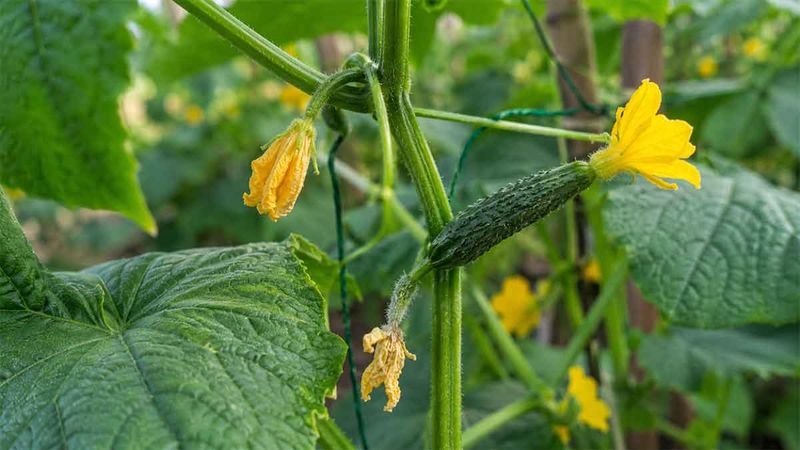
Watching cucumber blossoms fall off the vine without turning into a single cucumber is genuinely frustrating, especially when your plants look healthy and the season is slipping away. Late summer in the South brings the kind of heat that can quietly shut down fruit production before you realize what’s happening.
The good news is that flower drop usually has a clear cause, and finding it starts with a few simple observations right in the garden.
Start with sustained heat, not warm nights alone
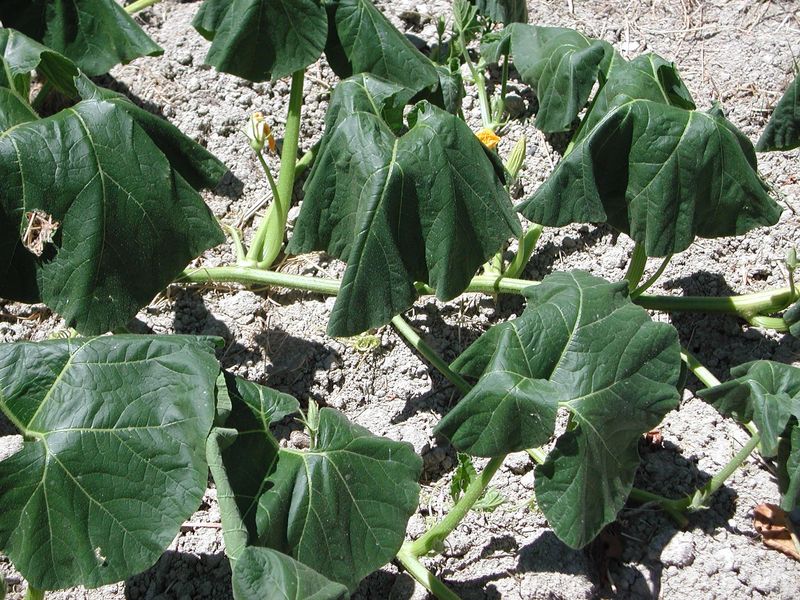
Flower drop on a cucumber vine during a late-summer heat wave points most strongly toward sustained heat and the pollination stress that comes with it. One warm night is not enough to confirm the diagnosis.
University of Minnesota Extension guidance on excessive heat in the vegetable garden notes that daytime temperatures around 90 degrees F combined with nighttime temperatures around 70 degrees F can reduce cucurbit fruit set. Those figures give you a useful reference point, but they are not a hard biological cutoff that applies equally to every cultivar, every humidity level, or every growing situation.
Before you change anything in the garden, pair your weather check with three quick observations. First, confirm that the flowers falling off are actually female flowers, not the normal wave of male flowers that drops without ever forming fruit.
Second, press your finger two inches into the soil near the base of the plant and check whether the root zone is adequately moist. Third, watch the flowers during the morning hours and note whether bees or other insects are visiting while the blooms are open.
Southern outdoor gardens can see all three problems at once during a heat wave, and treating the wrong one first wastes time. A single warm night is a clue worth noting, but sustained heat across both day and night is the condition that most consistently disrupts fruit set in field-grown cucumbers.
Identify the flowers before diagnosing failure
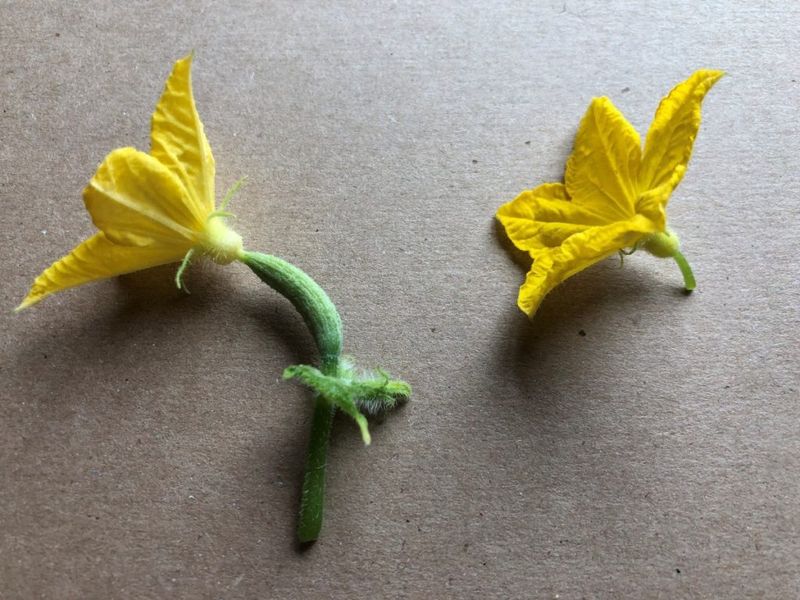
Before concluding that heat or poor pollination is wrecking your harvest, spend two minutes looking at which flowers are actually falling. Ordinary outdoor cucumbers produce two types of flowers on the same plant, and one of them is supposed to drop.
UGA Cooperative Extension’s guide to growing cucumbers in the home garden explains that male flowers commonly appear first and naturally fall without setting fruit, particularly early in the flowering cycle. A plant covered in fallen blossoms may simply be shedding its first round of males, which is completely normal behavior.
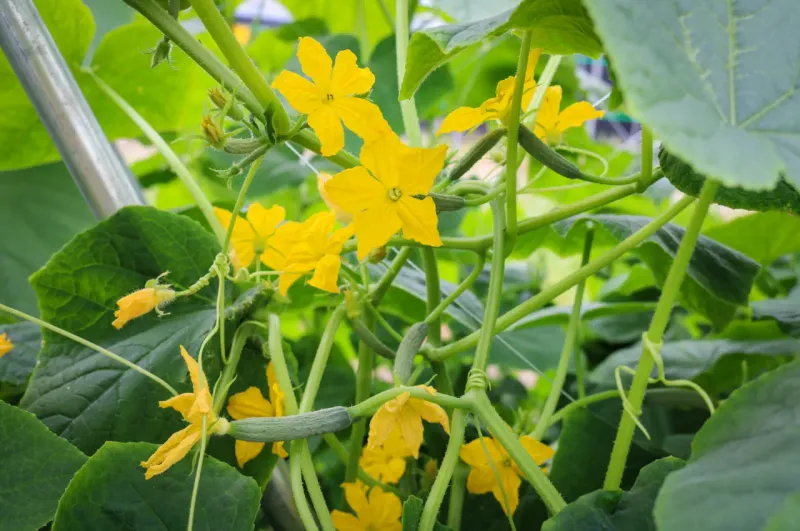
Telling the two flower types apart takes only a second once you know what to look for. A female flower has a small, cucumber-shaped swelling directly behind the petals at the base of the bloom.
That tiny swelling is the ovary, and it will become the cucumber if pollination succeeds. A male flower has only a slender, plain stem behind the petals with no swelling at all.
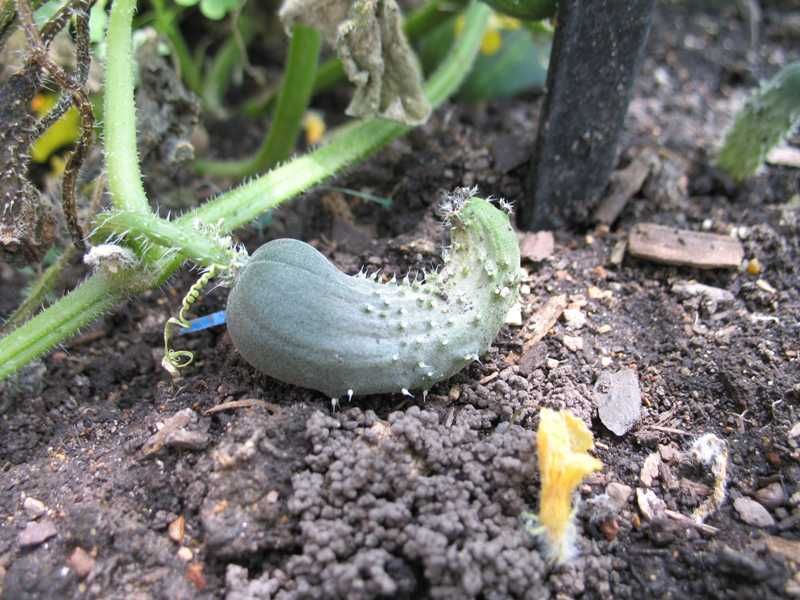
The symptoms that genuinely point toward a problem are different. If female flowers open fully and then fall without the ovary enlarging, or if small cucumbers turn yellow, shrivel, and drop before reaching an inch in length, those signs suggest that pollination failed or that heat or water stress aborted the young fruit.
Flower identification is the decision point for everything that follows in your troubleshooting process.
Understand how heat disrupts fruit set
High temperatures can interfere with cucumber fruit set through several overlapping pathways, and no single mechanism tells the whole story. One effect is a shift in flower sex expression: extreme heat may push some cucurbit plants toward producing more male flowers, which means fewer female flowers open during the hottest stretch of the season.
Research published in Scientia Horticulturae on temperature effects in gynoecious cucumber plants confirmed that temperature can influence flower-bud development well before the flower opens, so the problem visible during a heat wave may have started days earlier in the plant’s development.
Bee behavior is another layer. UGA Extension’s guide to pollination of vegetable crops notes that bee activity may drop off around midday when temperatures climb, and cucumber flowers have a short effective bloom window.
If bees are resting during the only hours the flowers are open, pollination simply does not happen.
Pollen performance also suffers under extreme heat and humidity. Florida IFAS guidance on pollination of cucurbits states that extreme weather conditions, including high temperature and humidity, can reduce pollen viability and pollination success.
A separate peer-reviewed study on heat stress effects on cucumber male flower development documented pollen abortion, reduced viability, and lower germination rates under high-temperature conditions.
One important qualification: a controlled greenhouse study found that a specific gynoecious cultivar actually showed more flower abortion at lower nighttime temperatures, not higher ones. That finding is a reminder that the phrase “warm nights cause cucumber flowers to drop” is too simple.
The stronger, more consistent outdoor guidance points to combined heat, hot days together with warm nights, and the related disruption to pollinators and pollen.
Check soil moisture before adding fertilizer
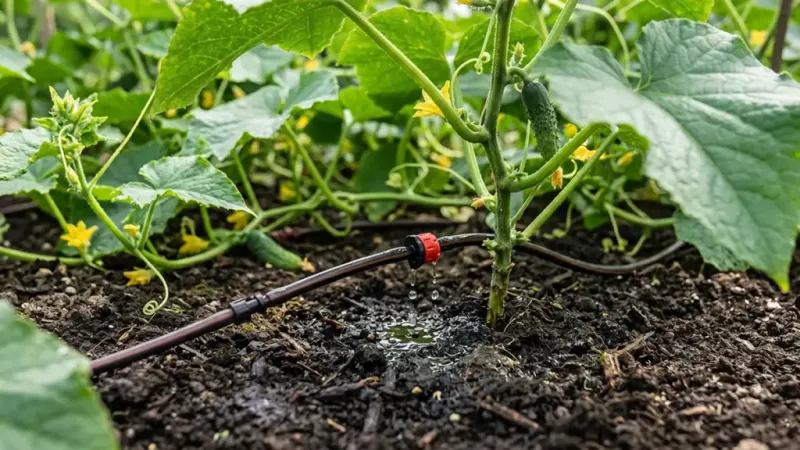
Root-zone moisture is the next thing to assess after you have identified your flower types and checked the temperature pattern. Soil that swings repeatedly between bone-dry and waterlogged adds its own stress on top of heat and can push a plant into aborting flowers or young fruit even when temperatures moderate.
UMN Extension’s irrigation strategies for vegetables emphasize maintaining consistent root-zone moisture rather than alternating between extremes.
Deep, directed watering is more effective than frequent shallow sprinkles. Oklahoma State University’s cucumber production fact sheet recommends drip irrigation or soaker hoses as practical methods that deliver water to the root zone while keeping foliage drier.
A thick layer of mulch around the base of the plant slows evaporation and helps the soil hold moisture longer during hot, dry spells. Two to three inches of straw, wood chips, or shredded leaves makes a real difference.
Overwatering carries its own risks. Constantly wet soil and poor drainage can promote root rot and foliar disease, so the goal is steady, reasonable moisture rather than saturation.
Check the top two inches of soil before watering; if it still feels cool and damp, the plant likely does not need more water yet.
Fertilizer should not be the automatic next step when flowers drop. Excess nitrogen encourages lush vine and leaf growth while doing little to improve fruit set, and adding more fertilizer on top of heat stress can make things worse.
Reach for a fertilizer only if a soil test or a clear nutrient deficiency supports it.
Protect the brief pollination window
Standard outdoor cucumbers depend on bees and other insects to carry sticky pollen from a male flower to a female flower. When heat cuts bee activity during the short window that cucumber flowers stay open, pollination fails even if the plant looks perfectly healthy in every other way.
Protecting that window starts with a simple rule: keep insecticides away from open flowers and away from the garden while bees are actively foraging. University of Florida IFAS guidance on insect management for cucurbits specifically warns that insecticide applications to open flowers can harm pollinators and undercut the pollination services your crop depends on.
If pest treatment becomes necessary, follow the product label exactly, including any pollinator-protection directions and timing restrictions.
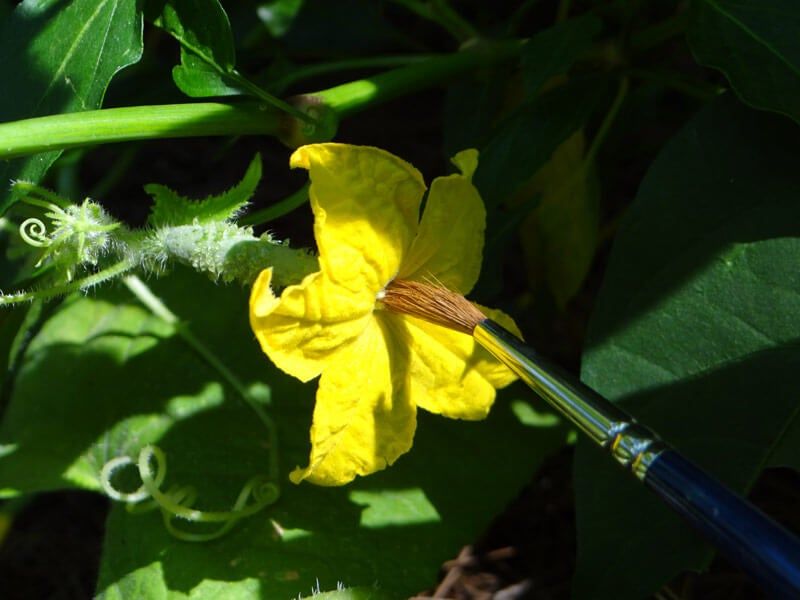
When you have confirmed that female flowers are open and soil moisture is reasonable, hand pollination is a practical rescue option for standard varieties. Texas A&M AgriLife Extension’s cucumber growing guide recommends touching the inside of a freshly opened male flower and then the inside of a freshly opened female flower with a soft brush or cotton swab, transferring the pollen directly.
You can also detach a male flower, fold back its petals, and press it gently against the center of the female flower. Morning is the best time, when flowers are fully open and still dry.
Hand pollination has real limits. It cannot restore flowers that heat, drought, disease, or nonviable pollen have already damaged.
It also cannot create female flowers that are not there yet, and it will not help a plant that simply lacks open females. Think of it as a targeted assist for the right moment, not a cure for the underlying stress.
Check the cultivar before transferring pollen
Not every cucumber on the market needs a bee to set fruit, and applying standard pollination advice to the wrong variety can waste time and cause confusion. Penn State Extension’s cucumber pollination resource explains that parthenocarpic varieties, which include many greenhouse, English, and Beit Alpha types, are bred to develop fruit without pollination at all.
If you are growing one of these and see abundant female flowers but no fruit, pollination is probably not the issue.
Gynoecious varieties add another layer of complexity. These cultivars produce mostly or entirely female flowers, which sounds ideal for fruit set but creates a problem: without male flowers on the same plant, there is no pollen source.
Many gynoecious varieties need a compatible pollenizer planted nearby, unless they are also parthenocarpic. Seed companies often include a few pollenizer seeds in the packet, sometimes marked with a different color coating.
Penn State’s guide to growing cucumbers in high tunnels reinforces that cultivar type strongly shapes how pollination works in practice. Checking the seed packet or the cultivar description online before you start hand-pollinating or buying a second plant can save a lot of effort.
Look for the words parthenocarpic or gynoecious, and note whether the packet mentions needing a pollenizer.
Redirect the diagnosis when symptoms point elsewhere
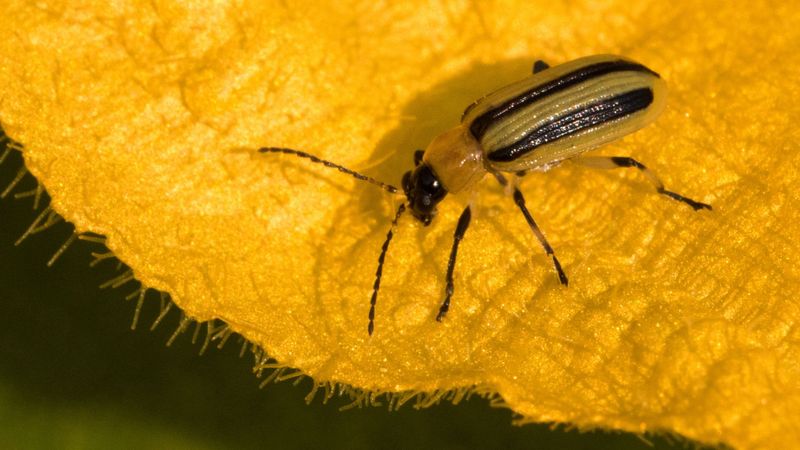
Sustained heat is a strong candidate when flowers drop during a heat wave, but other problems can produce the same visible symptom, and some of them need a completely different response. Sudden whole-plant wilting that does not recover overnight, for example, is more consistent with bacterial wilt transmitted by cucumber beetles than with heat stress alone.
UMN Extension’s guide to growing cucumbers in home gardens identifies cucumber beetles as a significant pest that can feed on flowers and spread bacterial wilt, which causes rapid, severe decline.
Spider mites are more common during hot, dry weather and leave behind bleached, bronzed, or stippled foliage rather than healthy-looking green leaves. UC Statewide IPM guidance on cucumbers lists spider mites among the key pests that intensify under dry summer conditions.
If you see those leaf symptoms alongside flower drop, mites deserve a look before you focus entirely on heat and pollination.
Afternoon shade is sometimes suggested as a way to reduce heat load on stressed plants, and it may help in some situations. However, cucumbers still need good light to produce and set fruit, and heavy shade combined with poor airflow can increase disease pressure, especially in humid Southern gardens.
UGA Extension’s home gardening guide cautions that overwatering and poor drainage create their own problems, a reminder that well-intentioned fixes can backfire when the root cause has not been identified. Match the treatment to the actual symptom, not to the most convenient explanation.
Judge recovery by the next flowers
Recovery from a summer heat stretch is possible, but it is not guaranteed, and understanding what to watch for keeps expectations realistic. An Extension response on August cucumber production describes fruit set improving when temperatures moderate, while also making clear that flowers and small cucumbers already aborted will not come back.
The plant moves forward, not backward.
After you have worked through the checklist, the next flush of flowers is your real indicator. Identify whether new female flowers are forming, confirm that soil moisture is stable, check that bees are visiting during the morning bloom window, and verify that your cultivar actually benefits from hand pollination before attempting it.
If new female flowers open, develop their ovaries, and hold on the vine, conditions are improving. If they continue to drop, revisit moisture, pest pressure, and disease before assuming the heat alone is still the culprit.
The practical sequence comes down to four steps: identify the flower type, stabilize moisture, protect pollinators, and redirect the diagnosis when plant symptoms point toward pests or disease. Aborted flowers are gone, but a plant that has been stabilized and is no longer under peak stress can still produce a worthwhile late harvest.