
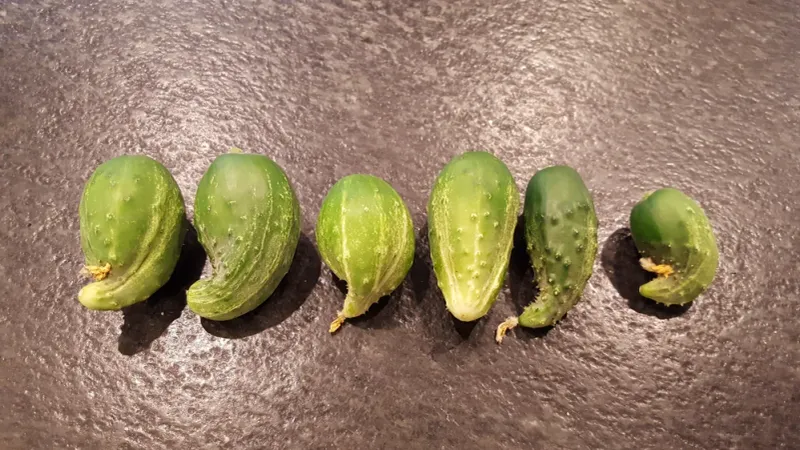
Pulling a cucumber off the vine only to find one end swollen and the other end narrow and nubby is one of those frustrating late-summer surprises that stops gardeners in their tracks. The good news is that a lopsided shape usually points to something fixable, not a garden disaster.
Understanding why it happens, whether the fruit is still worth eating, and what to do differently for the next round can save both the harvest and the headache.
The Shape Points to Stress, Not One Certain Diagnosis
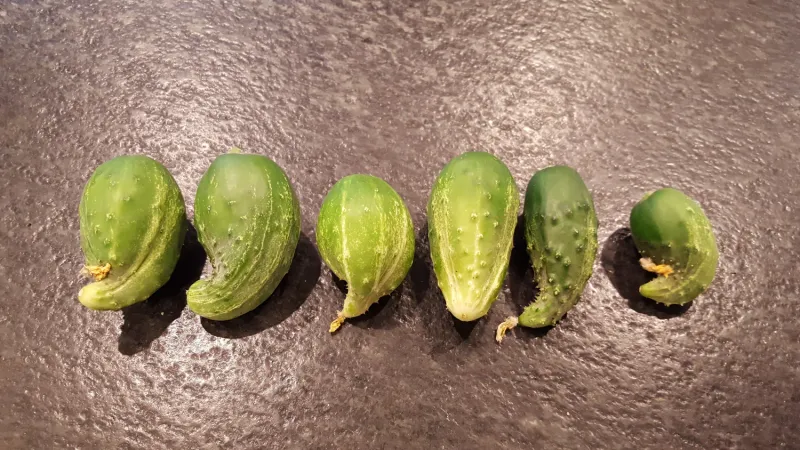
When a cucumber swells at one end and tapers off into a pinched, narrow, or nubby shape at the other, the plant is telling you something went wrong during fruit development, but the shape alone cannot name the exact cause. Virginia Cooperative Extension guidance on cucumbers, melons, and squash links misshapen fruit to poor pollination and inconsistent soil moisture as primary culprits, and late-summer conditions in places like Florida and Texas can push both of those problems at once.
The pattern of the deformity offers clues worth reading. A fruit that narrows at the middle or blossom end often points toward water stress during the roughly one-week window between pollination and harvest-ready size.
A cucumber that stayed small, lightweight, and poorly expanded from the start suggests pollination may not have been adequate. These are diagnostic tendencies, not certainties, and in real gardens both problems can overlap.
One thing extension guidance makes clear: the individual fruit will not correct itself. Penn State Extension’s cucumber pollination resource confirms that inadequate pollen transfer produces aborted or misshapen fruit that will not develop normally with more time on the vine.
Heat can worsen both pollination and water stress in late summer, but heat alone does not explain every deformed cucumber, so resist the urge to stop the investigation there.
Why Hot Weather Can Leave Cucumbers Poorly Pollinated
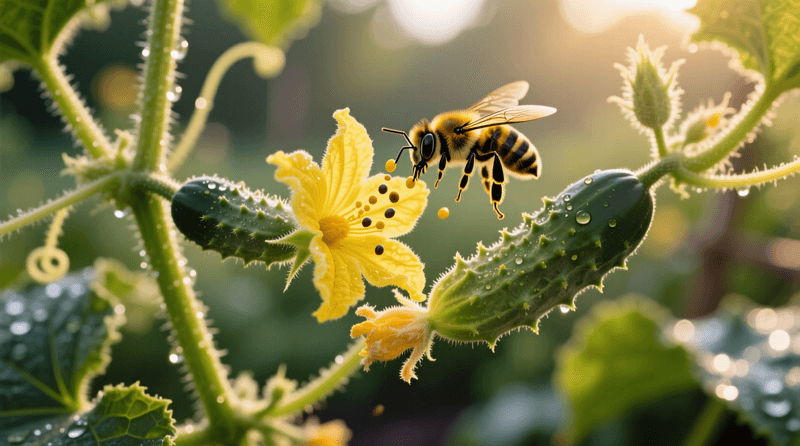
Cucumbers depend on insect pollinators to move pollen from male flowers to female flowers, and when that transfer is incomplete, the developing fruit can end up small, lightweight, or deformed. Penn State Extension explains that cucumber flowers are relatively small and produce less nectar than many other crops, which already makes them less attractive to bees compared to more rewarding blooms in the neighborhood.
Extreme heat adds another layer of difficulty. University of Minnesota Extension notes that bee activity tends to slow noticeably around very hot conditions, with roughly 90 degrees Fahrenheit serving as an approximate guideline rather than a hard cutoff point where cucumber pollination automatically fails.
Pollen viability can also drop in intense heat, meaning even bees that do visit may carry or deposit pollen that performs poorly.
Texas A&M AgriLife Extension specifically identifies heat-damaged pollen as a factor in producing gourd-looking or misshapen cucumbers, which matters for Southern gardeners pushing through August and September harvests. The practical response is to protect pollinators rather than eliminate them: avoid applying insecticides during bloom hours, and if pest treatment is genuinely necessary, choose a product labeled for the crop and follow the label’s guidance on timing so bees are less exposed.
Outdoor gardens generally benefit more from a pollinator-friendly approach than from hand-pollinating every flower, which is better suited to enclosed or poorly pollinated greenhouse settings.
Uneven Moisture Can Narrow the Fruit as It Develops
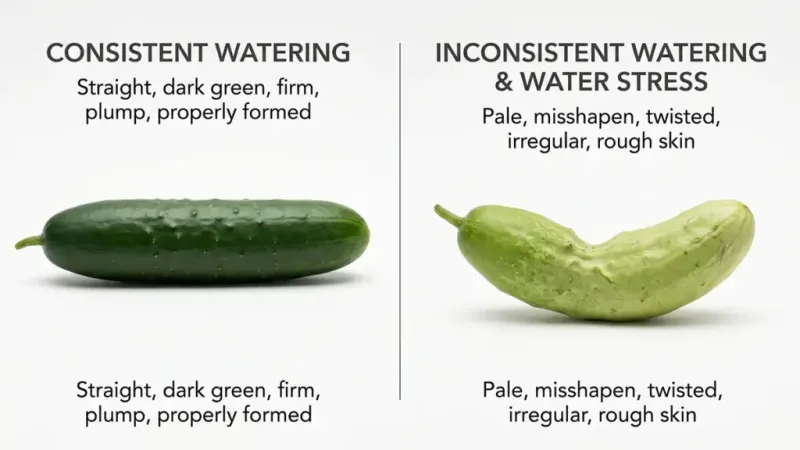
Water stress during the week or so that a cucumber takes to grow from a pollinated flower to harvest size can directly affect the fruit’s shape. Illinois Extension’s guidance on vegetables in extreme weather describes fruit that develops normally at one end but tapers at the other when soil moisture runs short during that critical growth window, which is exactly the pattern many Southern gardeners notice in late-summer heat.
The problem is not simply that it got hot. Repeated swings from very dry soil to briefly saturated soil can disrupt development just as much as a sustained drought period.
Illinois Extension’s cucumber growing guide lists inconsistent watering as a contributor to narrow waists, swollen blossom ends, and uneven fruit growth, and high temperature can intensify that effect by pulling moisture out of both the soil and the plant faster than the roots can replace it.
The goal is uniform root-zone moisture, not flooded soil. University of Minnesota Extension recommends checking the soil about two inches below the surface to judge when watering is actually needed, rather than following a rigid calendar schedule.
A general one-inch-per-week guideline is only a starting point; sandy soils common in parts of Florida may need more frequent watering, while heavier clay soils hold moisture longer and can become waterlogged if overwatered on a fixed schedule.
An Ugly Cucumber Is Not Automatically Unsafe to Eat
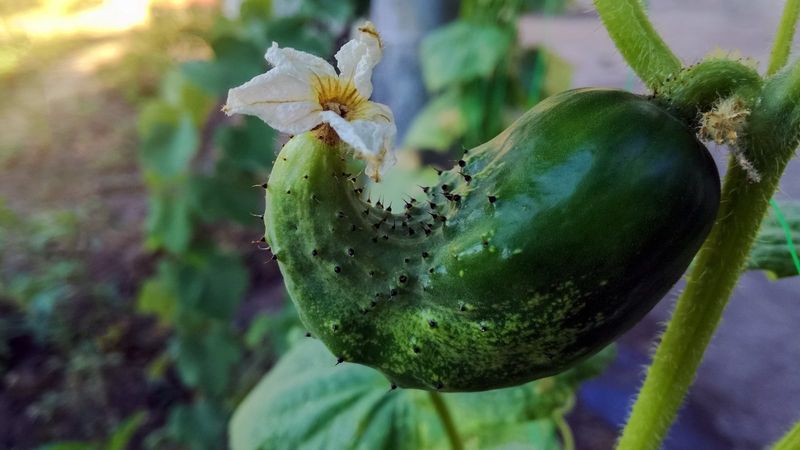
Shape is a quality issue, not an automatic food-safety verdict. A cucumber that looks lopsided, nubby, or tapered at one end can still be perfectly usable if it passes a straightforward physical check.
Illinois Extension points out that misshapen cucumbers are edible when they are otherwise sound, so press gently on the skin, check for soft or leaking spots, look for any sign of mold, and give the fruit a quick smell before deciding.
UConn Extension’s food-safety guidance is clear that soft, high-moisture produce showing mold should be discarded rather than trimmed, because mold on a watery vegetable like a cucumber can penetrate deeper than the visible surface suggests. A firm cucumber with no soft rot, no foul odor, no leaking tissue, and no extensive surface damage clears that threshold and can be evaluated on flavor.
Flavor is where the real safety line sits. Cucurbitacins, the bitter compounds that occur naturally in cucurbits, can increase under heat, drought, and uneven watering stress.
Iowa State University Extension notes that mild bitterness near the stem end is sometimes reduced by peeling, but pronounced bitterness throughout the fruit is a different situation entirely. Poison Control warns that cooking does not reliably neutralize cucurbitacins at high concentrations, so if a cucumber tastes intensely bitter, spit it out and discard the fruit rather than trying to salvage it by pickling, peeling, or cooking.
Remove Failed Young Fruit Instead of Waiting for a Rescue
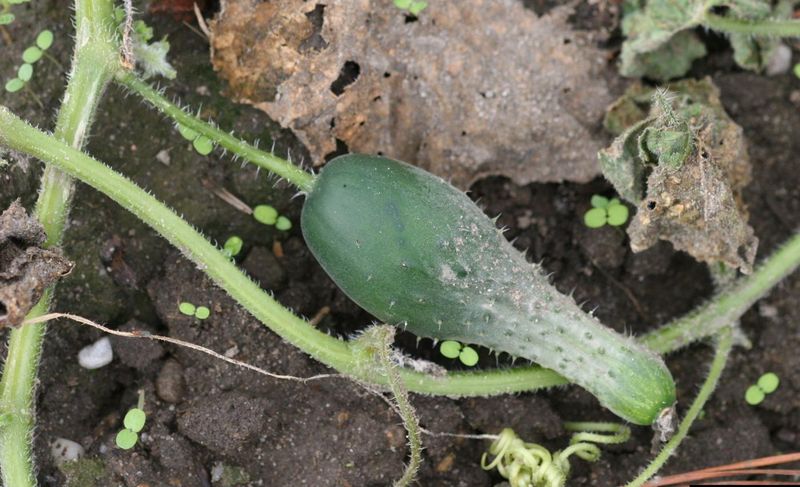
A cucumber that is already badly misshapen while still young is not going to straighten out or fill in evenly with more time on the vine. Illinois Extension advises harvesting or removing badly misshapen young cucumbers promptly rather than leaving them in place and hoping for improvement.
Waiting only keeps the plant investing energy into fruit that will not become marketable in shape, which can slow or reduce the development of the next round of flowers and fruit.
Removing a young failed cucumber is a garden-management decision, separate from the food-safety evaluation that applies to a mature misshapen fruit. A tiny, nubby cucumber pulled off early is simply waste, not a safety concern.
A full-sized but lopsided cucumber that has reached normal harvest size should still go through the firmness, odor, mold, and flavor checks described above before you decide whether to use it.
Getting into the habit of walking the vines every day or two during peak fruiting season makes this easier. Catching small, clearly failing fruit before they grow large enough to drain the plant’s resources is one of the most straightforward ways to keep the remaining cucumbers developing as well as possible under challenging late-summer conditions.
Stabilize Water and Pollination Conditions for the Next Fruit
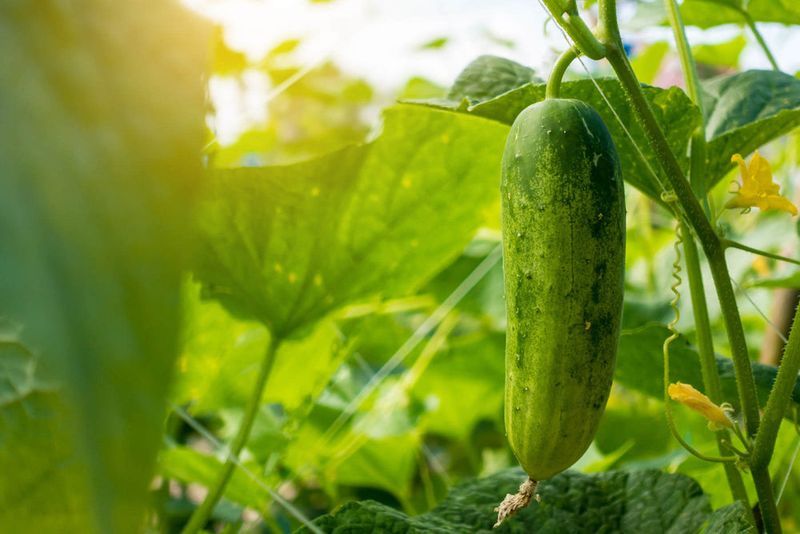
Keeping the next cucumbers from deforming starts with getting water delivery right. University of Minnesota Extension recommends watering deeply at the root zone when the soil at about two inches below the surface feels dry, rather than sticking to a fixed schedule that may not match actual conditions.
In a Florida sandy-soil garden during August, that check might need to happen every day or two; in a Texas clay-heavy bed that retains moisture longer, the interval stretches out. The one-inch-per-week guideline is a starting reference, not a rule that overrides what the soil is actually telling you.
Organic mulch helps buffer the moisture swings that contribute to uneven fruit development. University of Minnesota Extension notes that a layer of organic mulch moderates soil temperature and slows surface moisture loss, but it does not guarantee adequate water at the root zone.
Check beneath the mulch regularly, because a dry crust can form underneath a surface that looks fine from above.
Water delivery method also matters. Penn State Extension’s high-tunnel cucumber guide highlights drip irrigation and soaker hoses as practical ways to deliver water at the root zone while keeping foliage drier, which reduces both evaporation loss and disease risk compared to overhead watering.
Hand watering directed at the soil base works well when drip equipment is not available.
On the pollination side, the most useful step is avoiding insecticide misuse during bloom. Penn State Extension’s pollination resource cautions that improperly timed or applied insecticides can reduce bee activity or harm pollinators outright.
If pest treatment is necessary, use only a product labeled for the crop and the specific pest, read the label fully, and apply when bees are least active, typically early morning or evening, following whatever timing the product label specifies.
Look Beyond Heat When the Whole Plant Looks Wrong
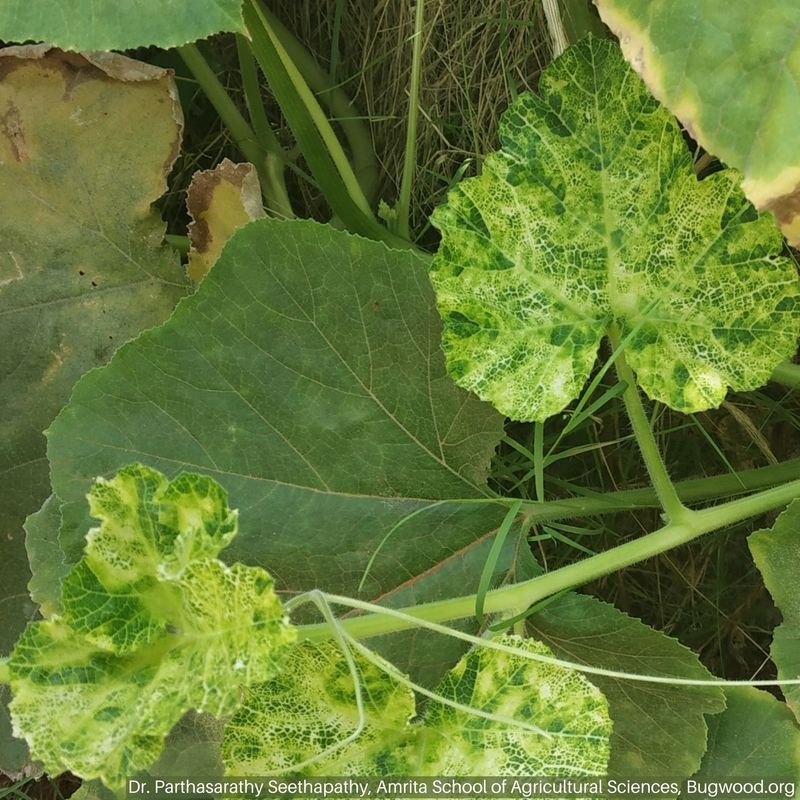
Heat and water stress are common explanations for deformed cucumbers, but they are not the only ones. When the deformity shows up alongside unusual leaf symptoms, a closer look at the whole plant is worth the time.
University of Minnesota Extension’s cucurbit virus guide describes mottled or mosaic leaf patterns, curled or puckered growth, stunting, unusual rings, blotches, or discoloration as signs that a virus may be involved. Visual inspection alone cannot confirm a virus, and if those symptoms are present alongside the deformed fruit, a plant diagnostic clinic can run tests that appearance-based assessment cannot replace.
Low fertility is another factor that occasionally contributes to poor fruit development, though it is not the default explanation for a single misshapen cucumber. Illinois Extension notes that a complete fertilizer may support later fruit when fertility is genuinely low, but adds a critical qualifier: overfertilizing can push excessive vine growth and actually delay or reduce fruiting.
A soil test is the right basis for any fertility decision, particularly in Southern gardens where heavy rainfall and repeated applications can create nutrient imbalances that guesswork fertilizing only worsens.
Cultivar type also changes the pollination picture in specific situations. Penn State Extension explains that parthenocarpic varieties can set fruit without pollination, which makes them useful in greenhouses and screened structures.
However, pollination of some parthenocarpic varieties in enclosed settings can itself produce misshapen fruit, so the variety choice and growing environment interact in ways worth understanding before the next planting season.
Use a Consistent Routine for the Next Harvest
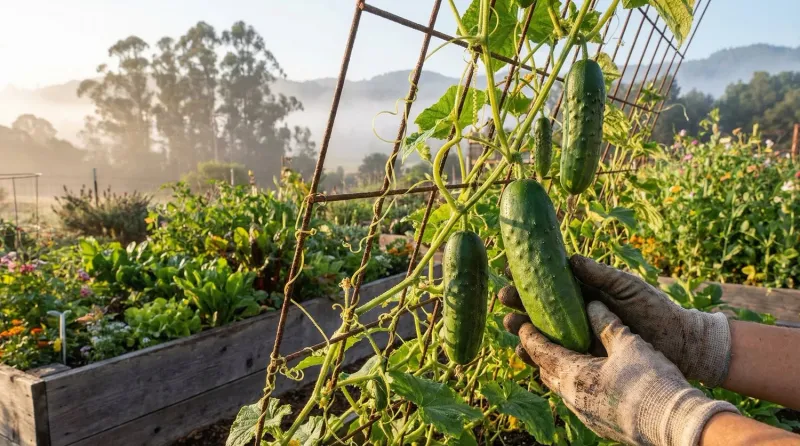
A reliable late-summer cucumber harvest comes down to a few repeatable habits. Remove fruit that is clearly not developing normally rather than leaving it on the vine, keep root-zone moisture as steady as your soil type and rainfall allow, and check soil moisture below the surface rather than watering by the calendar.
University of Minnesota Extension’s watering guidance and Penn State Extension’s pollination resource both support these basics as practical starting points.
Mulch the bed, water at the root zone, and protect bloom-time pollinators by timing any necessary pest treatments to avoid peak bee activity. A misshapen cucumber that is firm, free of mold and soft rot, and tastes normal is still worth using.
UConn Extension’s food-safety guidance and Illinois Extension both confirm that shape alone is not a safety issue, while spoilage or intense bitterness calls for disposal.
When deformity keeps showing up alongside unusual leaf symptoms, or when the fruit quality does not improve after addressing moisture and pollination, investigate plant-wide causes or run a soil test before reaching for a fertilizer or spray. The most resilient gardens are the ones where the gardener keeps looking for the actual cause rather than assuming one fix covers every season.