
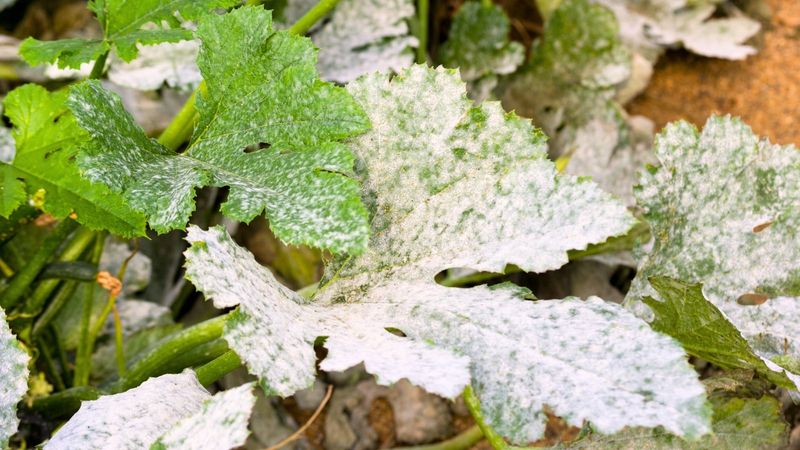
Walking out to your cucumber patch and finding the leaves coated in a white, dusty film is enough to make any gardener’s stomach drop. That coating is most likely powdery mildew, one of the most common late-summer diseases to hit cucumbers across the country. The good news is that you do not have to lose your harvest, and changing a few habits now can make a real difference. Understanding what actually causes this disease, and what only makes it worse, is the first step to getting your vines back on track.
That white coating is probably powdery mildew
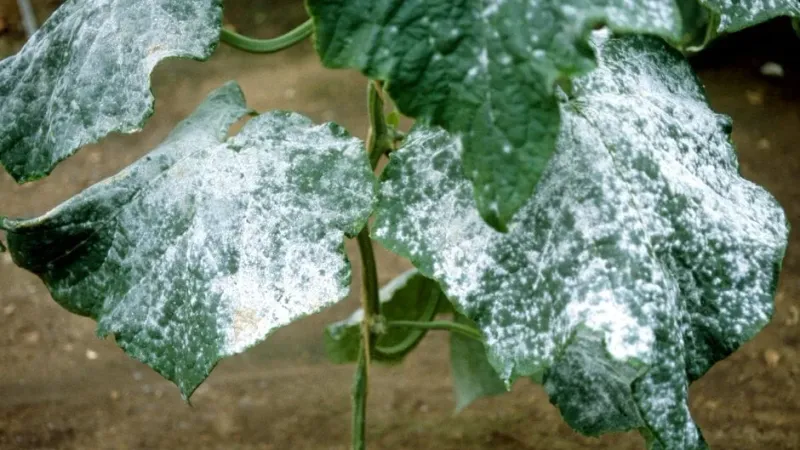
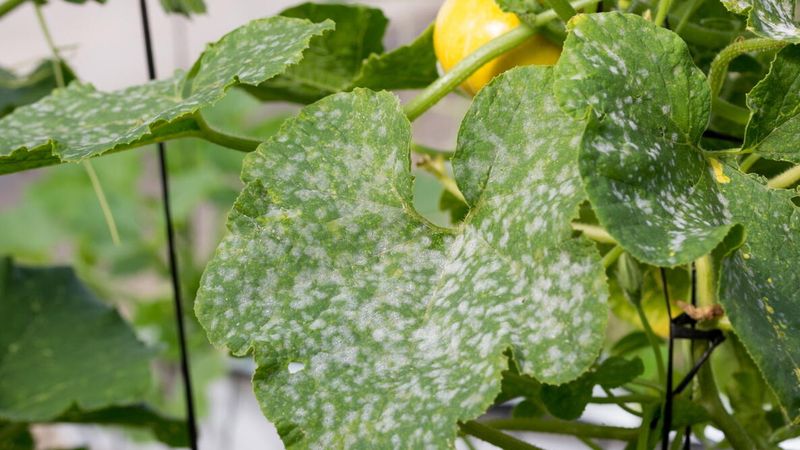
A white, dusty film spreading across your cucumber leaves in August has a familiar name: powdery mildew. According to UC IPM’s guide on cucurbit powdery mildew, the disease typically shows up as circular or irregular white-to-gray powdery patches on both the upper and lower surfaces of leaves. Those patches are made up of fungal growth, and they can spread quickly across a leaf blade once conditions favor the fungus.
Older leaves and those tucked in shadier, less ventilated parts of the vine often show symptoms first. As the disease advances, affected leaves may begin to yellow, turn papery, and eventually die back entirely. Severe infection can weaken the whole vine, reduce fruit production, and leave developing cucumbers exposed to sunscald once the foliage thins out.
Before you change your watering schedule or reach for a treatment, take a close look at the pattern. Expanding, irregular powdery patches that wipe off onto your finger are more suspicious than stable, symmetrical silvery markings. Some cucumber and squash varieties carry naturally mottled or silvery leaf patterns as part of their genetics, and those markings, noted by Colorado State University Extension, stay consistent rather than spreading. Confirm the symptom before you act.
Why it can appear during hot late summer
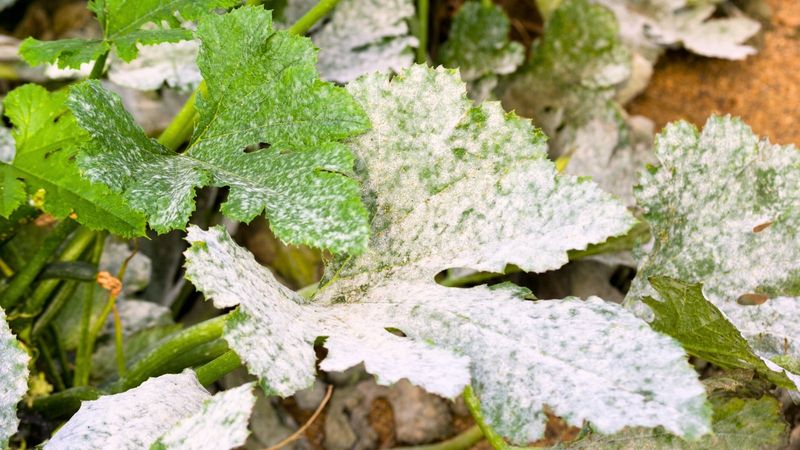
Many gardeners assume that a hot, dry August should protect their cucumbers from fungal disease. The reality is more complicated. University of Minnesota Extension’s cucurbit powdery mildew resource explains that infection is actually favored by humid periods and moderate temperatures, while warm, dry daytime conditions can help new spores form and spread by wind. The fungus can be active during the same stretch of weather that feels too hot and dry to support it.
Extreme heat and direct sunlight may suppress the fungus to some degree, but a hot garden is not automatically protected. Spores travel through the air and land wherever conditions allow them to take hold, meaning a brief overnight cool-down or a stretch of humid evenings can provide the window the disease needs to establish itself. Once it does, daytime heat does not erase it.
Evening overhead watering is one factor that can make canopy conditions less favorable, but it shares that role with several others. Crowded plants, weed competition, excessive shade, susceptible varieties, and high nitrogen levels can all contribute to disease severity. UC IPM notes that the fungus arrives via airborne spores and needs living plant tissue to survive, so treating it as the result of one single mistake misses the full picture of how the disease develops.
Change evening overhead watering without blaming the leaves
Stopping routine evening overhead watering is a smart move, but the reason is not what most people think. Penn State Extension points out that liquid water on leaves can actually inhibit spore germination for many powdery mildew fungi, which is the opposite of what gardeners usually assume. Wet leaves did not cause this disease. The problem with evening overhead irrigation is that it can leave the canopy humid and poorly ventilated overnight, and that kind of microclimate is generally unfavorable for plant health even if it is not the direct trigger for powdery mildew infection.
When a sprinkler runs at dusk and soaks the foliage, the leaves may stay damp for hours in cooler nighttime air with little air movement. That prolonged humidity within the canopy can create conditions that stress the plant and favor other problems alongside powdery mildew. Switching to morning watering at the soil line gives foliage a chance to dry off naturally during the day.
Powdery mildew and downy mildew are often confused, and the distinction matters here. UC IPM’s downy mildew guide explains that downy mildew requires leaf wetness to infect, making overhead irrigation a more direct concern for that disease. For powdery mildew, moving water to the soil line is still a practical recommendation, but the goal is improving canopy conditions, not drying out leaves to block infection. UC IPM recommends watering at the soil rather than overhead as part of an overall management approach.
Keep the cucumber hydrated while improving airflow
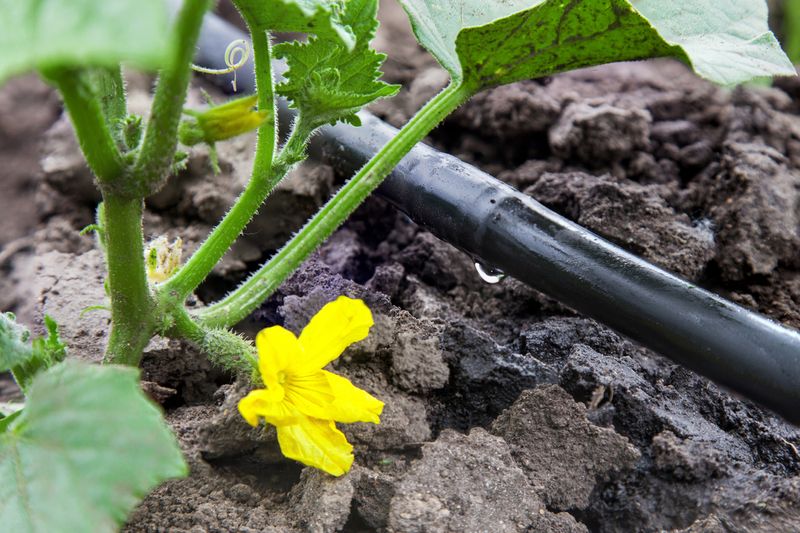
Drought stress is not a remedy for powdery mildew, and withholding water from cucumbers during late-summer heat will hurt the plant faster than any fungus will. Utah State University Extension’s vegetable water recommendations describe roughly 1 to 2 inches of water per week as a general reference for cucumbers, but that figure needs to be adjusted for your soil type, plant size, current growth stage, recent rainfall, and how hot and dry the weather has been. The soil and the plant’s appearance tell you more than any fixed schedule.
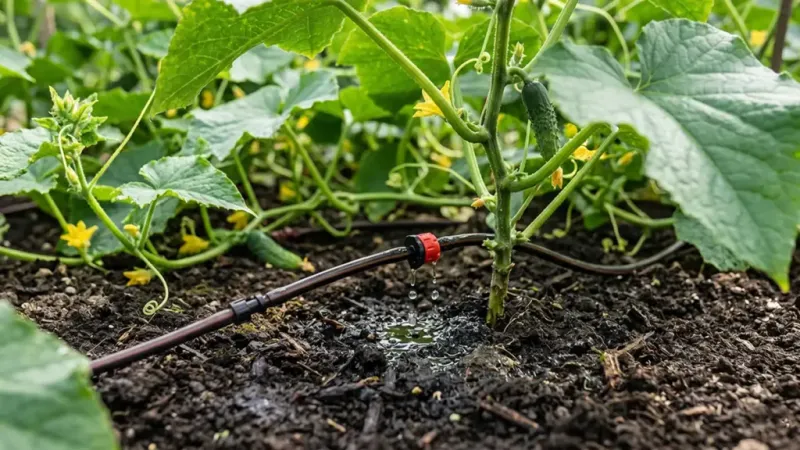
Drip irrigation or a soaker hose delivers water directly to the root zone without wetting the canopy at all, making it the most practical upgrade for both hydration and disease management. If drip is not available, moving your hose or sprinkler to the soil line in the morning gives foliage most of the day to dry before temperatures drop at night. Mulch laid around the base of the plant helps retain soil moisture between waterings and reduces the frequency you need to irrigate.
Airflow around the plant matters just as much as how you deliver water. University of Minnesota Extension recommends trellising vines so they grow upright rather than piling on the ground, removing competing weeds that crowd the base, and avoiding planting cucumbers too close together. Adequate sunlight reaching the interior of the canopy, combined with good air circulation, reduces the humid pockets where disease conditions can build up. UC IPM also lists dense foliage and shade as factors that increase canopy humidity.
Prune selectively and protect the plant’s remaining leaves
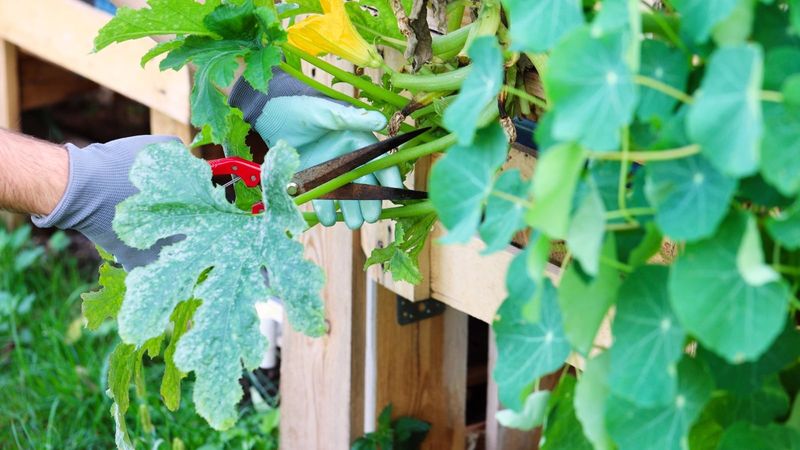
Removing the most heavily infected leaves can reduce the amount of active fungal growth on the vine and improve airflow through the canopy. The key word is selectively. University of Minnesota Extension’s guide to managing plant diseases in the home garden advises not removing more than one-third of a plant’s leaves at once, and that limit applies here. Stripping the vine bare to chase down every trace of white powder will do more harm than the disease itself.
Cucumber leaves serve a practical purpose beyond feeding the plant. They shade developing fruit from direct sun, and without enough canopy cover, cucumbers can develop sunscald, which shows up as pale, papery patches on the skin of the fruit. Preserve healthy foliage even when it is near infected leaves, and focus removal on leaves that are more than half covered with powdery growth or already yellowing and dying.
After removing infected leaves, do not leave them on the soil beside the plant. University of Minnesota Extension recommends discarding diseased plant material away from the garden rather than composting it, since spores can persist. Selective pruning supports your overall management plan, but it will not erase established disease on its own. Think of it as one tool among several, not a standalone fix.
Treat early, but respect heat and pesticide labels
Fungicide treatments are most useful when applied preventively or at the very first sign of disease. Once a significant portion of the foliage is covered in white powder, control becomes considerably harder, and University of Minnesota Extension notes that early intervention gives the best chance of slowing the disease’s progress. Waiting until the problem is severe before acting reduces the effectiveness of any product you apply.
Product choice and label compliance are non-negotiable. The EPA’s introduction to pesticide labels makes clear that the label is a legally enforceable document, not a suggestion. Before applying anything to your cucumbers, confirm that the current product label lists cucumbers specifically, follow all application directions, and observe the listed pre-harvest interval so you are not applying a treatment too close to picking time.
Temperature restrictions matter more than many gardeners realize. UC IPM’s powdery mildew on vegetables resource advises against applying horticultural oils when temperatures exceed 90 degrees Fahrenheit or when plants are drought-stressed. Sulfur can injure some cucurbit varieties and should not be applied near or above 90 degrees; oil and sulfur applications should not be made close together because of the risk of compounding injury. Do not spray during a heat wave without checking these label-based restrictions first.
Homemade remedies come up often in gardening conversations. Colorado State University Extension describes baking-soda-and-oil mixtures as experimental, and mixtures of milk, vinegar, or dish soap carry similar uncertainty. They are not guaranteed cures and should not take the place of a labeled product applied correctly and at the right time.
Prevent a repeat with variety and canopy planning

Next season’s cucumbers can start with an advantage if you choose varieties bred for powdery mildew resistance or partial resistance. University of Minnesota Extension notes that resistant varieties can reduce disease severity, though resistance is neither complete nor permanent. A resistant variety under poor growing conditions can still develop mildew, so variety selection works best alongside the other practices described here.
Spacing plants so air can move freely between them, training vines on a trellis, keeping the area free of weeds, and positioning cucumbers where they receive adequate direct sunlight all reduce the humid, shaded pockets that can favor disease development. Utah State University Extension also points to consistent soil moisture management as part of overall plant health, which ties back to the irrigation habits covered earlier in this guide. Balanced hydration keeps the plant vigorous and better able to tolerate disease pressure.
The central lesson from this season’s outbreak is straightforward: replace routine evening overhead watering with morning soil-level irrigation, keep the cucumber hydrated through the heat, and treat powdery mildew as a multi-factor problem rather than the product of a single mistake. UC IPM reinforces that variety, airflow, sunlight, and consistent moisture management all interact to influence how severe an outbreak becomes. A gardener who adjusts several small habits at once tends to see better results than one who tries to fix only one thing at a time.