
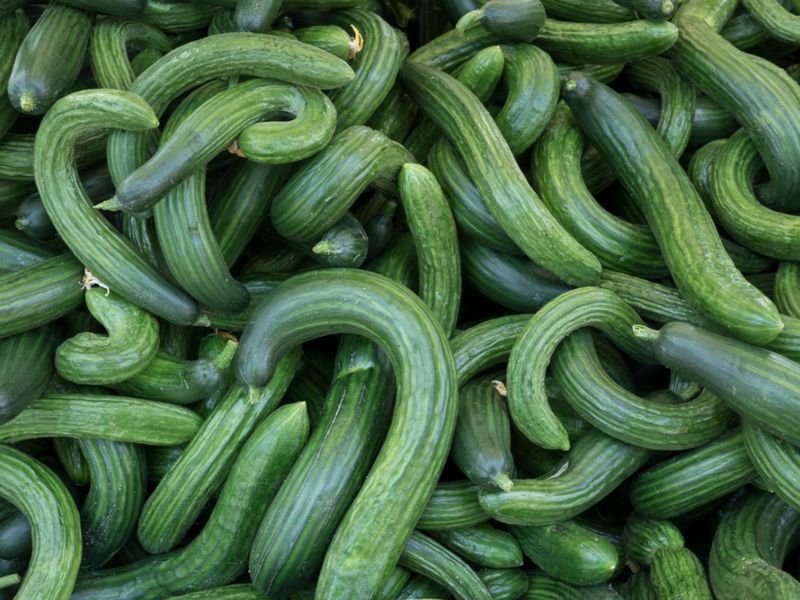
Pulling a small, twisted, or pinched cucumber off the vine is one of those frustrating late-summer surprises that makes you wonder what went wrong. Those stubby, curved, or unevenly developed fruits are telling you something about conditions during a very short window in the plant’s life.
Understanding the cause helps you stop blaming yourself, stop blaming the heat automatically, and start making targeted changes that actually improve the next round of fruit. The answer is often simpler than gardeners expect, and fixing it is within reach.
A Deformed Cucumber Often Signals Incomplete Pollination
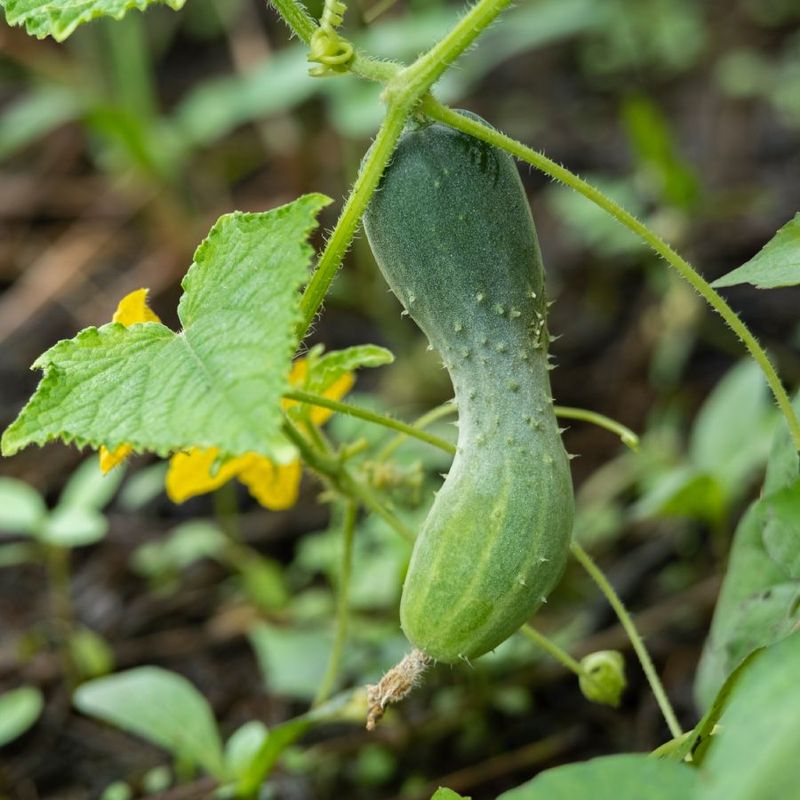
Picking up a stubby, curved, or pinched cucumber and wondering what went wrong is a common late-summer experience for home gardeners. The fruit you are holding likely reflects what happened during a very brief developmental window, not something you can reverse by watering more or adding fertilizer now.
Iowa State University Extension notes that misshapen cucumbers commonly result from incomplete pollination, where too little pollen reaches the female flower and only part of the cucumber expands fully.
That said, fruit shape alone cannot confirm the diagnosis. A single malformed cucumber on an otherwise productive vine does not prove pollination failed.
University of Minnesota Extension’s diagnostic guide lists inconsistent moisture, low soil fertility, viruses, insect injury, and mechanical damage alongside poor pollination as possible causes of deformed fruit, and the symptoms can look nearly identical.
One thing worth saying clearly: a cucumber deformed by poor pollination is generally an appearance and quality issue, not a safety hazard. UC Davis Vegetable Research guidance frames poor fruit development as a quality concern rather than a toxicity problem, though any fruit showing signs of rot or disease should be evaluated separately.
Heat may have played a role in what you are seeing, but it is one possibility among several worth examining.
A Cucumber Flower Has Only a Brief Pollination Window
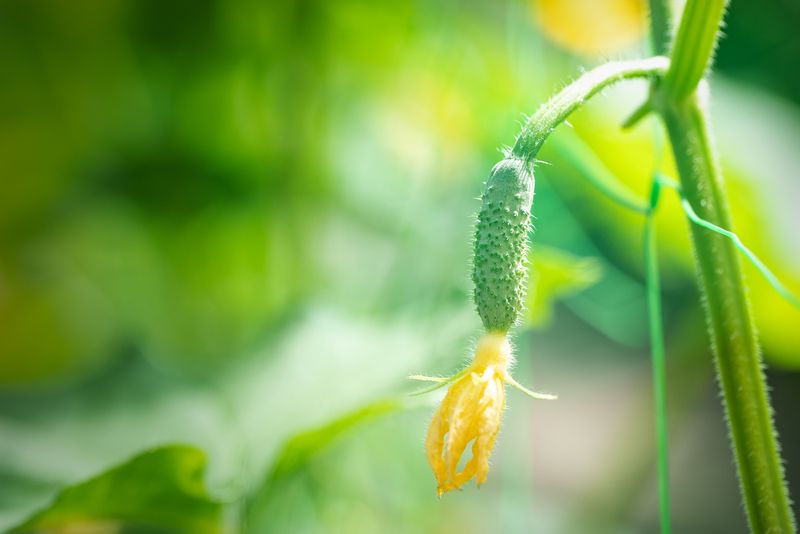
Cucumber plants produce two distinct flower types on the same vine, and knowing the difference matters when you are trying to figure out why fruit looks wrong. Female flowers carry a small, cucumber-shaped swelling at their base – that miniature fruit is the ovary, and it is the only flower that can develop into a cucumber.
Male flowers sit on a thinner, plain stem and exist solely to produce pollen. Iowa State University Extension explains that on standard varieties, bees and other insects carry pollen from male to female flowers, making insect activity essential to fruit development.
The timing is tighter than most gardeners realize. University of Nebraska Extension research on cucurbit pollination confirms that cucumber flowers open and remain receptive for roughly one day, which means weather, heat, and pollinator availability during that narrow period carry an outsized effect on whether a fruit develops normally.
Seeing a small cucumber beginning to form after a female flower drops its petals is encouraging, but it does not prove that enough pollen reached the stigma for the whole fruit to expand evenly. UC IPM’s guide to poor pollination in cucurbits makes clear that partial pollination – where some seeds form but others do not – can cause the fruit to develop unevenly, producing the curved, pinched, or lopsided shapes gardeners often mistake for a heat problem or a disease.
Late-Summer Heat Can Stack the Odds Against Normal Fruit
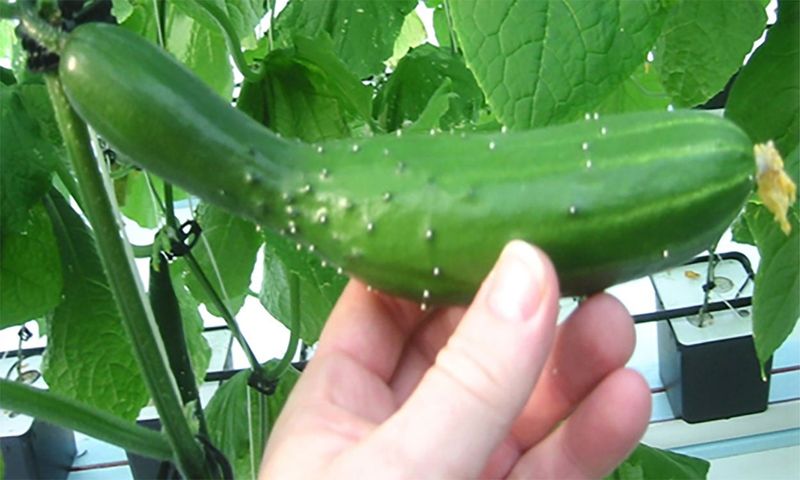
Extended heat does not automatically cause nubbins, but it can make the conditions for normal fruit development harder to achieve in several overlapping ways. Bees and other pollinators tend to reduce foraging activity during the hottest parts of the day, which means the brief window when a female cucumber flower is receptive may pass with fewer insect visits than the plant needs.
Research published in Frontiers in Plant Science on high-temperature effects on cucumber reproductive biology also finds that sustained heat stress can reduce pollen fertility and affect male-flower development, compounding the pollination problem beyond just bee behavior.
There is a separate moisture pathway that heat activates at the same time. Hot weather raises the plant’s water demand sharply, and if soil moisture swings between too wet and too dry, the developing fruit can be affected even when pollination itself went reasonably well.
Utah State University Extension’s cucurbit irrigation guidance identifies inconsistent watering during fruit development as a factor in poor cucumber quality and shape.
For Southern gardeners specifically, the regional climate adds further pressure. UF/IFAS Extension research on cucurbit pollination in Florida describes high temperatures, humidity, fog, and extended precipitation as conditions that can reduce pollinator visitation in warm-season production.
Heat is real and relevant, but it works through these specific mechanisms rather than being a blanket cause for every deformed cucumber you pull off the vine.
Check the Cucumber Variety Before You Intervene
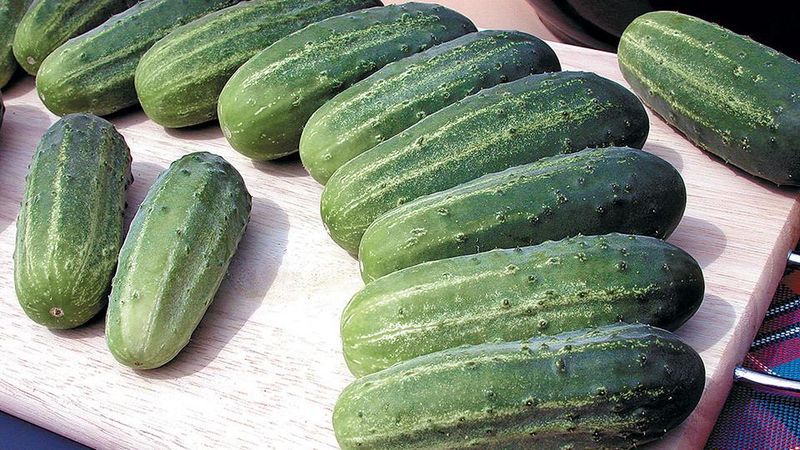
Before reaching for a paintbrush to hand-pollinate, it is worth taking thirty seconds to check what kind of cucumber you are actually growing. Variety type changes everything about how the plant sets fruit and what intervention, if any, makes sense.
University of Maryland Extension’s home cucumber guide outlines three main categories: standard monoecious varieties, which produce both male and female flowers and rely on insects to move pollen; gynoecious varieties, which produce mostly or entirely female flowers and may require a separate pollinator variety; and parthenocarpic varieties, which set seedless fruit without any pollination at all.
Gynoecious varieties often come with a few seeds of a standard pollinator variety included in the packet, a detail printed on the label that gardeners sometimes overlook. Planting those pollinator seeds alongside the gynoecious plants is part of the intended growing plan, not an optional extra.
Skipping them can reduce fruit set significantly even when bees are present.
Parthenocarpic cucumbers introduce a different risk when it comes to intervention. Penn State Extension’s high-tunnel cucumber guide explains that introducing pollen to a parthenocarpic variety can cause seeds to form and may reduce fruit quality or contribute to irregular shape – the opposite of the intended fix.
University of Minnesota Extension’s pollination requirements resource reinforces that parthenocarpic cucumbers are commonly selected for greenhouse and screened-enclosure growing precisely because they do not need insect help. Check the seed packet or plant label before deciding that hand-pollination is the right step.
Hand-Pollinate Fresh Flowers When the Evidence Fits
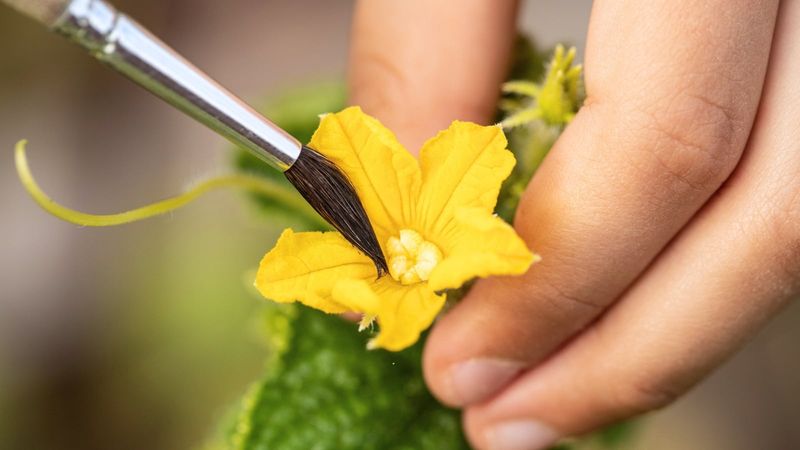
Morning is the right time to try hand-pollination, and the reason is practical: cucumber flowers open early and remain receptive for only a short period. Waiting until afternoon often means the window has already closed.
UF/IFAS Extension Sarasota County’s hand-pollination guidance recommends working with freshly opened flowers and using a small paintbrush, a cotton swab, or the male flower itself to transfer pollen directly to the stigma inside the female flower.
Identifying both flowers correctly before you start matters. The female flower has a small, cucumber-shaped swelling at its base just behind the petals – that is the ovary.
The male flower sits on a plain, slender stem with no swelling. Gently touch or brush the center of a freshly opened male flower to pick up pollen, then dab it onto the sticky center of a freshly opened female flower on the same or nearby vine.
University of Minnesota Extension and UC IPM both frame hand-pollination as a targeted option rather than a routine task. Use it when you have confirmed the plant is a standard, pollination-dependent variety and when pollinator visits appear scarce or fruit set has been consistently poor.
Directing your effort toward new, freshly opened female flowers is the productive move – an already pinched or curved young cucumber is very unlikely to straighten regardless of what you do to the vine now. Do not apply this technique to parthenocarpic varieties.
Stabilize Moisture and Protect Pollinator Access
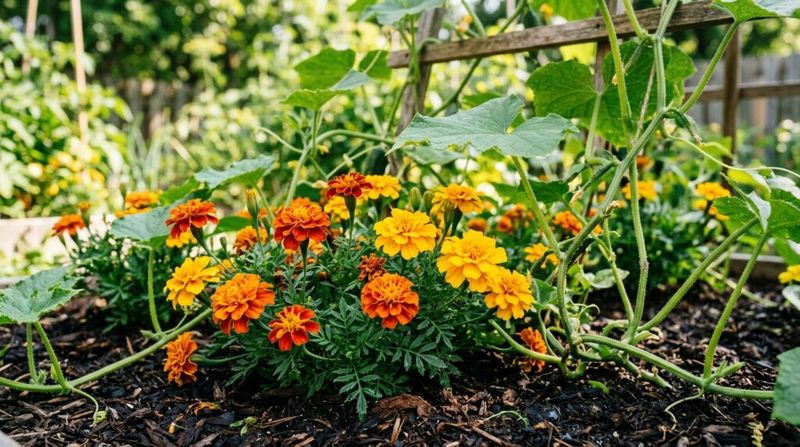
Steady soil moisture is one of the most controllable factors in cucumber fruit quality, and it matters both during flowering and as fruit develops. Cucumbers have a high water demand, and letting the soil swing between bone-dry and waterlogged creates stress that can affect fruit shape independent of pollination.
Utah State University Extension’s cucurbit irrigation guidance recommends consistent watering rather than irregular deep soaks, with mulch helping to buffer soil temperature and slow moisture loss between waterings. Drip irrigation or targeted hand-watering at the base of the plant keeps foliage drier and reduces the swings that stress developing fruit.
Keeping flowers accessible gives pollinators a reason to visit, and nearby flowering plants can support bee populations in the garden. That said, UC IPM’s cucurbit pollination resource is clear that companion flowers may help attract pollinators but cannot guarantee visits during every brief receptive window a cucumber flower offers.
Weather, competing bloom sources, pesticide exposure, and local pollinator abundance all play roles that flowering plants alone cannot override.
Insecticide use during bloom is one of the more direct ways gardeners accidentally reduce pollinator visits. UF/IFAS Extension recommends avoiding unnecessary applications during flowering.
If a pest problem genuinely requires treatment, Illinois Extension’s pollinator protection guidance advises following the product label carefully and accounting for direct contact, drift, residual toxicity, flowering weeds nearby, and any systemic activity in the product. Evening timing may reduce direct contact with foraging bees for some products, but it is not a universal guarantee of safety – the label is the authoritative guide.
Inspect the Whole Plant for Causes Beyond Pollination
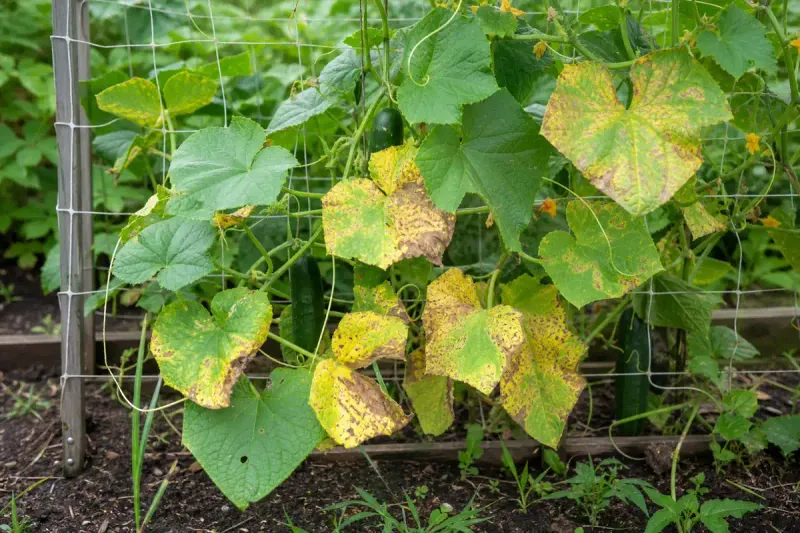
When hand-pollination and steadier moisture do not explain the pattern of deformed fruit, stepping back and reading the whole plant often points in a clearer direction. Mosaic or mottled leaves, distorted new growth, curling, stunting, unusual fruit color, rings, or blotches on the skin are signs that a virus may be present.
University of Minnesota Extension’s cucumber diagnostic tool lists virus infection among the causes of deformed fruit, and their cucurbit virus management resource makes clear that virus symptoms will not respond to hand-pollination, extra water, or fertilizer. Infected plants typically need to be removed to prevent spread through aphids and other vectors.
Pests and mechanical injury are worth checking too. Thrips, squash bugs, and other insects can damage developing fruit or flowers in ways that mimic pollination failure.
Mechanical damage from trellising, rough handling, or contact with a hard surface during early development can also create curved or pinched shapes that have nothing to do with bees or heat.
Utah State University Extension’s cucumber growing guide lists low fertility as one possible contributor to poor fruit quality, but fruit shape alone is not enough information to identify a nutrient deficiency. Applying a strong fertilizer without evidence from a soil test or visible whole-plant symptoms risks doing more harm than good.
One more myth worth clearing up: Texas A&M AgriLife Extension identifies as a common misconception the idea that cucumbers cross with squash, melons, or watermelons and become deformed during the current season. Cross-pollination between those crops affects saved seed only, not the shape or flavor of the fruit you harvest this year.
Remove Stalled Fruit and Judge the Next Growth
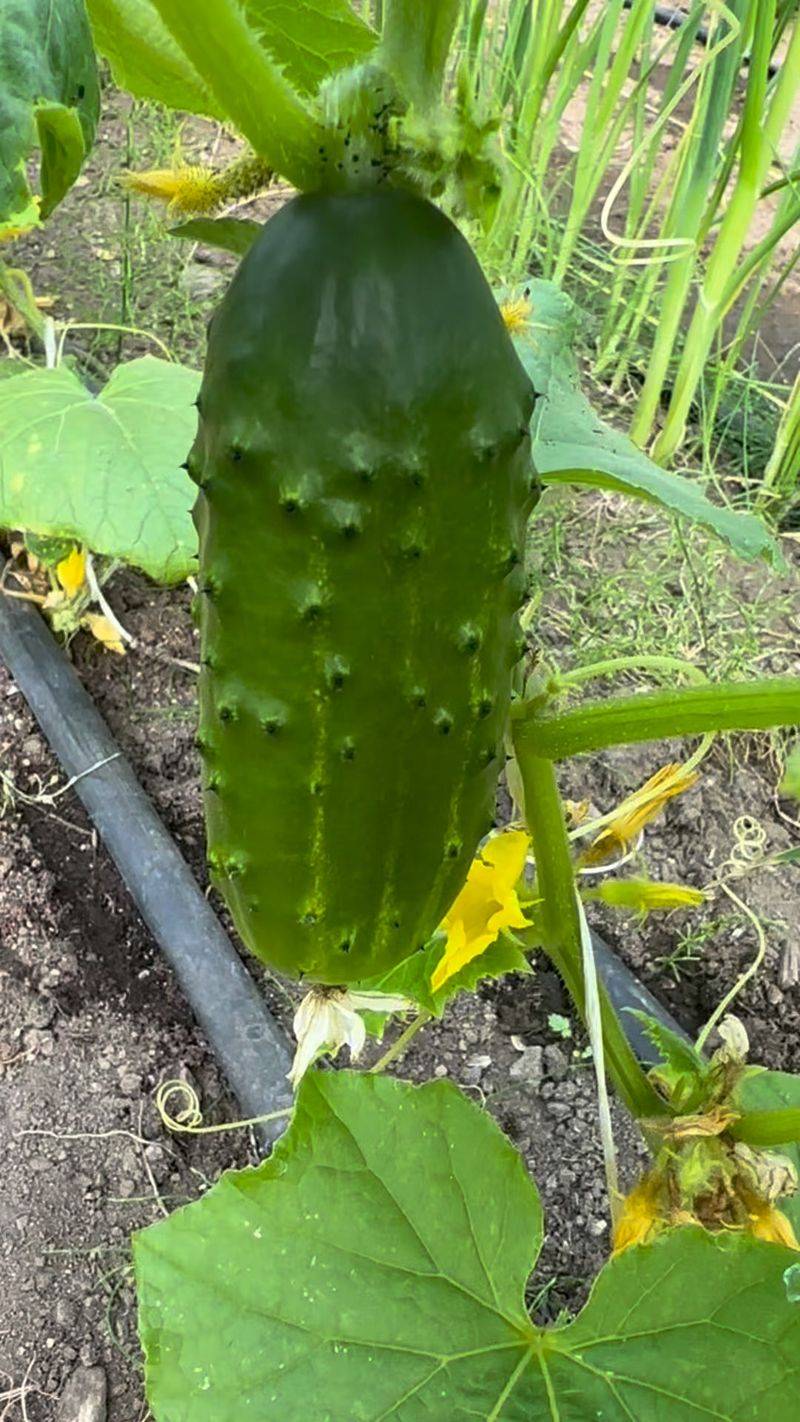
Leaving a severely misshapen or stalled young cucumber on the vine in hopes it will straighten is generally not a productive strategy. Utah State University Extension advises removing badly deformed young fruit rather than waiting, because doing so can redirect the plant’s energy toward new flowers and developing cucumbers that have a better chance of forming normally.
Cut or snip the fruit off cleanly rather than pulling, which can stress the vine.
After removing the problem fruit and improving moisture consistency, pollinator access, or targeted pollination on a standard variety, watch the next round of female flowers and the cucumbers that follow. Iowa State University Extension frames improved conditions as the path to better subsequent fruit rather than a fix for what already formed.
If the next cucumbers develop normally, the changes you made likely addressed the problem. If deformation continues across multiple new fruits, revisit the diagnostic checklist: confirm variety type, check the whole plant for virus symptoms or pest damage, and consider whether moisture or pollination conditions have truly stabilized.
University of Minnesota Extension’s diagnostic guide puts it plainly: incomplete pollination is a leading suspect when the plant otherwise looks healthy, but verifying the variety and inspecting the whole plant before blaming heat alone is the honest starting point. The gardener who asks the right question first tends to pull far fewer nubbins by the end of the season.