
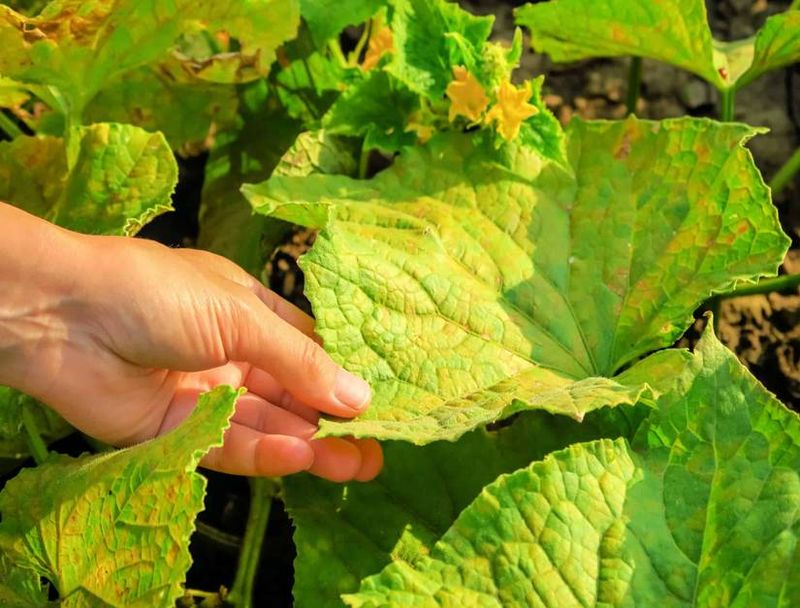
Watching your cucumber vines turn yellow in the middle of summer is genuinely worrying, especially when you feel like you have been watering faithfully. Many gardeners assume the heat is pulling moisture away faster than they can replace it, but the real picture is often more complicated than that. Yellowing can point to a missing nutrient, a pest, a disease, or even the plant’s normal aging – and the pattern of the yellowing matters more than the temperature outside. Knowing what to look for can turn a stressful guessing game into a manageable, step-by-step investigation.
Heat narrows the clues but does not diagnose the cause
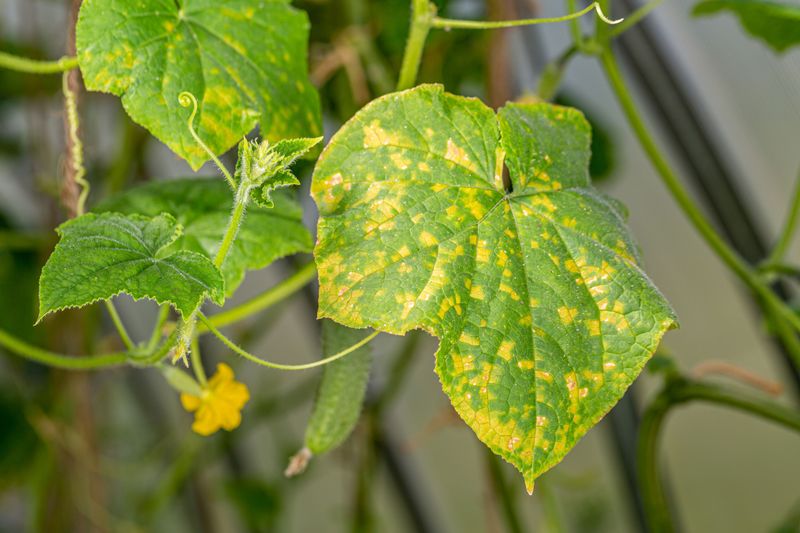
Cucumbers are thirsty plants under the best conditions, and hot, windy summer days push their water needs even higher. Utah State University Extension cucumber care guidance recommends roughly 1-2 inches of water per week, adjusted for plant size and conditions, with deep irrigation and mulch to hold soil moisture between watering sessions. Even gardeners who water on schedule can fall short when temperatures spike, because surface soil can look moist while the root zone runs dry.
Heat does not automatically mean drought, though, and it does not automatically point to a fertilizer problem. University of Minnesota Extension guidance on heat-stressed gardens explains that hot weather can cause wilting, leaf curling, stalled growth, and early leaf decline even when soil moisture seems adequate. Water stress and a nutrient shortfall can also occur at the same time, with drought making it harder for roots to absorb whatever nutrients the soil does contain.
Before assuming any single cause, check root-zone moisture by pushing a finger or a probe several inches into the soil near the base of the vine. Look at your drainage, your mulch layer, and how recently you irrigated. Then consider the leaves themselves: which ones are yellowing, where on the vine they sit, how quickly the problem is spreading, and whether the rest of the plant is growing normally. Leaf age, yellowing pattern, and the plant’s overall vigor will tell you far more than the weather forecast alone.
Older leaves with uniform yellowing and weak growth can suggest nitrogen
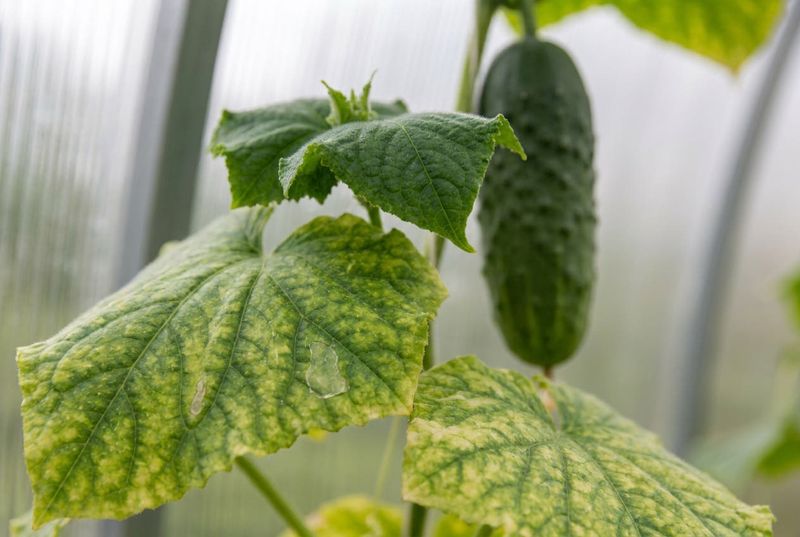
Nitrogen is the nutrient most directly tied to leaf color and growth rate in vegetable plants, which makes it the strongest nutrient suspect when a specific pattern appears: fairly uniform pale yellow-green coloration starting on the oldest, lowest leaves, combined with noticeably slow or weak overall growth. USU Extension nutrient management guidance explains that nitrogen deficiency typically causes pale yellowing and reduced growth, with older leaves affected first because nitrogen is mobile inside the plant and gets redirected toward younger, actively growing tissue when supplies run short.
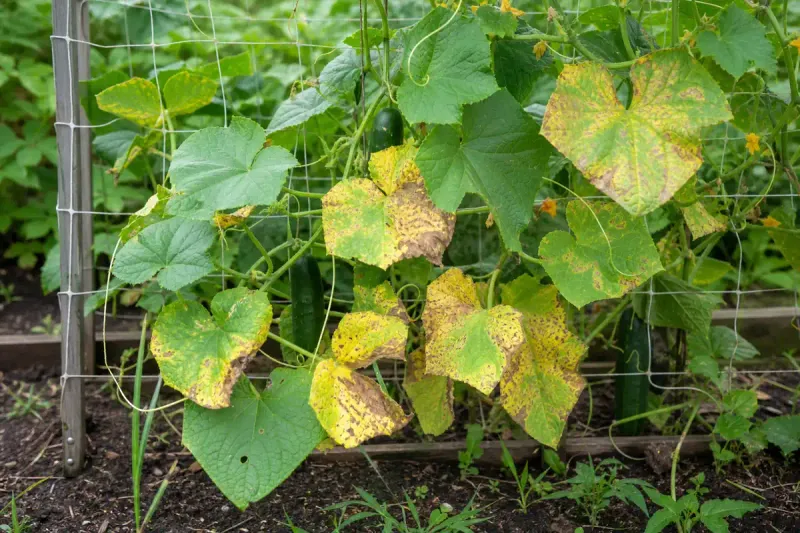
The key phrase there is “when a specific pattern appears.” Whole-leaf fading that begins low on the vine and moves upward, paired with a vine that seems to have stalled or slowed down, fits the nitrogen picture better than scattered yellowing or yellowing that starts at the leaf tips and margins. University of Minnesota Extension’s quick fertilizing guide distinguishes between uniform leaf yellowing – more consistent with nitrogen – and interveinal chlorosis, where tissue between the veins turns yellow while the veins themselves stay green, which points toward different nutrients.
Ask yourself whether the new growth at the top of the vine looks reasonably healthy. If young leaves are still green and the vine is producing, a few yellowing lower leaves may simply reflect normal aging rather than a deficiency. UMN Extension’s coverage of leggy, yellow seedlings reinforces that nitrogen-linked yellowing is a diagnostic tendency worth investigating, not a guaranteed diagnosis on its own. Heat, water stress, root damage, and other disorders can produce a similar appearance, so this pattern should lead you toward verification rather than an immediate trip to the fertilizer aisle.
Leaf age and vein color distinguish possible magnesium and iron problems
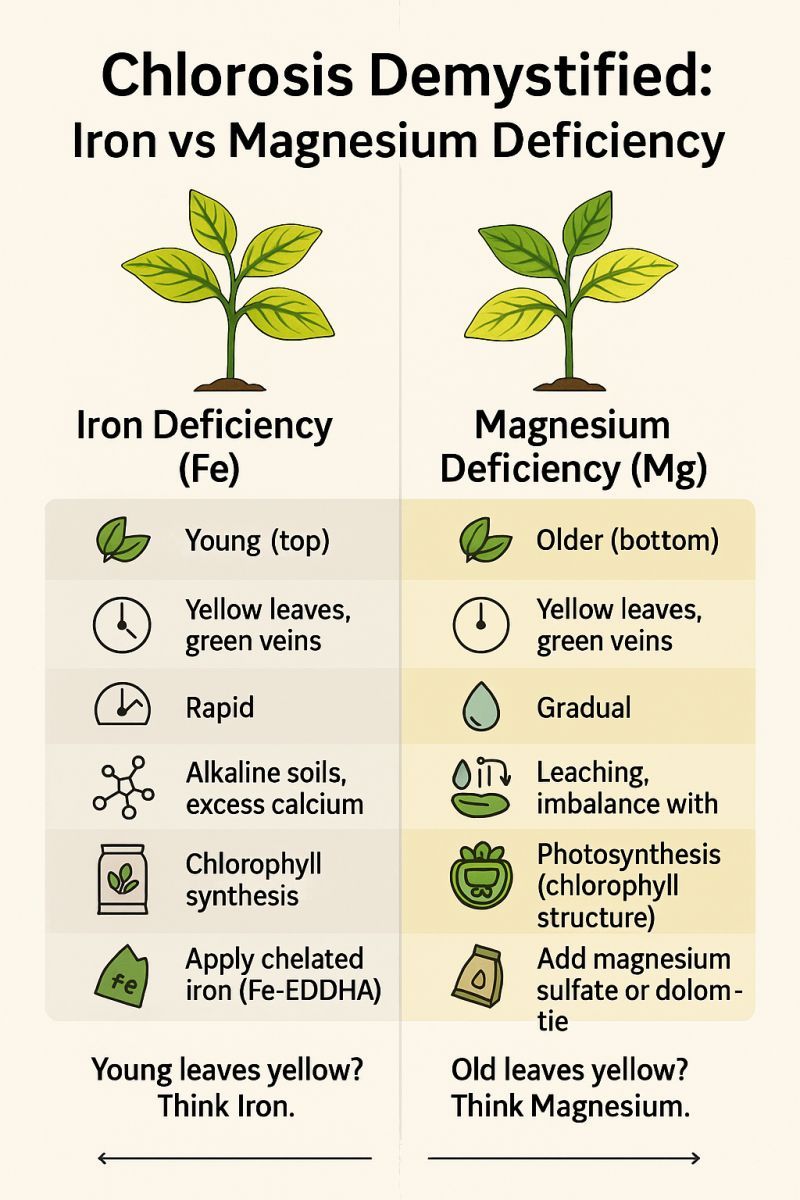
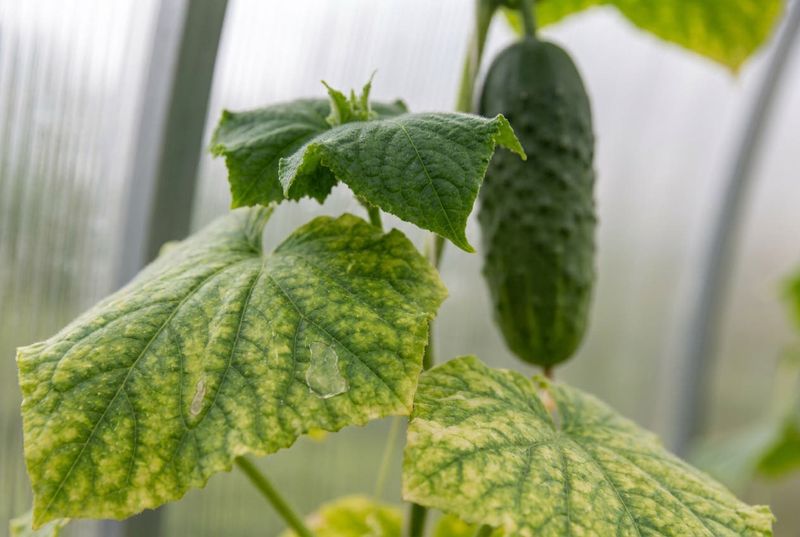
Two other nutrient patterns are worth knowing because they can look enough like nitrogen deficiency to send a gardener in the wrong direction. The first is magnesium deficiency, which tends to show up as yellow tissue between veins that stay noticeably green – a symptom called interveinal chlorosis. University of Kentucky’s VeggieScout resource on magnesium deficiency notes that this pattern typically appears on older leaves first and may be more likely in sandy soils with low pH, or during periods of rapid vine growth and heavy fruit production when the plant’s magnesium demand rises.
The second is iron-related interveinal chlorosis, which follows a similar vein-stays-green pattern but tends to appear on the newest growth rather than the oldest leaves. Iowa State University Extension’s guide to iron deficiency in plants explains that the problem is often an availability issue rather than a simple shortage: high soil pH, excess moisture, and poor root conditions can all prevent a plant from absorbing iron that is physically present in the soil. Texas A&M AgriLife’s cucurbit problem-solver similarly flags iron chlorosis as a condition linked to high pH or waterlogged soils rather than always indicating that iron is absent.
Potassium deficiency deserves a brief mention here because gardeners sometimes wonder whether it explains yellow leaves. UMN Extension’s fertilizing guide notes that potassium problems more often produce browning or scorching along the margins of older leaves than simple uniform yellowing, so it is less likely to be the primary answer for the pattern described in this article. All of these patterns – nitrogen, magnesium, iron, potassium – overlap enough that visual inspection alone cannot guarantee a diagnosis, which is why the next steps matter.
Inspect for pests, disease, roots, and normal aging before adding fertilizer
Reaching for fertilizer before ruling out other causes is one of the most common mistakes gardeners make with yellowing plants. Spider mites are a good example of why. These tiny pests thrive in hot, dry conditions and feed on leaf tissue in a way that creates fine yellow stippling across the leaf surface. University of Minnesota Extension’s cucumber leaf discoloration diagnostic tool lists spider mites and aphids among the pest causes of discolored cucumber foliage.
Flip the leaves over and look closely at the undersides before drawing any conclusions.
Disease can produce patterns that look deceptively similar to nutrient problems. Angular yellow spots bounded by leaf veins, particularly when accompanied by a gray or purple fuzz on the underside of the leaf, are a sign that warrants investigation for downy mildew rather than a fertilizer response. Penn State Extension’s cucurbit downy mildew update and University of Maryland Extension’s common cucumber problems guide both describe this symptom pattern as one that requires a disease-focused response, not a nutrient application.
Powdery mildew, cucumber mosaic virus, bacterial and fungal leaf spots, and root damage from overwatering or physical injury can all produce yellowing as well. USU Extension’s cucumber mosaic virus profile describes the mottled, distorted yellowing that virus infection can cause, which is quite different from the steady fade of a nutrient shortfall. Ask Extension guidance on cucumber yellowing also points out that some lower leaves simply yellow and drop as the vine matures, especially when the canopy thickens and shades them out. A visual checklist cannot definitively rule out pests or diseases, but inspecting carefully before fertilizing can help you distinguish possible pest and disease causes from nutrient-related ones and avoid treating the wrong problem.
Use testing to turn a nutrient clue into a responsible decision

Visual symptoms can point you in a useful direction, but they cannot confirm whether your soil is actually low in nitrogen, magnesium, or iron. A soil test removes much of that guesswork. Penn State Extension’s soil fertility guidance for vegetables recommends testing before making significant fertilizer decisions, because soil pH, drainage, moisture levels, and root health can all affect how well plants absorb nutrients that are physically present in the soil. Applying more of a nutrient that is already adequate, or that the plant cannot absorb because of a pH problem, is unlikely to help and could create new imbalances.
Iron is a clear example of this principle. Even if your soil contains iron, a pH above roughly 6.5 to 7.0 can make it chemically unavailable to plant roots. Correcting pH or improving drainage may do more for an iron-limited plant than adding an iron product. The same logic applies to magnesium and, to a lesser extent, nitrogen: waterlogged or compacted soil, damaged roots, and poor aeration can all restrict uptake.
University of Minnesota Extension’s foliar nutrient testing guide describes tissue or foliar testing as an additional diagnostic option when soil results and visual symptoms do not line up clearly. For most home gardeners, a basic soil test through a cooperative extension service is the most accessible starting point. When you do fertilize, match the product type and application rate to what the test shows and what the label specifies – rather than applying a standard dose and hoping for the best. Penn State Extension’s foliar fertilization guidance cautions that foliar products applied at incorrect concentrations can burn foliage, so label compliance is not optional.
Fix moisture and root conditions before feeding the vine

Correcting moisture and root conditions often matters as much as any fertilizer application, and it should come first in the rescue sequence. Start by confirming that the root zone is actually receiving water at the right depth. Shallow, frequent sprinkling wets the surface but may not reach the root mass, while deep irrigation encourages roots to grow downward and makes the plant more resilient during heat spells. USU Extension’s cucumber care page recommends approximately 1-2 inches of water per week as a starting guideline, with deep root-zone delivery and a layer of mulch to slow evaporation and buffer soil temperature.
Adjust that baseline upward during extreme heat or high winds.
Equally important is making sure the soil drains adequately. Roots sitting in waterlogged soil cannot absorb nutrients effectively, regardless of what the soil test shows. Check for pooling water after irrigation, compacted layers, or heavy clay that holds moisture too long. University of Minnesota Extension’s heat-garden guidance reinforces that poor drainage and heat stress together can compound leaf decline in ways that look a lot like fertilizer deficiency.
If a soil test confirms or strongly supports nitrogen deficiency after moisture and drainage issues have been addressed, apply a nitrogen-containing or complete fertilizer strictly according to the product label. Rates vary by product formulation, soil type, container versus ground planting, and how much nitrogen is already available, so a label-specific dose is far safer than a general recommendation. UMN Extension’s fertilizing guide emphasizes matching fertilizer source and rate to actual soil conditions. Keep in mind that severely yellowed leaves are unlikely to turn green again after treatment – the goal is to stabilize the plant and protect the healthy new growth coming in behind them.
Penn State Extension notes that foliar applications carry burn risk if concentrations are off, so any foliar product should be used only when there is a demonstrated need and full label compliance.
Let the pattern guide the next safe step
A few clear patterns can guide your next move without requiring a definitive diagnosis. Older leaves showing fairly uniform pale yellowing along with weak or stalled vine growth suggest nitrogen as a possibility worth investigating – check moisture first, then consider a soil test before applying anything. UMN Extension’s fertilizing guide and UK’s VeggieScout magnesium resource both describe these patterns as diagnostic tendencies rather than certainties.
Older leaves with yellow tissue between still-green veins point more toward magnesium or a related availability problem. Newer leaves showing that same interveinal pattern suggest iron, often tied to high pH or poor drainage rather than absent iron. Iowa State Extension’s iron deficiency guide and UMN Extension’s cucumber leaf discoloration tool can help you compare your symptoms to documented patterns.
Stippling, angular lesions, fuzzy growth on leaf undersides, or rapid unexplained decline all require a pest or disease investigation rather than a fertilizer response. Include heat, water supply, drainage, and normal vine aging in every assessment. Ask Extension guidance cautions against Epsom salt as a catch-all remedy and reinforces that soil testing is the responsible foundation for any significant nutrient application. The goal is never to force a yellow leaf back to green – it is to find the real cause and give the healthy growth behind it a fair chance.