
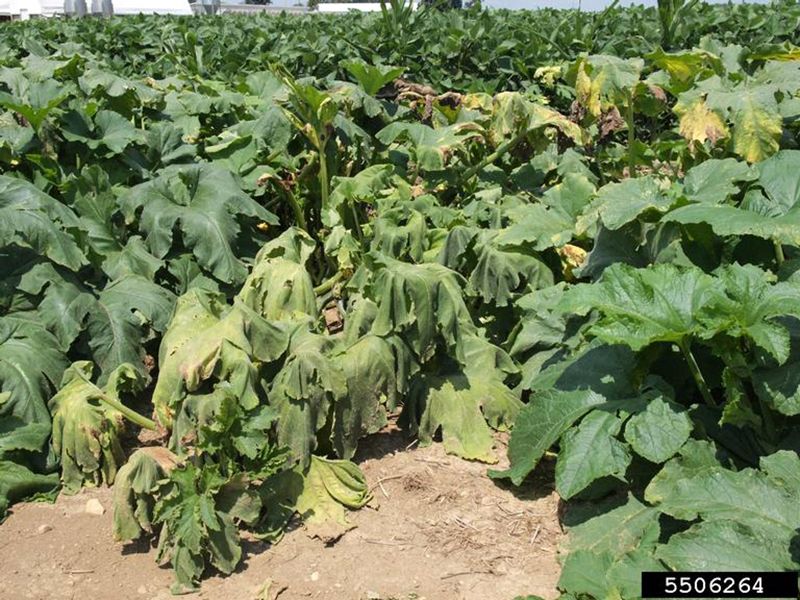
Walking out to your garden and finding a cucumber vine flat on the ground, when it looked perfectly fine the night before, is one of the more unsettling moments a home gardener can have. The instinct is to blame something dramatic happening inside the stem, but the real cause could be anything from dry soil to a beetle-spread disease working its way through the plant’s plumbing. Getting the right answer matters because the fix for heat stress looks nothing like the response to bacterial wilt. A quick, step-by-step inspection is the fastest way to know what you are actually dealing with.
Overnight collapse calls for inspection, not a diagnosis
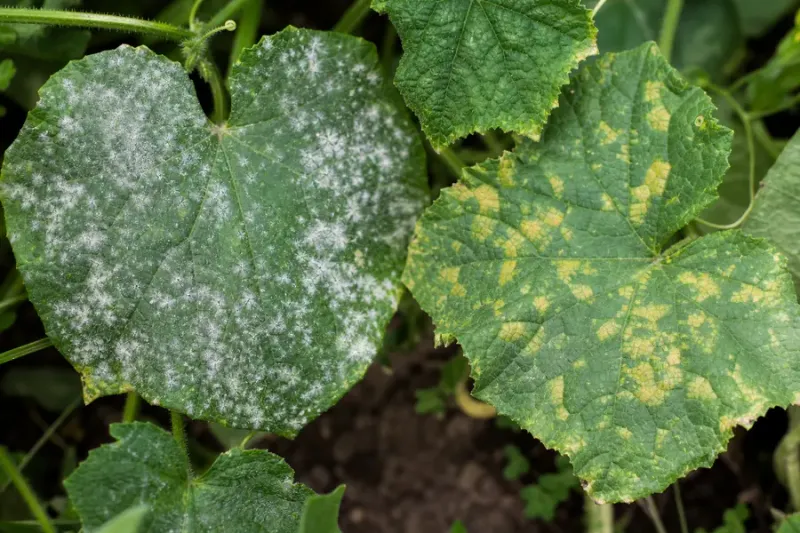
A cucumber plant can spend all day looking vigorous and still be flat by the next morning, and that timing alone tells you very little about what caused it. What actually happens is that a developing problem, whether disease, stress, or pest damage, quietly disrupts water movement until the plant can no longer hold itself upright. The collapse feels sudden, but the underlying trouble has usually been building for days.
Timing does not narrow the cause. University of Minnesota’s cucumber wilt diagnostic tool lists heat stress, bacterial wilt, squash bugs, root diseases, and other wilts as possibilities worth working through in order. The season of the year does not rule any of them in or out on its own.
For a cucumber specifically, bacterial wilt deserves earlier attention than squash vine borer. The common squash vine borer is primarily a threat to zucchini, summer squash, and pumpkins, and University of Minnesota Extension notes that cucumber is a relatively poor host. A useful inspection sequence is: check soil moisture, look at the crown and lower stem, make a fresh cut in a runner and watch for bacterial ooze, then search for cucumber beetles on and around the plant.
Check moisture and weather before cutting the plant
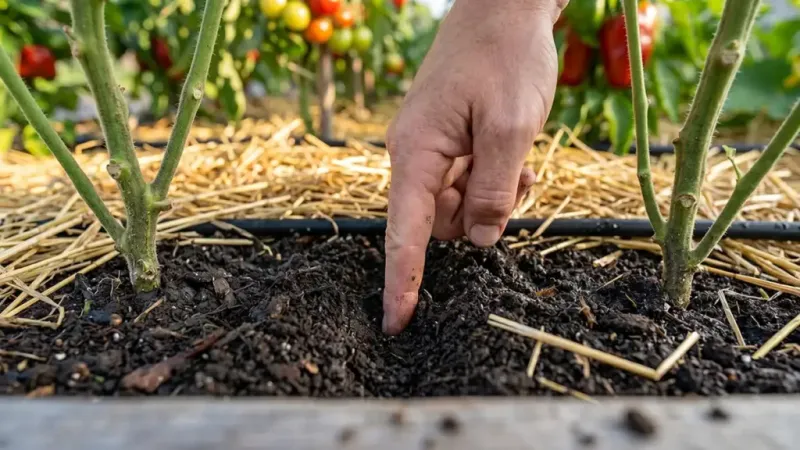
Before reaching for a knife or pulling the plant, spend two minutes checking the basics. Push a finger two inches into the soil near the root zone. Dry, crumbly soil after a stretch of hot weather is a strong signal that ordinary drought stress may be the culprit, not disease.
Cucumbers are shallow-rooted and lose water quickly through their large leaves. UC IPM’s cucumber growing guidance points out that water stress can cause wilting and also reduce fruit quality, so consistent moisture matters throughout the season. A plant that wilted during peak afternoon heat and then perked back up by the following morning is showing normal stress behavior, not disease.
The plant that warrants closer investigation is one that is still limp well after sunrise, after a night that cooled down normally, and after the soil checks out as adequately moist. Also think back on recent weather: an unusually hot night, a sudden dry spell, or a few days of neglected watering can produce dramatic wilt that looks alarming but recovers with a good drink. Do not remove a plant solely because it wilted once during a heat spike. Confirm that it stayed down through the cool of the night before moving to the next diagnostic step.
Bacterial wilt deserves first suspicion on cucumber
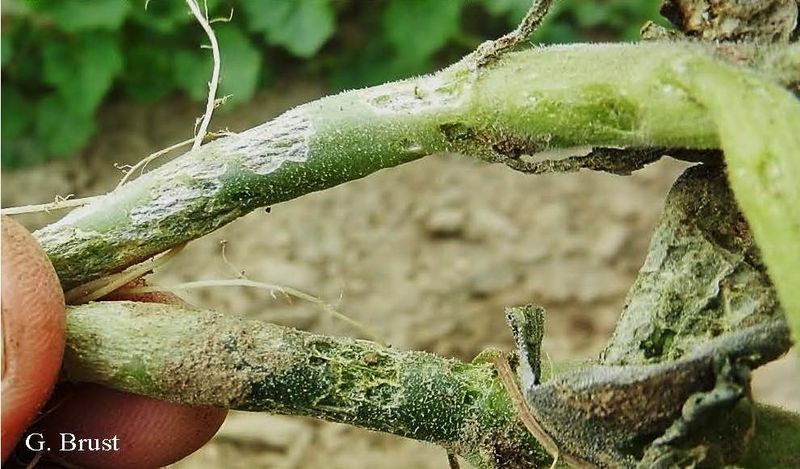
Bacterial wilt is caused by Erwinia tracheiphila, a bacterium that travels from plant to plant through the feeding wounds of striped and spotted cucumber beetles. Once inside, it multiplies inside the water-conducting vessels and physically blocks the flow of water and nutrients up the stem. The plant starves for water even when the soil is moist.
University of Minnesota Extension’s bacterial wilt guide describes the typical progression: a plant may wilt during the warmth of the day and seem to partially recover overnight, then one runner stays down, then another, until the whole vine collapses. That pattern of partial nighttime recovery followed by permanent decline explains why the final crash can look sudden even though the disease has been advancing for days.
Cucumber and muskmelon are significantly more susceptible to bacterial wilt than squash or pumpkins, which is one reason the disease rises to the top of the suspect list on a cucumber. The bacterium works entirely within the vascular system, so it disrupts the stem from the inside without any borer tunneling into the plant. University of Illinois Extension’s cucurbit bacterial wilt page confirms there is no curative treatment once a plant is infected, making early identification the most valuable step a gardener can take.
Inspect the crown for evidence of a squash vine borer
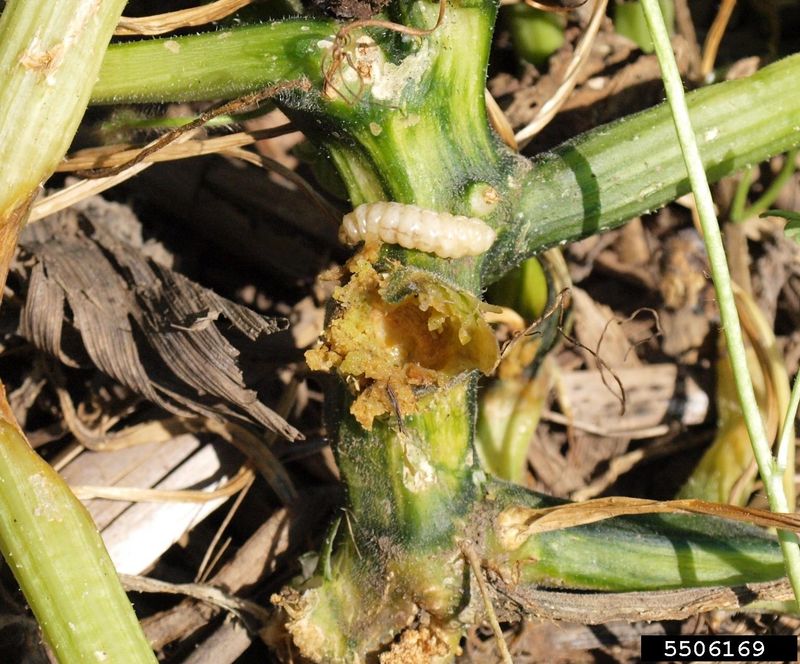
Kneel down and look closely at the lowest inch of the stem where it meets the soil. A squash vine borer leaves a distinctive calling card: a small entry hole, often surrounded by wet, greenish or orange sawdust-like material called frass. In some cases the crown itself feels soft or mushy when you press it gently.
Those signs matter a great deal on zucchini, summer squash, pumpkins, and some winter squash, because the common squash vine borer, Melittia cucurbitae, is primarily a pest of those crops. University of Minnesota Extension’s squash vine borer page and University of Florida IFAS guidance on the pest both identify cucumber as a relatively poor or minor host compared with squash and pumpkins. The University of Illinois plant problem database similarly notes that squash vine borer damage on cucumber is uncommon.
If your collapsed plant is a cucumber and the crown looks clean, with no entry hole and no frass, a squash vine borer is an unlikely explanation. A clean stem does not prove bacterial wilt by itself, but it does let you move confidently to the vascular check in the next step. Save the borer investigation for any squash or pumpkin plants growing nearby, where the pest is far more at home.
Use the stem check and beetle search as supporting evidence
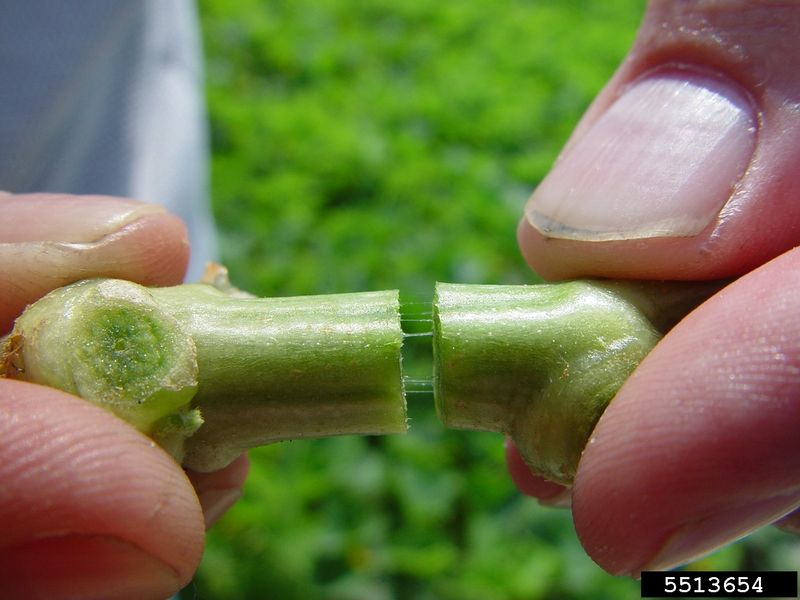
Once you have ruled out dry soil and found no borer evidence at the crown, a fresh stem cut can give you more information. Choose a runner that is still wilted and make a clean cut about an inch from where it meets the main stem. Press the two cut surfaces firmly together for a few seconds, then pull them apart slowly and steadily.
If thin, thread-like strands of bacterial ooze stretch between the halves as you separate them, that is a positive result that supports bacterial wilt. University of Illinois Extension’s bacterial wilt resource describes this streaming test as a useful field check, and the University of Minnesota notes that a negative result does not rule out the disease. The ooze is not always visible even in infected plants, and a laboratory submission is the only way to confirm the diagnosis with confidence.
While you have the plant in front of you, take a few minutes to search for cucumber beetles. These are small, yellowish insects with either bold black stripes or black spots. UC IPM’s cucumber beetle page explains that both the striped and spotted species transmit bacterial wilt through their feeding. University of Minnesota’s vegetable IPM blog notes that beetles may have moved on by the time wilt becomes obvious, so their absence does not clear them as the source of the problem.
Check the undersides of leaves and the base of the plant, and look at any nearby cucurbits as well.
If bacterial wilt is strongly suspected, remove the plant
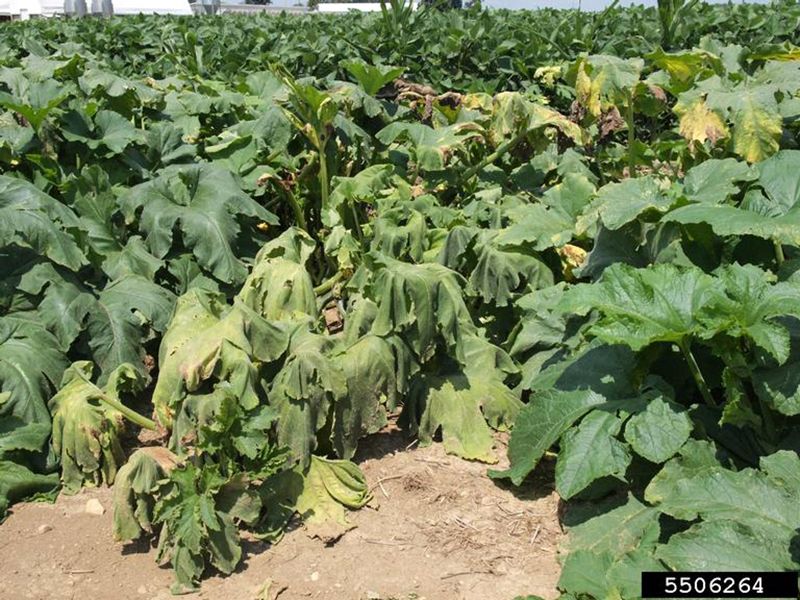
When the inspection points clearly toward bacterial wilt, the most protective action is removal. Pull the entire plant, roots and all, and bag it or take it directly to a municipal yard waste bin. Do not compost it, and do not leave it lying in the garden bed.
University of Minnesota Extension’s bacterial wilt management page states plainly that no treatment cures a plant already infected with Erwinia tracheiphila. Adding extra water, fertilizer, hydrogen peroxide, bleach, dish soap, or any fungicide will not reverse the vascular blockage. Utah State University Extension’s bacterial wilt notes reinforce that removal reduces the chance for cucumber beetles on or near the sick plant to pick up the bacterium and carry it to healthy vines.
After removing the plant, walk the rest of your cucurbit bed carefully. Check every cucumber, melon, squash, and pumpkin for early wilt symptoms and for beetles actively feeding. A plant that is just beginning to wilt during the day but recovering at night may be in the early stages of infection. Catching those plants while the disease is still progressing gives you the best window to make an informed decision about removal before more beetles can feed on infected tissue and spread the pathogen further.
Protect nearby cucumbers from cucumber beetles
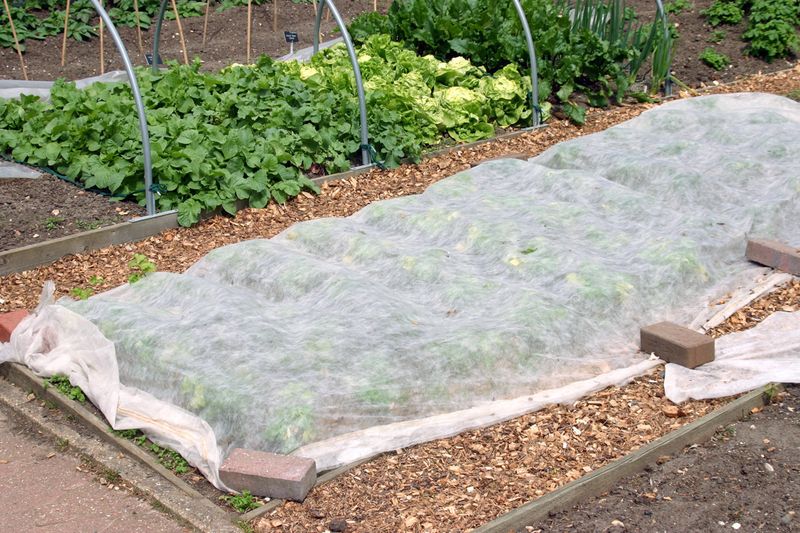
With a sick plant removed, the goal shifts to the cucumbers still standing. Floating row covers placed over young transplants at planting time create a physical barrier that keeps cucumber beetles off the foliage entirely. Iowa State University Extension’s cucumber beetle FAQ recommends row covers as a reliable non-chemical option for reducing early beetle pressure.
The critical step is removing covers as soon as flowers begin to open. Bees must reach the blossoms for cucumbers to set fruit, and a cover that stays on through bloom will cut your harvest. Penn State Extension’s organic cucurbit production guide also notes that resistant or tolerant cucumber varieties can reduce risk, though no variety offers complete immunity. Choosing a less-susceptible variety is a reasonable layer of protection, not a guarantee.
Garden hygiene helps too. Clear spent cucurbit vines and debris at the end of the season rather than leaving them in the bed, since old plant material can harbor beetles and other pests over winter. Manage weeds around the planting area, as dense weed cover can provide shelter and alternate habitat. UC IPM’s cucumber beetle overview supports both cultural steps.
If you consider a labeled insecticide for beetle management on healthy plants, EPA guidance on reading pesticide labels requires using only a product labeled for the specific pest and crop, and EPA pollinator protection labeling rules prohibit many applications while bees are actively foraging on open flowers.
Keep squash vine borer advice on squash and pumpkins
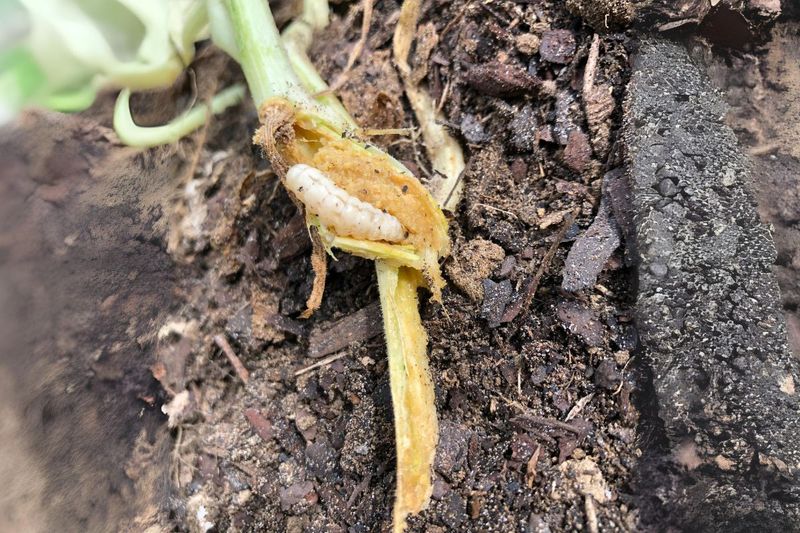
If the wilted plant in your garden turns out to be a squash or pumpkin rather than a cucumber, and the crown shows a clear entry hole with frass, you are likely dealing with a squash vine borer larva. The management options are limited once larvae are inside, but understanding them helps you act quickly.
University of Minnesota Extension’s squash vine borer resource explains that insecticides work best as a preventive measure, applied to the stem before larvae enter. After entry, sprays cannot reach the larvae feeding inside. University of Illinois Extension’s Good Growing blog mentions that some gardeners carefully slit the stem lengthwise to locate and remove the larva, but cautions that this technique can injure the plant further and does not offer a reliable rescue.
Virginia Cooperative Extension’s cucurbit pest guide also covers borer management on susceptible squash crops. None of this advice transfers automatically to a cucumber. Unless you have confirmed that a squash vine borer larva is actually present in a cucumber stem, treating it as a borer problem risks missing the real cause and delaying the right response.
Follow the evidence instead of the headline
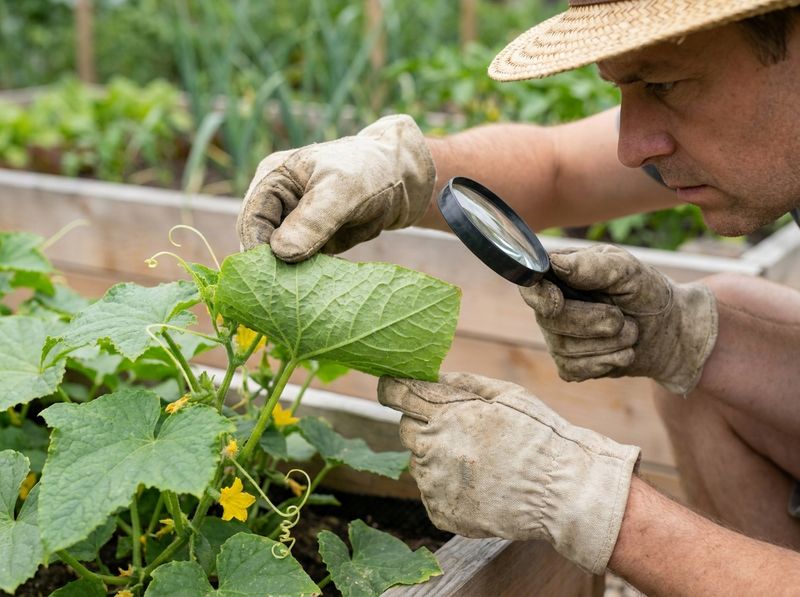
A wilted cucumber vine deserves a methodical look, not an automatic conclusion. Start with soil moisture and recent weather. Move to the crown for borer signs. Cut a runner and watch for bacterial streaming.
Scan the plant and the surrounding bed for striped or spotted cucumber beetles.
University of Minnesota Extension and UC IPM both support this sequence as the practical path to a defensible answer. Remove the plant only when the evidence points strongly toward bacterial wilt, not because the timing felt suspicious or the collapse seemed dramatic.
If chemical control ever enters the picture for managing beetles on healthy plants, reading the pesticide label completely is a legal requirement and a safety necessity – follow all reentry, harvest-interval, and pollinator precautions listed there. A cucumber that collapses overnight is asking you to look closely, not act fast. The gardeners who find the right answer are usually the ones who check the soil before they reach for anything else.