
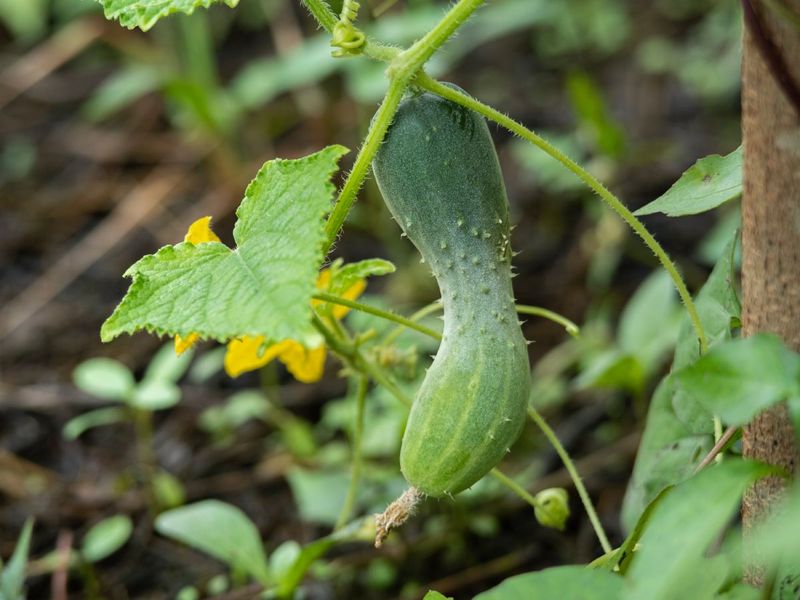
Pulling a hooked or curled cucumber off the vine is one of those gardening moments that makes you wonder what went wrong. The good news is that misshapen cucumbers rarely mean your plant has given up. Two problems show up most often as the cause: incomplete pollination during the brief window when flowers are open, and uneven soil moisture during fruit development. Sorting out which one is at work, or whether both are playing a role, takes a few quick observations that any gardener can make.
A crooked cucumber has more than one possible cause
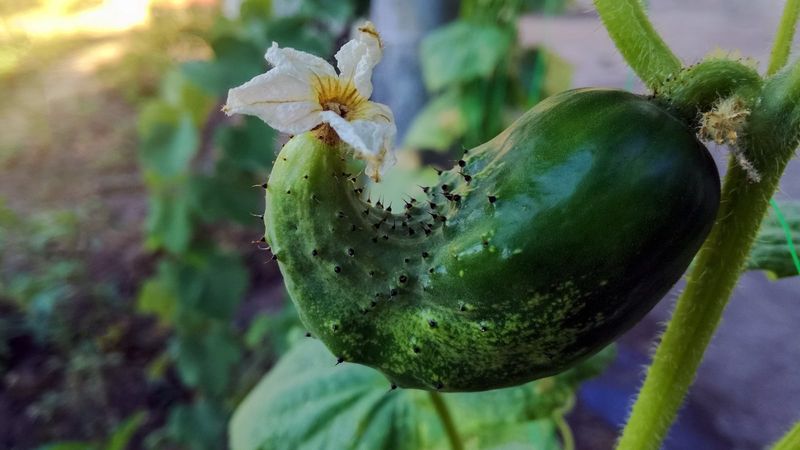
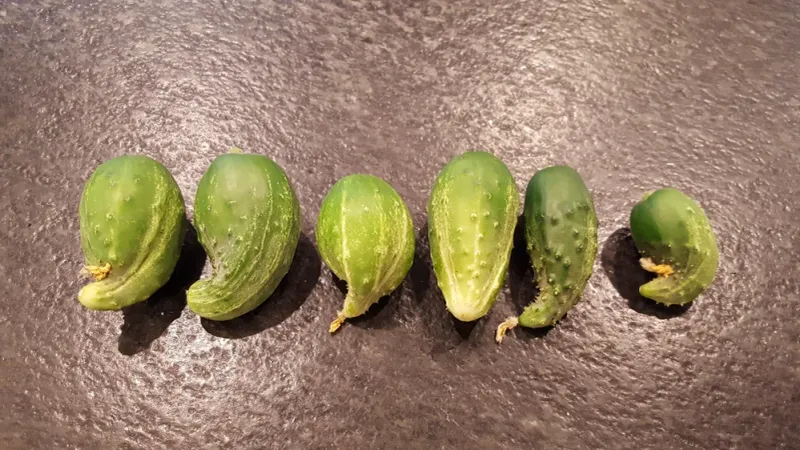
Misshapen cucumbers go by a lot of descriptions: hooked, curled, nubbed, one-sided, or what growers sometimes call “dogbone” shaped, where both ends are wide and the middle pinches in. All of those terms describe visible symptoms, not a single root cause. Sorting out what actually happened requires looking at three things in parallel: your cultivar type, your flowers and pollinator access, and your soil moisture.
Incomplete pollination is a well-known explanation for uneven fruit development. Iowa State University Extension notes that when pollen transfer is insufficient, a cucumber may enlarge unevenly, develop nubs, or abort before reaching full size. The seed development inside the fruit drives expansion, so parts of the fruit with fewer seeds may stay narrow or underdeveloped.
Inconsistent soil moisture is the other major player. Repeated dry-and-wet swings during flowering and fruit set can distort growth in ways that look almost identical to a pollination problem. Oklahoma State University Extension lists both pollination gaps and moisture stress among the common reasons cucumbers develop irregular shapes. Starting with both checks, rather than assuming one cause, puts you in a much better position to actually fix the problem.
Read the flowers during the morning window
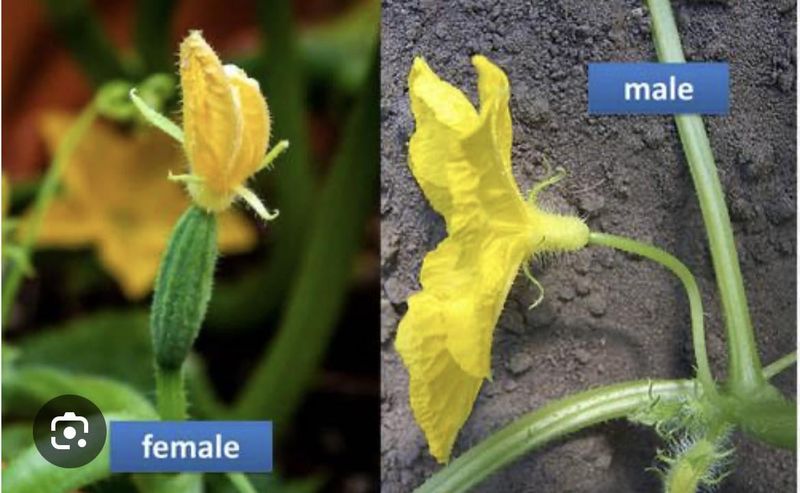
Cucumber plants produce two distinct flower types on the same vine, and knowing which is which is the first step in evaluating your pollination situation. Female flowers carry a small, immature cucumber-like swelling directly behind the petals, sometimes called the ovary. Male flowers attach to a plain stem with no such swelling. Both types need to be open at the same time for pollination to occur.
Bees and other insects must physically move pollen from a male flower’s stamen to the sticky center, called the stigma, of a female flower. Georgia Cooperative Extension guidance on vegetable crop pollination explains that cucumber flowers are receptive for only a limited period, generally a few hours in the morning. Once that window closes, the opportunity for that flower is gone.
Watching your plants during that morning window gives you real information. Penn State Extension’s cucumber pollination guidance points to low bee activity, recent pesticide applications, repeated rain during bloom, or very hot conditions as factors that make incomplete pollination more plausible. None of these observations is conclusive on its own, but if you step outside on a warm morning and see almost no bee visits to open flowers, that is a meaningful clue worth acting on.
August heat shifts several risks at once
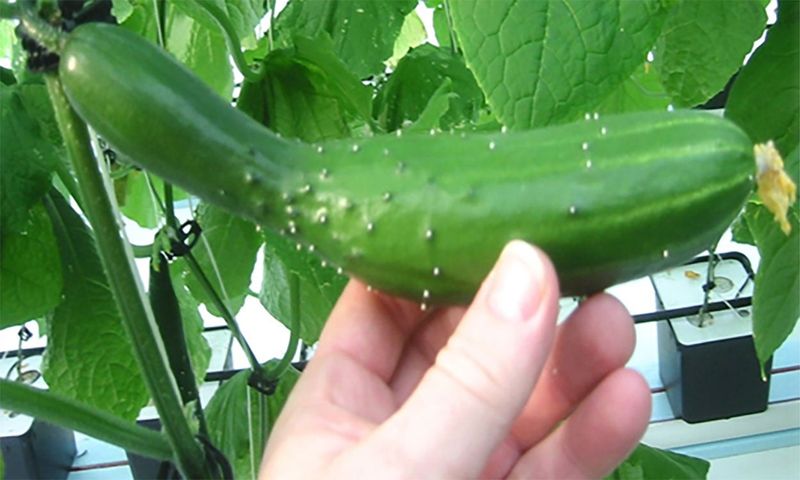
Hot August weather does not automatically ruin cucumber pollination, but it does stack several risks on top of each other in ways that matter. Bee activity tends to drop when temperatures climb into uncomfortable ranges, which means fewer insects visiting flowers during the already-brief morning receptive period. University of Minnesota Extension’s overview of heat effects on vegetable gardens describes how very hot conditions can reduce pollinator visits, damage pollen viability, and trigger flower abortion in cucurbits.
These are related but distinct mechanisms. A bee that stays in its hive during a heat spike is a pollinator-access problem. Pollen that loses viability before transfer happens is a pollen-quality problem. A flower that drops before it fully opens is a flower-set problem.
Each one can contribute to misshapen fruit, but they call for different observations and sometimes different responses.
Heat also increases how fast the soil dries out, which means moisture stress becomes more likely at the same time pollinator activity dips. That overlap is exactly why August cucumbers so often end up crooked: multiple risk factors converge at once. Rather than blaming temperature alone, treat a heat wave as a prompt to check your flowers, your bee activity, and your soil moisture in sequence, because any of the three, or a combination, may be driving the problem.
Check soil moisture before changing the schedule
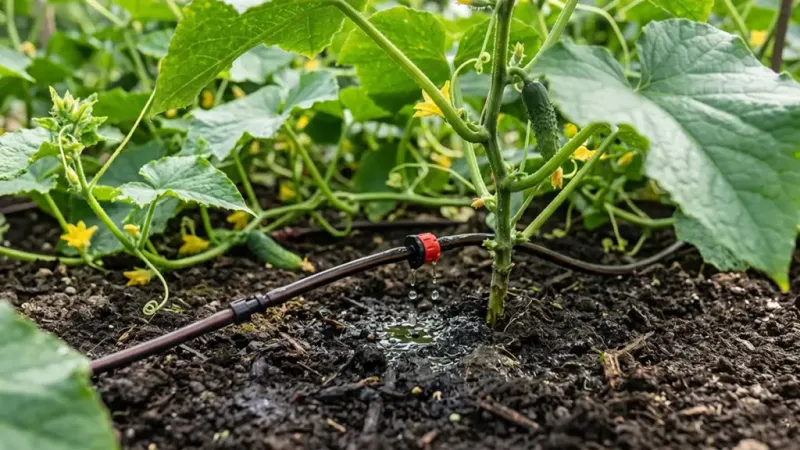
Afternoon wilt is one of the most misleading signals in a summer vegetable garden. When temperatures peak in the early afternoon, cucumber plants sometimes droop even when the soil holds plenty of moisture. University of Minnesota Extension’s vegetable garden watering guidance recommends checking the soil several inches below the surface rather than relying on leaf appearance alone, because temporary afternoon wilt can occur when root-zone moisture is still adequate. If the soil feels dry at that depth, irrigation is warranted; if it still feels cool and slightly damp, waiting until morning to reassess is the better call.
Repeated swings between bone-dry and waterlogged conditions are what cause the most fruit damage. University of Minnesota Extension’s cucumber growing guide recommends deep, soil-level watering with a drip system or soaker hose rather than frequent shallow applications. Mulch laid two to three inches thick around the base of the plant slows evaporation, moderates soil temperature, and helps buffer the wet-dry swings that distort developing fruit.
Utah State University Extension’s vegetable water recommendations suggest roughly one to two inches of water per week as a general reference, but that figure should be adjusted for rainfall, soil type, container versus in-ground planting, plant size, and how heavy the fruit load is. The goal is reasonably consistent moisture at the root zone, not a rigid daily or weekly schedule applied regardless of conditions.
Check the cultivar before adding pollination help
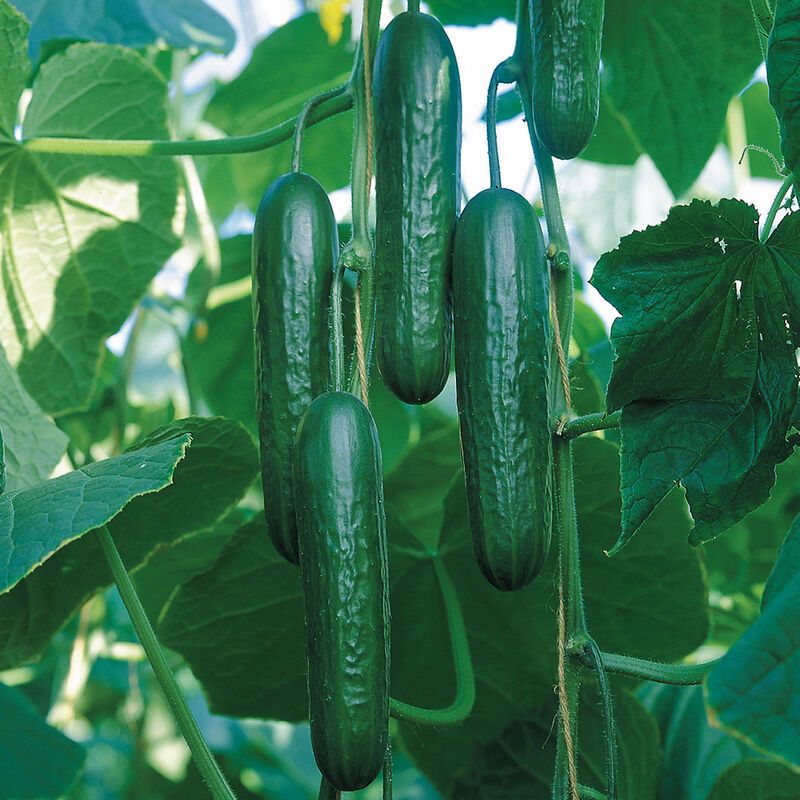
Before you start attracting more bees or practicing hand pollination, check your seed packet or cultivar description. Cucumber varieties fall into a few distinct categories, and the right response to misshapen fruit depends on which type you are growing.
Standard field cucumbers produce both male and female flowers and rely on insects to move pollen between them. These are the varieties where a pollination gap is a real possibility. Parthenocarpic varieties, which are common in greenhouse and high-tunnel production but increasingly available to home gardeners, set fruit without any pollination at all. Penn State Extension’s high-tunnel cucumber guide explains that parthenocarpic plants are specifically bred to develop fruit without fertilization, and that open-pollination of these varieties can actually produce seeded, bitter, curved, or otherwise misshapen fruit.
If you are growing a parthenocarpic type and trying to fix crooked cucumbers by inviting more bees, you may be making the problem worse.
Gynoecious varieties are a third category, producing mostly or all female flowers. They may require a pollenizer plant nearby to supply pollen, unless the variety is also parthenocarpic. Reading the seed description takes about thirty seconds and can save you a lot of unnecessary troubleshooting. If you no longer have the packet, a quick search of the variety name usually turns up the relevant details.
Improve the next crop of fruit
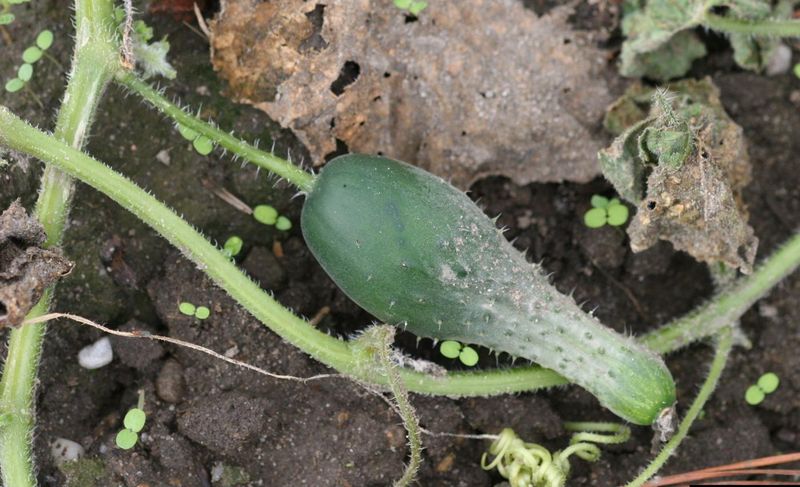
Once a cucumber has developed unevenly, that shape is fixed. Fruit that is already hooked, curled, or nubbed will not straighten as it continues to grow. Iowa State University Extension recommends removing severely misshapen cucumbers from the vine rather than leaving them to mature. Keeping deformed fruit on the plant diverts energy that could support better-formed cucumbers developing behind it.
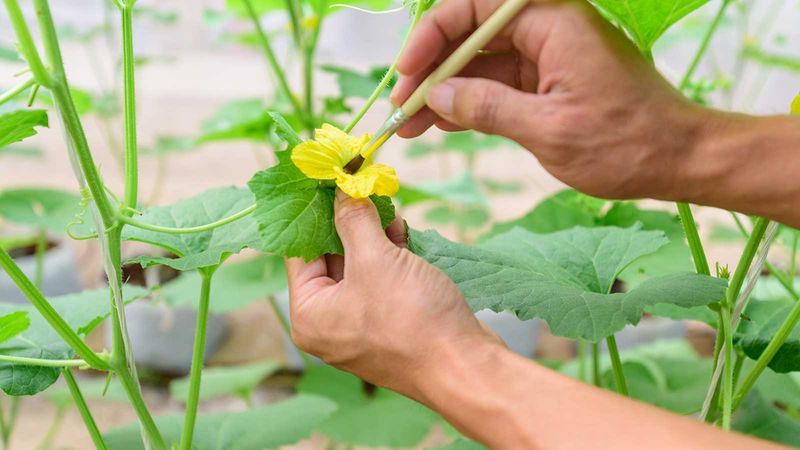
For the next wave of flowers, hand pollination is a practical option if your observations suggest that bee visits are infrequent and your variety is a standard field type, not parthenocarpic. Illinois Extension’s seed-saving guide describes the basic technique: use a small, clean paintbrush or a cotton swab to collect pollen from the stamen of an open male flower, then gently dab it onto the stigma at the center of an open female flower. Both flowers need to be open at the time, so plan to work in the morning during the receptive window.
Hand pollination is not a guaranteed fix, and it will not compensate for severe heat damage to pollen or a parthenocarpic variety that does not need the help. Think of it as a reasonable backup when you have watched the flowers, confirmed low bee activity, and identified your cultivar as one that depends on insect transfer. Used in the right situation, it gives developing fruit a better start.
Protect pollinators while flowers are open
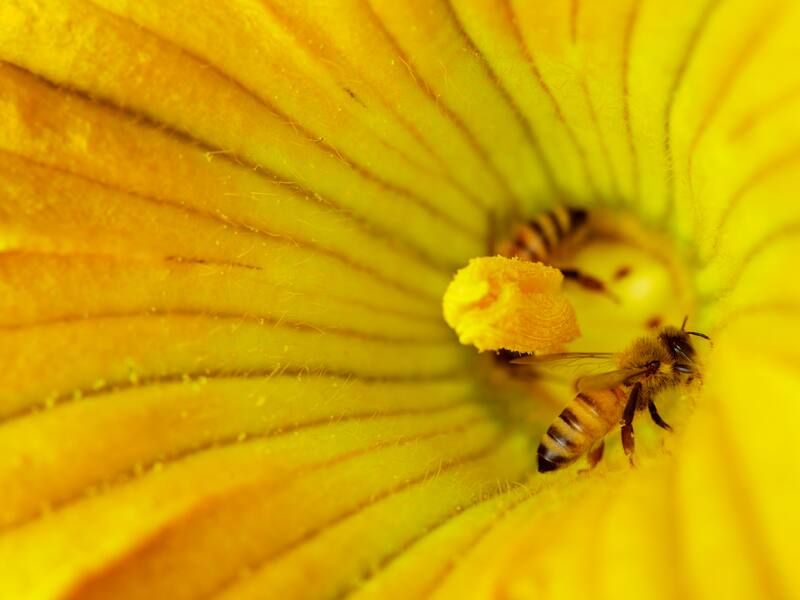
Row covers are a useful tool for managing cucumber beetles and moderating temperature, but they block bee access completely while they are in place. University of Minnesota Extension’s cucumber beetle guidance notes that row covers generally need to come off once flowering begins so that pollinators can reach the flowers. Leaving them on through the bloom period is a straightforward way to cause the very pollination gaps that lead to misshapen fruit.
Pesticides are another factor worth examining carefully. Penn State Extension’s cucumber pollination resource identifies insecticide use near blooming plants as a contributor to reduced pollination. Some products kill or repel bees directly; others leave residues that persist on flowers after application. The pesticide label is the controlling document for every application, specifying the crop, timing, bee-protection requirements, and pre-harvest intervals that apply to that product.
General timing advice, such as spraying early in the morning before bees are active, can be useful context, but it does not override the label’s specific instructions. EPA pollinator protection guidance and the EPA’s read-the-label resources both emphasize that some products prohibit application during bloom or while bees are foraging, regardless of time of day. Reading the label before each use is the only way to know which restrictions apply to what you are spraying.
Skip the common wrong fixes
One of the most persistent myths in cucumber troubleshooting is that nearby squash, pumpkins, melons, or watermelons are causing the fruit to grow crooked or taste bitter through cross-pollination. Oklahoma State University Extension clarifies that crosses between these species, where they are even biologically possible, affect saved seed and the following generation, not the current fruit on your vine. This season’s cucumbers will not change shape or flavor because of what is growing in the next bed.
Calcium supplements, eggshells, and general fertilizer applications are also commonly suggested as remedies for misshapen cucumbers. Colorado State University Extension’s vegetable troubleshooting resource does not support indiscriminate nutrient additions as a fix for pollination-related deformity. Adding fertilizer without a soil test can create new imbalances and will not address a problem rooted in flower access or moisture swings.
When the main checks for cultivar type, flower and pollinator access, and soil moisture do not explain what you are seeing, a secondary list is worth working through. University of Missouri Extension’s cucumber overview identifies disease, insect feeding injury, mechanical damage from tools or trellising, cold snaps during early fruit set, low soil fertility, excessive nitrogen, and cultivar characteristics as additional possibilities. These are less common explanations, but they are real ones when the primary checks come up empty.
Use a parallel check for the next harvest
A practical troubleshooting sequence for the next flush of cucumbers looks like this: confirm your cultivar type from the seed packet, then step outside during the morning flowering window to watch for open male and female flowers and observe how many bees are visiting. Examine the soil several inches below the surface to assess moisture, not just the leaf appearance in afternoon heat. Penn State Extension and University of Minnesota Extension both support stabilizing soil moisture and protecting pollinator access as the two most actionable steps for improving future fruit.
Hand-pollinate only if the variety is a standard field type and bee visits appear genuinely sparse. Iowa State University Extension confirms that already-crooked cucumbers will not straighten, but correcting the underlying pollination or moisture problem can meaningfully improve the cucumbers that set after you make the fix. Misshapen fruit is usually a quality and appearance concern rather than a food-safety one; fruit that is simply curved but otherwise firm and free of rot, disease lesions, or significant insect damage is generally still worth eating. The plant is not failing – it is telling you something specific, and now you know how to listen.