
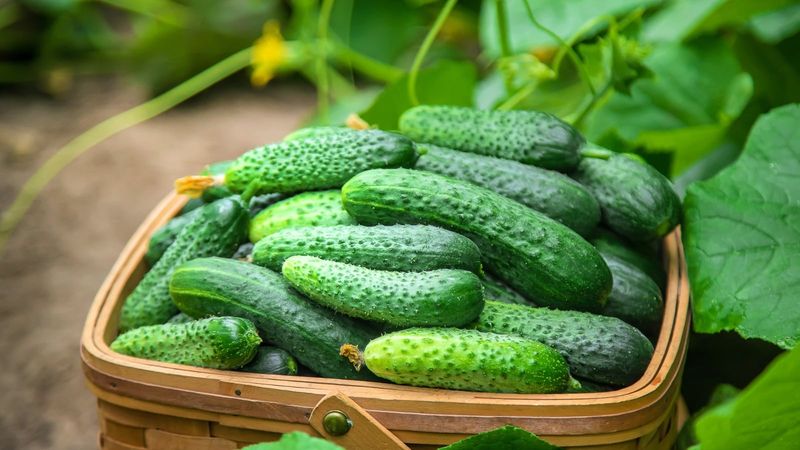
Biting into a cucumber you grew yourself and finding it sharp and unpalatable is genuinely frustrating, especially in August when the plants look healthy and productive. Many gardeners blame the variety, the heat, or even nearby plants, but one fixable habit, letting the soil swing from bone dry to soaking wet, can contribute to the problem. The good news is that understanding why bitterness develops gives you real steps to improve the cucumbers still forming on your vines. Watering is often part of the story, but it is rarely the whole story.
Bitter cucumbers contain a natural defense compound
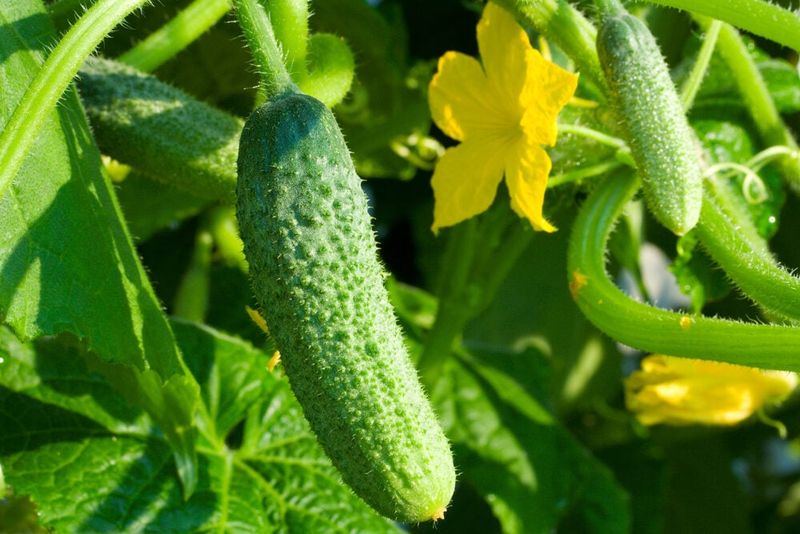
Cucumbers taste bitter because of natural compounds called cucurbitacins, and the one most responsible for that sharp, unpleasant flavor in cucumber fruit is cucurbitacin C. These compounds exist in all cucurbits, the plant family that includes cucumbers, squash, melons, and gourds, and they originally evolved as a defense against insects and other herbivores. When you bite into a cucumber and the back of your throat puckers, cucurbitacins are the reason.
Modern cultivated cucumber varieties have been selectively bred over generations to keep cucurbitacin levels very low in the fruit. Published research on cucurbitacin biosynthesis confirms that specific fruit-bitterness genes regulate whether cucurbitacin accumulates in the edible portion of the plant. That genetic layer matters because it means two plants growing side by side in identical conditions can respond very differently to the same stress.
A bitter harvest does not automatically point to a watering problem. University of Minnesota Extension guidance on growing cucumbers notes that genetics and variety play a meaningful role in how readily a plant expresses bitterness when conditions get difficult. Environmental stress, including drought, heat, and poor nutrition, can push a plant toward higher cucurbitacin expression, but the variety you planted sets the baseline. A variety with strong low-bitterness genetics is simply less likely to turn unpalatable under pressure than one with weaker fruit-bitterness gene expression.
Uneven moisture can amplify August stress
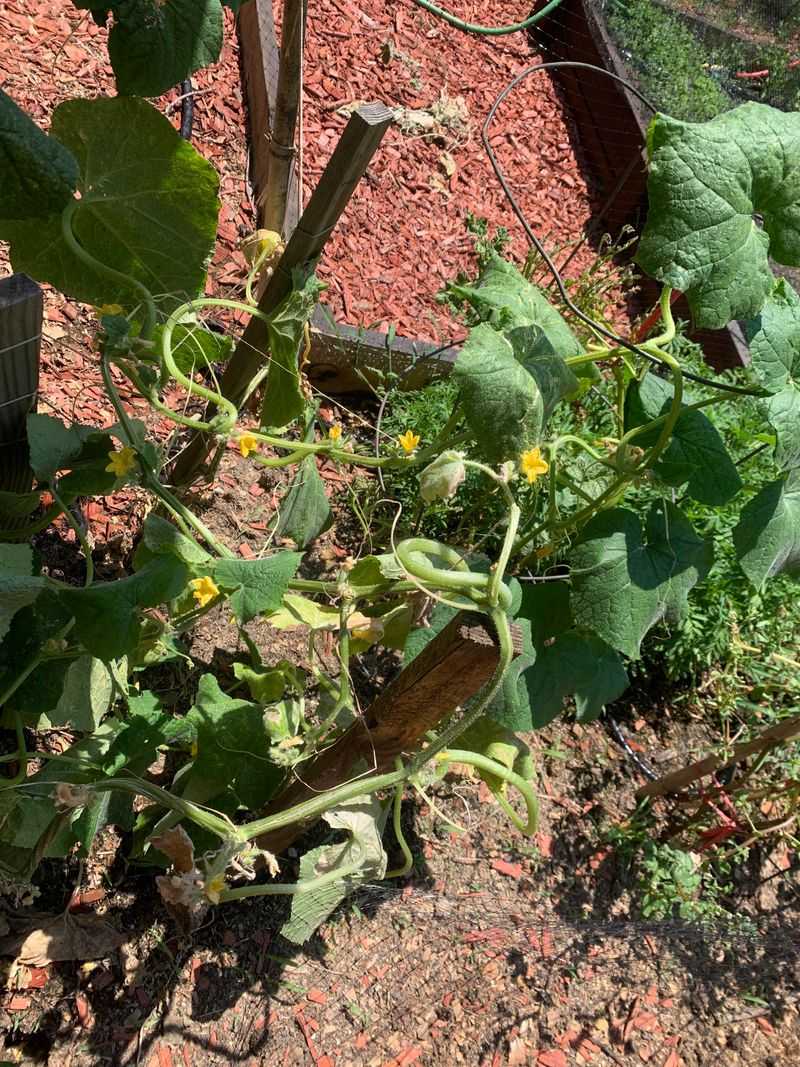
Moisture stress is one of the more common and fixable contributors to bitter cucumbers, particularly during the hottest stretch of summer. The pattern that causes the most trouble is not a single missed watering but a repeated cycle: the soil dries out substantially, the gardener notices and waters heavily, the soil dries out again, and the cycle continues through weeks of fruit development. Utah State University Extension specifically advises avoiding water stress because it can produce bitter, pointed, and misshapen cucumbers.
Hot August weather makes this pattern easier to fall into. When air temperatures climb, cucumber plants pull water from the soil faster, so a watering schedule that worked fine in June may leave roots dry by midday in August. Oregon State Extension lists temperatures above 90 degrees F, drought, and poor nutrition together as possible stressors that can contribute to bitterness, which shows how heat and uneven irrigation overlap rather than compete as explanations.
The timing of that stress matters more than the day you notice bitterness in the kitchen. Illinois Extension notes that inadequate soil moisture at any point during cucumber fruit development can produce tapered, misshapen, or bitter fruit. Bitterness you taste today likely reflects conditions the plant experienced during flowering, fruit set, or the early enlargement phase of those cucumbers, not necessarily what happened yesterday.
Use the soil to decide when to water
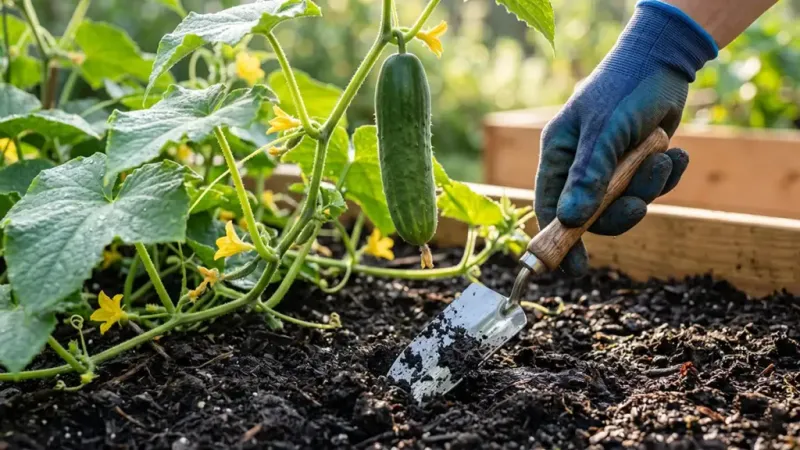
The most reliable guide for when to water is the soil itself, not the calendar. Move any mulch aside and press a finger or small trowel into the ground near the base of your cucumber plant. University of Minnesota Extension advises watering when the soil feels dry about 2 inches below the surface. That 2-inch check is a trigger for deciding whether to water, not the depth you are trying to moisten.
The actual target is much deeper. Colorado State University vegetable guidance recommends keeping cucumber soil moist to roughly 10 inches deep while still preserving good drainage. When you water, the goal is to apply enough slowly that moisture works its way through that full root zone, not just the top layer.
A starting point that many extension programs suggest is approximately 1 inch of total water per week, counting any rainfall. Utah State University water recommendations for vegetables treat that figure as a baseline rather than a fixed rule. Sandy soil drains quickly and may need more frequent watering; clay or organic-rich soil holds moisture longer and may need less. Plant size, wind exposure, mulch coverage, and heat all shift the actual amount required.
During an August heat wave, your soil check may tell you to water every day or every other day, and that is fine as long as drainage remains adequate and you are moistening the root zone without creating soggy conditions.
Apply water slowly and protect the foliage
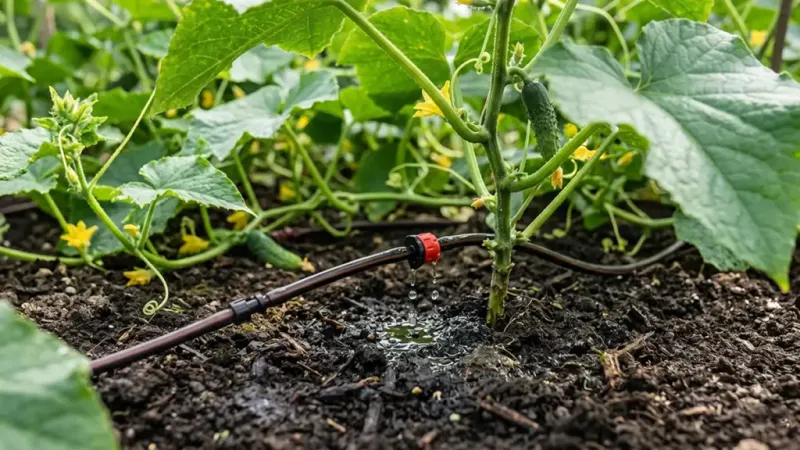
Once you know the soil needs water, how you apply it matters almost as much as how much you apply. Slow delivery at the soil surface gives water time to penetrate downward through the root zone rather than running off the surface or pooling around the stem. Utah State University Extension recommends drip irrigation or a soaker hose placed at the soil surface as the preferred method for cucumbers, and Colorado State University vegetable guidance reinforces that approach for keeping moisture where roots can use it.
Soil type should shape your schedule. Sandy soils drain fast and may need shorter, more frequent sessions to keep the root zone consistently moist. Clay or organic-rich soils hold water longer, so watering too often can leave roots sitting in oxygen-poor conditions that invite root rot and fruit problems. The fix for a dry-then-flood cycle is not to water every day automatically; it is to check the soil and water slowly when the 2-inch trigger tells you to.
University of Minnesota irrigation guidance for vegetables cautions against overwatering, which can cause root disease, nutrient leaching, and fruit cracking alongside the more obvious problem of soggy soil. Routine overhead watering adds another layer of risk: wet foliage can encourage foliar diseases like powdery mildew and downy mildew, and sprinklers running during the day may interfere with bee activity while cucumber flowers are open and need pollination.
Mulch helps hold a steadier root-zone climate
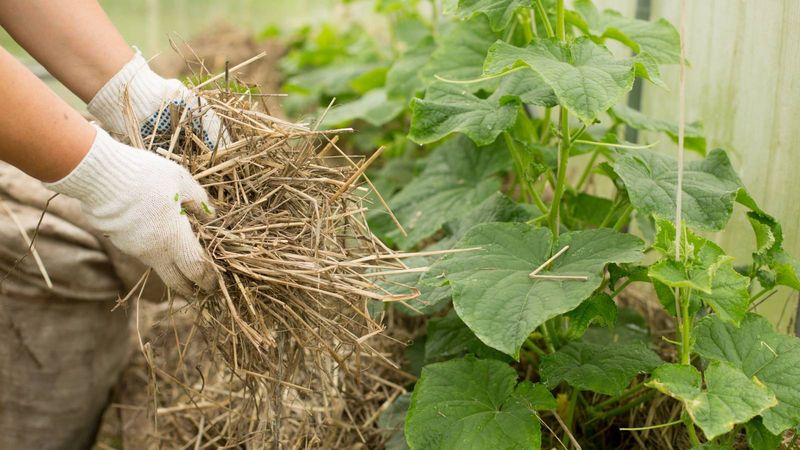
Organic mulch is one of the most practical tools for smoothing out the moisture swings that can contribute to bitter fruit. A 2-3 inch layer of straw, shredded leaves, or other suitable vegetable-garden mulch spread around the base of your cucumber plants slows evaporation from the soil surface, which is especially valuable during hot August afternoons when bare soil can lose moisture quickly. University of Minnesota Extension on mulching for soil and garden health explains that organic mulches help moderate soil temperature as well, reducing the temperature swings that can add to plant stress.
Colorado State University guidance on mulches for the vegetable garden recommends keeping mulch a few inches away from the main stem to avoid trapping moisture directly against it. Mulch is not a set-and-forget solution. Covered soil can still dry out, particularly during stretches of extreme heat or low rainfall, so you still need to move the mulch aside and check the soil regularly before deciding whether to water.
Think of mulch as an aid that improves the odds of consistent root-zone moisture, not as a cure for existing bitterness or a substitute for sound watering judgment. Illinois Extension connects consistent soil moisture to better cucumber quality, and mulch is one practical way to make that consistency easier to maintain through the rest of the season.
Check genetics and other stresses before blaming water
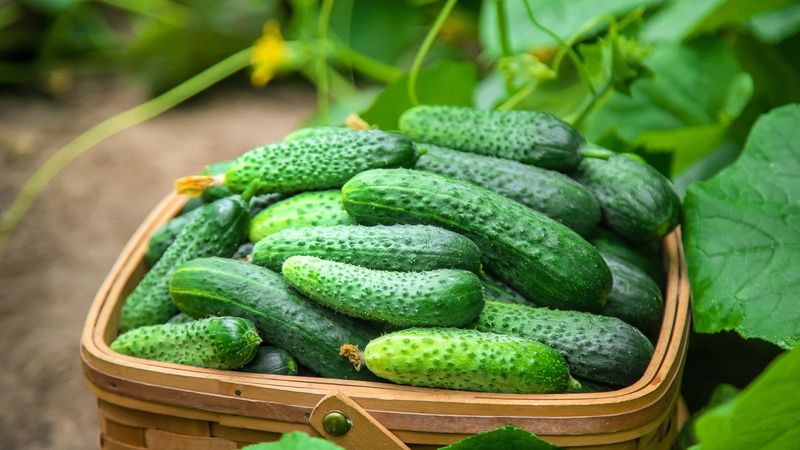
When bitterness persists even after you have been watering carefully, the explanation may have little to do with irrigation. Variety is a strong underlying factor. Research on cucurbitacin genetics and gene-mapping studies published in Nature Genetics both confirm that specific genes regulate whether cucurbitacin accumulates in the fruit. A variety that was not strongly selected for low fruit bitterness may express bitterness more readily under any kind of stress, while a variety bred specifically for low bitterness is generally more resilient, though not entirely immune.
High temperatures, wide temperature swings between day and night, poor nutrition, and disease are all recognized stressors that can push bitterness higher. Oregon State Extension lists these alongside drought as possible contributors, and University of Minnesota Extension notes that genetics and growing conditions interact to determine how bitter a cucumber becomes. If your soil fertility is low or a foliar disease has been reducing leaf area, the plant may struggle regardless of how well you irrigate.
One myth worth clearing up directly: cucumbers do not turn bitter because they cross-pollinated with nearby muskmelons or watermelons. Illinois Extension and Utah State University Extension both state clearly that cucumbers and melons do not cross-pollinate in a way that affects the taste of the current season’s fruit. Cross-pollination influences seed genetics and potential offspring, not the fruit already forming on your plant this summer.
Handle mild bitterness differently from extreme bitterness
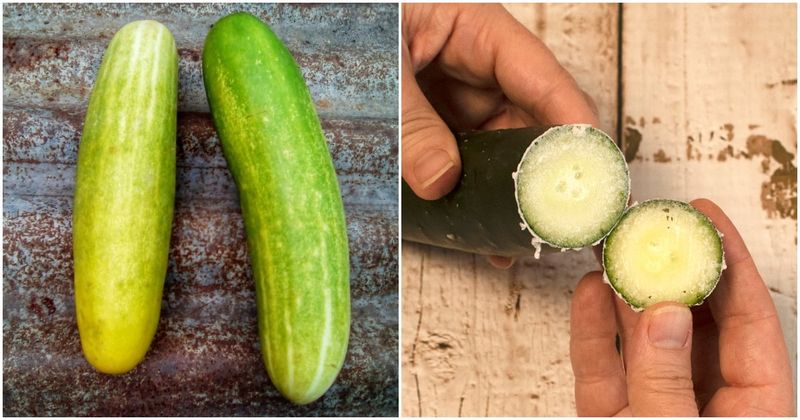
Prompt harvesting is a simple habit that supports both fruit quality and ongoing plant production. Pick cucumbers before they yellow and before the seeds harden inside, because overmature fruit is less pleasant to eat and leaving it on the vine signals the plant to slow down or stop producing. Penn State Extension guidance on growing cucumbers reinforces frequent harvesting as a practice that keeps plants productive through the season.
For fruit that is only mildly bitter, there is a practical kitchen step worth trying. Bitterness from cucurbitacins tends to concentrate near the skin and at the stem and blossom ends rather than evenly through the flesh. Oregon State Extension recommends deeper peeling, particularly near the stem end, as a way to reduce mild bitterness, and University of Minnesota Extension notes that cucumber fruit is typically bitterest at the blossom end. Removing both ends and peeling more generously than usual may make a mildly unpalatable cucumber worth eating.
This is a quality workaround, not a guarantee, and it will not help if bitterness runs through the flesh.
A different standard applies to extreme bitterness. If a cucumber, or any cucurbit, tastes intensely and unusually bitter, discard it rather than continuing to taste or serve it. Published case reports on cucurbit poisoning document that very high cucurbitacin levels, most often seen in bitter bottle gourds or unusual volunteer plants, can cause rapid vomiting, diarrhea, and serious gastrointestinal symptoms. Oregon State Extension guidance on volunteer cucurbits also flags intense bitterness in unfamiliar or wild cucurbit plants as a reason for caution.
This precaution does not mean that every mildly bitter cucumber from your garden is dangerous, but an intensely bitter or abnormal fruit is not worth the risk.
Steadier watering can improve the next harvest
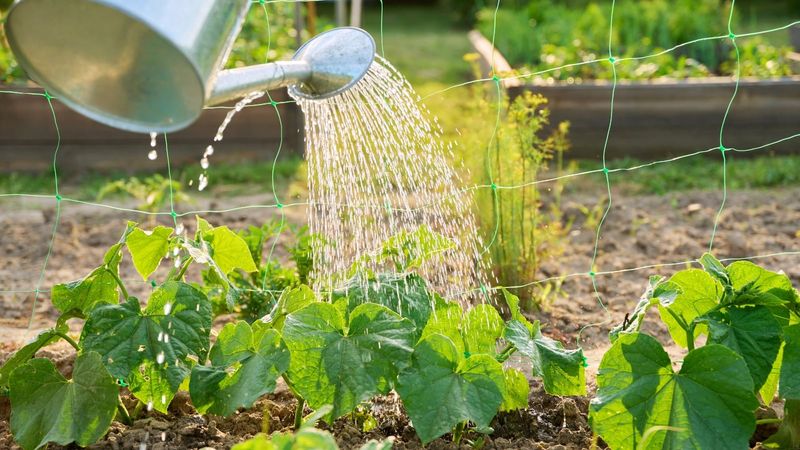
The practical sequence going forward is straightforward. Check soil moisture 2 inches below the surface before each watering session, apply water slowly at the base of the plant until you have moistened the root zone without creating soggy conditions, and keep a layer of organic mulch in place while still checking beneath it regularly. University of Minnesota irrigation guidance and Utah State University cucurbit irrigation recommendations both support this approach as the foundation of consistent cucumber quality.
If bitterness continues in new fruit after several weeks of steadier watering, reassess the variety you are growing and check for signs of disease, nutrient deficiency, or other stresses. Those factors can override even a sound irrigation routine. Oregon State Extension treats temperature, drought, and nutrition as overlapping contributors rather than separate problems, so a multi-factor check is more useful than chasing a single cause.
These changes can improve the cucumbers still forming on your vines, but they cannot reliably sweeten fruit you have already picked. As always, discard any cucurbit that tastes intensely or unusually bitter rather than trying to work around it. Oregon State Extension guidance on bitter cucurbits applies that caution especially to unfamiliar or volunteer plants. A more consistent watering habit is a real improvement worth making, and the cucumbers still on the vine are the ones most likely to benefit from it.