
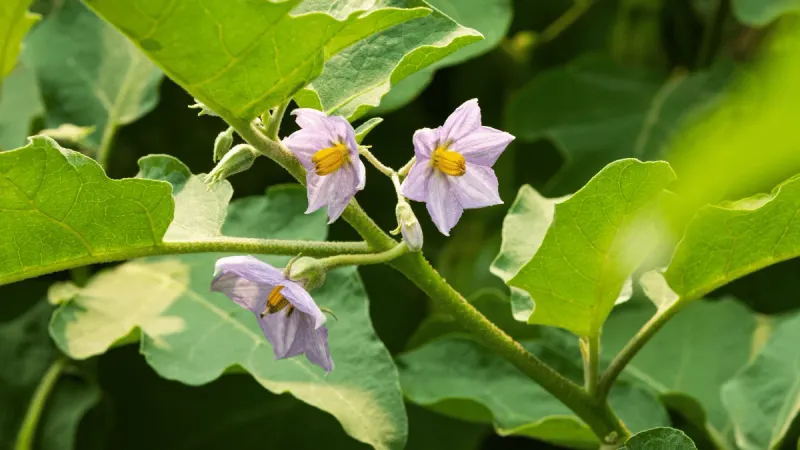
Watching eggplant flowers fall off day after day without a single fruit forming is one of the more frustrating problems a summer gardener can run into. The plant looks healthy, it keeps blooming, but nothing sticks.
Late-summer heat is often part of the story, especially in places like Florida and Texas where temperatures can stay brutal for weeks at a stretch. This guide walks through how to tell whether heat and moisture stress are likely contributors, and what else to check before you change anything about how you’re caring for the plant.
A heat spell can interrupt fruit set before the plant looks ill
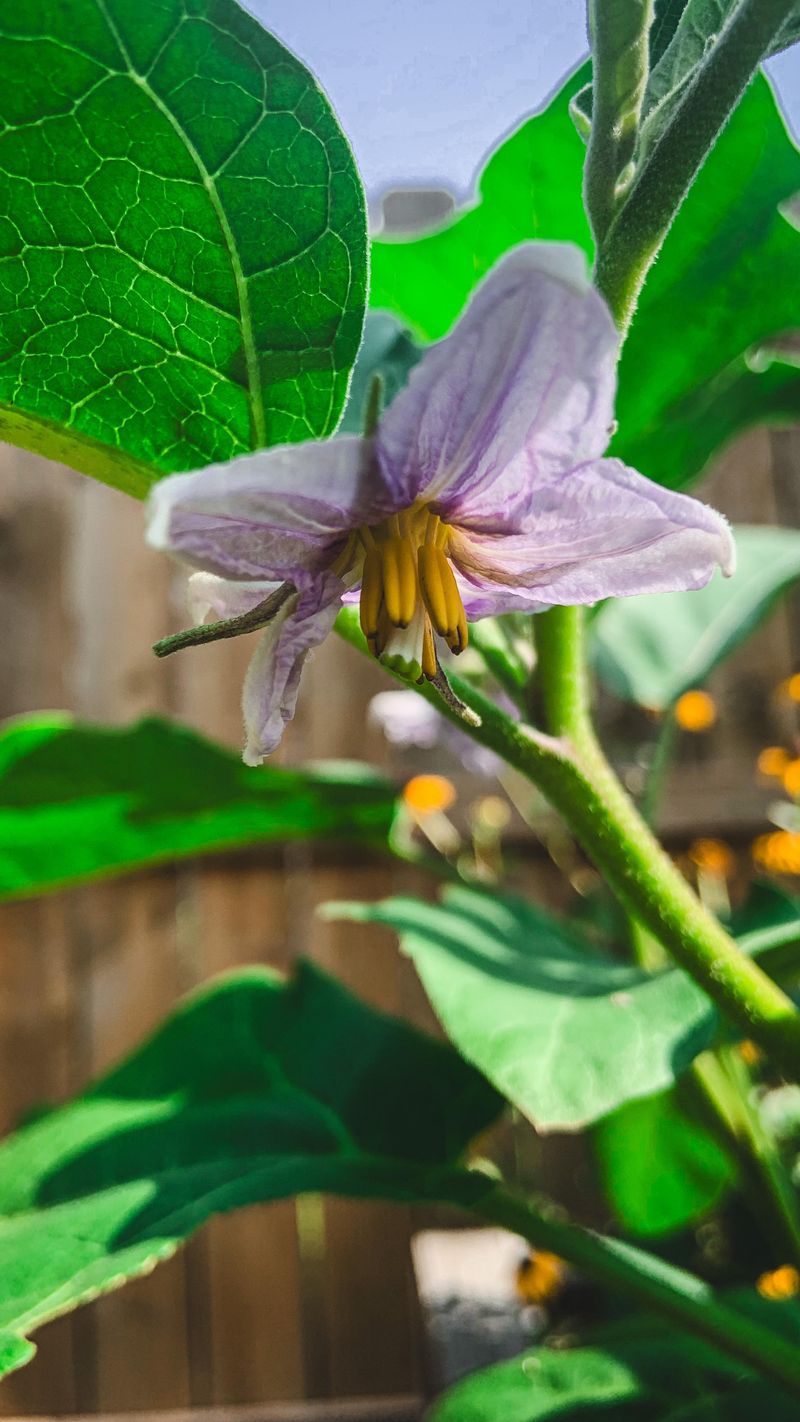
Eggplant is genuinely more heat tolerant than many vegetables, so it can be surprising when a plant that looks perfectly fine stops producing fruit. What often goes unnoticed is that extreme temperatures can disrupt reproduction well before the leaves show any distress.
The flowers open, stay on the plant for a day or two, and then drop without leaving even a tiny fruitlet behind.
A single fallen blossom is not a useful signal on its own. Flowers remain open for roughly two to three days, and an occasional drop can reflect normal variation rather than a problem worth acting on.
The more meaningful pattern is repeated drop across many flowers during the same period, especially when that timing lines up with a stretch of very hot weather.
According to UC ANR eggplant production guidance, fruit abortion can occur when daytime temperatures approach or exceed around 95 degrees F, and pollen deformity increases when nights fall below about 61 degrees F. Persistently hot evenings may add stress in some conditions, though that effect is less firmly established than the documented cool-night risk.
Use 95 degrees F as a practical warning point rather than a hard cutoff, because cultivar, duration, and growing conditions all influence how the plant responds.
Drought and uneven soil moisture frequently operate alongside heat, making it harder to separate one cause from the other. The goal of this guide is to help you test heat as a plausible explanation while keeping other causes in view, because water stress, weak pollen transfer, insects, excess nitrogen, and disease can each produce the same visible symptom.
Start with the weather-and-soil-moisture pattern
Before changing anything about how you water or feed the plant, spend a few minutes reviewing what the weather actually did during the days when those flowers were open. Check whether temperatures were running near or above 95 degrees F, and note whether nights were unusually cool or whether the whole stretch felt relentlessly warm.
That timing comparison is more useful than inspecting the plant alone, because flowers that opened during a mild week and dropped anyway point toward a different problem than flowers that opened during a heat spike.
Soil moisture deserves equal attention. UMass Extension eggplant guidance notes that eggplant has high water requirements during flowering, fruit set, and fruit enlargement, and that insufficient moisture can reduce yields and contribute to flower abortion.
Push a finger or a wooden dowel two to three inches into the soil near the root zone rather than judging moisture by the surface, which can dry out quickly while the deeper soil stays adequate or, conversely, stays saturated after heavy rain.
Heat and drought tend to work together. UConn Extension guidance on drought and heat in vegetable crops points out that the visible symptom may be blossom drop while the underlying stress is high water demand from leaves and roots rather than temperature alone.
If the soil is dry, aim for deep, consistent irrigation using drip or soaker delivery when practical, and layer mulch to slow surface evaporation.
Resist the reflex to simply water more. Beds that stay saturated after irrigation or rain can damage roots and create conditions favorable to Phytophthora and Pythium, as noted in the UF/IFAS Florida Plant Disease Management Guide for eggplant.
If water sits on the soil surface for an hour or more after irrigation stops, improving drainage is a more useful step than increasing the frequency of watering.
Pollination may need help, but bees are not the whole answer
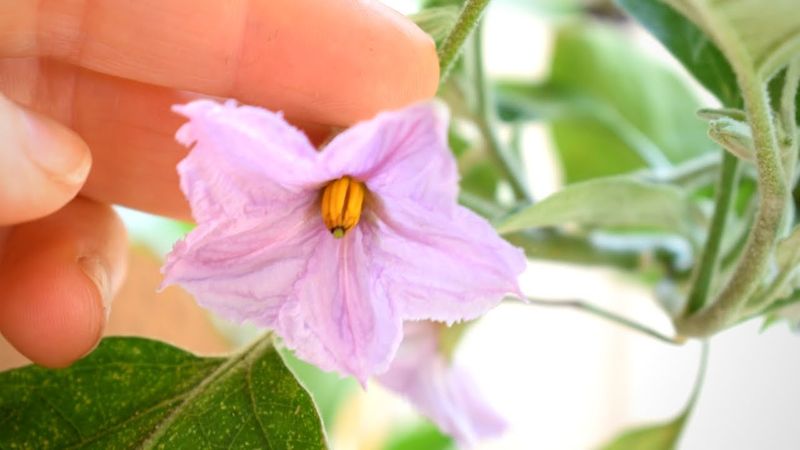
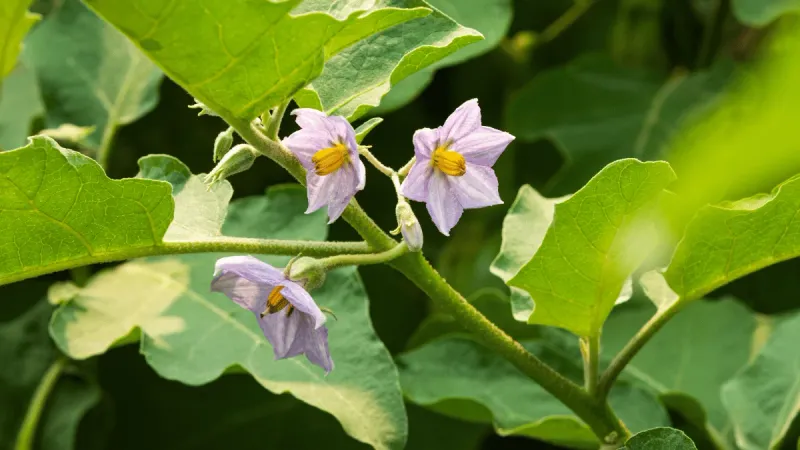
Eggplant flowers carry both male and female parts in the same bloom, which means the plant is capable of pollinating itself without any outside help. A shortage of bees does not automatically explain why flowers are falling.
That said, vibration from bees, wind, or manual movement can improve how well pollen is released and transferred within the flower, and a sheltered or screened growing space may reduce that natural movement enough to affect fruit set.
According to NDSU Extension guidance on vegetable garden pollination, gently shaking or tapping the flowering stems once a day during a calm period is a practical way to encourage pollen movement. A clean cotton swab or a small artist’s brush can also be used to transfer pollen from one part of the flower to another.
These methods work best when flowers are present and open but no tiny fruit is beginning to form, particularly in containers on screened porches or in areas with limited wind or bee activity.
A note on limits: UC ANR hand-pollination guidance makes clear that manual techniques can improve pollen transfer when transfer is the actual problem, but they cannot restore pollen viability or repair reproductive tissue that has already been damaged by severe heat. If daytime temperatures have been running close to or above 95 degrees F for an extended stretch, the pollen itself may be compromised, and tapping the flowers is unlikely to change the outcome until conditions improve and new, undamaged flowers open.
Eggplant also differs from cucumbers and squash, which produce separate male and female flowers. Advice about male flowers dropping naturally applies to those crops and should not be applied to eggplant, where every flower has the potential to set fruit.
Dropped flowers are not proof of pests or disease
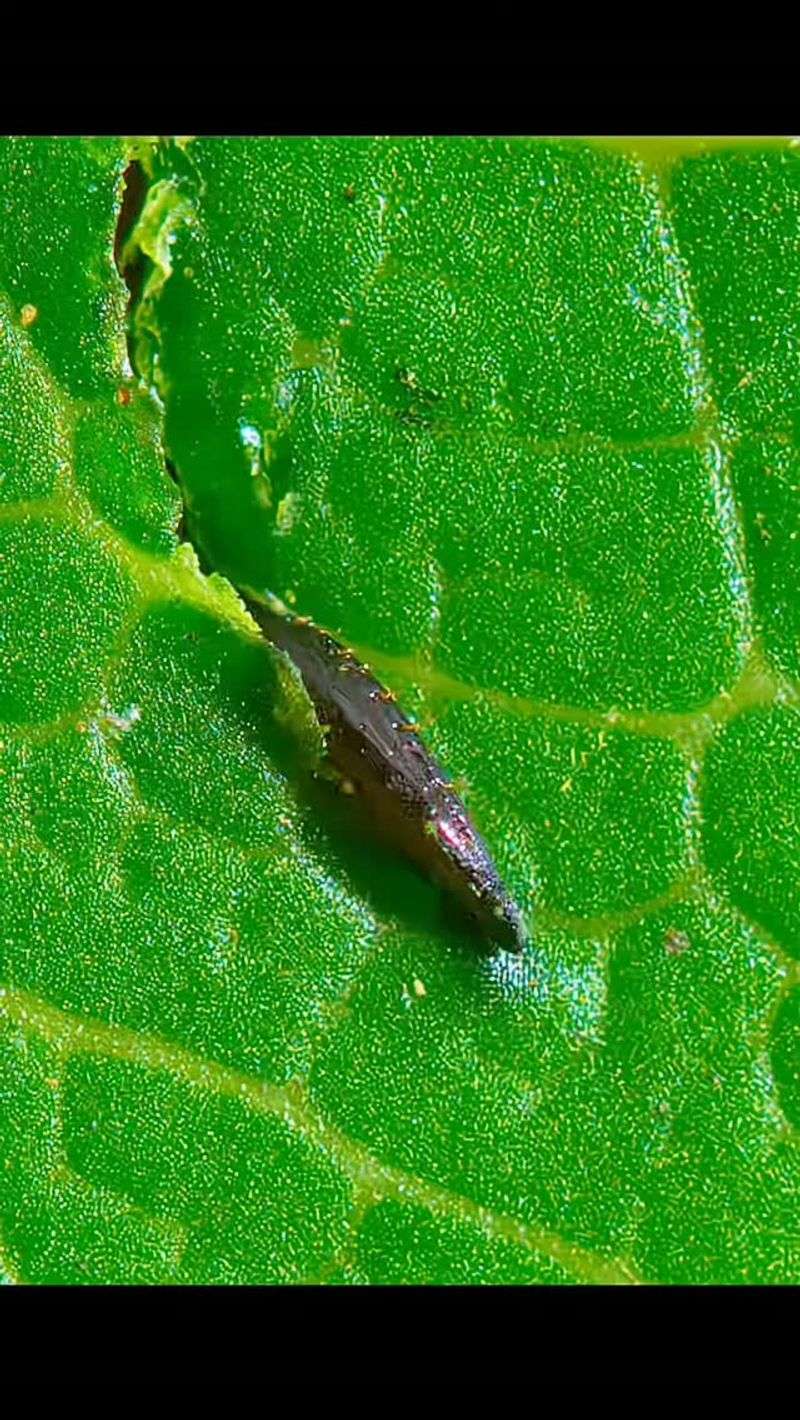
Finding no obvious cause after checking temperature and moisture can make it tempting to assume insects or disease are responsible. Before reaching for a spray bottle, spend time actually inspecting the plant.
Look at the dropped flowers and any remaining buds, the undersides of leaves, the stem near the soil line, any fruitlets that have started forming, and the pedicels, which are the small stems that connect the flower to the plant.
UC IPM guidance on lygus bugs in eggplant explains that these insects can inject a toxin into flower buds and small fruit, causing them to abort within a few days. The damage is not always obvious from a quick glance, so look for small discolored spots on buds or misshapen fruitlets.
Thrips are another possibility, and UF/IFAS guidance on managing thrips in pepper and eggplant notes that not every thrips species or population present in eggplant flowers causes economic damage worth treating.
Disease becomes a more plausible explanation when you find supporting evidence beyond the dropped flowers themselves. The UF/IFAS Florida Plant Disease Management Guide for eggplant describes infected pedicels as a pathway for premature fruit drop, while Phytophthora and Pythium are associated with wet conditions, root or stem damage, and fruit decay.
If you see lesions, wilting, or soft rot on any part of the plant, those signs shift the investigation toward disease.
A clean inspection does not prove that heat caused the problem. UC IPM blossom drop guidance notes that weather and water stress are common explanations, but nutrient imbalance, cultivar sensitivity, and unseen pest pressure remain possible.
Identify a specific pest or disease before treating, keep pollinators in mind when evaluating any insecticide, and continue monitoring if blossom drop persists after conditions improve.
Cool the flowering zone without taking away its light
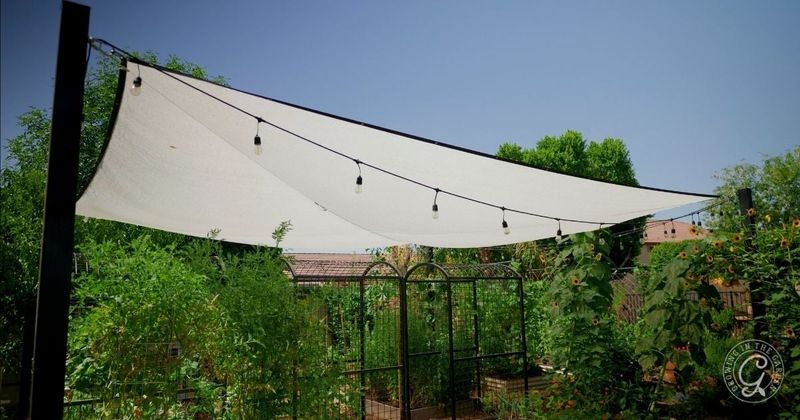
When temperatures are running well above comfortable levels for flowering, adding temporary afternoon shade is one of the most practical things you can do right away. The goal is to reduce the heat load on open flowers and developing buds during the hottest part of the day, not to keep the plant in dim conditions permanently.
A shade cloth rated for 30 to 40 percent shade, supported so it does not rest directly on the foliage, can make a measurable difference during an extreme heat event.
Eggplant has relatively high light requirements for fruit set, as noted in UF/IFAS greenhouse vegetable production guidance. Heavy or permanent shade may reduce the energy available for flowering and fruiting, which means the remedy could end up reducing yield rather than protecting it.
Use shade as a short-term measure during the worst heat and remove or reposition it once temperatures return to a more manageable range.
Row covers deserve a separate note. University of Maryland Extension guidance on row covers explains that standard insect-excluding covers can raise temperatures substantially inside the tunnel, which is the opposite of what you want during a summer heat event.
Remove ordinary row covers at flowering in hot weather unless the material is specifically designed as summer insect mesh or shade protection and is set up with adequate ventilation.
Shade cloth is a risk-management step, not confirmation that heat caused the flower drop. If the plant continues dropping flowers after conditions cool and moisture is steady, the cause is likely something other than temperature alone, and adding more shade will not solve it.
Stabilize care instead of adding a fertilizer rescue
After a stretch of dropped flowers, the natural urge is to do something decisive. Adding fertilizer feels productive, but it is one of the more common ways gardeners accidentally make the problem worse.
Excess nitrogen in particular tends to push the plant toward lush, dark-green foliage at the expense of flowers and fruit. A plant that is already dropping blossoms does not benefit from being pushed harder into vegetative growth.
University of Minnesota Extension guidance on growing eggplant recommends fertilizing based on a soil test or product label directions for vegetables rather than adding nutrients as a reaction to symptoms. Phosphorus, calcium, bloom boosters, and high-nitrogen applications are not reliable remedies for blossom drop and can create nutrient imbalances that cause additional problems over time.
The more useful care adjustment is stabilizing moisture. Alternating between letting the soil dry out severely and then soaking it heavily stresses the root system and can open the door to root and crown diseases, as outlined in the UF/IFAS Florida Plant Disease Management Guide for eggplant.
Aim for consistently moist soil by adjusting irrigation frequency to match your soil type, container size, recent rainfall, and drainage conditions rather than following a fixed daily schedule.
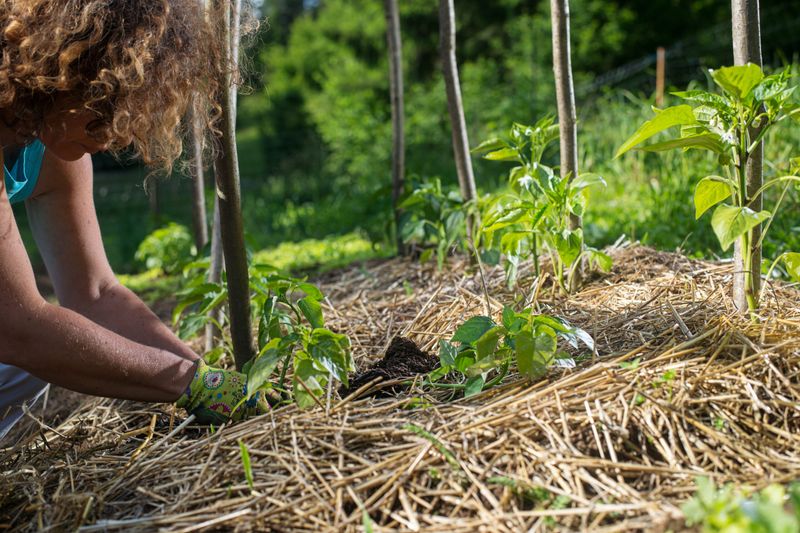
Mulch is one of the most reliable tools for maintaining that moisture balance. A two-to-three-inch layer of straw, shredded leaves, or similar organic material slows evaporation, moderates soil temperature, and reduces the swings between wet and dry that can compound heat stress.
Keep the mulch a few inches back from the main stem to avoid trapping moisture against it, which can encourage rot at the base of the plant.
Recovery depends on what happens after the heat breaks
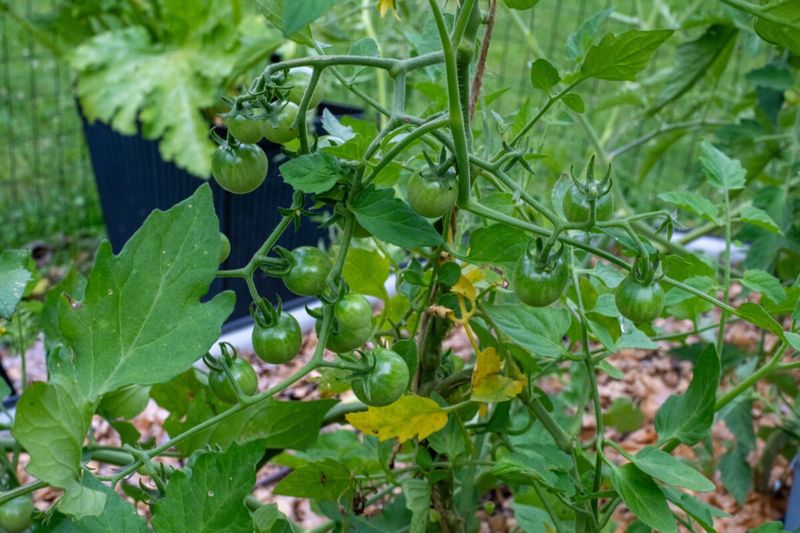
Judging whether any change you made actually helped requires patience. New flowers need time to open, get pollinated, and begin forming fruit before you can see a result.
Watching newly opened flowers for the appearance of a small swelling at the base, which is the beginning of a fruitlet, is a more reliable way to assess progress than comparing the total number of dropped flowers before and after.
Keep checking soil moisture and foliage condition as new flowers appear. If blossom drop continues after temperatures have moderated and soil moisture has been steady, go back through the list of other possible causes: pollination conditions, pest activity, nutrient balance, cultivar sensitivity, and disease signs.
A pattern that persists under genuinely improved conditions is telling you that heat and drought were not the whole story.
One practical yield step that is easy to overlook: University of Missouri Extension eggplant production guidance notes that leaving mature fruit on the plant can slow or stop the formation of new flowers and reduce overall yield. Harvest eggplant while the skin is still glossy and the flesh gives slightly under pressure.
Once the skin loses its sheen and becomes dull, the fruit is past its prime and the plant’s energy is being spent maintaining it rather than setting new fruit.
For gardeners in Florida, UF/IFAS Gardening Solutions guidance on eggplant notes that North and Central Florida have August planting windows, which means late summer can represent a reset or replanting opportunity in parts of the state. Available guidance from Texas A&M AgriLife Extension on fruiting vegetables confirms eggplant as a Texas crop but does not establish a statewide late-summer blossom-drop threshold, so timing decisions in Texas should account for local latitude, elevation, and first-frost date.
The practical verdict is a pattern, not a single fallen bloom
Repeated blossom drop during a stretch of days at or above around 95 degrees F, especially when soil moisture has been dry or erratic, makes combined heat and water stress a reasonable explanation worth acting on. That pattern does not prove those causes, but it is enough to justify checking moisture, adding temporary shade, and observing whether new flowers set fruit once conditions ease.
UC ANR eggplant production guidance and UConn Extension drought and heat guidance both support treating temperature and moisture stress as a leading possibility without ruling out other contributors.
Flowers that stay on the plant without forming fruit, particularly in a sheltered or low-wind spot, may benefit from gentle tapping or manual pollen transfer. Persistent drop under improved conditions calls for renewed attention to moisture consistency, soil nutrition, cultivar response, and any pest or disease signs you may have missed earlier.
The restrained response holds across all scenarios: steady moisture, brief heat relief during the worst afternoons, enough light for fruit set, no reflex fertilizer application, and careful observation of new growth. A plant that drops a few flowers during a brutal August week is not necessarily in trouble; one that drops every flower across several weeks under a range of conditions is asking you to look more carefully.
Most eggplant plants that get through the worst of the heat and receive consistent, measured care will find their footing again once the season begins to turn.