
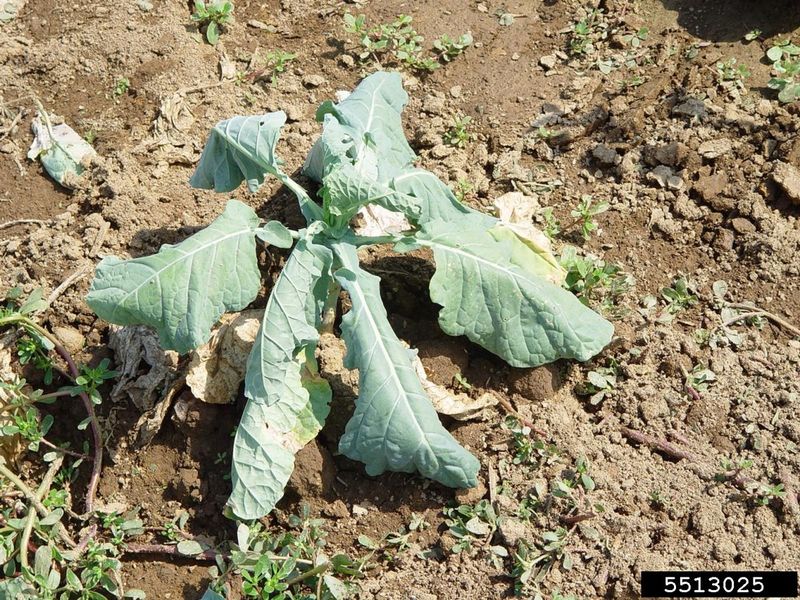
Planting fall cabbage in late summer feels like a race against the calendar, and then you watch your transplants flop over in the afternoon heat and wonder if you have already lost. The problem is more common than you might think, especially for gardeners in Florida, Texas, and across the South who are setting out brassica starts into brutal conditions.
Most of the time, the cause is not simple thirst – it is a mismatch between how fast leaves lose water in the heat and how slowly a disturbed root system can replace it. Knowing the difference between that fixable situation and a disease problem can mean the difference between a successful fall crop and a lost one.
Heat and disturbed roots can outpace the plant
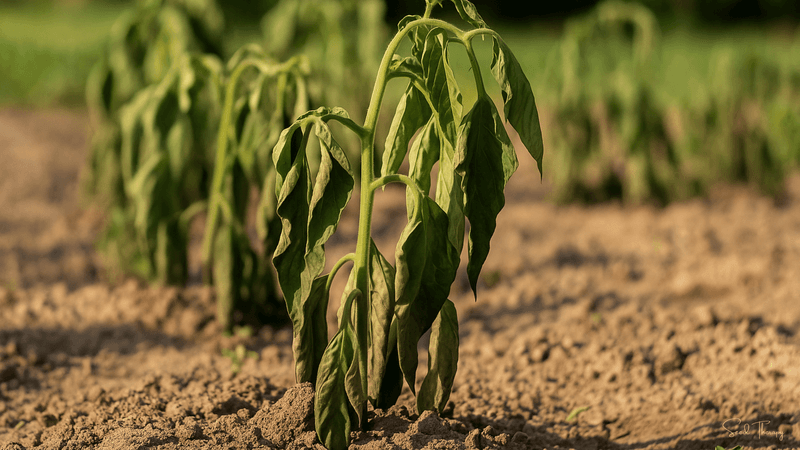
Cabbage is a cool-season crop, and its preferred growing temperatures are a far cry from what a Southern garden delivers in August or early September. When a greenhouse-grown or indoor-started transplant gets moved directly into full sun, hot wind, and reflected heat from bare soil, the leaves immediately begin losing water through a process called transpiration – far faster than normal.
The roots, which have been disturbed during transplanting and have not yet grown into the surrounding garden soil, simply cannot keep up with that demand.
As University of Maryland Extension guidance on vegetable transplants explains, cabbage, broccoli, and cauliflower are among the crops most sensitive to this transition stress. The plant’s above-ground parts are suddenly exposed to conditions that were never part of its sheltered growing environment, and the root system has not had time to compensate.
Hot, dry air and direct sun accelerate moisture loss through the leaves even when the planting hole itself is not bone dry.
Several otherwise healthy transplants wilting together shortly after planting is a recognizable pattern consistent with this heat-and-root mismatch. NC State’s Root Cause Reports on sun and heat injury note that high temperature, strong sunlight, and wind combine to push water loss beyond what a plant’s vascular system can handle.
Replacing the assumption of simple thirst with this more accurate picture is the first step toward an effective response.
Check the plant before adding more water
Before reaching for the hose again, take a close look at the plant itself. A cabbage that is wilting purely from heat stress will often perk back up after the sun drops, after it gets some shade, or by the following morning when temperatures cool.
That pattern – daytime droop followed by noticeable overnight recovery – is a clue consistent with heat-driven water loss, not a confirmed diagnosis, but it points in a reassuring direction.
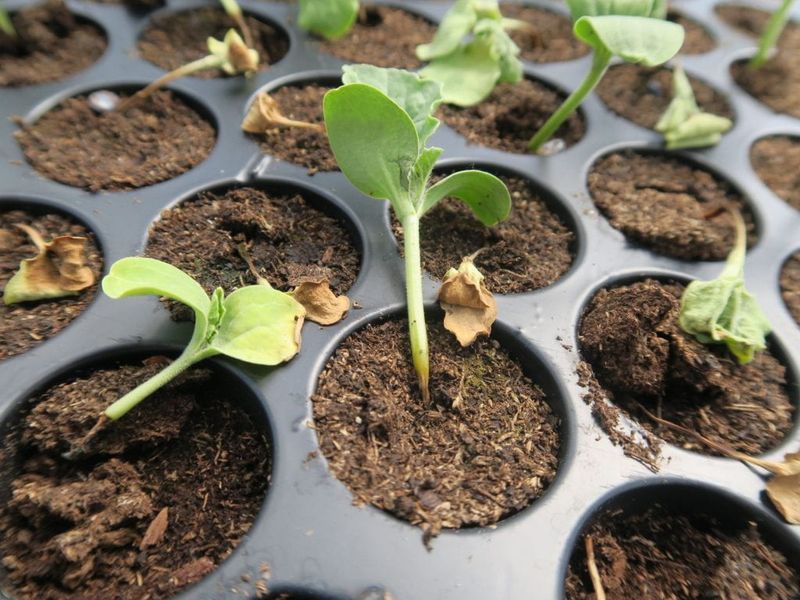
A plant that stays wilted in moist soil, or that gets progressively worse over several days, deserves a closer look at the stem and roots. Gently press the stem at the soil line and check its color.
A healthy stem feels firm and looks green or pale. A stem that is dark, sunken, constricted, water-soaked, or mushy at the soil line tells a different story.
According to UConn Extension’s guide on damping-off, that kind of tissue damage is more consistent with fungal pathogens that attack the stem at or below the soil line – conditions that irrigation alone will not reverse.
The UF/IFAS Florida Crop/Pest Management Profile for cabbage identifies damping-off, wirestem, black rot, and Fusarium yellows as diseases that can affect cabbage in Florida production. Wirestem in particular causes a dry, corky constriction of the lower stem.
If you see root tissue that is brown, slimy, or rotting when you gently loosen the soil around the root ball, disease is a more likely explanation than heat stress, and more water will not help – and may make things worse.
Hardening off helps plants handle the transition
Hardening off is the practice of gradually introducing indoor- or greenhouse-grown transplants to outdoor light, wind, and temperature before they go into the ground. For cabbage-family crops, University of Maryland Extension specifically names cabbage, broccoli, and cauliflower as crops for which this step is especially worthwhile.
A general guideline is to spend approximately 5 to 14 days on the process, starting with an hour or two of filtered outdoor light and working up to longer exposure and direct sun over time.
Hardening off reduces the severity of transition stress – it does not make cabbage immune to heat, wind, or root disturbance. A well-acclimated plant entering the garden still faces the shock of root disruption and new environmental conditions.
What changes is the plant’s capacity to handle that adjustment without collapsing under the added pressure of full sun and hot air hitting it all at once.
Gardeners who need to plant immediately, without time for a full acclimation period, are not out of options. Choosing cooler planting conditions, providing temporary shade right after planting, handling the root ball with care, and keeping the root zone moist can still reduce stress meaningfully.
UGA Cooperative Extension’s cabbage production guide notes that container-grown transplants with an intact root ball generally suffer less shock and resume growth more quickly than bare-root plants, so protecting that root ball during planting matters even when other steps have to be skipped.
Plant during cooler conditions and settle roots into moist soil
Planting day choices have a real effect on how quickly transplants settle in. Illinois Extension’s cabbage guide recommends choosing cloudy, overcast, or even rainy conditions for setting out summer-planted cabbage, specifically because direct sun drives up water loss from the leaves right when the root system is at its most vulnerable.
Late afternoon is another solid option – the worst heat of the day is already past, and the plant gets overnight hours to begin adjusting before facing the next day’s sun.
Selecting the right transplant matters too. Young, stocky plants with roughly four to six true leaves tend to establish more reliably than tall, stretched ones.
UC IPM’s cultural tips for cabbage recommend burying the stem to the first leaf when setting transplants, which can help stabilize a leggy plant and improve contact between stem tissue and soil. UGA’s guidance suggests planting at least to the original growing depth or slightly deeper, without prescribing one universal measurement.
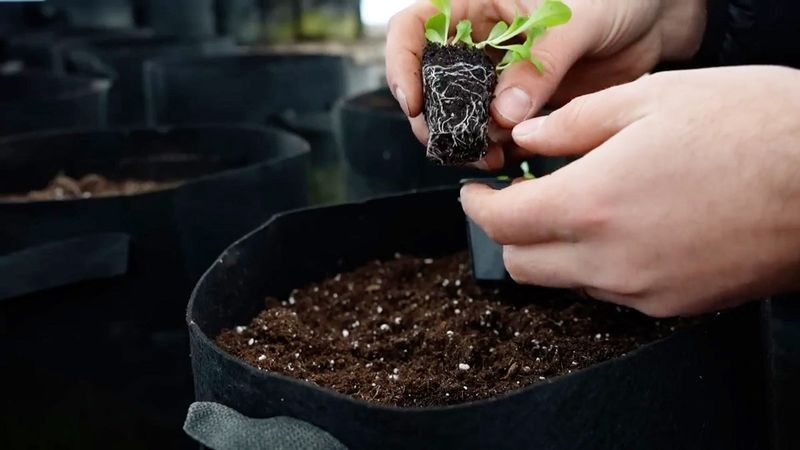
Handle the root ball as gently as possible. Squeezing, tearing, or shaking loose the roots adds injury on top of the stress the plant already faces.
Once the transplant is positioned, firm the soil around the root ball to eliminate air pockets, which can dry roots out quickly. UGA’s cabbage production guide recommends planting into moist soil and irrigating immediately after to create solid soil-to-root contact.
The goal of that first watering is connection and moisture, not saturation.
Use temporary midday protection while roots reestablish
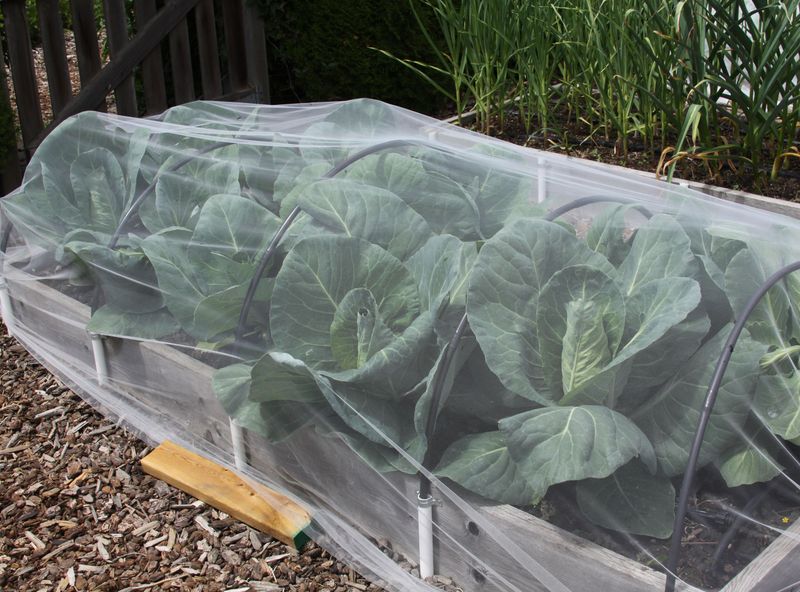
Newly planted cabbage does not need to face the harshest part of the day unprotected while its roots are still finding their footing. Temporary midday shade can significantly reduce the water loss that drives wilting during the establishment period.
UC IPM recommends shading summer-planted cabbage with 50% shade cloth or two layers of floating row cover until plants have developed about six leaves, and also suggests midday shade or row cover for at least the first week after transplanting.
The type of cover you choose matters. Lightweight fabric row covers let some air and light through while reducing the intensity of direct sun and slowing moisture loss.
They are generally the safer choice in hot Southern conditions. Plastic covers present a real risk in summer heat: without ventilation, they can trap enough warmth to damage or kill the very plants you are trying to protect.
CSU Extension notes that plastic covers should be vented or removed in hot weather, while thinner fabric materials can provide shade and some cooling benefit without the heat-trapping problem.
Shade is a short-term establishment tool, not a permanent growing condition. Cabbage needs strong light for healthy leaf development and head formation.
Once transplants show new growth and stop wilting overnight, you can begin reducing or removing the cover, ideally during cooler morning hours rather than pulling it off in the middle of a hot afternoon. The transition back to full sun can be gradual, just as the initial hardening-off period was.
Maintain steady moisture without saturating the bed
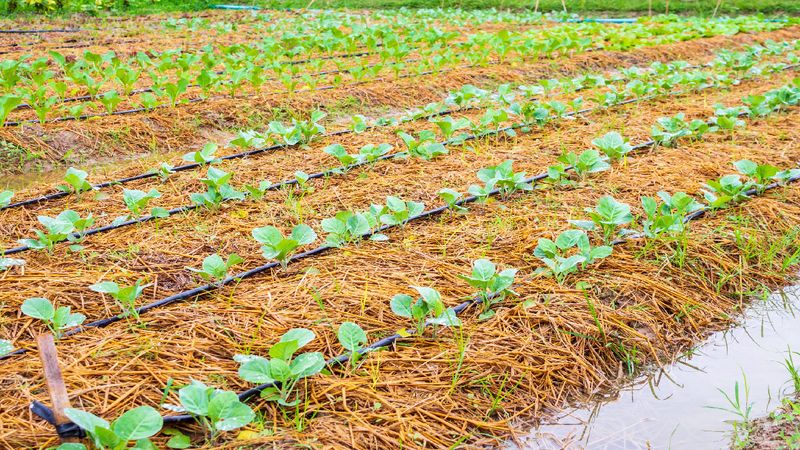
Keeping the root zone evenly moist during the first two weeks after transplanting is one of the most important things you can do for newly planted cabbage. UGA’s cabbage production guide recommends planting into moist soil and applying approximately 0.3 to 0.5 inch of irrigation immediately after setting transplants, with an emphasis on maintaining consistent moisture while roots establish.
That figure is a planting benchmark, not a daily formula to repeat mechanically.
As plants settle in, the general guidance from Iowa State University Extension’s home cabbage guide is approximately 1 inch of water per week when rainfall does not provide it. Sandy soils, high heat, wind, and low humidity all increase how quickly the soil dries out, so actual watering frequency depends heavily on your specific conditions.
A garden in coastal Florida behaves differently from one in inland Texas, and a raised bed dries out faster than an in-ground plot in heavy clay.
Watering deeply matters more than watering often. UC IPM warns that wetting only the top few inches of soil can stunt root development by giving roots no reason to grow downward.
Drip irrigation, furrow watering, or a slow overhead soak that reaches the full root zone is more useful than quick, shallow sprinkles. Avoid routinely wetting foliage if disease pressure is a concern in your area.
A 2 to 3 inch layer of straw, dry grass clippings, or shredded leaves over the bed can reduce evaporation and help keep the root zone more stable between waterings. Iowa State recommends this mulch layer for cabbage, with one important note: keep it away from direct contact with the stem.
Rutgers Plant and Pest Advisory notes that wet, poorly drained soil encourages the pathogens behind damping-off, so the goal is evenly moist and well-drained, not perpetually saturated.
Match fall planting to your local growing window
No single planting date works for the entire South. Latitude, elevation, proximity to the coast, and local first-frost or first-cooling patterns all shift the ideal fall cabbage window by weeks or even months from one region to the next.
A date that works well in the Texas Panhandle is completely wrong for the Rio Grande Valley, and Florida’s fall cabbage calendar is different again from either of those.
Texas A&M AgriLife Extension’s fall vegetable gardening guide lists approximate final transplanting dates ranging from August 1 in some parts of the state to November 20 in others – a spread of nearly four months within a single state. That range alone shows why a generic “plant your fall cabbage now” instruction can mislead more gardeners than it helps.
UF/IFAS guidance on Florida cabbage production reflects a similarly distinct calendar shaped by the state’s long warm season and mild winters.
Heat management strategies – shade, careful irrigation, hardening off – can help a transplant survive a challenging establishment period, but they cannot fully compensate for planting at the wrong time for your area. A transplant set out too early into relentless heat faces a much harder recovery than one planted at the beginning of the local fall window.
Check with your county extension office for region-specific timing before you start seeds or order transplants.
Watch for improving recovery as roots reestablish
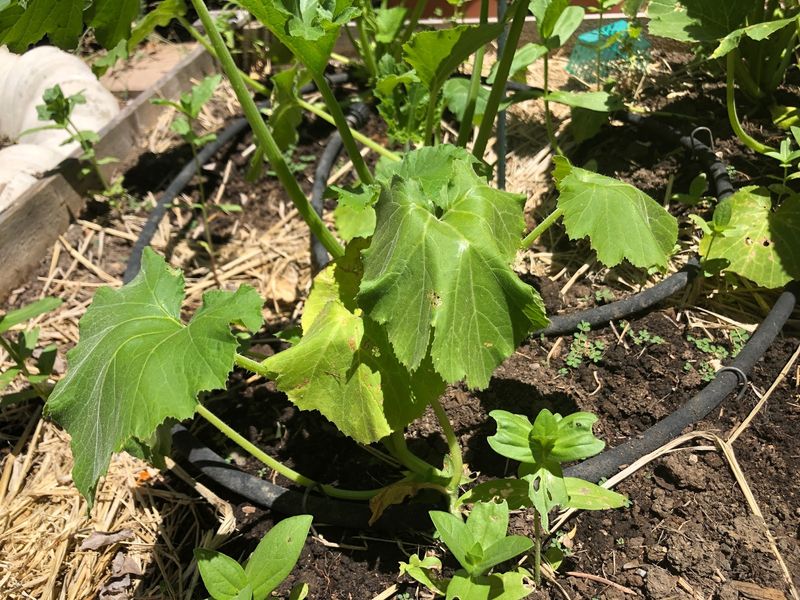
Start your assessment at the stem and soil line, not the leaves. If the stem looks healthy and the soil is appropriately moist, shade the plant during the worst midday heat and water the root zone thoroughly – not constantly.
UC IPM’s cabbage cultural tips and UGA’s production guide both support this combination of shade and consistent root-zone moisture as the core establishment strategy.
Reduced midday wilting and stronger recovery during cooler morning and evening hours are signs that roots are beginning to reconnect with surrounding soil. How quickly that progress appears depends on the plant’s condition going in, the local weather, and how well the root ball was protected during transplanting.
There is no universal deadline for when a plant must recover – improvement over time matters more than hitting a specific day.
Persistent decline, collapse at the soil line, or discolored and mushy roots are signals that point away from heat stress and toward a disease problem. UConn Extension’s damping-off guide is a useful next reference if the stem or root symptoms match what you find.
More irrigation will not rescue a diseased plant – and knowing the difference early is what keeps the rest of your fall crop on track.