
Fall cauliflower is one of the trickier crops to time well in the South, and watching a transplant sit still, stay small, and develop purple-tinged leaves during the hottest weeks of late summer is genuinely unsettling. The good news is that these symptoms have known explanations, and understanding them helps you respond wisely rather than reaching for the nearest fertilizer bag.
Heat, moisture stress, transplant shock, nutrition gaps, disease, and even cultivar traits can all play a role, sometimes together. This article walks through each possibility so you can figure out what is actually happening in your garden bed.
What stunted, purple-tinged cauliflower is telling you
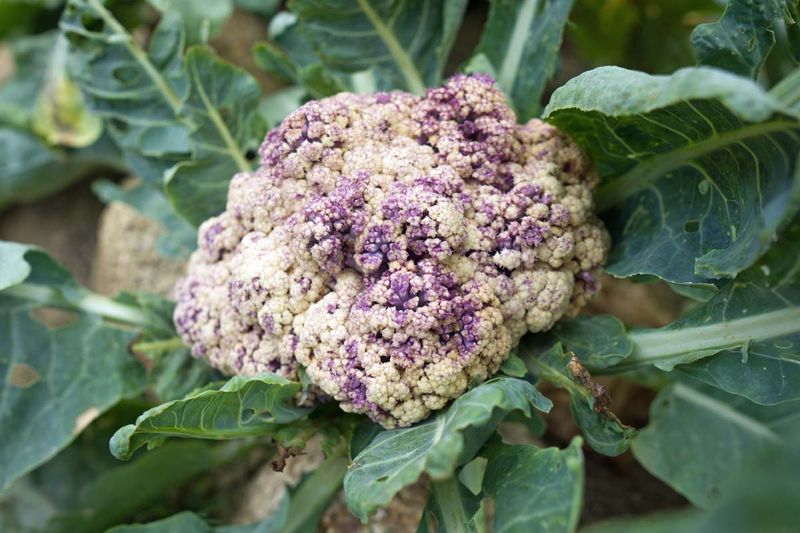
Cauliflower transplants that stall out and develop purple-tinged foliage during late summer are not sending a single, simple message. Several things can produce this combination of symptoms at once, and treating it as one problem with one fix is where most gardeners go wrong.
Heat is a real factor. Utah State Extension guidance on cauliflower identifies excessive temperature as a primary reason fall transplants grow slowly and fail to form good heads.
Transplant shock, drought, uneven watering, and poor nutrition can each add to that stress, making a plant look worse than heat alone would explain.
Purple foliage is a separate thread to investigate. The leaf color does not confirm that heat is the cause, and it does not automatically point to a nutrient deficiency either.
It is a nonspecific warning sign that can reflect restricted phosphorus uptake, moisture or temperature stress, root injury, cultivar characteristics, disease, or something else entirely.
The safest approach is a symptom-based investigation rather than an immediate corrective action. USU’s brassica production-problems guide and Penn State’s cole-crop guidance both reinforce that diagnosing the pattern before intervening leads to better outcomes.
The sections ahead cover heat and moisture effects first, then purple leaves, heading problems, disease, and finally what recovery may or may not look like for your specific plant.
How heat can delay growth and damage early curds
Cauliflower is built for cool weather, and when temperatures climb into the range that late-summer Southern gardens regularly hit, the crop responds by slowing down or stopping productive growth altogether. USU’s cauliflower growing guide notes that the crop grows best when temperatures stay below about 75 degrees F, with growth, yield, and head quality declining as temperatures push above 80 degrees F.
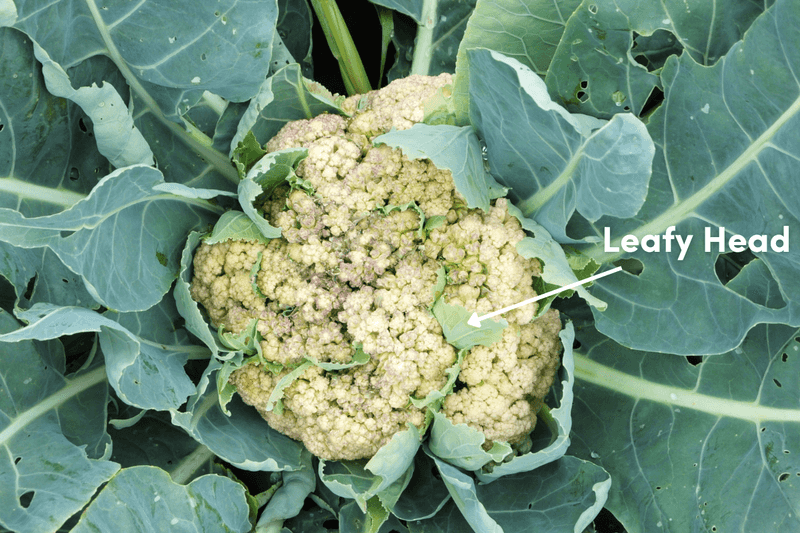
Above roughly 85 degrees F, the damage becomes more visible. USU’s brassica planting and spacing guide reports that temperatures in this range can significantly slow growth and lead to rough or discolored curds, as well as bracts pushing up through the developing head.
These are structural problems caused by heat interrupting normal curd development, not cosmetic issues that resolve on their own.
The situation gets worse when heat combines with low or fluctuating soil moisture. A plant that is both hot and unevenly watered during early head formation is more likely to produce a loose, misshapen curd, develop leaves growing through the curd, or form a premature small head before the plant has enough leaf mass to support a full-size harvest.
Understanding this temperature-driven pathway is important before moving on to the purple-leaf question, because the two issues, though they may appear together, often have different explanations and different responses.
What purple leaves can—and cannot—prove
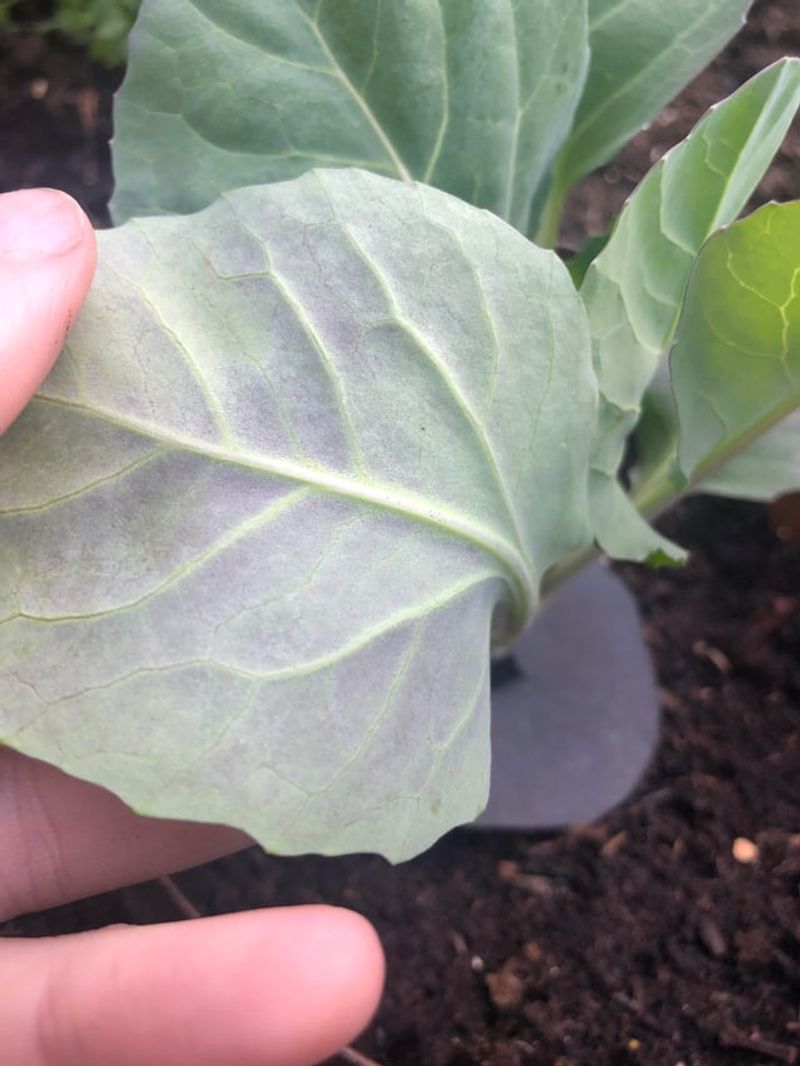
Purple or reddish leaf color in cauliflower is easy to misread. Before assuming the plant has a phosphorus deficiency or that heat is directly responsible, it helps to understand what the color can and cannot tell you on its own.
Phosphorus deficiency is one recognized cause of purple foliage in brassicas. UGA’s soil fertility guide identifies older, lower leaves as a common starting point for phosphorus symptoms, so a purple cast that begins on the bottom of the plant and works upward is a more specific clue than a whole-plant color change.
Even so, University of Minnesota’s fertilizing guide cautions that visual nutrient diagnosis is difficult because several stresses can produce similar-looking symptoms.
Phosphorus may already be present in your soil but simply unavailable to the plant. Colorado State Extension’s plant nutrition resource explains that uptake can be blocked by unsuitable pH, dry soil, cold wet soil, compacted roots, or root injury from transplanting.
Oregon State Extension’s guide on environmental factors affecting plant growth adds that temperature and moisture extremes both interfere with how roots absorb available nutrients.
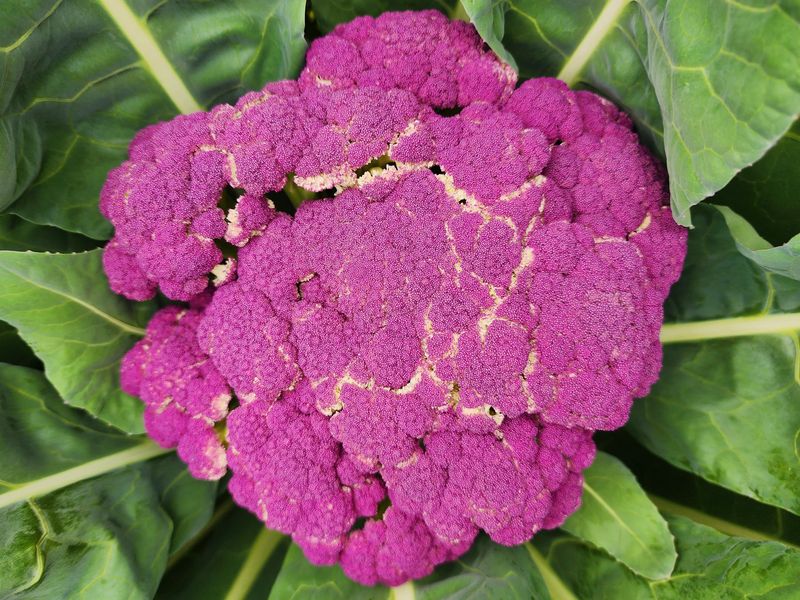
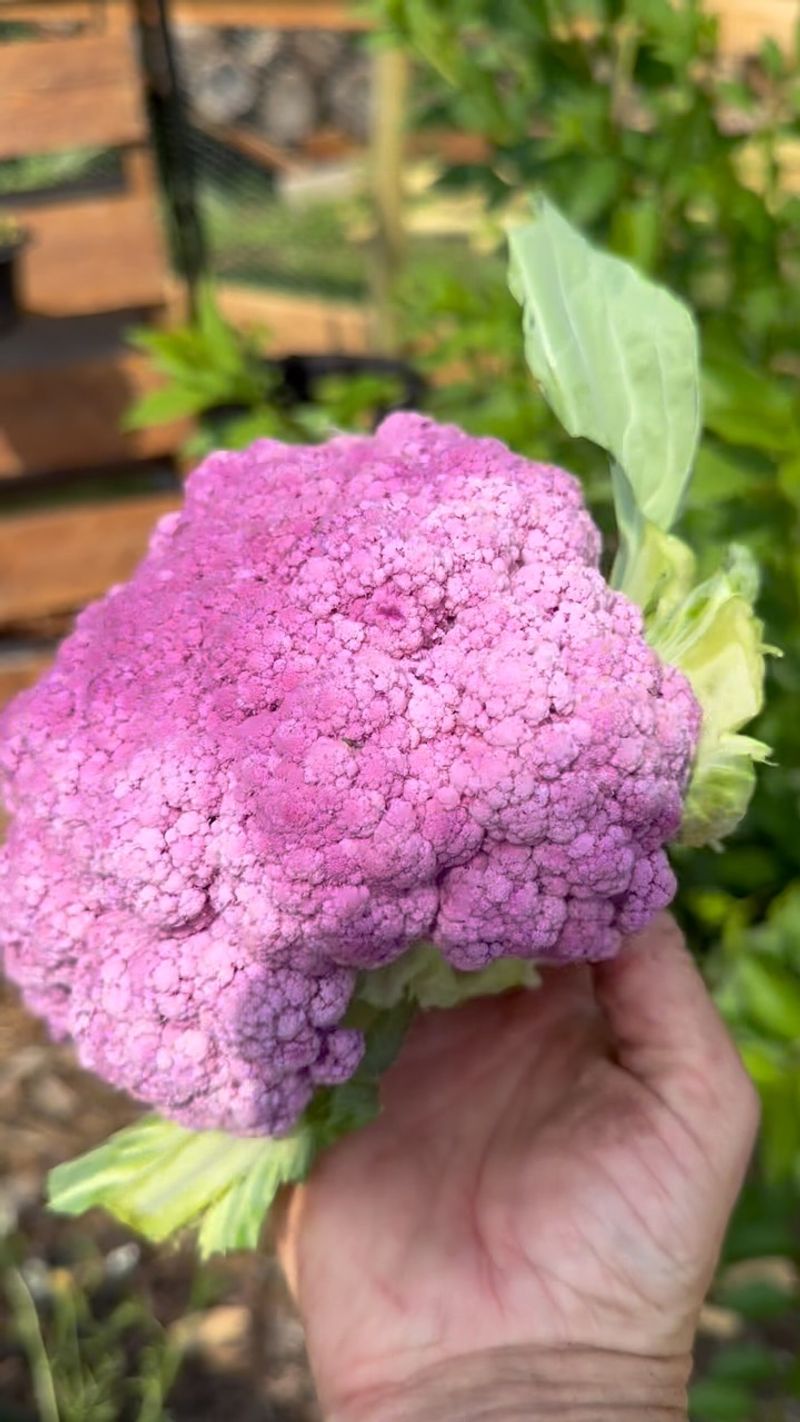
Purple foliage should also be separated from purple cauliflower heads, which are a cultivar trait. UGA’s cauliflower production guide and UMN’s cauliflower growing guide both note that naturally purple-headed varieties develop their color in the curd, not in the leaves, and that is a completely different situation.
Inspect the leaf age and pattern, check the root zone and soil moisture, and arrange a soil test before applying phosphorus fertilizer.
Is it buttoning or a failed growing point?
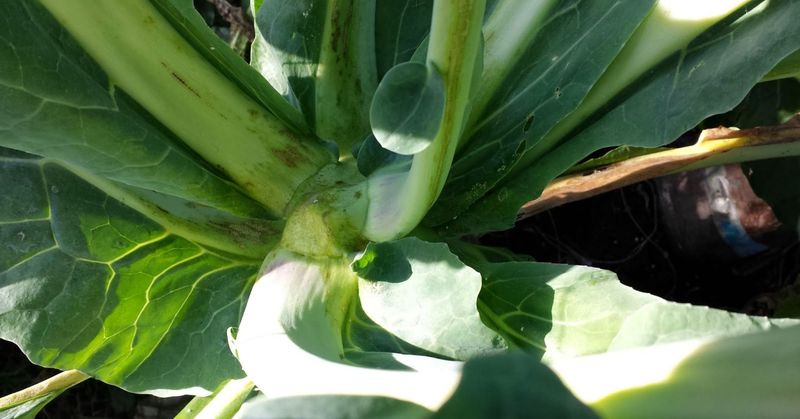
Not every cauliflower heading problem looks the same, and the distinction between buttoning and a damaged growing point matters because the two conditions carry different recovery outlooks.
Buttoning is the formation of a small, premature curd before the plant has grown enough leaves to support a full-size head. USU’s cauliflower guide and USU’s brassica production-problems guide both list transplant shock, drought, nutrient shortages, cold stress, and other post-transplant setbacks as recognized triggers.
A buttoned plant has technically headed, but the curd it produces will be small and unlikely to reach a usable size.
A plant that remains leafy and never forms any central curd at all is a different situation. University of Minnesota’s guide on non-pest issues in cool-season crops notes that absent heading may reflect damage to the growing point itself, which can result from cold injury, insect feeding, physical damage during transplanting, or other post-transplant stress.
When the growing point is gone or severely injured, no amount of improved watering or nutrition will prompt a curd to form.
Checking the center of the plant is a useful first step. A tiny curd tucked among the inner leaves confirms buttoning.
A plant with healthy-looking leaves but no sign of a central structure forming suggests a different problem, one worth examining more closely before deciding whether to keep the plant or use the space for a fresh transplant timed to your local fall window.
Stabilize root-zone moisture before adding products
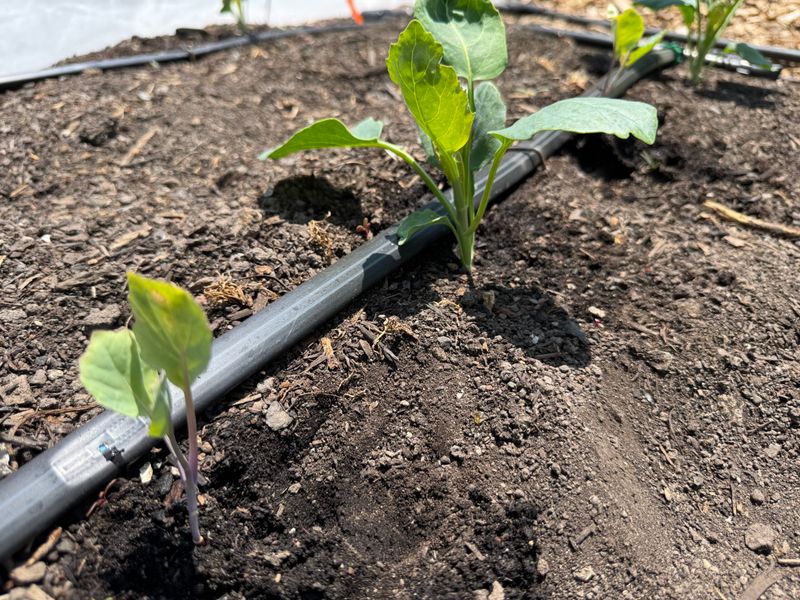
When heat and moisture stress are the working hypothesis, the first response should be restoring steady moisture to the root zone, not reaching for a fertilizer or amendment. A plant that is cycling between dry and waterlogged soil cannot take up nutrients efficiently regardless of what is in the ground, so stabilizing moisture is a necessary first step before anything else can help.
USU’s cauliflower guide and USU’s vegetable water recommendations suggest approximately 1 to 2 inches of water per week as a starting reference for cauliflower. That figure shifts depending on rainfall, soil type, whether plants are in containers, how much mulch is covering the bed, and how hot conditions are locally.
Use it as a baseline, not a universal prescription.
Newly planted transplants and established plants have different needs. UGA’s fall vegetable gardening guide recommends watering new transplants daily during the first week while they establish roots, then shifting to watering as conditions require once the plants are settled in.
Established plants need consistent moisture rather than a fixed daily schedule, with adjustments for rain, mulch coverage, and local heat.
Drip irrigation or soaker hoses are worth using if you have them. Both methods deliver water directly to the root zone and keep foliage drier than overhead watering does, which can reduce the risk of foliar disease.
A 2- to 3-inch layer of organic mulch over the bed helps slow evaporation and moderate soil temperature, giving roots a more stable environment during the hottest part of the day. Avoid repeated cycles of letting the soil go completely dry and then soaking it heavily, as that pattern stresses roots and makes nutrient uptake less reliable.
Limit new transplant and heat stress
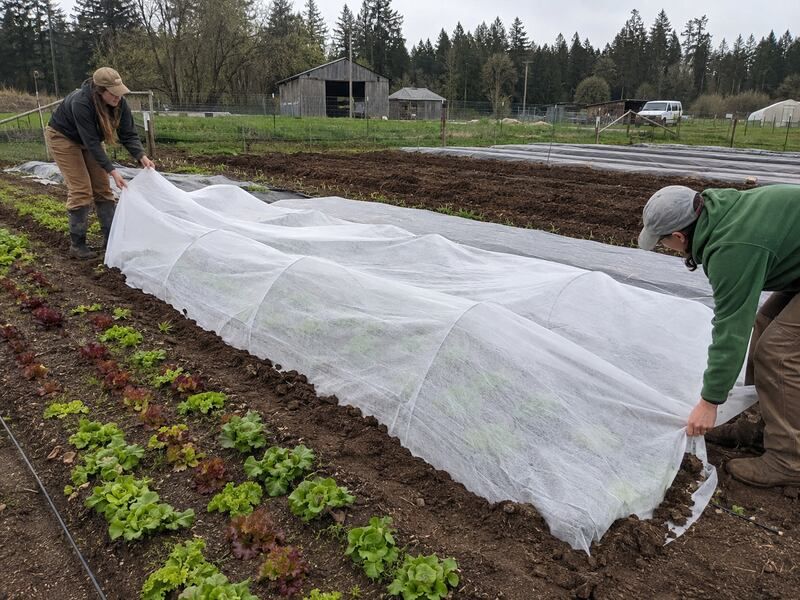
Reducing the stress a newly set transplant faces in late-summer heat starts before the plant ever goes into the ground. Hardening seedlings gradually over about a week, exposing them to outdoor light, wind, and temperature changes while keeping them adequately watered, gives them a much better chance of establishing without a serious setback.
UMN’s seed-starting guide describes this gradual outdoor exposure as an important step for any transplant, and UMN’s cauliflower growing guide reinforces that close attention to watering during the establishment period is essential. Skipping the hardening step and setting greenhouse-grown seedlings directly into a hot, sunny bed in August is a reliable way to trigger the kind of shock that leads to buttoning or stalled growth.
Lightweight summer row cover can offer some protection from wind and insects during the first week or two after transplanting. UGA’s fall vegetable gardening guide notes the value of protecting young transplants from insect pressure, which is particularly heavy in late summer in the South.
Use summer-weight material rather than heavier frost cloth, because heavier covers can trap excessive heat and create conditions that are worse than the open sun.
Temporary afternoon shade from a shade cloth or nearby structure may reduce heat load on the hottest days, but present it only as a short-term measure. Excessive shade weakens growth over time, and naturally purple-headed cauliflower cultivars actually need sunlight to develop full curd color.
Think of any shade or cover as a brief bridge, not a permanent fix.
Test nutrition and choose the right fall window
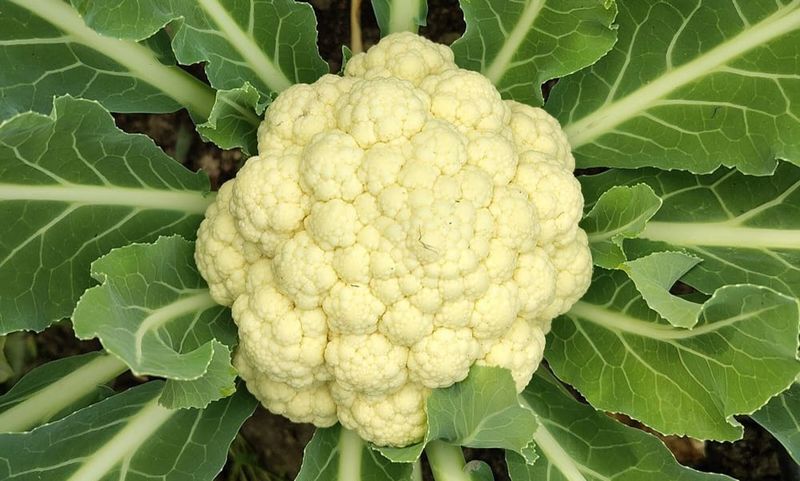
Purple foliage can push gardeners toward an immediate high-phosphorus fertilizer application, but applying phosphorus without knowing your soil’s actual nutrient levels and pH can cause more problems than it solves. Excess phosphorus can worsen nutrient imbalances and contribute to runoff, as Penn State’s phosphorus management guide and Colorado State’s plant nutrition resource both make clear.
A soil test tells you whether phosphorus is actually low or simply unavailable due to pH or other conditions.
If a soil test is not immediately available, a balanced vegetable fertilizer applied according to its label is a safer interim step than a high-phosphorus product chosen based on leaf color alone. USU’s cauliflower guide notes that adequate nitrogen is particularly important for supporting the leaf growth that a developing head depends on.
UGA’s soil fertility guide reinforces the value of testing before amending.
Timing your planting to the correct local window is equally important and often overlooked. Florida and Texas are not one climate, and a single national planting date does not apply.
UF/IFAS cauliflower guidance and UF/IFAS Gardening Solutions list different windows for North, Central, and South Florida, while Texas A&M’s cole crop guide shows that fall transplant dates across Texas range from mid-July in some warmer regions to October or November farther north and west. Checking your county Extension office or local planting calendar is the most reliable way to avoid putting transplants out during the worst heat window for your specific area.
UMN’s cauliflower growing guide recommends choosing short-season or heat-tolerant cultivars when warm weather may linger into your planting window. Selecting a variety bred to handle some heat and mature quickly gives your crop a better chance of heading before conditions deteriorate again.
Check for disease, insects, and spreading damage
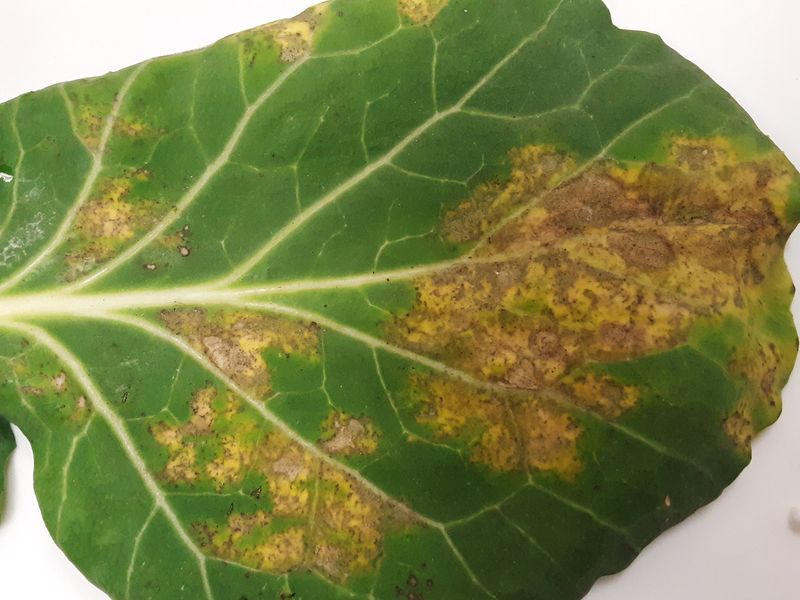
Purple or bluish leaf color accompanied by other visible symptoms should shift your investigation away from nutrition and toward disease or insect damage. Applying phosphorus fertilizer to a plant that is actually fighting a pathogen or an insect infestation will not help and may delay the correct response.
Inspect both surfaces of the leaves and the base of the plant carefully. Yellow spots, fuzzy or powdery growth on leaf undersides, ragged holes in the leaf tissue, wilting that does not improve after watering, water-soaked lesions, or necrosis that is spreading from one area to another are all signs that something beyond heat and moisture stress is at work.
Penn State’s guide on downy mildew and powdery mildew describes the fuzzy undersides and yellowing patterns associated with downy mildew, which affects brassicas and can be confused with nutrient stress at first glance.
USU’s brassica disease management guide and UMN’s cauliflower growing guide both describe brassica diseases and insect damage as having distinct signs that require closer inspection rather than a default fertilizer response. USU’s brassica production-problems guide also connects severe root or growing-point damage to a poorer recovery outlook regardless of what corrective steps are taken afterward.
Rapidly worsening symptoms or damage that is spreading across multiple plants are signals to contact your local Extension office for a more specific diagnosis. Trying to treat a disease or pest problem as a nutrition problem wastes time during a season that is already short.
Cooling may help, but the harvest is not guaranteed
Working through the checklist in order gives you the best chance of an honest assessment. Stabilize root-zone moisture first, reduce any additional transplant stress, examine the purple leaf pattern and look for signs of disease or insects, and arrange a soil test before adding phosphorus.
Then watch for new leaf growth and check whether the central growing point is still intact.
Cooler fall temperatures may allow a stressed plant to resume growth if the growing point is undamaged and no severe disease or root injury is present. USU’s cauliflower guide supports that possibility, but it does not extend to every situation.
A plant that has already buttoned, lost its growing point, or developed significant disease or root damage is unlikely to produce a usable head regardless of what the weather does next. USU’s brassica production-problems guide is clear that some damage is not reversible.
If the current plant does not recover, use the experience to plan the next one better. UGA’s fall gardening guide, UF/IFAS cauliflower guidance, and Texas A&M’s cole crop guide all provide region-specific timing that can help you put the next transplant in the ground at the right moment, with the right cultivar, for your corner of Florida or Texas.
A well-timed planting in suitable conditions is always a stronger foundation than any rescue treatment applied to an already-struggling plant.