
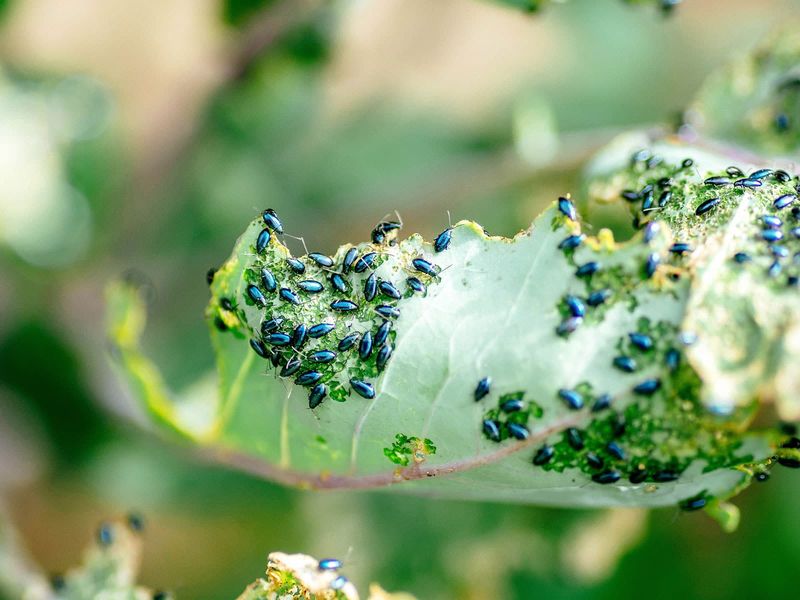
You checked your fall kale bed, found a row of healthy little sprouts, and came back two days later to find the leaves riddled with tiny holes. That kind of damage can happen fast, and it is alarming when the seedlings are still small enough to lose in a week.
Most of the time, the culprit is a small jumping insect called a flea beetle, and the good news is that you can act quickly to protect what is left. Understanding exactly what you are looking at, and why late-summer conditions in the South can make young kale more vulnerable, is the first step to getting your fall crop back on track.
Tiny shot holes make flea beetles the first suspect
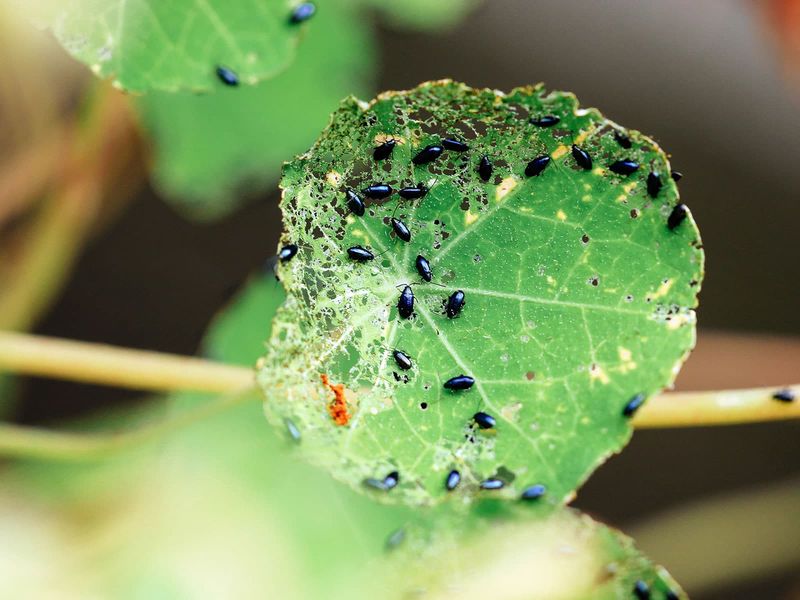
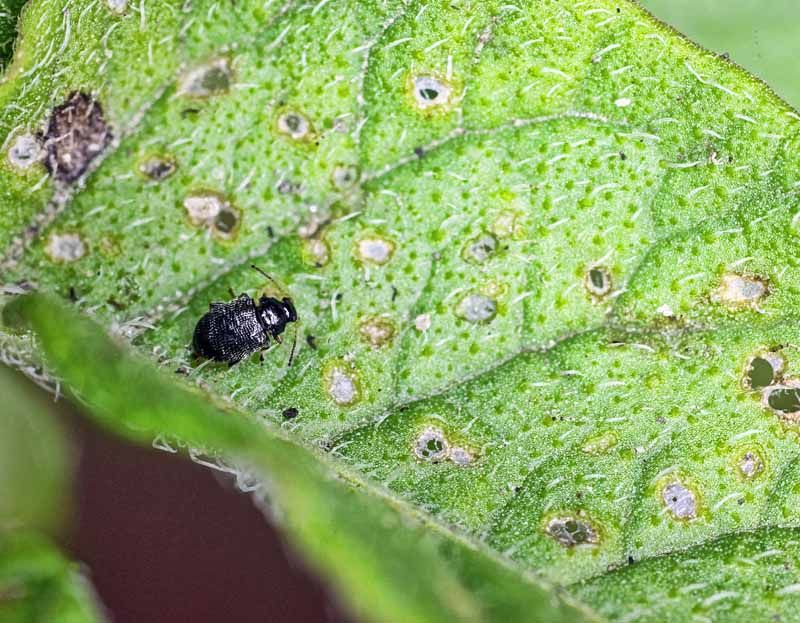
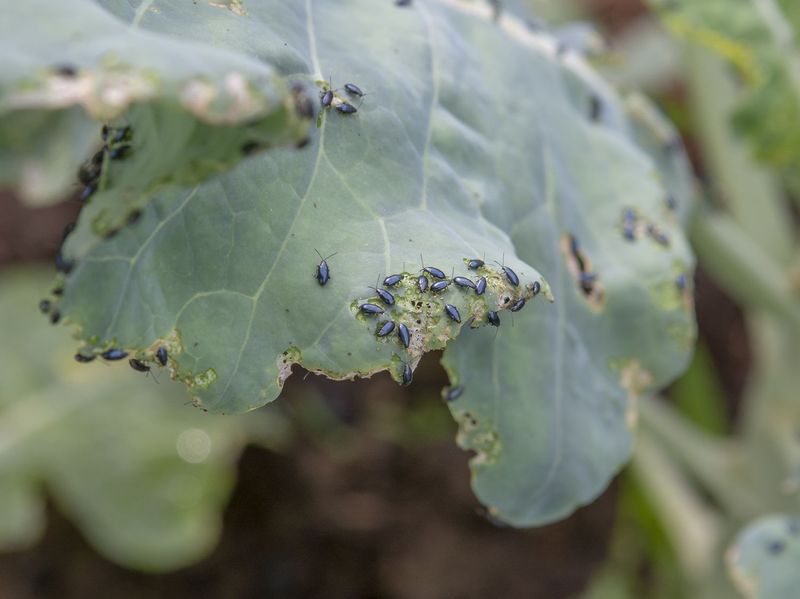
When young kale leaves emerge covered in dozens of tiny, pepper-like holes, each one roughly the size of a pinhead or smaller, adult flea beetles are the leading suspect. UC IPM’s cole crop pest guidelines describe flea beetle injury as numerous small pits and rounded or irregular shot holes that give foliage a peppered or shotgun-blast appearance.
A single large ragged tear or a few scattered bites point elsewhere, but that pattern of many small holes spread across the leaf surface is the signature you are looking for.
The insects themselves are small, often shiny, and equipped with enlarged hind legs that launch them into the air the moment a leaf is disturbed. Several species feed on brassicas, including kale, collards, cabbage, and mustard.
University of Minnesota Extension notes that the adults are easier to spot by their jumping behavior than by sight alone, since they move quickly and blend into soil.
Seedlings at the cotyledon-to-first-true-leaf stage are the most vulnerable. At that size, a plant has very little leaf area to spare, and heavy feeding can stunt or kill it before it develops a second set of leaves.
Older plants with five or more leaves generally tolerate the same feeding pressure much better, which is why protecting seedlings during the first week or two after germination matters most.
Compare the damage before choosing a treatment
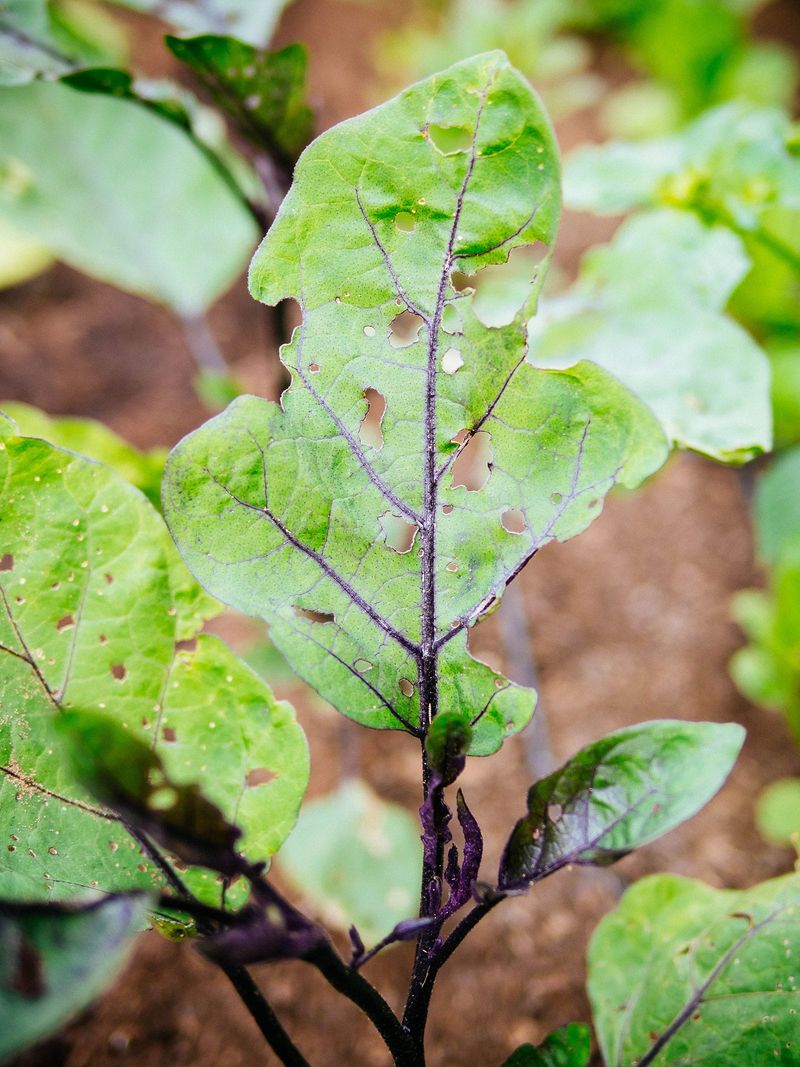
Not every hole in a brassica leaf points to the same pest, and treating for the wrong one wastes time while the real culprit keeps feeding. UC IPM’s home and landscape flea beetle page and the Texas A&M Vegetable IPM flea beetle resource both describe adult flea beetle damage as small, numerous pits or holes, while larger or ragged openings suggest a different chewing insect.
Caterpillars, including cabbage looper, imported cabbageworm, diamondback moth larvae, and others, tend to leave bigger, more irregular holes. Some species feed from the underside first, creating a translucent windowpane effect before breaking through.
Look for green or pale larvae resting on the leaf underside or along the midrib, small dark frass pellets on the leaf surface, tiny round eggs attached to leaves, or silky webbing near the growing tip. University of Minnesota’s plant diagnosis tool for cabbage-family crops lists these clues alongside damage photos to help narrow the field.
UMN’s caterpillars-on-cole-crops guide reinforces that visible larvae and frass are needed to confirm caterpillar feeding rather than assigning any single hole pattern to one species.
A quick field test helps when you cannot see insects directly. Hold a white sheet of paper under a damaged leaf and tap the plant firmly.
Flea beetles will jump and land on the paper, where their small dark bodies are easy to spot. No jumping insects on the paper, combined with visible larvae or frass, shifts the diagnosis toward caterpillars and changes which management steps make sense.
Heat raises the stakes without telling the whole story
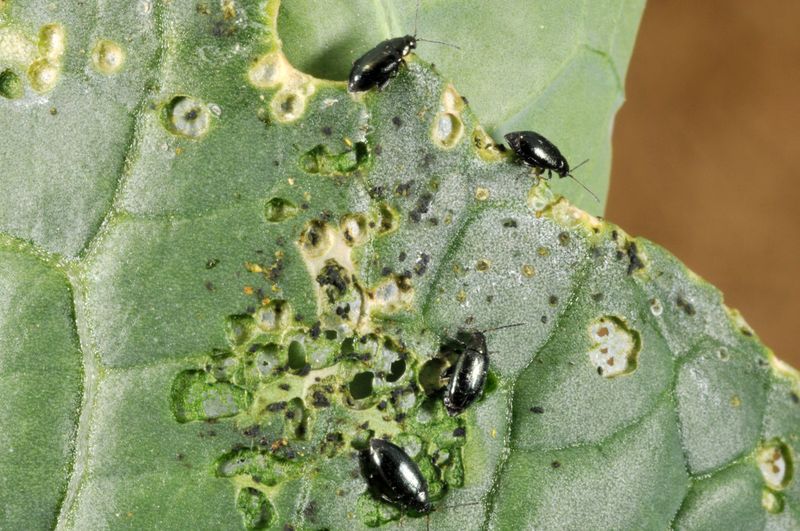
Warm, dry weather can favor flea beetle activity in some regions, and it can leave small kale seedlings less equipped to handle feeding at the same time. University of Maryland Extension notes that flea beetles tend to be more active in warm, dry conditions, which can overlap with late-summer establishment windows in parts of the South.
A seedling that is already stressed by heat and uneven watering has less capacity to outgrow damage quickly.
That connection does not mean heat alone creates a flea beetle outbreak. Spring is the primary peak in many northern and mid-Atlantic regions, but the picture is different farther south.
UF/IFAS extension guidance on flea beetles and NC State’s tobacco flea beetle pest management resource both document that warmer-region flea beetle species can produce multiple generations per year, meaning populations may remain active well into late summer or early fall in states like Florida, Georgia, and parts of Texas. Regional species, local weather patterns, and nearby host plants all shape whether beetles are present in numbers.
The practical takeaway is straightforward: late-summer heat is a condition that can make the situation worse, not a diagnosis on its own. If your kale seedlings show the right damage pattern and you find jumping beetles, the heat explains why the seedlings are struggling to compensate, not why the beetles appeared in the first place.
Address both the pest and the stress.
Inspect first, then use a secured breathable cover
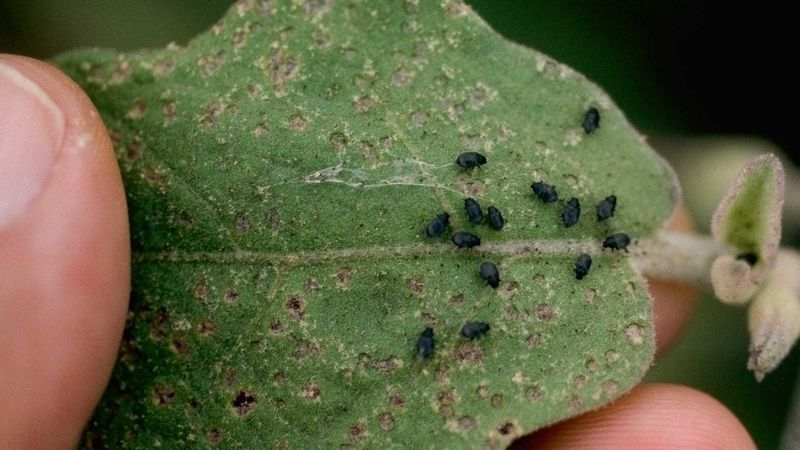
Before reaching for any cover, spend two or three minutes checking the plants and the soil surface around the base of each seedling. Look for small dark beetles resting on leaves or jumping when a plant is touched.
If beetles are already present in the bed, covering it without addressing them first traps the insects inside with the seedlings, where they can continue feeding undisturbed.
Utah State University’s flea beetle management guide is direct on this point: row covers work best as preventive exclusion, installed before beetles reach the crop. Once beetles are established beneath a cover, the cover cannot reliably cure the infestation.
If you find beetles on the plants, address them first, then cover the bed to protect against fresh arrivals from outside.
When you are ready to install the cover, use lightweight floating row cover fabric or fine insect netting rather than clear plastic film. UC IPM’s leaf and flea beetle home-and-landscape page recommends row covers as an effective physical barrier, and the Texas A&M AgriLife fall vegetable gardening guide notes that spunweb fabric provides both pest protection and light shading, which matters in late-summer Southern heat.
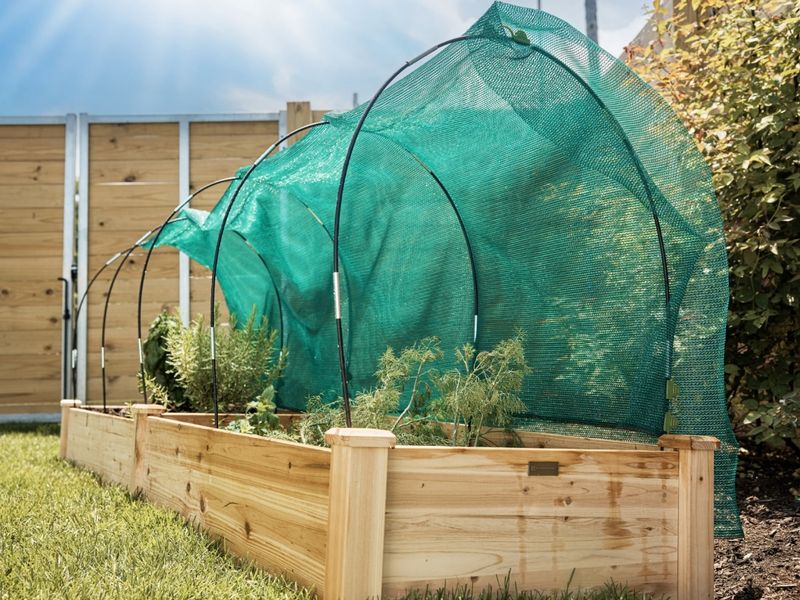
Bury or pin every edge so beetles cannot crawl under the fabric from the side. Leave enough slack so the cover floats above the seedlings rather than pressing down on them.
Crop rotation helps too: if brassicas grew in the same spot recently, beetles may already be present in the soil, and moving the planting location reduces that pressure.
Moisture and temporary shade help kale reach the safer stage
A seedling that is growing steadily can outpace moderate flea beetle feeding far better than one that is wilted, dry, or stunted from heat. Keeping the soil consistently moist, not waterlogged but never bone dry at the surface, gives young kale the best chance to push out new leaves faster than beetles can remove them.
UGA Extension’s fall garden planting guide specifically recommends half shade for young fall-garden seedlings during the hottest part of establishment, and the Texas A&M AgriLife fall vegetable guide advises keeping transplants moist and using shade where appropriate during the establishment window.
Temporary afternoon shade from a shade cloth, a breathable row cover on low hoops, or a nearby taller plant can lower soil temperature and reduce moisture loss during the two to three hottest hours of the day. This is a short-term measure, not a permanent installation.
Once daytime temperatures drop and the seedlings develop several true leaves, the extra protection can come off gradually.
Breathable fabric is the right choice for late-summer conditions in Florida, Texas, and similar climates. Utah State University’s row cover research page and the Texas A&M AgriLife fall vegetable gardening PDF both note that heat can accumulate under solid plastic film and that ventilation becomes necessary.
Clear plastic can drive soil and air temperatures to damaging levels in late-summer heat, and it also creates humidity conditions that encourage fungal disease on seedlings that are already stressed. Check covered beds every day or two for moisture, airflow, and any sign of disease forming at the soil line.
Scout twice a week and remove sources of pressure
Young kale needs eyes on it regularly, not just when something looks wrong. UC IPM recommends checking seedlings and new transplants at least twice per week until they are well established.
Each visit should include both a look at the insects present and an honest count of how much leaf area has been lost. A plant losing a small percentage of its leaves while still pushing new growth is in a different situation than one that has lost most of its foliage with no new leaves emerging.
Utah State University’s flea beetle leafy greens guide and University of Minnesota’s common vegetable insects resource both offer published thresholds in the range of one to five beetles per seedling or roughly 10 to 30 percent defoliation as conditions that may warrant action. Treat those figures as warning points rather than precise home-garden rules.
Plant age, current vigor, whether feeding is slowing or accelerating, and local beetle pressure all affect the right call. UC IPM’s home and landscape flea beetle guidance notes that once plants have approximately five or more leaves, they generally tolerate feeding much better than seedlings at the cotyledon stage.
While scouting, clear out any cruciferous weeds, wild mustard, or old brassica plant debris within a few feet of the bed. University of Minnesota Extension notes that weeds and crop debris can provide food and shelter for flea beetles and may increase pest pressure near new seedlings.
Removing that habitat does not eliminate beetles, but it reduces the reservoir feeding the population closest to your crop.
Use pesticides only after diagnosis and label checks
Physical exclusion, moisture management, and sanitation handle most of the work for seedling-stage flea beetle pressure. When feeding is heavy and those steps have not been enough, a pesticide may be appropriate, but the product must be labeled specifically for use on edible kale and applied exactly as the current label directs.
EPA guidance on reading pesticide labels before use makes clear that the label is a legal document, and EPA pesticide labeling questions and answers explains that using a product on a crop not listed is a violation regardless of how similar it seems to a listed crop. Always check the preharvest interval and follow it.
Homemade dish-soap mixtures should be avoided. University of Minnesota Extension’s insecticidal soap guidance warns that dish soap formulations can burn foliage, particularly on plants that are already heat- or drought-stressed.
Even registered insecticidal soap products require direct contact with the insect to work and can cause leaf damage if applied incorrectly or during the hottest part of the day.
Bt products, which are often recommended for caterpillar pests, do not affect adult flea beetles. UMN’s caterpillars-on-cole-crops guide and UGA Cooperative Extension’s fall vegetable gardening publication both clarify that Bt is appropriate only when the confirmed pest is a caterpillar species susceptible to it and the product label lists the crop.
Match the treatment to the pest you have confirmed, consult your local extension office for current product options, and never apply any pesticide beyond the rate or frequency the label allows. UC IPM’s cole crop flea beetle guidelines offer a useful framework for deciding when treatment is warranted versus when cultural controls are sufficient.
Protect the growing point and watch for new leaves
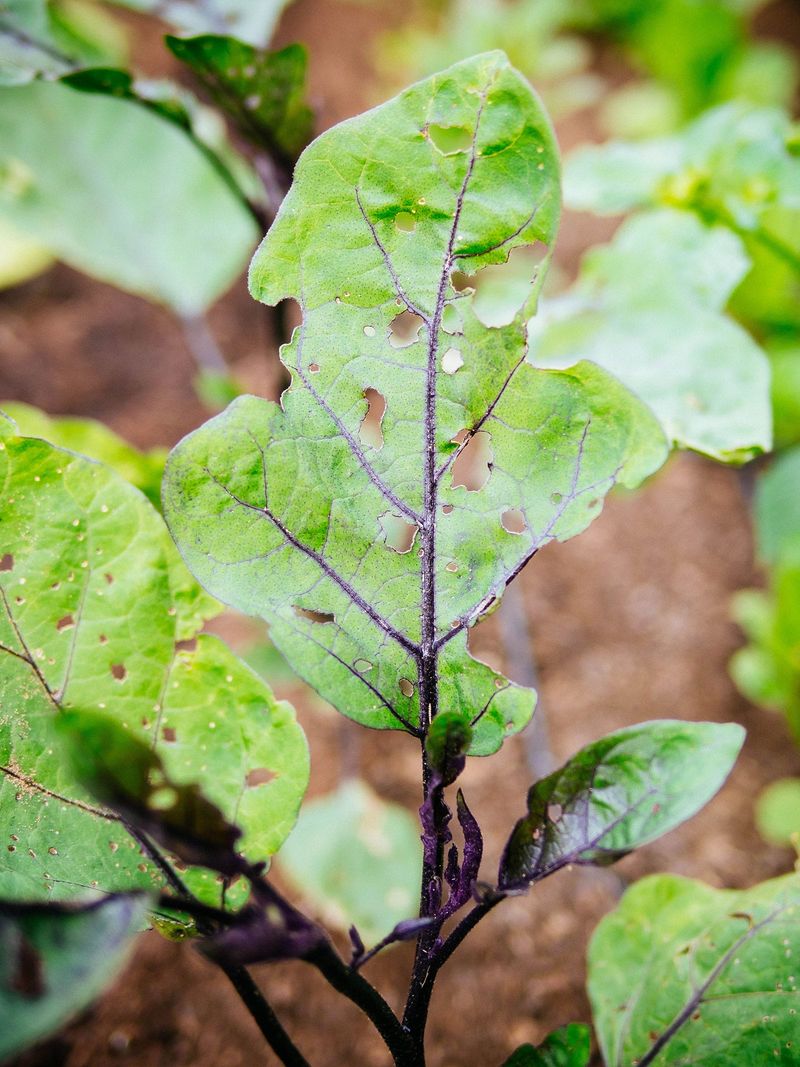
A seedling that still has its central growing point intact has a real chance of recovering, even if the older leaves look rough. Once fresh feeding stops and the plant has adequate moisture, new leaves can emerge and the plant may outgrow the damage over the following week or two.
The seedlings most at risk are those that have lost nearly all leaf area with no new growth visible, or those where feeding continues unchecked at the growing tip.
Check each plant individually rather than writing off the entire bed at once. Stop fresh feeding by confirming your cover is properly secured, address any beetles still present, and give the surviving seedlings consistent water and a brief period of afternoon shade if temperatures remain high.
Keep scouting on your twice-weekly schedule and note whether new leaves are emerging or whether damage is progressing.
Most fall kale beds are not lost to a flea beetle outbreak, but the window for protecting cotyledon-stage seedlings is short. A plant that gets through its first two weeks with its growing point intact and feeding reduced is usually on its way to a productive fall harvest.
The seedlings that make it past five true leaves will have earned their spot in the garden.