
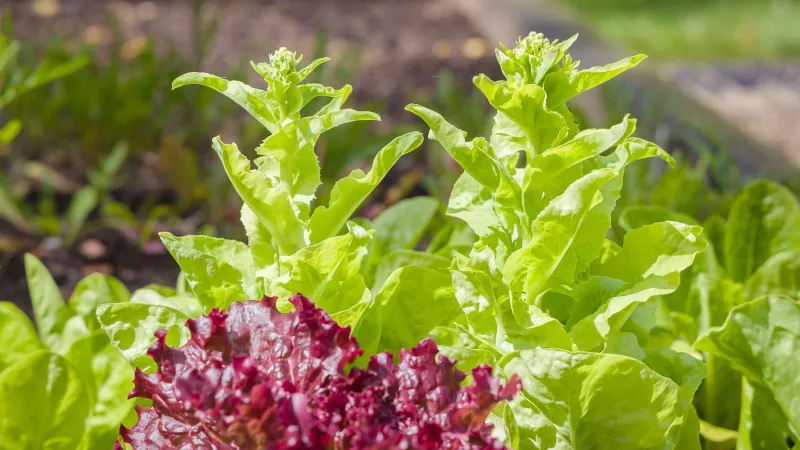
Planting lettuce in late summer for a fall harvest sounds straightforward, but Southern gardeners often watch their seedlings stretch tall, turn bitter, and go to flower before producing a single decent leaf. The problem is real, but it is not always what it looks like.
Understanding what actually drives lettuce toward flowering, and what just looks like bolting but is not, can save your fall garden and your patience.
First, separate true bolting from normal open lettuce growth
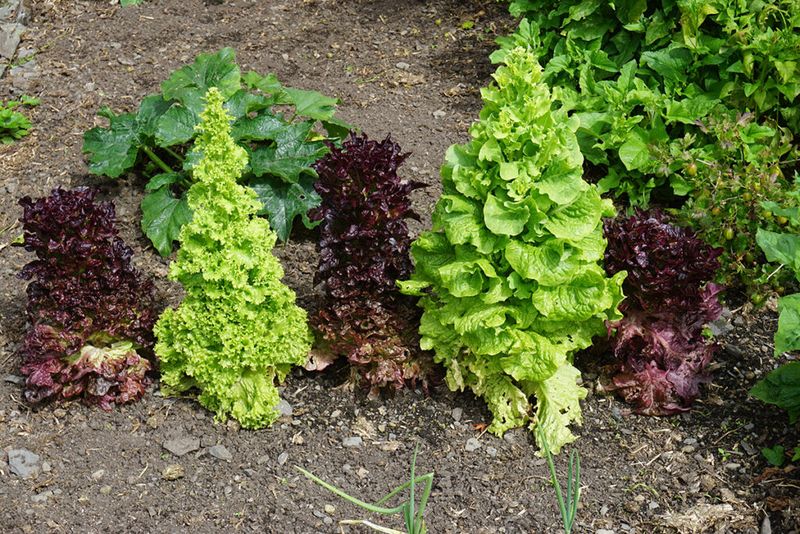
Leaf lettuce does not form a dense, round head under normal conditions, and that is not a problem. Many gardeners growing loose-leaf varieties in Texas, Florida, or Georgia expect a tight ball of leaves and panic when the plant stays open and relaxed.
That open form is simply what leaf lettuce does, and it is not a sign of bolting.
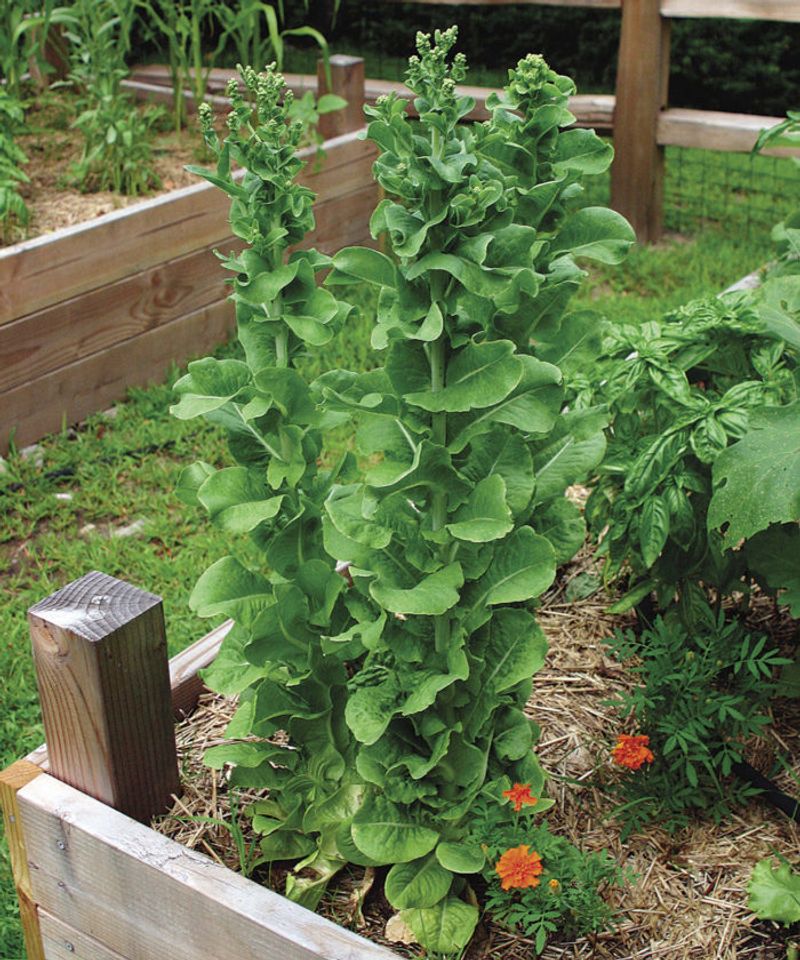
True bolting looks different. Watch for a central stem that begins elongating rapidly, pushing the plant upright and giving it a taller, more column-like silhouette.
Leaf shape often changes too, with newer leaves becoming smaller, more pointed, or more deeply lobed than the broad, rounded leaves the plant produced earlier. Once flower buds appear at the top of that elongated stem, the plant has committed to reproduction, and University of Minnesota Extension guidance on growing lettuce is clear that this process cannot reliably be reversed.
Bitterness can show up before you ever see a flower stalk. Heat and water stress can affect flavor on their own, so a bitter leaf does not automatically mean your plant is already flowering.
The UMN diagnostic page on bitter lettuce confirms that heat stress and drought are independent contributors to off flavor. If you taste bitterness but the stem is not yet elongating, improving moisture and shade may still help quality.
Once flowering is clearly underway, your best move is to harvest whatever tender leaves remain and plan a replacement planting for cooler conditions.
Heat raises bolting risk without creating one universal trigger
Lettuce does not bolt the moment a thermometer crosses one specific number. The response builds with time, intensity, and a combination of conditions rather than flipping like a switch at a single temperature reading.
That distinction matters a lot for fall gardeners in the South, where heat lingers well into September and sometimes October.
Practical extension guidance uses rough thresholds to describe risk ranges rather than hard rules. University of Minnesota’s lettuce flowering diagnostic page notes that multiple days above roughly 75 degrees Fahrenheit can raise the risk of flowering.
Southeastern production guidance goes further, warning that several consecutive days above 85 degrees Fahrenheit can trigger seed-stalk formation. Research published in peer-reviewed literature used controlled day-night conditions of about 91 degrees Fahrenheit during the day and 77 degrees at night, and found that visible bolting initiation began in heat-sensitive cultivars after roughly eight days under those conditions.
That is a laboratory setting, not a backyard garden, but it illustrates how exposure duration compounds the risk.
Warm nights are a meaningful part of the equation. When temperatures stay elevated after sundown, the plant gets no overnight recovery period, and the cumulative heat load accelerates the shift from leaf production to stem elongation and flowering.
A few hot afternoons with cool nights is a very different situation from a week of warm days followed by muggy, 75-degree nights. Recognizing that pattern, rather than hunting for one magic threshold, gives you a more accurate read on when your plants are in real danger.
Day length, light, genetics, and drought change the outcome
Two lettuce plants can sit in the same bed, face the same temperatures, and respond completely differently. Cultivar genetics are a major reason.
Lettuce behaves as a quantitative long-day plant, meaning that longer days push it toward flowering, and research on photoperiodic response across genetically diverse lettuce accessions shows that high temperature and day length interact to accelerate the transition. A heat-sensitive cultivar planted in late August, when days are still long and temperatures are high, faces a much more difficult environment than a slow-bolting type planted a month later.
Plant age and water status add more variables. Older, more mature plants often bolt more readily than younger seedlings that have not yet accumulated the physiological signals that precede flowering.
Drought stress compounds the heat signal, telling the plant that conditions are deteriorating and pushing it to reproduce before the season ends. Intense direct light, especially the harsh afternoon sun common across the South in August and September, raises leaf temperature above air temperature and adds to the overall stress load.
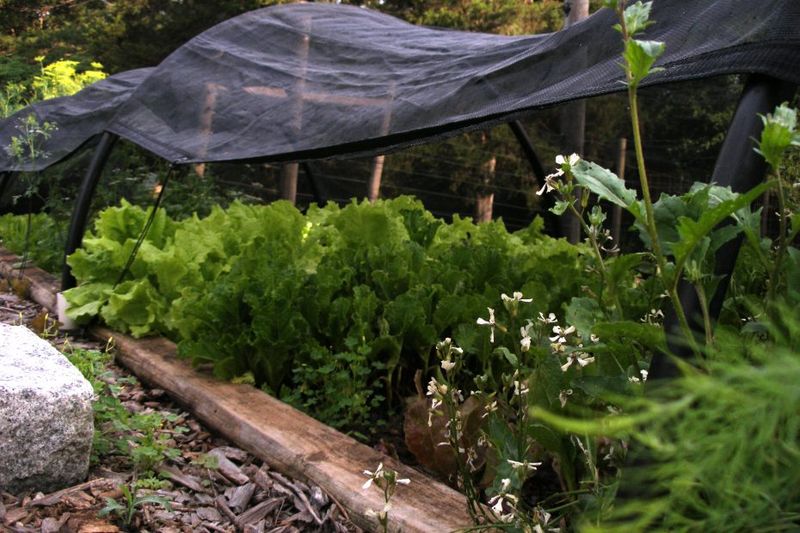
Shade cloth can reduce both heat and light intensity, and USDA Agricultural Research Service work on lettuce bolting and flowering supports shade as a useful management tool. The limit is that shade does not shorten the day or override a cultivar’s genetic sensitivity.
A plant predisposed to bolt under long days will still receive the same photoperiod signal even under a shade cloth. Think of shade as a way to reduce one stressor, not as a complete solution to a multi-factor problem.
The UC Statewide IPM bolting overview reinforces that point, noting the interaction of multiple environmental and genetic factors.
An open, tall, or failed seedling may have another problem
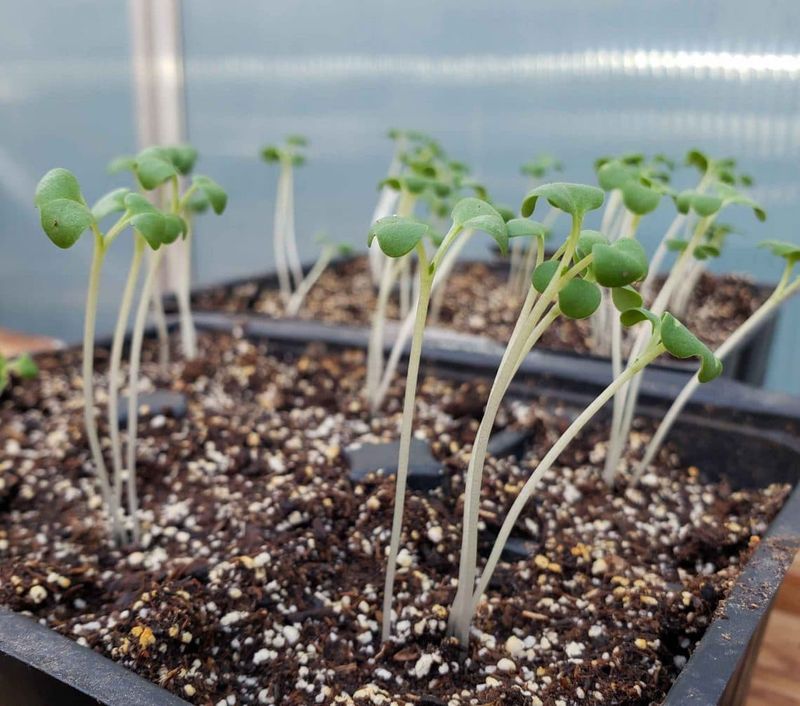
Not every struggling lettuce seedling is bolting. Several other conditions produce plants that look wrong but have a completely different cause, and treating them as bolted plants leads to the wrong fix.
Running through a short checklist before pulling plants can save a lot of unnecessary replanting.
Seedlings that are tall, pale, and floppy rather than upright with a thickening central stem are often stretching toward light, not bolting. Insufficient light causes weak, elongated growth called etiolation, and it looks nothing like the firm, rapid stem elongation of a plant moving toward flowering.
Separately, seeds that simply never germinate in late-summer soil may be experiencing thermoinhibition. Research on thermoinhibition of lettuce seed germination confirms that lettuce seed germinates best around 70 to 75 degrees Fahrenheit, and overheated soil can prevent emergence entirely until temperatures drop.
If your seeds are not coming up, the soil temperature may be the culprit rather than any problem with the plants themselves.
Plants that are stunted, discolored, and bitter but not elongating toward a flower may be suffering from heat stress, drought, a nutrient shortage, or spacing problems that limit airflow and root space. A plant that stays small and fails to form a head may simply be a leaf type that never heads up, or a crisphead variety that lacks the cool conditions it needs.
One more possibility worth knowing: UMN guidance on non-pest issues in cool-season crops flags aster yellows as a cause of bitter, distorted, and unusually stunted lettuce. If your plants are yellowing, bizarrely twisted, and stunted rather than simply stretching toward a flower, aster yellows carried by leafhoppers is worth investigating as a separate diagnosis.
Time fall planting around the hottest establishment period
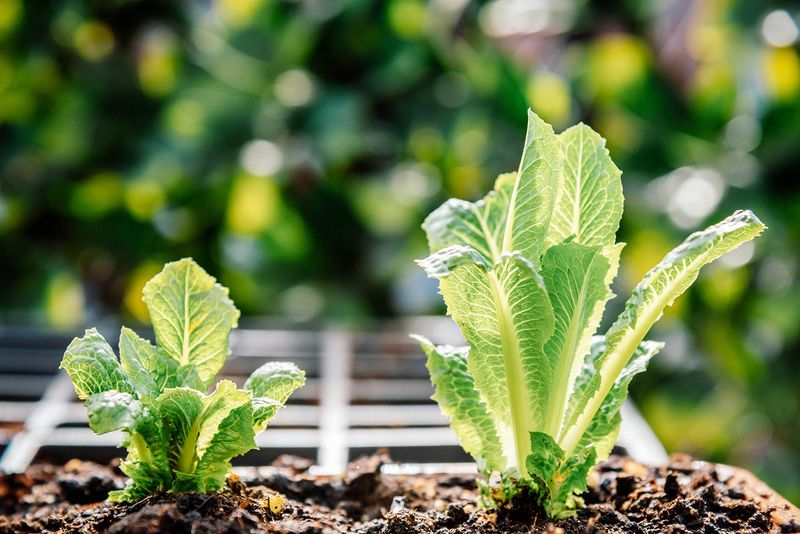
Timing is the single biggest lever a Southern gardener has for fall lettuce success. Starting too early means young plants face the worst heat of the season during their most vulnerable stage, and no amount of watering or shade fully compensates for planting seedlings into 95-degree conditions in August.
The goal is to get plants into the ground late enough to dodge the peak heat, while still leaving enough growing time for a real harvest before temperatures drop below the crop’s comfort zone.
Regional guidance gives useful anchors, though none of them should be copied blindly. Texas A&M’s looseleaf lettuce guidance points to September as the target planting month for Central Texas, with harvest expected in November.
UGA Extension’s fall vegetable gardening calendar lists leaf lettuce for roughly September 1 through October 15, though timing varies across Georgia’s different climate zones. In Florida, UF/IFAS vegetable gardening guidance shows outdoor planting windows beginning in September and extending through winter in many parts of the state, with cultivar selection and local timing playing a bigger role than any single calendar date.
Southern Texas and South Florida can still be genuinely hot in September and even October, so a date on a chart is less reliable than watching your local forecast. If daytime highs are still consistently in the upper 80s or 90s, starting transplants in a protected indoor or shaded location and waiting for a cooler window makes more sense than rushing seeds into overheated soil.
The Texas A&M AgriLife fall vegetable gardening guide reinforces using local conditions and lettuce type together when setting your planting window, rather than relying on one fixed date.
Reduce heat and water stress while plants establish
For gardeners who have already put plants in the ground, the focus shifts to keeping them alive and productive through whatever heat remains. Two things matter most during establishment: consistent soil moisture and temporary protection from the harshest afternoon sun.
Lettuce roots are shallow, and they dry out fast in sandy Southern soils or containers. Utah State University Extension irrigation guidance for leafy greens recommends watering deeply enough to wet the entire root zone rather than giving frequent light surface sprinkles that barely penetrate the soil.
In containers or sandy beds, that may mean checking moisture daily during hot spells. The goal is even moisture without waterlogging, because standing water is as harmful as drought.
NC State Extension’s lettuce production guide also identifies consistent moisture as a key factor in maintaining leaf quality and slowing stress-related bitterness.
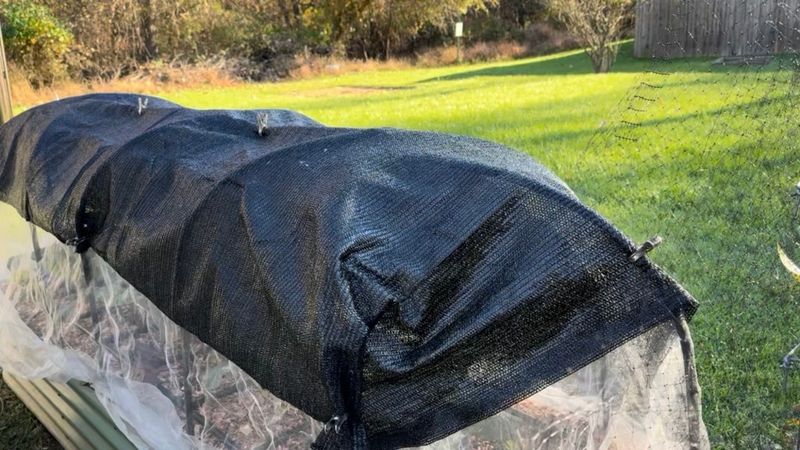
Afternoon shade can meaningfully reduce leaf temperature and light stress during hot spells. A framed shade cloth held above plants rather than draped directly on them maintains airflow while cutting the intensity of direct sun.
UGA Extension research on extending the lettuce season in Georgia using shade cloth found that shade can help preserve quality during warm periods. Heavy, continuous shade without airflow, however, can lead to weak and stretched growth, so the cover should be elevated and used selectively rather than left in place around the clock.
One firm warning: never seal plastic row cover over lettuce in hot weather. Plastic traps heat and can cook seedlings quickly.
If you want to use a cover, choose a ventilated fabric or shade material, and University of Maryland Extension guidance on growing lettuce at home supports using breathable materials rather than solid plastic in warm conditions. These steps improve survival odds and leaf quality, but they are not a guarantee against bolting if heat and day length remain unfavorable.
Choose a suitable type and harvest before quality collapses
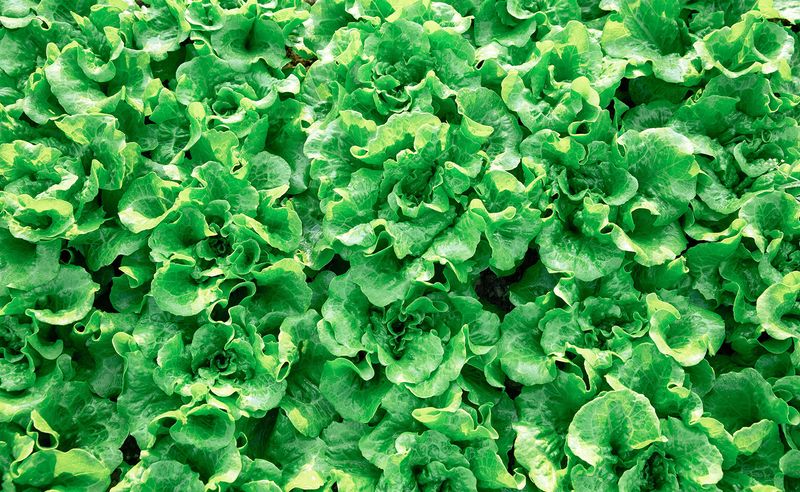
Cultivar selection is one of the most practical things a Southern gardener can control before seeds ever go into the ground. Not all lettuce handles heat the same way, and choosing a type described as slow-bolting, heat-tolerant, or suited to summer and fall production can meaningfully extend your harvest window even when conditions are far from perfect.
UF/IFAS guidance on lettuce production systems lists several cultivars with heat tolerance or slow-bolting characteristics worth trying in warm-region gardens, including Summercrisp types, Nevada, New Red Fire, Tropicana, and Coastal Star. These are not guarantees.
Regional performance varies, and a cultivar that thrives in central Florida may behave differently in north Georgia or the Texas Hill Country. Treat these names as a starting point for your own local trials rather than a promise of success.
Meanwhile, UF/IFAS vegetable gardening guidance for Florida specifically notes that leaf types grow well in Florida’s warm conditions, while dense crisphead lettuce is better reserved for the coolest months. That distinction applies broadly across the South: loose-leaf and Summercrisp types offer a far more realistic warm-region crop than iceberg-style heads.
Harvest often and harvest young. Oregon State University Extension tips for growing great lettuce recommend cutting baby leaves while they are still small and tender, and UMN’s lettuce growing guide supports frequent harvesting as a way to stay ahead of toughening and bitterness.
When a plant has clearly bolted with a tall flower stalk and bitter leaves throughout, salvage whatever tender outer leaves remain, then remove the plant. Purdue Extension’s lettuce bolting resource advises replacing affected plants and replanting when conditions improve rather than waiting for a clearly bolted plant to recover.
The best fall lettuce crop usually comes from matching the right cultivar to a well-timed planting, then harvesting early enough that the heat never gets the last word.