
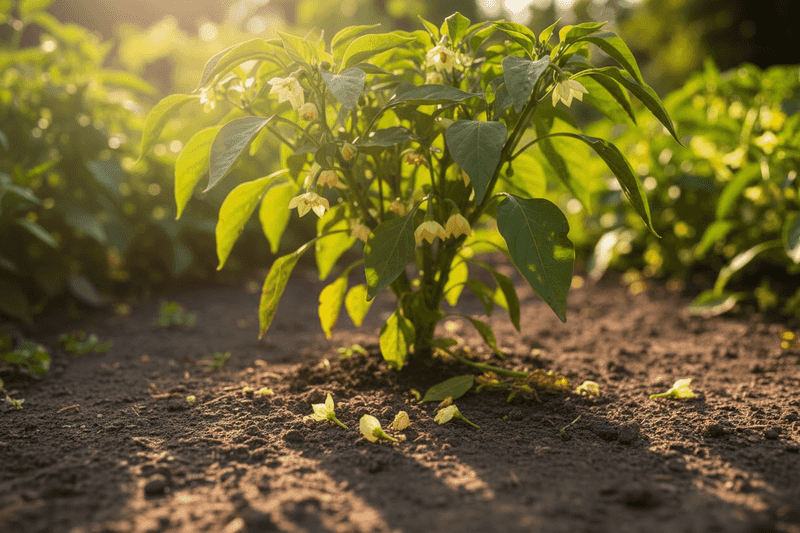
Watching flower after flower fall from your pepper plants without a single fruit forming is one of the most frustrating sights in a summer garden. For Southern gardeners counting on a fall harvest, those dropped blossoms can feel like a warning sign that the whole crop is failing.
Most of the time, the culprit is closer to your thermometer than to your watering can or fertilizer bag. Understanding what is actually happening gives you a real shot at protecting what is left of the season.
Heat is the leading suspect when healthy blossoms fall
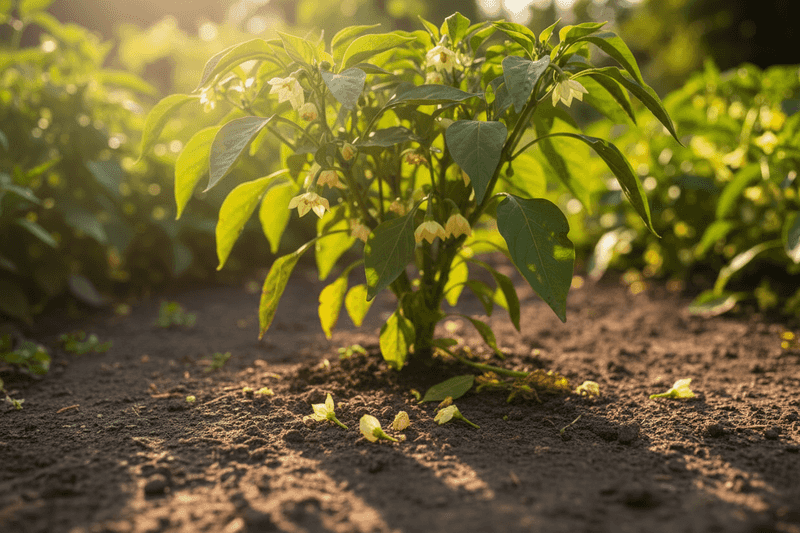
Pepper flowers that look perfectly healthy one morning and lie on the soil by afternoon are sending a clear message about temperature. Extension sources from Texas A&M and the University of Georgia identify daytime highs around 90 to 91 degrees Fahrenheit, paired with nights that stay above roughly 70 to 75 degrees, as conditions commonly associated with poor fruit set and blossom abortion in peppers.
Texas A&M pepper production guidance treats these ranges as practical warning thresholds rather than a hard biological line, because cultivar, humidity, and local conditions all shift exactly where a plant starts to struggle.
Bell peppers tend to hit that wall earlier than many hot-pepper types. Iowa State Extension notes that hot peppers often tolerate high temperatures better and may keep setting fruit in conditions where bell peppers have already stopped.
That does not mean every jalapeño or cayenne will sail through a heat wave without problems, but it does explain why two plants growing side by side in the same bed can behave very differently.
Check both your daytime high and your overnight low using a min-max thermometer or a weather app with hourly data. A string of days at or above 90 degrees combined with warm nights is strong evidence that heat is driving the drop.
Even so, moisture supply, fertility, pollination conditions, wind, humidity, and pest pressure each deserve a separate look before you settle on any single diagnosis.
A steady root zone gives flowers a better chance
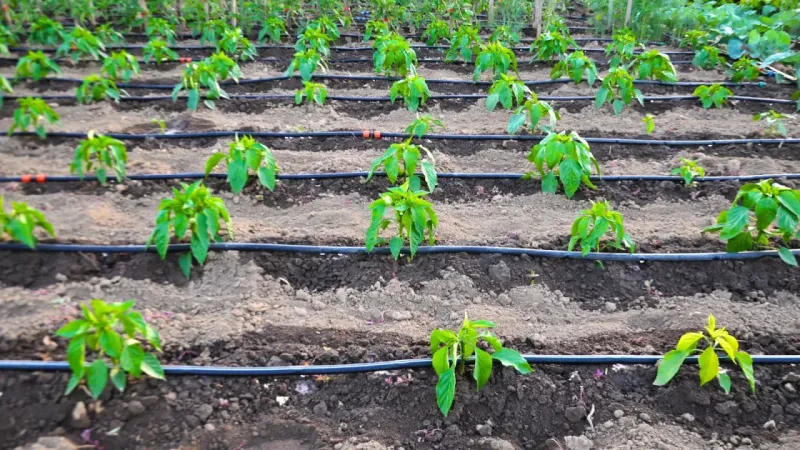
Soil moisture that swings between bone dry and waterlogged puts extra pressure on a plant that is already fighting high temperatures. Oklahoma State Extension pepper production guidance identifies drought and uneven moisture as documented contributors to flower and young-fruit drop, separate from and sometimes compounding the effects of heat.
When roots are stressed by dryness, the plant has fewer resources to hold onto developing flowers, and blossom abortion becomes more likely even on days that are not record-breaking.
Overwatering creates a different but equally serious problem. Waterlogged soil cuts off oxygen to roots, invites root rot, and can produce wilting that looks deceptively similar to drought stress.
Before adjusting your irrigation, push a finger or a soil probe a few inches into the root zone and check what you actually find. UC IPM pepper cultural tips recommend watering deeply enough to reach the root zone and then monitoring soil conditions rather than following a fixed calendar schedule, because the right frequency depends on soil type, container size, plant size, weather, and whether mulch is in place.
A two- to three-inch layer of organic mulch around the base of each plant can meaningfully reduce the temperature swings and evaporation cycles that dry out the root zone between waterings. Drip or soaker irrigation delivers water at ground level, keeps foliage dry, and reduces runoff compared to overhead sprinklers.
Neither tool guarantees that flowers will set, but both help keep the root environment stable enough for the plant to cope with whatever heat arrives.
More fertilizer will not force heat-stressed flowers to set
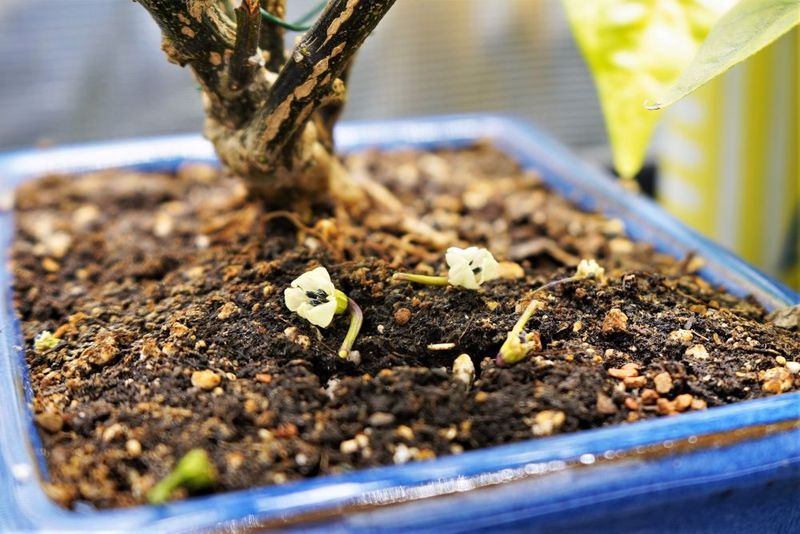
A plant that refuses to fruit can trigger the impulse to feed it, but adding more fertilizer to a heat-stressed pepper is usually the wrong move. Excess nitrogen is particularly counterproductive during flowering: it pushes the plant toward producing abundant, dark green foliage while signaling it to delay or reduce fruit set.
UF/IFAS fertilizer research on peppers supports matching fertility inputs to actual soil needs rather than applying heavy doses in response to poor production. A soil test is the most reliable way to know what your garden actually requires before adding anything.
Calcium is worth addressing separately because it comes up often in pepper conversations. Blossom drop and blossom-end rot are two completely different problems.
Blossom drop happens before a pepper ever develops: the flower falls while the plant is still in bloom. University of New Hampshire Extension explains that blossom-end rot appears later, as a sunken, darkening lesion on the bottom of a developing fruit, and it is tied mainly to how consistently calcium moves through the plant via water uptake rather than to a simple shortage of calcium in the soil.
Spraying calcium on leaves or adding calcium fertilizer as a blanket response to blossom drop does not address either problem reliably.
UF/IFAS pepper production guidance recommends following label directions or local Extension recommendations rather than guessing at rates. When in doubt, hold off on additional feeding until you have ruled out heat, moisture, and pest causes, and then consult your county Extension office for soil-test-based advice specific to your region.
Use shade to lower the heat load, not to promise a cure
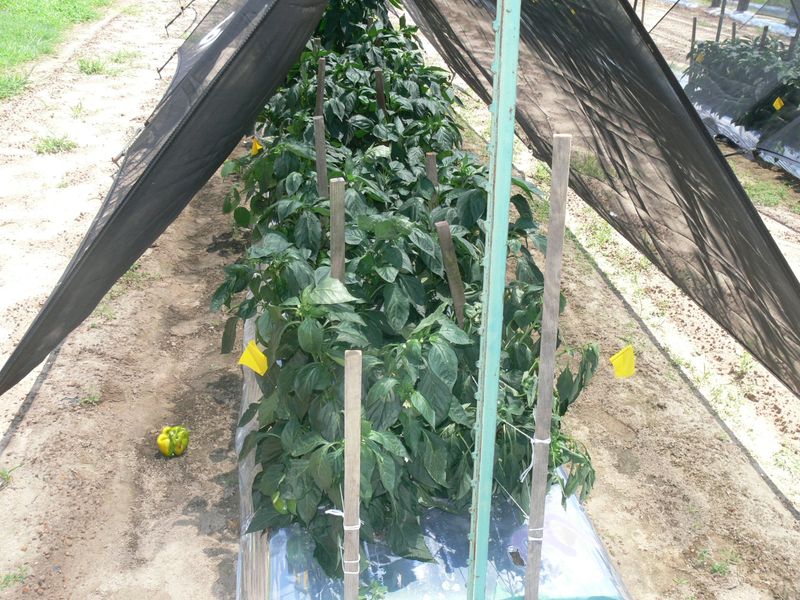
Once you have confirmed a hot-weather pattern, temporary afternoon shade is a practical and low-risk tool to add to your response. University of Delaware Cooperative Extension identifies approximately 30 percent shade cloth as a useful level for many vegetables, including peppers, because it cuts intense sunlight without blocking enough light to reduce photosynthesis significantly.
The goal is to reduce the heat load on flowers and developing tissue during the hottest part of the afternoon, typically from around noon through mid-afternoon when solar radiation peaks.
Results from field work suggest the benefit shows up more clearly in fruit quality than in fruit number. University of Delaware research on pepper production found that shade improved pepper size and marketability but did not necessarily increase the total number of fruits set.
Shade can reduce heat stress and may help the plant hold onto more flowers, but treating it as a guaranteed cure for blossom drop overstates what the evidence shows.
Securing shade cloth properly matters as much as choosing the right density. Fabric that is loosely attached can catch wind and damage plants or tear away entirely during summer storms, which are common throughout the South.
Use stakes, clips, or a simple hoop system to hold the cloth firmly above the canopy. Also avoid clear plastic row covers during hot weather unless they are actively ventilated.
University of Maryland Extension row-cover guidance notes that plastic covers can trap heat and raise temperatures inside, worsening exactly the stress you are trying to relieve. Shade cloth, not heat-retaining plastic, is the right material for intense Southern summer conditions.
Pollination and pests deserve a targeted inspection
Blaming a missing bee population is a common first instinct when fruit refuses to form, but peppers generally self-pollinate, meaning pollen from a flower can fertilize itself without insect help. Iowa State Extension explains that while insect visitation can improve some production outcomes, such as fruit size or seed count, the absence of bees is not automatically the reason flowers are falling.
Heat, high humidity, poor pollen function, and physical flower injury can all interfere with fruit set even when the plant is fully capable of self-pollinating under better conditions.
Hand pollination is sometimes suggested as a quick fix, but it is not a reliable universal remedy for heat-related blossom drop. UC Marin Master Gardeners pepper notes and other Extension sources treat hand pollination as a limited experiment worth trying only after heat, moisture, and pest issues have already been addressed.
Touching a small brush or cotton swab to open flowers may help in specific cases, but it will not override the physiological effects of excessive temperature on pollen viability.
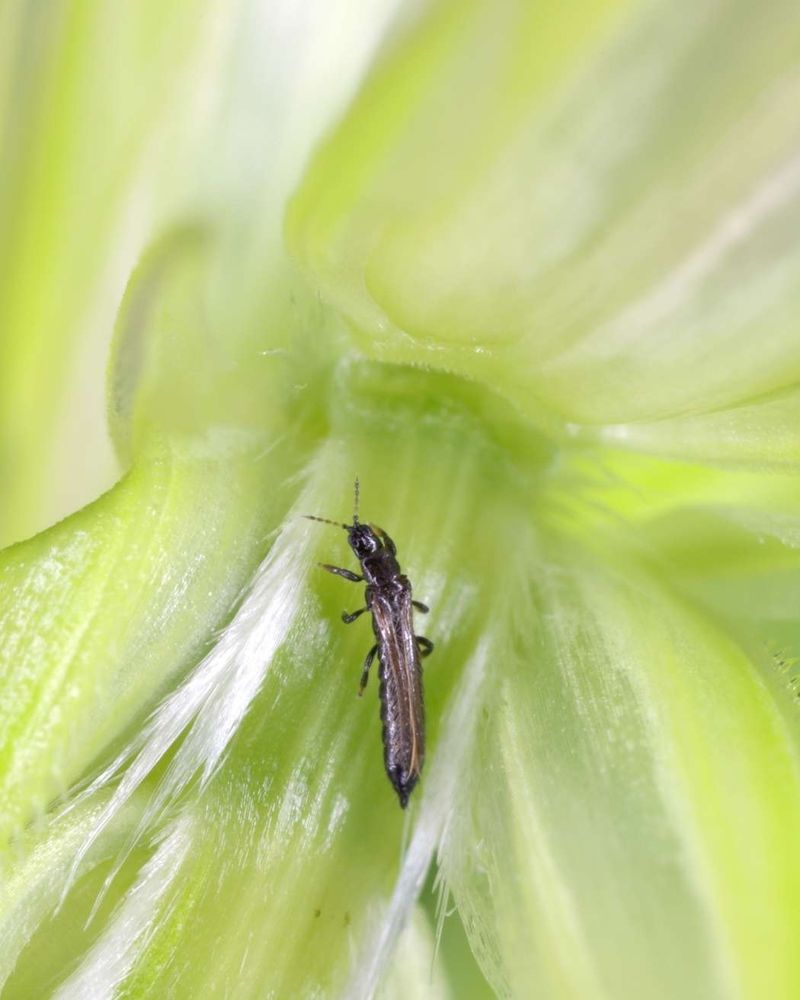
A close physical inspection of your plants is more productive than either blaming bees or reaching for a spray bottle. Look at open flowers, the undersides of leaves, and any tiny developing fruit for signs of aphid colonies or thrips feeding injury.
UF/IFAS pepper pest management guidance notes that aphids feeding on flowers can reduce fruit set and may transmit plant viruses, while thrips can injure flower tissue and interfere with development. However, NC State Extension thrips management research emphasizes scouting first and establishing a threshold before treating, because not every thrips sighting justifies a spray.
UF/IFAS integrated pest management principles call for identifying the pest, following the product label, using selective controls, and protecting pollinators and beneficial insects rather than applying broad-spectrum pesticides automatically during flowering.
A heat pause may still leave time for a fall harvest
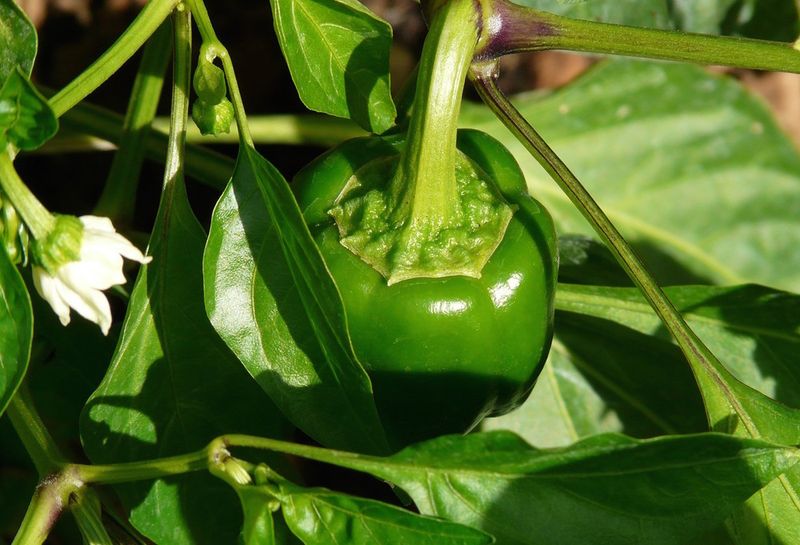
Losing several weeks of fruit set to a summer heat spell does not automatically mean the season is over. Peppers are grown as a fall crop across much of the South precisely because temperatures moderate enough in late summer and early fall to allow a productive second window.
Whether that window is still open for your plants depends on several overlapping factors: the variety you chose, when you set out transplants, your specific local temperature pattern, and how soon the first frost or cool-weather limit arrives in your area.
Texas and Florida offer useful but very different examples. Texas A&M AgriLife Extension fall gardening guidance lists peppers as a recommended fall crop but notes that recommended planting dates vary substantially across the state’s gardening regions, so a single statewide date does not apply.
In Florida, UF/IFAS vegetable gardening in Florida and UF/IFAS pepper production for Florida describe late-summer and fall planting windows that differ among north, central, and south Florida because of how much each region’s temperatures shift between August and December.
If your transplant date and variety’s days-to-maturity still leave a reasonable gap before your area’s first expected cool spell, the plant may resume setting fruit as temperatures ease. Watch new flower buds and check whether small peppers are holding on the plant rather than dropping.
Recovery is possible but not guaranteed, and matching your expectations to your actual remaining season is more useful than assuming the worst or the best.
Use a calm, staged diagnosis before changing everything
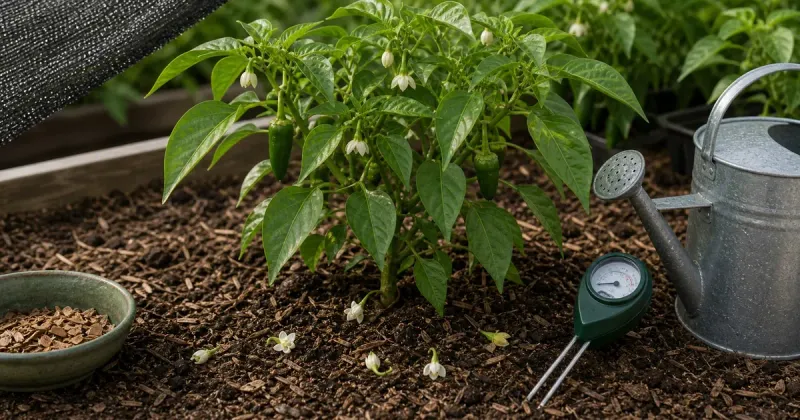
Reacting to blossom drop by changing everything at once makes it nearly impossible to know what actually helped. A more useful approach works through the most likely causes in order, starting with what costs nothing and carries the least risk.
Pull up your local temperature data for the past two to three weeks and check both the daytime highs and the overnight lows. If days have been consistently near or above 90 degrees and nights have stayed warm, heat is your strongest lead, as Texas A&M pepper production resources and other Extension sources consistently indicate.
Next, check root-zone moisture by feeling the soil a few inches down rather than guessing from the surface. If the soil is consistently moist but not soggy, watering is probably not the main problem.
If it is dry or swinging between wet and dry, adjust your approach before adding anything else. Oklahoma State Extension supports consistent moisture management as a key factor in reducing compounding stress during heat events.
Hold off on fertilizer unless a soil test points to a specific deficiency, and avoid calcium or phosphorus applications as a default response to blossom drop.
Once temperature and moisture are addressed, set up properly secured shade cloth if afternoon heat remains intense, then inspect flowers and foliage closely for aphids, thrips, or other pest injury before considering any spray. University of Delaware heat-stress guidance reinforces matching each response to the actual observed condition rather than applying broad fixes all at once.
Watch for new buds holding on as temperatures ease. Late-summer heat often explains pre-fruit blossom drop in Southern gardens, and steady, targeted care gives your plants the best realistic chance at a fall harvest without promising outcomes that depend on weather you cannot control.