
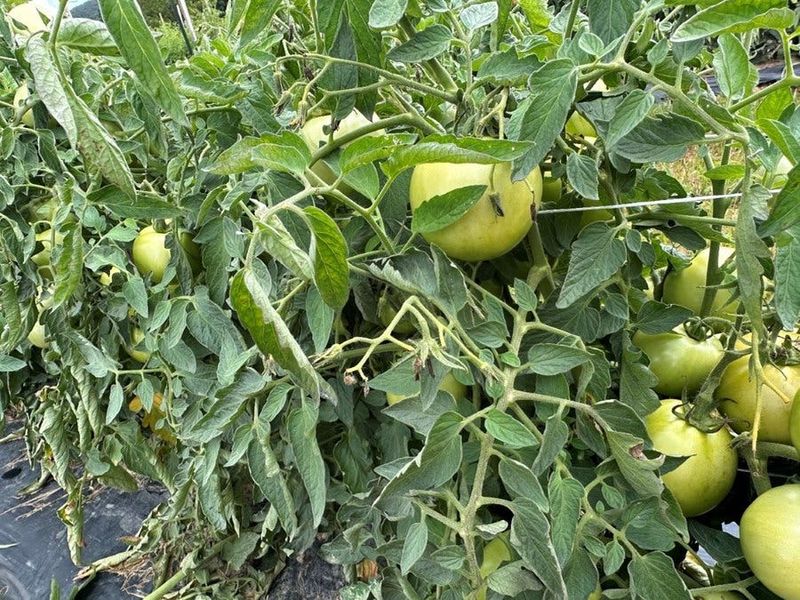
Something feels off when your tomato plants look lush, green, and full of energy but refuse to produce a single flower. Southern gardeners run into this exact puzzle every late summer, and the answer is rarely as simple as “it’s too hot.” Understanding what is really happening can save your fall crop and help you avoid fixes that make things worse.
Heat often stalls fruit set—not necessarily flower-bud formation
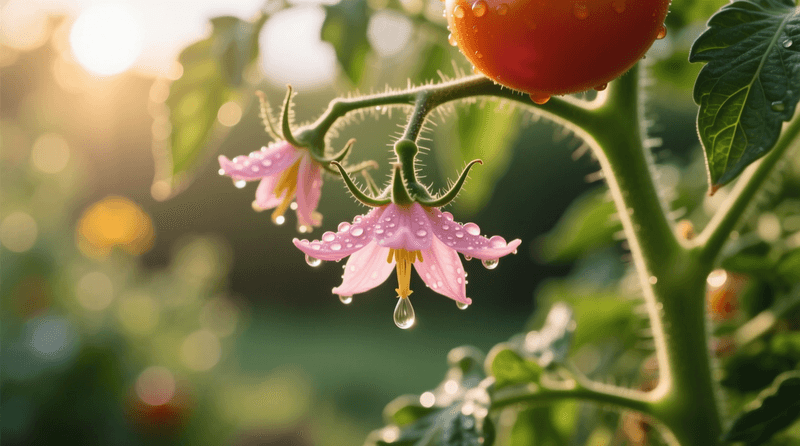
Tomato foliage and stems are surprisingly resilient when temperatures climb, but the reproductive parts of the plant are another story. Pollen development and pollination are far more temperature-sensitive than leaf or stem growth, which is why a plant can look perfectly healthy on the outside while quietly failing to set fruit.
Prolonged daytime temperatures around or above 90 to 92 degrees Fahrenheit, especially when nighttime temperatures stay near or above roughly 70 degrees, can interfere with pollen function and the whole process of fruit formation.
When heat disrupts that process, flowers may dry up before they open fully, abort partway through development, or fall from the plant without producing any fruit. UGA Cooperative Extension’s Commercial Tomato Production Handbook identifies sustained high temperatures as a key reason tomato flowers and fruit set fail during the growing season, while vegetative growth continues.
The plant keeps pushing out stems and leaves because those systems are simply less vulnerable to heat than pollen and ovule development.
One important distinction: this explanation fits best when flowers are forming but then failing. If your plant is producing almost no flower buds at all, heat is only one possibility among several, and assuming heat is the cause without further investigation can lead you in the wrong direction.
Penn State Extension notes that high temperatures during the 7 to 15 days before flowering can contribute to flower abortion, meaning you might see the damage after temperatures have already started to ease. Treat that timing as a variable possibility, not a fixed rule.
First, determine whether flowers are failing or buds are absent
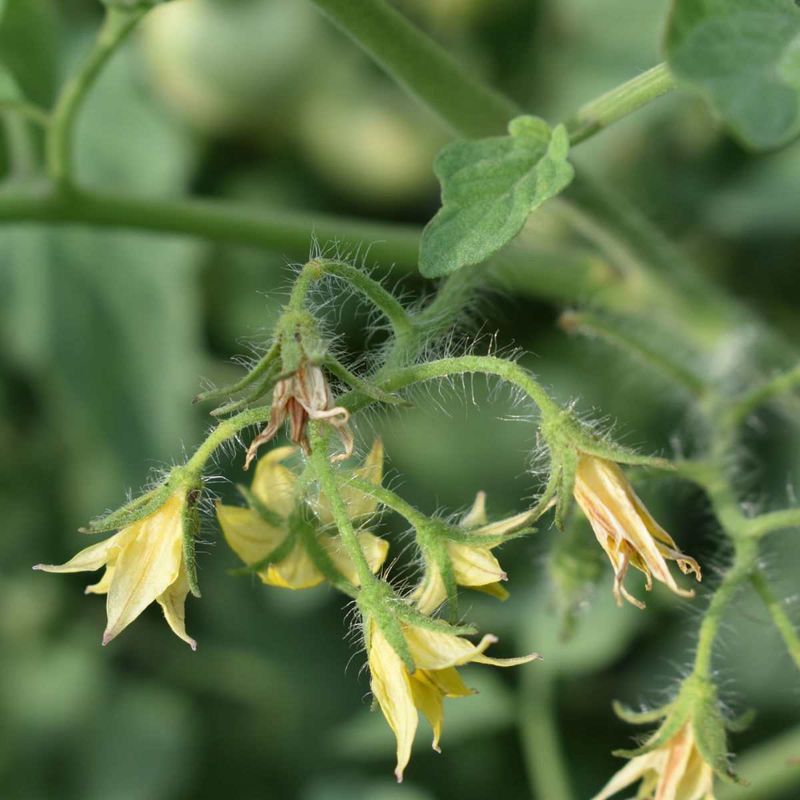
Before blaming heat, spend a few minutes doing a close visual inspection of your plants. Walk along each plant and look at the growing tips, the branch nodes, and any existing flower clusters.
What you find will tell you a great deal about what is actually going wrong.
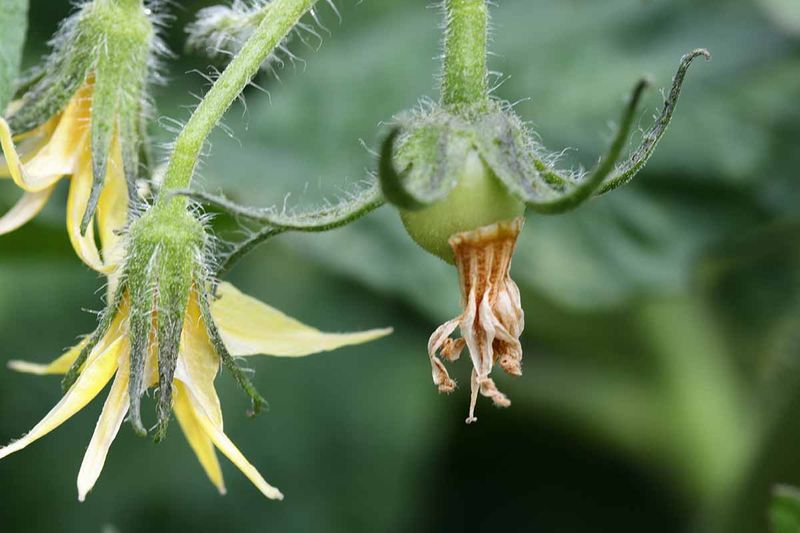
If you see small dried flowers, fallen blossoms on the soil, or tiny fruit that shriveled before developing, heat-related reproductive stress is a reasonable suspect, especially when daytime temperatures have been consistently high. University of Minnesota Extension explains that excessive heat can cause tomato flowers to drop before they set fruit, a pattern that shows up clearly when you look at the base of flower stems and the soil beneath the plant.
That physical evidence of attempted flowering points toward a heat or stress problem at the reproductive stage.
A different picture emerges when the plant is tall, leafy, and vigorous but producing almost no buds anywhere. That pattern calls for a broader look.
Excessive nitrogen from repeated fertilizer applications can push a plant toward lush vegetative growth at the expense of flower production. Inadequate direct sunlight, whether from shade trees, nearby structures, or cloudy stretches, can reduce flowering significantly.
Drought, fluctuating soil moisture, poor drainage, root injury from digging or pests, and transplant stress can all interrupt the normal reproductive cycle as well.
A tall, leafy appearance alone does not prove excess nitrogen, and it does not confirm heat stress either. UGA’s Georgia Homegrown Tomatoes guide points out that indeterminate tomato varieties naturally continue producing stems and leaves throughout the season.
Vigorous growth is normal for those types; it only becomes a red flag when combined with other evidence like a fertilizer history heavy on nitrogen or confirmed shading problems.
Check the other stresses that can suppress flowering
Nitrogen is one of the more common culprits when a tomato plant grows abundantly but resists flowering. Repeated applications of high-nitrogen fertilizer, especially without a soil test to guide the rate, can tip the plant’s energy budget toward stems and leaves rather than reproduction.
Oklahoma State University Extension connects excess nitrogen with delayed maturity and reduced fruit formation in tomatoes. The fix is not to add more fertilizer of a different type but to stop unnecessary feeding, check your application history, and run a soil test before adding anything.
Sunlight is another factor that often goes unexamined. Tomatoes generally need at least six hours of direct sun daily to flower and fruit reliably.
If nearby trees have leafed out since spring, or if a fence or structure now casts afternoon shade, the plant may be getting less light than it did when you set it out. Reduced light can suppress flowering even when the plant looks otherwise healthy.
Root stress from drought, waterlogged soil, physical damage, or transplant shock can also slow or stop bud formation. Plants under root stress redirect resources away from reproduction.
In Florida especially, fall also brings elevated pressure from bacterial leaf spot, target spot, tomato yellow leaf curl virus, and whitefly-vectored diseases. UF/IFAS tomato cultivar research for north Florida highlights how disease and pest pressure during fall can significantly affect plant performance and fruit set.
Inspect your leaves, stems, and new growth carefully for spots, distortion, stippling, or unusual color changes.
Physiological leaf roll, where leaves curl upward along their length, can look alarming but does not automatically identify the cause of missing flowers. Texas A&M AgriLife Extension notes that leaf roll in tomatoes often results from environmental conditions or cultivar characteristics, with overall growth and yield sometimes remaining normal.
Do not assume leaf roll alone explains why the plant is not blooming.
Stabilize moisture, roots, and light during the heat
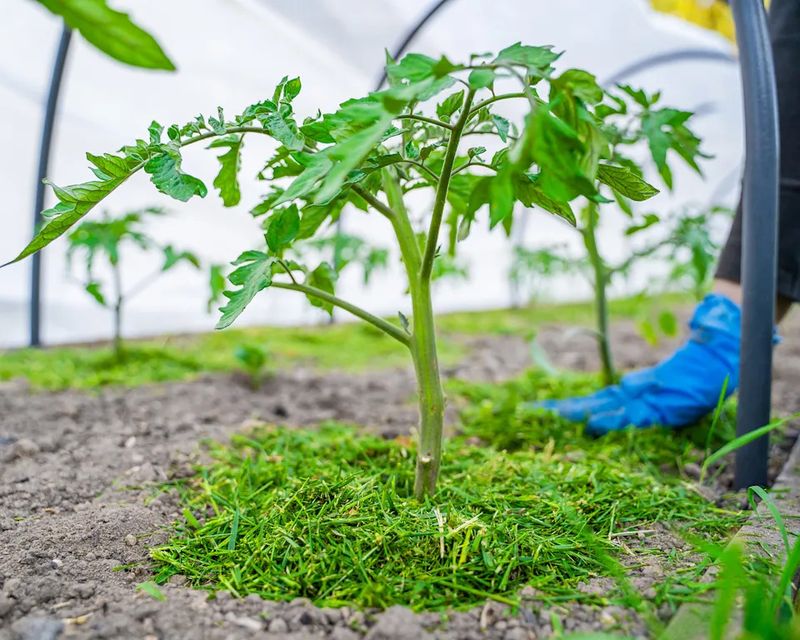
Consistent soil moisture is one of the most reliable things you can control during a hot spell. Water deeply enough to moisten the entire root zone rather than just wetting the surface, and then let soil moisture guide your next watering rather than a rigid calendar schedule.
Checking the soil a few inches down before watering helps you avoid both underwatering and overwatering, which can each cause problems of their own.
University of Minnesota Extension’s irrigation guidance for vegetables recommends drip irrigation or soaker hoses as practical ways to deliver water directly to the root zone while keeping foliage drier. Wet foliage during hot, humid Southern summers creates conditions that favor fungal and bacterial diseases, so root-zone watering is a better choice than overhead sprinklers.
During extreme heat, established tomato plants may need more frequent irrigation, but drainage still matters. Soil that stays constantly saturated can suffocate roots and cause the kind of root stress that suppresses flowering.
Mulch is an inexpensive tool that pays dividends during heat events. A 2 to 3 inch layer of straw, wood chips, or shredded leaves over the root zone slows evaporation, moderates soil temperature swings, and helps maintain the steady moisture that tomatoes need to flower and set fruit.
Temporary shade during the hottest part of the day can reduce heat load on the plant. University of Minnesota Extension’s heat gardening guidance suggests a 30 to 40 percent shade cloth as a protective measure during an extreme heat event, not as a permanent fixture.
Tomatoes need full sun to flower well, and moving them into deep or lasting shade can reduce blooming rather than help it. University of Minnesota Extension also advises postponing heavy pruning until a heatwave passes, since pruning adds physical stress at a time when the plant is already working hard to cope with high temperatures.
Skip force-flowering fixes that lack reliable support
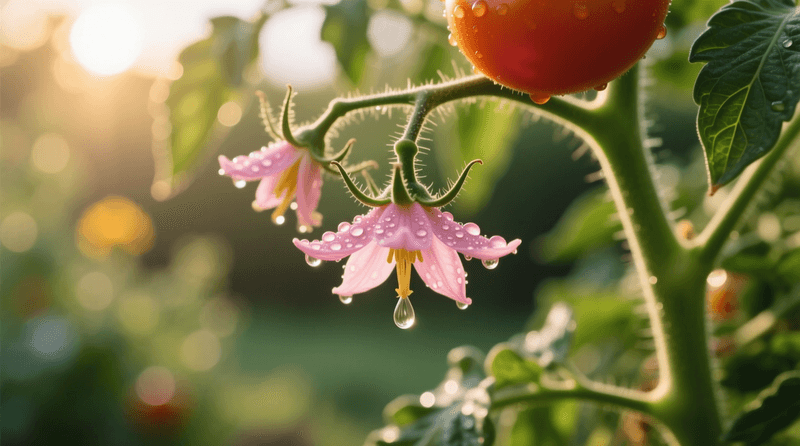
Reaching for a bag of fertilizer when your tomato plant looks leafy but flowerless is a common reaction, but it often makes things worse. Adding nitrogen because a plant looks green and vigorous can push it further toward vegetative growth rather than flowering.
UGA’s Growing Good Tomatoes guidance supports soil testing and balanced, label-directed fertilization rather than routine supplementation based on plant appearance. The same applies to phosphorus: reviewed Extension sources do not recommend adding phosphorus routinely as a universal bloom remedy, and excess fertilizer can worsen plant problems rather than fix them.
Blossom-set sprays are another popular suggestion that falls short under high-heat conditions. Oklahoma State University Extension indicates these sprays have little or no effect when temperatures are high; they are more relevant in certain cool-weather situations.
Applying them during a Southern late-summer heat event is unlikely to produce results.
Calcium sprays come up frequently in online discussions about blossom problems, but they are not a proven treatment for heat-related blossom drop. Blossom drop, where flowers fail before any fruit forms, is a different problem from blossom-end rot, which appears later as a dark, sunken lesion at the bottom of developing fruit.
University of Minnesota Extension’s tomato disorders resource emphasizes consistent moisture and appropriate fertility as the foundation of management, not calcium sprays, and the two disorders should not be conflated.
Hand-vibrating flowers to assist pollination can be useful under the right conditions, but it cannot repair pollen that has already been damaged by heat or reverse flowers that have already aborted. Overhead watering in the afternoon, sometimes suggested as a way to cool plants, can increase foliage-disease risk in humid Southern climates and wastes water through rapid evaporation.
Root-zone irrigation is a safer and more effective strategy.
Use regional planning to improve the next fall crop
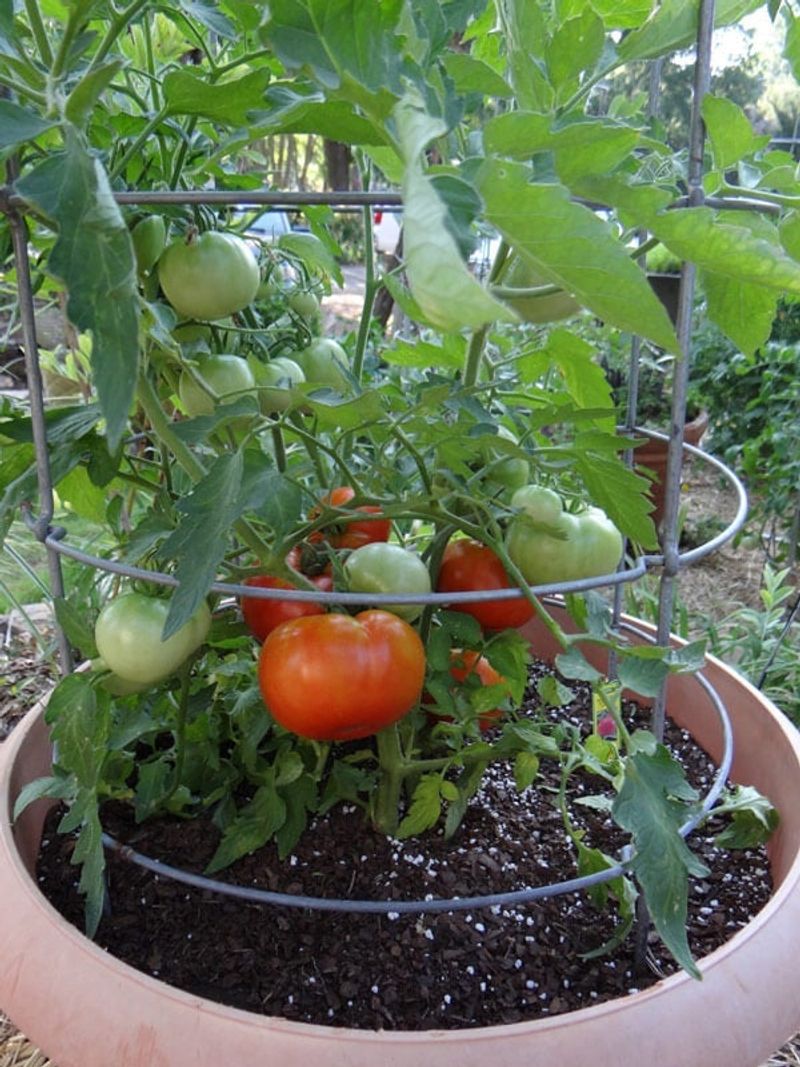
Even if this season’s plants are struggling, a realistic look at your region’s fall window and variety choices can set you up better next time. Cooler temperatures in September and October may allow new flowers to form and set, but recovery is not guaranteed.
Plants still need adequate moisture, sunlight, balanced fertility, and disease control, plus enough weeks remaining before cold weather or disease pressure ends the season.
Hot-set tomato cultivars are worth considering for future fall plantings. These varieties are bred with better heat tolerance in mind, which can improve their chances of setting fruit during late-summer conditions.
UGA Cooperative Extension lists examples including Solar Set, Solar Fire, and Florida 91 as options for Southern gardeners. UF/IFAS tomato cultivar research identifies additional varieties for Florida including Heat Wave II, BHN types, Amelia, and Bella Rosa, with disease resistance factored into those recommendations.
Variety performance varies by location and season, so these should be treated as useful starting points rather than guarantees.
Planting dates matter enormously for fall tomatoes in the South, and the right window differs by state and even by region within a state. UGA recommends late July to mid-August transplant timing for southern Georgia, while Florida guidance points to July or early August for hot-set varieties in north Florida.
Texas timing varies by region across a large state. Texas A&M AgriLife Extension’s fall vegetable gardening guide provides regional planting windows specific to Texas conditions.
Your county Extension office’s planting calendar is the most reliable local reference.
Some areas face real limits on fall tomato production regardless of variety. Texas A&M AgriLife Extension notes that fall production is marginal in parts of Texas, and Florida sources warn that fall disease pressure from whitefly-vectored viruses and bacterial diseases can make a reliable harvest difficult even when temperatures improve.
Knowing your regional baseline helps you set realistic expectations rather than chasing a harvest that may not be feasible this season.
Let cooler weather provide evidence, not false reassurance
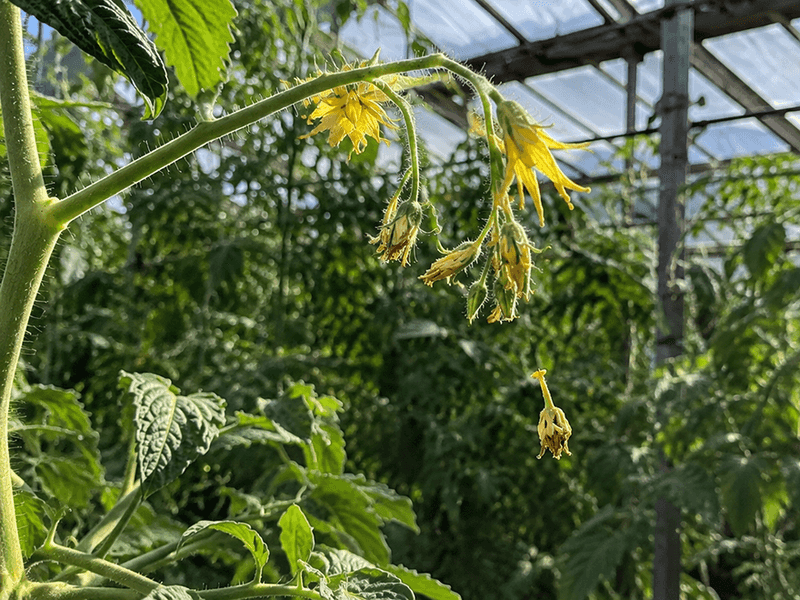
As temperatures begin to ease, your plants will tell you something useful. Keep moisture consistent, protect the root zone with mulch, and hold off on unnecessary fertilizing or pruning while you watch for new buds and flower clusters forming at the growing tips.
UGA Cobb County gardening guidance notes that once temperatures moderate, new flowers may set normally, though that outcome still depends on plant health, available season length, and conditions in your specific location.
New flowering after a heat break supports a heat-related diagnosis when flowers had previously formed and failed. If the plant still produces almost no buds after temperatures drop, the problem likely involves light, fertility, root health, pests, disease, or a seasonal window that has simply closed.
A cooler forecast is encouraging, but it does not guarantee a harvest when the plant is unhealthy or the regional fall season is short. The clearest measure of recovery is new buds followed by fruit that holds and develops, not just a lower thermometer reading.