
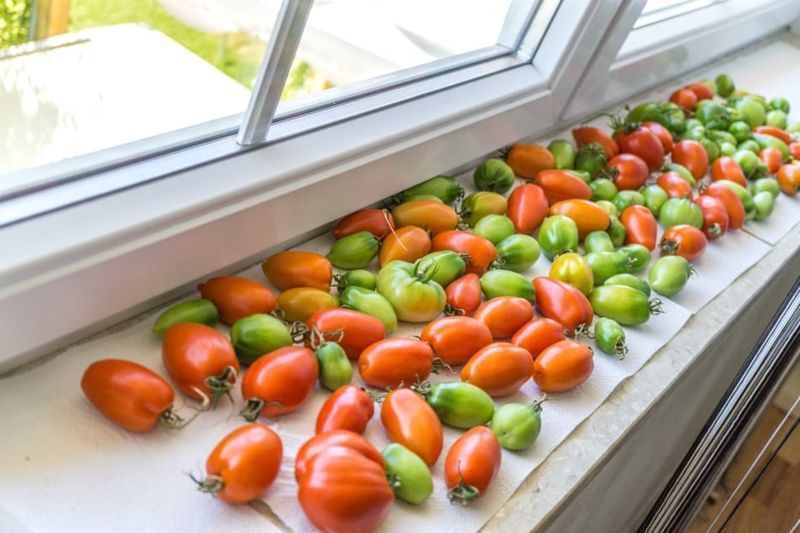
Cooler nights are coming, and your tomato vines are still loaded with green fruit. Frost can end the season fast, but many of those tomatoes still have a second chance on your kitchen counter.
Knowing which ones to pick, and how to treat them once they are inside, makes the difference between a rescued harvest and a pile of mush. Here is a simple plan that fits Southern gardens.
Pick before frost, starting with tomatoes that are already blushing
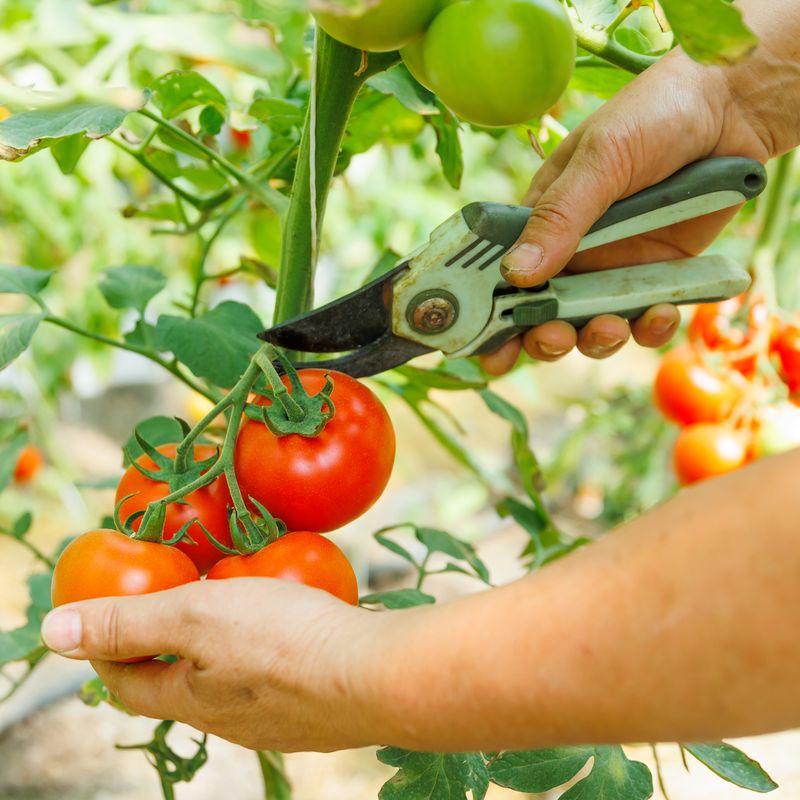
Watch the forecast more than the calendar. Tomatoes are frost-susceptible, as Texas A&M AgriLife guidance points out, and its fall gardening guide recommends harvesting fruit at the pink stage and finishing it in a warm part of the house.
Timing depends on where you live. A gardener in the Texas Panhandle may be racing a freeze in October, while a gardener in South Florida may have weeks or months of warm weather left.
Florida’s long growing season, noted in UF/IFAS tomato production material, means frost is not equally urgent across the state.
When a cold night shows up in your local forecast, pick in this order. First, grab anything pink or changing color.
Then bring in the full-size green tomatoes that look promising. Leave the tiny, hard ones for last, since they are the least likely to finish.
Which green tomatoes are mature enough to ripen?
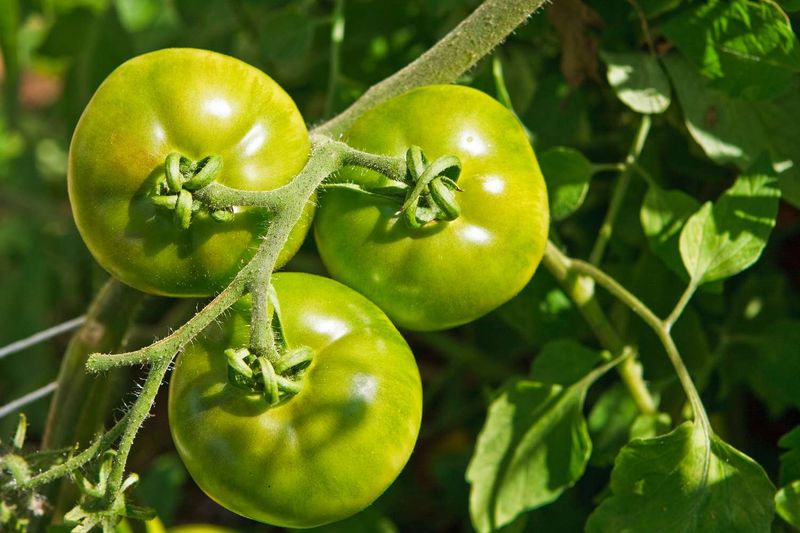
Green color alone does not tell you much. A tomato that has reached the mature-green stage has finished growing and has the internal changes needed to ripen off the vine.
A tomato that is still immature does not.
According to Colorado State Extension, mature green fruit looks shiny and is sometimes marked by a pale, star-shaped area at the blossom end. Matte, dull green fruit is less likely to ripen off the plant.
Size helps too. Full-size fruit with a glossy or slightly lighter green skin is a better bet than small, rock-hard tomatoes.
Pink, or breaker-stage, fruit shows the first blush of the variety’s mature color and is your best prospect for good results indoors.
Mature-green tomatoes can ripen, but they may not taste as good as vine-ripened ones. No look-over can guarantee the outcome, so treat your picks as a good try rather than a sure thing.
Sort and inspect the harvest before bringing it inside
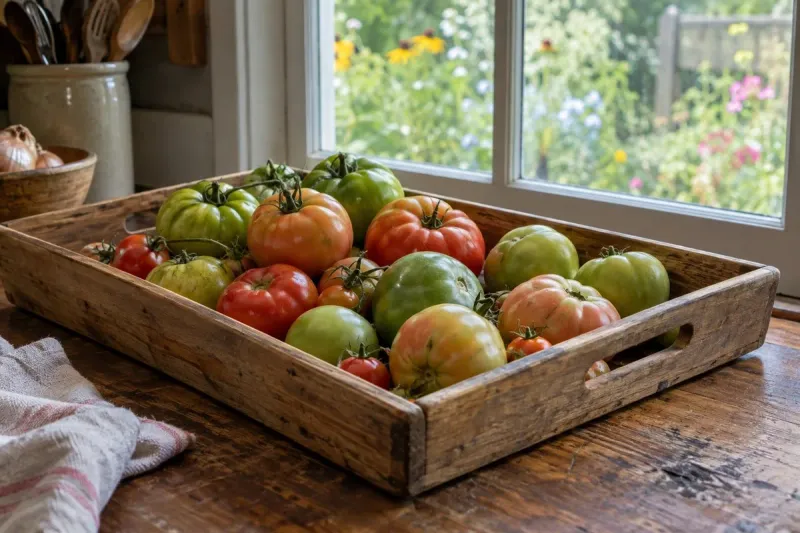
Spend a few minutes sorting before anything goes on a shelf. Make one group for pink and color-changing fruit, another for mature-green tomatoes, and a third for small or doubtful ones.
Fruit at different stages ripens on different schedules, so mixing them makes checking harder.
Look each tomato over for soft spots, cracks, or signs of decay. Fruit that is already breaking down can spoil its neighbors, so set it aside for the compost pile or use it right away if it is still sound.
Sorting makes ripening easier to manage, but it does not make immature tomatoes ripen. Guidance from UGA Extension says mature-green and pink tomatoes can ripen at home, and Colorado State notes that mature-green fruit may take longer.
A warm, ventilated spot is better than the refrigerator
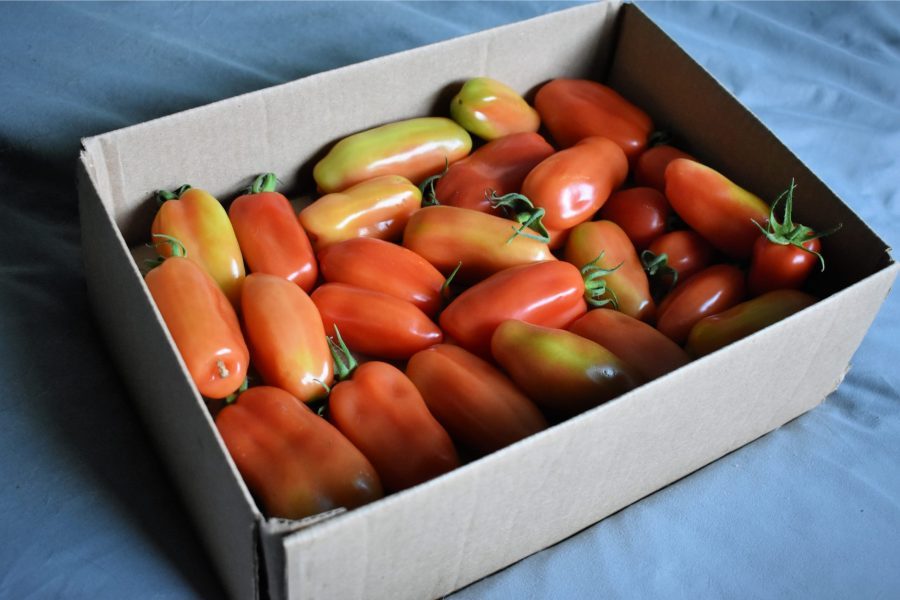
Room temperature does the work here. Aim for roughly 65 to 70 degrees F in a place with decent airflow, such as a pantry shelf, a spare room, or a kitchen counter.
UGA Extension suggests about 70 degrees and good ventilation for ripening.
Lay the tomatoes in a single layer, stem side up if you like, with a little space between them. Crowding traps moisture and makes rot more likely.
Skip the refrigerator for fruit you want to turn. Clemson Extension says refrigeration inhibits ripening, and cold can hurt flavor and texture as well.
A garage that dips cold on frosty nights may also be too chilly, so pick a spot that stays mild.
Once a tomato is fully ripe, you can move it to the fridge if you cannot eat it right away.
A paper bag is optional; sunlight is not required
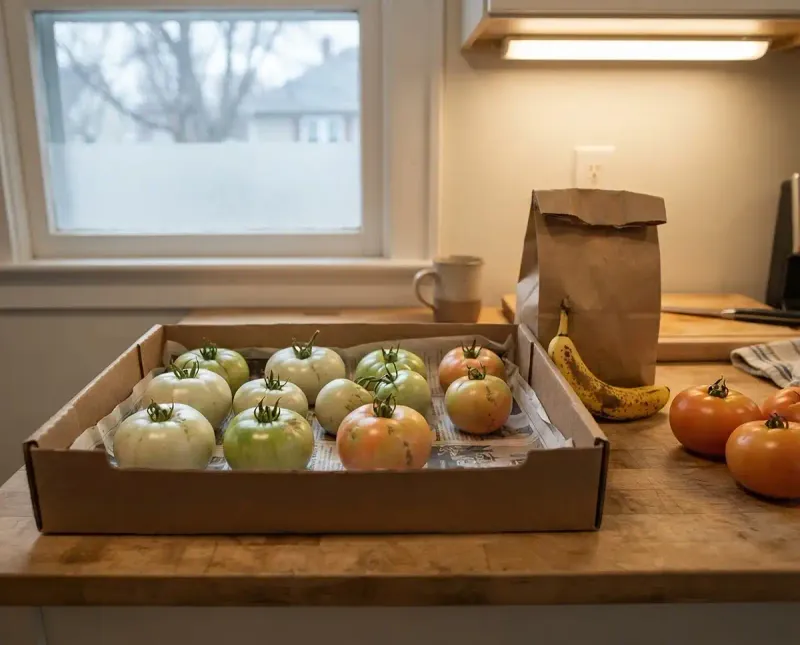
Lots of gardeners swear by paper bags, and they can be handy. Illinois Extension explains that a bag can help hold in some of the ethylene the fruit makes naturally, and it recommends checking the fruit daily.
If you try one, fold the top loosely and keep the tomatoes from piling up. A bag is a choice, not a requirement, and it does not promise faster or complete ripening.
Sunlight is not needed either. Clemson Extension says light is unnecessary for harvested tomatoes.
A hot, sunny windowsill can actually overheat or wrinkle fruit, so a shaded shelf works fine.
Expect uneven results, and keep checking
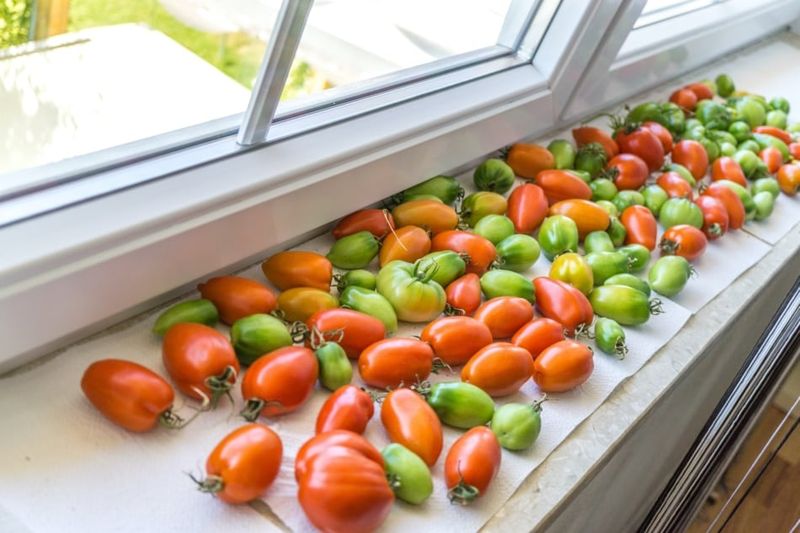
Some tomatoes will turn in a week, and others will take much longer. Maturity and temperature both affect timing, so there is no fixed schedule.
Look at the fruit every day or two and pull out any that soften or show mold.
Expect a mixed outcome. Pink and mature-green tomatoes may ripen well, though mature-green ones can taste a bit less rich than vine-ripened fruit.
Small immature tomatoes may never turn, and that is normal. UGA and Colorado State both draw this line.
You will not save every tomato, but a good share of that green crop can still end up on your plate.