
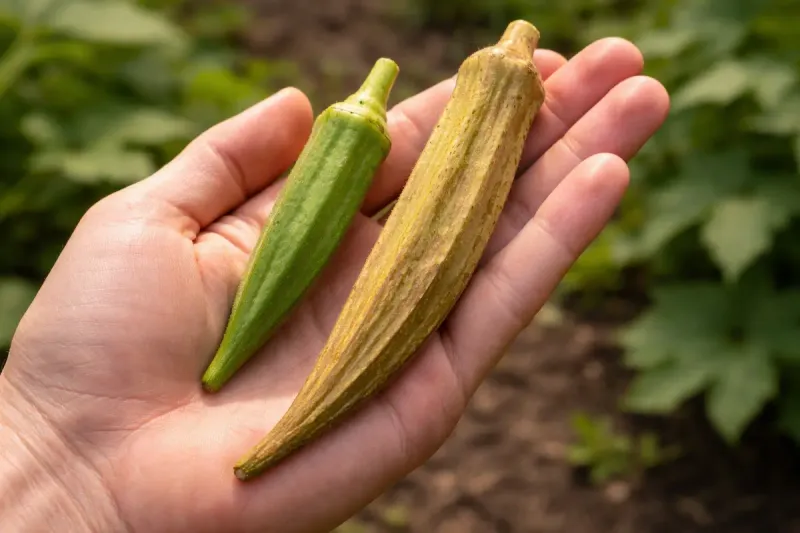
Few things are more frustrating in a Southern garden than checking your okra in the morning and finding pods that were perfectly sized yesterday have already turned stiff and stringy overnight. The problem is real, it happens fast, and it tends to get worse as August heat cranks up.
Understanding why okra pods toughen so quickly is the first step toward actually doing something about it.
Most woody pods are past their tender stage
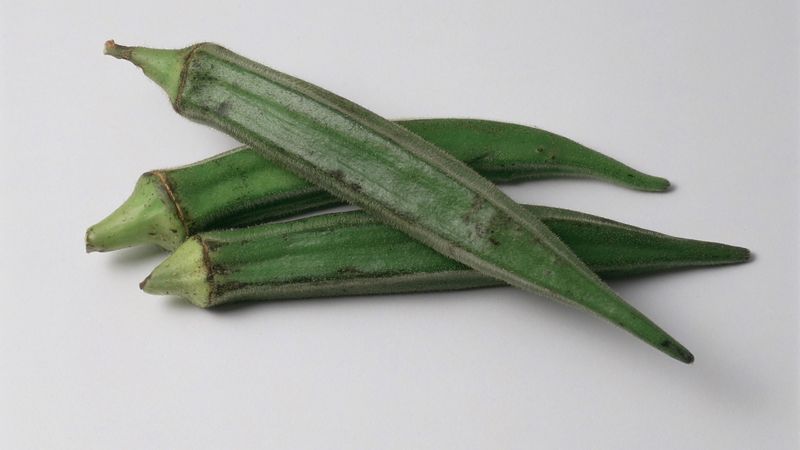
A tough, fibrous okra pod is almost always a pod that has simply grown past its tender stage. Before reaching for a fertilizer bag or worrying about disease, check the pod itself: if it bends without breaking, feels rigid along the ridges, or resists a knife, it has already developed the woody fiber that makes it unpleasant to eat.
That fiber forms naturally as the pod matures, and no amount of watering or feeding will reverse it once it is there.
Okra is harvested while it is still immature, which is exactly what makes the timing so tricky. Texas A&M AgriLife Extension guidance on okra and Oklahoma State University’s okra production fact sheet both emphasize picking pods while they are still young and tender, before fiber development takes hold.
When a pod is left on the plant even a day or two too long, the wall thickens, the seeds enlarge, and the texture shifts from silky to stringy.
Hot late-summer weather can make this shift appear almost sudden. Research on temperature and okra growth found that high temperatures accelerate pod development and fiber formation, so a pod that seemed close to ready at your last check can cross into overmaturity before the next one.
Heat is the accelerator here, not the root cause. The pod became woody because it matured, and heat simply made that happen faster than expected.
Why hot weather can shrink the harvest window
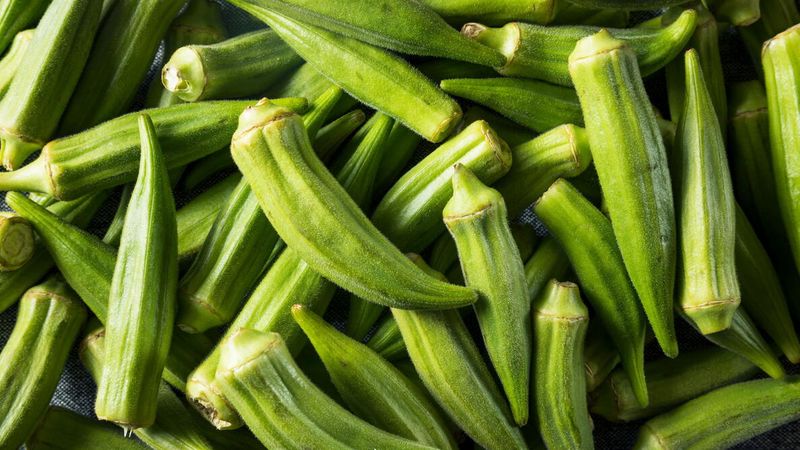
Okra has a reputation as a heat lover, and that reputation is well earned. The plant thrives in the kind of temperatures that wilt everything else.
But the same heat that pushes okra to grow vigorously also compresses the window between a tender, pickable pod and one that has gone fibrous and stiff.
Under moderate conditions, a pod might stay in its tender zone for two or three days after it reaches a pickable size. During a stretch of intense August heat, that window can shrink considerably.
The full research paper on temperature and okra pod quality documented rapid pod growth and quality deterioration around the usual five-to-six-day post-flowering harvest timing under high-temperature conditions, meaning pods can reach and pass their peak faster than a standard harvest schedule anticipates.
This does not mean that every tough pod is the result of a single brutally hot day. The relationship is cumulative: sustained high temperatures keep accelerating pod development throughout the season, so a picking schedule that worked fine in June may leave you consistently behind by late August.
Oklahoma State’s production guidance notes that harvest timing must be adjusted for conditions, reinforcing that a fixed calendar schedule is not reliable during the hottest stretch of the year. The practical takeaway is that heat tightens an already narrow window, and gardeners who do not shorten their inspection intervals during peak summer will keep finding pods they have already missed.
Judge readiness by variety, size, and texture
Pod length is a useful starting point, but it is not the whole answer. Home-garden extension recommendations vary quite a bit: University of Maryland Extension’s okra guide suggests harvesting around 2 to 4 inches for many varieties, while other sources put the target closer to 3 to 5 inches.
The reason for the range is that cultivar matters enormously. Some long-podded varieties stay tender well past the 4-inch mark, while compact or fast-maturing types can turn fibrous at smaller sizes.
Treating any single measurement as a universal rule will get you into trouble.
A physical tenderness test is more reliable than a tape measure alone. University of Illinois Extension and Oregon State University’s vegetable guidance both recommend checking whether the pod tip snaps cleanly or whether the pod cuts without much resistance.
A tender pod should give easily under a knife or break cleanly at the tip when bent. If the pod bends without snapping, or if you have to saw through the stem, the pod has already developed too much fiber for fresh eating.
University of Arkansas Extension’s okra home gardening guide reinforces that cultivar knowledge is key: learning the expected tender size for the specific variety you planted is more useful than memorizing a generic number. If you saved seed from last year or bought an unlabeled transplant, start checking pods early and use the snap test to calibrate your eye for that plant’s particular harvest stage.
Pick frequently to keep the plant producing
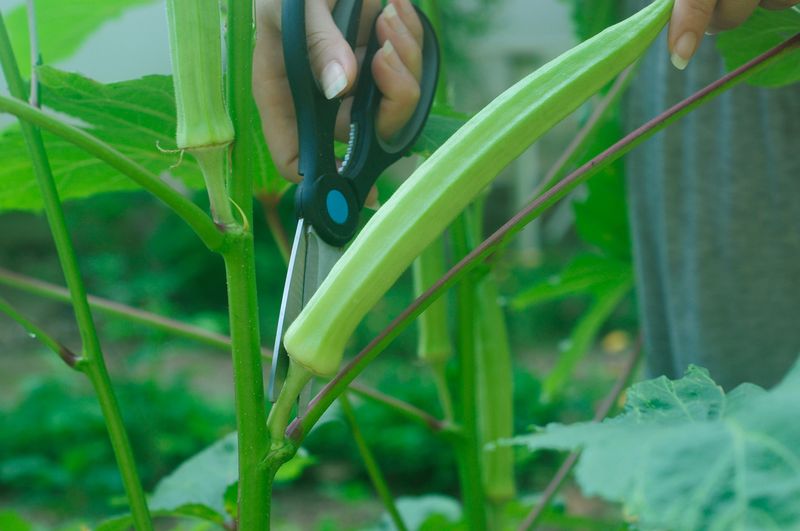
Frequent picking is the most effective habit you can build during late summer. Texas A&M AgriLife Extension recommends harvesting every one to two days when growth is rapid, and University of Georgia Cooperative Extension’s commercial okra guide notes that daily harvest may be necessary during periods of fast pod development.
For Florida and Texas gardeners dealing with peak August heat, every-other-day checks are a minimum, and daily inspections are often the only way to stay ahead of the plant.
Removing oversized pods matters beyond just clearing out the ones you missed. Utah State University Extension’s okra guide explains that leaving mature pods on the plant can slow or stop new flowering and reduce overall yield.
The plant reads a mature, seed-bearing pod as a signal that its reproductive work is done. Pulling those pods off, even if they are too fibrous to eat, tells the plant to keep setting new ones.
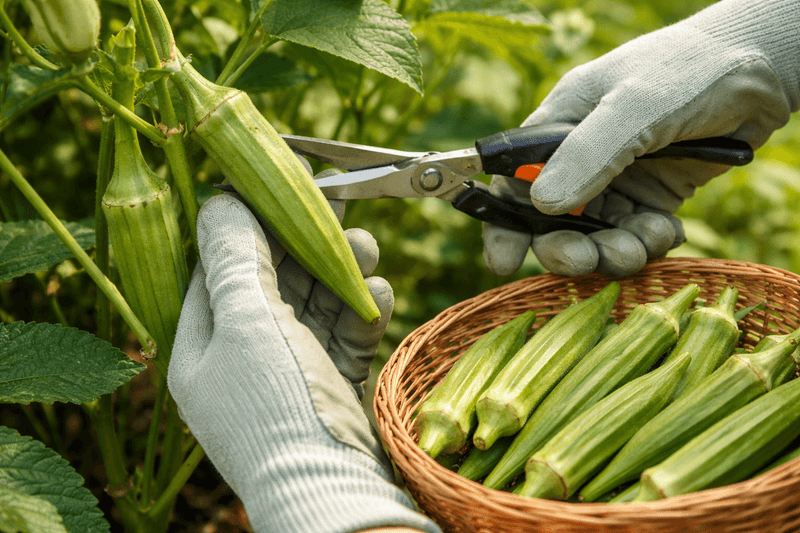
Use a sharp knife or garden shears rather than pulling or twisting pods free. UF/IFAS okra production guidance and Oklahoma State’s fact sheet both recommend clean cuts to reduce damage to the plant.
Also worth noting: okra stems and pods carry small hairs or spines that can irritate skin, even on varieties sold as spineless. Gloves and a long-sleeved shirt make harvest more comfortable and protect your arms from the prickle that comes with working close to the plants.
Maintain moisture, but do not expect a rescue
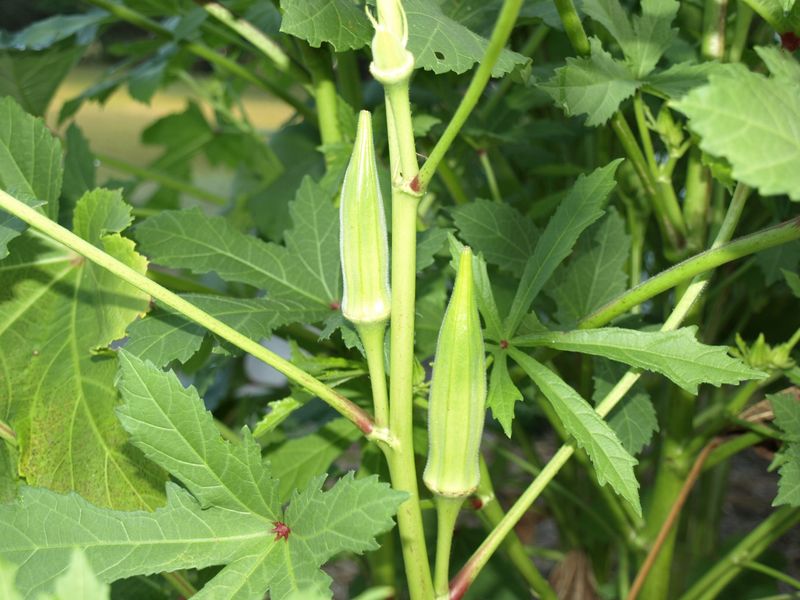
Consistent soil moisture supports healthy okra growth during flowering and pod development, and letting the soil dry out repeatedly during this period can affect yield and pod quality. Oklahoma State University Extension suggests supplemental irrigation of approximately 1.5 inches every 10 days during production when rainfall falls short, and UF/IFAS gives a similar range depending on soil type and growth stage.
These are broad references, not fixed prescriptions, and your actual need will vary with your soil, recent rain, and how hot the stretch has been.
Water stress can reduce plant growth and overall pod output. The Tropical Agricultural Research study on okra under temperature and water stress found measurable effects on growth and yield under drought conditions, and additional research on deficit irrigation and okra pod quality supports the value of keeping moisture steady through the production period.
Even so, a well-watered plant will still produce tough pods if harvest is delayed. Irrigation supports the plant; it does not control how fast individual pods develop or mature.
The most important thing to understand about water and woody pods is this: extra watering cannot make a fibrous pod tender again. Once fiber has developed in a pod wall, that structure is permanent.
Improving your irrigation routine may help the plant produce more pods over time, but it will not rescue the ones you have already missed. Consistent moisture is a forward-looking investment in your next round of pods, not a fix for the ones already on the plant.
Handle overmature pods and fresh harvest differently
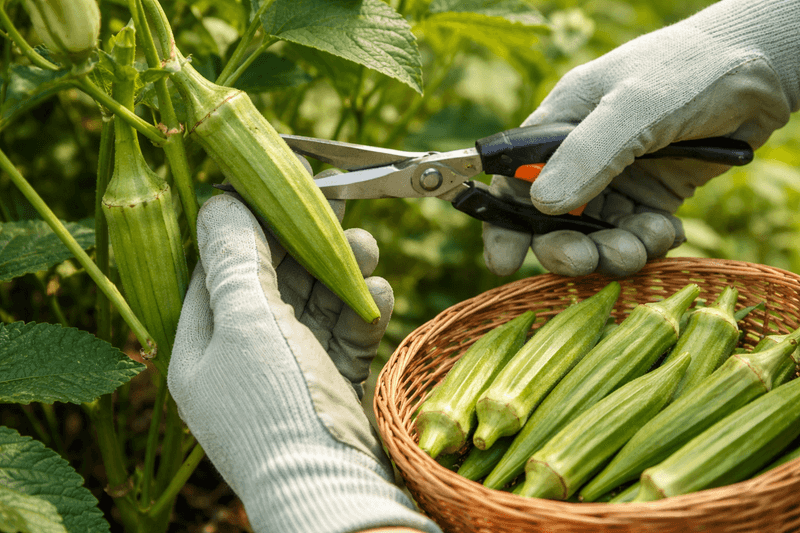
Overmature pods belong in one of two places: off the plant entirely, or saved intentionally for seed or dried arrangements. Leaving fibrous pods attached slows the plant’s production of new flowers and pods, so pull them even when they are not worth eating.
If you want to save seed from a favorite open-pollinated variety, mark those pods early and let them dry on the plant fully before collecting. For everything else, remove and compost or discard the overmature ones promptly.
For the pods you do harvest at the right stage, morning picking helps preserve quality. Oklahoma State Extension recommends harvesting in the morning to reduce field heat carried into the pod.
Research published in Scientia Agricola on temperature and okra pod quality found that fiber content increases in pods stored at warmer temperatures after harvest, and a related study in Agriculture on bio-stimulants and okra shelf life supports the value of cooling pods promptly after picking. Use fresh pods within a day or two for best texture, or store them loosely wrapped in the refrigerator.
One caution on refrigeration: do not store okra as cold as possible. USDA produce storage guidance warns that excessively low temperatures can cause chilling injury in okra, leading to pitting and surface discoloration.
University of Illinois Extension and University of Maryland Extension both suggest using pods within a few days rather than relying on extended refrigerator storage. Cooling helps, but postharvest handling cannot undo fiber development that occurred while the pod was still on the plant.
Look for additional symptoms before changing the diagnosis
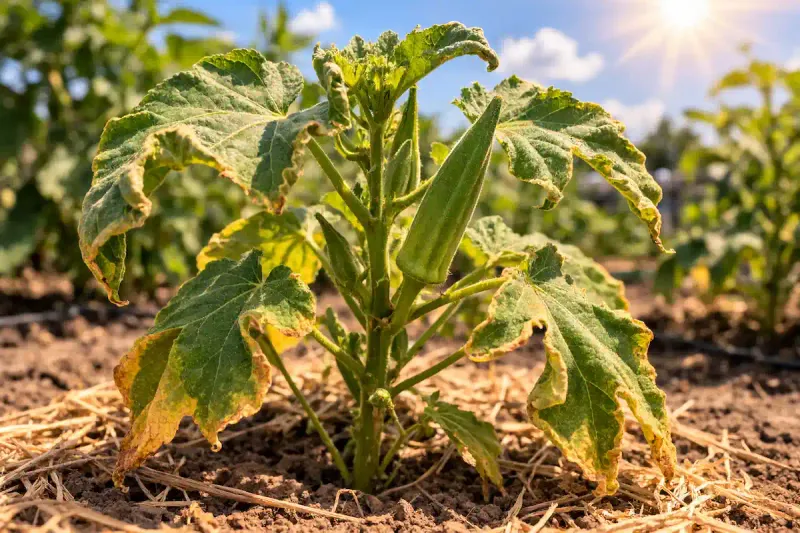
Isolated tough pods, especially during a stretch of hot weather, almost always come down to harvest timing and pod maturity. That diagnosis holds when the plant itself looks healthy: good leaf color, steady new flower production, and no wilting beyond the normal midday droop that most okra shows in direct summer sun.
When the problem is limited to pods that got away from you between checks, there is no need to suspect disease, pests, or a nutrient problem.
The picture changes when other symptoms appear alongside tough pods. Oklahoma State Extension and University of Illinois Extension both note that wilting, yellowing, plant collapse, spotted or distorted leaves, and rotting young pods can point toward pests, disease, root problems, or excess soil moisture rather than ordinary pod overmaturity.
A plant that is wilting in the morning, not just at midday, may have a root issue or a soil drainage problem worth investigating separately.
Rotting young pods, in particular, are not a heat or maturity symptom: they suggest a fungal issue, a pollination failure, or a pest problem and call for a different response. Oregon State’s okra guidance cautions against applying pesticides, fungicides, or fertilizers without identifying a specific cause first.
If your plant shows only tough pods and otherwise looks vigorous, stay focused on harvest frequency and timing. Bring in a separate diagnosis only when the plant itself is telling you something is wrong.
Shorten the gap between checks during peak heat
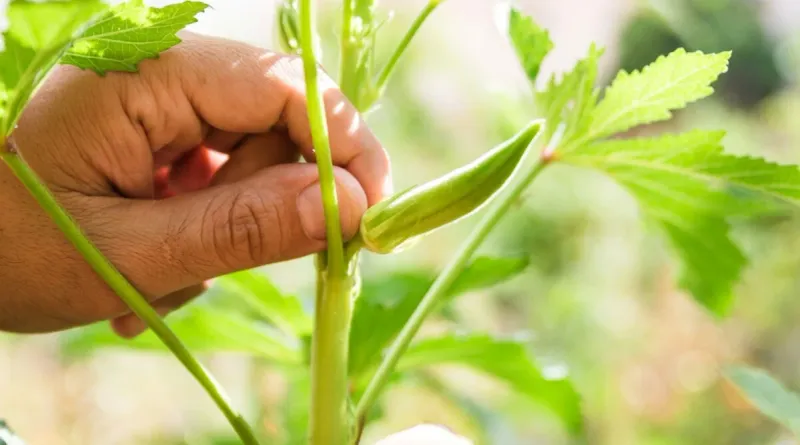
The most reliable fix for woody okra pods is also the simplest: check the plants more often. During the hottest weeks of late summer, Texas A&M AgriLife Extension and University of Georgia Cooperative Extension both point toward daily or near-daily harvest as the practical standard.
Learn your cultivar’s expected tender size, use the snap-or-cut test on every pod rather than guessing by eye, and pull or cut overmature pods even when they are past eating.
Keep soil moisture steady, pick in the morning when possible, and use fresh pods promptly after harvest. Oklahoma State Extension’s okra guidance ties these habits together into a practical late-summer routine that gives the plant the best chance to keep flowering through the heat.
Heat speeds up a naturally narrow harvest window, but it does not make every pod woody on its own.
Once you understand that timing is the real issue, the frustration of finding a stiff pod becomes a signal to adjust your schedule rather than a reason to dig up the plant. The pods you catch at the right moment are the reward for shortening the gap between checks.