
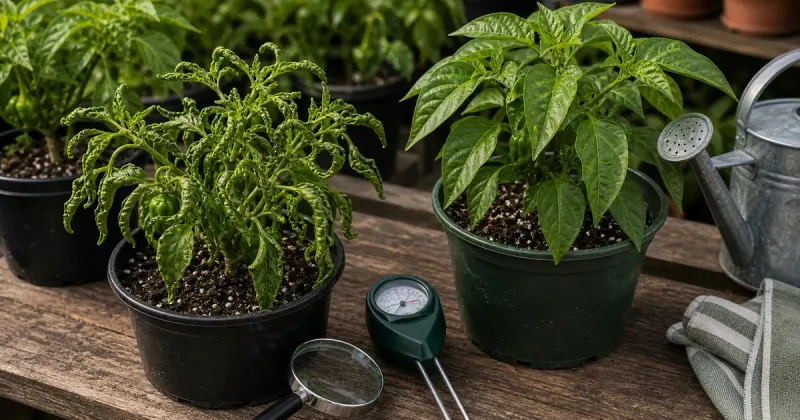
Pepper plants can throw gardeners a real curveball in late summer: the leaves start curling and feel almost tough to the touch, yet the plant itself keeps right on growing. For Florida and Texas gardeners pushing through weeks of brutal heat, this combination is easy to misread as a sign of disease or pests.
Understanding what is actually happening in the root zone can save you from reaching for treatments that will not help and may even cause more stress to an already struggling plant.
The pattern points first to physiological leaf roll
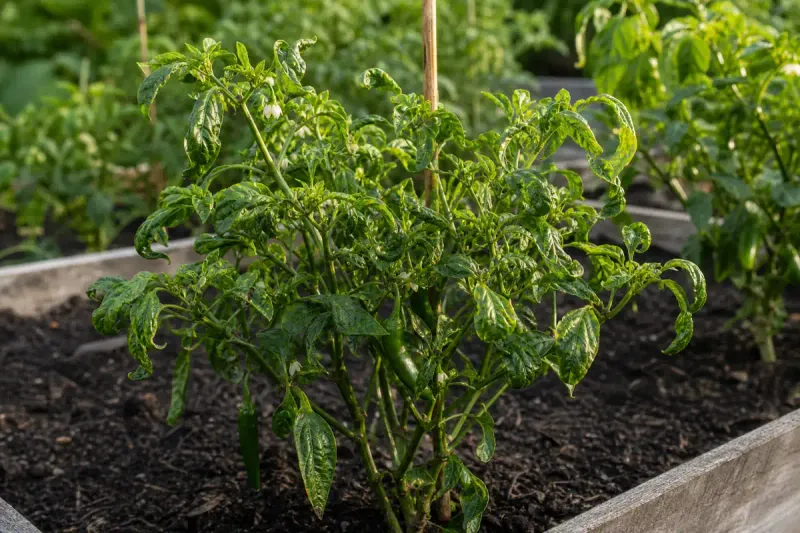
Green pepper leaves that roll, especially downward, feel leathery or brittle, and stay on a plant that continues putting out new growth are showing what plant scientists call physiological leaf roll. According to Washington State University Hortsense, this is a noninfectious response to environmental stress, not a sign of an insect infestation or a spreading disease.
The plant is reacting to something in its growing conditions, and that distinction matters before you do anything else.
Physiological leaf roll generally fits the picture when leaves roll or cup while remaining green, the plant has no major stunting, and new growth at the tips looks normal rather than twisted or distorted. These clues support the diagnosis, but they do not confirm it the way a lab test would.
Still, UC Statewide IPM guidance on physiological leaf roll is clear that this condition generally requires no chemical treatment at all.
The more productive first step is figuring out what is stressing the root zone. Heat is one possible trigger, but drought, excess soil moisture, and poorly drained soil can each play a role too.
Reaching for a pesticide or fertilizer before checking those conditions is unlikely to help and may add another layer of stress to a plant that is already working hard to cope.
Heat changes water balance, but soil conditions still matter
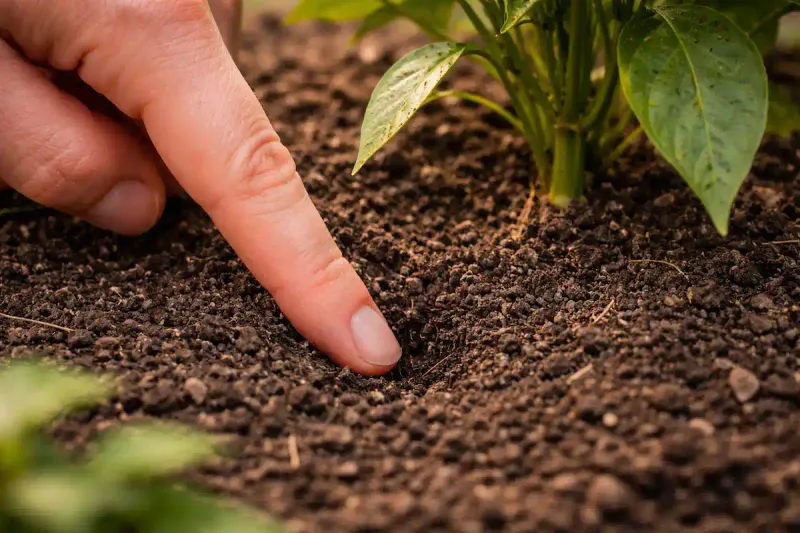
During a Southern summer heat wave, water evaporates from the soil faster and escapes through the plant’s leaves at a higher rate than usual. Because peppers have relatively shallow root systems, as noted by University of Missouri Extension, they feel that moisture stress quickly and can show it in their leaves before the soil even looks dry on the surface.
Here is the part that trips up a lot of gardeners: curled or cupped leaves do not automatically mean the soil is too dry. WSU Hortsense explains that excessive soil moisture and poor drainage are also associated with physiological leaf roll in peppers.
A bed that holds water after rain or irrigation can stress roots just as surely as one that dries out too fast.
Uneven moisture creates problems beyond leaf appearance. UConn Extension’s drought and heat guidance connects moisture swings to reduced leaf area, flower drop, small-fruit drop, and a higher risk of blossom-end rot.
Soil that stays saturated can also set the stage for root diseases like Phytophthora blight. The real diagnostic move is to stop looking at the leaves and start looking at what is happening a few inches underground.
Check moisture before you reach for the hose
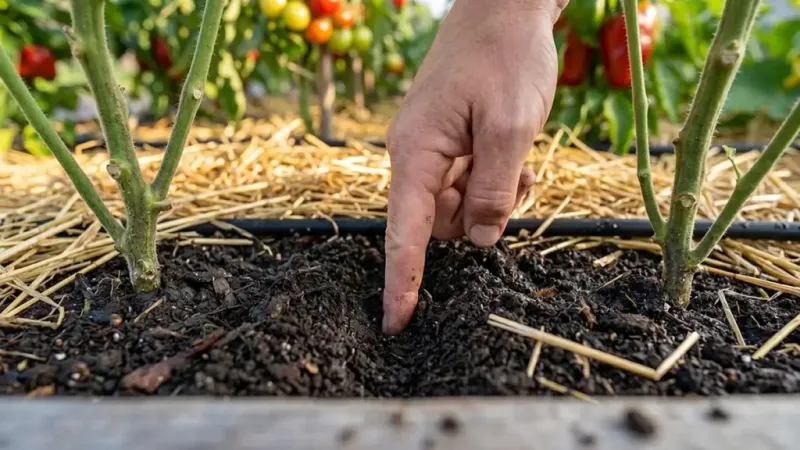
Before adding any water, push a finger or a small trowel two to three inches into the soil near the root zone. If the soil feels moist at that depth, the plant is probably not suffering from drought, even if the surface looks dry and the leaves are curled.
Factor in any rain or irrigation from the past day or two, since water does not always disappear from root depth as fast as it does from the top inch.
Also check whether water lingers. After a rain or a watering session, does the bed drain within an hour or two, or does it stay soggy?
Standing water or consistently wet soil is a signal to hold off on irrigation rather than add more. The goal is steady, even moisture, not a cycle of bone-dry soil followed by heavy soaking, because that pattern stresses roots and can worsen the exact symptoms you are trying to fix.
Utah State University Extension’s pepper-growing guide cites roughly 1 to 2 inches of water per week as a general home-garden baseline, but that number shifts with heat, wind, container growing, recent rainfall, and soil type. Sandy soils drain fast and may need more frequent attention.
When you do water, slow and deep beats fast and shallow: drip irrigation, a soaker hose, or careful hand watering at the soil surface gets moisture where roots can actually use it.
Stabilize the root zone instead of treating the leaves
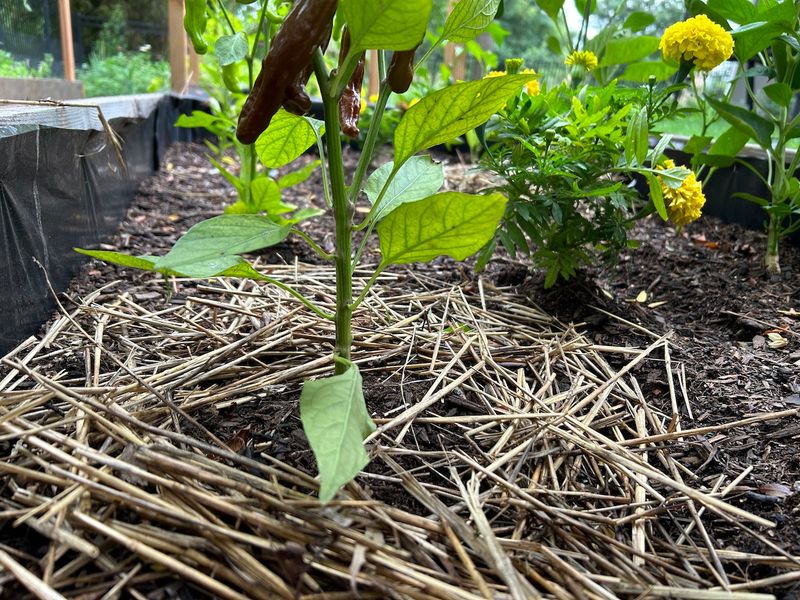
Once you know what the soil is doing, the care plan becomes straightforward. If the soil is dry well below the surface, water deeply and slowly until moisture reaches the root zone, then let the soil approach dryness again before repeating.
If the bed stays wet after rain or watering, hold off on adding more water and look at whether drainage can be improved, whether that means raising the bed, adding organic matter over time, or simply watering less often.
Mulch is one of the most practical tools available for this situation. A 2 to 3 inch layer of organic mulch, such as straw, shredded leaves, or wood chips, can slow evaporation, help keep soil temperature from spiking, and buffer against the rapid wet-dry swings that stress roots.
UConn Extension recommends mulching as a key cultural practice during heat and drought. Keep the mulch pulled back an inch or two from the stem to avoid trapping moisture against it.
WSU Hortsense is explicit that physiological leaf roll calls for cultural care rather than a chemical fix. Skip the impulse to add calcium, Epsom salt, or a general fertilizer as a remedy.
There is no evidence these correct the condition, and excess nitrogen in particular can push the plant toward more leaf growth while delaying the fruit set you are counting on later in the season.
Use temporary afternoon shade to reduce extreme heat
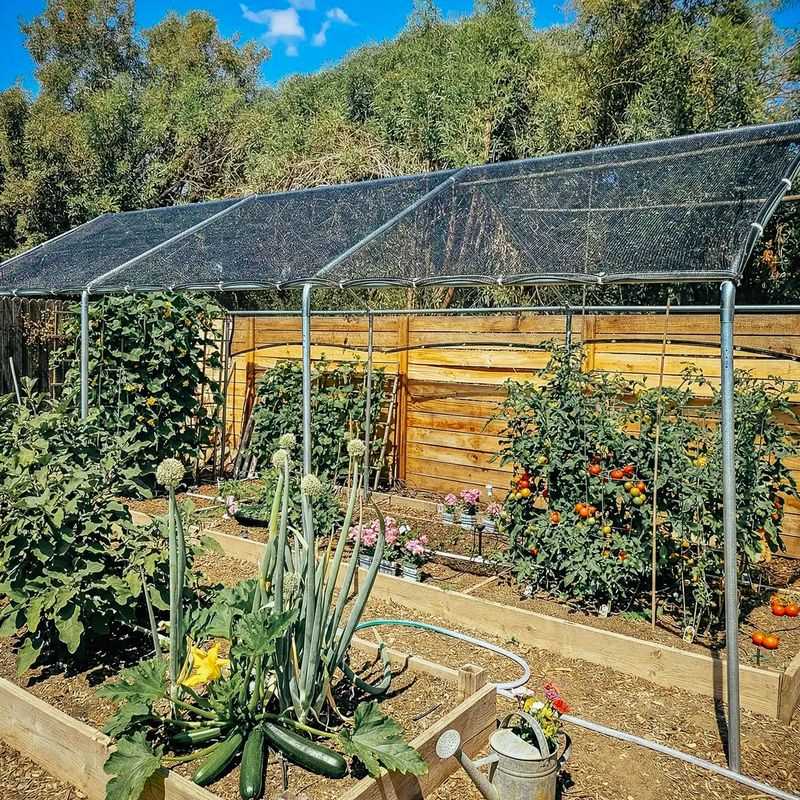
When afternoon temperatures push past the point where even well-watered peppers struggle, a layer of shade cloth can take some of the pressure off. University of Delaware Cooperative Extension recommends approximately 30% shade cloth as a reasonable starting point for protecting garden vegetables from heat stress.
The cloth should sit on a simple frame positioned above the plants rather than draped directly on the foliage, and it should allow air to move freely underneath.
Shade reduces the heat load on leaves and slows the rate at which water evaporates from both the soil and the plant. That combination can make a real difference during a stretch of extreme heat.
Even so, shade is a support measure, not a complete solution. It cannot correct saturated soil, address root disease, resolve a mite infestation, reverse viral damage, or undo herbicide injury.
Treat it as one part of a broader approach, not the whole answer.
Oregon State University Extension advises postponing pruning, transplanting, and other major stress on plants until extreme heat has passed. Adding another stress on top of an already heat-pressed pepper plant rarely ends well, so hold off on any big interventions until conditions moderate a bit.
Look for specific signs of mites, viruses, or herbicide injury
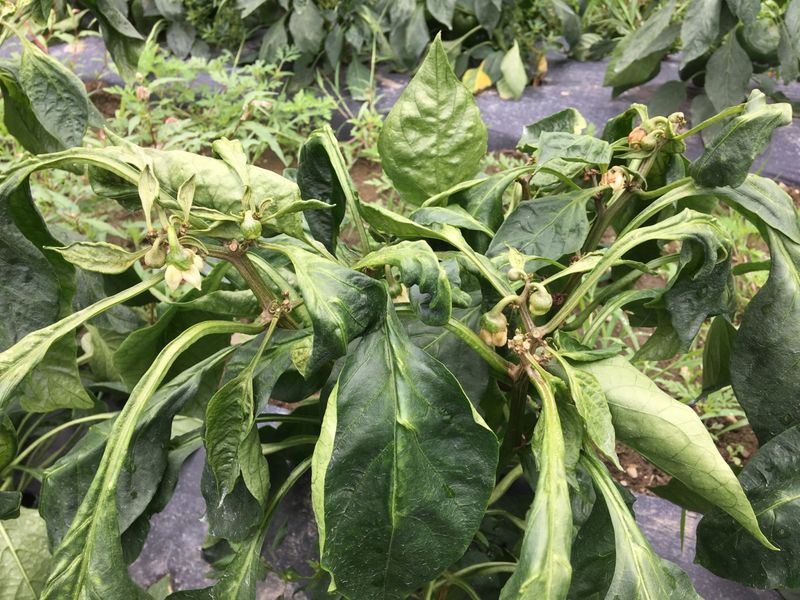
Broad mites are the most important look-alike for physiological leaf roll, particularly for gardeners in Florida and other warm regions. The key distinction is where the damage shows up: broad mites target young, expanding leaves and buds rather than older, mature foliage.
Virginia Cooperative Extension’s broad mite factsheet describes affected tissue as distorted, thick, narrow, strap-like, twisted, bronzed, or hardened, sometimes with stunting, malformed terminals, flower loss, or russeted fruit. That pattern of damage concentrated in new growth is meaningfully different from the general leaf rolling seen with physiological stress.
These mites are tiny enough to be nearly invisible without magnification. UF/IFAS guidance on broad mites recommends inspecting new growth, leaf undersides, leaf axils, and buds with at least a 10x hand lens, and notes that a stronger lens or even a microscope may be needed for a confident identification.
The mites may also be gone from the most damaged tissue by the time you look. Timing alone cannot make the call: UF/IFAS Miami-Dade pepper pest management guidance notes that pepper damage from broad mites commonly occurs in winter and spring, not exclusively in late summer.
Viral disease becomes more plausible when curling comes with mosaic or yellow mottling, puckered or very small bunched leaves, stunting, or distorted fruit. Texas A&M’s plant disease handbook describes pepper mosaic symptoms as upward curling combined with mottling, small discolored leaves, stunting, and poor-quality fruit.
Herbicide injury follows a different trail: Iowa State University Extension’s herbicide drift guidance connects cupping, twisting, strap-shaped new leaves, and distorted growing points with recent lawn or field treatments, drift events, contaminated mulch, or similar injury appearing across multiple sensitive plants nearby. Do not spray as a precaution when these causes overlap; unnecessary products can injure heat-stressed foliage and harm beneficial insects.
Judge recovery by new growth, not old leaf damage
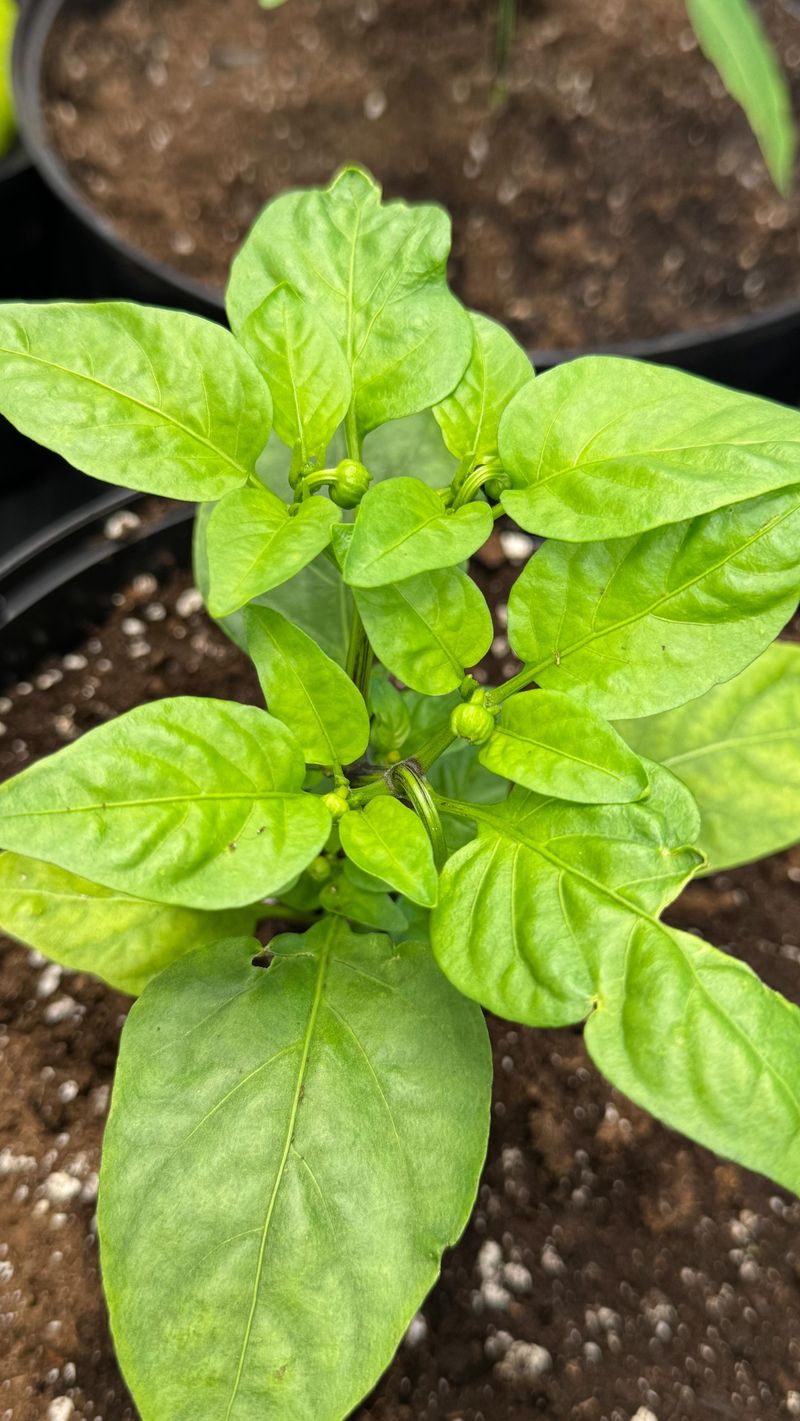
After stabilizing moisture and reducing heat exposure, do not expect the already-damaged leaves to uncurl or soften on their own. Old tissue that rolled or hardened under stress tends to stay that way.
WSU Hortsense makes clear that the appearance of existing damaged leaves is not the right measure of recovery. The more useful check is whether the newest growth at the growing tips looks normal in shape, color, and size, and whether the plant continues developing without escalating distortion.
Keep in mind that even a plant navigating physiological leaf roll successfully can still take a hit in production. University of Maryland Extension notes that very hot days and nights can cause flower drop and slow or stop pepper-pod development even when the plant survives and keeps producing leaves.
Healthy foliage does not guarantee a full harvest when extreme heat lingers.
The clearest decision rule is this: when the plant remains green and growing with normal-looking new growth, manage the root zone and reduce heat first. If new growth becomes progressively distorted, the whole plant declines, fruit shows abnormalities, or you find evidence of pests or herbicide exposure, that is the moment to investigate further.
A plant that keeps moving forward is telling you something worth listening to.