
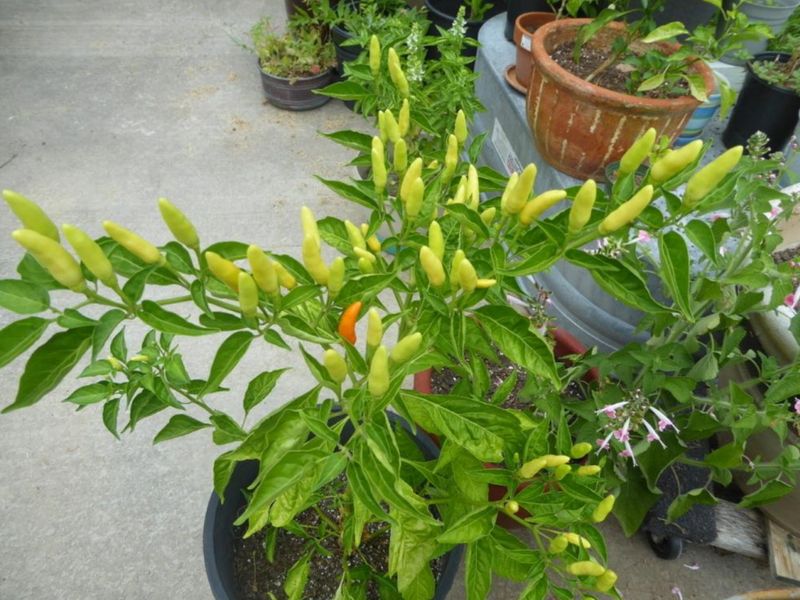
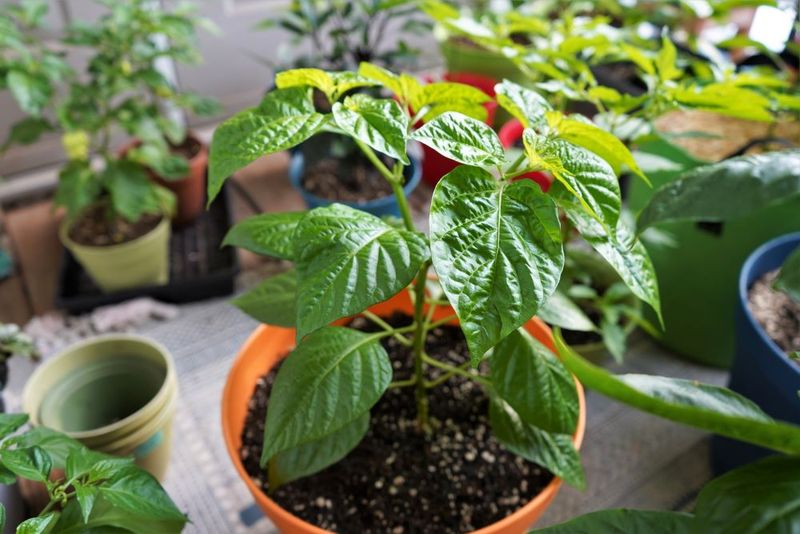
Your pepper plant looks healthy enough to win a prize – dark green leaves, thick stems, plenty of new growth – but barely a pepper in sight. August heat is often the real culprit behind this frustrating gap between a thriving-looking plant and an empty harvest. Understanding what heat, moisture, and your fertilizing routine are doing to your flowers can help you make smarter choices before the season slips away.
Heat can leave a healthy pepper plant with almost no pods
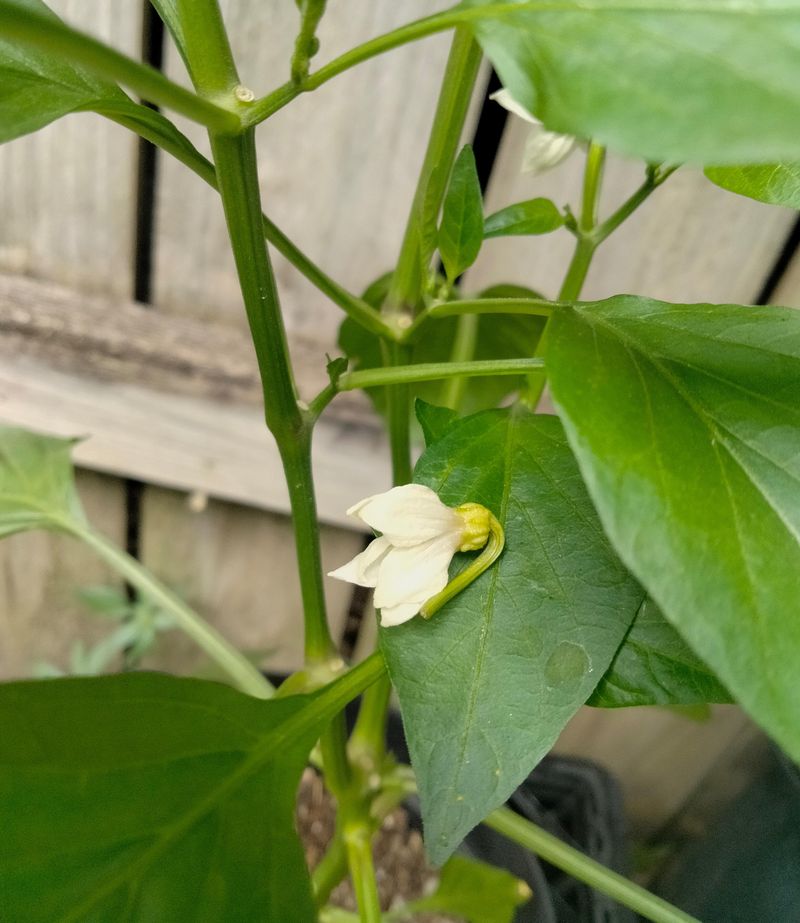
Pepper plants are more temperature-sensitive than they look, and August is when that sensitivity shows up most clearly in the harvest. Fruit set works best when daytime temperatures stay around 70-80 degrees Fahrenheit and nights stay between 60-70 degrees. When daytime heat climbs near or above roughly 90-95 degrees, flowers and very young fruit can abort before a pepper ever forms, even while the rest of the plant stays dark green and vigorous.
OSU Extension guidance on growing peppers notes both the heat sensitivity of pepper flowers and the sunscald risk that follows when the canopy is disturbed during intense sun. A controlled study found that exposure to temperatures around 33 degrees Celsius (91.4 degrees Fahrenheit) reduced fruit set in bell pepper flowers at particularly vulnerable stages, including young buds and flowers at the moment of opening, as Erickson and Markhart documented in Plant, Cell and Environment.
Those temperature thresholds are not universal guarantees. Cultivar, duration of heat exposure, humidity levels, wind, soil moisture, and plant age all affect how badly fruit set suffers during a hot stretch. Some varieties tolerate high heat better than others. Heat is the leading possibility to consider first in August, but ruling it out requires looking at the full picture of your site, your weather history, and your plant’s behavior rather than assuming one cause explains everything.
The missing pods may reflect flowers that failed weeks ago
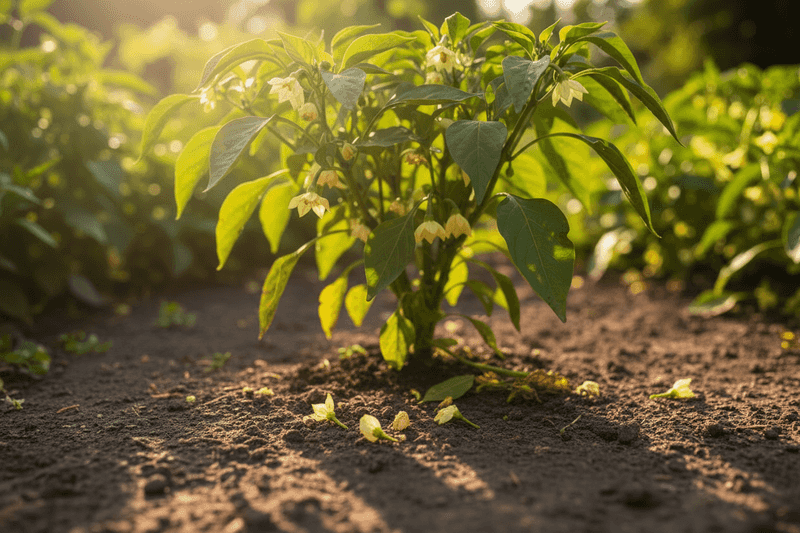
One of the more confusing things about heat-related flower loss is the delay between what happened and what you see. A pepper plant can look perfectly healthy right now while the pods it should be carrying were lost weeks ago during a hot spell. The flowers aborted quietly, the plant kept growing, and by the time you noticed the bare branches, the cause was already in the past.
Wageningen University research on reproductive organ abortion in sweet pepper explains that the reproductive stages most vulnerable to heat include very young buds and flowers at anthesis, and that abortion often leaves little visible damage on the rest of the plant. The plant simply stops carrying those flowers forward without any obvious sign of injury to leaves or stems.
Before concluding that your plant has a continuing problem, look closely for dropped blossoms on the soil surface, tiny newly formed peppers no bigger than a pea, and any developing fruit already on the plant. Illinois Extension’s pepper production problems guide points out that peppers can take more than a month to ripen after pollination, so a temporary heat-driven pause is not the same as a season-ending failure. Finding even a few tiny new pods means recovery is already underway.
Uneven moisture makes hot-weather flower loss worse
Dry soil does not just stress the roots – it also pushes the plant toward dropping buds, flowers, and small fruit it might otherwise have held. Repeated wet-dry swings through a hot August amplify the same reproductive sensitivity that high temperatures create. The plant treats both heat and water shortage as signals that conditions are not right for setting and carrying fruit.
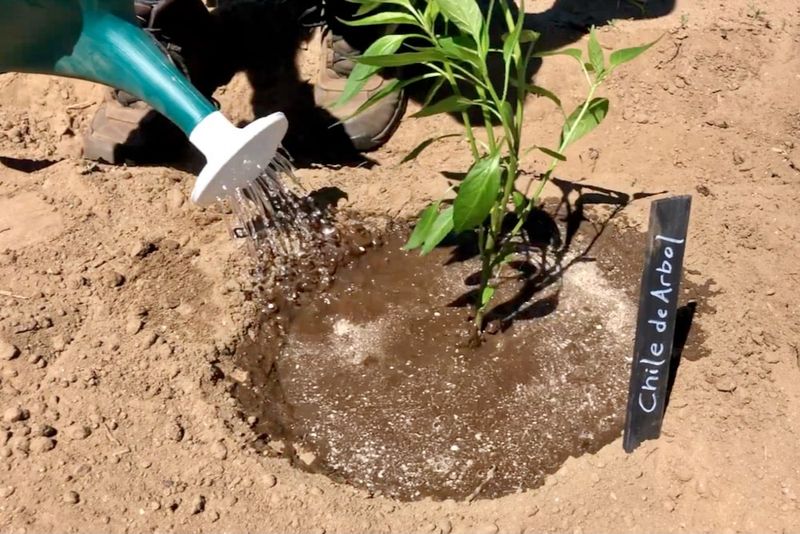
University of Minnesota Extension guidance on growing peppers recommends deep, consistent watering and the use of mulch to slow evaporation and maintain more even soil moisture between waterings. Containers are especially vulnerable because they dry out faster than in-ground beds, so they may need watering more frequently during a heat wave than you expect.
When you water, aim for the soil surface rather than the foliage. Drip irrigation, a soaker hose, or a slow deep soak at the base of the plant keeps moisture where the roots can use it and reduces the risk of leaf diseases that wet foliage can encourage. The goal is to keep the root zone as consistently moist as practical through the hottest part of the season, not to flood the plant after it has dried out and then repeat that cycle. Steady moisture will not override extreme heat by itself, but it removes one of the factors that can make flower loss worse than it needs to be.
Lush foliage can suggest excess nitrogen without proving it
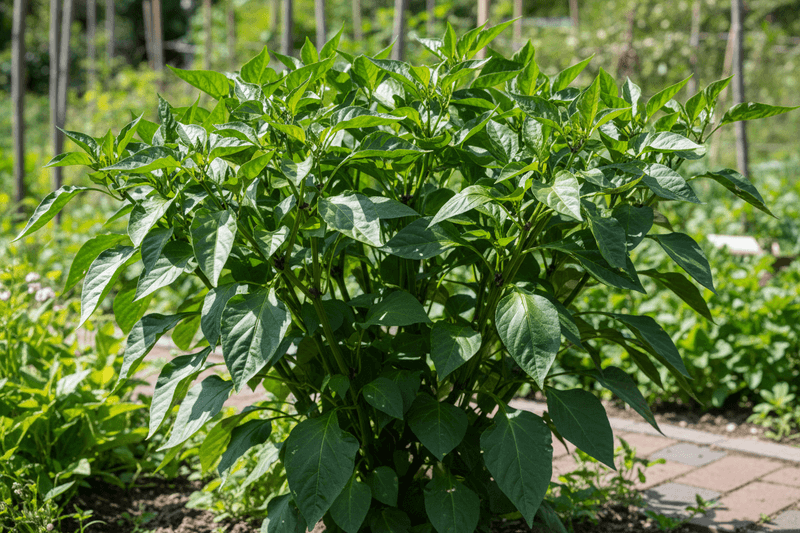
A pepper plant covered in thick, dark green leaves with almost no fruit can point toward excess nitrogen, but it does not prove it. Nitrogen encourages leafy vegetative growth, and when a plant receives more than it needs at the wrong time, it may keep pushing stems and leaves instead of shifting energy toward flowers and fruit. That pattern is a real possibility and worth considering if you have been applying high-nitrogen fertilizer on a regular schedule.
At the same time, University of Illinois Extension’s pepper growing guide explains that a plant can also remain leafy simply because heat removed its flowers before any fruit could form. Without fruit acting as a growth sink, the plant has nowhere to send its energy except into more leaves and stems. Foliage alone cannot tell you which explanation is correct.
Look at your fertilizing history as a clue rather than a verdict. If you applied a high-nitrogen product repeatedly and on a shorter schedule than the label recommends, excess nitrogen is worth suspecting. In that case, pause additional fertilizer and wait. University of Minnesota Extension advises using low- or no-phosphorus fertilizer unless a soil test specifically calls for phosphorus, and Penn State Extension’s soil testing guidance makes clear that testing before changing a nutrient program helps avoid applying nutrients that are already present in excess.
The canopy protects peppers from more than it hides
Stripping leaves off a struggling pepper plant feels productive, but it often makes things worse in August. Healthy foliage does two important jobs: it captures sunlight for photosynthesis and it shades the fruit below from intense sun. Remove too many leaves during a heat wave and you may trigger sunscald on the peppers that are already developing, turning a pod problem into a fruit-quality problem on top of it.
OSU Extension’s pepper growing publication specifically flags sunscald as a risk when the canopy is disrupted during hot, sunny conditions. Limit any cutting to growth that has a clear reason behind it: dead branches, diseased stems, foliage touching the soil, or badly damaged leaves that are no longer functioning.
Commercial and experimental pruning systems sometimes use structured defoliation to manage fruit load and light penetration in controlled greenhouse settings, but those results do not transfer directly to a backyard plant grown outdoors. Research published in Agronomia Mesoamericana on pruning effects in Capsicum annuum and Penn State’s commercial vegetable production recommendations both reflect systems with controlled light, plant density, and support structures that do not match what most home gardeners are working with. Topping or heavily thinning an outdoor pepper plant in August is not a reliable path to more pods.
A measured August reset protects the next flowers
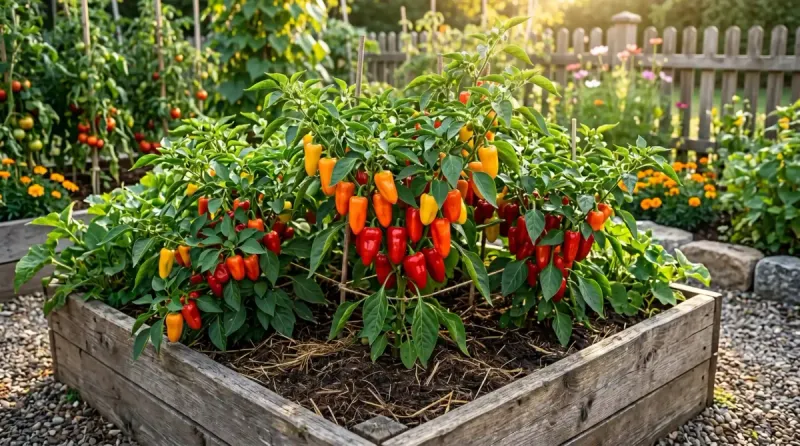
When a pepper plant stalls in August heat, the most useful response is a calm, sequenced one. Start with soil moisture – mulch the root zone if you have not already, and water deeply and consistently rather than in reactive bursts after the soil has gone dry. Mulch slows evaporation and helps buffer the root zone against temperature swings, giving the plant a more stable base to work from.
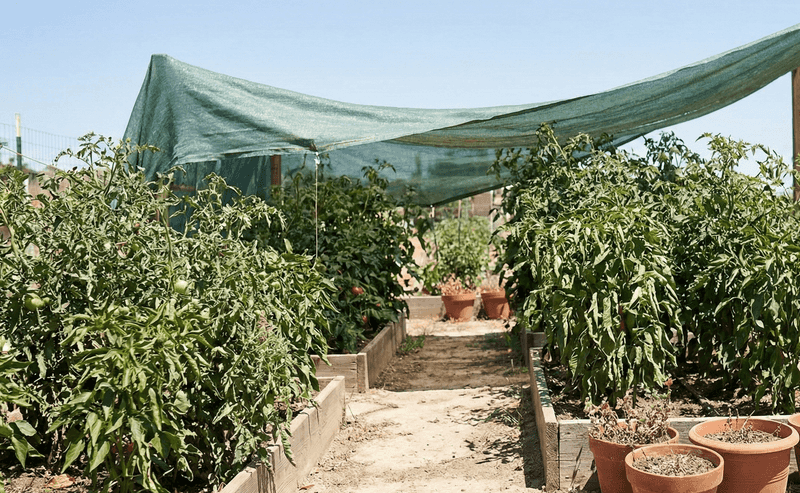
If your site gets intense afternoon sun and temperatures have been running well above 90 degrees, temporary shade cloth can reduce both heat and sunscald risk during the worst part of the day. OSU Extension notes shade as a mitigation option for pepper heat stress while also cautioning that too much shade reduces photosynthesis and can lower overall yield. Use it selectively and temporarily rather than as a permanent fix.
Harvest any peppers that have reached mature size regularly. University of Minnesota Extension notes that continued harvesting can encourage the plant to produce more flowers and fruit. Remove only foliage that is clearly dead or damaged, inspect the plant for tiny newly set pods, and give the system a chance to stabilize before reaching for any additional intervention. As Illinois Extension’s August pepper guide emphasizes, a temporary pause in pod production is not the same as a plant that has stopped working.
Popular fixes can target the wrong problem
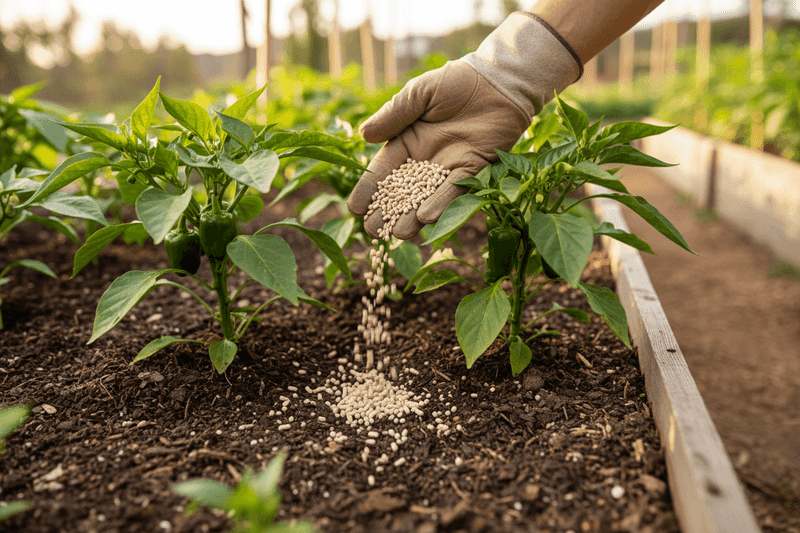
Reaching for a high-phosphorus bloom booster when peppers are not setting fruit is a common reaction, but it is not a reliable solution. Nutrient applications should follow a soil test or a label-based crop recommendation, not a general assumption that more phosphorus will force flowers. Penn State Extension’s soil testing resource explains that excess phosphorus can accumulate in the soil over time and contribute to water quality problems, so adding it without evidence of a deficiency can create a new issue while doing nothing for fruit set.
Hand-pollination is another fix that often gets recommended but rarely addresses the actual problem. Peppers are generally capable of setting fruit without insect help, as University of Minnesota Extension’s pollination requirements guide confirms. A lack of bees is not the default explanation for heat-related flower loss, and systematically hand-pollinating flowers during a heat wave does not change the conditions that caused abortion in the first place.
Blossom-end rot also deserves a separate mention here. It appears as a sunken, darkened area on the bottom of an already developing pepper, and it is connected primarily to uneven water availability affecting calcium movement inside the plant, not simply a calcium shortage in the soil. Calcium sprays or supplements do not reliably solve it. Illinois Extension and UMN Extension both distinguish this condition clearly from failure to set pods, because treating them as the same problem leads to the wrong response.
Judge recovery by new set, not by the August pause
The most useful thing you can do right now is look for new growth at the nodes and tiny peppers no bigger than a fingernail. If the plant is healthy, moisture is steady, and small new pods are appearing as temperatures ease even slightly, the canopy is doing its job and the plant is recovering on its own schedule. Continue regular care, keep harvesting mature fruit, and resist the urge to intervene further.
If your fertilizing history suggests repeated high-nitrogen applications and the foliage is unusually lush even by pepper standards, stop adding fertilizer and have the soil tested before making any further changes to the nutrient program. Illinois Extension and University of Minnesota Extension both support a measured, test-before-you-treat approach rather than automatic supplementation.
Heat, uneven moisture, and possibly excess nitrogen are interacting explanations for a leafy August pepper with few pods, not a single hidden culprit that one fix will solve. Protecting the root zone, stabilizing moisture, and letting the plant carry new flowers through a cooler stretch is the practical path forward. Illinois Extension’s August pepper production guide puts it well: a plant that pauses in peak heat often rebounds once conditions ease, and the best evidence of recovery is a new pod forming, not a calendar date.