
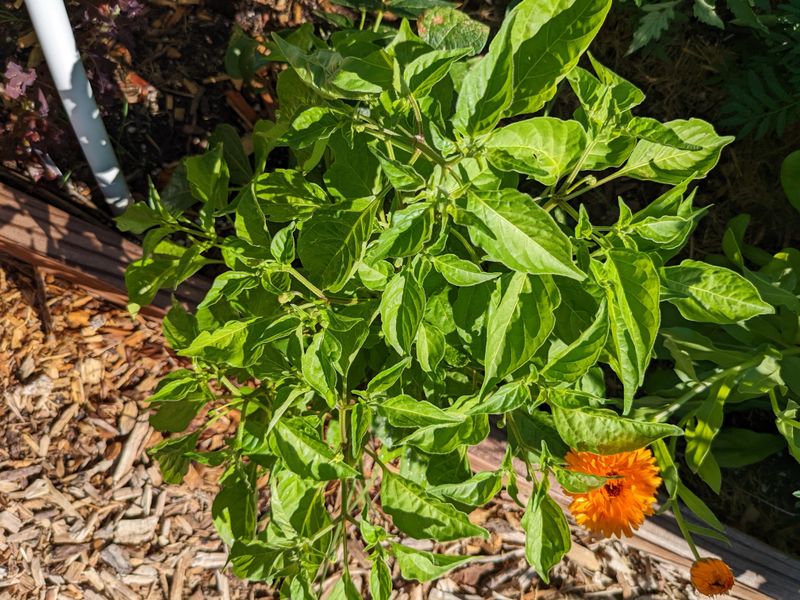
You step outside to check your pepper plants and find them packed with deep-green leaves, looking healthier than ever, yet not a single pod in sight. Before you blame the bag of fertilizer in your garage, the real culprit may be the heat wave baking your garden right now. Understanding what is actually stopping your peppers from fruiting can save you from making changes that do more harm than good.
Bushy foliage does not diagnose a feeding problem
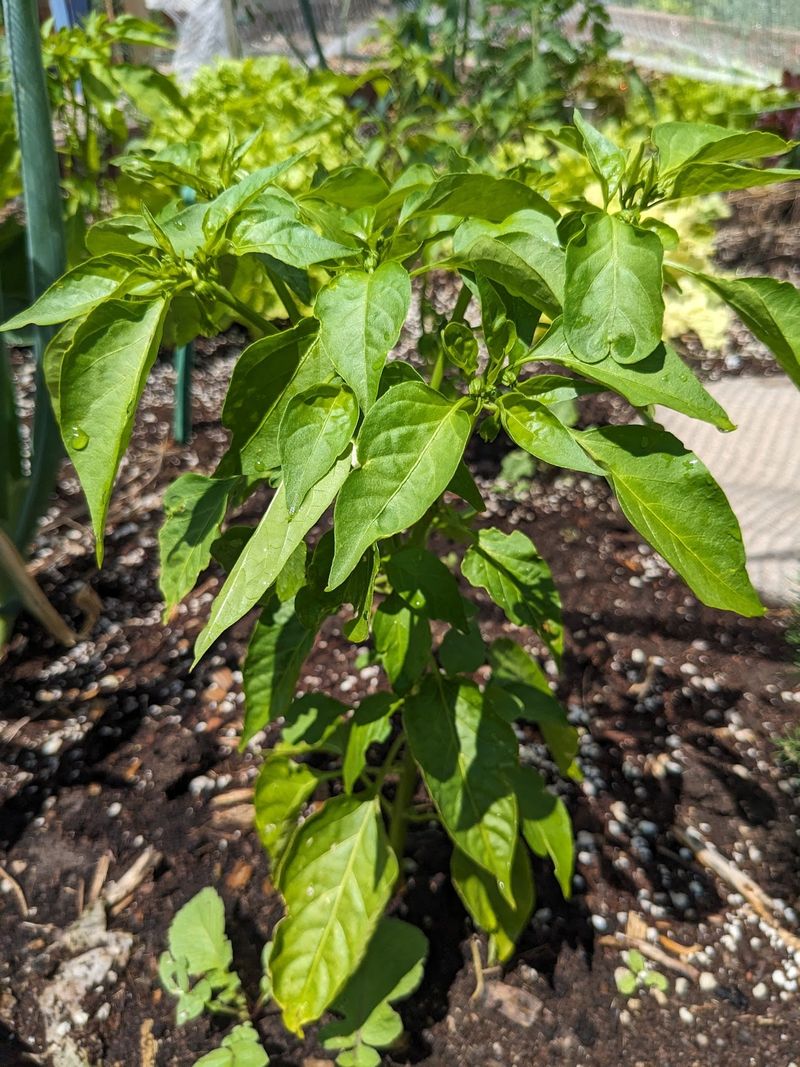
A pepper plant loaded with thick, dark-green leaves and zero pods is alarming to see, but the appearance alone cannot tell you why the fruit is missing. Yes, excess nitrogen can push a plant toward vigorous leafy growth while slowing fruit production, and that pattern is more plausible when you recently applied a nitrogen-heavy fertilizer, spread fresh manure, added heavy compost, or fed the plant repeatedly in a short stretch. Without that kind of feeding history behind it, lush foliage is just lush foliage.
University of Illinois Extension research on pepper production specifically cautions against assuming overfertilization when peppers look green and full but carry no fruit. Plants redirect nutrients into leaves and stems when pods are not developing, which can make a heat-stressed or moisture-stressed plant look exactly like an overfed one. Blaming the fertilizer bag first is a tempting shortcut, but it leads many gardeners to add yet another product when the real problem is environmental.
The governing rule here is straightforward: check heat and water conditions first, then look for actual evidence of a feeding swing. UC IPM guidance on nitrogen excess confirms that the visual clues for overfertilization are strongest when combined with a clear feeding history, not from appearance alone. You do not need to strip off healthy leaves or rush to add a corrective product. Start with the environment, and the feeding question will become much clearer.
Heat can interrupt fruit set before a pod forms
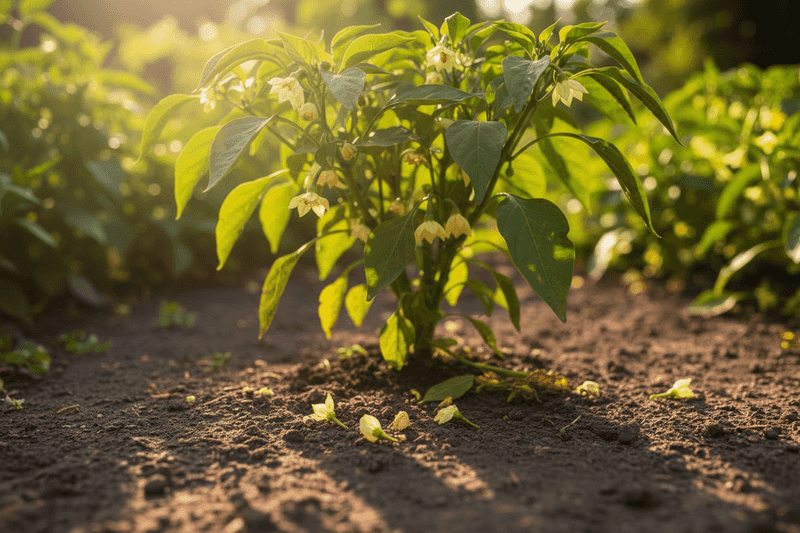
When a heat wave settles over your garden, it can shut down fruit production quietly and completely, even while the plant keeps pushing out new growth. Pollen viability drops under high temperatures, flower development can be disrupted, and blossoms may abort before a pod ever begins to form. The plant is not failing overall; it is responding to conditions that make setting fruit genuinely difficult.
UC IPM’s overview of pollination failure in peppers and eggplants notes that poor fruit set commonly occurs when daytime temperatures climb above roughly 85 to 90 degrees Fahrenheit or when nighttime temperatures stay above approximately 75 to 80 degrees. These are warning ranges, not hard cutoffs, and your results will vary with cultivar, local humidity, and how long the heat persists. Bell peppers tend to be more sensitive to high temperatures than many hot-pepper varieties, a distinction confirmed by Iowa State Extension’s explanation of why bells often stall while hot peppers keep setting.
Heat creates a misleading picture that trips up a lot of gardeners. When the temperature spikes, flowers drop and pods disappear, while the plant continues producing leaves because vegetative growth is more heat-tolerant than reproduction. That combination, bushy plants with no pods, looks like a nitrogen problem even when fertilizer had nothing to do with it. New Mexico State University’s guide to environmental stress in chile peppers lists high temperature alongside insufficient water, wind, and nutrient imbalance as causes of flower drop, reinforcing that the heat hypothesis deserves serious attention before fertilizer gets the blame.
Audit what the plant received before the heat arrived
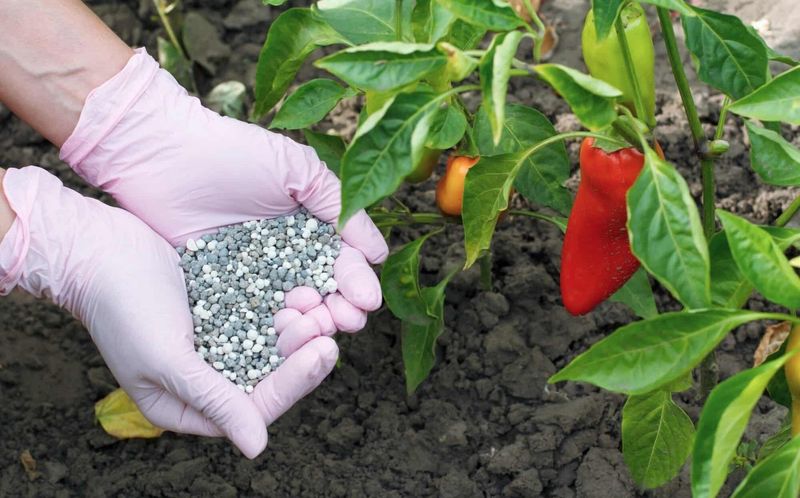
Rather than reaching for a new product, spend a few minutes reviewing what the plant already received. Think back over the past four to six weeks: did you apply a fertilizer with a high first number on the N-P-K label, spread fresh manure, mix in a heavy load of compost, or feed the plant more than once in quick succession? The first number in an N-P-K ratio represents the relative nitrogen content, so a product labeled 20-5-5 delivers a much heavier nitrogen load than one labeled 5-10-10. UC IPM’s nitrogen excess resource notes that visual symptoms of overfertilization are most credible when a clear feeding history supports them.
If your audit turns up a recent high-nitrogen application, repeated feedings, or a fresh manure addition, excess nitrogen becomes a plausible contributing factor worth addressing. If you have not fertilized recently, used a balanced product at label rates, or relied mainly on aged compost, changing your fertilizer is unlikely to solve a fruit-set problem caused by heat. UC IPM’s cultural tips for growing peppers emphasize reading product labels carefully and adjusting inputs based on what the plant has actually received.
Resist the pull toward a high-phosphorus bloom booster at this stage. Phosphorus application should be guided by a soil test, not by a desire to trigger fruiting, and adding phosphorus without that evidence may not improve production while increasing runoff risk. The audit’s job is to tell you whether a feeding swing actually happened, not to generate a new shopping list.
Pause feeding while extreme heat persists
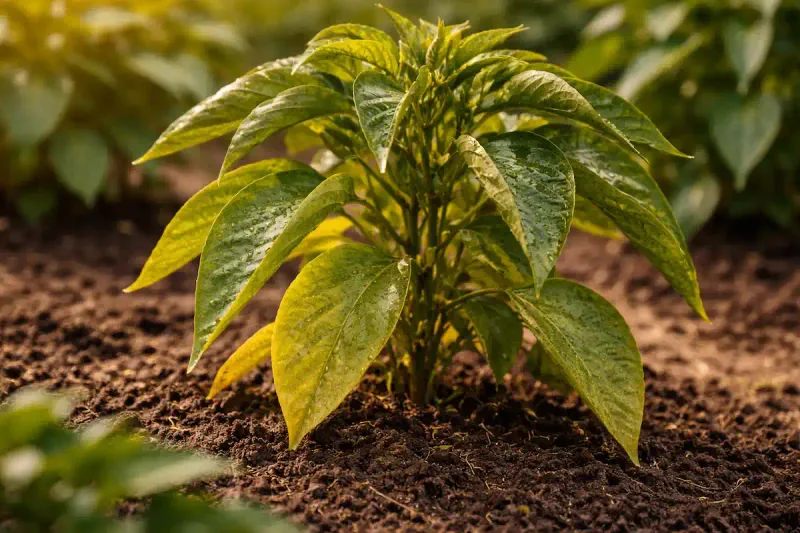
Once you have confirmed that a heat wave is underway, the single most protective feeding decision you can make is to stop routine fertilizing until temperatures moderate. Oregon State Extension’s guidance on protecting plants during extreme heat advises against fertilizing during heat events, and the reasoning is straightforward: a plant under heat stress cannot process additional nutrients efficiently, and concentrated fertilizer can increase salt levels around the roots, risking burn or toxicity.
Bloom boosters and heavy feeding products are especially tempting when your peppers look green but fruitless, because the instinct is to push the plant toward production. Resist that instinct. Adding more fertilizer during a heat wave does not open a stuck fruit-set window; it adds another stressor on top of the one already shutting things down. Oklahoma State Extension’s pepper production guide recommends basing fertility decisions on soil tests and local recommendations rather than reactive feeding, a point that applies with extra force when conditions are already extreme.
If your feeding audit identified a genuine nitrogen surplus, the correction is simply to stop adding more and let the plant work through what it already has in the soil. Do not remove healthy foliage in an attempt to redirect energy. When temperatures settle and the plant shows signs of new flowering, you can reassess feeding needs using the product label, a soil test, or a recommendation from your local extension service. Penn State Extension’s phosphorus management guidance reinforces that nutrient applications without soil-test support can accumulate without improving yield while creating runoff concerns.
Stabilize moisture and reduce afternoon heat
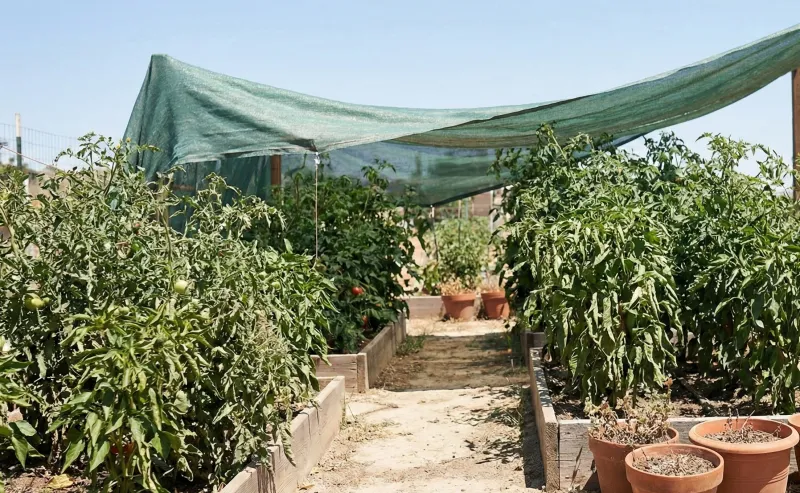
Consistent soil moisture is one of the most effective tools you have during a heat wave, and it helps whether or not nitrogen played any role in your fruit-set problem. Dry soil causes peppers to shed buds, flowers, and small developing fruit, so irregular watering can mimic or worsen the effects of heat stress. Water deeply at the root zone rather than giving the plants frequent shallow sips that wet only the top inch or two of soil. Oklahoma State Extension’s pepper production fact sheet recommends consistent moisture and deep watering as foundational practices, with adjustments for rainfall, soil type, container size, plant size, and current temperatures.
A layer of organic mulch around the base of the plants can reduce evaporation significantly, keeping the root zone cooler and more stable between waterings. Two to three inches of straw, wood chips, or shredded leaves works well for most garden beds. University of Minnesota Extension’s heat management tips for vegetable gardens support mulching as a practical way to moderate soil conditions during hot spells.
Temporary afternoon shade can also reduce heat load on days when temperatures push into ranges that impair pollen. A 30 to 40 percent shade cloth mounted above the plants with good airflow on all sides gives some relief without blocking the full-sun exposure peppers need for healthy growth. This is a short-term measure for extreme conditions, not a permanent installation. Blocking strong light all day trades one problem for another, since peppers depend on high light levels to fuel the flowering and fruiting cycle you are trying to restart.
Pollination is not the first problem to solve
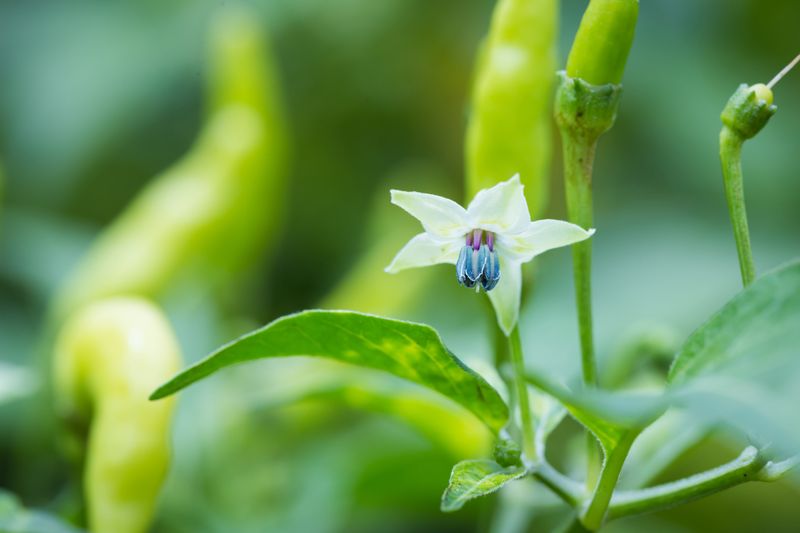
Peppers are naturally self-pollinating, meaning each flower carries both male and female parts and can set fruit without the help of a bee or any other outside agent. When your plants are covered in blossoms but producing no pods, a shortage of honeybee visitors is rarely the explanation. University of Minnesota Extension’s seed-saving guide confirms that peppers self-pollinate readily, though it acknowledges that pollinator activity can improve fruit size and seed count in some situations.
Heat, however, can damage pollen directly or interfere with flower development even when the blossoms look perfectly normal from the outside. UC IPM’s pollination resource for peppers and eggplants explains that high temperatures can reduce pollen viability and cause flowers to abort before fruit set occurs, which is why temperature and moisture management should come before any attempt to assist pollination manually. Routine hand-pollination of every flower is not a practical first response and may distract from the conditions actually preventing fruit set.
Blossom-end rot is a separate issue that sometimes gets confused with general flower drop. It appears as a dark, sunken spot on the bottom of developing fruit and involves calcium movement within the plant, which is closely tied to inconsistent watering rather than a calcium shortage in the soil. University of Illinois Extension’s pepper growing guide notes that adding calcium to the soil often does not correct blossom-end rot because the underlying problem is water availability, not a nutrient deficiency. Steady moisture remains the better remedy for both flower drop and blossom-end rot.
Use the next flowering window to reassess
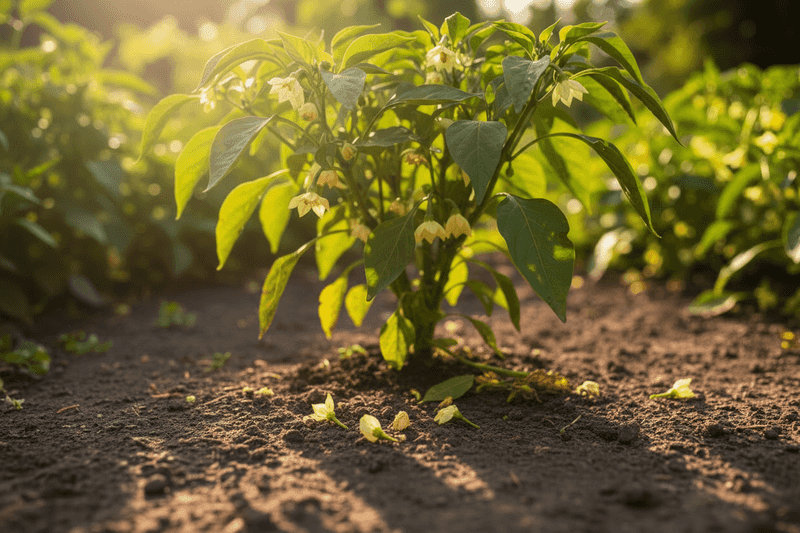
After temperatures moderate and you have stabilized moisture and paused additional feeding, watch the plant’s next round of flowers closely. NC State Extension’s blossom drop resource confirms that heat-related flower drop is often temporary, and a new fruit-setting window can open once conditions become more favorable. New flowers that appear after a heat event may set normally without any further intervention on your part.
If pods still fail to develop after temperatures have settled and moisture is consistent, that is the right moment for a broader review. New Mexico State University’s environmental stress guide lists wind exposure, poor light, transplant stress, pest pressure, disease, and nutrient imbalance as additional causes of persistent flower drop, any of which could be at work alongside or instead of the factors already addressed. Check whether the plants are getting enough direct sun, whether roots were disturbed during transplanting, and whether any pest or disease activity is present on the leaves, stems, or remaining flowers.
The practical sequence to carry forward is simple: evaluate heat and water stress first, pause feeding during extreme conditions, then consider nitrogen only when your feeding history gives you a real reason to. Illinois Extension’s pepper production problem-solving article puts it well: lush foliage in a heat wave points to the environment before it points to the fertilizer bag. Peppers are resilient plants, and a cooler stretch of weather often brings the flush of pods that the heat wave temporarily took away.