
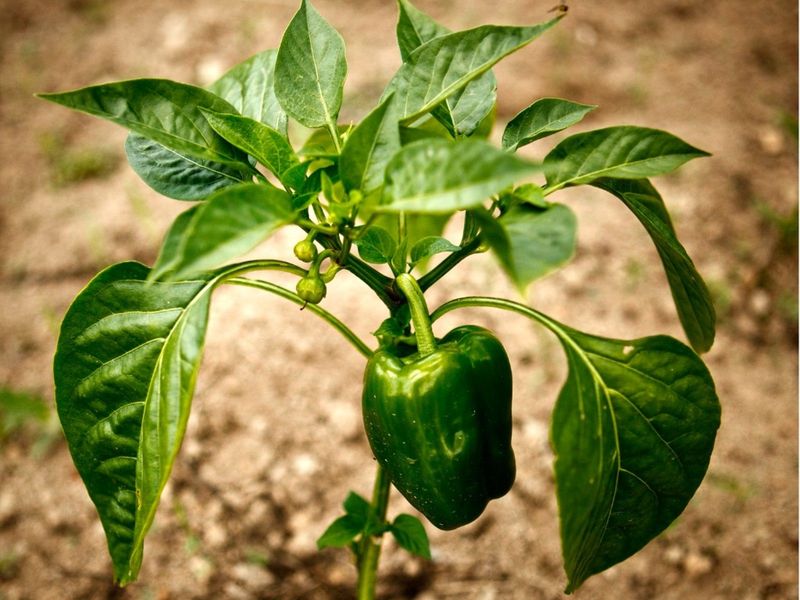
You water, you fertilize, and yet your pepper plants are covered in flowers or tiny little peppers that just refuse to grow. It is one of the most frustrating things a summer gardener can face, especially when August heat is already pushing plants to their limit. The real cause is rarely as simple as one feeding habit, and the fix depends on knowing exactly what your plant is doing right now.
Start by identifying what the plant is actually doing
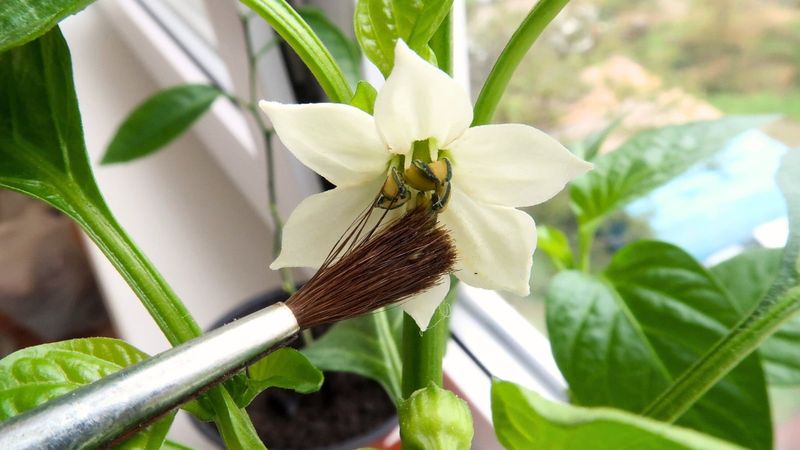
Before reaching for a fertilizer or a spray bottle, spend a few minutes looking at the plant carefully. There is a meaningful difference between flowers that fall off before forming fruit and fruit that has already attached but refuses to grow bigger. Each situation points toward different causes, and treating them the same way can send you in the wrong direction.
Flower drop, where blossoms open and then fall without leaving any developing pepper behind, usually suggests that pollination failed or that a sudden stress event hit the plant at the wrong moment. Heat injury, drought, strong wind, and pest pressure are all common triggers, according to University of Maryland Extension guidance on poor fruit set in vegetables. Tiny fruit that stays attached is a different story, because the flower was at least partially fertilized, but something is limiting normal development afterward.
Attached small fruit can reflect poor fertilization during a heat event, early developmental injury, uneven soil moisture, cultivar characteristics, or simply fruit that still needs more time. New Mexico State University’s pepper production guide notes that variety plays a real role in expected fruit size. Before treating anything as abnormal, compare what you are seeing against the mature size listed for your specific cultivar, because a naturally small-fruited pepper is supposed to stay small. Rushing toward a fertilizer remedy without making this distinction first can waste time and potentially make the underlying problem worse.
Heat can damage peppers before symptoms become obvious
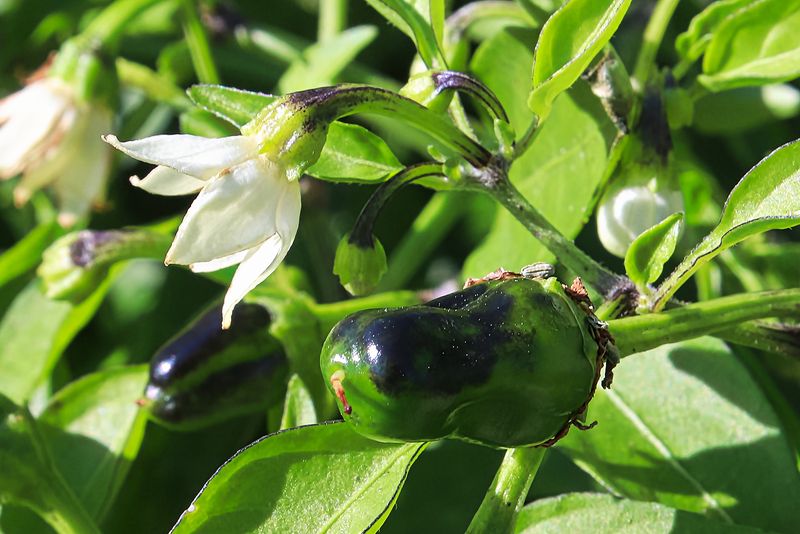
August heat is not just uncomfortable for gardeners. It can quietly disrupt pepper reproduction at stages that are invisible to the eye, well before any obvious sign of trouble appears on the plant. The damage often happens during pollen development, at the moment of flowering, and in the first few days after a flower is pollinated, which means the window for heat injury is wider than most people realize.
Research published in Plant, Cell and Environment found that high temperatures during these reproductive stages can reduce pollen viability, interfere with fertilization, cause abortion of young fruit, reduce the number of seeds that form, and ultimately limit fruit size. Extension sources generally flag daytime temperatures above roughly 90 to 95 degrees Fahrenheit and nighttime temperatures above about 70 to 75 degrees as conditions that can impair pepper fruit set, though these are approximate benchmarks rather than universal cutoffs. Cultivar, humidity, wind exposure, container size, and soil moisture all shift where the real danger zone falls for a given plant.
University of Maryland Extension specifically identifies heat stress as a leading cause of poor fruit set in peppers during summer. Utah State University’s vegetable guide similarly describes a preferred temperature range that many August gardens routinely exceed. Adding more fertilizer cannot repair a flower or young fruit that has already been damaged by heat. The most useful response at this stage is reducing the plant’s heat load, not feeding it more.
Stop routine high-nitrogen feeding when foliage is excessive
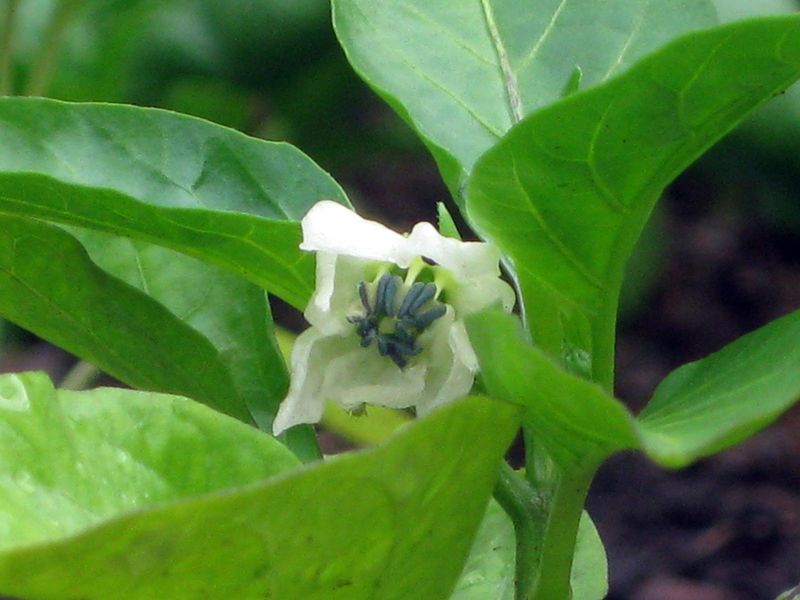
Nitrogen is the nutrient that drives leafy, green growth, and peppers do need some of it. The problem arises when a plant receives repeated high-nitrogen fertilizer applications and responds by producing a large, dark-green, leafy canopy while putting relatively little energy into flowers and fruit. If your plant looks unusually lush and vigorous but fruiting has been slow or sparse, that pattern is worth paying attention to.
University of Minnesota Extension’s pepper-growing guidance notes that excess nitrogen can make plants bushy and slow to bear. When the plant already fits that description, stopping routine high-nitrogen fertilizer is a reasonable step. However, Illinois Extension cautions that overfertilization is not established as the general explanation for poor pepper production, and that plants can perform similarly across different fertilizer inputs. Treating excess nitrogen as the automatic culprit whenever a pepper underperforms is not supported by the available evidence.
The nitrogen explanation becomes less convincing when a plant has already set fruit and the problem clearly started during a heat wave. In that situation, heat stress and inconsistent moisture deserve attention first. If you believe feeding is still necessary after addressing moisture and heat, Utah State University recommends following a specific side-dressing schedule rather than applying an arbitrary corrective dose. Any additional feeding should align with the product label and, ideally, with a soil test rather than with a guess about what the plant might be missing.
Stabilize moisture before adding anything else
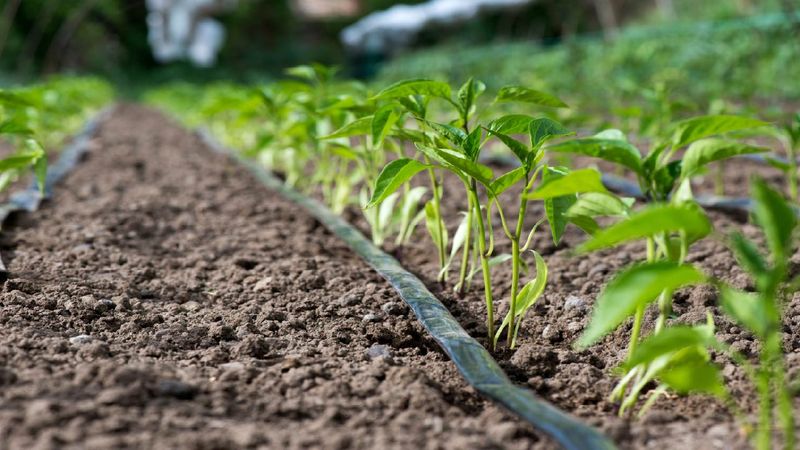
Roots that cycle between dry and waterlogged soil cannot move nutrients efficiently, and peppers are sensitive to that kind of instability. Consistent root-zone moisture is the single most immediate thing most gardeners can address during a heat wave, and it should come before any fertilizer decision. When moisture is erratic, even a plant with adequate nutrients in the soil will struggle to use them.
A general starting point is roughly 1 to 2 inches of water per week, but that range needs adjustment for your specific situation. Sandy soils drain faster and need more frequent attention. Clay soils hold water longer and can become waterlogged if watered too often. Container plants dry out much faster than in-ground beds and may need daily attention during extreme heat, while established in-ground plants with deep roots can often go longer between waterings.
Utah State University’s pepper guide and Oregon State Extension’s pepper publication both emphasize consistent moisture as central to healthy pepper production.
Deep, infrequent watering that wets the root zone thoroughly is preferable to repeated shallow sprinkling, which keeps only the top inch or two moist. A 2- to 3-inch layer of mulch over the soil surface helps slow evaporation, moderate soil temperature, and smooth out moisture swings between waterings. University of Minnesota Extension and Illinois Extension’s pepper page both point to moisture consistency as a factor in reducing blossom drop and supporting fruit development. Extra fertilizer applied to dry or stressed roots will not substitute for water that the plant actually needs to function.
Use ventilated afternoon shade to lower heat stress
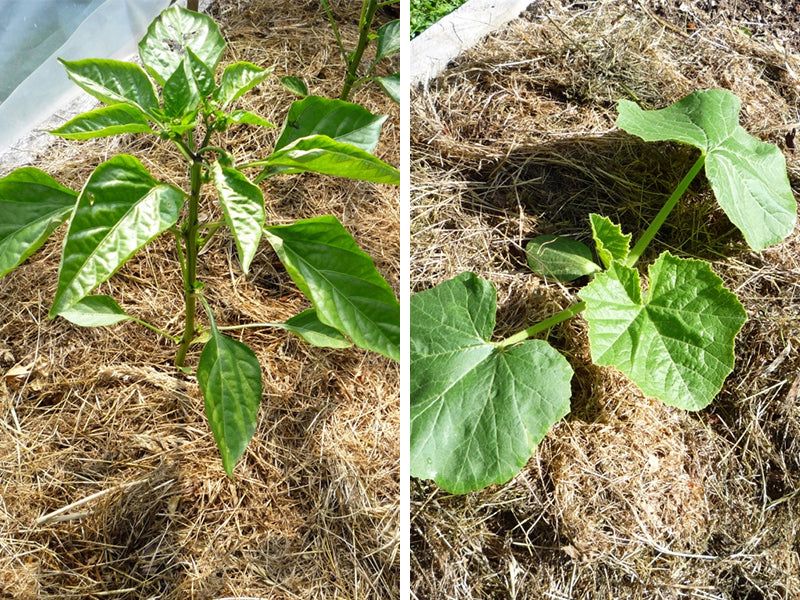
Reducing the heat load on your plants is one of the most practical things you can do during an August heat wave, and temporary afternoon shade is a tool that works alongside good watering rather than replacing it. Container plants and peppers with fruit exposed beyond the leaf canopy are especially vulnerable, because the fruit itself can overheat even when air temperatures seem manageable.
Oregon State Extension’s pepper guide recommends monitoring covered plants and keeping temperatures below 90 degrees Fahrenheit. A shade cloth or other covering must be properly ventilated, meaning air needs to move freely underneath and around it. Enclosing plants in an unventilated cover during hot weather can trap heat and make conditions worse, not better. Use stakes, hoops, or a simple frame to hold the cloth above the plants so airflow is not restricted.
Put the shade in place before the hottest part of the day, typically from late morning through mid-afternoon, and remove or adjust it in the evening so plants can benefit from cooler overnight temperatures. Check the temperature under the cloth periodically and pull it back if it is holding heat rather than reducing it. Pairing ventilated shade with root-zone irrigation and mulch gives stressed plants the best chance of recovering and setting new flowers successfully. Routine overhead wetting or misting of flowers is not recommended as a general strategy, because wet foliage held for extended periods can increase the risk of fungal disease.
Inspect the fruit before choosing a fertilizer or treatment
Not every pepper problem looks the same up close, and choosing a treatment without a clear diagnosis can waste money and potentially harm the plant or the surrounding environment. Spend a few minutes examining the fruit itself before reaching for any product.
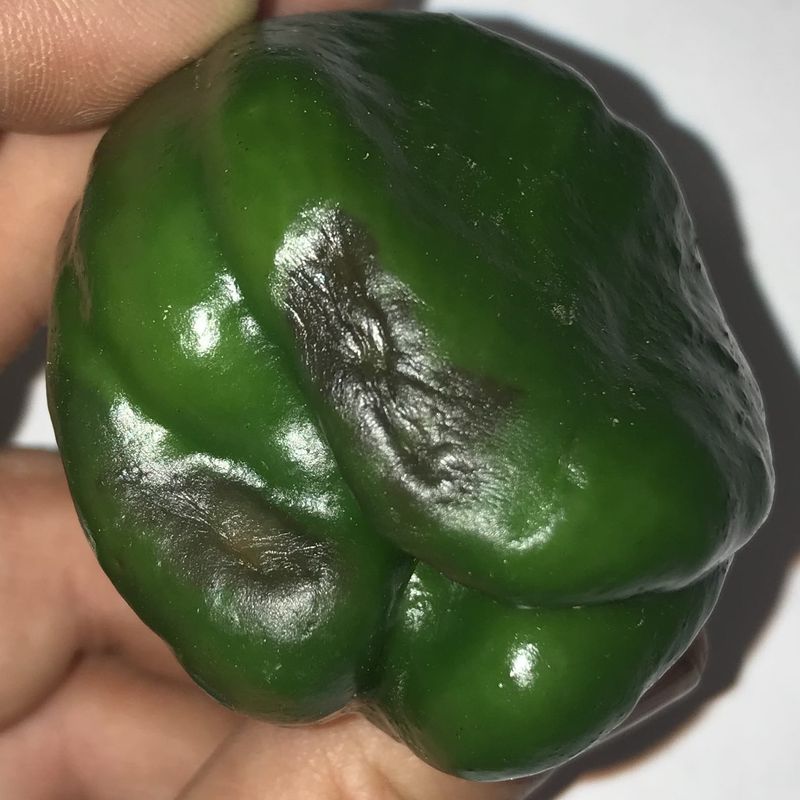
Blossom-end rot is a specific condition that shows up as a dry, dark, sunken area at the blossom end of the pepper, which is the tip opposite the stem. Illinois Extension’s pepper page explains that it is associated with inconsistent water movement within the plant, not simply a calcium shortage in the soil. Adding calcium products is often ineffective when the underlying issue is irregular watering, root damage, or drought, because the plant cannot move calcium to developing fruit without adequate, consistent water flow. Utah State University similarly identifies moisture consistency as the key management factor.
Sunscald is a separate issue that produces pale, tan, or papery patches on the side of the fruit that faces the sun, particularly when foliage has thinned and is no longer shading the peppers. University of Minnesota Extension and New Mexico State University both describe sunscald as a distinct problem from undersized or underdeveloped fruit. A pepper that is simply small may be perfectly healthy for its cultivar, or it may still be developing.
Before applying any fertilizer, bloom booster, or calcium product, consider getting a soil test. University of Minnesota’s soil-testing guidance, Penn State Extension, and University of Minnesota’s guide to interpreting soil tests for vegetables all explain how to match fertilizer choices to actual soil conditions rather than guessing. Always follow product labels exactly, and never apply more than the recommended rate. EPA guidance on nutrient pollution and EPA’s read-the-label-first resource both emphasize that excess nutrients applied beyond label rates can run off into water and cause real environmental harm.
Wait for healthy fruit and harvest at the right stage
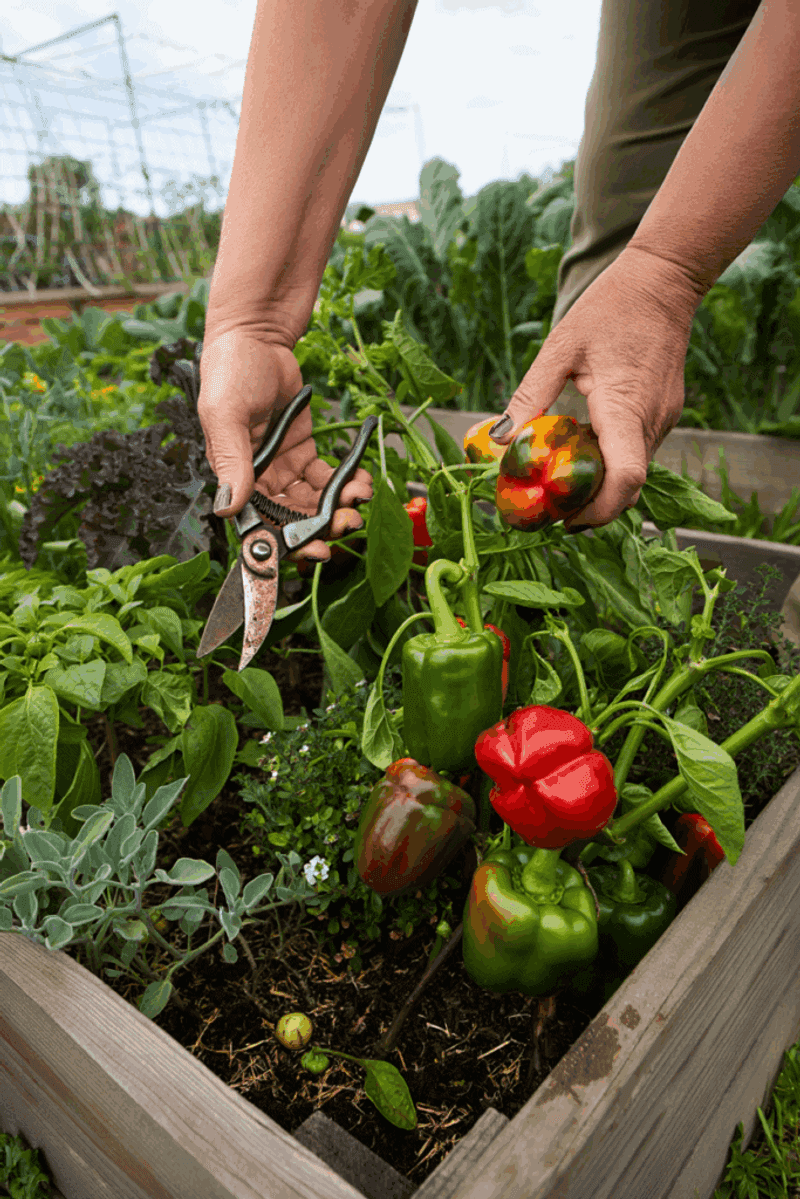
Patience is genuinely part of the solution here. Utah State University notes that peppers may need approximately 35 to 45 days from flowering to reach full color, depending on variety and temperature. A pepper that looks small today may simply be two or three weeks into that window, and checking it against the expected mature size for the cultivar is a more reliable measure than comparing it to a neighbor’s plant or a grocery store display.
Green peppers are not necessarily unripe in the sense of being unusable. Many varieties are fully mature at green stage and perfectly edible before any color change occurs. University of Minnesota Extension points out that harvesting mature fruit regularly can encourage the plant to continue flowering and setting new fruit. That said, harvesting will not restore fruit that was aborted or severely damaged during pollination or early development from heat stress.
The clearest decision rule for the rest of the season: stop high-nitrogen fertilizer when the plant is already large, dark green, and leafy. During an August heat episode, prioritize steady moisture and ventilated shade first, then reassess new fruit as it develops against what your cultivar is actually supposed to produce. A plant that gets through the heat with stable roots and manageable temperatures will often surprise you.