
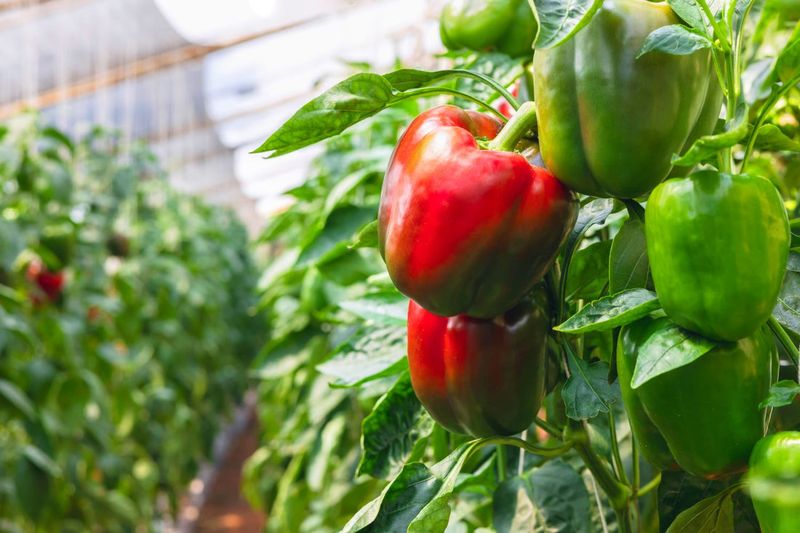
Your pepper plants look healthy, the flowers keep coming, and yet nothing is turning into actual peppers. That maddening gap between blossom and fruit is one of the most common frustrations for Southern gardeners in late summer.
A pattern of hot nights, especially during a stretch of 90-degree-plus days, is often the leading reason behind it. Understanding what is actually happening inside those flowers can help you take smarter steps right now.
Flower Drop Signals a Fruit-Set Problem, Not Automatically a Pollinator Shortage
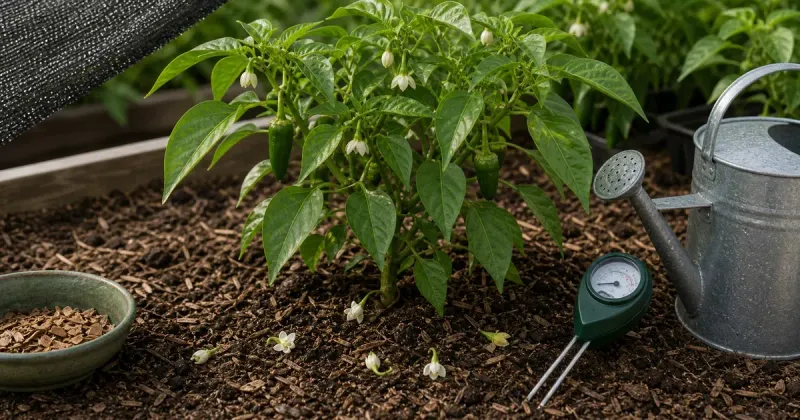
Watching flower after flower fall from a pepper plant that otherwise looks perfectly green and vigorous is genuinely discouraging. Before assuming the bees stayed home, though, it helps to understand how peppers actually work.
Peppers are generally self-pollinating, meaning each flower carries both male and female parts and can produce fruit without insect help. University of Minnesota Extension pollination guidance confirms that peppers do not require bee visits to set fruit, which means a shortage of pollinators is rarely the first explanation when a healthy plant stops producing during a heat wave.
Two different problems can look similar from a distance. A plant that has stopped flowering altogether is dealing with something different from a plant that keeps producing buds and flowers but sheds them before any fruit forms.
The second pattern, flowers appearing and then dropping or forming tiny fruits that shrivel and abort, is the one most often tied to reproductive stress from heat. Blossom drop during a heat wave should send your attention toward temperature and plant health, not toward attracting more pollinators.
That said, blossom drop during hot weather does not automatically confirm that nighttime heat is the only cause. Oklahoma State University vegetable guidance lists excessive nitrogen, irregular watering, insect pressure, and variety choice alongside temperature as possible contributors.
The most useful first step is to compare several nights of temperature readings with the timing of your blossom drop, then check for other potential causes before settling on a single explanation.
Hot Nights Can Disrupt the Flowers’ Path to Fruit
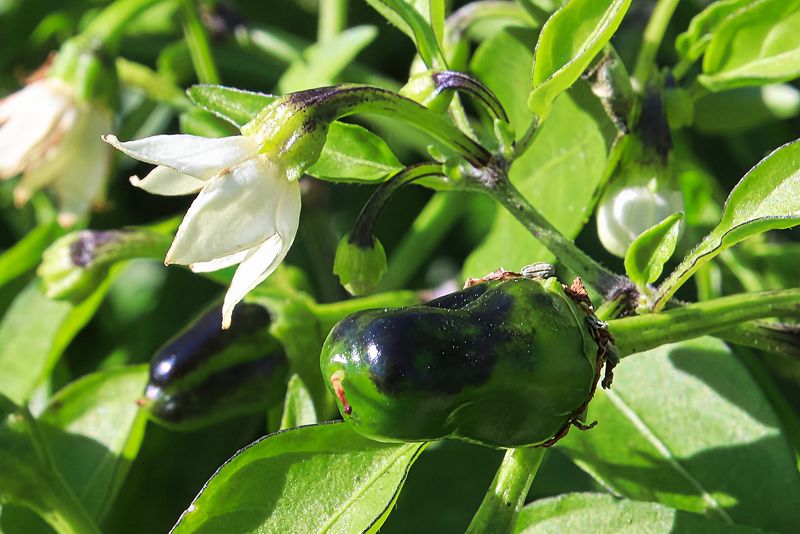
Pepper flowers go through a precise sequence of development before they become fruit. Pollen has to form properly, the flower has to open at the right stage, fertilization has to occur, and the developing fruit has to stay attached long enough to grow.
Warm nights can interfere with more than one step in that chain. Oklahoma State Extension notes that most peppers may drop blossoms when daytime temperatures climb well above 90 degrees Fahrenheit and nighttime temperatures stay above roughly 75 degrees, a combination that creates sustained heat stress with no overnight relief for the plant.
Research adds important detail to that field observation. Controlled work on bell pepper flower development found that heat can damage pollen and sensitive flower organs during the days before a flower even opens, which means the visible drop you see today may reflect damage that started earlier in the week.
Separately, research on bell pepper physiology showed that elevated temperature combined with higher vapor-pressure deficit can reduce fruit set directly, not only through pollen failure. Earlier diurnal temperature studies also found that different day-and-night temperature combinations produced meaningfully different fruit-set rates in sweet pepper.
A plant can stay lush and green while its flowers fail because vegetative growth and reproductive development respond differently to heat. The roots, stems, and leaves keep functioning while the flowers bear the stress first.
University of Minnesota guidance on heat and vegetable gardens reinforces that daytime temperatures above roughly 85 to 90 degrees can also reduce fruit set, so the problem is not nighttime heat alone. Nights above approximately 70 to 75 degrees during a sustained hot stretch are a strong warning pattern, but they are a practical field range, not a hard biological threshold that applies equally to every pepper variety.
Review Several Overnight Lows Before Changing the Whole Garden
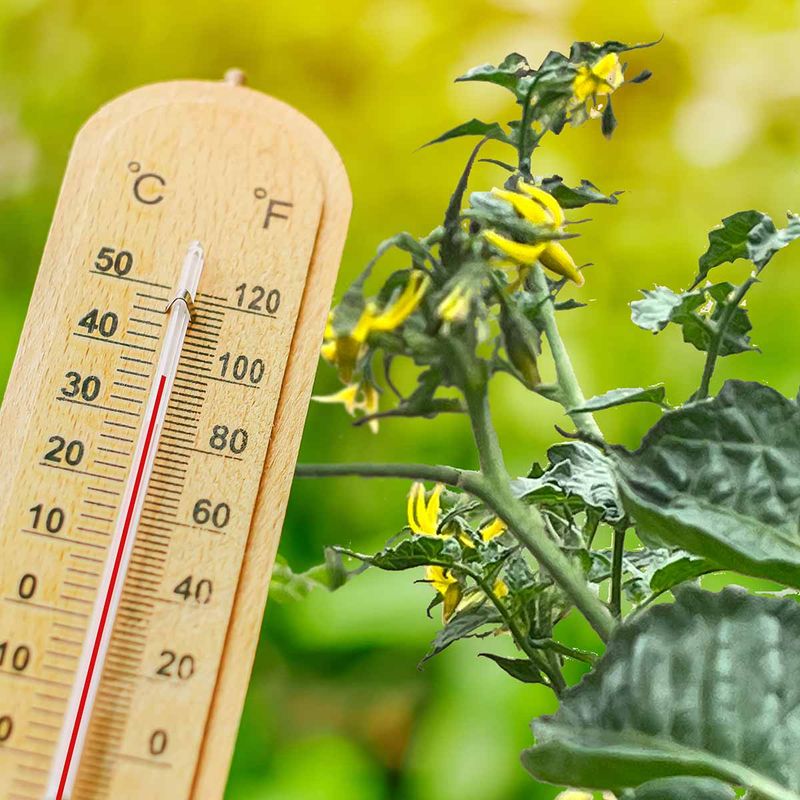
One hot night does not tell the whole story. A single overnight reading above 75 degrees during an otherwise mild week is far less meaningful than five or six consecutive nights where the temperature never dips below 72 or 73 degrees.
Pull up your local forecast history or check a backyard min-max thermometer and look at the past week or two of overnight lows alongside the daytime highs. Oklahoma State pepper production guidance points to the combination of very hot days and persistently warm nights as the relevant pattern, not any single reading.
Match those temperature records against your plant’s behavior. If blossom drop picked up around the same time that nights started staying warm, and daytime temperatures were consistently in the 90s, the heat-stress explanation becomes stronger.
Utah State University pepper guidance notes that flowers commonly abort during unfavorable weather and that fruit set tends to improve when conditions become more favorable, which suggests the problem is tied to a period of stress rather than a permanent change in the plant.
Keep in mind that temperature thresholds vary by cultivar. A range that shuts down fruit set on a bell pepper may have less effect on a small-fruited hot pepper.
A matching weather pattern strengthens the heat-stress diagnosis, but it should not lead you to skip a check for other causes. Oklahoma State vegetable FAQs remind gardeners that water stress, insect pressure, excessive nitrogen, and variety choice can all contribute to poor fruit set even when temperatures look like the obvious culprit.
Review the trend first, then look at the whole picture before making big changes.
Even Moisture Gives Heat-Stressed Flowers a Better Chance
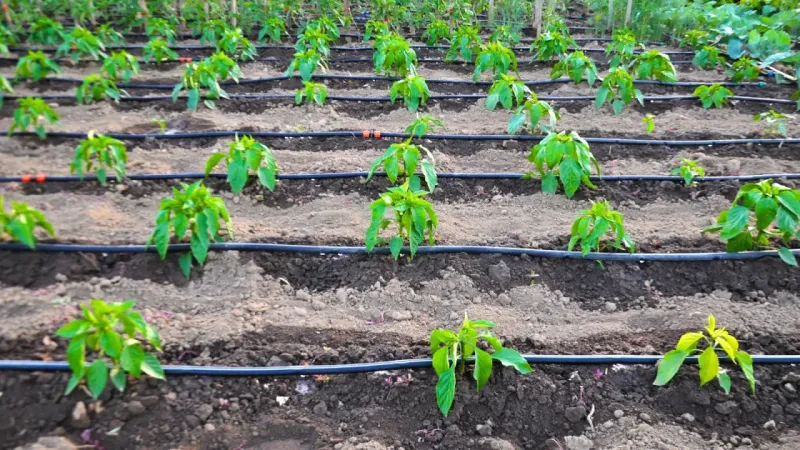
Root-zone moisture is one of the few things you can control directly during a heat wave, and keeping it consistent matters more than people often realize. Irregular watering, with soil swinging from bone dry to waterlogged, stresses pepper plants in ways that compound heat damage.
Dry spells reduce a plant’s ability to move water and nutrients through its tissues at exactly the moment when it needs that capacity most. Utah State University irrigation guidance for peppers emphasizes thorough watering at the root zone rather than frequent shallow surface applications that barely reach the deeper roots.
Mulch is one of the most practical tools available to Southern gardeners during a heat wave. A few inches of straw, wood chips, or similar organic material over the root zone slows evaporation, keeps soil temperatures more stable, and reduces the moisture swings that add stress to already-challenged plants.
University of Minnesota irrigation strategies for vegetables support drip or soaker systems as safer and more consistent delivery methods than overhead sprinklers, particularly during hot periods. Utah State water recommendations for vegetables also caution against cycles of severe dryness followed by flooding, which can trigger problems beyond blossom drop.
Steady moisture supports the plant through the heat and keeps it in better condition to set fruit when temperatures moderate. University of Minnesota heat-garden guidance reinforces that consistent soil moisture is a fundamental support strategy during extreme heat.
What even irrigation cannot do is reverse reproductive damage that high temperatures have already caused to pollen or flower tissue. Think of consistent watering as keeping your plants ready to produce, not as a guaranteed fix for fruit set during the worst days of a heat wave.
Use Afternoon Shade to Reduce the Daytime Burden
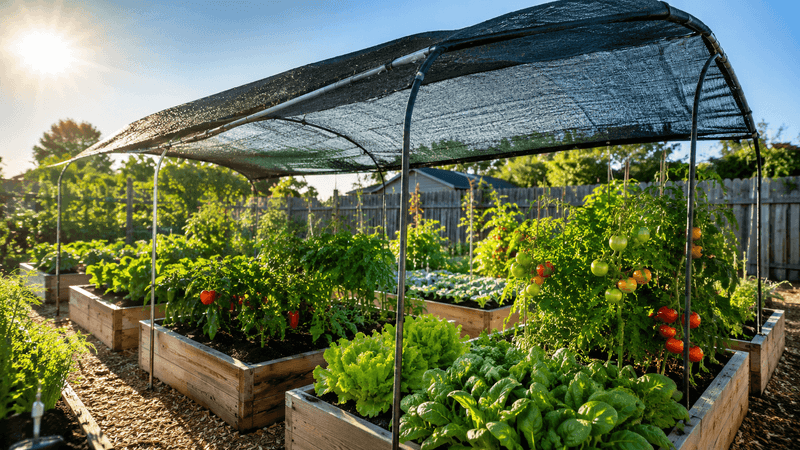
Afternoon shade will not lower the overnight air temperature in your garden bed, but it can meaningfully reduce the daytime heat load that compounds a plant’s stress. Direct sun during the hottest part of the day pushes leaf and fruit surface temperatures well above air temperature, and reducing that direct exposure gives plants a somewhat easier afternoon.
Temporary shade cloth rated at approximately 30 to 40 percent is the most practical option for home gardeners. University of Minnesota guidance on keeping gardens thriving through heat supports shade as a tool for reducing plant stress during extreme conditions.
Set up shade for the afternoon hours, roughly from midday through late afternoon, and remove or lift it during the cooler morning hours when peppers benefit from full sun and photosynthesis. University of Arizona Extension guidance on extreme heat and plant responses notes that excessive or prolonged shading can reduce photosynthesis and weaken plants over time, so shade should be a temporary intervention rather than a permanent setup.
Arizona Extension July gardening guidance similarly treats afternoon shade as a short-term protective measure during peak heat periods.
Florida research on commercial pepper production offers useful context here. University of Florida IFAS work on bell peppers grown under open-shade structures found that managed shade systems can extend production into hot summer conditions, and related UF/IFAS research on shade for vegetables and herbs supports shade as a practical heat-management tool.
Those studies involve managed production systems with irrigation and cultivar selection, so a backyard shade cloth is a sensible step, not a guaranteed match for commercial results. Treat afternoon shade as one layer of heat management alongside consistent watering, not as a standalone solution.
Popular Rescue Fixes Often Miss the Failure Point
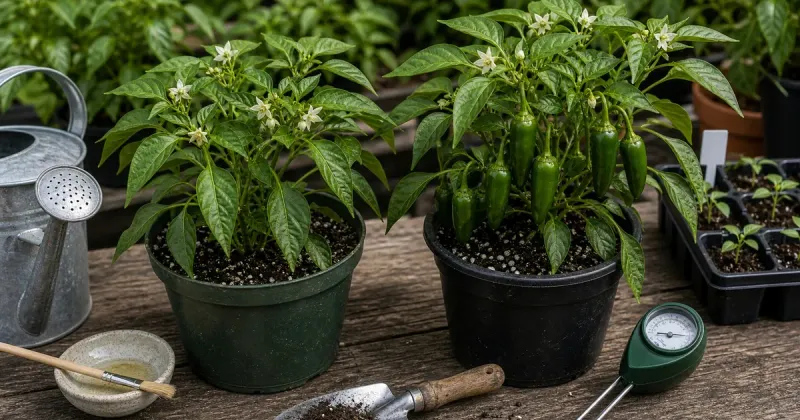
When peppers stop setting fruit, the instinct to do something immediately is understandable. Several commonly suggested fixes, though, address the wrong part of the problem or can make things worse.
Hand-pollination is one of the most frequently recommended rescue steps, but controlled research on bell pepper flower development and heat found that high temperatures can reduce fruit set even when flowers are manually pollinated. If the pollen itself is heat-damaged or the flower’s reproductive tissues are compromised, moving pollen from flower to flower with a brush does not reliably restore fruit set.
Attracting bees with companion plants is good garden practice in general, but it targets a problem peppers rarely have. University of Minnesota pollination requirements guidance confirms that peppers are self-pollinating and do not depend on bee visits to produce fruit.
During a heat wave, the failure point is inside the flower, not in the absence of pollinators. Nighttime overhead spraying is another popular suggestion, but Utah State irrigation guidance does not support it as a way to meaningfully cool plants or restore fruit set, and in humid Southern conditions, wet foliage at night can increase disease pressure.
Adding fertilizer as an emergency response deserves a specific caution. Oklahoma State vegetable guidance lists excessive nitrogen as a contributor to poor fruit set because it pushes the plant toward vegetative growth at the expense of flowering and fruiting.
Arizona Extension heat-stress guidance also advises against fertilizer applications as a stress response. Fertilizer decisions should follow a soil test and an established crop program, not a moment of heat-wave frustration.
The most useful actions during a heat wave are the quieter ones: consistent irrigation, mulch, and temporary afternoon shade.
Investigate Other Causes When the Weather Pattern Does Not Fit
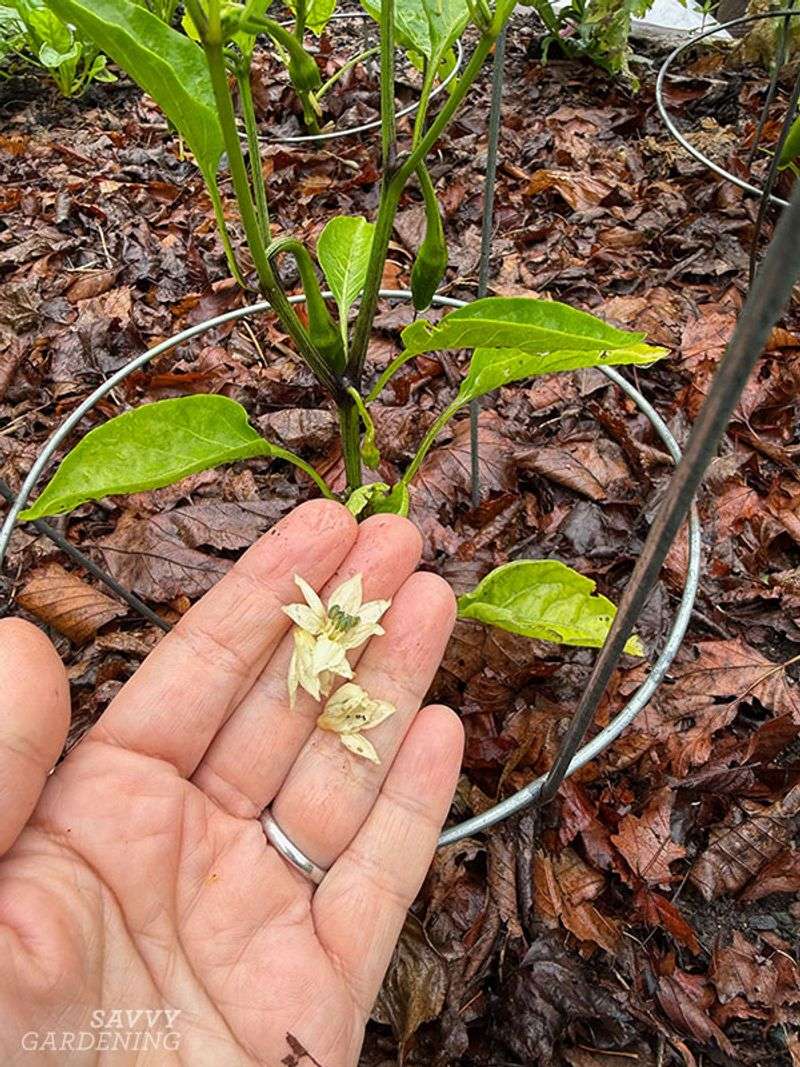
A plant that drops flowers or fails to set fruit without a clear pattern of hot nights deserves a closer look at other possible causes. Start with the flowers and new growth themselves.
Thrips are tiny insects that feed directly on flower tissue and can cause blossom drop that looks identical to heat-related abortion. Aphids clustering on buds and new growth can distort development and, according to University of Florida IFAS pepper pest management guidance, can also transmit viruses that reduce fruit set and plant health over time.
A hand lens or even a phone camera on macro mode can reveal pest activity that is easy to miss at arm’s length.
Look at the broader plant for signs of virus or wilt disease: mosaic patterns on leaves, stunted or distorted new growth, sudden wilting that does not recover with watering, or yellowing that moves through the plant unevenly. Utah State pepper garden guidance notes that unfavorable conditions beyond temperature, including disease and irregular watering, can all contribute to poor fruit development.
Review your watering history honestly: drought stress followed by heavy irrigation is a documented trigger for blossom drop and can also set up blossom-end rot.
Blossom-end rot is worth distinguishing clearly from the problem described in this article. It appears as a dark, sunken, or leathery spot on the blossom end of a fruit that has already started growing, not as flowers that fail to form fruit at all.
University of Minnesota pepper growing guidance explains that blossom-end rot involves localized calcium availability related to water stress, not a failure of pollination or fertilization. Finally, Oklahoma State vegetable guidance lists variety choice as a factor: some cultivars simply perform better in specific conditions, and a variety that struggles in your particular microclimate may need to be reconsidered for future seasons.
Cooler Weather Can Restart Fruit Set, but Recovery Takes Time
Once overnight temperatures drop back into a more comfortable range for peppers, most healthy plants will resume flowering and fruit set. The recovery, though, is not instant.
Flowers that developed and opened during the hottest period may already be lost, and some flowers that appear shortly after temperatures moderate may still reflect damage that occurred earlier in their development cycle. Research on pepper flower development stages and heat found that damage to pollen and flower organs can happen during the days before anthesis, so the effects of a heat wave can linger briefly even after conditions improve.
Harvesting peppers at mature size is one of the most practical things you can do to encourage the plant to keep going. University of Minnesota pepper growing guidance notes that continued harvesting encourages plants to keep flowering and setting fruit once conditions improve.
Leaving mature-size peppers on the plant indefinitely signals the plant to slow down production, which is the last thing you want during a recovery window. Pick regularly, even if the harvest feels thin.
Variety choice shapes how well a plant bounces back. Oklahoma State pepper production guidance reports that small-fruited pungent types, such as jalapeño-like varieties, tend to handle high-temperature fruit-set challenges better than bell peppers.
That difference is worth remembering for future planting decisions in Florida, Texas, and other consistently hot Southern gardens. No variety is fully immune to severe heat, but starting with cultivars that have a stronger track record in your region reduces the odds of hitting this problem again.
Utah State pepper guidance puts it plainly: fruit set usually improves when weather becomes more favorable, and a well-maintained plant is far better positioned to take advantage of that window than one that has been stressed by drought or nutrient imbalance on top of the heat.