
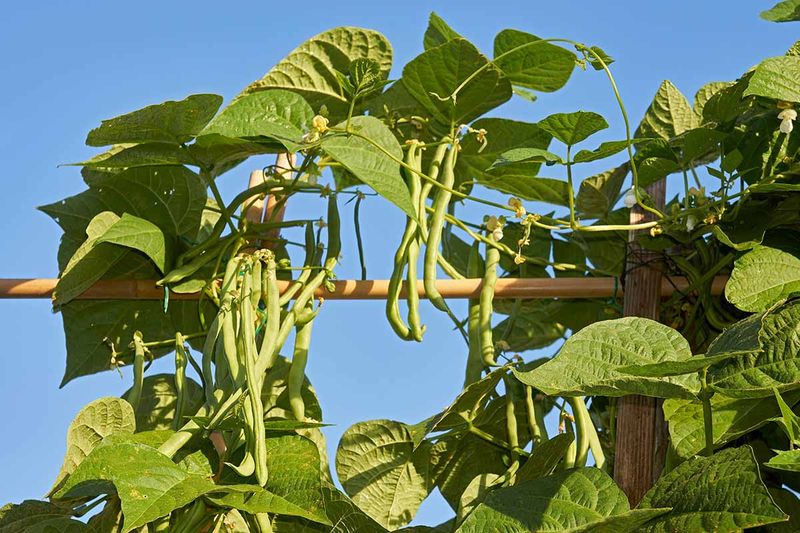
Watching your pole bean vines climb higher every day while the rest of the garden bakes in late-summer heat can feel like a mixed blessing. The plants look strong, but the flowers you are waiting on just are not showing up.
Heat is one of the most common reasons this happens, and understanding why it occurs can help you decide what to do next and what to skip.
Heat Can Interrupt Flowering Even While the Vines Keep Growing
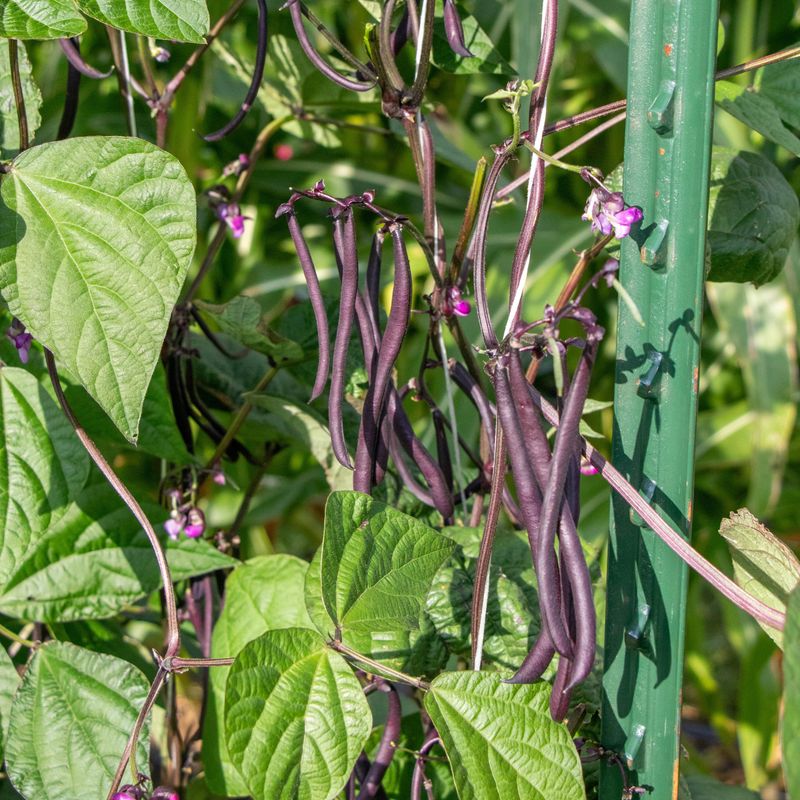
Pole beans are indeterminate, twining vines that can reach six feet or taller, and they are built to keep producing new growth through the season. That vigorous upward climb you are seeing is the plant doing what it does best.
The trouble is that the same conditions fueling all that leafy growth can quietly shut down flowering at the same time.
Heat is a strong, well-documented possibility when pole beans look healthy but produce few or no flowers during a prolonged late-summer heat spell. UGA home-garden guidance for green beans notes that production may slow and flowers may drop when temperatures climb above roughly 85 degrees F.
The risk increases further above about 90 degrees F, particularly when nights stay warm, and flower abortion becomes especially likely above 95 degrees F when the soil is also dry.
Heat can affect bean flowering in two related ways. High temperatures can cause flowers to abort before they fully develop, and they can also reduce the effectiveness of the pollen in flowers that do manage to open.
Either way, the result is the same: a vine that looks perfectly vigorous but sets few pods.
Lush foliage tells you the plant is still actively growing, but it does not guarantee that flowering will proceed normally. Duration of the heat, nighttime temperatures, soil moisture, and cultivar all shape how severely a particular plant responds.
A temporary production pause is not the same as a permanently failing vine.
First Determine Whether Flowers Formed and Then Dropped
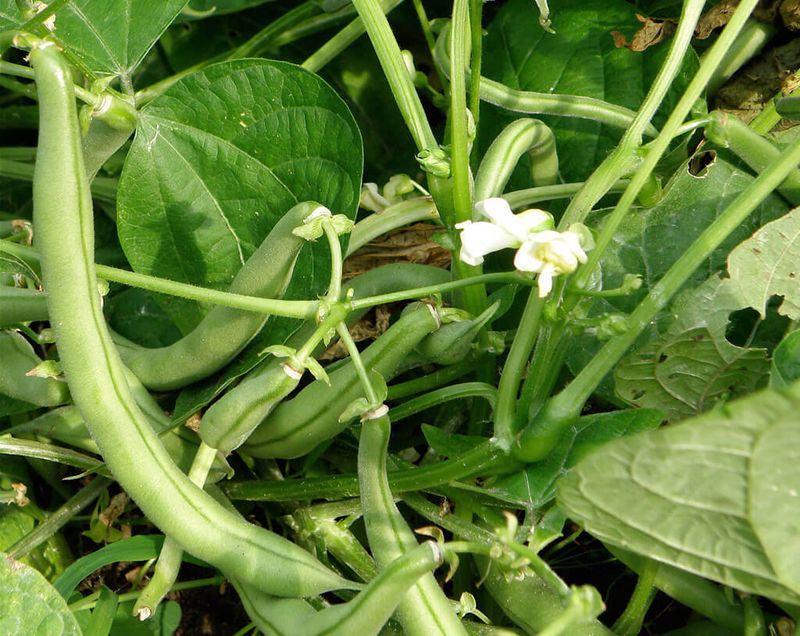
Before settling on heat as the explanation, spend a few minutes making one key distinction: did flowers form and then disappear, or has the vine never produced any flowers at all? Those are different situations, and they point toward different next steps.
A vine that produced flowers that then dropped or shriveled before setting pods fits the pattern of heat-related flower abortion. University of Minnesota Extension’s guidance on heat in the vegetable garden explains that bean flowers can abort and pollen can become less effective under sustained high temperatures, especially when soil moisture is also low.
If you can find small, dried flower stems or dropped petals at the base of the plant, that is a meaningful clue.
A vine that has produced no flowers at all is a broader diagnostic problem. Heat can still be part of the picture, but other factors deserve consideration too.
UMN’s fertilizer guidance points out that excess nitrogen commonly drives leafy, dark-green vegetative growth while delaying flowering or fruiting. If the leaves are an unusually deep green and the growth looks almost too lush, fertilizer history is worth reviewing.
Beyond nitrogen, a completely flowerless vine may also be affected by pests, disease, root problems, or poor drainage. UGA’s commercial snap-bean production guide and the UMN growing-beans resource both note that aphids, spider mites, thrips, viruses, and bacterial diseases can reduce plant performance even when vines appear generally healthy.
A quick inspection of leaves, stems, and the root zone is worthwhile before assuming weather is the only cause.
Keep Soil Moisture Consistent During Flowering
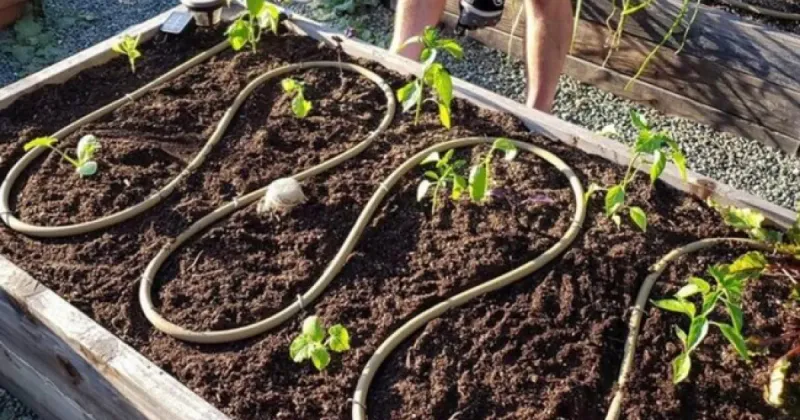
Dry soil and high temperatures are a compounding problem for pole beans. When the root zone dries out during a heat wave, the plant faces two stressors at once, and flowering is often the first thing to suffer.
Keeping moisture consistent will not erase the effects of extreme heat, but drought stress on top of heat stress makes the situation noticeably worse.
Rather than judging soil moisture by how the leaves look, check the soil directly. Push your finger or a small trowel about two inches below the surface.
If the soil feels dry at that depth, water thoroughly enough to wet the root zone. UMN’s vegetable garden watering guide cautions against repeated shallow watering, which wets only the top layer and encourages roots to stay near the surface where they are most vulnerable to heat.
How often you need to water depends on your soil type, recent rainfall, whether you are using mulch, and whether the beans are growing in a container or in the ground. Sandy soils drain fast and may need water more frequently; heavy clay holds moisture longer but can also compact.
Container plants typically need more frequent attention than in-ground beds. UMN’s vegetable irrigation strategies resource reinforces that no single schedule fits all situations.
Overwatering carries its own risks. Waterlogged soil reduces oxygen around the roots, can promote root rot, and may leach nutrients out of the root zone.
The goal is steady, even moisture, not constant saturation. A well-watered plant may still pause flowering during a prolonged heat wave and pick back up when temperatures ease.
Use Mulch and Temporary Afternoon Shade to Reduce Stress
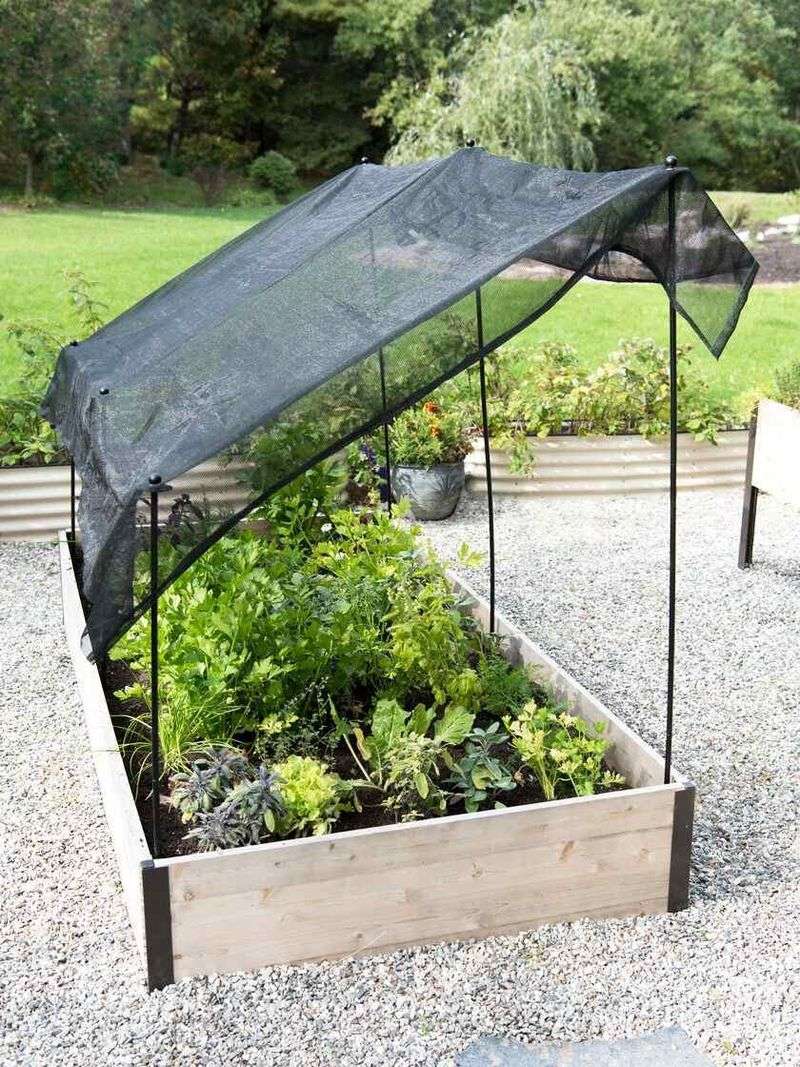
Two practical, nonchemical steps can make a meaningful difference when heat is bearing down on your bean patch. Neither one is a guaranteed cure, but together they reduce the stress load on plants that are already working hard to survive the hottest part of summer.
Mulching the soil around your pole beans helps in two ways. It slows evaporation so the soil stays moist longer between waterings, and it moderates the temperature of the root zone.
UMN’s mulching guidance recommends applying an appropriate organic mulch, such as straw or shredded leaves, around plants while keeping the material a few inches away from the stems to avoid moisture buildup and rot at the base. A two- to three-inch layer is generally effective for moisture retention and temperature buffering.
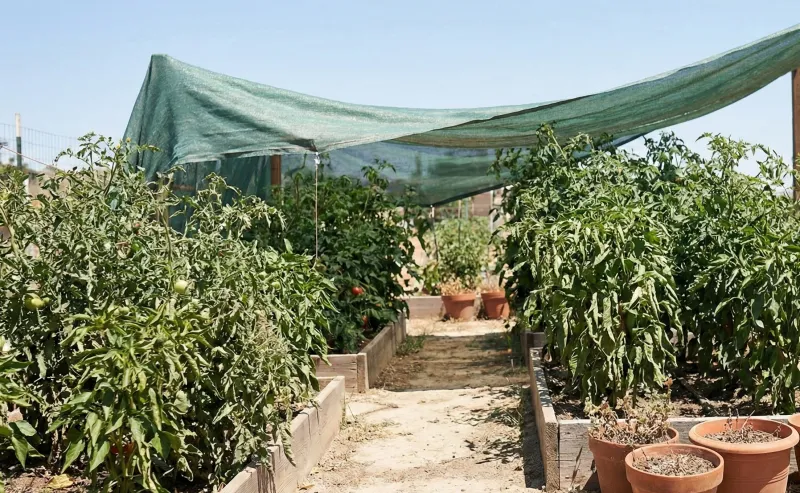
Temporary afternoon shade is the second tool worth considering during the worst stretches of a heat wave. UMN Extension’s heat-wave garden guidance suggests temporary 30 to 40 percent shade cloth for heat-stressed garden plants as a way to reduce the direct heat load during peak afternoon hours.
A simple frame draped with shade cloth on the south or west side of the planting can cut the harshest sun without eliminating the light the plants need.
Set realistic expectations for both measures. Mulch and shade support the plant’s ability to cope, but they cannot reset the internal processes that high temperatures disrupt.
Flowering may not resume immediately even after you put these steps in place.
Avoid Fertilizer Fixes That Produce More Leaves
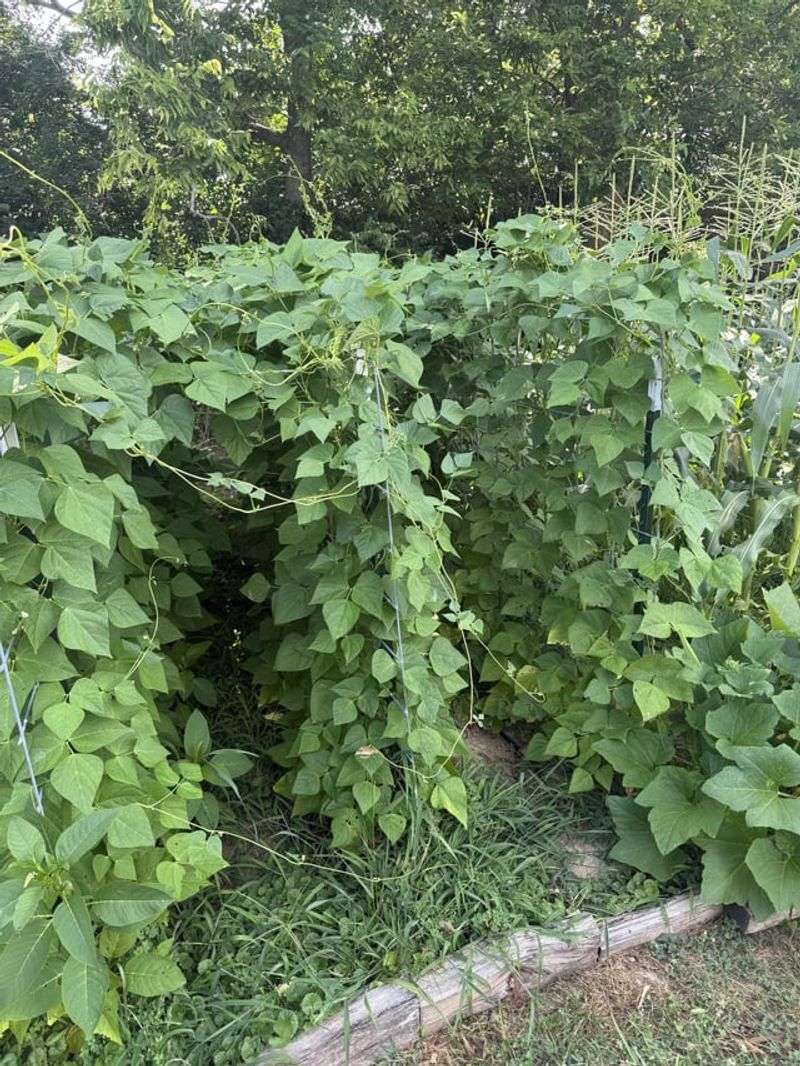
When a plant is not doing what you want, adding fertilizer can feel like a logical response. For pole beans that are not flowering, that instinct is worth resisting.
Beans are legumes, meaning they can fix atmospheric nitrogen through root bacteria, and they generally need far less supplemental fertilizer than many other vegetable crops.
Adding nitrogen when the vines are already tall and aggressively leafy is likely to make the problem worse. UMN’s fertilizing guide explains that excess nitrogen pushes plants toward vegetative growth, which is exactly the opposite of what you want when you are trying to encourage flowers and pods.
If the leaves are unusually dark green and lush, high nitrogen levels may already be part of the story.
Phosphorus and boron sprays are sometimes suggested as bloom boosters, but neither is a reliable general fix for heat-related or fertilizer-related flower problems. A UGA county extension discussion on bean flowering notes that beans are self-pollinating and that evidence for boron improving pollination is limited and largely non-field-based; unnecessary boron can actually be toxic to plants at elevated levels.
Phosphorus does not reliably correct flower abortion caused by heat.
A soil test is the most reliable guide to whether your beans actually need anything added. If you have not tested recently and the plants were growing well before the heat arrived, holding off on any fertilizer until conditions moderate is a reasonable approach.
Base any future amendments on what the soil and plant symptoms actually indicate, not on the absence of blooms alone.
Inspect a Vigorous Vine for Pests, Disease, and Root Problems
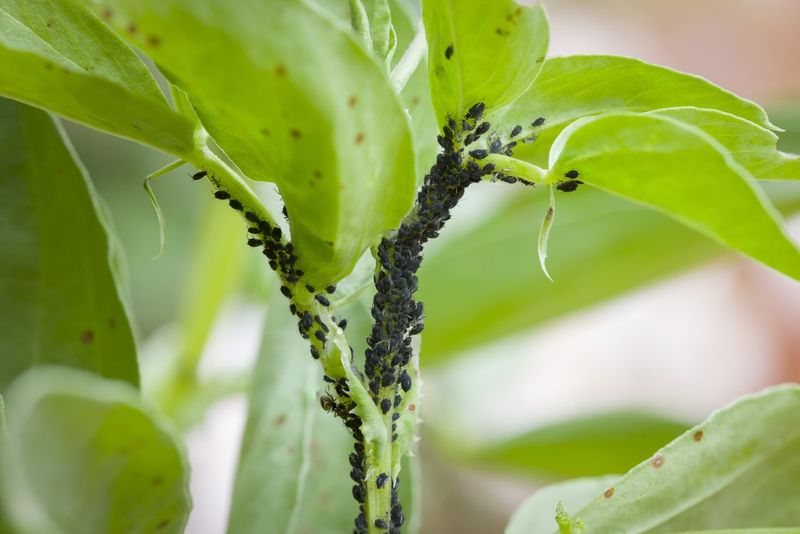
A vine that looks strong and leafy can still have a hidden problem reducing its ability to flower and set pods. Heat is a reasonable first suspect under late-summer conditions, but treating it as the only possible cause means you might miss something that is actually fixable right now.
Work through a quick inspection before deciding on any treatment. Start with the leaves: look for distorted, curled, or puckered growth, which can signal virus infection or feeding damage from thrips or aphids.
Check the undersides of leaves for stippling, bronzing, or fine webbing, which are signs of spider mites. Look for chewing damage along leaf edges or on pods if any have formed.
UMN’s bean-growing guide lists aphids, spider mites, thrips, and leaf beetles among the pests that can reduce bean performance even when the plant does not show immediate severe decline.
Move on to the stems and the base of the plant. Soft, discolored, or lesion-covered stems can indicate bacterial or fungal disease.
Check whether the soil drains properly after a heavy rain; standing water around the root zone can contribute to root rot that slows the whole plant down. UGA’s commercial snap-bean production guide notes that viruses and bacterial diseases can limit yield even on vines that appear generally vigorous.
If you find a pest or disease problem, identify it specifically before reaching for any product. Texas A&M’s vegetable pest management guide makes clear that any pesticide must be used strictly according to its label, including confirmation that the product is approved for the crop, the specific pest, the timing relative to flowering, any pollinator precautions, and the pre-harvest interval.
Applying the wrong product, or the right product at the wrong time, can create new problems.
Regional Planting Dates Shape Your Next Move
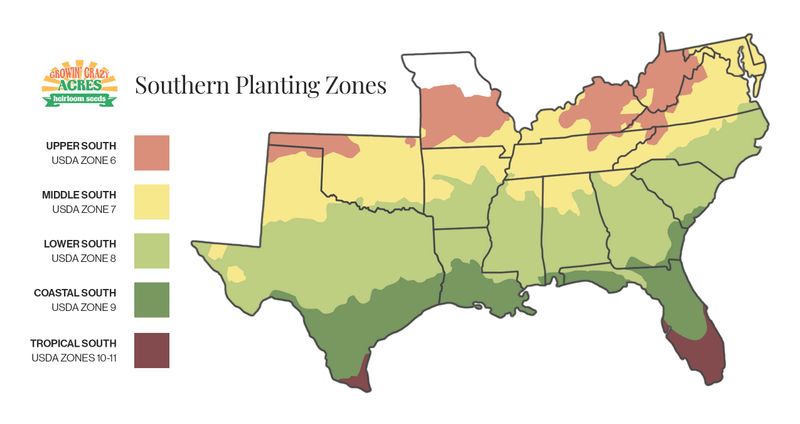
Recovery expectations depend partly on where you garden. Pole beans are indeterminate, which means a plant that pauses during extreme heat has not necessarily given up for the season.
UMN’s bean-growing resource confirms that pole beans can continue producing through the season under suitable conditions, so a temporary slowdown during a heat wave does not automatically mean the vine is finished. Production may improve once temperatures moderate, though watering and other interventions cannot erase all the effects of sustained high heat.
For Florida gardeners, the situation is more nuanced than in northern states because the planting calendar extends well into fall. UF/IFAS planting guidance shows pole-bean windows extending into August and September in parts of the state, meaning a heat-stressed summer planting may overlap with a viable fall window depending on your region.
A new planting timed to cooler fall conditions can sometimes be the most practical path forward.
Texas and Georgia gardeners face equally location-specific decisions. Texas A&M’s regional vegetable planting guide gives different fall bean dates by region of the state, and UGA’s county planting chart places Georgia pole-bean fall windows generally in July and early August for much of the state.
A planting that missed that window may not have enough time before first frost to justify replanting, depending on your location.
Check with your local county extension office or state planting calendar before deciding whether to wait on the current vines or start fresh. The right answer varies by region, microclimate, and how many frost-free weeks remain in your growing season.
Reduce Stress, Then Recheck the Plant
Working through this problem is more straightforward than it might feel in the middle of a heat wave. Start by figuring out whether flowers formed and dropped or whether the vine has not bloomed at all, since that distinction shapes everything that follows.
Then check the soil moisture two inches down, water thoroughly if it is dry, and apply mulch around the root zone if you have not already. Consider temporary afternoon shade cloth during the most extreme heat, and hold off on adding any fertilizer unless a soil test or clear nutrient deficiency symptom points you in that direction.
Walk the vine carefully and look for pests, disease spots, stem lesions, or drainage problems before concluding that heat is the only issue. One more thing worth knowing: common pole beans are generally self-pollinating, so UGA’s pollination guide for vegetables confirms that a shortage of bees and hand-pollination are not typically the missing piece when pod set fails.
A heat-stressed vine may well resume flowering once temperatures drop to a more manageable range, but no article can tell you exactly when that will happen for your specific plant. The documented heat effects on vegetable flowering are real, and so is the plant’s capacity to recover.
Reduce the stressors you can control, keep watching the vine, and let the season tell you the rest.