
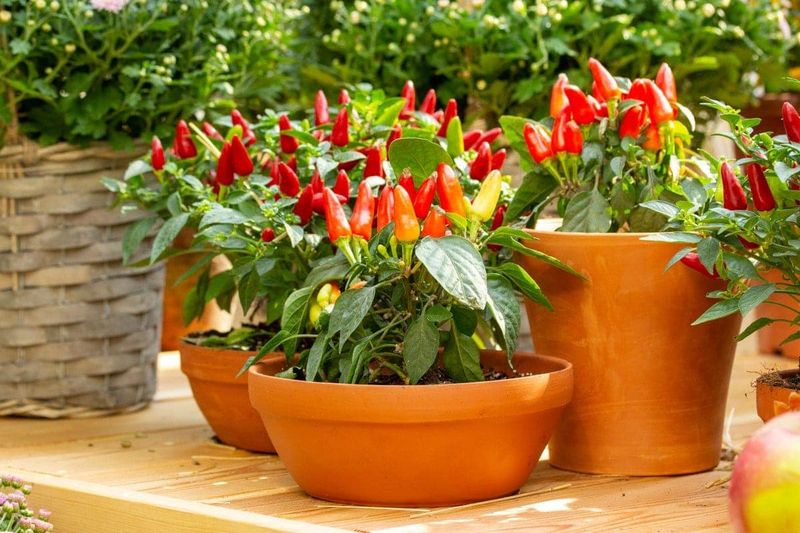
Watching your potted pepper shed flower after flower in August heat is one of the more discouraging sights in a Southern garden. You water, you fertilize, you move the pot around, and still the blooms fall before a single pepper has a chance to form.
The container itself may be making that heat stress worse, even if it is not the whole story. Understanding what is happening inside and around that pot gives you a practical place to start fixing the problem.
Is the flower dropping—or is the pepper developing blossom-end rot?
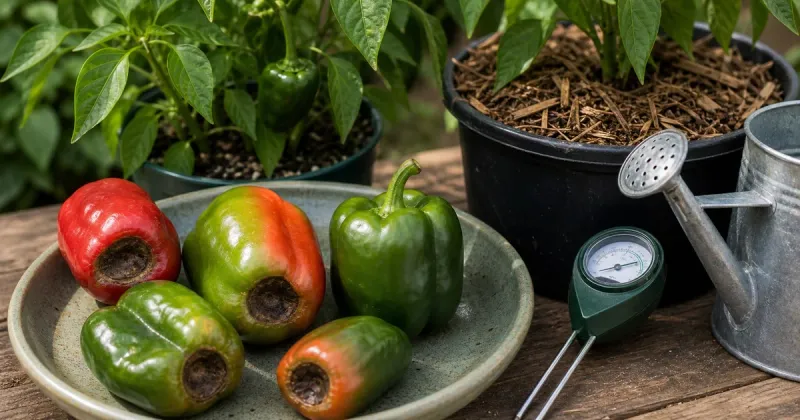
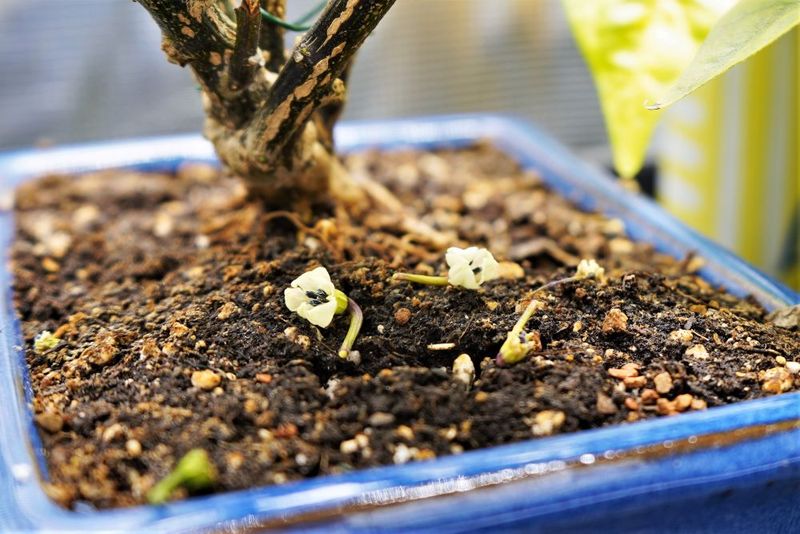
Before changing anything about your pot or your watering routine, take a close look at what is actually falling off the plant. True blossom drop means the flower itself dries out, browns or shrivels, and then falls away before it ever develops into a pepper.
You may find small, dried flower stems on the soil surface or around the base of the pot.
Blossom-end rot is a different problem entirely. That condition shows up on a pepper that has already started to grow, appearing as a tan, sunken, or blackened area at the bottom tip of the fruit where the flower was attached.
University of Minnesota Extension’s pepper fruit diagnostic tool explains that blossom-end rot is linked to inconsistent water supply and how calcium moves within the plant, not simply to a shortage of calcium in the potting mix. Adding calcium products will not reliably stop flowers from falling off.
The two problems call for different responses. Flowers falling before fruit sets points toward heat stress, water inconsistency, variety sensitivity, fertility issues, pests, or disease.
Blossom-end rot on a developing fruit points toward uneven moisture and the plant’s ability to move water and nutrients upward. Inspect the fallen material and the plant carefully before reaching for any product or making any container change.
The container may amplify a late-summer heat and water problem
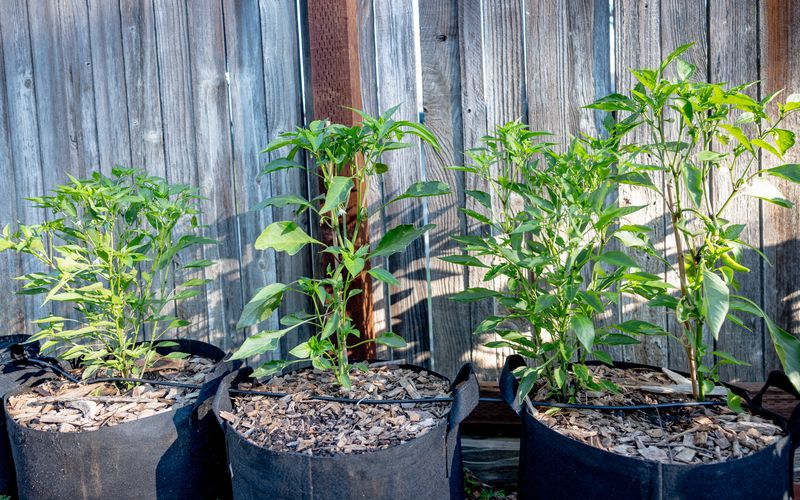
A container does something that in-ground soil mostly resists: it heats up fast. A small, dark, or exposed pot sitting on concrete or a south-facing patio can reach temperatures in the root zone that are far higher than air temperature alone.
That root-zone heat, combined with the limited volume of potting mix available to buffer moisture loss, can intensify both water stress and temperature swings during a heat wave. Oklahoma State University Extension’s container gardening guidance recommends larger containers, well-drained soilless mix, and consistent moisture specifically because small pots lose both water and temperature stability quickly.
Poor drainage creates a separate and distinct problem. When water cannot move freely through the potting mix and out the drainage holes, the root zone becomes waterlogged.
Roots need oxygen, and saturated media deprives them of it, leading to root damage and increased risk of fungal disease. A plant with damaged roots may wilt or drop flowers even when there is plenty of water in the pot.
The container is not automatically the primary cause of blossom drop. Oklahoma State’s vegetable gardening FAQ notes that peppers commonly drop flowers when daytime temperatures climb well above 90 degrees F alongside nights staying above roughly 75 degrees F, and those conditions affect in-ground plants too.
High heat, warm nights, drought, excess nitrogen, pests, disease, and cultivar differences are all established contributors. The container is a factor you can actually change, which makes it a practical starting point even when other forces are also at work.
Audit the pot, roots, media, and drainage before adding fertilizer
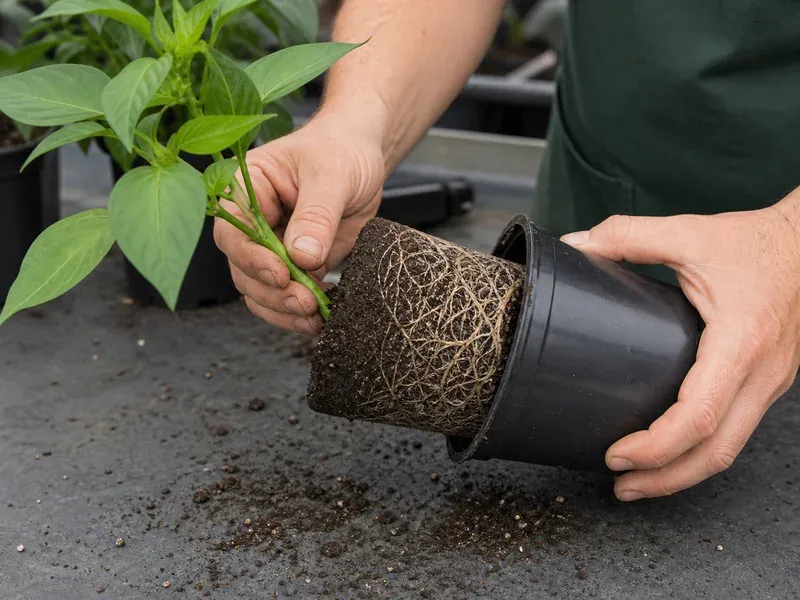
A quick physical inspection of the container can tell you more than any fertilizer label. Start by checking the pot size.
If the container is small enough that roots are visibly circling out of the drainage holes or filling every inch of the mix, the plant has outgrown its home. University of Illinois Extension recommends at least a 16-inch container for peppers, while Oklahoma State and Georgia extension guidance commonly point to at least 5 gallons as a practical heat-season target for productive plants.
Think of those figures as a useful range, not a guarantee: variety, climate, drainage, and care all affect how a container performs.
Next, watch how the pot behaves after watering. If water rushes straight out the sides without wetting the mix evenly, the media may be hydrophobic or compacted.
If the plant wilts quickly between waterings despite regular irrigation, the root volume is likely insufficient for the plant’s needs in your heat conditions. Check the drainage holes too: blocked holes mean water sits at the bottom of the pot, cutting off oxygen to the roots even when the surface looks dry.
The potting mix itself matters as much as the pot size. Illinois Extension’s container growing guide explains that garden soil alone tends to compact in pots, restricting drainage and aeration.
A quality soilless potting mix drains well while still holding enough moisture between waterings. Finally, look at where the pot is sitting: a black container on a concrete patio absorbs and radiates heat from two directions at once.
Upgrading pot size or mix will not fix poor drainage or erratic care, so address all of these before reaching for fertilizer.
Steady moisture matters more than a memorized watering schedule
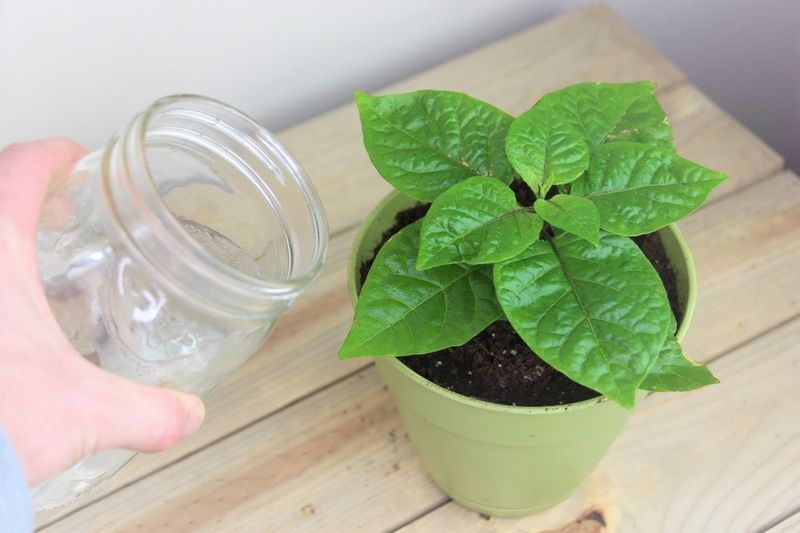
Consistent moisture during flowering and fruit set is one of the most practical things you can control in a container pepper. The difficulty is that no single watering schedule works for every pot, every size, every location, or every Southern heat wave.
A small container in full Texas or Florida afternoon sun may need water twice in one day, while a larger shaded pot may stay adequately moist for much longer. University of Minnesota Extension’s container watering guidance advises checking the potting mix rather than following a fixed calendar, watering thoroughly until excess drains from the bottom, and never leaving the container sitting in a saucer of standing water.
The risks run in both directions. Prolonged dry periods cause the plant to shed flowers and small fruits as a stress response.
Minnesota Extension’s vegetable irrigation guidance notes that consistent moisture is especially critical during flowering and fruit development. On the other side, keeping the potting mix perpetually saturated starves roots of oxygen and invites root disease, which can produce wilting symptoms even when the mix feels wet.
A light layer of organic mulch on the surface of the potting mix helps slow evaporation and moderate temperature swings between waterings. University of Georgia Extension’s mulching guidance supports surface mulch as a way to conserve moisture and reduce soil-temperature fluctuations.
Keep the mulch away from direct contact with the pepper stem to avoid encouraging rot at the soil line. A steadier moisture level between waterings gives flowers a better chance of holding on through the hottest part of the day.
Protect the roots from afternoon heat without putting the pepper in darkness
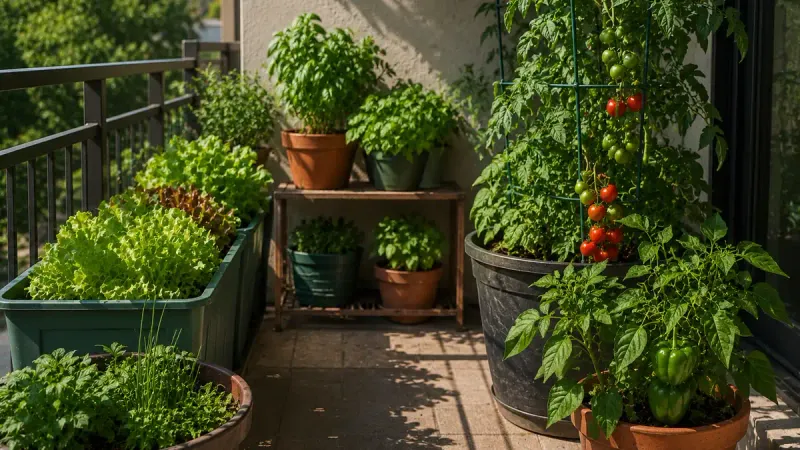
Placement decisions matter more for a container pepper than for an in-ground plant, because you can actually move the pot. During the most intense late-summer heat, the goal is to protect the root zone from the worst temperature spikes while keeping enough light reaching the foliage for the plant to flower and set fruit.
Arizona Cooperative Extension’s container gardening guide specifically warns that outdoor containers can heat the growing medium and roots to damaging levels, and recommends strategies to shade the container itself rather than simply shading the plant.
Moving the pot off concrete or away from south- and west-facing walls is a good first step. Concrete and light-colored masonry can reflect heat upward into the container from below while the sun hits it from above.
Placing the container on wood, gravel, or a plant stand breaks that contact. Using a light-colored outer pot around a dark inner container, or grouping several pots together so they shade each other’s sides, can meaningfully reduce root-zone temperature.
Temporary afternoon shade or approximately 30% shade cloth is a reasonable mitigation strategy during extreme heat stretches. UF/IFAS research on growing bell peppers under open shade structures supports the general principle that shading can extend pepper production during hot Florida conditions, though those results came from commercial-scale structures and should not be taken as proof that a specific shade percentage will produce identical results on every home porch.
The practical takeaway: morning sun plus filtered or shaded afternoons is a safer setup than full-day direct exposure on a hot surface, but moving the pepper into deep shade all day can reduce flowering just as surely as too much heat.
Do not mistake blossom drop for a fertilizer or pollination emergency
When flowers keep falling, the temptation is to reach for a product. Bloom-booster fertilizers, calcium sprays, eggshells, and Epsom salts are among the most common things gardeners try, but none of them reliably stop heat-related blossom drop.
University of Minnesota Extension’s review of common soil remedies does not support eggshells or Epsom salts as general fruiting aids, and calcium products address blossom-end rot on developing fruit rather than flowers falling off the plant.
Excess nitrogen creates a specific problem worth knowing: it can push the plant toward producing more leaves and stems at the expense of flowers and fruit set. Frequent watering during a heat wave also leaches nutrients out of the potting mix faster than normal, but that does not justify heavy fertilizer applications.
Minnesota Extension’s container plant guidance recommends following the product label and applying fertilizer in response to actual plant needs rather than as a general rescue treatment.
Pollination is another area where gardeners sometimes look for a fix that does not match the real problem. Peppers are generally self-pollinating, meaning they do not depend on bees to transfer pollen between flowers.
University of Minnesota Extension’s pollination requirements guide confirms that wind movement and insect activity can assist pollen release, but a lack of bees is not a credible first explanation for widespread flower loss in a potted pepper. Hand-pollinating every flower is usually unnecessary.
If flowers are falling in large numbers during a heat wave, the environment around the plant is far more likely to be responsible than a pollination gap.
If better container conditions do not help, investigate heat, variety, pests, and disease
Improving the container, stabilizing moisture, and reducing afternoon heat exposure are worthwhile first steps, but they may not be enough on their own. Sustained high temperatures remain a direct biological obstacle.
Oklahoma State Extension’s vegetable FAQ notes that bell peppers are generally more heat-sensitive than jalapenos and many other hot-pepper types. The roughly 90-degree daytime and 75-degree nighttime benchmarks are useful diagnostic reference points, not universal biological cutoffs: humidity, wind, plant age, water status, and how long the heat lasts all affect how a specific plant responds.
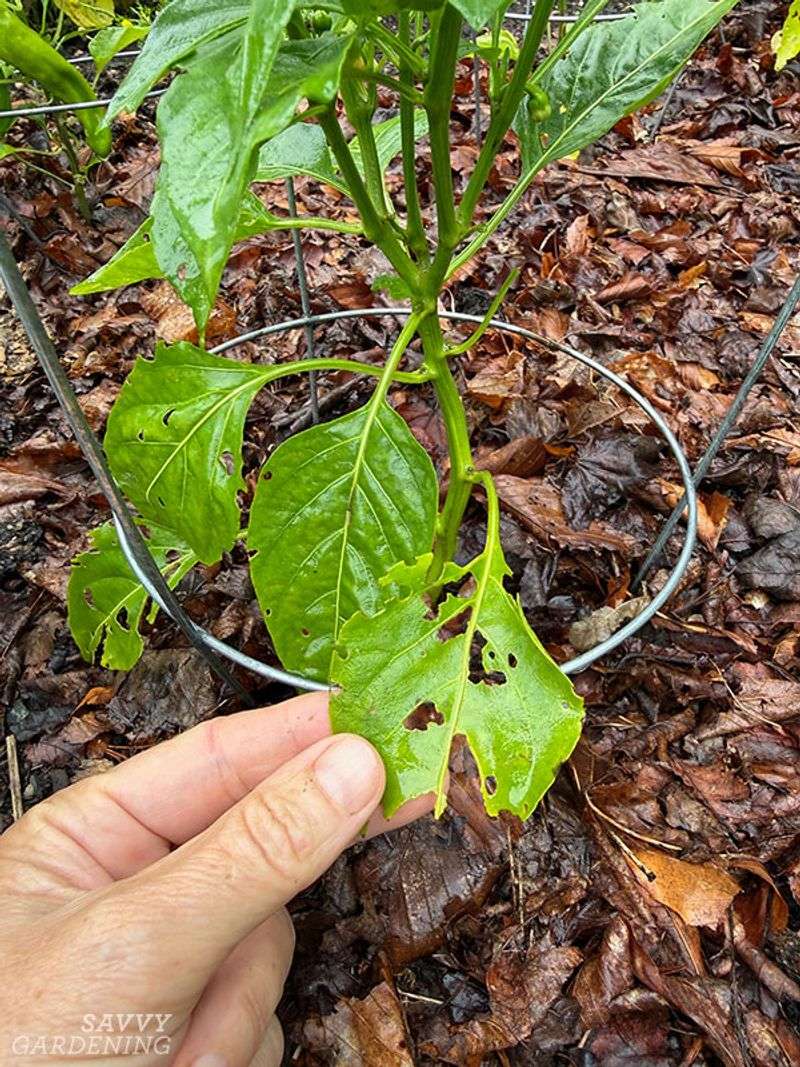
If the plant is not recovering after two to three weeks of improved conditions, inspect it closely for pests. UF/IFAS guidance on pepper weevil describes how this pest destroys buds and immature fruit from the inside, causing premature drop that can look exactly like heat-related blossom drop.
Thrips feed inside flowers, can distort growth, and in Southern production systems may transmit viruses. Look for puncture marks on buds, premature fruit yellowing, distorted or scarred new leaves, stippling on leaf surfaces, or tiny insects tucked inside open flowers.
Minnesota Extension’s heat-garden guidance also cautions that a wilted plant does not automatically need more water: root disease from overwatering can produce wilting symptoms even when the mix is wet.
Diagnose before treating. Broad-spectrum insecticide applications during flowering can harm beneficial insects and reduce the natural pollen movement that peppers do benefit from.
If treatment is necessary, choose the least disruptive effective method and follow the pesticide label carefully, especially regarding application timing relative to flowering. A targeted response based on what you actually find will serve the plant better than a preventive spray applied out of frustration.
A cooler, steadier pot gives the pepper its best chance to fruit again
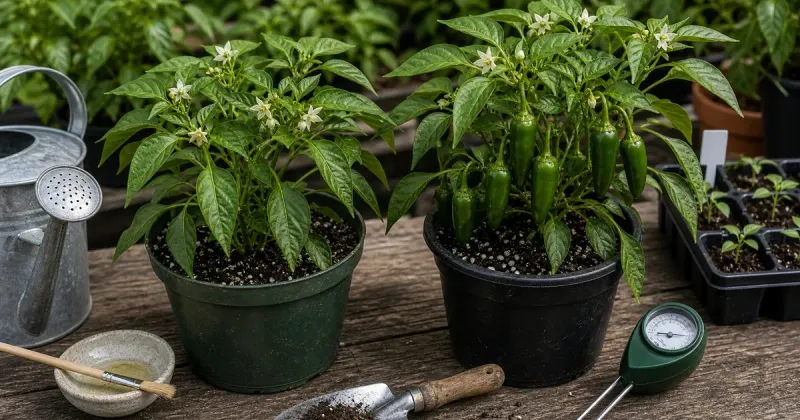
Start with the symptom: confirm that flowers are actually falling before they form fruit, rather than diagnosing blossom-end rot on a developing pepper. Once true blossom drop is confirmed, work through the container conditions systematically.
Move up to a larger container if the plant is rootbound or the mix dries out within hours, use a quality soilless potting mix that drains freely, and clear any blocked drainage holes.
Stabilize moisture by checking the mix before watering and watering thoroughly each time until water drains from the bottom. Mulch the soil surface lightly to slow evaporation, and move the pot off heat-reflective surfaces and away from the worst afternoon sun while keeping the foliage in adequate light.
Skip the bloom boosters, calcium products, and Epsom salts unless you have identified a specific documented deficiency.
University of Minnesota Extension’s pepper growing guide notes that regular harvesting of mature-size peppers can encourage the plant to continue setting new fruit, so keep picking even while you are working on the recovery. None of these steps promise immediate results while extreme heat continues, but Oklahoma State Extension’s container guidance reinforces that the container remains the most practical variable a home gardener can adjust.
A cooler, steadier root zone will not override every weather challenge, but it removes one obstacle the plant should not have to fight on top of everything else.