
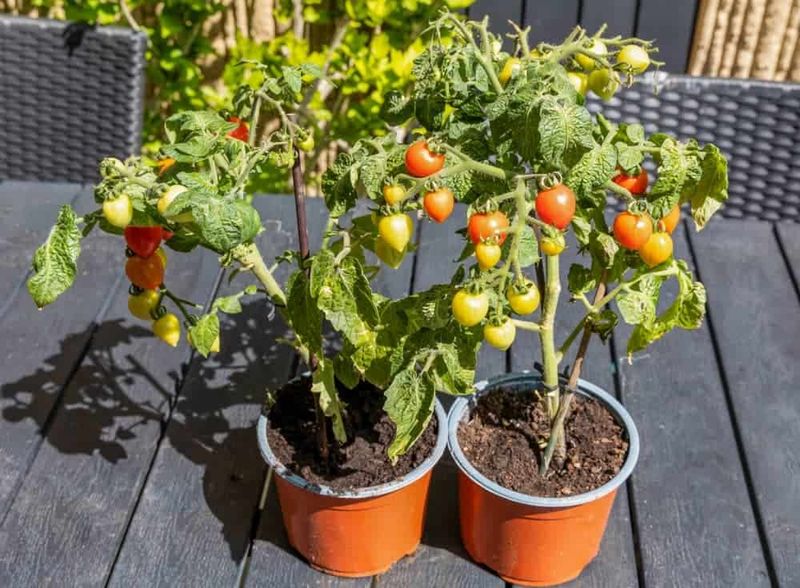
Your potted tomato has been sitting in the same container all summer, and something just feels off – the plant looks tired, the leaves curl in the afternoon, and the fruit you were counting on never quite showed up. For Southern gardeners in places like Florida and Texas, late summer can be the hardest stretch of the growing season, and container tomatoes feel every degree of it.
Before you give up on the plant, it helps to know that a handful of fixable problems tend to explain most of what you are seeing, and the first place worth checking is right under your feet.
Start with the container, but do not assume it is guilty
When a vigorous tomato plant stays small, stops pushing new growth, or seems to wilt faster than it should, the container itself is a reasonable first place to look. Limited root-zone volume is one of the more common setup problems in container gardening, and it can quietly hold a plant back in ways that are easy to mistake for disease or poor soil.
A root system that has run out of room cannot explore for water and nutrients the way it would in a larger volume of mix, and that restriction can reduce the plant’s overall growth, biomass, fruit weight, and yield. Research on container size and tomato production has found measurable differences in plant performance when root volume is limited, supporting the idea that pot size matters more than many gardeners expect.
Hot weather makes a small container more punishing. A pot with limited soil volume dries out faster and heats up more quickly than a larger one, which means a plant in a cramped container can swing from adequately moist to drought-stressed in just a few hours on a hot afternoon.
Dark-colored containers sitting in direct sun can become especially warm, adding heat stress to the moisture problem.
That said, a small pot is not the only explanation for a struggling tomato. Poor drainage, inconsistent watering, nutrient problems, inadequate light, disease, pests, and plain extreme heat can all produce similar symptoms.
UGA Cooperative Extension guidance on container gardening treats root-zone conditions as one factor among several, and that framing is worth keeping in mind before you move anything.
Look for evidence of root restriction before repotting
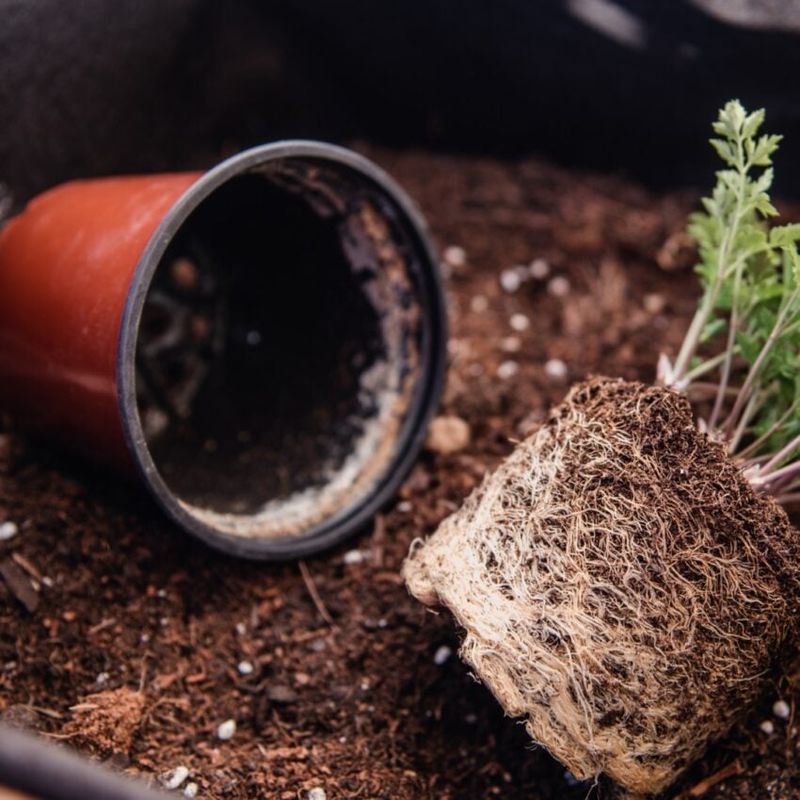
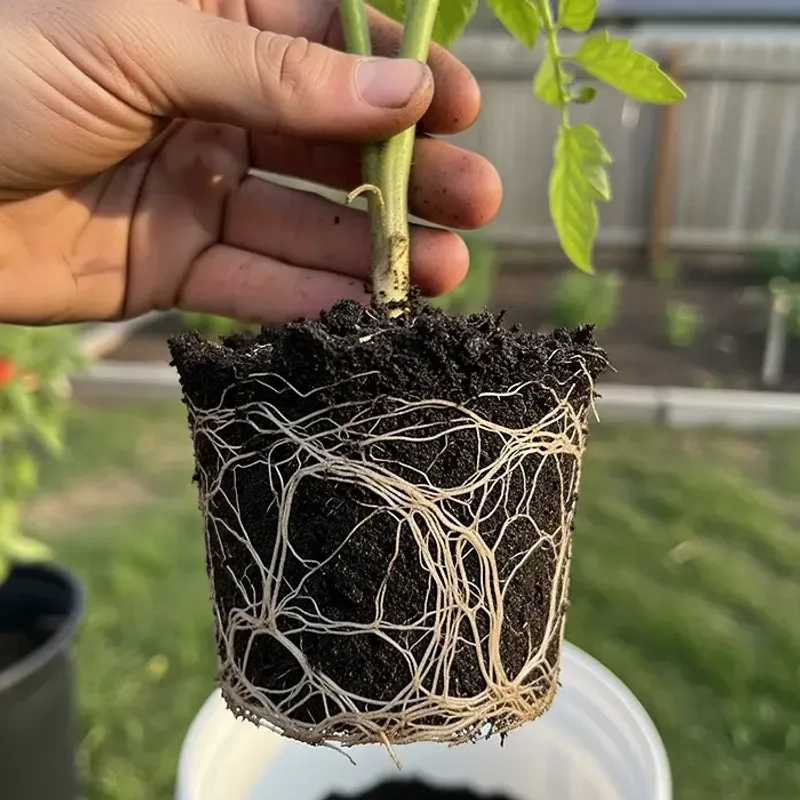
Checking for root restriction takes about two minutes and can save you from moving a plant that does not actually need to move. Tilt the container and slide the root ball partway out, or simply look at the drainage holes.
If roots are densely circling the outside of the root ball, poking thickly through the drainage holes, or forming a solid mass that mirrors the shape of the pot, those are real signs that the container has become too small for the plant inside it.
A few behavioral clues can reinforce what you see. A root-bound plant often dries out within hours of a thorough watering, wilts quickly even after the mix has been wetted, or develops a potting mix that becomes difficult to rewet once it dries completely.
When you see those patterns together with a densely packed root ball, the case for an undersized container gets stronger. Container gardening guidance from UGA Extension connects limited root space to reduced top growth, which matches what many gardeners observe when a plant suddenly stalls.
Before concluding anything, though, rule out the competing explanations. Poor drainage and waterlogged media produce wilting that looks almost identical to drought stress.
Nutrient deficiency, disease, pest damage, inadequate light, and transplant shock can all stunt a tomato without the roots being bound at all. University of Minnesota Extension notes that a tomato can wilt from heat even when the potting mix is still moist, because the plant loses water through its leaves faster than its roots can replace it.
Wilting alone is not enough to confirm root restriction.
Choose enough volume for one tomato’s growth habit
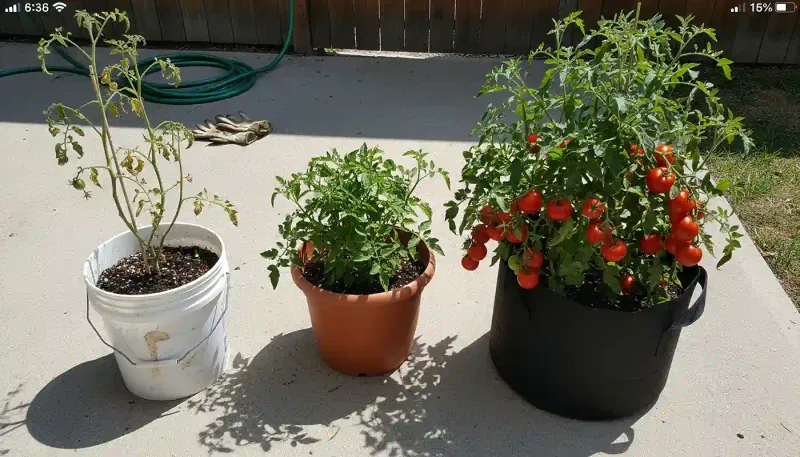
Once you have confirmed that root restriction is likely contributing to the problem, the next step is matching the plant to an appropriately sized container. A practical starting guideline, supported by UGA Extension’s container gardening recommendations, is roughly 5 gallons for one determinate tomato and 10 gallons for one indeterminate tomato.
Texas A&M AgriLife Extension similarly suggests 5 gallons as a minimum for a single tomato, with a preference for compact or small-fruited container varieties at that size. These are starting points, not universal rules.
Growth habit changes the calculation. A compact patio tomato bred for container life can manage in less root volume than a vigorous indeterminate heirloom that wants to climb six feet and set fruit for months.
The larger the plant’s natural size, the more root room it needs to support that growth. One container should house one full-size tomato plant.
Crowding two or more plants into a single pot multiplies the root competition and makes every problem described here worse.
Climate, wind, container material, and your own watering schedule also affect how quickly a pot dries and how well it supports the plant. A clay pot in a windy Texas backyard can dry out significantly faster than a fabric grow bag in a sheltered Florida patio, even at the same volume.
If you do decide to move a root-bound plant into a larger container, expect some temporary transplant stress as the plant adjusts. Extension guidance frames repotting as a step that may improve the plant’s future root environment, not a guaranteed way to rescue the current harvest.
Build a root zone that drains and stays evenly moist
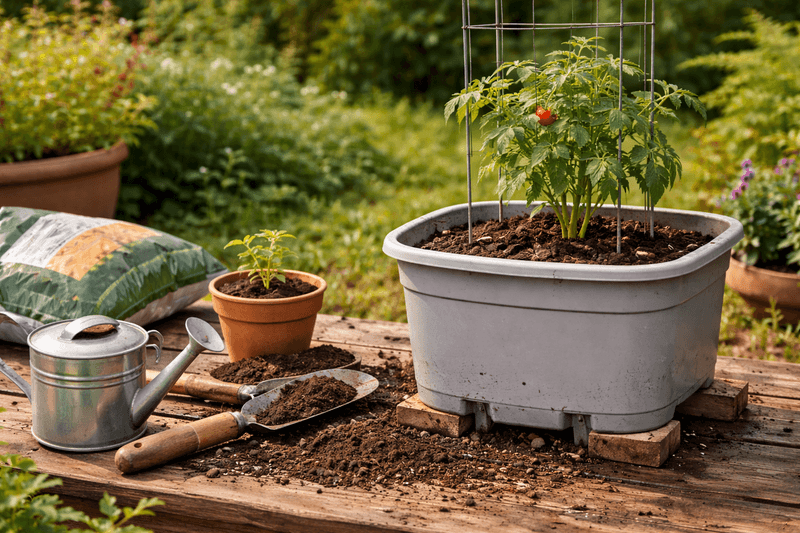
A bigger container only helps if what goes inside it supports healthy roots. The growing medium matters as much as the pot size, and the right choice here is a commercial potting mix formulated for containers, not ordinary garden soil.
UGA Extension gardening guidance recommends commercial potting mix specifically because garden soil can compact in containers, drain poorly, and introduce soil-borne pathogens that thrive in the warm, moist conditions inside a pot. A good potting mix holds enough moisture to buffer the roots between waterings while still draining freely so oxygen can reach the root zone.
Drainage holes are not optional. Every container needs them, and they need to stay unobstructed.
A saucer or tray under the pot can catch runoff and protect a surface, but it should not hold standing water for long periods. Prolonged waterlogging pushes oxygen out of the root zone and can contribute to root problems and nutrient loss, producing symptoms that look a lot like drought stress or nutrient deficiency.
Watering technique matters more than a fixed schedule. Check the top inch or two of the potting mix before you water, and when the plant needs water, apply it thoroughly so moisture reaches the full depth of the root zone.
University of Minnesota Extension guidance on container watering explains that hot conditions may require checking containers daily or even more than once a day, but constant saturation is not the target. Shallow sprinkles that wet only the top layer of mix are equally problematic because they encourage roots to stay near the surface where heat and drying are most severe.
Lower root-zone heat during the hottest part of the day
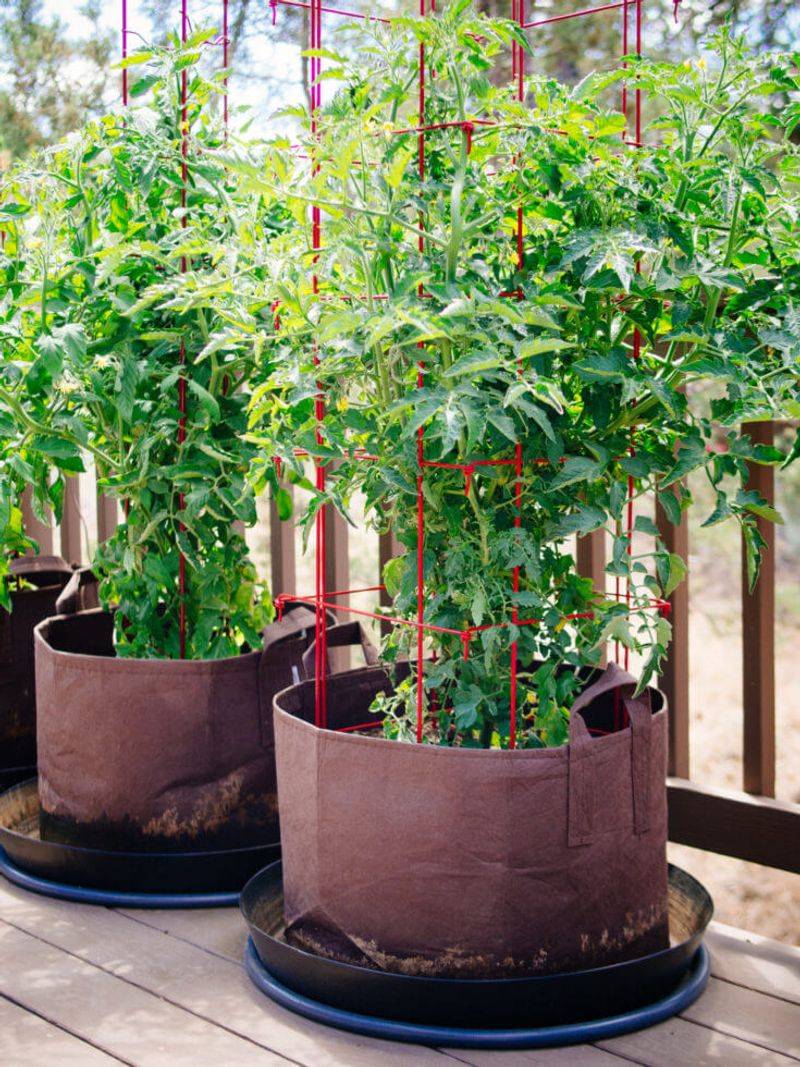
Even a properly sized container with good potting mix can become a heat trap during the worst hours of a Southern summer afternoon. Dark-colored plastic and metal containers absorb radiant heat and can push root-zone temperatures well above what tomato roots handle comfortably.
When roots overheat, water uptake slows and the plant shows the same wilting, curling, and stress signals as a plant that is simply dry. Root overheating and drought stress often overlap, which is why addressing container temperature is part of the same fix as addressing moisture.
A few practical moves can help. Spreading a layer of mulch on the potting mix surface reduces evaporation and moderates temperature swings at the root zone.
Moving the container to a spot that gets morning sun and afternoon shade is one of the more effective adjustments where the layout of your yard allows it. Shielding the container from reflected heat off walls, pavement, or fences also helps.
University of Minnesota Extension container plant guidance supports surface mulching as a way to reduce moisture loss and buffer soil temperature, and placing a smaller container inside a larger outer pot can add an insulating air gap around the root zone.
These steps improve plant stability and reduce stress, but they are not a promise of restored fruit production during an active heat wave. Extension heat-gardening guidance frames shade and root-zone protection as ways to help plants survive and recover, not as guaranteed fruiting solutions when air temperatures are already at damaging levels.
Separate root recovery from heat-related fruit-set failure
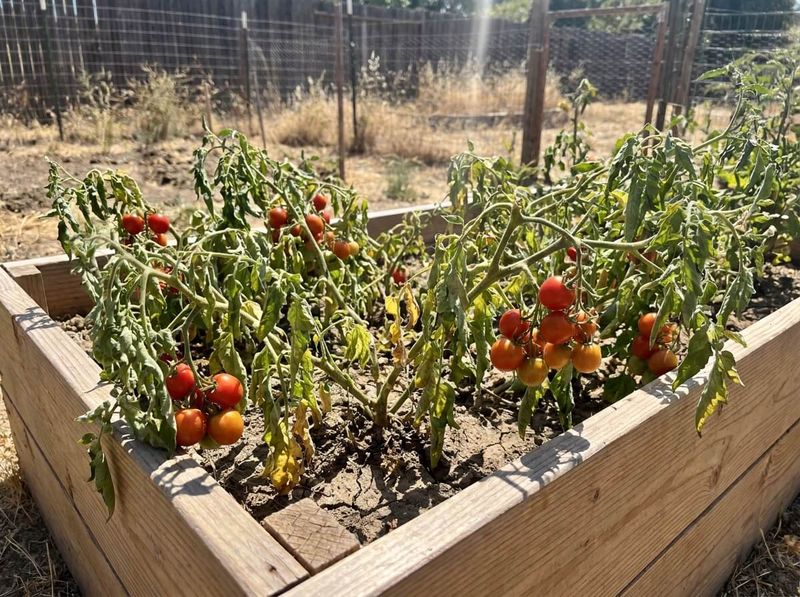
Fixing the container and improving the root zone may not bring back the flowers that are already on the plant right now, and understanding why matters for setting realistic expectations. High air temperatures can damage tomato pollen directly, causing flowers to drop before they set or to produce no viable fruit even when the plant is well-watered and properly housed.
Penn State Extension’s overview of heat stress in tomatoes explains that temperatures above roughly 95 degrees Fahrenheit during the day or above about 75 degrees at night can interfere with pollen viability and fruit set. A container upgrade may improve future vegetative growth and water stability, but flowers already exposed to those temperatures may still fail regardless of what you do to the pot.
Variety selection plays a real role here, and the right choice depends on where you garden. UF/IFAS Gardening Solutions guidance on tomatoes notes that large-fruited varieties may stop setting fruit when average nighttime temperatures climb to around 80 degrees Fahrenheit, while cherry and grape tomatoes tend to continue setting fruit more reliably in Florida’s heat.
Heat-tolerant or hot-set cultivars are specifically bred to pollinate under higher temperatures and are a better fit for late-season Southern production.
Florida and Texas are not on the same summer schedule. Florida’s heat and humidity can persist long enough to make midsummer large-fruited tomato production genuinely difficult, while Central Texas commonly uses a fall planting window with transplants going in during July or August.
The UF/IFAS Florida Vegetable Gardening Guide outlines planting windows that vary by region within the state, reinforcing that late summer may be a transition period or a heat-management challenge depending on exactly where you are gardening.
Do not turn a container problem into a fertilizer or pruning problem
When a potted tomato looks weak, the instinct to add fertilizer is understandable, but it can make things worse if the underlying problem is root restriction, drought stress, or waterlogged media. Frequent watering does leach nutrients from container potting mix over time, so regular feeding is genuinely helpful during a healthy growing season.
The key word is regular, not aggressive. University of Minnesota Extension guidance on fertilizing container plants recommends following the product label rather than increasing rates, because excess nitrogen tends to push lush, leafy growth at the expense of flowering and fruiting, and overfertilization can injure the root system directly.
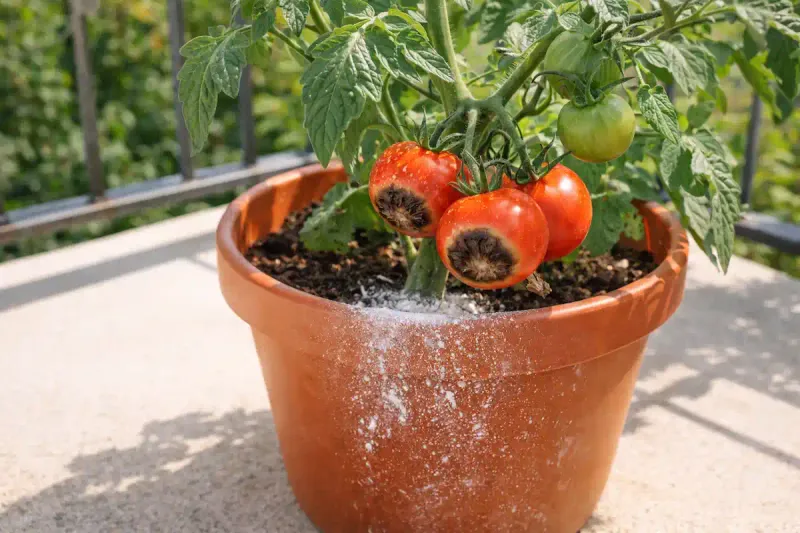
Blossom-end rot is another symptom that often triggers the wrong correction. The dark, sunken patch at the base of the fruit looks like a calcium deficiency, and calcium sprays are widely sold as the fix.
In reality, University of Illinois Extension guidance on blossom-end rot explains that the problem usually reflects disrupted calcium movement into the fruit caused by uneven moisture, root damage, waterlogging, heat, or excess fertilization. Calcium sprays applied to the leaves or fruit are not a reliable cure when the underlying water-uptake problem has not been addressed first.
Aggressive pruning carries its own risks in hot weather. Removing a significant amount of leaf cover might seem like a way to reduce the plant’s water demand, but Illinois Extension’s explanation of tomato leaf rolling and wilting warns that stripping protective foliage can expose both the fruit and the container surface to more direct heat and sunlight, worsening the stress you are trying to reduce.
Use the next heat spell as a better test
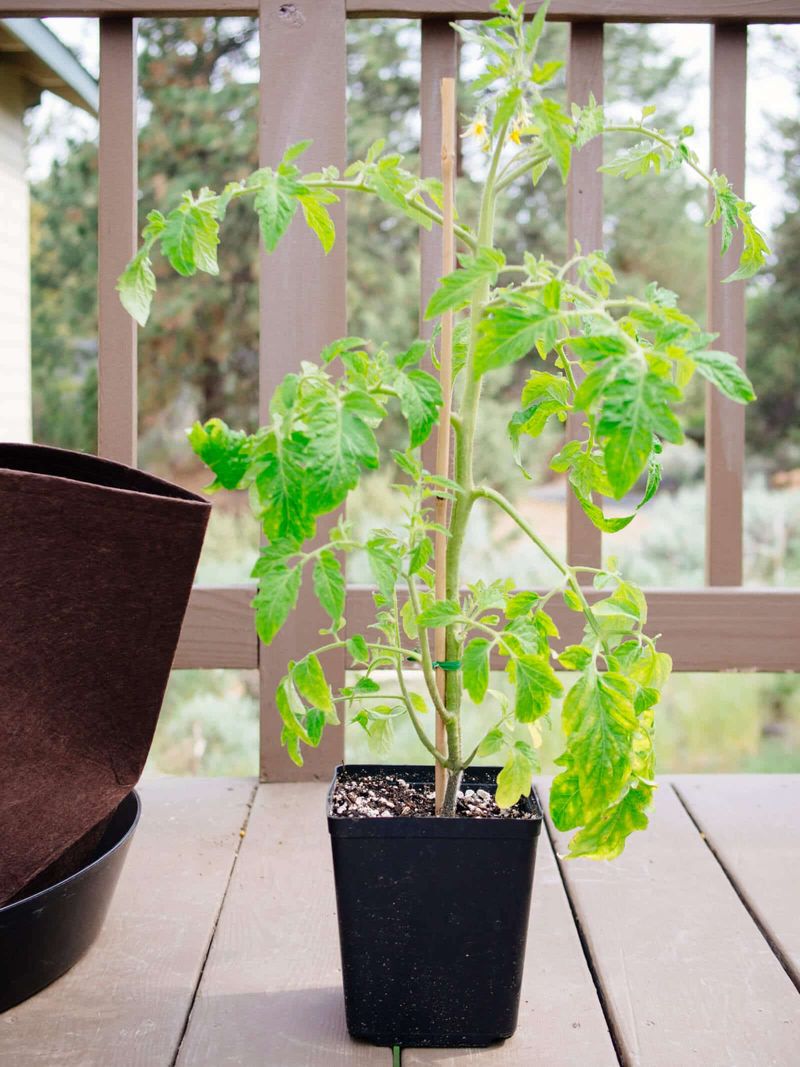
Putting the full picture together comes down to a short checklist you can run through before the next stretch of hot weather arrives. Check whether the root ball has outgrown its container using the physical clues from earlier.
If root restriction looks likely, move the plant into an appropriately sized container with one plant per pot, fresh potting mix, and clear drainage holes. Establish a watering routine based on checking the mix rather than a fixed calendar, and add surface mulch and afternoon shade where your yard allows.
UGA Extension’s container gardening guidance treats these setup decisions as the foundation of container success, and getting them right gives the plant a fair chance to perform. Limited root volume is the first setup issue worth investigating when a vigorous potted tomato stays small or unproductive, but it is not a confirmed explanation for every struggling plant.
Other causes, from drainage problems to pest pressure to inadequate light, deserve equal scrutiny if the container checks out.
These changes may improve future growth and water stability, but high temperatures can still prevent fruit set regardless of how well the container is managed. In Florida, that heat may persist well into fall, while Central Texas gardeners may find that a properly timed fall planting in a well-prepared container outperforms any rescue attempt on a midsummer plant.
Sometimes the most useful thing a better container does is give you a stronger plant for the season ahead.