
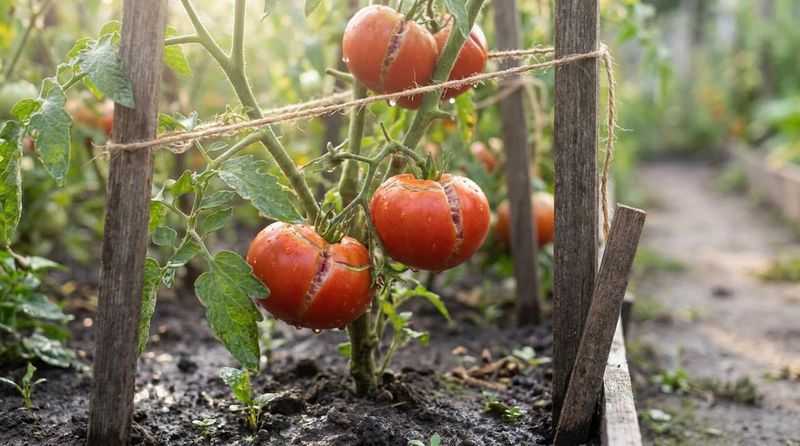
Walking out to your garden after a summer rainstorm and finding your biggest, ripest tomatoes split wide open is genuinely discouraging. The damage seems to happen overnight, and rain gets most of the blame. But a dry stretch before that storm often sets the stage, and understanding that connection gives you real ways to reduce how often it happens.
The crack pattern usually identifies a growth problem
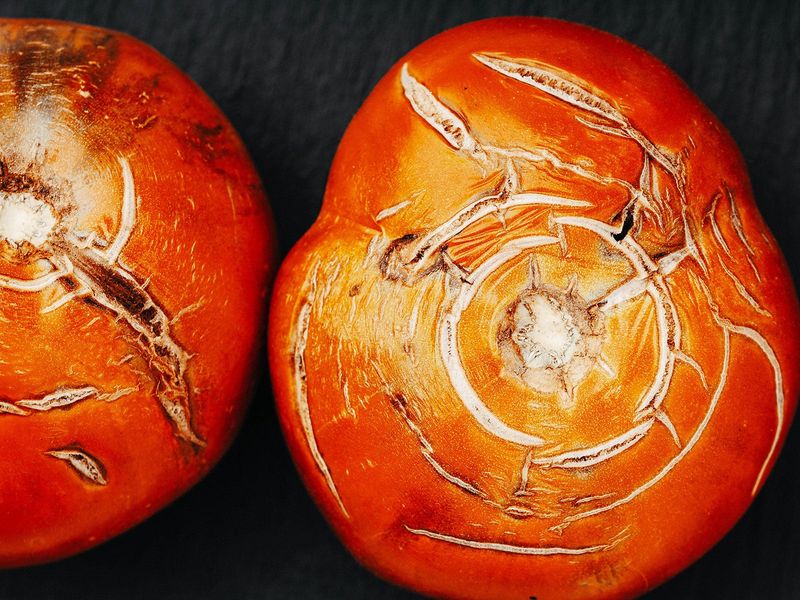
Knowing what you are looking at makes the rest of this guide useful. Two types of growth cracks show up most often on ripening tomatoes. Radial cracks extend outward from the stem end like spokes on a wheel. Concentric cracks form rings around the shoulder of the fruit, sometimes shallow, sometimes deep enough to expose the interior.
Both types tend to appear on fruit that is actively growing or ripening when soil moisture changes quickly. University of Minnesota Extension’s tomato fruit crack diagnostic describes these two patterns as the most common growth-related splits and distinguishes them from several other disorders that can look similar at first glance.
Blossom-end rot shows up as a dark, leathery, sunken patch on the bottom of the fruit, not near the stem. Sunscald appears as a pale, papery, or whitened area on the side of the fruit that was exposed to direct sun. Catfacing produces deep, irregular scarring and puckering at the blossom end, usually from cold temperatures during early fruit set.
Insect feeding leaves small puncture marks or ragged wounds, and disease lesions often show discoloration, water-soaking, or a fuzzy appearance around the damaged area. If your tomatoes show clean cracks radiating from the stem or circling the shoulders after wet weather, you are most likely dealing with growth cracking, and this guide applies directly to what you are seeing.
Why a dry spell makes rain split ripe fruit
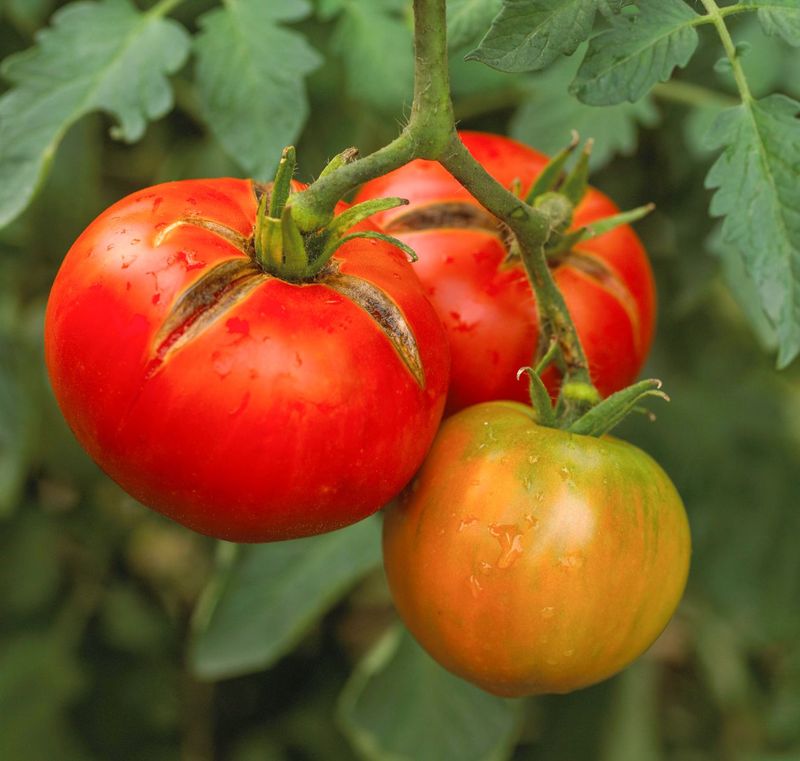
The mechanism is straightforward once you picture what happens inside the plant. During a dry stretch, the soil holds very little available water and the tomato fruit stops expanding much. The skin tightens around the fruit as it ripens, becoming less flexible. Then a heavy rain arrives, the soil absorbs a large amount of water quickly, and the plant’s roots take it up rapidly.
All that water moves into the fruit faster than the skin can stretch to accommodate the sudden increase in volume. The skin splits. Penn State Extension’s guide to tomato cracking explains that cracking is most likely when soil moisture changes rapidly while fruit are in the rapid-growth or ripening stage, because ripening progressively weakens the skin’s ability to handle internal pressure.
Rain plays more than one role here. Soil that was dry becomes saturated, and that moisture swing is the most controllable part of the problem. But rain can also wet the fruit surface directly, and water may enter through tiny openings or through tissue near the stem scar, adding to the pressure from inside.
Saying rain is not the culprit would miss part of the picture. A more accurate way to think about it is that a dry-to-wet moisture swing creates the conditions, and a summer rainstorm often provides the immediate trigger. Both matter, but the moisture swing is the part you have the most ability to influence before the storm arrives.
Check the root zone instead of following a rigid calendar
The most effective prevention step is also the most practical: keep soil moisture as even as possible instead of letting plants get very dry and then soaking them. That pattern, drought followed by a heavy drink, is the exact setup that makes cracking more likely. A watering calendar alone cannot account for everything that changes from week to week.
Penn State Extension’s tomato growing guide offers roughly 1 to 1.5 inches of water per week, including rainfall, as a general starting point. That figure is useful context, not a rigid prescription. Sandy soils drain faster and may need more frequent attention. Clay soils hold moisture longer and can stay wet for days after a rain.
Hot, dry, or windy weather pulls moisture out of the soil faster. A large, heavily fruiting plant needs more than a smaller one.
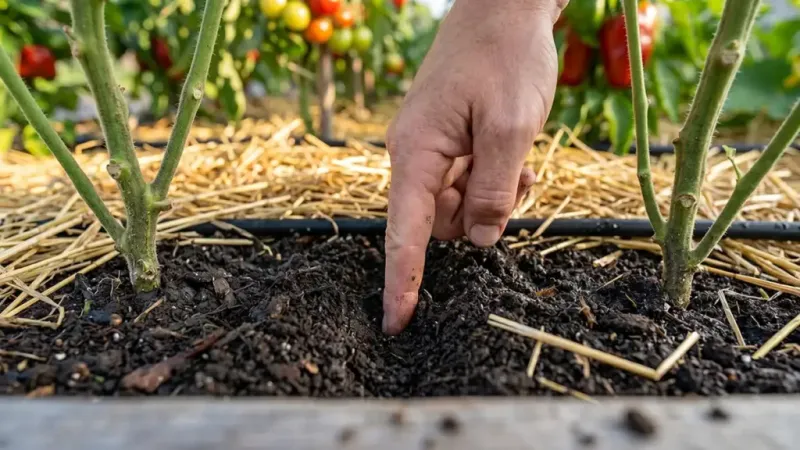
The practical approach is to check the soil directly. Press your finger or a wooden dowel about 2 inches into the soil near the plant. If it feels dry at that depth, water. If it still feels moist, hold off and check again the next day.
When you do water, go slowly enough to wet the deeper root zone rather than just dampening the surface.
University of Minnesota Extension’s irrigation guidance for vegetables reinforces this approach, noting that shallow, frequent sprinkles can encourage roots to stay near the surface, making plants more vulnerable to dry spells. Watering deeply but only when the soil actually needs it builds a more resilient root system and reduces the swings that set up cracking.
Mulch and soil-level irrigation smooth out moisture changes
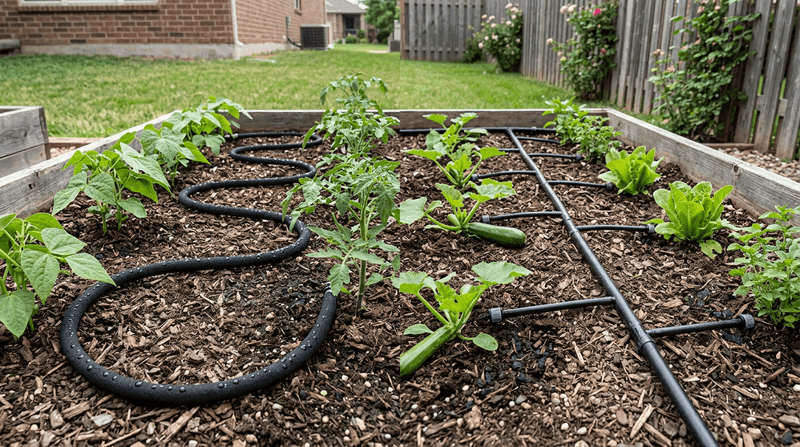
Consistent watering is easier to maintain when you have tools working in your favor. Organic mulch is one of the most reliable. A 2 to 3 inch layer of straw, shredded leaves, or wood chips spread around the base of your tomato plants slows evaporation from the soil surface and buffers the temperature swings that can dry soil out quickly on hot August afternoons. Keep mulch a few inches away from direct contact with the stem to reduce the chance of rot at the base.
University of Minnesota Extension’s tomato disorders page specifically names mulch as a way to maintain more uniform moisture and reduce growth cracking. It will not eliminate every split, but it slows the cycle that sets them up.
Where you deliver water matters as much as how much you give. Drip irrigation lines and soaker hoses release water slowly at soil level, letting it absorb into the root zone without wetting the plant’s foliage or fruit. Careful hand-watering at the base of the plant accomplishes the same thing.
Routine overhead watering with a sprinkler or hose nozzle aimed at the canopy is the least desirable approach for ripening tomatoes. Wet foliage stays wet longer and creates conditions where fungal diseases can take hold. Beyond disease risk, overhead water landing directly on ripening fruit can contribute to cracking, particularly when fruit are already under pressure from a prior dry stretch. Switching to soil-level watering is a straightforward change that addresses both concerns at once.
A storm forecast changes the harvest decision
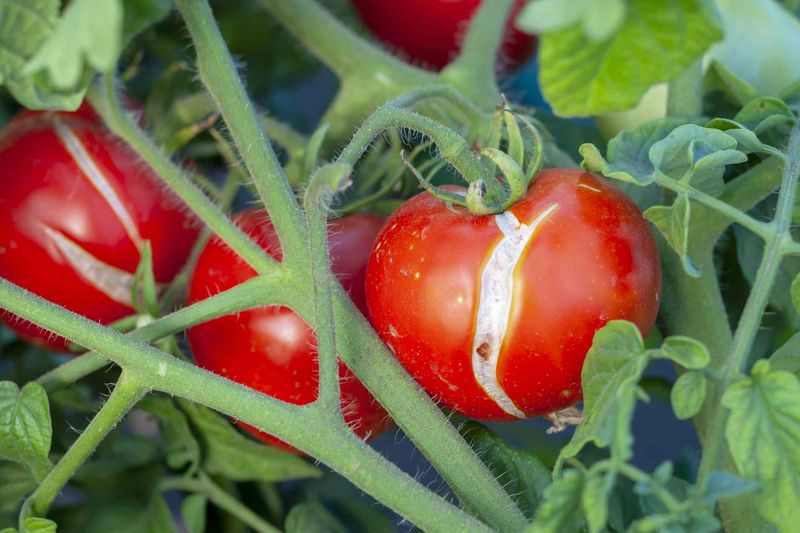
Some moisture swings are beyond your control. A line of thunderstorms can drop an inch of rain in an hour regardless of how carefully you have been watering. When a heavy storm is in the forecast and your tomatoes are close to ripe, early harvesting can save fruit that would otherwise split overnight.
The key is knowing which fruit to pick. University of Missouri Extension’s article on tomato fruit cracking recommends harvesting tomatoes that are already showing color or are nearly ripe before a predicted heavy storm. Tomatoes at this stage will continue to ripen indoors at room temperature, though fully vine-ripened fruit often has a flavor advantage. That tradeoff is worth accepting to avoid losing a fruit entirely.
Routine early picking is a different matter. Pulling every tomato while it is still fully green is not necessary and is likely to leave you with fruit that ripens unevenly or lacks depth of flavor. Save pre-storm harvesting for fruit that has already begun to color up.
After the storm passes, walk the garden and inspect every plant carefully. Cracks provide an immediate opening for fungi, bacteria, and insects, and fruit that looks fine right after a storm can deteriorate within a day or two. Catching damaged fruit early gives you the best chance of using the sound portions before decay sets in.
Several factors can intensify cracking
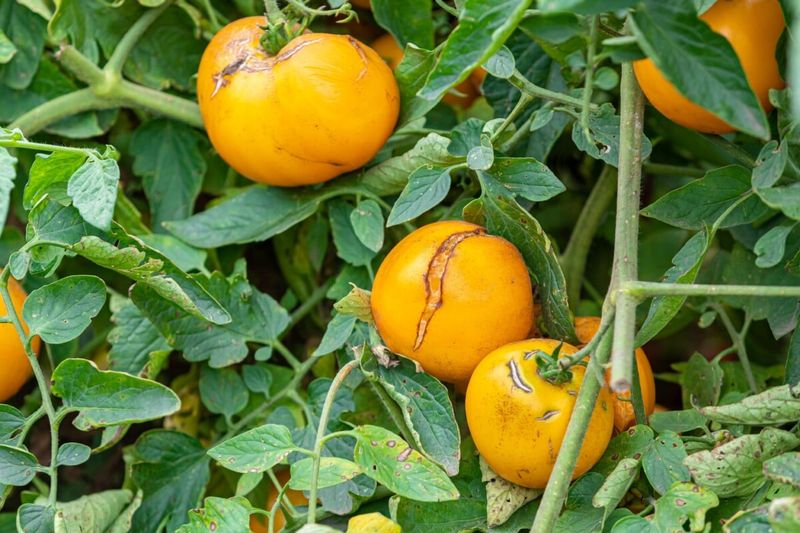
Steady watering reduces the most controllable risk factor, but some cracking happens even when you have been careful. Several other influences can tip the balance, and recognizing them helps explain why some years are worse than others even when your routine has not changed.
Heat and direct sun accelerate moisture loss from soil and can stress fruit that is exposed by thin or stripped foliage. Ripeness matters too: the closer a tomato is to fully ripe, the less flexible its skin becomes. Large-fruited varieties and heavily loaded plants carry more pressure in each fruit. Excessive irrigation, not just drought, can trigger the same rapid expansion if a plant goes from adequately moist to waterlogged.
Leaf cover plays a protective role that is easy to underestimate. Penn State Extension notes that healthy foliage shades fruit, moderates temperature, and reduces direct exposure to sun and heat. Aggressive leaf removal can expose fruit to conditions that increase cracking risk and worsen related disorders like sunscald.
Fine, rough, leathery networks of tiny surface cracks, sometimes called rain check or cuticle cracking, are a related but distinct problem. Penn State Extension’s overview of rain check in tomatoes notes that heavy rain and cultivar susceptibility are both implicated, but the exact mechanism is not fully settled and should not be treated as identical to growth cracking.
University of Minnesota Extension’s fruit crack diagnostic points out that large-fruited slicers and many heirloom varieties tend to crack more easily than smaller or crack-resistant types. Choosing crack-resistant cultivars can lower your baseline risk, but no variety is fully immune when conditions are severe enough.
A cracked tomato is a freshness decision, not an automatic loss
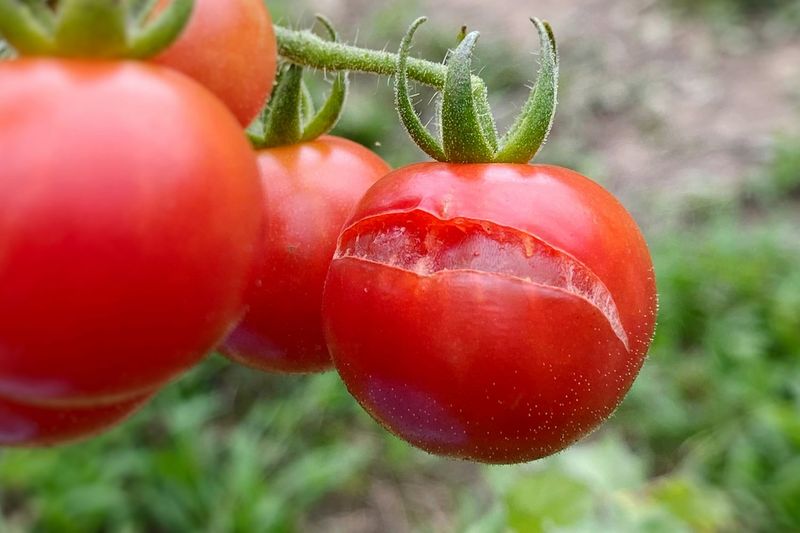
Finding a split tomato is frustrating, but it does not automatically mean the fruit is wasted. The real concern with a cracked tomato is speed. Once the skin opens, the fruit is no longer protected from the environment. Fungi, bacteria, and insects can enter through the crack within hours, especially in warm August weather.
University of Missouri Extension’s guidance on splitting tomatoes supports using cracked fruit promptly for fresh eating when the tomato remains otherwise sound. Cut away the damaged area generously, check that the remaining flesh looks and smells normal, and use it the same day. Sliced into a salad, cooked into a sauce, or eaten straight off the cutting board, a sound cracked tomato is still good food.
The line is drawn at signs of decay. Fruit that is moldy, rotting, sour-smelling, or soft and mushy beyond the crack itself should go to the compost pile. When in doubt, trust your senses.
Home canning is a different situation entirely, and the rules are stricter. University of Minnesota Extension’s home canning guide for tomatoes advises using only high-quality, undamaged tomatoes and following tested, properly acidified recipes. Cracked, damaged, or decayed fruit introduces variables that can compromise the safety of a canned product. Save the split tomatoes for fresh use, and reserve your best undamaged fruit for the canning jar.
Steadier moisture gives the next crop a better chance
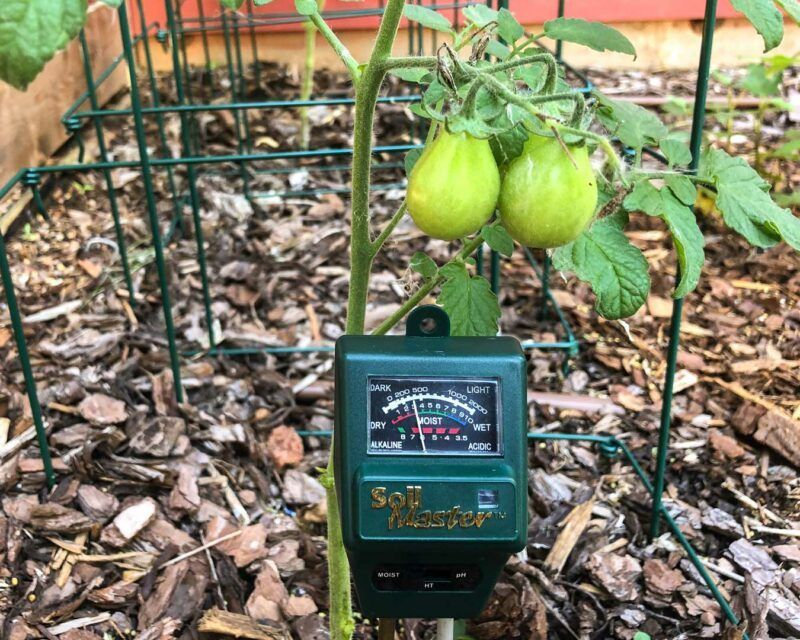
Pulling all these steps together comes down to a simple routine. Check root-zone moisture every day or two during hot, dry stretches rather than watering on a fixed schedule. Count rainfall as part of your weekly total and adjust accordingly. Keep mulch in place through the rest of the season to slow evaporation and cushion the effect of sudden rains.
Maintain healthy leaf cover rather than stripping the plant aggressively. Watch the weather forecast in late summer and harvest color-changing fruit before a major storm is expected. Penn State Extension’s tomato growing guide and their cracking overview both emphasize that consistent moisture management is the most practical lever available to home gardeners.
If cracking has been a recurring problem despite careful watering, consider trying crack-resistant cultivars next season. No variety is immune to a severe dry-wet swing, but starting with genetics that tolerate moisture fluctuation better gives you a meaningful head start. The goal is not a perfect season but a more resilient one.