
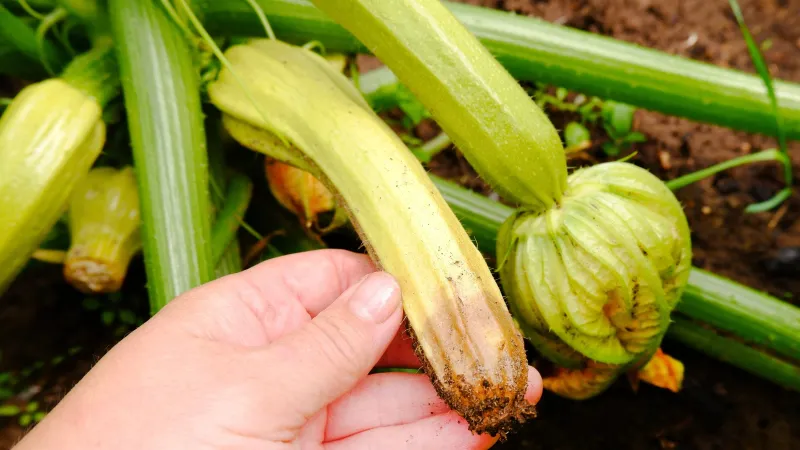
Watching a tiny squash turn soft and brown at the tip is one of the more frustrating sights in a summer garden, especially when the plant looks healthy and full of flowers. The cause is not always obvious, and blaming the heat or the bees right away can send you down the wrong path.
Several different problems, from incomplete pollination to fungal disease to calcium-transport stress, can produce that same blossom-end decay. Knowing which one you are actually dealing with makes all the difference in what you do next.
Rot at the Blossom End Does Not Identify the Cause
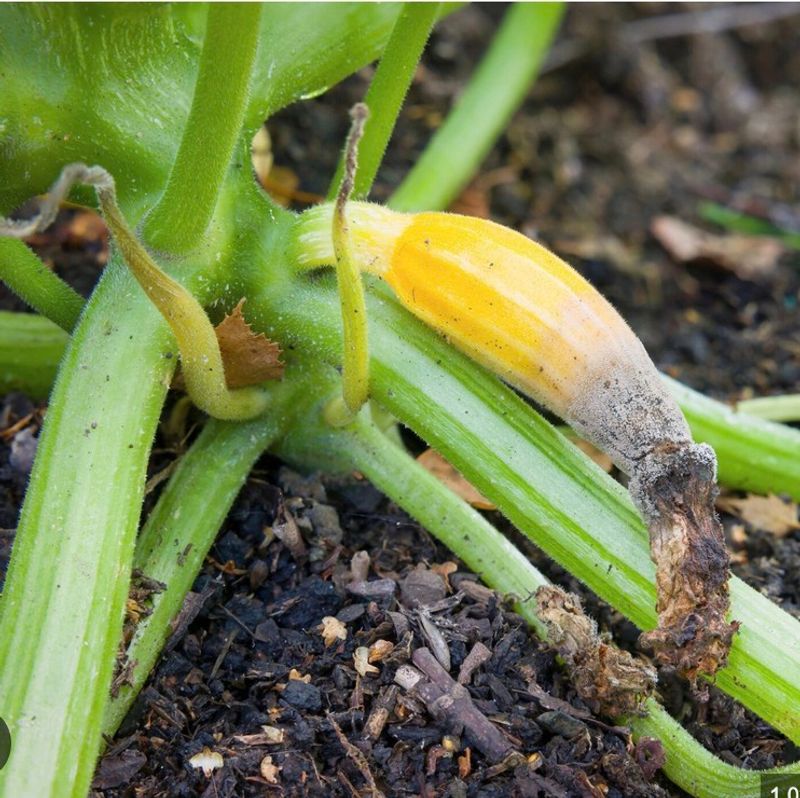
A baby squash going soft and brown at the flower end is a symptom, not a verdict. That same discoloration can come from at least three very different problems: incomplete pollination, a physiological disorder called blossom-end rot, or any of several fungal fruit rots.
Jumping straight to a treatment without checking which problem you have often wastes time and misses the real issue.
Start by looking at the fruit itself before you look at the weather or the bees. Notice the size of the failed fruit, its shape, whether it feels watery or just shriveled, and whether there is any visible fuzzy or powdery growth on the surface.
Also consider how many days it has been since the flower opened, because timing is one of the most useful clues you have.
Oklahoma State University Extension’s squash disease guide lists multiple overlapping causes of fruit decay in cucurbits, reinforcing that blossom-end decay is a nonspecific finding rather than a single diagnosis. The sections that follow will help you match what you see on the fruit to the most likely explanation, so you can choose a response that actually fits the problem rather than guessing.
Female Flowers Still Need Pollen to Develop Fruit
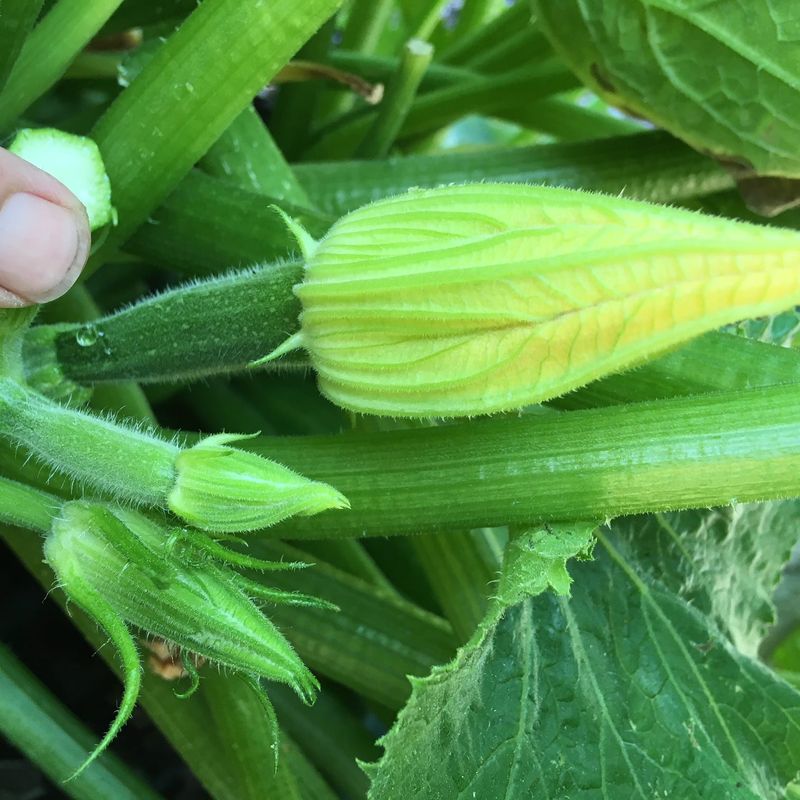
Squash plants carry two types of flowers on the same vine. Male flowers appear on a plain stem, while female flowers sit on top of a small, rounded swelling that looks like a miniature version of the mature fruit.
That swelling is the ovary, and it only develops into an edible squash if insects carry viable pollen from a male flower to the sticky stigma inside the female flower. UF/IFAS Extension’s seed-saving guide for Florida growers confirms that squash flowers require insect-mediated pollen transfer to set fruit successfully.
Here is the part that surprises many gardeners: a female flower can open, look perfectly healthy, and still fail to receive enough viable pollen. Seeing female flowers does not confirm that pollination happened.
The flower may close and the tiny fruit behind it may begin to swell slightly, then stall, shrink, soften, and rot. That sequence is a strong signal that the fruit was never fully fertilized.
Poorly pollinated fruit tends to stay small, sometimes takes on an uneven or tapered shape, and usually aborts within a few days of flowering. UMN Extension’s pollination requirements resource notes that fruits and vegetables requiring insect transfer can fail to set when pollinators are absent or pollen delivery is incomplete.
That early abort pattern is one of your clearest clues that pollination, not disease, is the likely culprit.
Hot Weather Can Reduce Pollination Success During the Morning
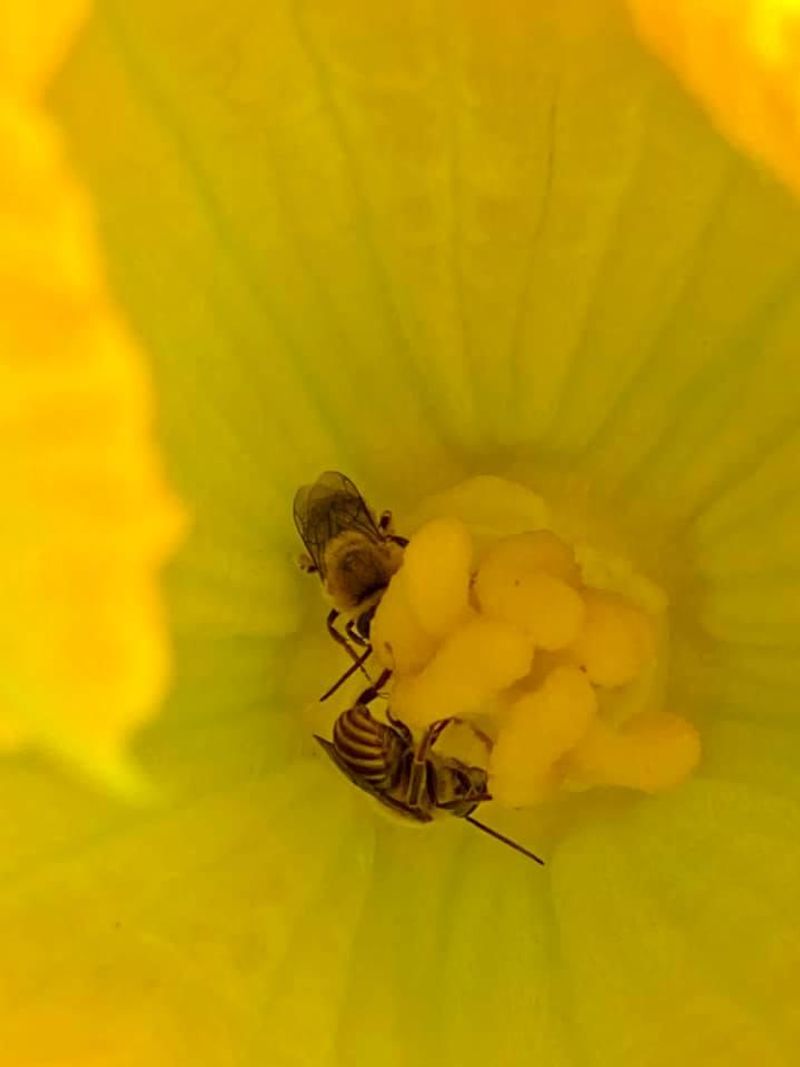
Squash flowers open for only a few hours each morning, and that brief window is when pollination must happen. UMN Extension’s heat-stress guide for vegetable gardens explains that excessive heat can reduce pollinator activity and lower the chance of successful pollen transfer during that morning period.
The flowers do not open for a shorter time because of heat; rather, the insects that need to visit them may simply be less active when temperatures climb.
Around 90 degrees Fahrenheit is a useful general warning point: many bee species reduce foraging activity near or above that range. That said, 90 degrees is not a hard cutoff where squash pollination automatically fails.
Actual fruit set depends on a combination of factors, including nighttime temperatures, humidity levels, how consistently the plants are watered, the cultivar you are growing, and how abundant and diverse your local pollinator community happens to be.
UF/IFAS research on cucurbit pollination in Florida notes that different bee groups contribute to squash pollination across spring and fall crops, and that honey bees are not always the most effective squash visitors. In Florida and Texas, where late-summer heat is prolonged and intense, pollinator activity patterns can shift in ways that reduce consistent flower visits during the narrow morning window.
Heavy rain on flowering mornings can have a similar effect, washing away or diluting pollen before bees arrive.
Read the Fruit Before You Choose a Remedy
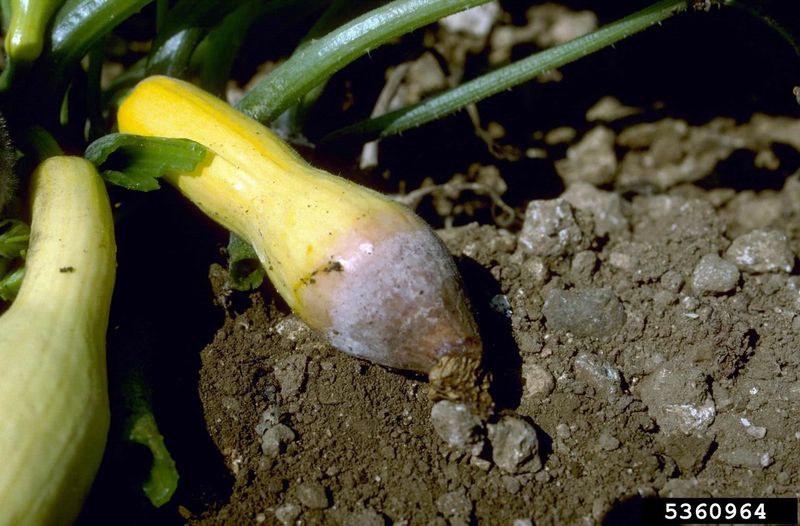
Poor pollination and fungal rot can look similar at a glance, but a closer inspection usually separates them. When a tiny squash aborts soon after flowering, stays noticeably small or lopsided, shrivels rather than softening into a watery mass, and shows no fuzzy or powdery surface growth, incomplete pollination is the more likely explanation.
The fruit essentially ran out of the hormonal signal that keeps it growing, because fertilization never fully occurred.
A different picture points toward fungal disease. UMN Extension’s Choanephora rot page describes a soft, watery decay that often begins at the blossom end and may be accompanied by white, gray, or purplish-black fuzzy growth on the fruit surface.
That pattern, especially after wet weather or periods of poor air circulation, points more strongly toward a fungal rot than toward a pollination problem. OSU Extension’s pumpkin and squash disease fact sheet lists Choanephora, Pythium, and white mold among the fungal causes of cucurbit fruit decay with overlapping symptoms.
Blossom-end rot is a third possibility, and it deserves its own explanation. UMN Extension’s vegetable irrigation guidance explains that blossom-end rot is a calcium-transport disorder rather than proof that your soil lacks calcium.
The developing fruit can be starved of calcium even when soil levels are adequate, because calcium moves through the plant in water and depends on functioning roots and consistent moisture. Fluctuating soil moisture, root damage, rapid growth, excessive nitrogen, soil salinity, and heat stress can all disrupt that transport.
When symptoms overlap, hold your diagnosis loosely and let the full pattern guide you.
Hand-Pollinate the Next Suitable Female Flower
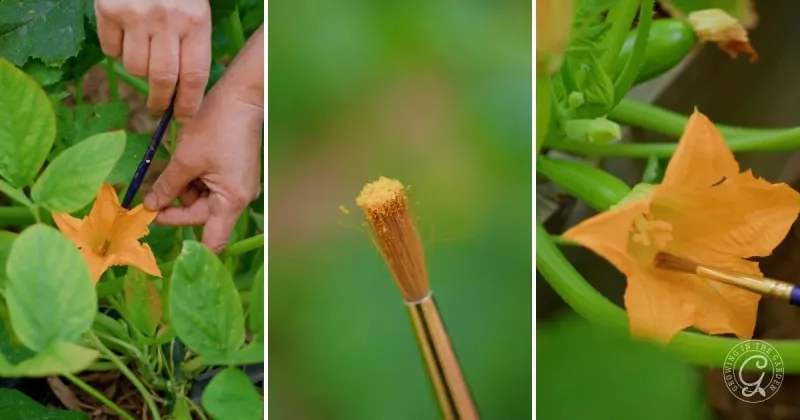
When you can see that insect activity is low during the morning flower-opening period, hand-pollination gives individual female flowers a better chance. The technique is straightforward and takes less than a minute per flower.
Go out to your squash plants early in the morning while the flowers are still open, which usually means before 9 or 10 a.m. in Southern summer heat.
Find a freshly opened male flower, one that has yellow pollen visibly coating the central anther structure. You can either peel back the male flower’s petals and press the anther gently against the stigma inside the female flower, or use a dry cotton swab to collect the pollen and then dab it onto the stigma.
UMN Extension’s guide to growing pumpkins at home describes this pollen-transfer method as a practical option when natural pollination is unreliable.
Hand-pollination can improve the odds that a specific female flower sets fruit, but keep your expectations realistic. UMN Extension’s vining vegetable guide makes clear that hand-pollination is a targeted rescue for individual flowers, not a cure for underlying disease, drought stress, root injury, or widespread plant problems.
If your plants are struggling from heat exhaustion, poor root health, or a fungal infection, adding pollen to a female flower will not reverse that damage. Address the root cause alongside any pollination work.
Keep Root-Zone Moisture as Even as Practical
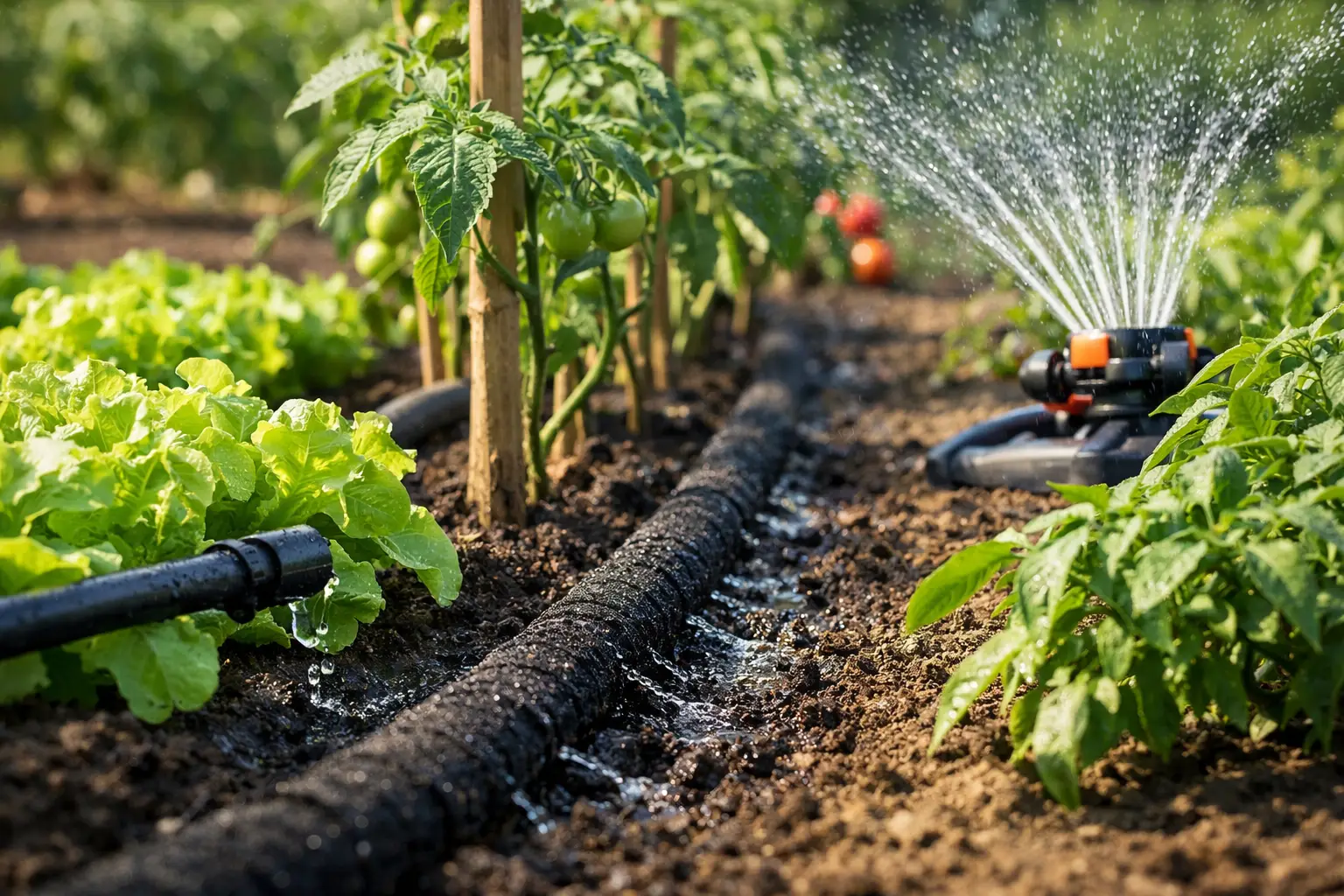
Consistent soil moisture does more than keep plants from wilting. It supports the water movement that carries calcium from roots into developing fruit, and it reduces the temperature swings at the root zone that compound heat stress during Southern summers.
When soil dries out severely between waterings and then receives a heavy soaking, roots can be damaged by that cycle, and calcium transport suffers as a result.
UMN Extension’s irrigation strategies for vegetables recommends watering deeply enough to moisten the full root zone rather than applying light, frequent sprinkles that wet only the surface. Mulching around the base of your squash plants slows evaporation significantly and buffers soil temperature, giving you more time between waterings without the moisture swings that stress roots.
A two-to-three-inch layer of straw, wood chips, or similar organic material works well for this purpose in Florida and Texas gardens.
Even with careful watering, consistent moisture cannot guarantee fruit set or reverse a fruit that has already begun to rot. Think of steady irrigation as reducing the conditions that make blossom-end rot and heat stress more likely, rather than as a cure once symptoms have appeared.
If you are already seeing soft, browning fruit, remove it and then focus on keeping the remaining developing fruit better supported through the rest of the season.
Reduce Wetness and Remove Rotting Fruit
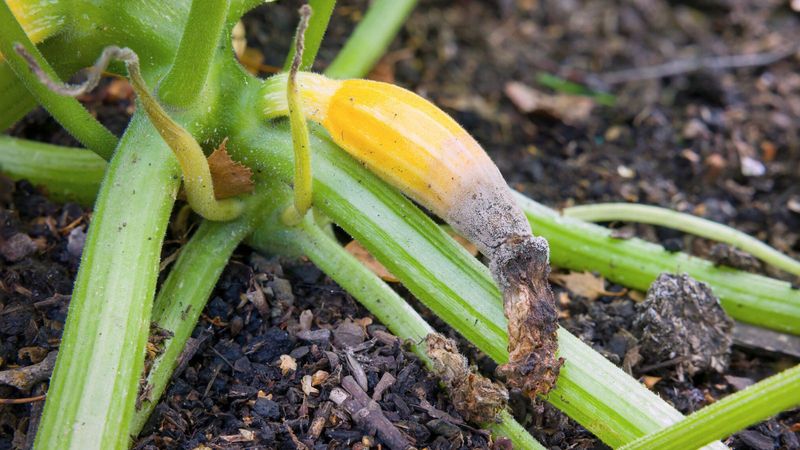
Fungal rots thrive when fruit surfaces stay wet, air circulation is poor, and decaying plant material sits on or near the soil. Adjusting a few basic practices can reduce those conditions meaningfully.
Water at the soil surface rather than overhead whenever possible, because keeping foliage and fruit dry limits the moisture that fungal spores need to germinate and spread. Oklahoma State University Extension’s squash and pumpkin production guide recommends soil-level irrigation and adequate plant spacing as practical steps for reducing fruit rot pressure.
When overhead watering is your only option, water in the morning so that leaves and fruit surfaces have time to dry before evening. Mulch placed around the base of plants keeps developing fruit from resting directly on wet soil, which is a common contact point for soil-borne pathogens.
Spacing plants far enough apart to allow air to move through the canopy also helps, because still, humid air around dense foliage creates favorable conditions for Choanephora rot and similar fungal problems.
Remove rotting fruit from the plant as soon as you spot it. Infected material left on the vine or dropped to the soil can release spores that spread to healthy fruit.
Discard removed fruit and any infected plant debris in the trash rather than the compost pile. UMN Extension’s white mold guidance for cucurbits advises against adding infected cucurbit material to home compost unless the system reliably reaches the temperatures needed to kill pathogens, which most backyard piles do not sustain consistently.
For pest management, protect the pollinators your squash depends on. UGA Extension’s commercial squash production guide advises against applying insecticides to open squash flowers and recommends treating only when flowers are closed or bee activity is minimal.
Always follow the product label, and choose the timing that reduces pollinator exposure while still addressing pests like squash bugs.
Match the Clues to the Next Step
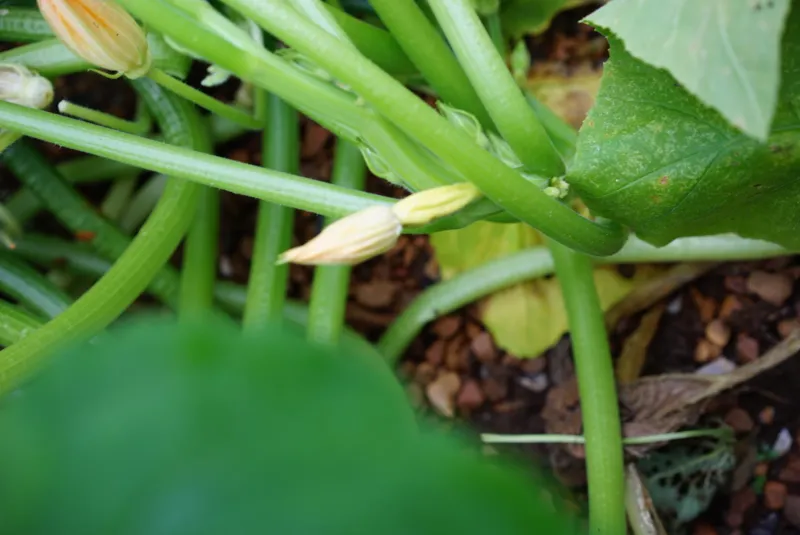
Before reaching for any remedy, spend a minute with the failed fruit. Small, shriveled, misshapen fruit that aborted quickly and shows no fuzzy growth points toward a pollination problem.
Soft, watery decay with visible mold growth, especially after wet weather, calls for sanitation and drier conditions rather than hand-pollination. A firm, darkened blossom tip on a fruit that is otherwise growing normally fits the calcium-transport disorder picture better than either of those.
Once you have a working diagnosis, act on it specifically. Hand-pollinate the next open female flower when insect activity looks low and both flowers are fresh.
Keep soil moisture as even as you can manage, using mulch and deep watering to avoid the wet-dry swings that stress roots. Keep developing fruit off wet soil, remove any rotting material promptly, and discard it rather than composting it.
UMN Extension’s heat-stress guidance confirms that late-summer heat can reduce pollination success, but heat is one factor among several, not a guaranteed explanation for every failed fruit. If watery decay with fuzzy growth keeps appearing despite hand-pollination and cleaner conditions, the problem is more likely fungal than pollination-related, and that warrants a disease-focused response rather than more pollen transfer or calcium folklore.
The gardener who inspects first and treats second usually saves more of the crop.