
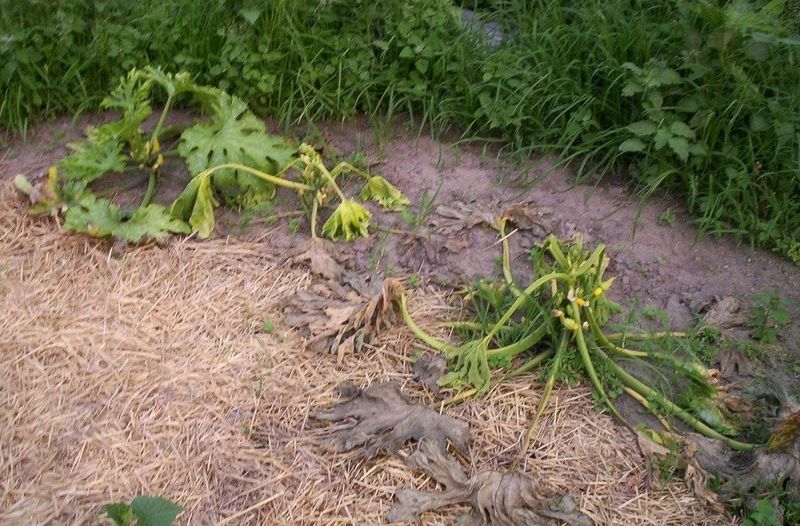
Walking out to your garden and finding a squash plant that looked fine yesterday now drooping flat on the ground is a genuinely alarming sight. Late-summer heat is an easy thing to blame, but the real explanation may be something working silently inside the stem.
Knowing the difference between a plant that is temporarily stressed and one with a more serious problem can save you time, water, and the rest of your harvest.
A collapsed squash may have more than one explanation
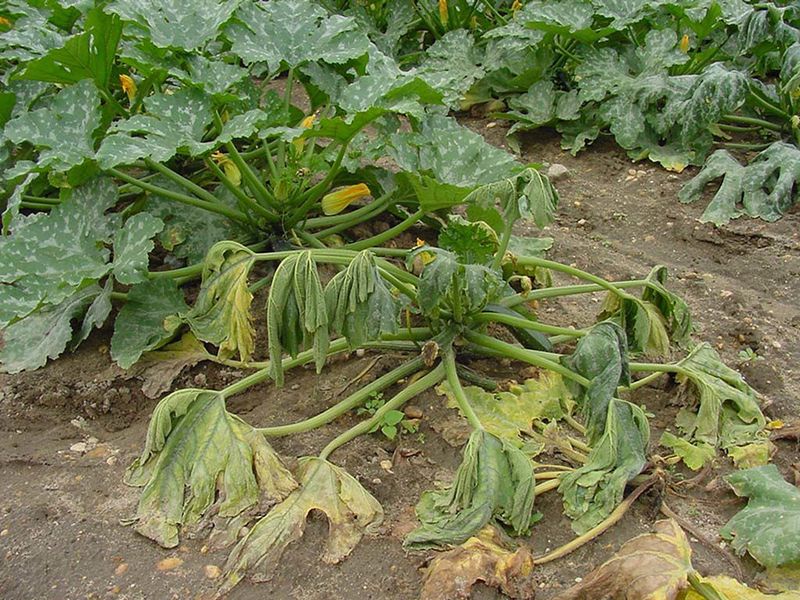
Squash are tough plants right up until they are not. A single plant that suddenly goes flat while every other vine in the bed still looks healthy is a signal worth taking seriously, and heat alone does not fully explain that pattern.
One possibility that fits that picture is a squash vine borer. The larva of this moth tunnels into the lower stem of Cucurbita crops, including many summer squash, zucchini, and pumpkins, and disrupts the flow of water up through the plant.
University of Minnesota Extension guidance on squash vine borers describes early symptoms that can look like midday wilting and progress to whole-plant collapse if the larva is not found and removed.
Heat matters here, but not in the way most gardeners assume. High temperatures raise a plant’s water demand sharply, so any disruption to water movement, whether from a borer, a disease, or a root problem, becomes far more visible and damaging during a heat wave.
Heat does not create the pest; it makes the damage harder to hide.
Wilting that recovers by evening or the next morning often reflects normal heat or water stress rather than a borer. Persistent overnight or morning wilt is the pattern that warrants a closer look, including a hands-on check of the stem near the soil line.
That inspection is the strongest next step you can take before deciding what to do.
Inspect the lower stem for the strongest borer clue
Before you reach for the hose or pull the plant, crouch down and take a close look at the stem from the soil line up to about six inches above it. That short stretch of vine is where the most useful evidence tends to show up.
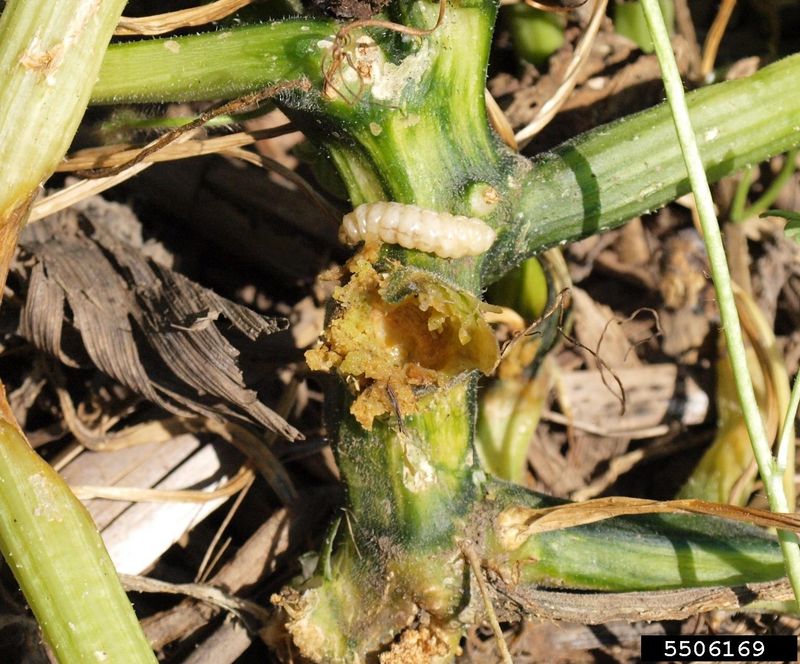
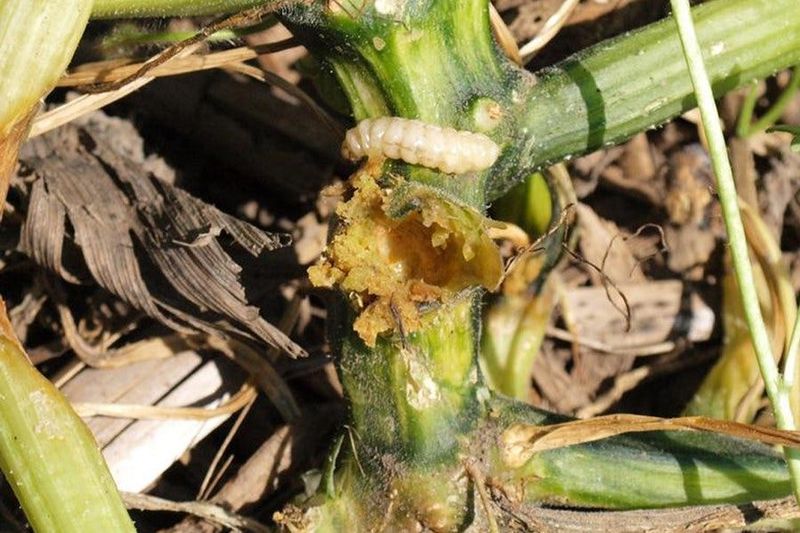
Look for a small entrance hole, roughly the size of a pencil tip, often surrounded by green, orange, or brown material that resembles wet or powdery sawdust. That material is frass, the waste left behind by a feeding larva.
Extension guidance on squash vine borers identifies this combination of a hole and frass near the stem base as the strongest practical field clue for a borer infestation. You may also notice swelling, soft or mushy tissue, or a stem that appears pinched or girdled.
If you want to confirm what is inside, you can carefully split the stem lengthwise at the point where you see the frass, using a sharp, clean knife. A cream-colored larva with a brown head is the borer.
Move slowly and avoid cutting into the crown or severing the vine entirely, since the stem will need to stay intact for any rescue attempt.
Finding a hole and frass is a strong clue, not a final verdict. A plant can have more than one problem at once, and borer wounds sometimes invite secondary rot or disease.
Treat what you see as evidence that guides the next step, not as a complete diagnosis on its own.
Temporary heat wilt should improve after temperatures fall
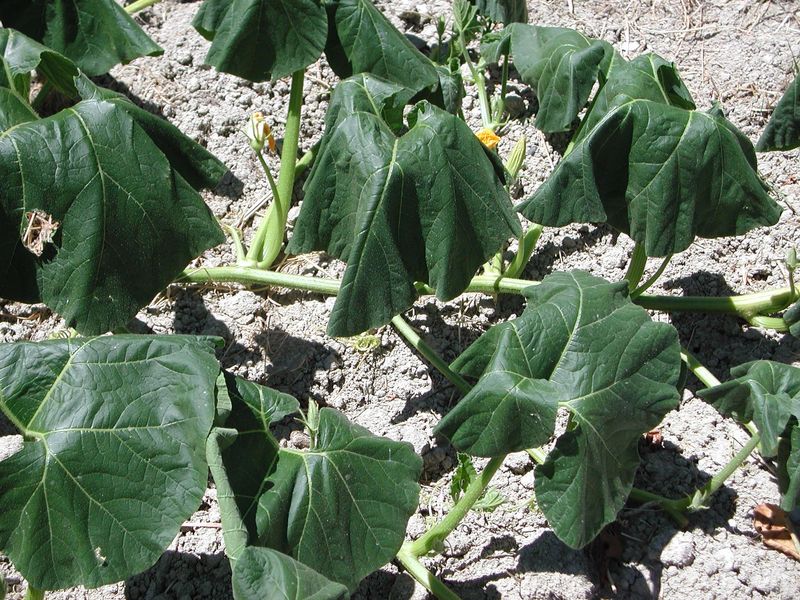
Squash leaves can look alarmingly limp at two in the afternoon even when the plant is perfectly healthy. That kind of midday droop is a normal response to intense heat and high water demand, and it is worth watching before you draw any conclusions.
A plant under ordinary heat or water stress will usually recover on its own once temperatures fall in the late afternoon or evening. Colorado State University Extension guidance on cucurbits notes that this reversible wilting pattern is common and does not, by itself, indicate a pest or disease problem.
If your plant looks fine the next morning, heat stress was the likely culprit.
Persistent wilt that does not improve overnight is a different situation. That pattern warrants checking root-zone moisture several inches below the surface before adding any water.
UConn Extension’s vegetable drought and heat guidance recommends probing the soil rather than watering solely because leaves are drooping.
When the soil genuinely needs water, slow and deep irrigation works better than a quick daily sprinkle. Iowa State University Extension suggests aiming to wet the root zone thoroughly, with roughly one inch per week from rain plus irrigation as a starting point, adjusted for your soil type, mulch, wind, and current weather.
In Florida’s fast-draining sandy soils, you may need to water more often, but UF/IFAS guidance on edible landscape irrigation cautions that saturated soil can damage roots just as drought can. Extra water will not help a plant with a larva inside its stem, and it can make crown or root rot worse.
Compare the other causes of squash collapse
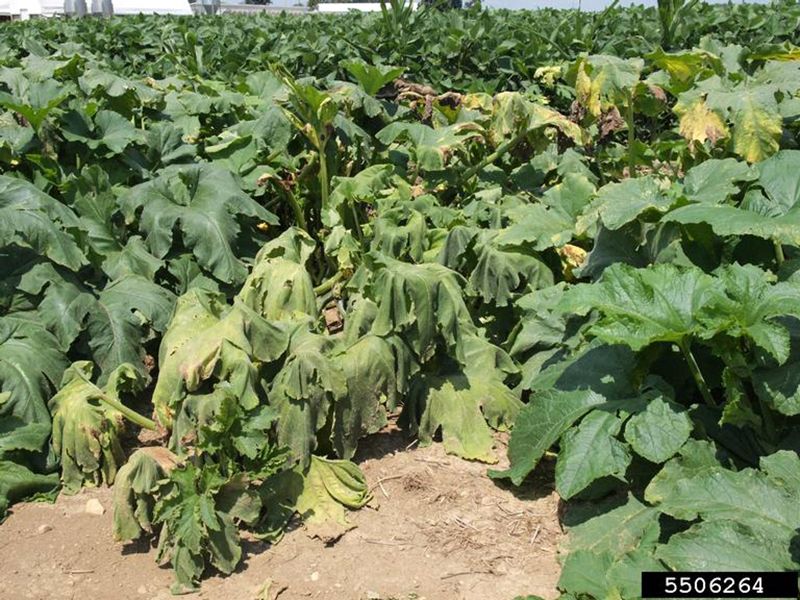
A hole and frass in the stem point toward a borer, but several other problems can bring a squash plant to the ground just as quickly, and some of them look similar at first glance.
Bacterial wilt often starts as daytime wilting that partly improves overnight, then gradually stops recovering. Cucumber beetles may be present in the area, since they carry the bacteria that causes this disease.
A simple field test is to cut a wilted stem, hold the two cut ends together for ten seconds, and then slowly pull them apart. A stringy, thread-like ooze that stretches between the cut surfaces supports a bacterial wilt diagnosis.
University of Minnesota Extension’s squash and pumpkin wilting diagnostic guide notes that squash and pumpkins are less commonly affected by bacterial wilt than cucumbers and muskmelons, so this cause is worth considering but not the first assumption.
Squash bugs cause wilting through sap-feeding, but the evidence you are looking for is the insects themselves, their bronze-colored egg clusters on the undersides of leaves, or the small gray-and-black nymphs, not borer holes and frass. UF/IFAS edible landscape guidance reinforces that each problem leaves its own distinct signs.
Root and crown rot can produce a soft, water-soaked area at the base of the plant, brown lesions, or a sudden whole-plant collapse. Overwatering or prolonged wet soil conditions often contribute.
Virginia Cooperative Extension’s squash vine borer publication also points out that borer wounds can invite opportunistic pathogens, meaning a plant may have both a borer and secondary rot at the same time. One visible clue does not rule out a second underlying problem.
Try a limited rescue only when damage is early
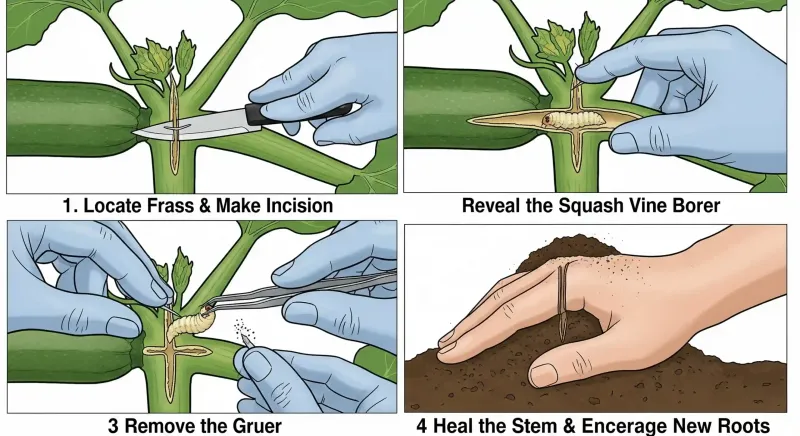
Catching a borer early, before it has worked its way deep into the crown, leaves open a repair option that is worth attempting on a plant that still has firm, viable tissue above and below the damage.
Use a sharp, clean knife to make a careful lengthwise slit in the stem at the point where you found the frass and hole. The goal is to expose the larva so you can remove or kill it, not to cut deeply into the crown or sever the vine.
University of Minnesota Extension’s borer guidance describes this technique and recommends mounding moist soil over the wounded section of stem afterward. Squash can sometimes form supplemental roots from buried stem tissue, which may help the plant compensate for the damaged area.
Keep your expectations realistic going into this. A plant with severe crown damage may not recover regardless of what you do, and the surgery itself adds stress to an already weakened vine.
Even a plant that survives the procedure may produce little additional fruit if the growing season is nearly over or the damage was extensive.
This approach makes sense when the plant still has healthy leaves and visible new growth, the damage appears to be limited to one section of stem, and the season still has enough time left to yield something. A plant that is already collapsed and brown at the crown is probably past the point where stem surgery will help.
Remove plants that cannot recover
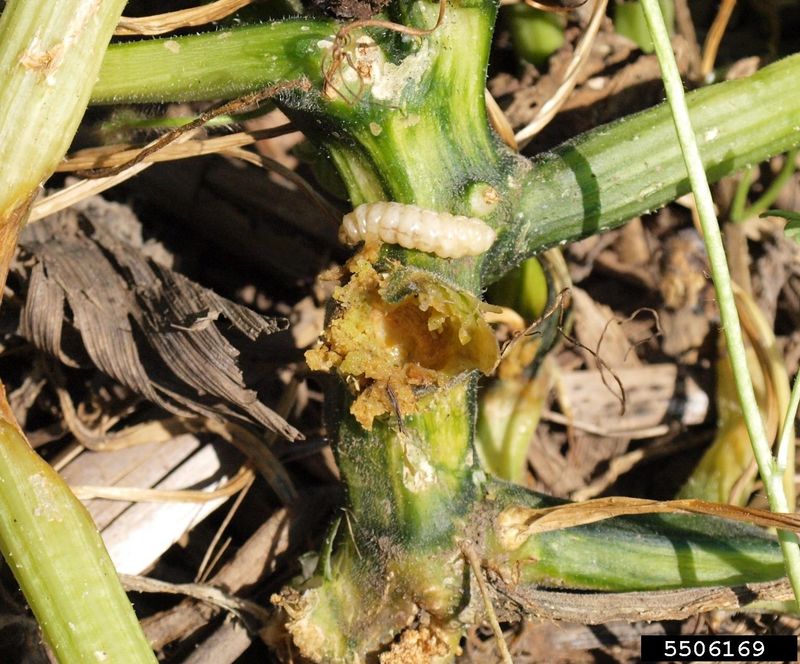
Some plants are too far gone to justify any rescue attempt, and leaving a dead or dying vine in place can create a problem for the next season. When the crown is mushy, the stem is girdled all the way through, and no healthy green growth remains, removal is the right call.
Pull the plant and seal it in a bag before putting it in the trash, or destroy it away from the garden. The goal is to prevent any larvae still inside the stem from crawling out, entering the soil, and pupating there over the winter.
University of Minnesota Extension recommends prompt cleanup specifically to reduce that carryover opportunity.
Crop rotation is a useful follow-up step, but treat it as a pressure-reduction measure rather than a guarantee. Moving squash, zucchini, and pumpkins to a different part of the garden can reduce the number of pupae in any one spot, but Virginia Cooperative Extension notes that adult moths are mobile and can find new squash plantings even after you rotate.
Sanitation and rotation together are more useful than either one alone, but neither eliminates future risk entirely.
Prevent tunneling in the next planting
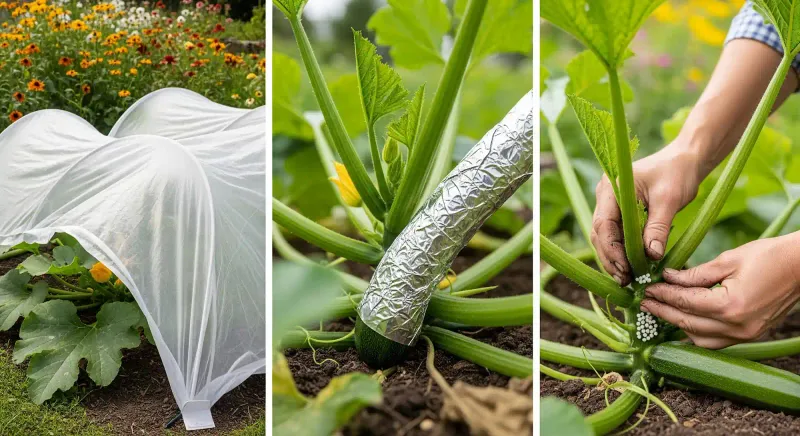
Prevention works best when it starts before the borer does. Frequent scouting around the base of stems, especially checking for adult moths, freshly laid eggs, and any early frass, gives you the best chance of catching a problem before larvae tunnel out of reach.
Timing your planting earlier in the season, where your local conditions allow, can help your plants mature and produce before peak borer activity in your area. Succession planting is another option for keeping fresh, younger vines in the ground when earlier ones finish.
University of Illinois IPM guidance on squash vine borers notes that timing varies considerably by latitude, and southern regions may experience more than one generation of the moth in a season, so there is no single calendar date that applies across Florida and Texas.
Choosing less-preferred squash types is another layer of protection. Many butternut and other Cucurbita moschata varieties are less susceptible to borer damage than summer squash and zucchini.
Less susceptible does not mean immune, so scout these plants too.
Floating row covers can block adult moths from reaching the stem to lay eggs, but they must be removed or opened when flowers appear so pollinators can do their job. If you grew squash in the same bed last year, be aware that placing a row cover over that soil could trap emerging moths underneath it rather than keeping them out.
Insecticides work mainly against exposed eggs or newly hatched larvae before they enter the stem. UF/IFAS borer guidance explains that larvae already tunneling inside the vine are largely protected from surface treatments.
Any product you consider must be labeled for use on the crop and pest; follow the label’s rate, harvest interval, protective-equipment requirements, and pollinator precautions, and avoid applying to open flowers or during active pollinator visits.
Use the next morning’s condition to choose your response
Morning is your clearest window for reading what a squash plant actually needs. A plant that wilted badly in yesterday’s afternoon heat but stands upright again at sunrise most likely dealt with ordinary heat stress, and the right response is to check root-zone moisture before adding water rather than assuming the worst.
A plant still collapsed at dawn, or one that looks worse than it did the evening before, deserves a stem inspection. Check the base for holes, frass, soft tissue, and any signs of insects or disease before deciding between measured watering, a rescue attempt, or removal.
CSU Extension guidance on cucurbits and UMN’s squash wilting diagnostic tool both support using that morning observation as the starting point for any diagnosis.
A squash vine borer is a real and plausible explanation when one plant collapses while its neighbors stay healthy, but the stem evidence, not the heat or the date, is what should guide your next move. The borer leaves a signature; look for it before you decide what the plant needs.