
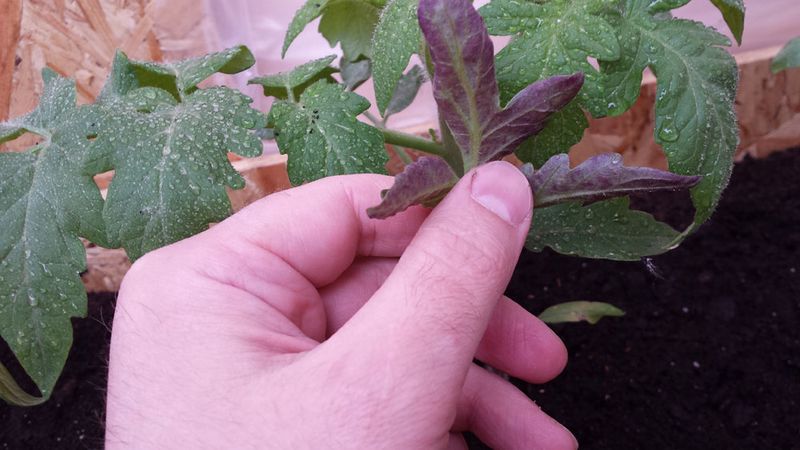
Walking out to your tomato plants and spotting purple or reddish-purple color on the undersides of leaves can feel alarming, especially during a hot stretch of summer. Before you reach for the fertilizer bag, though, that color is a warning sign worth reading carefully rather than treating blindly. The symptom usually points to a problem with how the plant is accessing phosphorus, and several different causes can get in the way of that process. Understanding what you are actually seeing makes the difference between a fix that works and one that wastes time or makes things worse.
Purple undersides point to an uptake problem, not a diagnosis
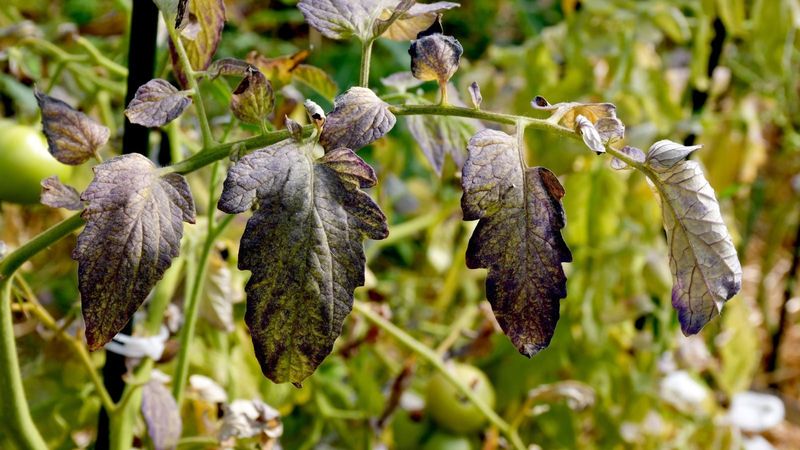
Reddish-purple or deep purple color appearing on the undersides of tomato leaves, along the veins, or on young stems is one of the more recognizable signs that a plant is struggling to access phosphorus. Texas A&M AgriLife Extension lists dark green foliage paired with purple or reddish-purple undersides, veins, and stems as the typical visual pattern of phosphorus deficiency in tomatoes, with older lower leaves often showing symptoms first. Severe or prolonged cases can progress to weak growth, stunting, delayed flowering, or early leaf decline.
Young seedlings and recent transplants are especially prone to this pattern while their roots are still getting established. University of Maryland Extension notes that newly transplanted tomatoes commonly develop purple undersides and stems and that many of these plants recover on their own once roots settle into garden soil.
Here is the part that matters most before you buy anything: the purple color does not prove that your soil is low in phosphorus. A plant can show every classic deficiency symptom while phosphorus sits in the soil unused, blocked from the roots by unfavorable conditions. University of Connecticut Extension frames the symptom as a phosphorus-availability warning, which means the right response is to find out why the plant cannot reach what may already be there, not to automatically add more.
Heat may reveal the problem rather than cause it
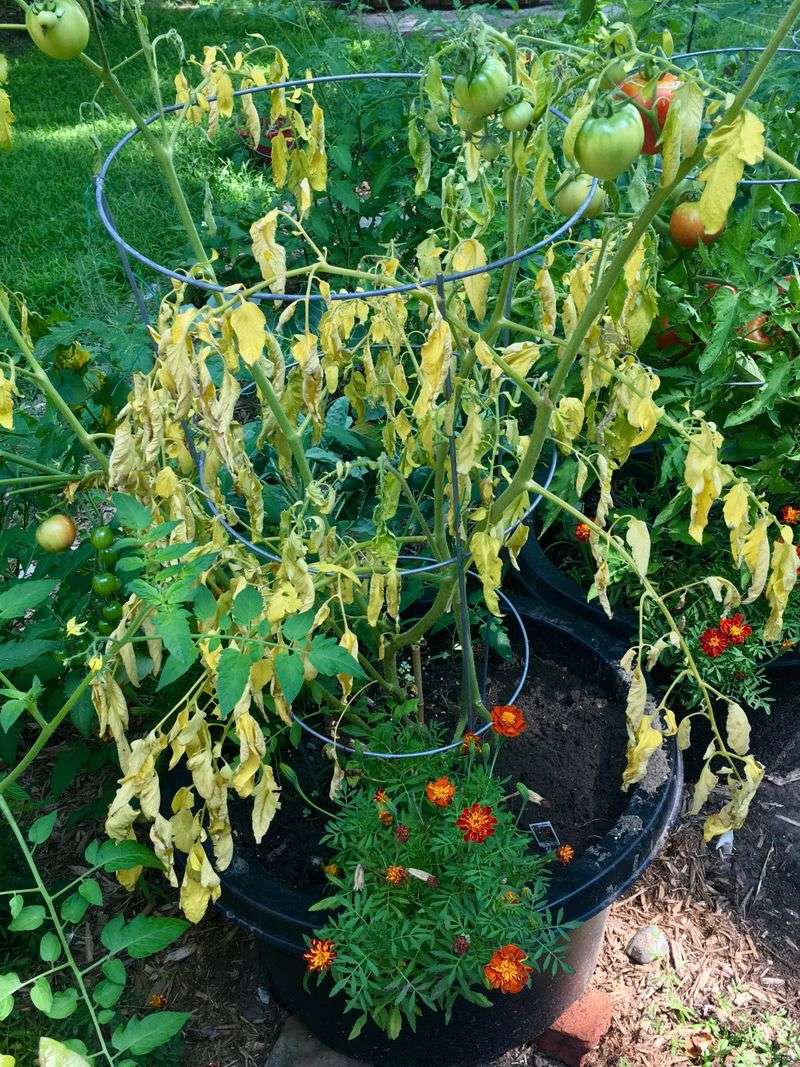
Hot summer weather and purple tomato leaves often show up at the same time, which makes it easy to assume one caused the other. The connection is less direct than it looks. Classic phosphorus-related purpling in tomatoes is most strongly associated with cool soil and cold, sluggish roots, not with high temperatures, and it shows up most often in seedlings and early-season transplants whose roots have not yet spread enough to pull nutrients efficiently.
Texas A&M AgriLife Extension’s phosphorus deficiency guidance focuses on root zone conditions and establishment rather than summer heat as the primary driver. Meanwhile, Penn State Extension describes what heat stress in tomatoes actually looks like: leaf rolling, wilting, blossom-drop problems, and difficulty with fruit set, particularly when air temperatures climb into the roughly 88-102 degrees F range.
What heat can do is expose or worsen a root problem that was already present. A heat wave may cause the soil to dry unevenly, push roots into stress, and reduce the plant’s ability to absorb nutrients, including phosphorus. That sequence can make a borderline uptake problem visible for the first time. UMass Extension notes that temperature effects on phosphorus availability vary by growth stage, cultivar, and whether you are measuring air or soil temperature, so treat any threshold you read as diagnostic context rather than a guaranteed rule for your specific garden.
The pattern tells you when disease deserves attention
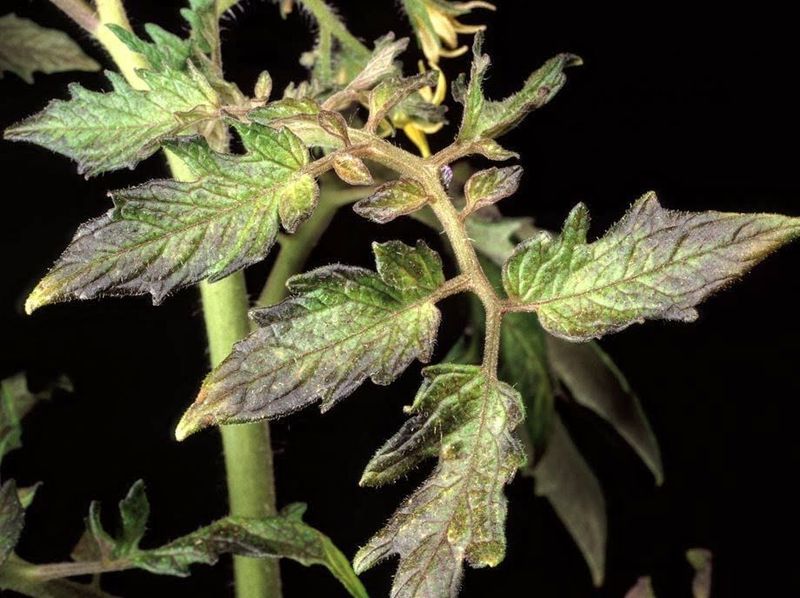
Before reaching any conclusion about fertilizer or disease, spend a few minutes looking at the plant carefully. A phosphorus-uptake problem typically produces a smooth, even purple or reddish-purple cast that follows the veins and covers leaf undersides without creating discrete spots, lesions, or patches of fuzzy growth. Check the newest leaves at the top of the plant. If they look healthy and the plant is still flowering or setting fruit, the situation is less urgent than it might feel.
Disease looks different. Colorado State University Extension describes disease-related problems as involving discrete yellow or brown lesions, spots with defined edges, wilting, distortion, stunting, or a rapid general decline. Those signs call for a different kind of response than a nutrient problem does.
Two diseases sometimes come up when gardeners notice purple on tomato leaves, and both require additional symptoms to identify. University of Minnesota Extension describes tomato leaf mold as producing yellow spots on the upper leaf surface with corresponding olive-gray or brown velvety fungal growth on the underside, and it is most common in high-humidity environments like greenhouses and high tunnels. A smooth purple cast without yellow spots and fuzz is not leaf mold. Curly top virus can cause purpling along veins, but it comes with upward leaf rolling, distortion, yellowing, stunting, or stopped growth.
Purple undersides by themselves are not enough to point to that virus. If you see any of those additional signs alongside the color change, consider contacting your local extension office for a broader diagnosis.
Roots and pH determine whether phosphorus reaches the plant
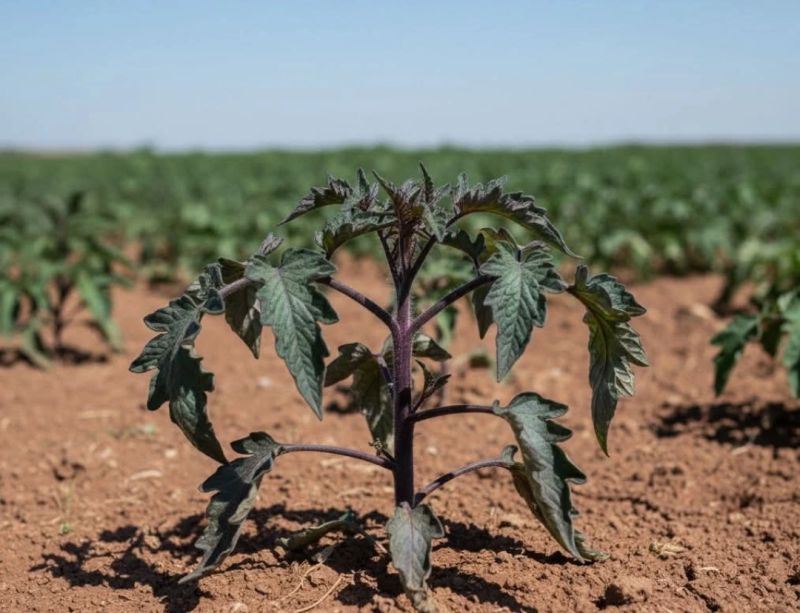
Phosphorus can be sitting in your soil in adequate amounts and still fail to reach the plant. Several conditions create that gap, and identifying which one applies to your garden matters more than adding fertilizer before you know the answer.
Soil pH is one of the most common barriers. UMass Extension puts the optimum soil pH range for tomatoes at approximately 6.2-6.8 and notes that phosphorus availability drops noticeably below pH 6. Root zone temperature also plays a role: cold soil slows root activity and the plant’s ability to pull phosphorus in, which is why the symptom is so common in early-season transplants. Poor drainage and waterlogged soil cut off oxygen to roots, which impairs their function even when the soil has plenty of nutrients.
Drought stress does the opposite, reducing the water movement that carries dissolved phosphorus to root surfaces.
University of Maryland Extension also points to transplant stress as a straightforward contributor: a plant that has not yet established its root system cannot absorb nutrients efficiently regardless of what the soil test shows. Root damage from insects, disease, mechanical injury, or overly aggressive cultivation can produce the same result.
When a plant is stunted, wilting without an obvious water reason, or declining faster than the weather explains, inspect the roots if possible. Discolored, mushy, or rotted roots can block nutrient uptake even in fertile soil. Iowa State University Extension recommends soil testing as the reliable way to determine whether phosphorus and pH are actually part of the problem before any fertilizer is applied.
Stabilize the root zone before adding fertilizer

A plant that is wilting, heat-stressed, or sitting in poorly managed soil is not ready to benefit from fertilizer. Applying nutrients to a tomato under those conditions can worsen salt stress in the root zone without solving the underlying problem. The first priority is getting the growing environment stable enough that roots can actually function.
Start with soil moisture. Inconsistent watering, whether too much or too little, is one of the most common reasons tomato roots struggle during summer. Penn State Extension recommends consistent soil moisture and root-zone protection as the foundation of heat-stress management, ahead of any feeding decision. Check that your drainage is working properly as well: compacted or waterlogged soil robs roots of oxygen and prevents phosphorus uptake no matter how much fertilizer you add.
Mulch is one of the most effective tools available to a summer gardener. A 2-3 inch layer of organic mulch over the root zone moderates soil temperature, slows moisture loss, and reduces the kind of surface drying that stresses roots on hot afternoons. Iowa State University Extension recommends directing water to the soil rather than using overhead watering, which helps keep foliage dry and reduces the splash dispersal of common tomato leaf diseases. Once watering is consistent, drainage is adequate, and the plant is no longer wilting mid-day, you will have a clearer picture of whether the purple coloring is fading with new growth or still needs further attention.
Let the soil test decide whether phosphorus is needed
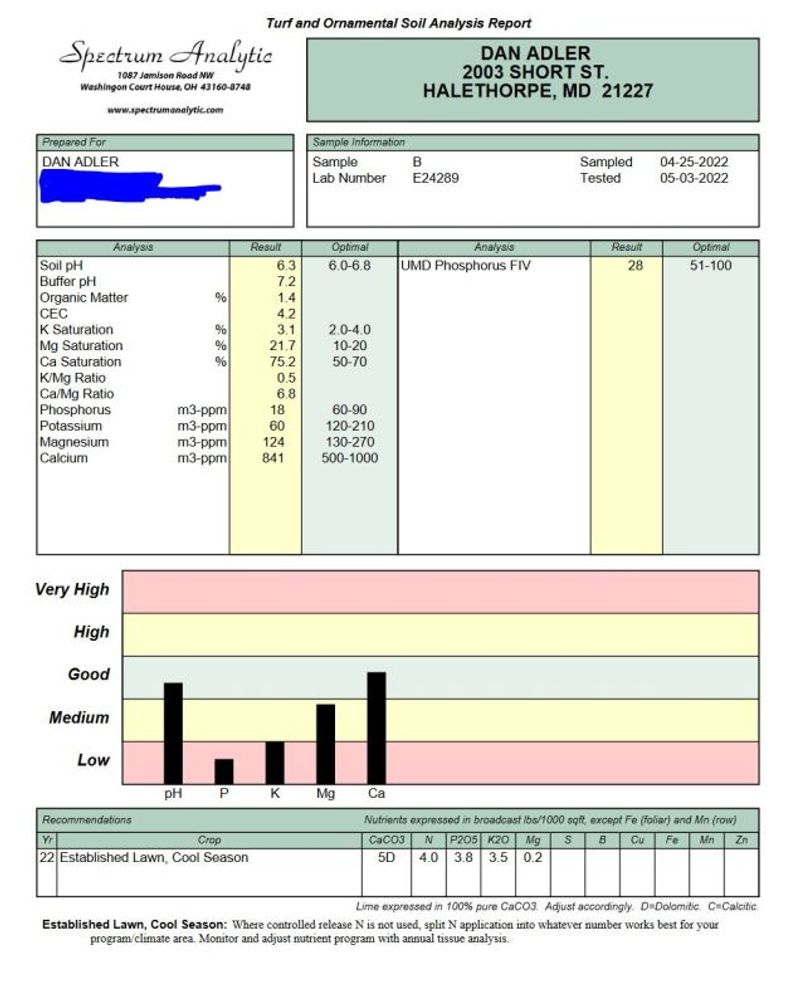
A soil test is the most straightforward way to move from guessing to knowing. Without one, you have no reliable way to tell whether your garden actually needs more phosphorus or whether the issue is pH, root health, or something else entirely. Most state university extension services offer affordable soil testing, and many county offices can direct you to a reputable lab.
When a test shows genuinely low phosphorus, follow the recommended product and rate that comes with the report and apply it according to the product label. UC Statewide IPM Program guidance on tomato fertilization notes that phosphorus applications are most effective before planting or at transplanting, when roots are establishing and the nutrient can be incorporated into the root zone. Repeated casual midseason additions are not how extension programs generally recommend managing phosphorus.
If the test shows medium or high phosphorus already in your soil, adding more is unlikely to help and can create new problems. Iowa State University Extension’s home-garden fertilizer guidance recommends zero additional phosphorus for soils that test above the adequate range, and UC IPM similarly states that yield response to phosphorus fertilizer is unlikely when soil-test levels are already high. Excess phosphorus can throw off the balance of other nutrients and contribute to environmental runoff. If the test shows the real issue is pH, correcting pH with lime or sulfur according to the test’s recommendation may restore phosphorus availability without adding any phosphorus at all.
Judge recovery by new growth, not old leaf color
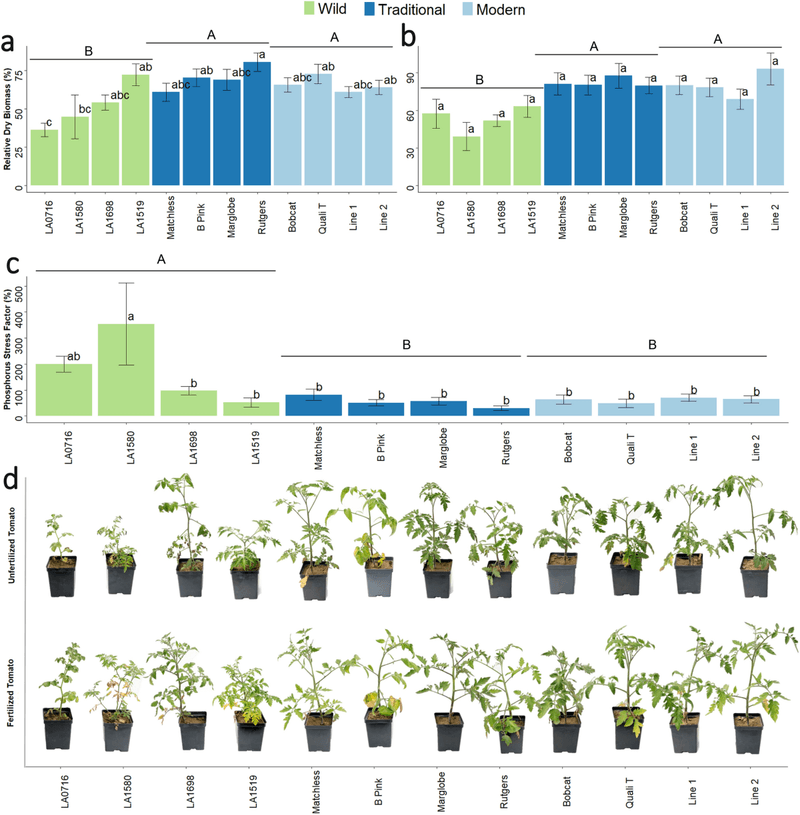
Once you have stabilized moisture, addressed drainage, and applied any fertilizer that a soil test actually supports, resist the urge to judge the outcome by looking at the leaves that already turned purple. Existing discoloration in older tissue often persists because the plant does not reclaim the pigment once it forms. University of Connecticut Extension’s phosphorus deficiency guidance points to healthy new growth as the more useful recovery signal: fresh leaves coming in green, continued flowering, and normal fruit development indicate the plant is moving in the right direction.
Not every persistent purple pattern traces back to phosphorus or the conditions that affect its uptake. University of Florida IFAS research on tomato purple leaf disorder describes a separate condition whose expression varies by cultivar and light level, unrelated to nutrient deficiency. If your plant continues to show purple coloring after root conditions and pH have been corrected, the plant is vigorous, and soil phosphorus tests adequate, the cause may be genetic or light-related rather than nutritional. That kind of persistent, unexplained pattern is worth bringing to your local extension office rather than treating with more fertilizer.
The practical sequence that protects your plants without overcomplicating things: look at the pattern carefully, stabilize the root zone, run a soil test, and feed only when the results give you a reason to. A tomato that gets consistent water, good drainage, appropriate pH, and mulched roots is already set up to outgrow a temporary uptake problem on its own.