
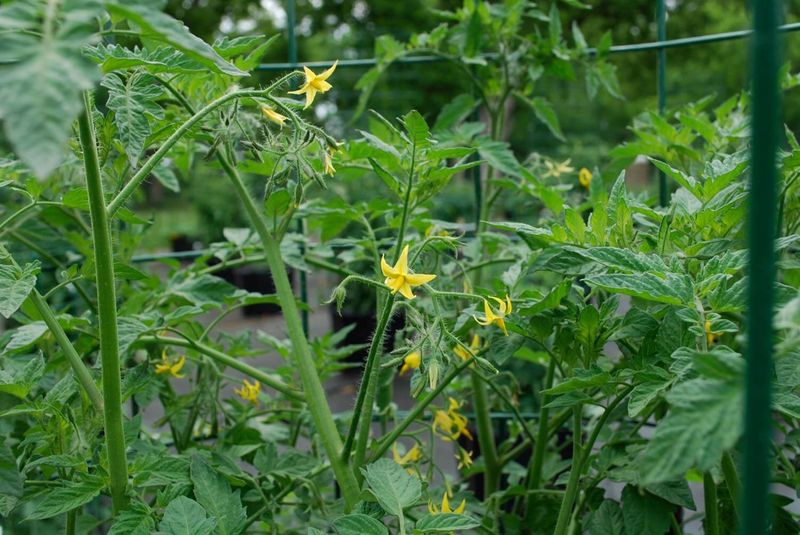
Watching a tomato plant push out leaf after leaf while flowers dry up and fall before setting a single fruit is one of the most frustrating things a Southern gardener can face. The plant looks healthy, maybe even too healthy, yet the harvest never comes.
Warm nights are often at the heart of the problem, but the full story depends on which symptoms you are actually seeing. Knowing the difference between heat-related blossom drop and a few other common causes will help you respond in the right way without wasting time on fixes that do not fit.
Start with the blossom pattern
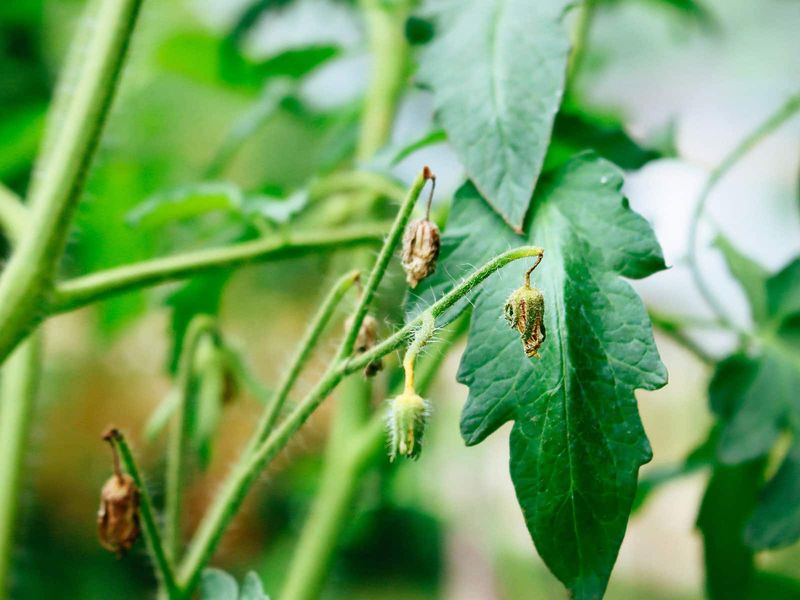
Before reaching for fertilizer or shade cloth, take a few minutes to observe exactly what is happening with your plant’s flowers. Three distinct patterns point toward three different problems, and treating the wrong one wastes time and can make things worse.
The first pattern is a plant that produces almost no flowers at all, even though its foliage is unusually vigorous and deep green. That combination warrants a closer look at nitrogen levels, available sunlight, the plant’s growth habit, or possible disease rather than heat stress.
Iowa State University Extension guidance on poor fruit set lists insufficient light, excessive nitrogen, and cultivar differences as reasons flowers may fail to appear in the first place.
The second pattern is the one most Southern gardeners recognize in midsummer: flowers open, look normal for a day or two, then turn yellow or brown, dry up, and drop without forming fruit. When this happens during a stretch of warm nights, heat stress alongside moisture fluctuation, humidity, or wind is a more direct explanation than nitrogen.
The third pattern is tiny fruit that starts forming and then stops developing. This can involve heat, inconsistent soil moisture, nutrient or root problems, disease, or cultivar sensitivity.
University of Maryland Extension’s fruit-set resource notes that several stressors can interrupt development at different stages. Run through this quick checklist before acting: Are flowers forming at all?
Are nights staying warm? How consistent is your watering?
Have you fertilized recently and heavily? Is the plant getting at least six to eight hours of direct sun?
Are there any signs of disease, insects, or root trouble?
Why hot nights disrupt tomato fruit set
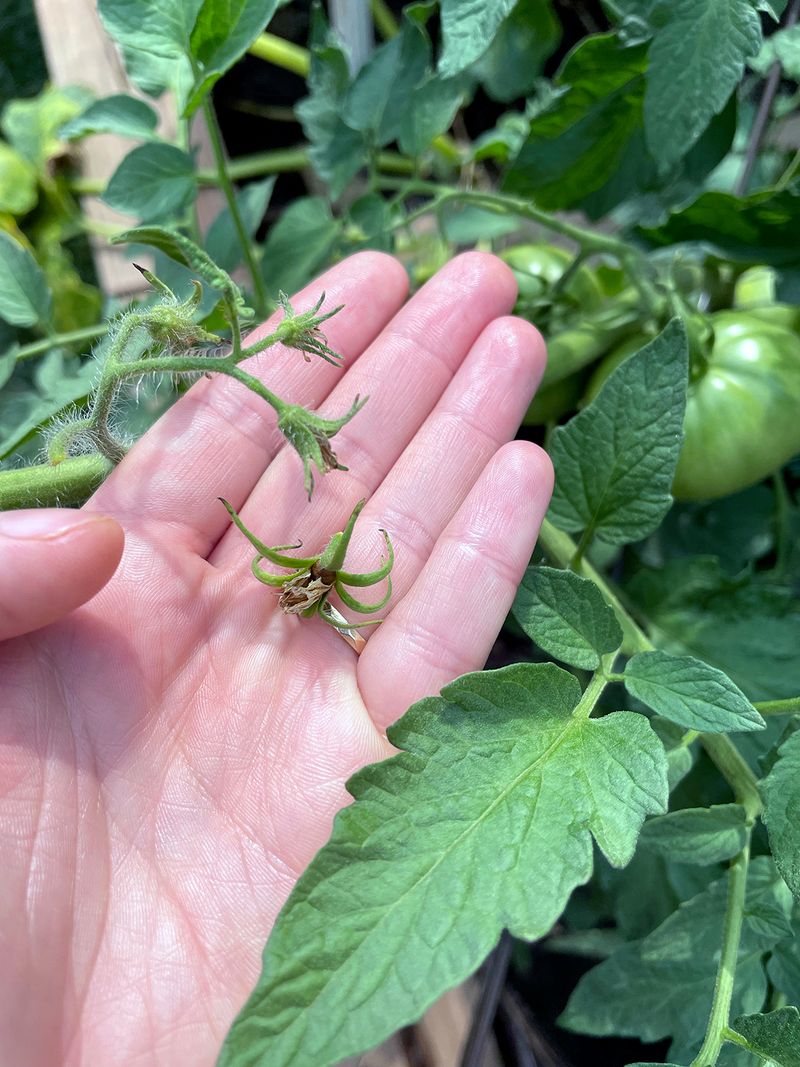
Tomatoes evolved in a climate with warm days and relatively cool nights, and their reproductive process reflects that preference. When nights stay persistently warm, a chain of events inside the flower can quietly shut down fruit set even while the plant continues growing vigorously above ground.
Heat can reduce the amount of viable pollen a flower produces, make existing pollen less able to germinate, and interfere with the pollen tube’s ability to reach the ovule and complete fertilization. If fertilization does not happen within a narrow window after the flower opens, the blossom or the tiny developing fruit that follows will abort.
Alabama Cooperative Extension’s blossom-drop guidance identifies high temperatures as a primary driver of this process in Southern gardens.
Fruit set is generally more reliable when overnight lows stay roughly in the 60 to 70 degree Fahrenheit range. Problems often become more noticeable when nights remain around 70 to 75 degrees or higher, especially when daytime temperatures are also climbing above 85 to 90 degrees.
UF/IFAS Extension notes that large-fruited varieties may continue blooming but stop setting fruit when average nighttime temperatures approach 80 degrees. These are practical ranges rather than hard cutoffs because cultivar, fruit size, humidity, plant water status, and the duration of the hot spell all influence how a plant responds.
High humidity and drought stress are related but distinct problems. Very high humidity can prevent pollen from releasing freely, while very dry air or dry soil can desiccate flowers and compound water stress.
The combination of heat and humidity is especially hard on tomatoes, but the mechanism is not identical in every weather pattern. Check your overnight lows and how long the warm spell has lasted, not just the afternoon high, before deciding heat is the culprit.
When nitrogen deserves suspicion
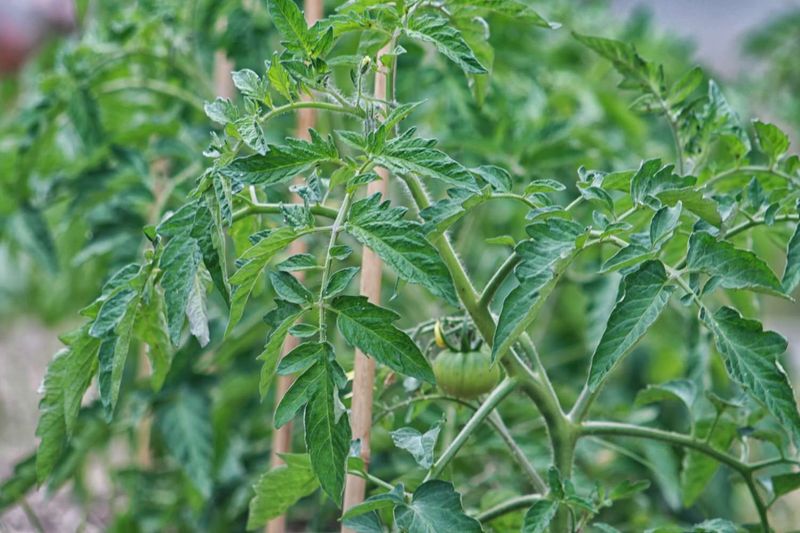
Nitrogen gets blamed for a lot of tomato problems it did not cause, so it helps to know when the evidence actually points in that direction. The nutrient promotes vegetative growth, which is useful early in the season but can work against fruit production when applied in excess during the flowering stage.
Nitrogen excess becomes a credible explanation when the plant shows unusually lush, dark green growth, produces few or no flowers despite being well past transplant size, and has recently received heavy applications of fertilizer or fresh manure. UF/IFAS Extension Sarasota County’s fruit-set explainer describes how excess nitrogen can push a plant toward producing more leaves and stems at the expense of flowers and fruit.
That is a different situation from a plant that is flowering normally and then losing those blossoms during a heat wave.
Also worth noting: indeterminate tomatoes naturally produce a lot of foliage while they flower and fruit. A leafy plant is not automatically an overfertilized plant.
The key signals are the unusual darkness of the green, the near-absence of flower buds despite vigorous growth, and a clear history of heavy feeding.
If nitrogen excess seems plausible, stop routine high-nitrogen feeding while you investigate. Do not automatically add phosphorus, potassium, Epsom salts, or a bloom-booster product as a counterbalance.
Alabama Extension’s blossom-drop resource does not support those additions as reliable general solutions, and excess fertilizer of any kind can raise salt concentrations around roots and create a different kind of stress. A soil test is the right way to find out what the plant actually needs before adding anything.
Reduce moisture and root-zone stress
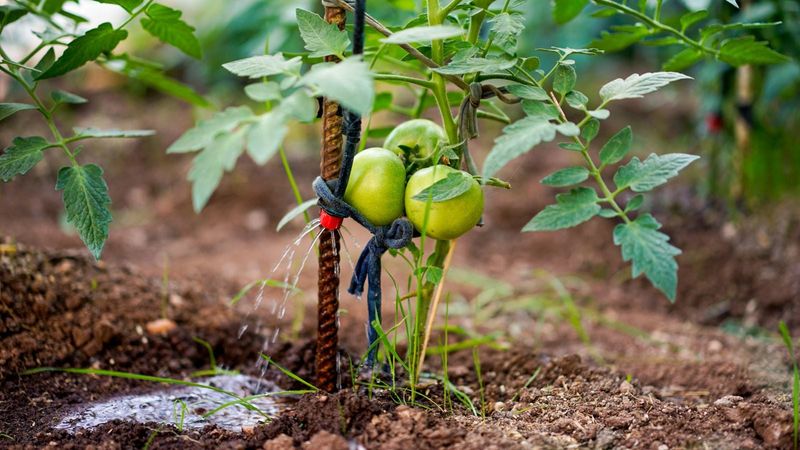
Consistent soil moisture is one of the most practical things you can manage when tomatoes are struggling in summer heat. Stress from drought, excessive watering, or wide swings between wet and dry conditions can each contribute to blossom drop, adding to whatever heat or humidity the plant is already dealing with.
Deep, infrequent watering works better than light, frequent sprinkling because it encourages roots to reach further into the soil where moisture lasts longer and temperatures are more stable. UF/IFAS Gardening Solutions recommends roughly 1 to 2 inches of water per week for tomatoes, applied in deep soakings rather than shallow passes.
That figure is a general guideline, not a universal rule. Adjust it based on how much rain you have received, your soil type, whether plants are in containers, and how extreme the heat has been.
Containers dry out much faster than in-ground beds and may need water daily during a heat wave.
Mulching the root zone is a simple step that pays off in two ways: it slows moisture evaporation from the soil surface and helps buffer soil temperature against the worst afternoon heat. University of Delaware Cooperative Extension’s heat-stress guidance recommends mulch as a practical tool for keeping roots more comfortable during hot spells.
Apply a 2 to 3 inch layer of straw, shredded leaves, or another organic material, but keep it slightly pulled back from the base of the stem to reduce the risk of crown rot or stem disease at the soil line.
Even with good watering habits and mulch in place, these steps reduce added stress rather than reverse heat damage that has already occurred. Pollen that has already been damaged by prolonged high temperatures will not recover, but protecting the root zone gives the plant a better foundation for the flowers it produces next.
Use temporary shade with restraint
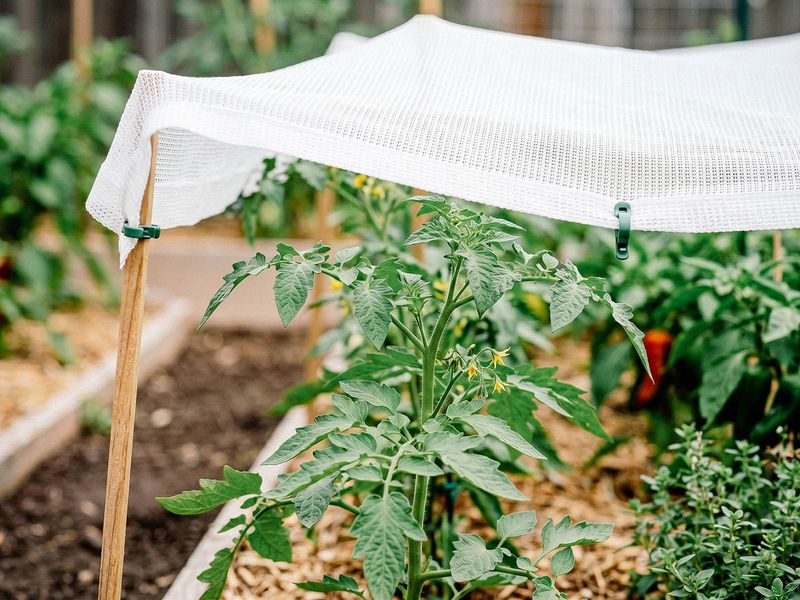
Shade cloth is sometimes presented as a quick fix for heat-stressed tomatoes, but its value depends entirely on how it is used. Installed correctly, it can take the edge off the most intense afternoon heat without cutting off too much of the light the plant needs to keep growing and flowering.
Approximately 30 percent shade cloth is a reasonable starting point for temporary heat relief. It reduces heat load while blocking less light than heavier grades of shade fabric.
University of Delaware Cooperative Extension’s heat-stress resource supports shade as a practical intervention during the worst conditions, and University of Maryland Extension’s guide on beating heat in vegetable production similarly notes shade as a tool for reducing plant stress during extreme weather.
Hang the cloth above the plants rather than draping it directly over the foliage so that air can still move freely around the leaves and stems. Secure it well against wind, since a loose cloth that flaps and collapses onto plants can cause physical damage and trap heat instead of reducing it.
Remove or roll it back on cooler or cloudy days so the plant keeps receiving adequate light for photosynthesis.
Heavy shade causes its own problems by reducing the energy the plant produces, which can delay recovery rather than speed it up. Wet foliage held under a tight canopy can also encourage fungal disease.
Shade cloth is a temporary measure during the worst of summer heat, not a substitute for appropriate planting timing or a cure for blossoms that have already aborted.
Pollination assistance has limits
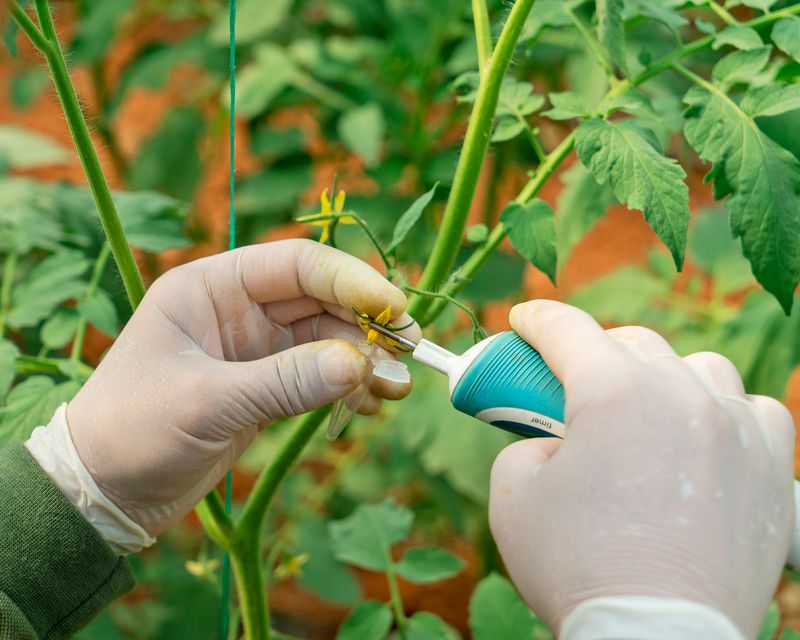
Tomatoes are self-pollinating, which means each flower carries both male and female parts and does not need a bee to move pollen between separate plants. Under ordinary outdoor conditions, wind and the natural movement of the plant handle the gentle vibration needed to shake pollen loose inside the flower and get it where it needs to go.
Gently vibrating flower clusters by hand during the warmest part of the day can help in a few specific situations: a sheltered patio where there is very little air movement, a covered porch planting, or a greenhouse. University of Arizona Cooperative Extension’s tomato-growing guide explains that vibration assists pollen release in settings where wind and plant movement are limited.
A light tap on the stem behind the flower cluster or a gentle shake of the plant is enough.
What hand-pollination cannot do is fix pollen that heat has already damaged. If overnight temperatures have been consistently high enough to reduce pollen viability, moving nonviable pollen from one part of the flower to another will not produce fruit.
The problem is the pollen itself, not the delivery method.
Humidity adds another layer of complexity. Very high humidity can cause pollen to clump and stick rather than releasing freely, while very dry conditions can dry out flowers and worsen moisture stress on the plant.
University of Maryland Extension’s fruit-set guidance identifies both extremes as contributors to poor pollination outcomes. Attracting more bees or other pollinators is not the solution when the underlying issue is heat-damaged pollen or humidity-related pollen failure.
Expect new fruit after conditions improve
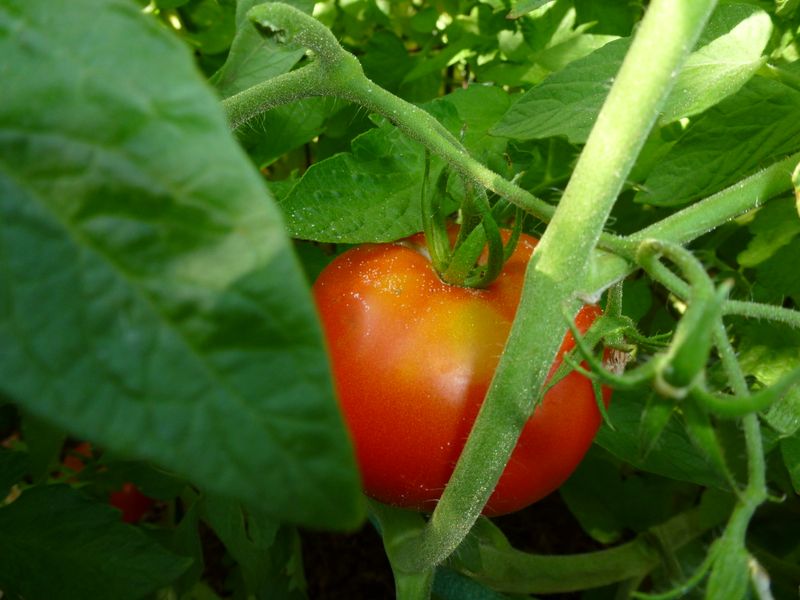
Recovery from a stretch of heat-related blossom drop does not happen by rescuing the flowers that already fell. Those blossoms are gone and will not come back.
What actually signals recovery is new flowers forming and holding on long enough to develop into fruit, which depends on temperatures returning to a range the plant can work with.
Healthy, well-watered plants typically resume flowering and fruit set once nighttime temperatures moderate into a more favorable range. University of Maryland Extension’s fruit-set resource confirms that recovery is realistic when the underlying stress is relieved, though the timeline depends on how long the plant was under pressure and how much of its energy reserves remain.
Keep up consistent watering, maintain the mulch layer, and hold off on any additional fertilizer until you can reassess the plant’s actual condition.
Avoid escalating to blossom-set sprays or hormone products as a shortcut. Extension sources note these products may offer some benefit when cold temperatures are the cause of blossom drop, but they have little reliable effect when heat is the primary problem, and results can be inconsistent with possible fruit malformation.
For future plantings, look for cultivars described by current regional sources or seed suppliers as heat-set, hot-set, or heat-tolerant. UF/IFAS Extension’s tomato production chapter lists varieties including Florida 91, Solar Fire, and Phoenix among those with heat-setting ability, and notes that cherry and grape tomatoes generally hold fruit set over a wider temperature range than many large-fruited types.
Heat tolerance means a variety can perform better under hot conditions, not that it is immune to extreme heat, drought, disease, or fertility problems. Check your local extension service or a regional seed supplier for planting windows and variety performance in your specific area, since timing and cultivar suitability vary across Florida, Texas, and the broader South.
Match the response to the evidence
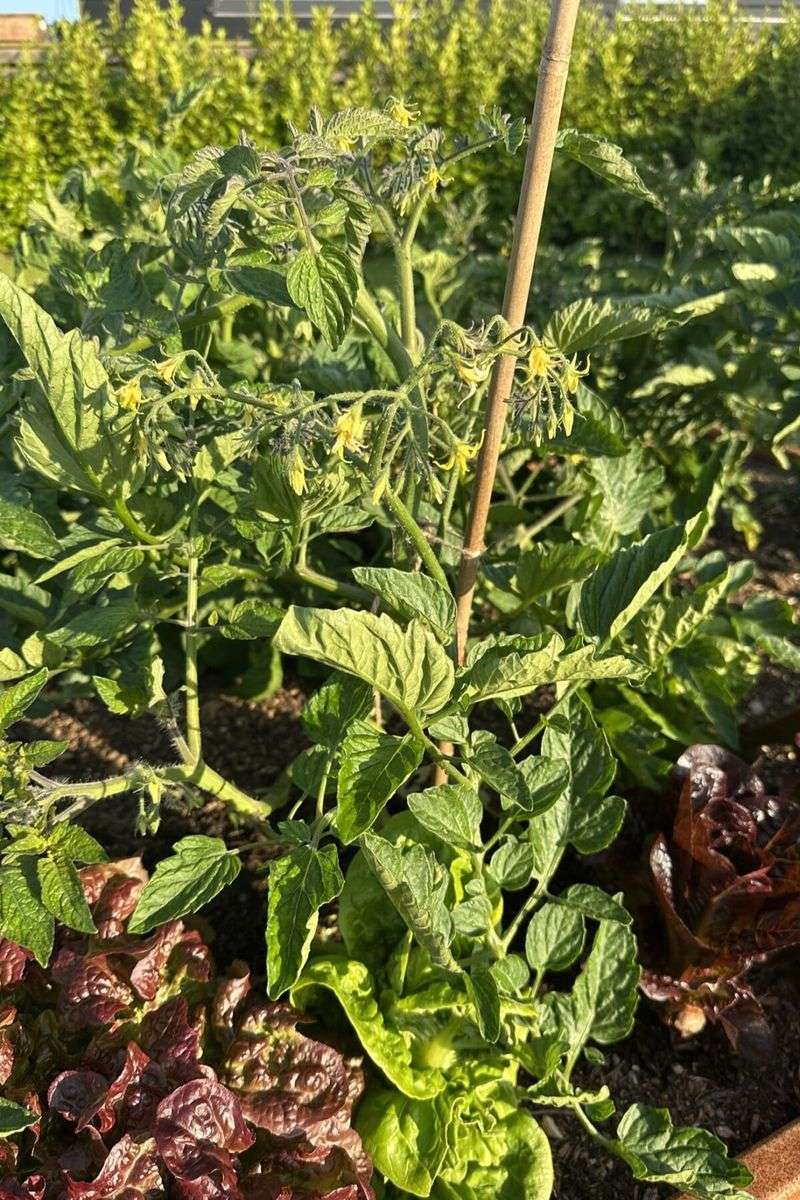
The right response to a tomato plant that is not setting fruit depends on the specific symptoms in front of you, not a universal ranking of causes. Heat and nitrogen are both real possibilities, but they fit different situations.
When flowers are forming and then drying up or dropping during a stretch of warm nights, the most productive place to start is checking nighttime temperatures, reviewing your watering consistency, and considering whether humidity, wind, or cultivar sensitivity is adding to the stress. Alabama Cooperative Extension’s blossom-drop guidance and University of Maryland Extension’s fruit-set resource both point to heat and moisture stress as the leading contributors in that pattern.
When the plant is unusually dark green and lush with sparse flowering after recent heavy feeding, stopping high-nitrogen applications and running a soil test makes more sense than adding shade cloth or hand-pollinating. Iowa State University Extension’s fruit-set FAQ reminds gardeners that light, cool temperatures, disease, insects, root problems, and cultivar differences can all produce a similar-looking outcome.
New fruit forming, not revived old blossoms, is the sign that your plant has turned the corner. If neither the heat pattern nor the nitrogen pattern fits what you are seeing, broaden the investigation before committing to a treatment.