
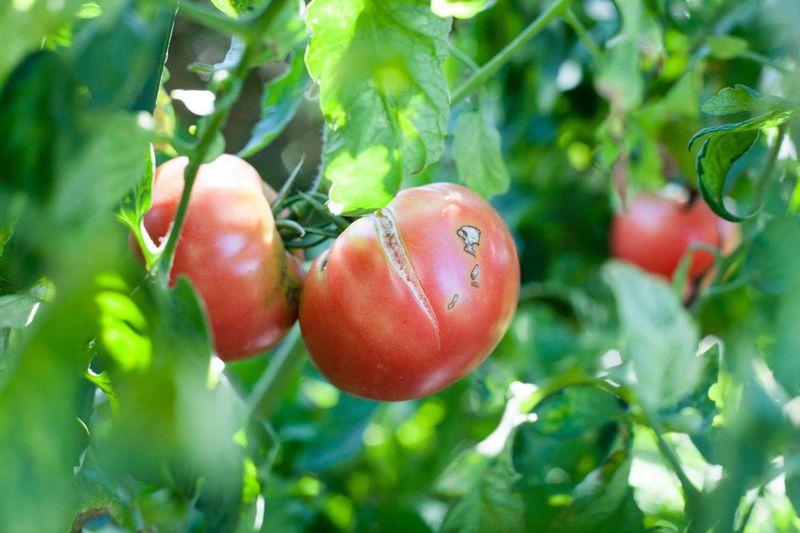
Walking out to your garden and finding a nearly ripe tomato split wide open overnight is one of summer’s most frustrating surprises. The crack can appear suddenly, but the cause has been building quietly in the soil and inside the fruit for longer than you might think.
Understanding what triggers the split puts you in a much better position to protect the tomatoes still hanging on the vine.
The crack pattern usually reveals the problem
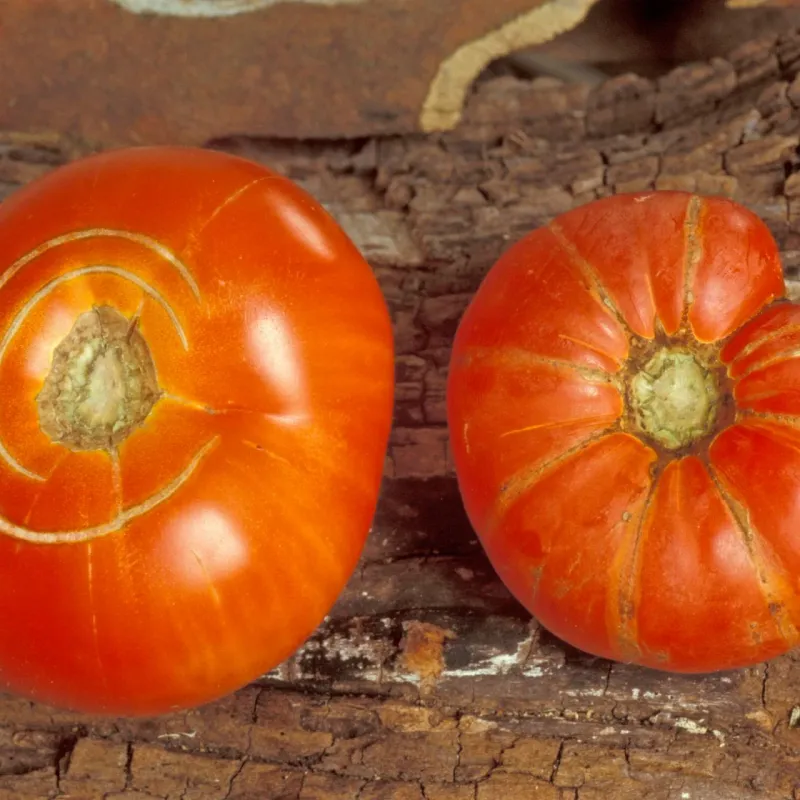
Two distinct crack shapes show up on splitting tomatoes, and knowing which one you are looking at can tell you a lot about what went wrong. Radial cracks run outward from the stem scar like spokes on a wheel, while concentric cracks form rings around the shoulders or stem end of the fruit.
University of Minnesota Extension fruit crack identification guidance describes both patterns as commonly linked to rapid fruit growth and shifts in moisture availability.
Gardeners most often spot these cracks as fruit approaches maturity and color, but green tomatoes are not immune. The skin of a ripening tomato is already under tension as the fruit fills out, so any sudden push from inside can open a split along lines of least resistance near the stem.
Both crack types can appear on the same fruit during a single season, and Texas A&M AgriLife guidance on radial cracking notes that the patterns are a reliable visual flag pointing toward water and growth dynamics rather than a disease or pest. Spotting the pattern early gives you a practical starting point before anything else is checked.
What happens after dry soil gets a sudden drink?
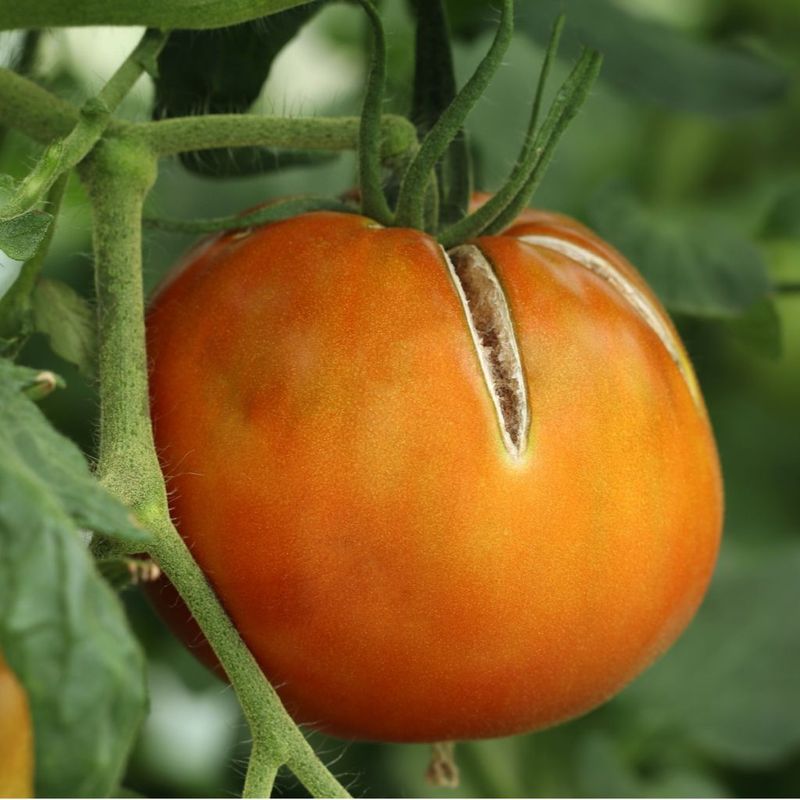
Picture a tomato plant that has been baking in late-August heat for several days with little rain. The soil dries out, the plant loses water through its leaves faster than roots can replace it, and the fruit slows its growth under that moisture stress.
Then a thunderstorm drops two inches of rain, or you give the plant a long corrective soak.
Water suddenly becomes available again, and the plant moves it quickly into the fruit. The interior of the tomato can swell faster than its outer skin is able to stretch, and the skin gives way.
Peer-reviewed research on tomato fruit cracking links this kind of rapid water uptake and growth acceleration to the mechanical failure of the fruit skin, with factors including growth rate, skin elasticity, humidity, and radiation all playing a role in how likely a split becomes.
A gardener may walk outside the next morning and find a large crack that was not there the evening before. That overnight discovery is real, but the full physiological process, including the stress period, the water shift, and the internal pressure building inside the fruit, developed over time rather than in a single night.
Heat acts as an amplifier here: warm conditions increase the rate at which the plant loses water, deepen the moisture gap, and can speed up fruit growth once water returns, making the swing from dry to wet more damaging than it would be in cooler weather. Heat alone, though, does not explain the crack.
The sharp change in water availability is the stronger recurring cause, as University of Georgia Cooperative Extension tomato disorder guidance consistently emphasizes.
Heat is only one part of the cracking equation
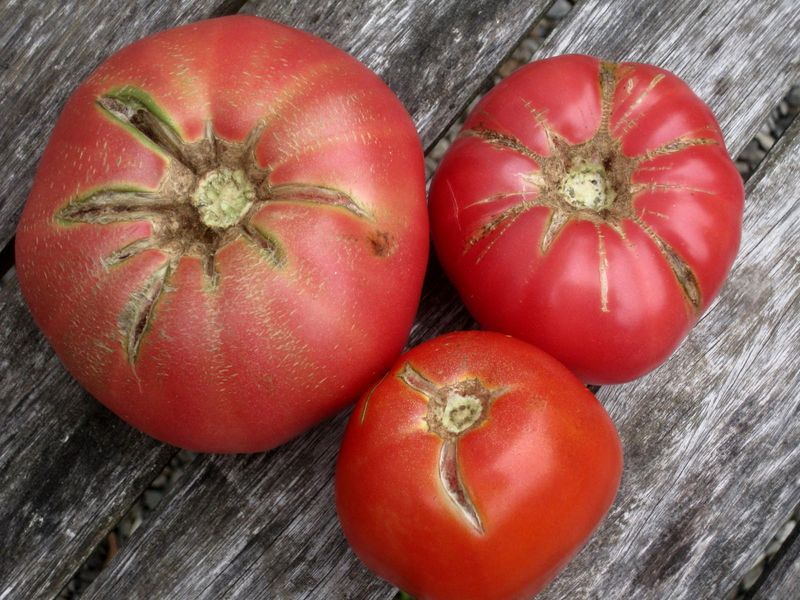
Some tomatoes crack more readily than others, and variety plays a bigger role than many gardeners expect. Large-fruited types and many beloved heirloom varieties carry skin that stretches less easily, making them more vulnerable when growth accelerates.
Smaller-fruited varieties often show more resilience, though no cultivar is fully immune under every combination of heat, rain, and soil moisture.
Fruit nearing maturity is especially susceptible because the skin has already been stretched close to its limit and the tomato is still taking up water. Warm temperatures, high humidity, and conditions that push rapid fruit development all raise the odds of a split, as published research on the physical and genetic factors behind fruit cracking explains.
Skin properties, growth rate, solar radiation, and cultivar genetics each contribute, so the process is not reducible to a single cause.
Excessive nitrogen fertilization can also push lush, fast vegetative and fruit growth that increases susceptibility. Fertilizing based on actual crop needs, and using a soil test where possible, is more useful than applying nutrients as a reaction after cracks appear.
University of Georgia soil fertility guidance for tomatoes reinforces that nitrogen management should follow crop demand rather than serve as a corrective measure. A gardener with a susceptible heirloom variety may see cracking even with reasonably consistent irrigation during a stretch of weather that strongly favors rapid growth, which is worth knowing before blaming the watering routine entirely.
Handle cracked fruit before the wound turns into decay
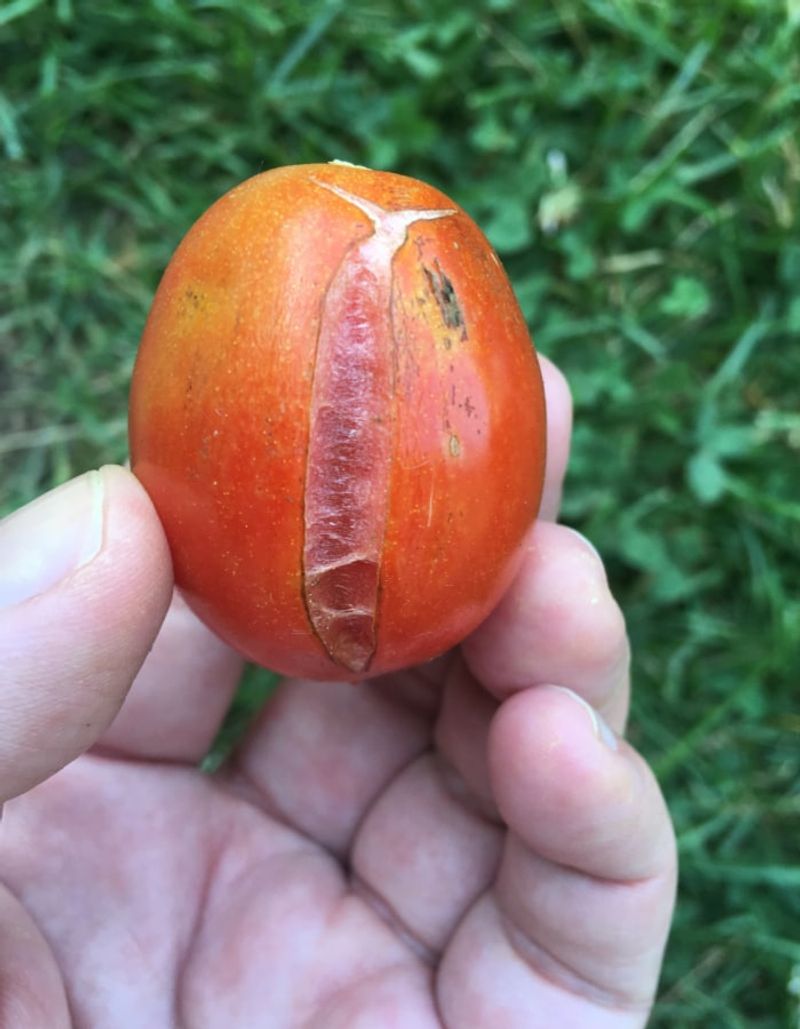
A split tomato is not automatically a lost tomato, but it does need your attention quickly. Cracking is generally a physiological disorder rather than a disease, meaning the split itself was not caused by a fungus or bacterium.
The problem is that an open crack creates an entry point, and Texas A&M AgriLife notes that secondary fungi, bacteria, and decay organisms can colonize a crack quickly, especially in hot, humid, or rainy conditions common across the South.
Only clean, firm tomatoes with a limited crack and no mold, foul odor, softness, or visible decay should be considered for prompt fresh use. Wash the fruit thoroughly, then cut away the cracked area with a generous margin.
USDA food safety guidance on produce supports washing and trimming damaged areas from otherwise sound fruit before eating fresh.
Discard any tomato that shows mold growth, a bad smell, extensive softness, heavy decay inside the crack, or widespread contamination. These are not candidates for washing and trimming.
Do not use cracked, diseased, or overripe tomatoes in home-canned salsa or other preserved products unless a tested recipe specifically permits them; University of Minnesota Extension canning guidance is clear that damaged tomatoes can affect the safety of home-canned products. These steps manage what you have already lost rather than repair the crack, so the real goal is to get ahead of future splits before they happen.
Steady root-zone moisture reduces the next round of splits
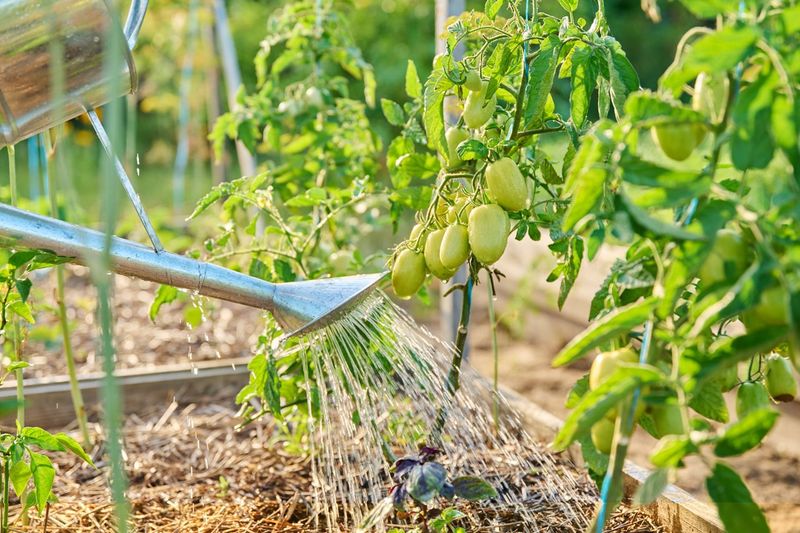
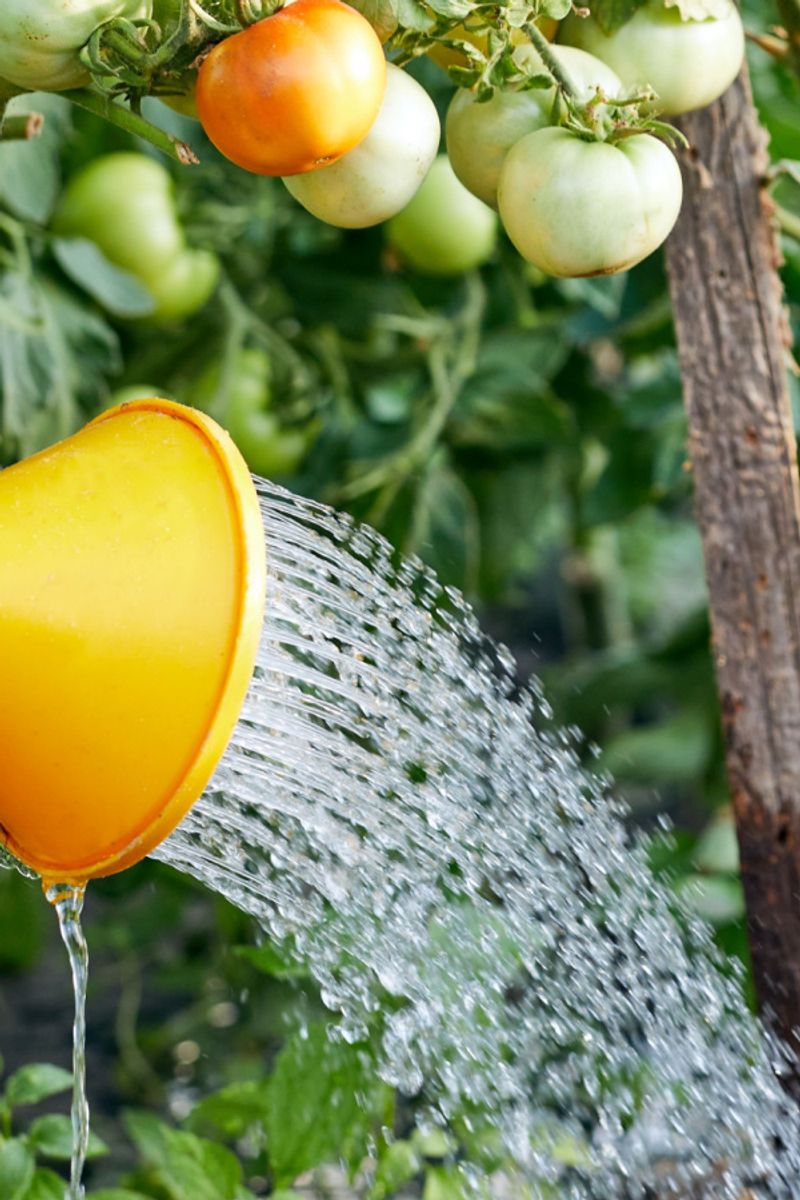
The most reliable way to reduce future cracking is to keep soil moisture as even as practical rather than letting it swing between very dry and very wet. Water thoroughly at the root zone and adjust how often you water based on your soil type, container size, plant size, recent rainfall, wind, and the heat and humidity of your specific location.
University of Minnesota Extension irrigation guidance for vegetables emphasizes watering at the root zone and responding to actual soil conditions rather than following a fixed calendar schedule.
Drip irrigation or a soaker hose makes consistent root-zone watering easier and keeps foliage drier, which can also reduce some leaf and fruit disease pressure. Mulch applied around the plant, with a small gap left near the stem, can slow evaporation and moderate soil temperature, shrinking the size of wet-dry swings between rain events.
UF/IFAS mulching research supports using organic mulch as a tool for moderating soil moisture and temperature in Florida vegetable gardens. Mulch will not prevent cracking during a heavy downpour, but it reduces the baseline stress that makes a rain event so damaging.
Southern conditions vary considerably. Florida’s fast-draining sandy soils can dry out quickly between waterings, and UF/IFAS tomato growing guidance recommends consistent watering and mulch to manage that challenge.
In Texas, high temperatures and low humidity can raise water demand well above what a once-a-week schedule covers, as Texas A&M AgriLife water-use guidance makes clear. Check the soil before adding water, and account for any rain that has fallen rather than automatically delivering a large corrective soak.
Harvest timing and plant choices can protect the remaining crop
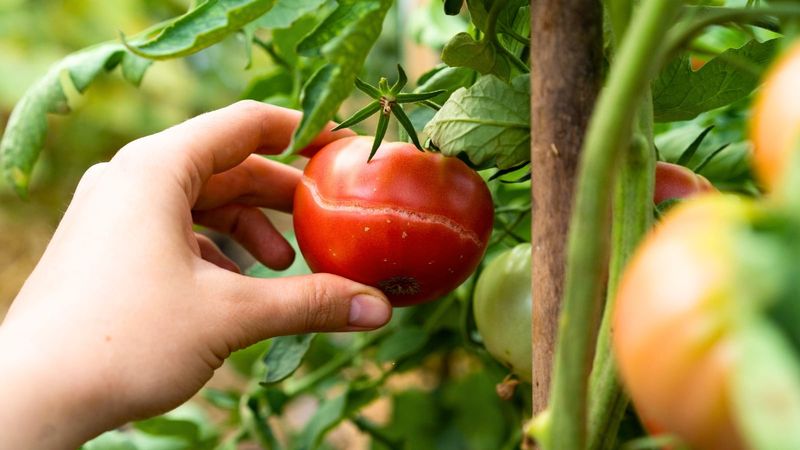
When cracking keeps showing up on the same plants, harvesting fruit a little earlier is one of the most practical adjustments available. Tomatoes that have reached the breaker or pink stage, meaning color change has begun, can finish ripening indoors at room temperature away from direct sunlight.
Oklahoma State University Extension horticulture guidance recommends harvesting at the breaker stage as a way to reduce the time fruit spends exposed to late-season rain and moisture swings. Indoor ripening does not heal a crack that already opened, but it keeps sound fruit out of harm’s way.
Variety selection matters for the long term. Crack-resistant types may reduce how often splitting occurs, while large-fruited and many heirloom cultivars tend to be more susceptible.
University of Minnesota Extension tomato disorder guidance lists variety selection as a practical management tool while noting that resistance is not immunity and results vary with growing conditions. If a particular variety cracks every season despite your best efforts, trying a smaller-fruited or specifically crack-resistant type next year is a reasonable step.
Nitrogen management connects to this section too. Avoiding excessive fertilization reduces the kind of rapid, lush growth that makes fruit more susceptible.
Base fertilizer applications on crop needs or a soil test rather than applying nitrogen as a post-crack remedy. Preserving enough foliage to shade developing fruit is equally important: avoid severe pruning because sudden leaf loss can expose tomatoes to intense sunlight and cause sunscald, a separate problem covered in the next section.
University of Georgia tomato disorder guidance specifically warns against removing too much canopy at once.
Not every damaged tomato has a growth crack
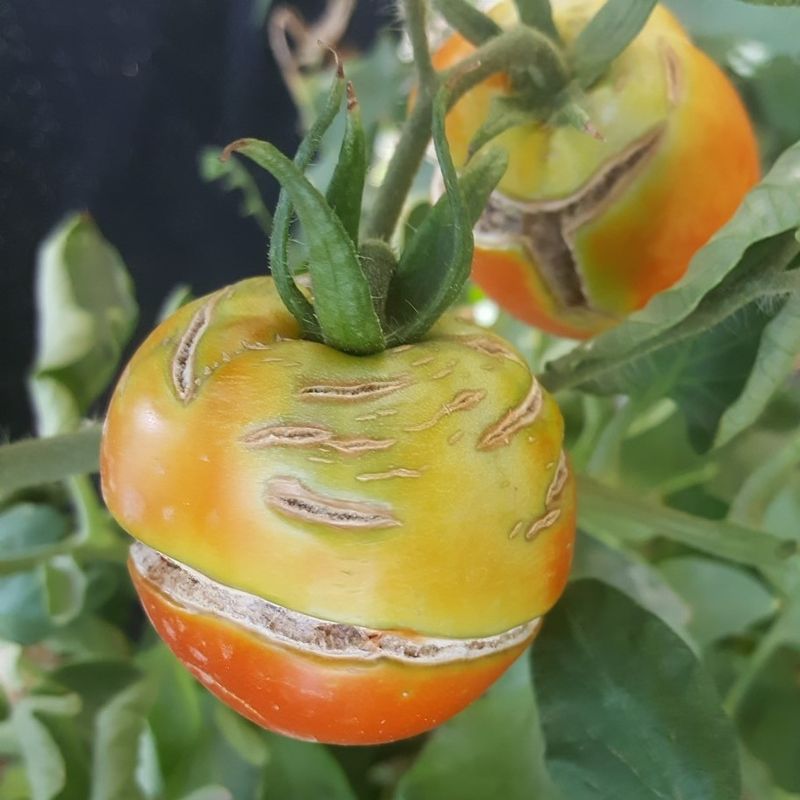
Growth cracking is easy to misidentify when other tomato problems are present at the same time, and the wrong diagnosis can lead to the wrong fix. A growth crack splits the skin near the stem or forms a ring around the shoulders.
Sunscald looks completely different: it creates a pale, yellow, white, gray, or papery patch on the side of the fruit that faced the most intense sunlight, and it usually follows a period of sudden foliage loss that left fruit exposed. University of Georgia Cooperative Extension tomato disorder guidance distinguishes sunscald clearly from growth cracking and ties it to canopy management rather than moisture swings.
Blossom-end rot is a third distinct problem. It produces a dark, leathery, sunken area at the blossom end of the fruit, the end opposite the stem.
University of Minnesota Extension irrigation guidance connects blossom-end rot to calcium movement problems during uneven moisture conditions. Applying calcium sprays or supplements simply because fruit looks damaged is not a reliable general solution, and it will not address growth cracking at all.
Correct identification determines what action actually makes sense. A stem-end split points toward moisture consistency and, when relevant, variety choice.
A pale sun-damaged patch calls for protecting remaining foliage rather than pruning more of it away. A dark sunken blossom-end lesion signals a need to stabilize watering so calcium can move through the plant more reliably.
Oklahoma State University Extension home tomato guidance reinforces that each disorder has its own management path.
Consistent care lowers the odds, even when summer stays extreme
Pulling the whole picture together comes down to a short sequence. Spot a stem-end or shoulder split and recognize it as a sign that rapid fruit growth outpaced the skin, likely triggered by a sharp moisture swing made worse by summer heat.
Harvest firm fruit that has begun to change color before the next rain event gives it a chance to split. Keep root-zone moisture as even as your soil, containers, rainfall, and local heat allow, using mulch and drip irrigation as supporting tools rather than guarantees.
University of Georgia homegrown tomato guidance and University of Minnesota Extension tomato disorder resources both acknowledge that genetics, heavy rain, high humidity, and conditions that strongly favor rapid growth can still produce some cracks even in well-managed gardens. The realistic goal is to reduce how often splitting happens and save more of the crop, not to produce flawless fruit in every Southern summer.
A garden that cracks less is built on steadier habits rather than a single fix, and every split you prevent is a tomato that makes it to the table.