
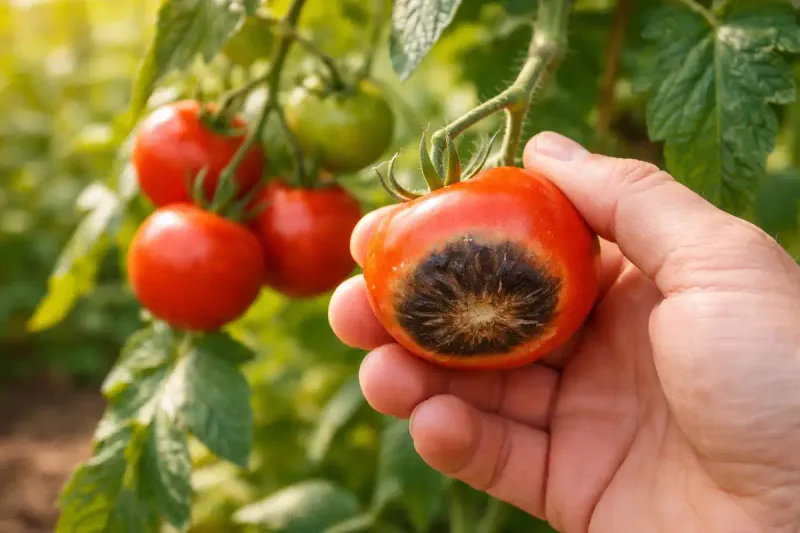
Spotting a dark, sunken patch on the bottom of a tomato you have been watching all summer is genuinely discouraging. Many gardeners assume the fruit caught a disease or the soil is simply worn out, but the real story is usually happening at the roots, not on the skin. Understanding what is actually going wrong makes it far easier to protect the tomatoes still forming on the vine.
First identify what is happening to the fruit
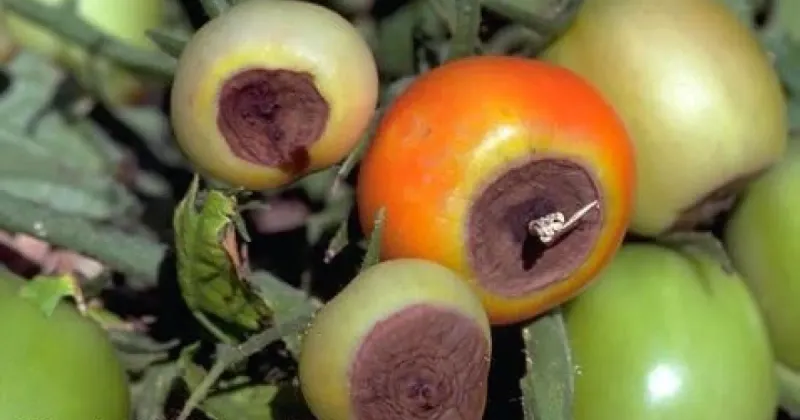
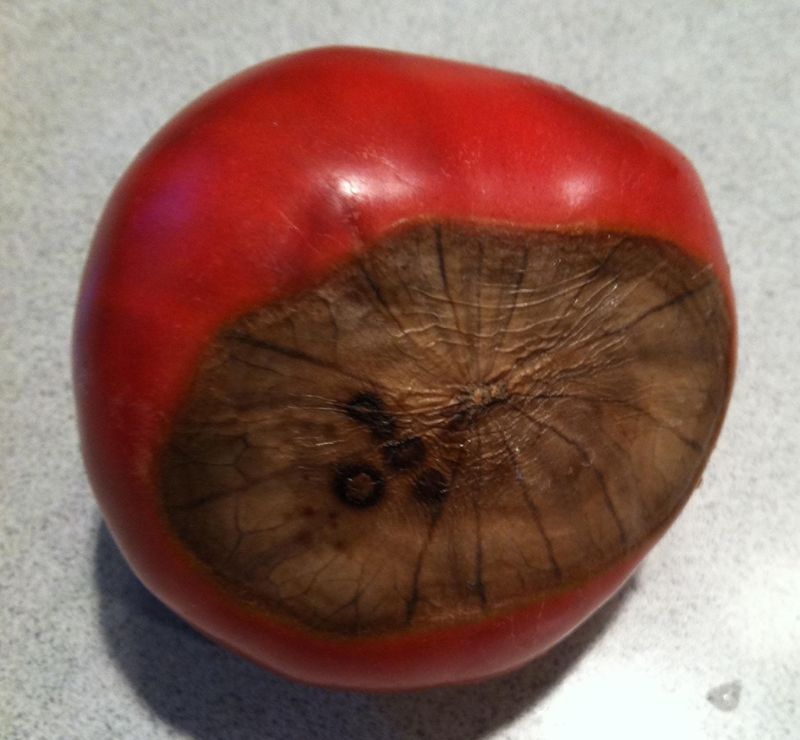
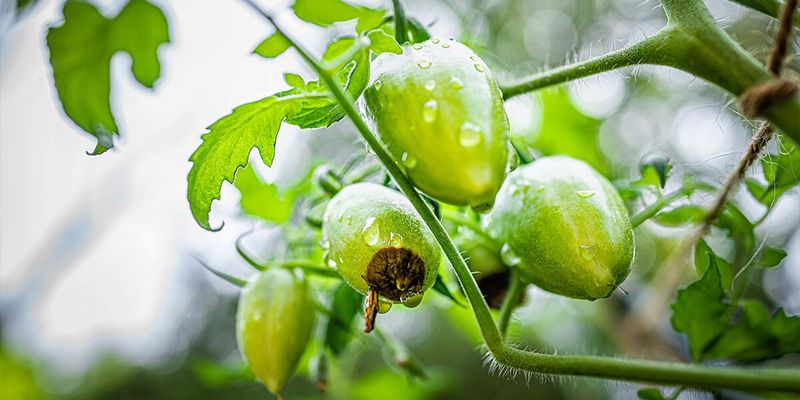
Look at exactly where the damage sits before reaching for any treatment. Blossom-end rot appears at the blossom end of the fruit, which is the rounded tip directly opposite the stem. The affected area typically starts as a small, water-soaked pale spot, then collapses into a sunken, firm, dry, or leathery patch that darkens from tan to brown or black as the tissue breaks down. University of Minnesota Extension’s tomato disorders guide describes this as a physiological disorder, meaning no pathogen causes the original damage and it cannot travel from plant to plant.
Secondary fungi and bacteria can move into that damaged tissue afterward, and when they do, the lesion may turn softer, wetter, or more obviously rotten-looking. That secondary colonization can make blossom-end rot resemble a fungal infection on the outside, which is why quick visual identification matters. The underlying disorder was already present before those organisms arrived.
A quick symptom check: press gently on the dark area. If the tissue is firm or leathery and the lesion sits squarely on the bottom tip, blossom-end rot is the most likely explanation. If the dark area is soft and spreading across the sides, or if you see fuzzy growth, a secondary organism has likely taken hold on top of the original damage. Oregon State University Extension’s blossom-end rot fact sheet reinforces that the disorder itself is not contagious, so healthy fruit on the same plant or a neighboring plant is not at risk from the lesion.
Why calcium trouble does not always mean poor soil
Calcium is the nutrient most closely linked to blossom-end rot, but the connection is more complicated than most gardening advice suggests. Developing fruit needs a steady supply of calcium carried through the plant’s water-conducting system, and that supply can fall short even when the soil holds plenty of calcium. Penn State Extension’s review of blossom-end rot notes that drought, sharp wet-dry cycles, waterlogged soil, root injury, heat, high salinity, rapid fruit growth, and excess nitrogen are all conditions that can interfere with how well roots absorb and move water and calcium upward.
Waterlogged soil is just as problematic as drought because saturated roots can lose their ability to take up water and nutrients even though moisture surrounds them. Excess nitrogen pushes the plant toward fast, lush vegetative growth, and that rapid expansion can outpace the calcium supply reaching the fruit. High salt levels from over-fertilizing can also reduce water uptake at the root surface.
Researchers have not completely settled whether localized calcium deficiency in the developing fruit actually triggers the disorder or whether it is part of a broader stress response the fruit undergoes. The practical takeaway is the same either way: adding calcium to soil that already contains enough will not fix the problem if poor moisture management or root stress is the real bottleneck. OSU Extension also confirms that the disorder affects fruit while the vine itself can remain vigorous and produce healthy fruit once conditions stabilize.
Treat August as a clue, not a diagnosis
Late summer is when several stresses pile on at once, which is why August sees so many cases of blossom-end rot across U.S. home gardens. Heat climbs, fruit enlarges quickly, and watering patterns often become inconsistent because summer schedules shift. But August timing is a prompt to investigate, not a guarantee that every garden is dealing with the same underlying problem.
Run through a short self-audit when symptoms appear. Ask whether the plant recently went through a stretch of dry weather, followed by heavy rain or a big irrigation session. Ask whether you have been watering shallowly and frequently rather than deeply and less often. Ask whether the soil has stayed soggy after rain, which can point to a drainage issue.
Minnesota Extension identifies drought and wet-dry swings as common contributors, and OSU Extension adds that saturated soil can damage roots just as drought can.
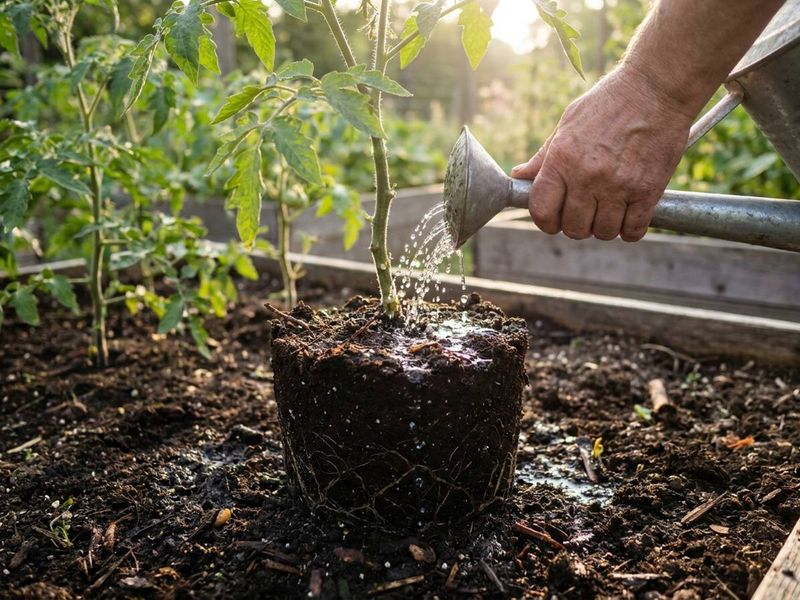
Container plants deserve special attention during this audit. Pots heat up faster than garden beds, lose moisture more quickly, and can swing from dry to waterlogged within a day or two of summer rain. A plant in a small container may need moisture checks every morning in a heat wave. Penn State Extension recommends checking soil moisture about 2 inches below the surface rather than relying on a fixed watering calendar, because heat, wind, soil type, rainfall, and plant size all change actual water needs from one week to the next.
Stabilize moisture and protect the roots
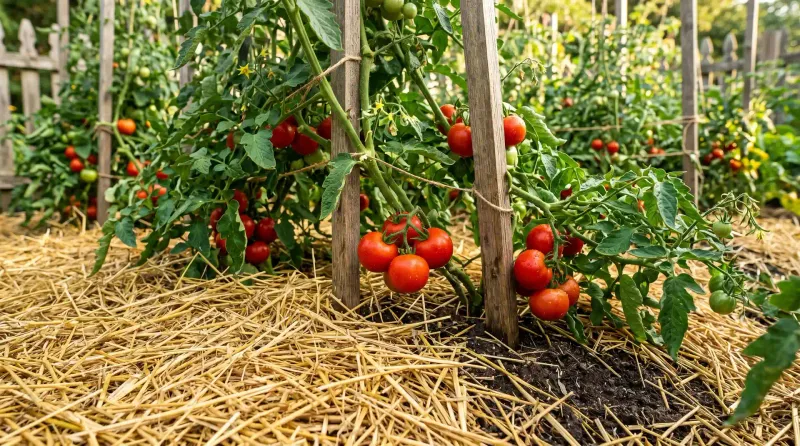
Once you have identified inconsistent moisture as a likely factor, the most useful response is to make the root zone as steady as possible going forward. Water the soil directly rather than the foliage, and aim for morning watering so any splash on leaves has time to dry. Penn State Extension gives 1 to 1.5 inches per week as a general tomato guideline, but also emphasizes checking soil moisture about 2 inches below the surface before watering, because actual needs vary with heat, wind, soil type, container size, and recent rainfall. The target is evenly moist soil, not wet or dry extremes.
Mulch is one of the most practical tools for reducing moisture swings between waterings. Penn State recommends roughly 2 to 3 inches of seed-free straw or bark mulch spread around the base of the plant, kept a few inches away from direct contact with the stem to discourage rot and pest problems. That layer slows evaporation, moderates soil temperature, and buffers the root zone against the rapid drying that often follows a hot afternoon.
Drainage matters as much as water supply. Soil that stays waterlogged after rain can injure roots and reduce their ability to take up water and nutrients, even though the ground looks moist. If water pools around your plants after rain, consider improving drainage before the next growing season. Minnesota Extension also advises avoiding cultivation within about 1 foot of the plant base, because root injury from hoes or tillers can compound the uptake problems already caused by uneven moisture.
OSU Extension confirms that protecting the root system is central to protecting later fruit. Container growers should check moisture more frequently than in-ground gardeners, especially during heat waves.
Existing lesions will not heal
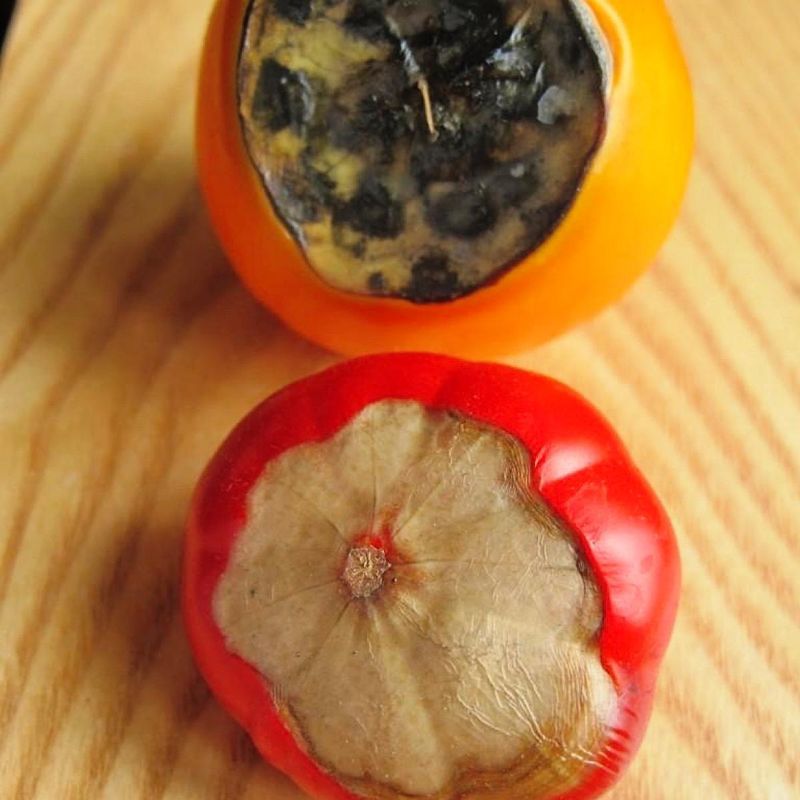
One of the most important things to understand about blossom-end rot is that the damaged tissue is permanent. No amount of watering, calcium spray, or fertilizer will restore a lesion that has already formed. The cells that broke down in the blossom end are gone, and the discolored, sunken area will remain through ripening. UGA Extension’s blossom-end rot guidance is direct on this point: management protects later fruit rather than repairing what is already affected.
Removing badly affected fruit is worth considering. When a tomato with a large, spreading lesion stays on the vine, the plant continues directing resources toward fruit that cannot fully recover. Taking it off may allow the plant to focus on younger fruit that are still developing. Removing affected fruit also reduces the chance that secondary mold or bacteria spreading through the damaged tissue will cause further problems.
Minnesota Extension notes that later fruit in the season can develop normally once growing conditions improve, which is genuinely encouraging. The vine is not condemned by early blossom-end rot. On the question of eating affected fruit, UGA Lincoln County Extension offers conditional guidance: a small, dry lesion can sometimes be cut away if the rest of the tomato is firm, free of mold, and free of foul odor. Fruit with extensive soft rot, spreading decay, visible mold, or a bad smell belongs in the discard pile, not on the cutting board.
Test before adding calcium or fertilizer
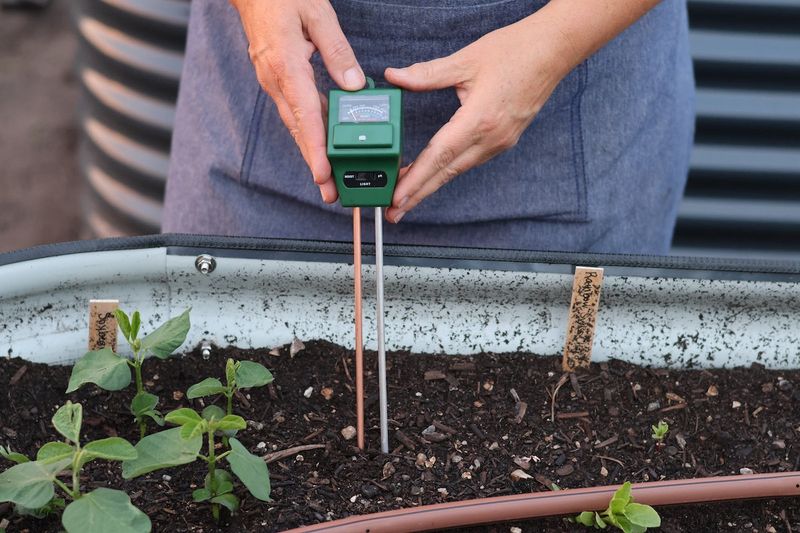
Reaching for lime, gypsum, or a calcium spray as soon as blossom-end rot appears is one of the most common reactions, and one of the least reliable. If the soil already contains adequate calcium and the real problem is moisture stress, root damage, or heat, adding more calcium cannot fix the delivery bottleneck. Penn State Extension’s blossom-end rot review makes clear that the disorder often involves water transport rather than a shortage of calcium in the soil, so amendments applied without testing may accomplish nothing useful.
Lime is a soil pH amendment, not simply a calcium supplement. Applying it to soil that is already at a suitable pH can push pH too high and interfere with the uptake of other nutrients. University of Minnesota Extension’s soil testing guidance recommends a soil test to evaluate pH, calcium levels, and overall nutrient status before selecting any amendment. A test result gives you a defensible reason to add lime, gypsum, or another product, and it also tells you when not to bother.
Eggshells are a popular home remedy, but Minnesota Extension’s review of common soil remedies explains that eggshells break down too slowly to correct a mid-season problem and that blossom-end rot is commonly a water-transport issue rather than a deficit of total soil calcium. Excess nitrogen from over-fertilizing deserves attention too, because it can push fast vegetative growth that outpaces calcium delivery to fruit. Foliar calcium sprays are sometimes mentioned as an emergency option, but most extension guidance treats them as uncertain and secondary, with limited movement to developing fruit. If you choose to try one, follow the product label carefully and do not treat it as a substitute for stabilizing root-zone moisture.
UGA Lincoln County Extension and UGA Tattnall County Extension both emphasize consistent moisture management as the primary approach.
Cracking is related to moisture but not the same disorder
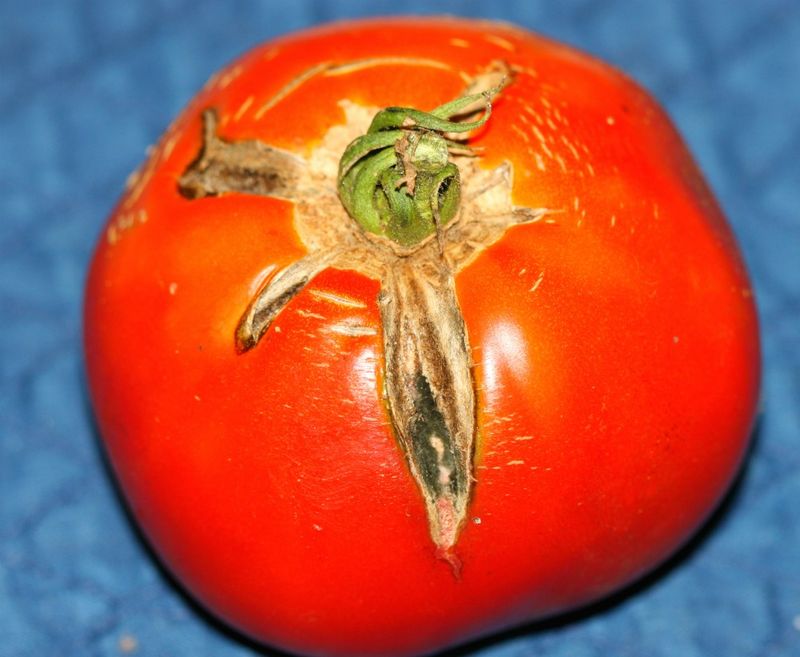
The article title groups cracking and bottom rot together, but they are different problems with different patterns. Growth cracking generally starts at the stem end of the fruit, radiating outward in lines, or it forms concentric rings around the shoulders of the tomato. It happens when the fruit expands rapidly after a period of drought or irregular watering, and the skin cannot keep pace with the interior. Minnesota Extension’s tomato disorders page describes both conditions and notes that steadier moisture can reduce risk for each, but the diagnoses and underlying mechanisms are not interchangeable.
Blossom-end rot, by contrast, produces a localized, sunken, dark, dry, or leathery lesion specifically at the blossom end, the rounded tip opposite the stem. The location is the most reliable distinguishing feature. Penn State Extension confirms that while both problems can appear in the same garden and even on the same plant, they should not be treated as one disorder with a single fix.
A few other fruit problems can look similar and are worth ruling out. Minnesota Extension’s tomato fruit diagnosis tool notes that anthracnose typically causes sunken spots on ripe or overripe fruit, often on the sides rather than the bottom tip. Sunscald produces pale, papery, or blistered patches on fruit exposed to direct sun, usually on the side facing the light. Stink bug feeding leaves cloudy, discolored spots just beneath the skin.
A dark, sunken, leathery lesion sitting squarely on the bottom tip of the fruit, firm at first and not on the side or shoulder, fits blossom-end rot more closely than any of these alternatives.
Judge success by the next fruit
After seeing blossom-end rot, the most practical sequence is to confirm the symptom, review what the root zone has been through recently, stabilize moisture, and use a soil test before adding any amendment. Improvement will not show up on the affected fruit, because that damage is fixed. Watch the tomatoes that form after you make changes. If conditions stabilize, later fruit should develop without the lesion.
Variety plays a genuine role in how often blossom-end rot appears. Minnesota Extension notes that large slicer, paste, plum, and elongated tomato types are generally more susceptible than small, round, or cherry types. Penn State Extension describes fruit shape and cultivar as factors associated with differing susceptibility rather than as proof of a single transport failure. No variety is immune, and growing a cherry type does not guarantee a problem-free season if moisture management is poor.
Keeping that variety difference in mind can help set realistic expectations: a paste tomato in a dry August may need closer attention than a cherry type in the same bed. The vine is not lost when blossom-end rot appears, and the season is not over. A plant that looked bad in July can produce a solid harvest in September once the root zone settles into steadier conditions.