
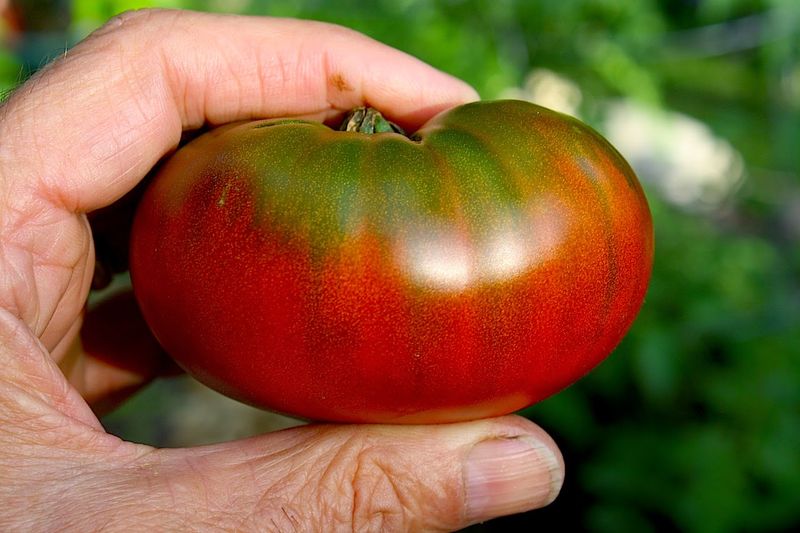
Pulling a tomato off the vine only to find a firm, green or yellowish patch locked around the stem end is one of summer’s more frustrating discoveries. The rest of the fruit looks ripe, but that top section stays hard and never quite delivers the flavor you were expecting. Heat, direct sun, variety, watering, and soil conditions can all play a role, and figuring out which factor is driving the problem on your plants makes a real difference in how you respond. This article walks through what that stem-end pattern actually means, what may be contributing to it, and what you can do right now to protect the fruit still coming.
A green shoulder is a clue, not a complete diagnosis
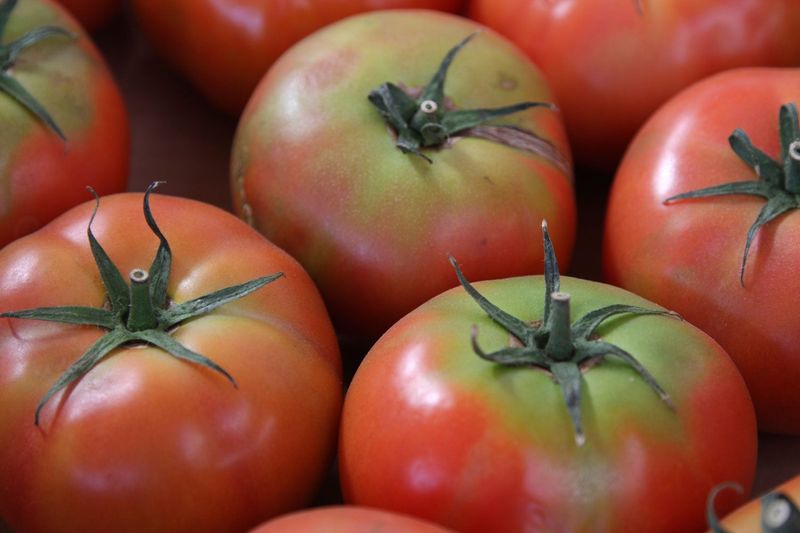
Spotting a hard green or yellow patch at the top of a mostly ripe tomato is easy to misread as one single problem with one clear cause. What you are actually seeing is a pattern called green shoulder or yellow shoulder, depending on whether the tissue stays distinctly green or fades to a gold or yellow tone that never progresses to red. University of Maryland Extension notes that the affected tissue around the stem end may remain firm and fail to develop the normal flavor of the rest of the fruit, even after the tomato appears fully ripe elsewhere.
Before treating this as a disorder, though, consider the variety you planted. Some cultivars naturally carry a green-shouldered phenotype, meaning the stem-end area retains green pigment as part of the plant’s genetics rather than as a sign of stress or damage. Missouri IPM explains that cultivars with the non-uniform ripening trait are more prone to showing visible shoulder color differences, especially under hot, bright conditions.
To sort out what you are dealing with, look at a few things together: the variety name if you have it, whether the color in the shoulder area shifts at all as the fruit ripens, how firm the tissue feels compared with the rest of the tomato, and whether recent weather has been unusually hot or the fruit has been sitting in direct sun without leaf cover. University of Minnesota Extension treats the shoulder pattern as a diagnostic starting point rather than automatic confirmation of a ripening disorder, and that framing is worth keeping in mind before making any changes to your plants.
Heat and direct sun can disrupt color development
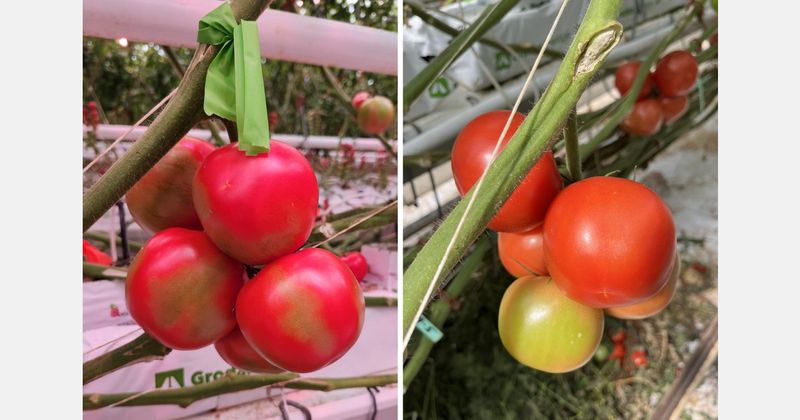
Tomato color comes from pigments, primarily lycopene for red and carotenoids for orange and yellow tones, that develop as the fruit matures. That process is sensitive to temperature, and when conditions get very hot, pigment production can slow down or stall. University of Missouri Extension notes that temperatures above roughly 85 degrees Fahrenheit are associated with slowed or disrupted pigment development in tomatoes, though this is not a hard cutoff that applies equally to every cultivar or situation.
What makes August particularly tricky is that the temperature at the fruit surface can run significantly higher than the air temperature when fruit is sitting in direct afternoon sun. A tomato exposed to full sun on a 90-degree day may be absorbing enough radiation to push its surface well above the air reading, and that localized heat load is concentrated at the stem end, which tends to face upward and catch the most direct light. Utah State University Extension confirms that fruit-surface temperatures can exceed ambient air temperatures substantially under direct sun exposure.
Heat and direct exposure are real contributors to uneven shoulder ripening, but they work alongside other factors rather than acting alone. Cultivar genetics, moisture consistency, soil fertility, and canopy density all interact with temperature to shape how a particular tomato develops its color. Treating heat as one important piece of a larger picture gives you a more accurate read on what is happening and a more useful set of responses to try. Oregon State University’s fresh-market tomato guidance similarly frames heat and exposure as contributing conditions rather than sole causes of color problems.
Protect healthy foliage instead of chasing more sun
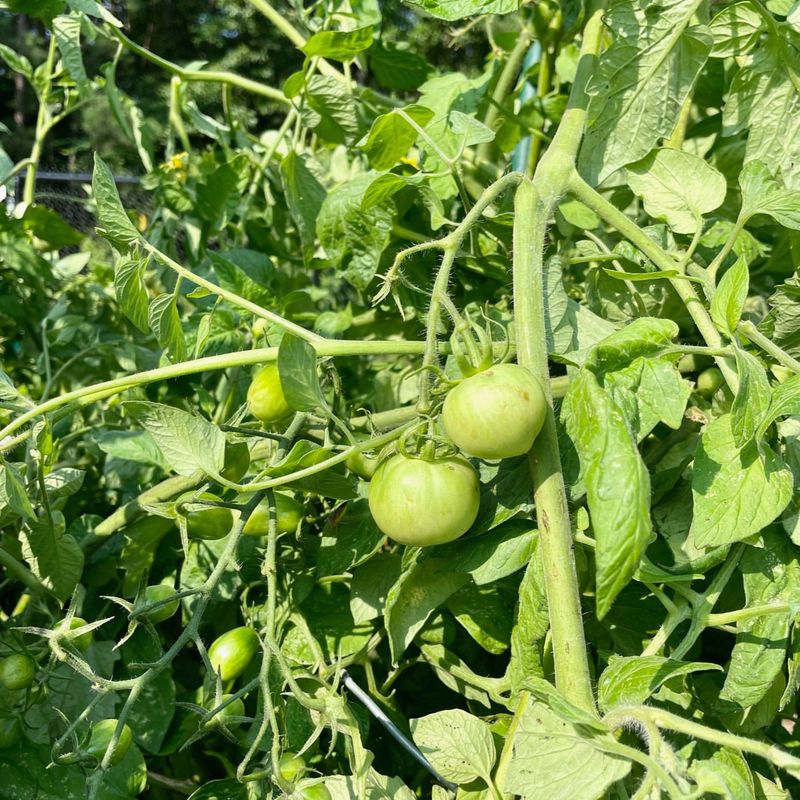
One of the more counterproductive responses gardeners reach for when tomatoes seem to ripen unevenly is pulling off leaves to let the fruit get more sun. The instinct makes sense on the surface, but it can make the shoulder problem worse rather than better. Healthy leaves act as a natural shield, intercepting intense radiation before it reaches the fruit and keeping the surface temperature of developing tomatoes lower than it would be in open, unshaded conditions.
University of Minnesota Extension specifically cautions against over-pruning, noting that removing too much foliage can expose fruit to sunscald in addition to increasing the heat load on developing tomatoes. Sunscald and yellow shoulder are separate problems, but both become more likely when the canopy thins out and fruit sits exposed to direct afternoon sun for long periods.
Sparse foliage from heavy pruning, pest damage, or disease can be a risk condition that makes heat-related color problems more likely, even if it is not a guaranteed cause of every green or yellow shoulder you see. Utah State University’s troubleshooting guide and USU’s tomato growing guide both recommend keeping as much healthy canopy as possible and limiting removal to leaves that are diseased, severely damaged, or genuinely necessary to manage for airflow. If your plant already has sparse coverage, the priority is preserving what is left rather than taking more off to chase ripening.
Use partial afternoon shade when fruit is exposed
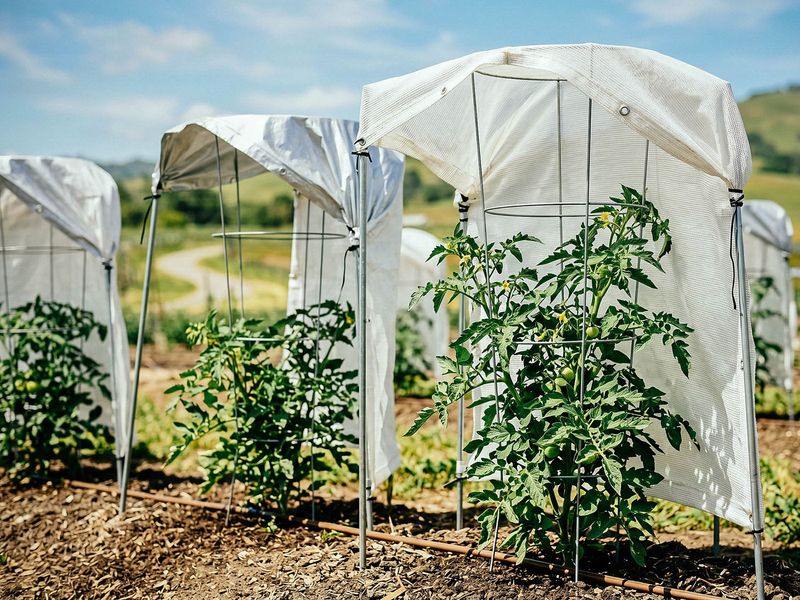
When a plant’s canopy is already thin and fruit is sitting in direct afternoon sun, one practical mid-season response is adding temporary, partial shade. A lightweight shade cloth or breathable shade fabric rigged over the most exposed plants during peak afternoon hours can reduce the heat load on developing fruit without putting the plant in conditions too dim for productive growth. The goal is to knock back the intensity of direct sun, not to block light entirely.
University of Missouri Extension recommends partial shading as a practical response when tomatoes are struggling with heat stress, and the Missouri high-tunnel production guide supports using shade fabric to manage fruit temperatures during hot periods. A 30 to 40 percent shade rating is typically enough to reduce peak intensity without starving the plant of productive light. Position the fabric so air can still move freely around and through the canopy.
Partial shade may limit additional heat stress and protect fruit that is still developing, but it is unlikely to recolor a shoulder that has already turned hard or yellow. Set realistic expectations: the intervention is about reducing further damage, not reversing what has already happened. One option to avoid entirely is an airtight row cover during hot summer weather. USU Extension’s row-cover guidance explains that sealed covers can trap heat, restrict airflow, worsen disease pressure, and interfere with pollination, making conditions significantly worse rather than better.
Breathable, temporary shade fabric is the more appropriate tool for this situation. University of Minnesota’s tomato growing guide also notes that tomatoes need full sun for productive growth, so any shading should be partial and temporary.
Stabilize water and test before adding fertilizer
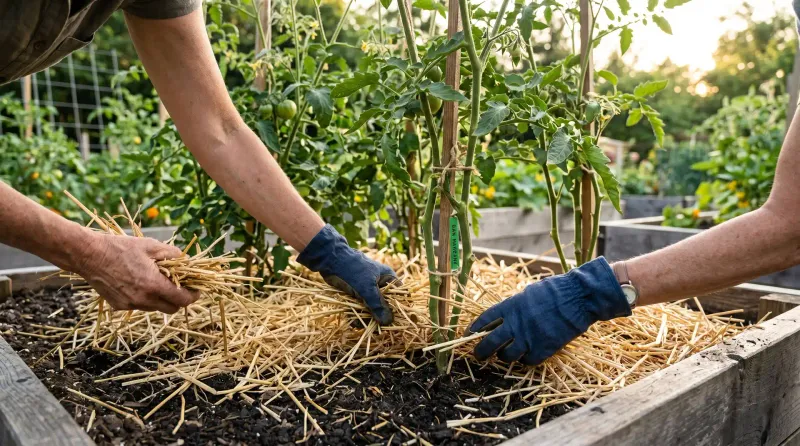
Moisture consistency matters more than total water volume when it comes to supporting healthy tomato development. Shallow, erratic irrigation can stress the plant and contribute to a range of physiological problems, including poor canopy health that leaves fruit more exposed. Mulching around the base of plants helps retain soil moisture between waterings and moderates soil temperature, both of which support a steadier growing environment. University of Minnesota’s tomato growing guide recommends deep, consistent watering paired with mulch as a foundation for reducing heat and drought stress.
Fertility is a more complicated question. Low potassium availability and other nutrient imbalances have been associated with uneven ripening in some research, but a hard green or yellow shoulder on its own is not proof of a potassium deficiency or any other specific soil problem. UMass Extension’s fact sheet on blotchy ripening notes that multiple interacting stresses can produce similar symptoms, and applying potassium without testing first can create nutrient imbalances rather than fixing them. The Oregon State University tomato production guide echoes this caution, recommending soil testing before making fertility adjustments.
Heavy nitrogen applications are worth avoiding as a quick fix. Excess nitrogen can push the plant toward producing more vegetative growth at the expense of fruit maturity, and it is listed among factors associated with some ripening disorders. USU Extension recommends against heavy nitrogen use mid-season, particularly when plants are already setting and developing fruit. Stabilizing water and deferring any fertilizer decision until you have soil-test results is the more cautious and more useful approach at this stage of summer.
Separate shoulder disorders from lookalike damage
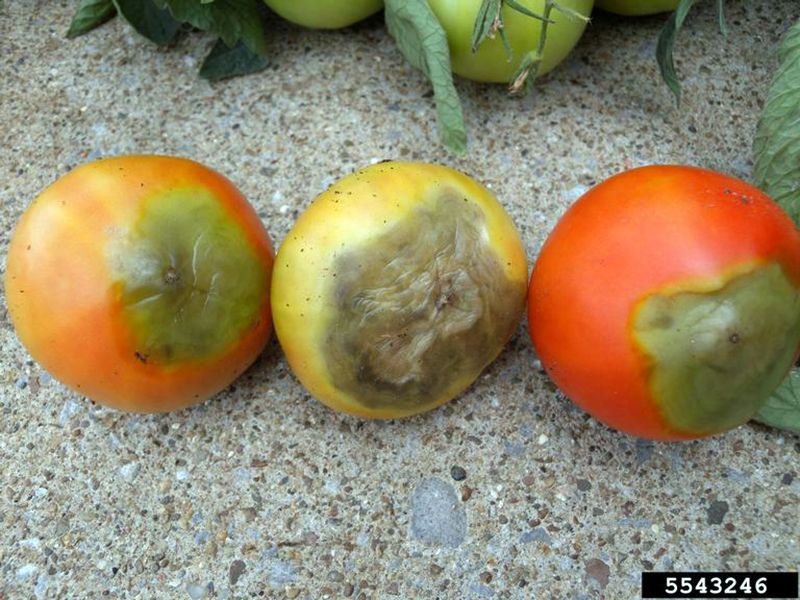
Not every color or texture problem on a ripening tomato is a shoulder disorder, and correctly identifying what you are looking at changes what you should do about it. Sunscald is one of the most common sources of confusion. It typically appears as a pale yellow, white, flattened, or papery patch on the side of the fruit that faces the sun directly, not at the stem end. University of Minnesota Extension distinguishes sunscald from yellow shoulder by location and texture: sunscald patches can become dry and collapsed as they age, while shoulder disorders generally involve firm, discolored tissue concentrated at the top of the fruit.
Blossom-end rot is easier to separate because it appears at the opposite end of the fruit, the flower end, as a dark, sunken, leathery patch. Catfacing produces scarring and distortion around the blossom end or across the fruit surface, often from cold or irregular pollination conditions early in fruit set. Viral diseases and other systemic problems tend to show up across the whole plant, with mottled or distorted leaves, stunted growth, or fruit abnormalities that go beyond a localized shoulder pattern. The UMN diagnostic guide can help sort through these overlapping symptoms.
Blotchy ripening and gray wall are also worth keeping separate from yellow or green shoulder. These disorders can involve internal whitening, hard areas distributed more broadly through the fruit, and are sometimes associated with dense canopies, low light penetration, high soil moisture, excess nitrogen, or disease pressure rather than with heat and exposed fruit. UMass Extension’s blotchy ripening fact sheet outlines how those conditions differ from the stem-end pattern of yellow shoulder, making it clear that the right response depends on correctly reading which problem is actually present.
Use affected tomatoes and prevent the pattern next season
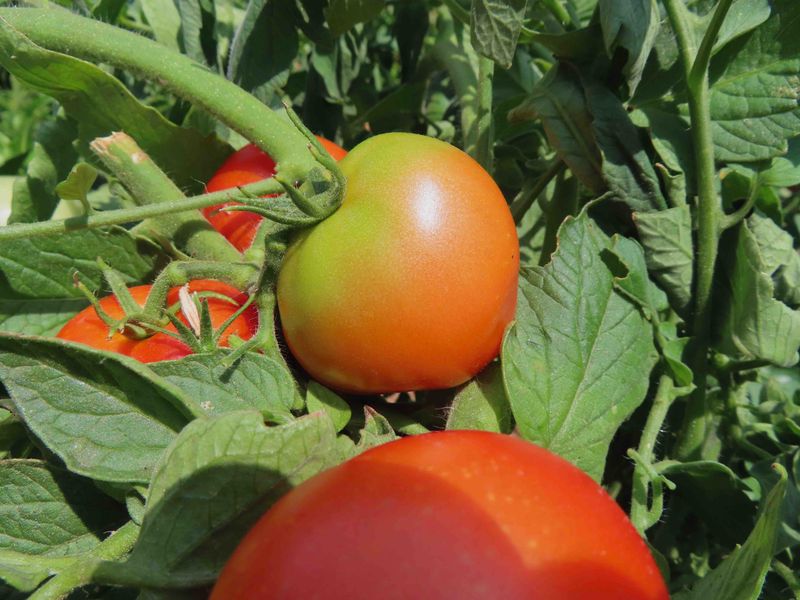
Fruit that has already developed a hard green or yellow shoulder is not necessarily a total loss. Once the rest of the tomato has ripened fully, go ahead and harvest it. The affected tissue can usually be cut away cleanly if the remainder of the fruit is sound, leaving you with perfectly usable tomato for cooking, sauces, or fresh eating. University of Maryland Extension confirms this approach, noting that the hard, discolored portion should be removed and discarded while the rest of the fruit is used normally.
Any tomato that develops decay in or around the affected area should be removed from the plant and discarded rather than salvaged.
The canopy care and partial shading you put in place now mainly protect fruit that is still developing rather than reversing what has already set. Keeping that expectation realistic helps you focus energy where it will actually make a difference for the rest of the season. University of Minnesota Extension reinforces that mid-season interventions are primarily about limiting additional stress, not correcting tissue that has already become firm or discolored.
For next season, the same principles apply in a more proactive form: balanced canopy management, careful attention to fruit exposure during peak heat, soil-informed fertility decisions, and consistent moisture. If the same variety shows the shoulder pattern year after year regardless of conditions, it may be worth considering a uniform-ripening cultivar that is less prone to the trait, as Missouri IPM notes. That said, switching varieties reduces risk rather than eliminating it entirely, since heat, exposure, and soil conditions still shape how any tomato ripens. The shoulder pattern is often the garden’s way of flagging that several conditions converged at once.