
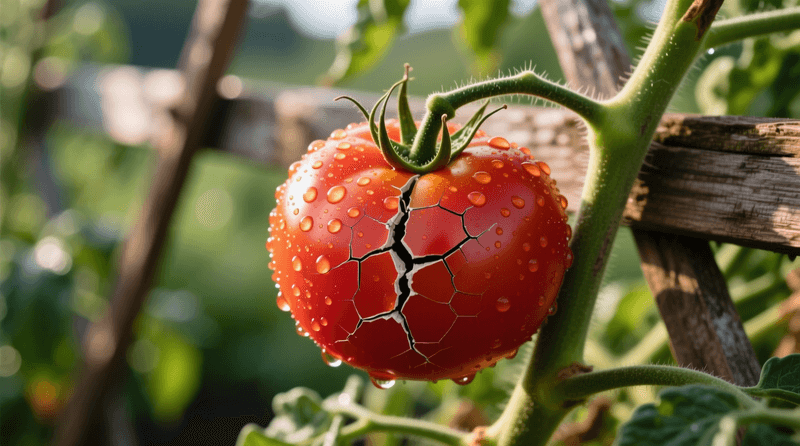
You walk out to the garden, hose in hand, and find the tomatoes you have been babying all summer have split wide open just as they were turning red. Few things sting quite like that. A sudden jump from dry soil to heavy watering or rain is a common trigger for tomato cracking, though the full picture involves heat, ripeness, and the variety you planted. Understanding what is actually happening gives you practical ways to protect the fruit still on the vine.
Identify growth cracks before changing your care routine
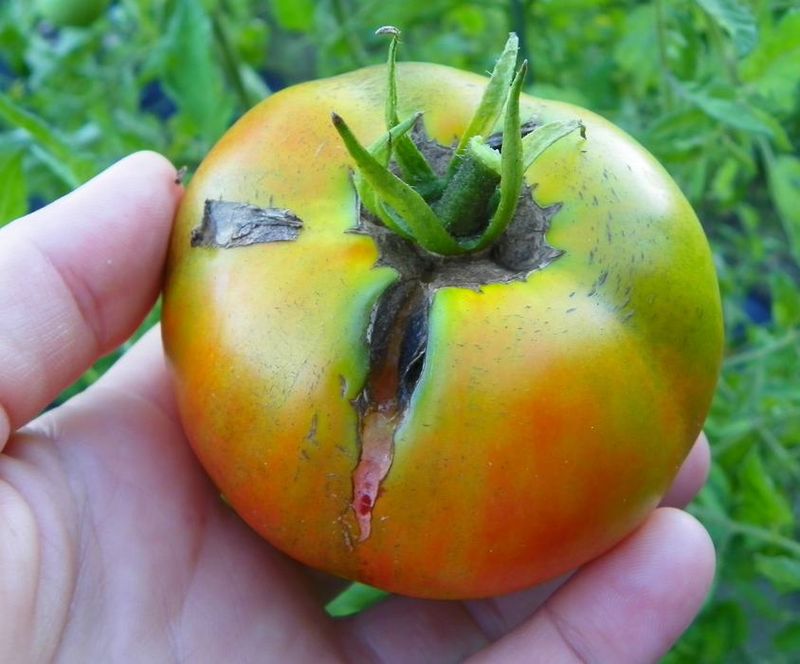
Radial cracks and concentric cracks are the two patterns most gardeners encounter with tomato splitting. Radial cracks run outward from the stem end like spokes on a wheel, while concentric cracks form rings that circle the shoulders of the fruit. Spotting which pattern you have matters because the response for growth cracks is different from the response for other common tomato disorders.
Blossom-end rot looks nothing like a crack. It produces a dark, sunken, leathery lesion at the blossom end, the bottom of the fruit opposite the stem, and is associated with calcium availability disrupted by uneven moisture. Adding calcium sprays or extra fertilizer is not the central remedy for radial or concentric growth cracks, even though fluctuating water is involved in both disorders. University of Minnesota Extension’s tomato disorder guide clearly separates these two conditions so gardeners can avoid misdiagnosing one as the other.
Sunscald is the third disorder worth ruling out. It appears as a pale, gray-white, or papery patch on the side of the fruit that faces the sun directly, often after foliage is removed or lost. The UMN plant diagnostic tool for tomato fruit cracks can help you confirm whether you are looking at growth cracking rather than sun exposure damage. Getting the diagnosis right first means you will not waste time on remedies aimed at the wrong problem.
A sudden dry-to-wet change can overwhelm a ripening tomato’s skin
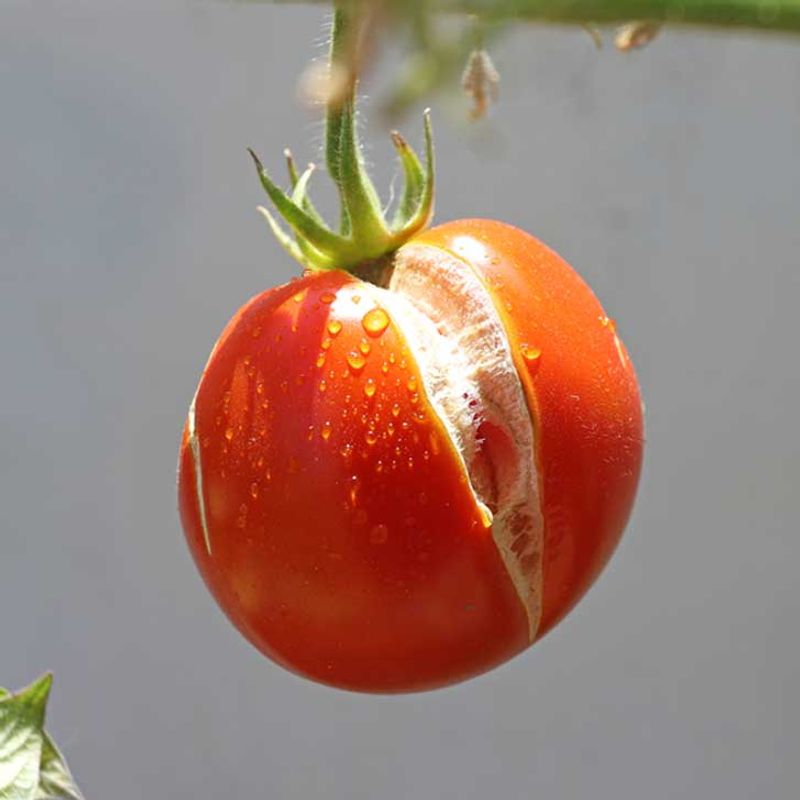
When the root zone dries out significantly and then receives a large amount of water from irrigation or rain, the plant can take up moisture rapidly and send it to the fruit. The interior of a nearly ripe tomato may expand faster than the skin and cuticle can stretch to accommodate it, and the result is a split. The timing, cracking right after you water, is a clue about the trigger, but it does not mean that water physically entered the tomato in an instant or that the watering event alone caused the damage.
Ripening makes the situation worse in a specific way. Research on tomato cuticle mechanics during ripening shows that fruit continues to grow even as it ripens, and the cuticle, the waxy outer layer of the skin, changes in ways that reduce its ability to stretch without tearing. A tomato that is two-thirds ripe is more vulnerable than one that just set on the vine, because the skin has less flexibility precisely when internal pressure from water uptake may be highest.
Penn State Extension’s cracking guide describes this mechanism and reinforces that the abrupt shift from dry to wet is a common trigger rather than the only explanation. Some tomatoes crack during steady weather with no obvious moisture swing, which is a reminder that other factors are always part of the equation.
August heat raises the risk without telling the whole story
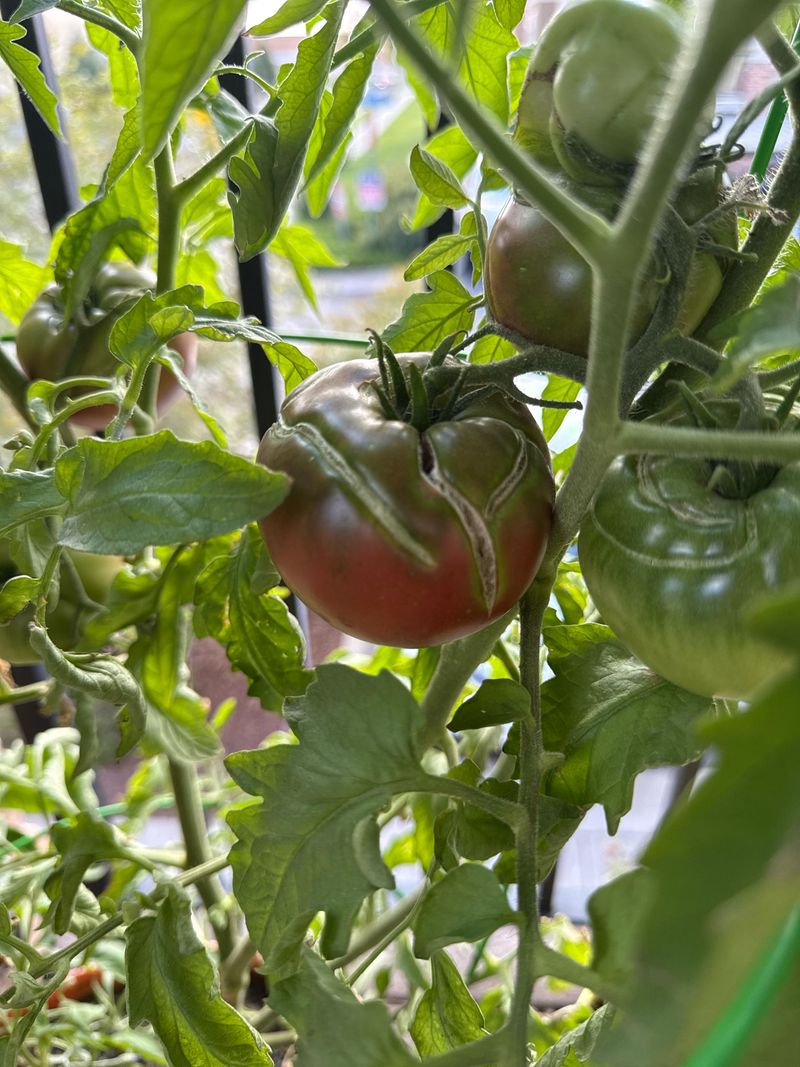
High temperatures push tomato plants to use water faster, which can intensify the dry-to-wet swings that set the stage for cracking. On a hot August afternoon, a plant that looked adequately watered in the morning may already be under stress by midday. That accelerated demand means the gap between dry and wet can widen more quickly than it would in cooler weather, making the eventual watering or rainstorm more of a shock to the fruit.
Strong sun, exposed fruit, and high humidity all add to the picture. Fruit that hangs in direct sun without leaf cover warms up and expands more than shaded fruit, and that temperature-driven expansion adds internal pressure on top of whatever moisture the plant is delivering. Penn State Extension identifies temperature, sun exposure, and ripening stage as contributing conditions alongside water fluctuation, which is why blaming watering alone can leave gardeners puzzled when cracks appear even after careful irrigation.
Cultivar genetics play a real role too. Large-fruited types and many heirloom varieties are frequently noted as more susceptible, though fruit size alone does not determine risk. UMN’s tomato cracking diagnostic notes that variety differences are substantial, meaning two plants side by side in the same bed can respond very differently to the same conditions. Stabilizing moisture addresses one important trigger, but heat, sun angle, and the plant’s own genetics remain factors outside your direct control.
Water the root zone steadily, not by a rigid daily rule
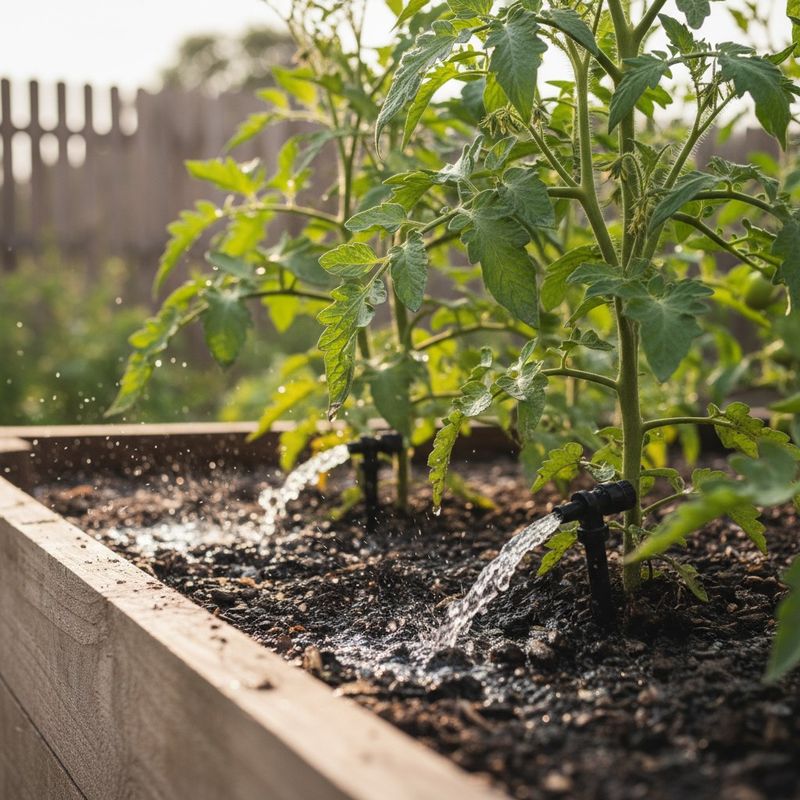
The goal is to keep the root zone from swinging between bone dry and soaking wet. Water the soil around the plant thoroughly when the top few inches begin to dry, then check moisture several inches down before watering again rather than following a fixed daily schedule. A calendar-based routine ignores the fact that a cloudy, cool week and a blazing August week have completely different drying rates.
UMN Extension’s tomato growing guide offers roughly 1 inch of rain or irrigation per week as a starting benchmark, but immediately notes that sandy soils may need more frequent watering and recommends checking moisture several inches down. Containers, raised beds, windy sites, and large plants in a heat wave can exhaust that inch well before seven days pass. Treat the 1-inch figure as a rough reference, not a prescription.
Drip irrigation or a soaker hose delivers water directly to the root zone at a slower, more even rate than hand watering or overhead sprinklers, which can help reduce the size of wet-dry swings over time. Penn State Extension recommends base watering for both moisture consistency and disease prevention, since keeping foliage dry reduces fungal pressure. Shallow sprinkling is worth avoiding because it encourages roots to stay near the surface, where they dry out fastest and experience the most dramatic moisture swings during hot spells.
Use mulch and healthy foliage to moderate plant stress
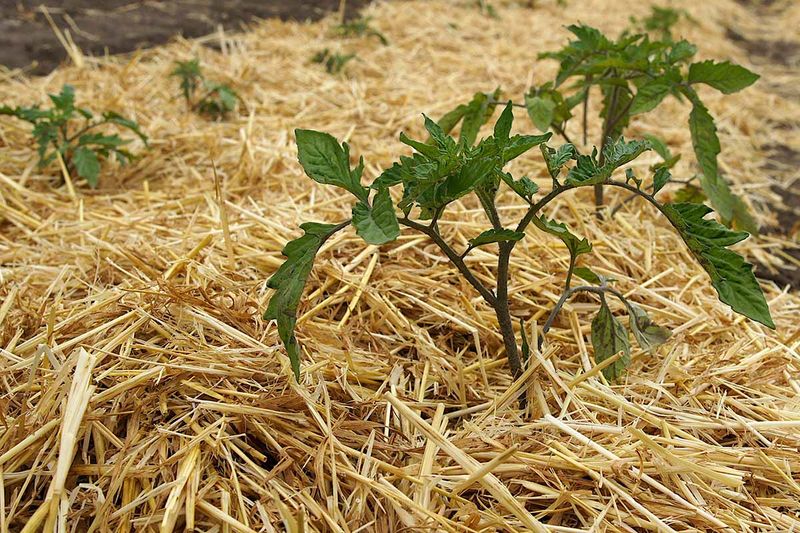
Organic mulch spread around the base of tomato plants slows evaporation from the soil surface, which helps keep moisture from dropping as sharply between watering sessions. That smaller swing in soil moisture can reduce the risk of the abrupt dry-to-wet shift that contributes to cracking. Keep the mulch a few inches away from the plant stem to avoid creating a moist environment right against the base, which can invite rot and disease.
UMN Extension’s growing guide cites 3 to 4 inches of organic mulch for weed and moisture management in tomato beds, while other extension programs suggest 2 to 3 inches depending on the material and local conditions. Neither depth is universal. The right amount depends on the mulch type, your soil, and how quickly your beds dry out, so use the cited range as a guide and adjust based on what you observe.
Foliage management is easy to overlook, but healthy leaf cover shades the fruit and reduces the temperature swings that can contribute to cracking. Penn State Extension notes that excessive pruning or leaf loss from disease or insects can expose fruit to direct sun and increase damage risk. Keeping up with disease scouting and avoiding aggressive removal of healthy leaves gives the plant its own built-in shade system, which costs nothing and works around the clock.
Harvest vulnerable fruit before late ripening increases cracking
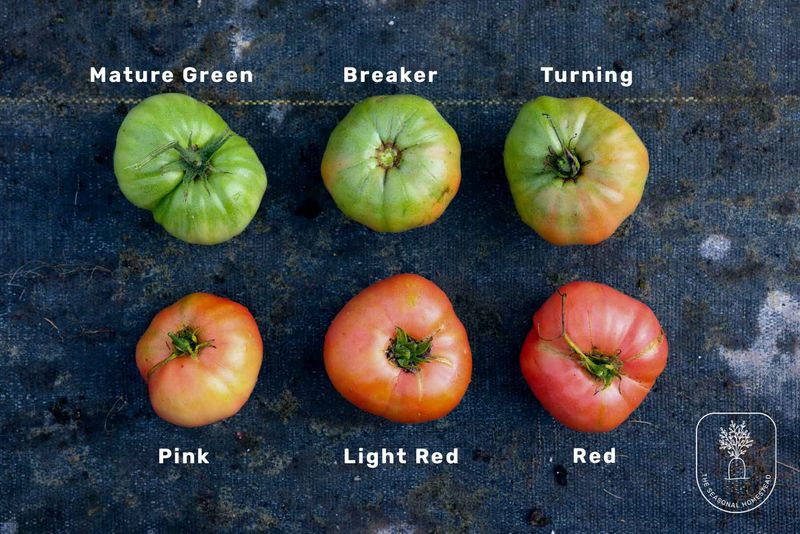
Fruit that is close to fully ripe sits at the highest point of cracking risk because the cuticle is at its least flexible and internal pressure from any moisture uptake has the greatest effect. One practical way to reduce losses on crack-prone varieties is to pick fruit at the breaker-to-pink stage, when the first blush of color has appeared but the tomato has not yet reached full vine ripeness. The fruit will continue to ripen indoors at room temperature and often reaches good eating quality without the added risk of splitting on the vine.
Penn State Extension identifies breaker-to-pink harvest as a possible way to reduce late cracking, framing it as a risk-reduction strategy rather than a guarantee. Some varieties will still crack before they reach that stage, and a crack-tolerant variety in the same conditions may do better without any early harvest at all.
For future seasons, comparing cultivar descriptions before you buy seeds or transplants can pay off. UMN’s cracking diagnostic notes that varieties differ substantially in cracking susceptibility, and choosing one described as crack-tolerant may reduce losses in a difficult August. No cultivar selection eliminates the problem entirely, but pairing a more tolerant variety with steady moisture management gives you two overlapping lines of defense instead of one.
Handle cracked tomatoes cautiously and keep them out of home canning
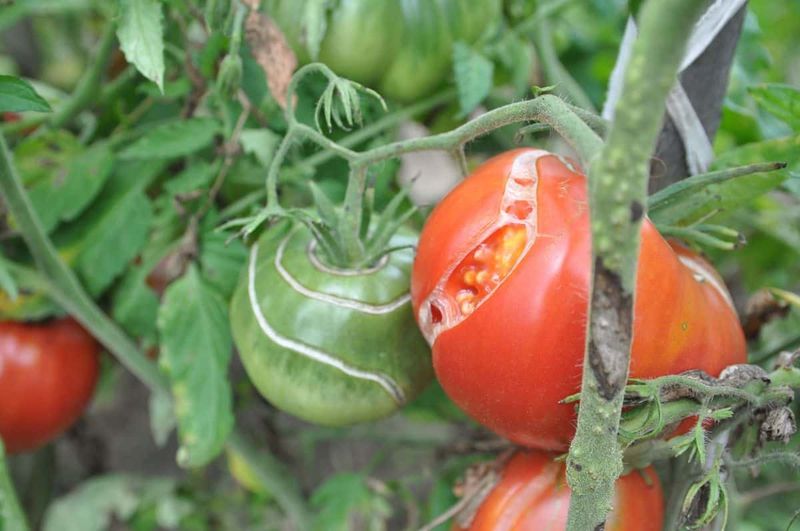
Once a crack opens in a tomato, the skin no longer provides a barrier against fungi and bacteria. Warm August temperatures speed up that process, so a lightly cracked tomato left on the vine or on the counter can move from minor damage to visible rot in less than a day. Check susceptible plants frequently during hot weather so you catch cracked fruit before decay sets in.
UMN Extension advises discarding tomatoes that show mold, decay, foul odor, or extensive damage, and that guidance is a reasonable starting point for assessing what you pick. For lightly cracked fruit without any signs of spoilage, FDA food-safety guidance on tomato handling makes clear that cracks and cuts can allow pathogens to enter and that cut or damaged tomatoes support pathogen growth if not handled properly. Follow food-safety guidance from your trusted authority rather than assuming a lightly cracked tomato is automatically safe or automatically ruined.
Home canning is a firm exception. UMN Extension’s home canning guide for tomatoes specifically advises using only high-quality fruit and not canning damaged tomatoes, because the internal condition of cracked fruit is hard to assess and the safety margins in canning leave no room for compromised produce. Steady moisture management can reduce cracking losses over the course of a season, but some cracking will happen regardless – the goal is fewer splits, not a perfect harvest.