
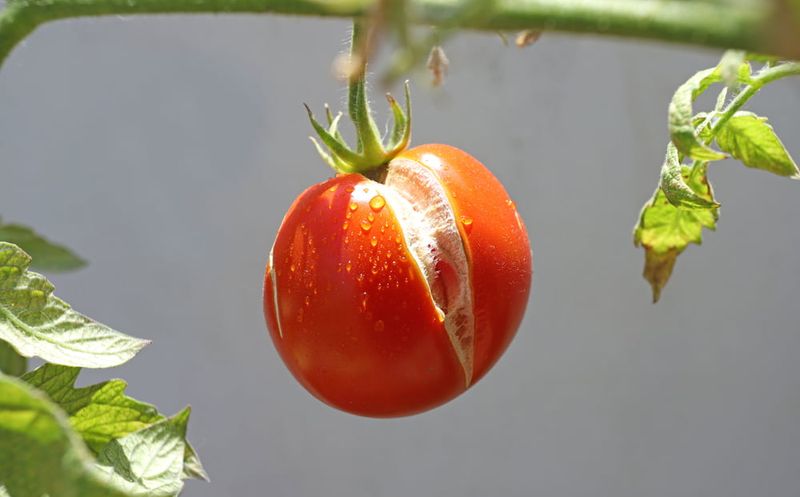
Walking out to your garden and finding a nearly perfect tomato split wide open is one of the most frustrating moments of the growing season. You did everything right, watered carefully, watched it slowly turn red, and then overnight it cracked from the stem down like it just gave up.
This happens to Southern gardeners every summer, especially when July and August bring their cycle of blistering heat followed by sudden downpours. Understanding why it happens is the first step toward saving the rest of your crop.
The Crack Pattern Reveals the Problem
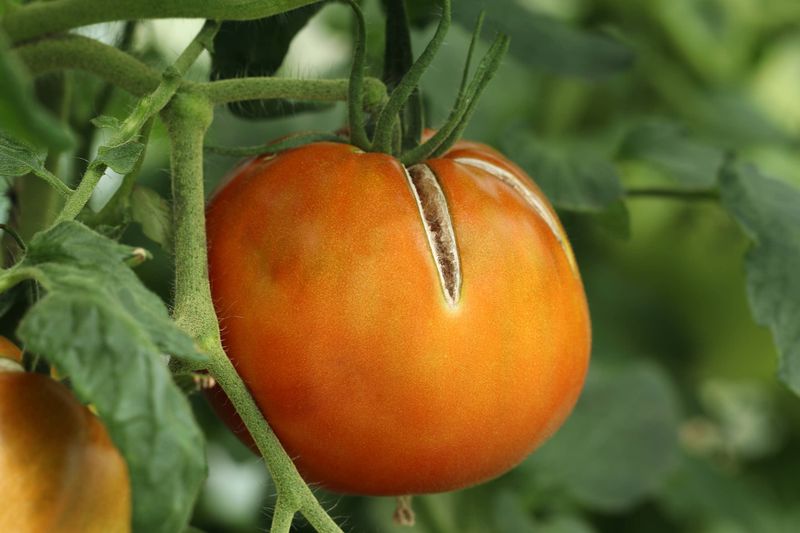
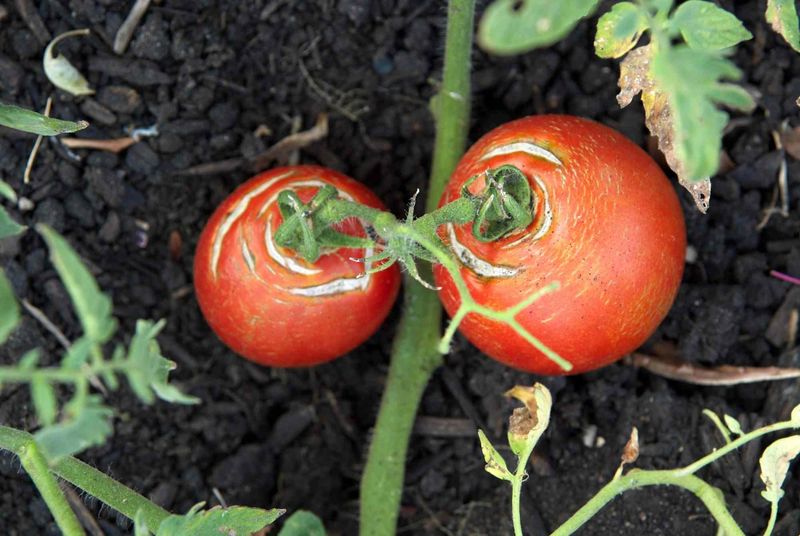
Look closely at where your tomato split and you will already have useful diagnostic information. Growth cracks on tomatoes follow two recognizable patterns: radial cracks that extend outward from the stem end like spokes on a wheel, and concentric cracks that form rings around the stem scar.
University of Minnesota Extension notes that both types commonly begin at the stem end and may appear on green fruit before the tomato even starts to color up, becoming more obvious as ripening progresses.
A dry stem-end split on an otherwise healthy-looking plant almost always points to a physiological disorder rather than a disease. The plant itself is not sick.
However, once a crack opens, it creates an entry point for fungi, bacteria, and opportunistic insects, so a cracked fruit that sits on the vine too long can develop secondary rot.
Knowing what you are looking at also helps you rule out other common tomato problems that require completely different responses. Blossom-end rot appears as a dark, sunken, leathery lesion at the bottom of the fruit, not the top.
Catfacing causes a puckered, distorted shape that usually traces back to cool temperatures during early fruit set. Sunscald shows up as pale, papery, or bleached patches on the side of the fruit that faced the sun directly.
Minnesota’s tomato disorder guide lists all four side by side so you can compare them. Treating a growth crack like blossom-end rot, for example, leads to the wrong fix and wastes time you could spend protecting the rest of your harvest.
Why a Tomato Can Split Overnight
The mechanism behind overnight splitting is straightforward once you trace it back a few days. Soil dries out during a hot stretch, the plant manages with less water, and the developing fruit slows its expansion.
Then rain arrives, or a gardener compensates with a large irrigation event, and suddenly the roots have far more water available than they did hours earlier. The fruit takes up that water rapidly, the flesh expands, and the skin, which has already been under stress and may have begun to harden slightly during the dry period, cannot stretch fast enough to keep up.
The result is a crack, often appearing at the stem end where the skin is thinnest and most vulnerable.
Texas A&M AgriLife Extension points out that radial cracking often begins while fruit is still green, which means a tomato that appears to split overnight may actually be revealing damage that started earlier in the growing cycle. Ripening softens and weakens the skin, making existing or developing cracks suddenly visible.
The nearly ripe tomato you find cracked in the morning is not a mystery. It is the end result of a moisture swing that may have started several days before.
UC IPM’s fruit crack guidance reinforces that rain can trigger cracking even when a gardener has been watering consistently, because a sudden rainfall event adds water availability faster than any drip system or schedule can account for. The goal of steady irrigation is risk reduction, not a guarantee that every tomato will survive a heavy storm intact.
Why Late-Summer Weather Raises the Odds
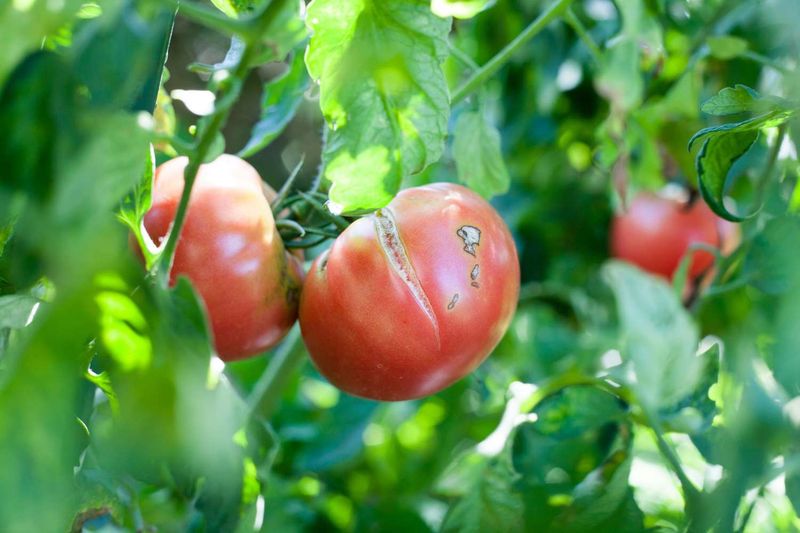
Southern late-summer conditions stack several cracking risk factors at the same time. Fruit is large and actively ripening, which means the skin is already under tension.
Temperatures regularly climb well above 90 degrees Fahrenheit, accelerating growth and stressing the plant. High humidity slows the cooling effect of transpiration, and direct afternoon sun can heat the fruit surface itself.
Then a Gulf Coast thunderstorm rolls through and drops two inches of rain in an hour onto soil that has been baking for two weeks.
Georgia Cooperative Extension’s Commercial Tomato Production Handbook specifically associates radial cracking with temperatures around or above 90 degrees combined with wet soil or prolonged rain following a dry period. That is a useful regional example for gardeners in Texas, Florida, and the Southeast, though the exact temperature at which cracking becomes likely varies by cultivar, soil type, and how severe the prior dry stretch was.
Large-fruited tomatoes and heirlooms are generally more prone to cracking than smaller-fruited varieties, partly because a larger fruit has more volume to expand and more surface area under stress. Penn State Extension confirms that cultivar susceptibility is a real factor, not just gardener luck.
Even a gardener who waters on a careful schedule cannot prevent every crack when a sharp rainfall event suddenly changes how much water the roots can absorb.
What to Do With Tomatoes That Already Cracked
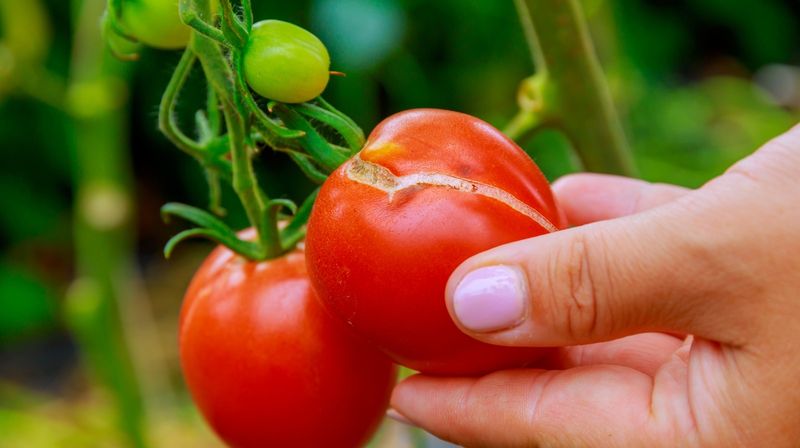
When you find split fruit on the vine, the first job is a quick triage. Pick up each cracked tomato and look at it honestly.
Fruit that is leaking juice, feels soft or mushy when squeezed, smells sour or fermented, shows visible mold, or has cracks that reach deep into the flesh should be removed from the plant and discarded. Leaving deteriorating fruit on the vine invites secondary rot, fungal growth, and insects that can spread to healthy tomatoes nearby.
A shallow, clean crack on an otherwise firm, good-smelling tomato is a different situation. Minnesota Extension’s tomato disorder resource does not treat every superficial crack as an automatic food-safety emergency.
A tomato with a minor surface crack can often be used promptly in fresh cooking, sliced for a salad, or cooked down into sauce the same day you pick it. The key word is promptly.
Cracked tomatoes do not store well because the opening allows microorganisms to enter quickly.
Home canning is a different matter entirely. Utah State University Extension’s tomato preservation guidance recommends using firm, disease-free tomatoes for canning and warns that damaged or deteriorating produce can introduce quality and safety problems into the finished product.
If you want to preserve your harvest, set aside only the cleanest, firmest fruit for the jar. Use a tested, properly acidified recipe rather than improvising with whatever is on hand, and do not try to rescue badly cracked or partially rotted tomatoes by cutting away the damaged sections before canning.
Keep Soil Moisture More Even
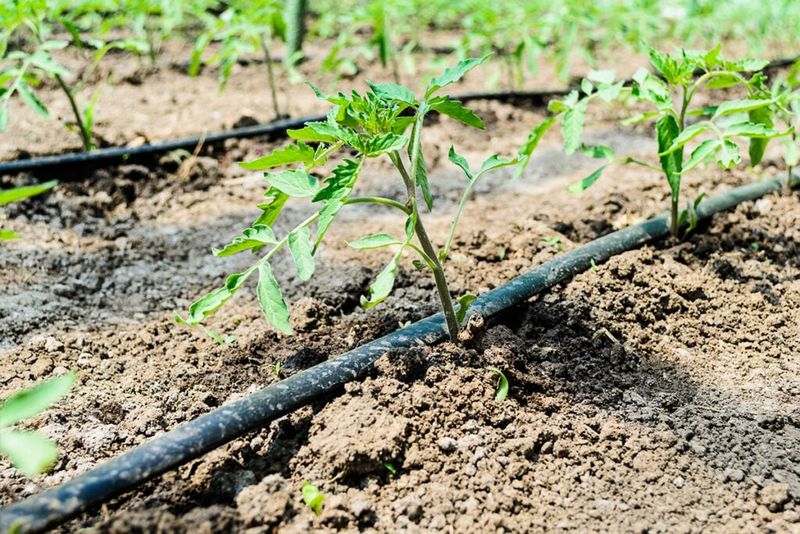
Steadier soil moisture is the most practical tool for reducing further cracking in the tomatoes still on the vine. The goal is to avoid the feast-or-famine cycle where soil gets very dry and then receives a large soak all at once.
Water your plants before they show signs of severe wilting, and maintain a consistent schedule through dry stretches rather than waiting until the soil is parched and then compensating with a heavy irrigation event.
Kansas State University Extension offers approximately 1 inch of water per week as a rough starting point for tomatoes, but that number should not be followed mechanically. A Texas garden in 100-degree heat with sandy soil and a container-grown plant will need more frequent attention than a loamy in-ground bed in a cooler week.
Adjust based on actual soil moisture, recent rainfall, your soil’s drainage rate, and the size and maturity of your plants. Checking the top few inches of soil before watering beats following a fixed schedule.
Mulch is one of the most effective and lowest-effort tools available. A 2- to 3-inch layer of straw, wood chips, or shredded leaves over the root zone slows evaporation and buffers the soil against rapid temperature and moisture swings.
That slower, more stable moisture environment is exactly what you want during a Southern summer heat wave.
Drip irrigation or soaker hoses can also help by delivering water slowly and directly to the root zone rather than dumping it all at once from above. Georgia Extension’s cultural troubleshooting guide and University of Florida IFAS guidance on efficient edible-landscape irrigation both support controlled, slow delivery as a way to reduce abrupt moisture changes.
Drip systems also avoid repeatedly wetting ripening fruit from above, which can be a contributing factor in some situations. That said, no irrigation method can prevent cracking caused by a heavy rainstorm, so treat these tools as risk reducers rather than guarantees.
Minnesota Extension’s vegetable irrigation strategies reinforce that the aim is consistent soil moisture management, not perfection.
Preserve Leaf Cover Around Ripening Fruit
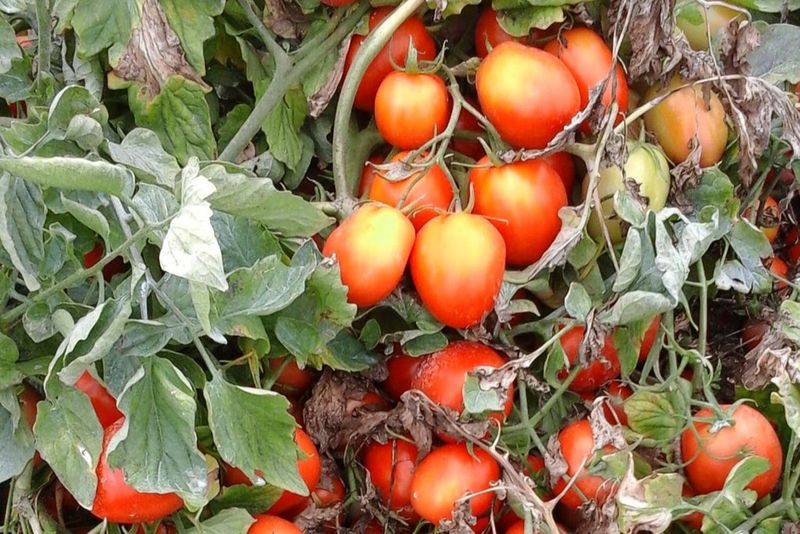
Leaf cover does more work than many gardeners realize. A healthy canopy shades the developing fruit, moderates surface temperature, and reduces the direct sun exposure that can stress the skin of a nearly ripe tomato.
When fruit is shielded from the most intense afternoon sun, it is less likely to experience the rapid temperature swings that can compound moisture-related cracking risk.
Heavy pruning is sometimes promoted as a way to improve airflow or redirect energy, but removing too much foliage leaves fruit more exposed to direct heat and sunlight. Georgia’s Commercial Tomato Production Handbook connects excessive pruning with greater fruit exposure and increased risk of sun injury, which can appear alongside or separately from growth cracking.
Removing suckers selectively and keeping the plant well-supported is reasonable practice, but stripping a plant down to bare stems in the name of tidiness can backfire during a Southern heat wave.
Canopy cover is not a standalone cure for cracking, and a lush plant can still produce split fruit after a sharp rainfall event. Think of it as one layer of protection that works alongside steadier moisture and mulch rather than replacing either.
Georgia Extension’s cultural guidance treats adequate leaf cover as part of the broader approach to managing fruit quality in high-heat conditions, not a single fix on its own. If your plants have already lost significant foliage to disease or aggressive pruning, focus your energy on moisture management while the canopy recovers.
Reduce Next Season’s Risk
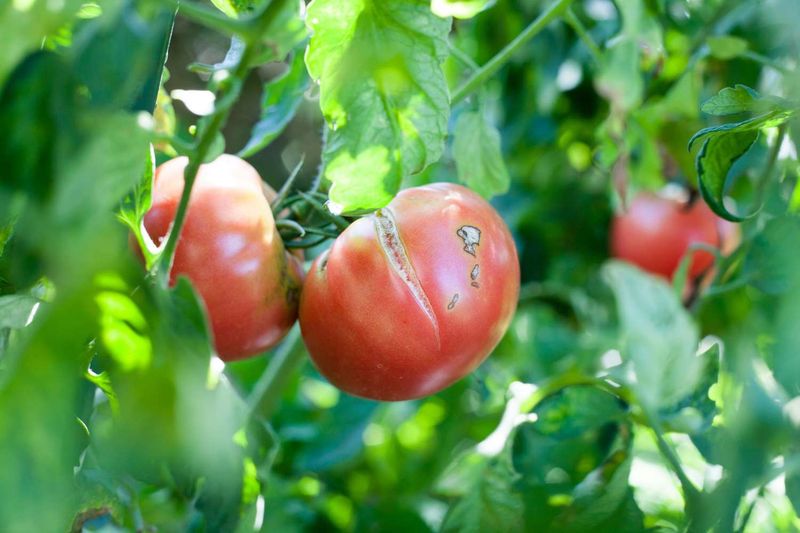
Next season starts with variety selection. Some cultivars are far more prone to cracking than others, and large-fruited heirlooms tend to be among the most susceptible.
If you have watched the same variety split year after year during late-summer rains, that is useful information worth acting on. University of Minnesota Extension confirms that crack-tolerant varieties exist and that cultivar choice genuinely affects how often cracking occurs.
Switching to a variety with better crack resistance does not eliminate the risk entirely, since moisture swings can crack almost any tomato under the right conditions, but it can meaningfully reduce how many fruits you lose in a bad late-summer storm.
Harvesting vulnerable tomatoes a little earlier is another option worth considering if cracking has been a recurring problem. Penn State Extension describes picking at the breaker or pink stage and allowing tomatoes to finish ripening indoors as a way to reduce late-stage cracking compared with leaving fruit fully vine-ripe through a heat-and-rain cycle.
This is a tradeoff, not a rule. You give up some vine-ripened flavor in exchange for fewer losses, and it makes the most sense when fruit is already showing early cracks or when a major rainstorm is forecast.
The strongest prevention plan combines several habits rather than relying on any single fix: choose varieties with better crack tolerance, keep soil moisture as even as possible throughout the season, apply mulch before the dry spells begin, use drip or soaker irrigation when practical, and preserve enough leaf cover to shade ripening fruit. Rain will still happen, and some cracking probably will too.
The goal is to keep it from taking over your harvest. A garden that loses a few tomatoes to a summer storm is still a successful garden.