
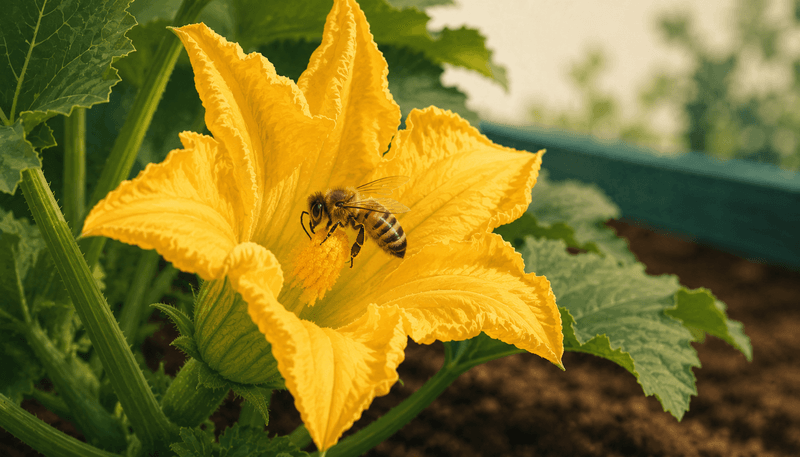
Watching your zucchini vine fill up with bright yellow flowers while never producing a single squash is one of the more frustrating moments in the summer garden. Before you pull the plant, though, the fix may be simpler than you think. Poor pollination is one of the most common reasons female flowers fail to develop into fruit, and a quick hand-pollination check can often turn things around. Understanding how zucchini flowers actually work is the first step toward getting that harvest.
A vine full of flowers has not necessarily failed
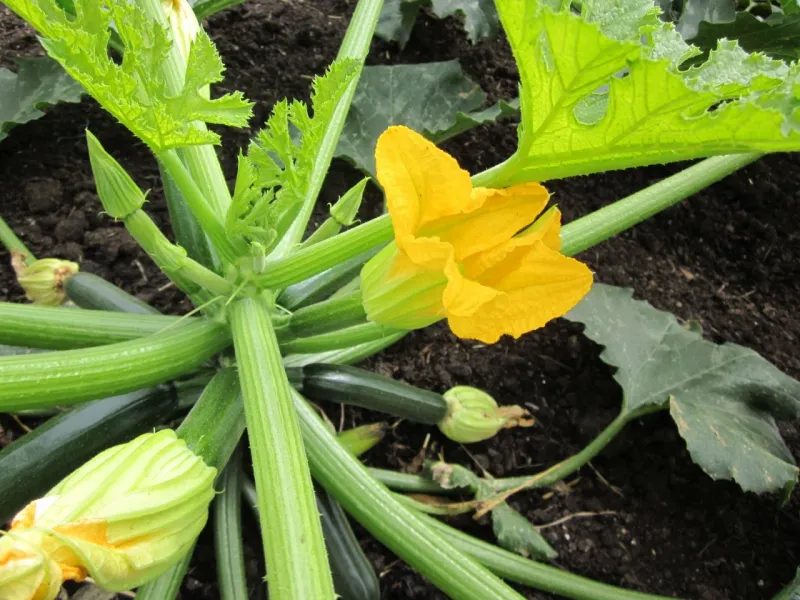
Seeing a zucchini vine covered in cheerful yellow flowers with nothing to show for it can feel alarming, but there is a good reason to pause before worrying. Zucchini is a plant that produces two completely separate types of flowers on the same vine: male flowers and female flowers. Utah State University Extension guidance on growing summer squash confirms that the first flowers to appear are commonly male, and they drop off the plant without producing fruit. That is entirely normal behavior, not a sign that something has gone wrong.
Male flowers exist to supply pollen, and they often appear a week or two before any female flowers show up. A plant that has only put out male blooms so far simply has not reached the stage where it can set fruit yet. The vine is not failing; it is following its natural sequence.
The diagnostic step that matters most at this point is checking whether any female flowers have opened. University of Minnesota Extension’s zucchini growing guide notes that poor pollination becomes a real concern only when female flowers are present but repeatedly fail to develop. Until you have confirmed that female flowers are opening and then failing, a temporary run of male-only blooms is worth watching rather than treating as a crisis.
The flower’s base reveals whether fruit can form
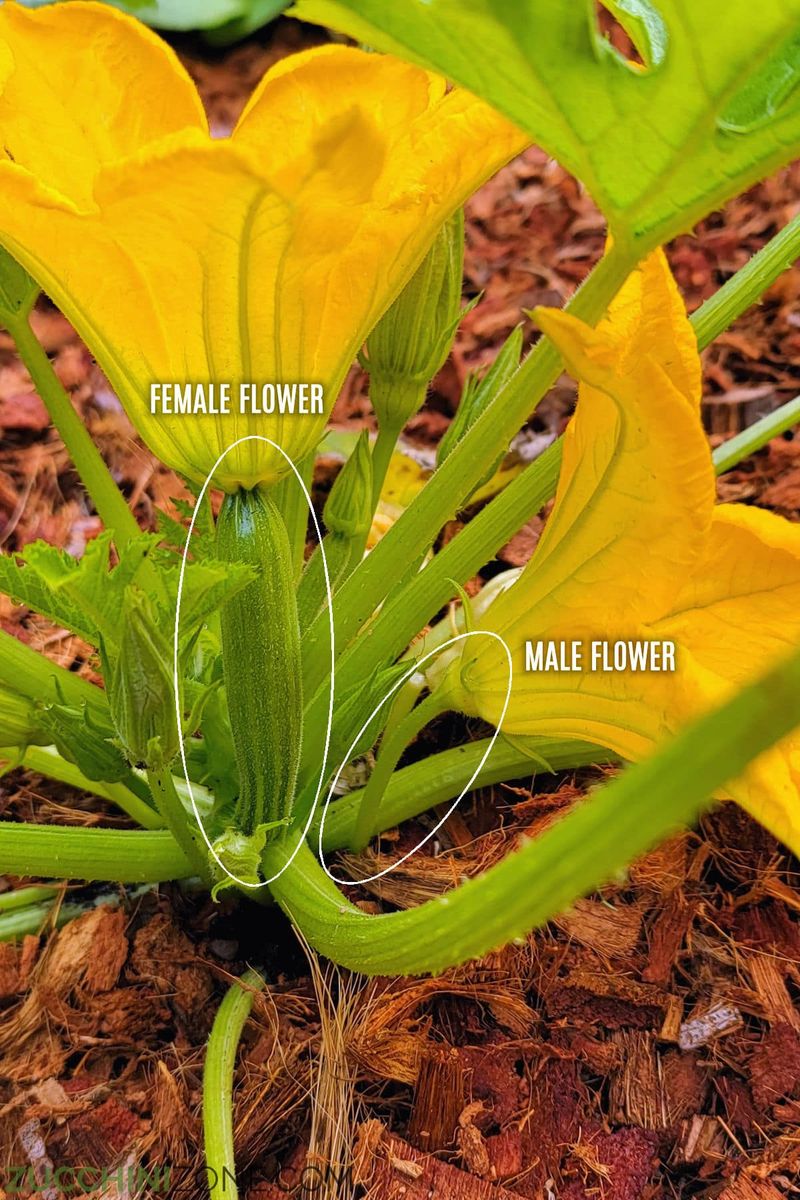
Knowing which flower type you are looking at changes everything about how you respond. A female zucchini flower is easy to identify once you know the clue: look directly at the base of the blossom, right where the stem meets the petals. A female flower has a small, swollen, miniature-zucchini-shaped ovary sitting there, plump and unmistakable. That ovary is what eventually grows into your harvest.
Inside the flower, a sticky, multi-lobed structure called the stigma receives the pollen.
A male flower looks quite different at the base. University of Minnesota Extension describes the male flower as having a straight, slender stem with no swelling at the base. Inside the male flower, the pollen-bearing anther is the central structure, often visibly dusted with yellow pollen when the flower is freshly open.
The practical takeaway is straightforward: only a female flower can develop into a zucchini. Colorado State University Extension’s vegetable garden hints reinforce that male flowers will always drop without producing fruit, which means a vine covered entirely in male blooms cannot set fruit no matter how many bees visit. If every flower you see has a slim stem and no swollen base, the vine simply needs more time before you can diagnose a pollination problem. Check the base first, then decide what action to take.
A shriveling baby zucchini may signal incomplete pollination
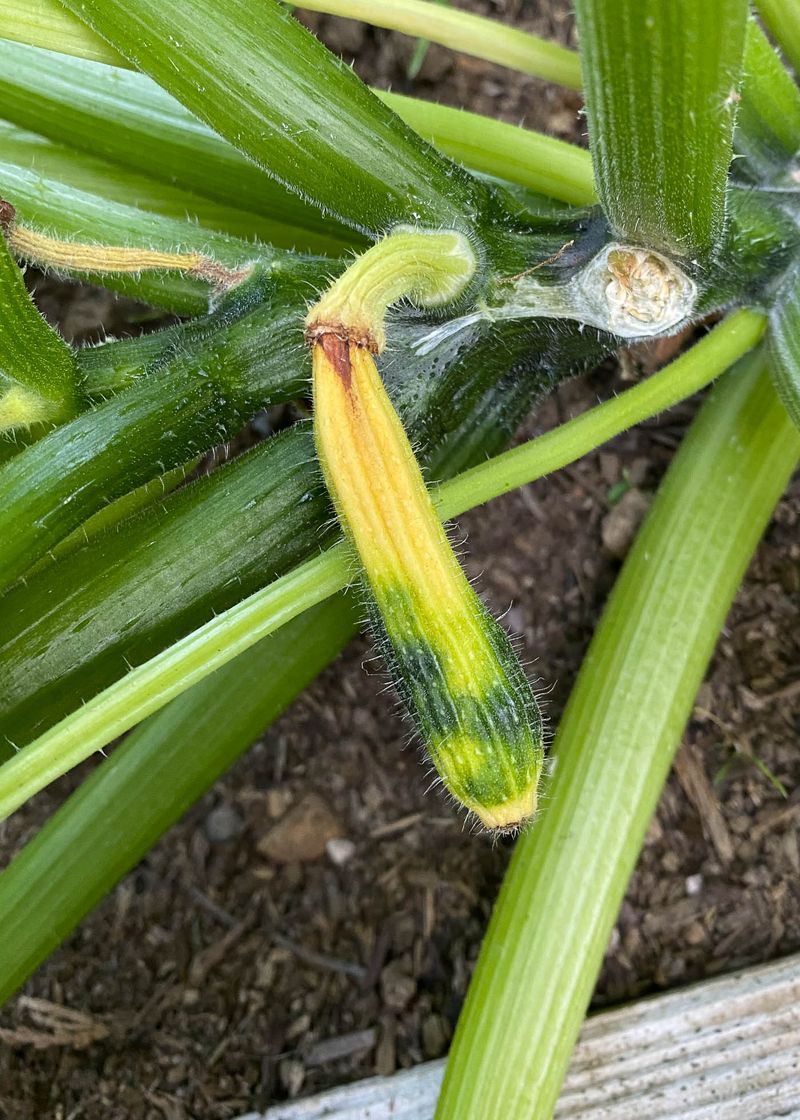
Once you have confirmed that female flowers are opening, the next thing to watch is what happens to the small ovary behind each bloom. When pollination goes well, that miniature zucchini swells steadily over the following days. When it does not go well, the pattern looks quite different. The tiny fruit may yellow, shrivel, or simply stop growing and fall off the vine.
A misshapen zucchini that grows unevenly can also suggest that pollen was deposited unevenly across the stigma, leaving parts of the ovary unfertilized.
These symptoms are suggestive of incomplete pollination, but they are not definitive proof on their own. Colorado State University Extension’s guide to cucurbits notes that heat stress, drought, and excessive moisture can produce the same yellowing and abortion even when pollination occurred. Treat shriveling baby fruit as a reason to investigate pollination first, not as a guaranteed diagnosis.
Timing plays a large role in whether bees reach the flowers at all. University of Minnesota Extension’s guide on flower and fruit set in cucurbits explains that zucchini flowers open for a short window, generally in the morning, and that rain, cool temperatures, clouds, wind, heat, or low insect activity can all reduce bee visits during that period. A single overcast or windy morning can mean a female flower opens and closes without a single pollinator stopping by, leaving the ovary without the pollen it needs.
Hand-pollinate an open female flower step by step
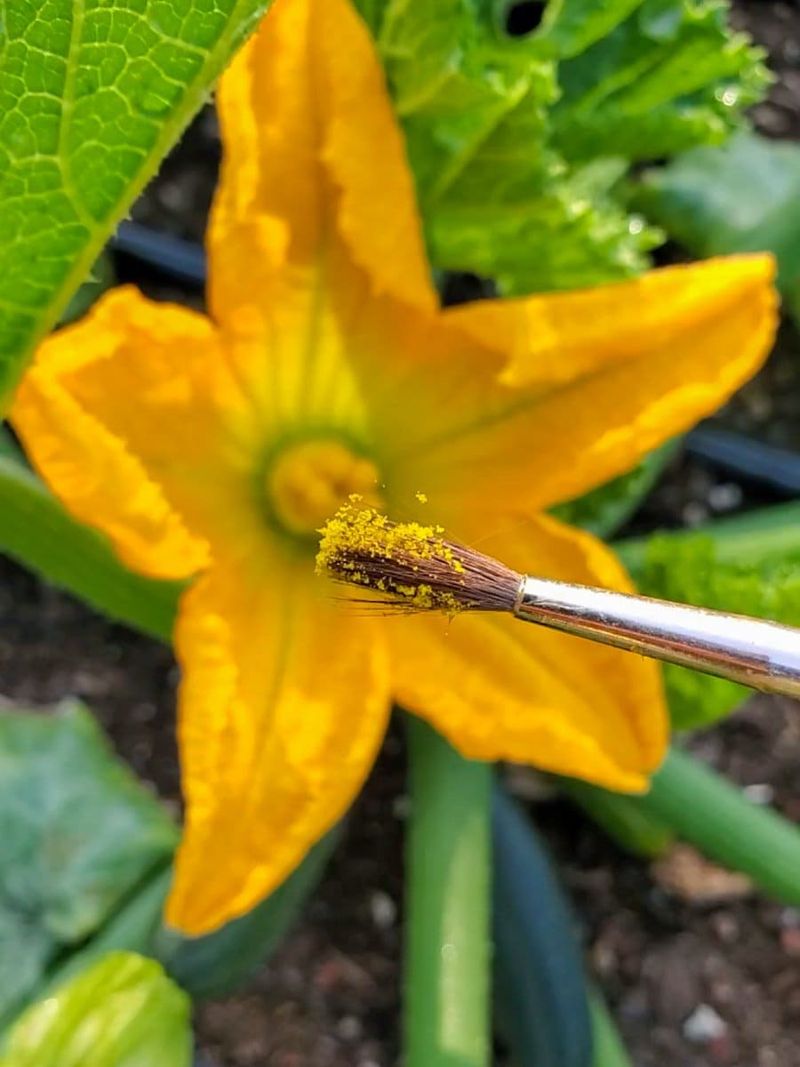
Hand-pollination is a simple, low-risk technique that moves pollen from a male flower directly to the stigma of a female flower when bees are not getting the job done. The procedure takes only a few minutes, and you do not need any special equipment. Colorado State University Extension’s vegetable garden hints outline the basic approach that home gardeners can follow with confidence.
Start by identifying an open female flower, the one with the swollen, miniature-zucchini-shaped ovary at its base. Then find a freshly opened male flower on the same plant or another nearby zucchini. Peel back or remove the male flower’s petals to fully expose the central anther, which should be dusted with visible yellow pollen. Gently brush the anther directly against the stigma inside the female flower, making contact with all parts of that sticky central structure.
If you prefer to keep the male flower intact, a clean cotton swab works well to pick up pollen from the anther and transfer it to the stigma.
Repeat the process for each open female flower that needs attention. Morning is generally the best time to do this, while the flowers are freshly open and the pollen is viable. Hand-pollination gives the ovary the pollen it needs to develop, but it cannot override heat, drought, disease, or other stress factors. Think of it as removing one obstacle, not guaranteeing a harvest.
If a flower aborts after a careful hand-pollination, broader growing conditions are worth examining next.
Weather and garden barriers can reduce fruit set
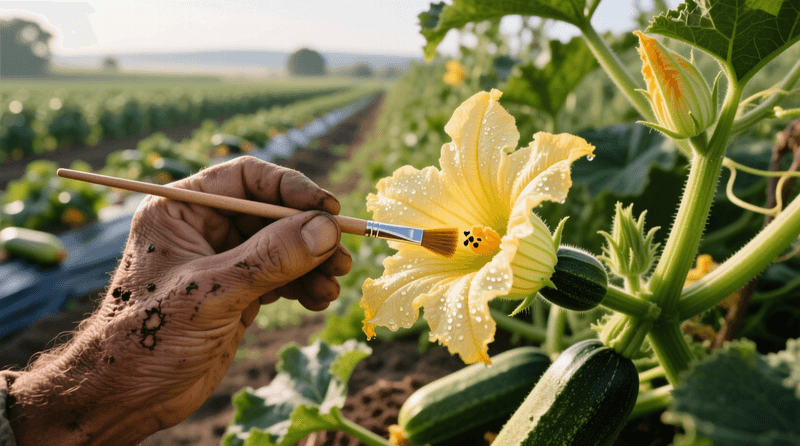
Heat is one of the more overlooked reasons a zucchini vine seems to stop producing. University of Minnesota Extension’s research on how vegetables respond to heat reports that daytime temperatures above roughly 90 degrees Fahrenheit combined with nights above roughly 70 degrees Fahrenheit can push cucurbit plants toward producing more male flowers and may contribute to flower or young-fruit abortion. These are reported risk conditions, not a hard cutoff where fruiting automatically stops, but they are worth noting during a heat wave.
Water stress works in both directions. Both drought and excessive moisture can interfere with fruit set in cucurbits, according to University of Minnesota Extension guidance on vining vegetable production. Keeping soil moisture reasonably consistent can reduce stress on the plant, though steady watering is a general stress-reduction measure and not a guaranteed way to restore fruit set on its own.
Floating row covers are a common tool for protecting plants from cucumber beetles and other pests, but they create a real trade-off during flowering. Penn State Extension’s guide on insect pests affecting squash notes that covers can block pollinators from reaching the flowers. Remove covers once female flowers begin to open, or hand-pollinate each female flower while the cover stays in place. Finally, avoid spraying insecticides directly on open blooms or while bees and other pollinators are actively visiting the garden.
Penn State Extension’s cucumber production guidance advises following pesticide labels carefully and taking steps to protect pollinators, since reducing bee activity during bloom can compound any existing pollination shortfall.
Know when pollen is not the main problem
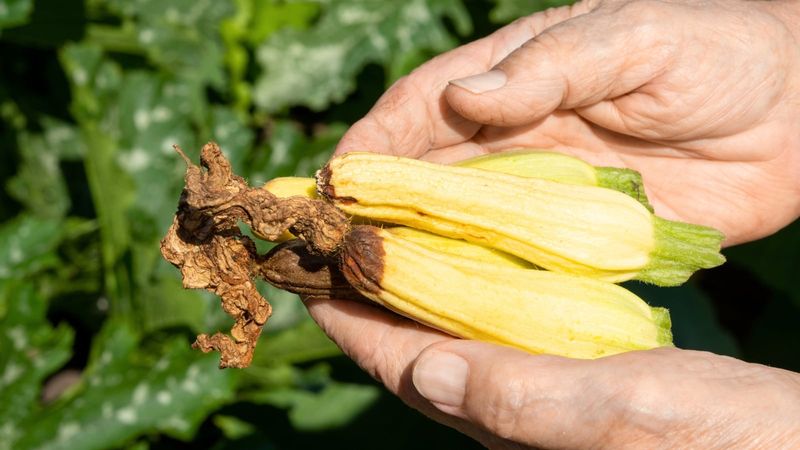
Hand-pollination is a useful tool, but it has clear limits. Flowers that develop fuzzy gray or white growth, or that rot at the blossom end, are showing signs of a moisture-related problem or a fungal disease rather than a pollination gap. University of Minnesota Extension identifies choanephora rot as one condition that can infect zucchini blossoms during wet periods, producing that characteristic fuzzy coating. Moving pollen to a diseased flower will not save it.
Severe heat, prolonged drought, waterlogged soil, heavy pest pressure from squash vine borers, bacterial wilt, powdery mildew, or root damage can all cause flower and fruit abortion that hand-pollination cannot address. University of Minnesota Extension’s cucurbit fruit-set guidance lists environmental and plant-health stressors as legitimate alternative causes when female flowers repeatedly fail despite adequate pollinator activity.
Fruit load on the plant is another factor worth checking. Colorado State University Extension notes that leaving oversized zucchini on the vine can signal the plant to slow or stop setting new fruit. Harvesting regularly – before fruit grows large and seedy – helps the plant redirect energy toward the next round of flowers. That said, consistent harvesting supports continued production; it does not substitute for diagnosing the underlying cause when flowers or young fruits keep failing.
If hand-pollination and regular harvesting still leave you with aborted fruit, look carefully at soil moisture, temperature patterns, and the plant’s overall health before concluding that pollination is the culprit.
Use the female flower to choose your next move
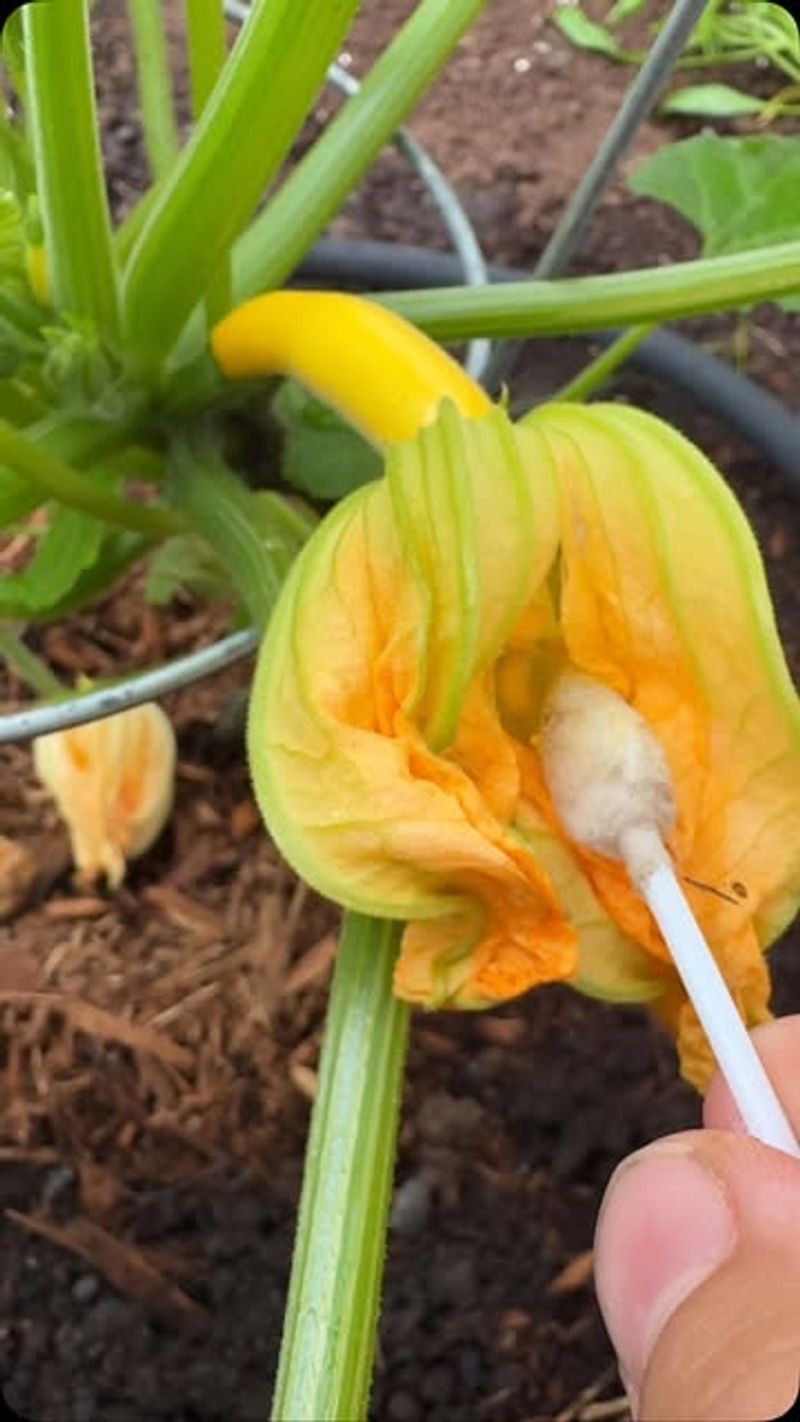
Every diagnostic check starts at the same place: the base of the flower. Look for that swollen, miniature-zucchini-shaped ovary that marks a female bloom. If only male flowers are open, the vine needs more time, and no intervention is required yet. If female flowers are opening and then shriveling, that is your cue to act.
On mornings when bee activity seems low, the weather is poor, or you are using row covers, hand-pollinate each open female flower using a freshly opened male flower from the same plant. University of Minnesota Extension confirms that a single zucchini plant carries both flower sexes, so you do not need a second plant to complete the process. Keep flowers accessible to bees whenever possible, and avoid pesticide applications during bloom. Penn State Extension reinforces that protecting pollinators during the flowering period supports the fruit set that hand-pollination alone cannot fully replace.
Harvest any mature zucchini promptly, monitor for signs of disease or stress, and check University of Minnesota Extension’s cucurbit production guidance if problems persist after hand-pollination. A vine that keeps aborting fruit after careful pollination is asking you to look beyond pollen. The flower’s base tells you where to start; what you find next tells you where to go.