
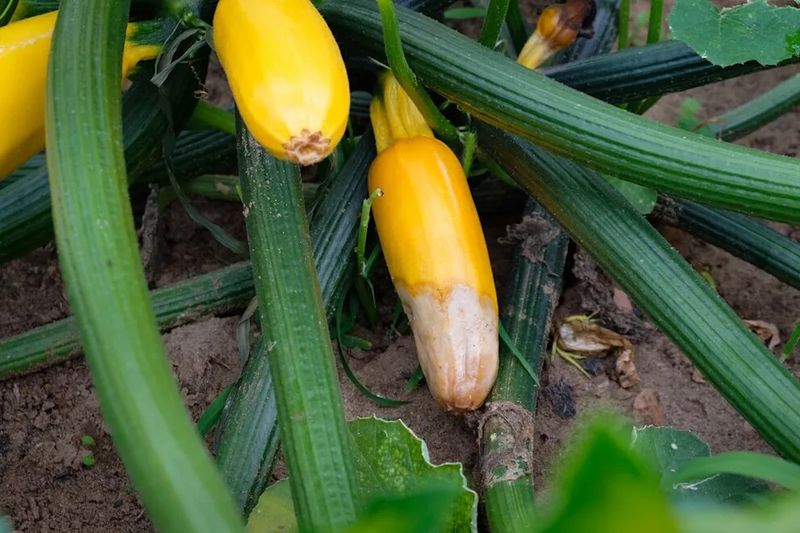
Finding a tiny zucchini turning yellow and mushy at the blossom end is one of the most discouraging sights in a summer garden. Many gardeners assume disease is to blame and reach for a spray, but the real starting point is usually upstream at the flower. Inadequate pollen transfer to a female flower often stops fruit development before it barely begins, and August conditions can make that problem more likely. Knowing how to read the flowers, check for look-alike disorders, and take targeted action can turn a frustrating pattern around.
Start with the fruit pattern, not the calendar
A young zucchini that swells briefly, stays small, turns yellow or brown, becomes misshapen, shrivels near the blossom end, and drops off is showing a recognizable pattern. UC IPM guidance on poor pollination in cucurbits explains that when a female flower receives inadequate pollen, the developing fruit cannot sustain normal growth and eventually aborts. The fruit may look flattened or twisted rather than straight and full, and if you cut one open before it deteriorates completely, few or no seeds inside can support the idea that pollination fell short.
That “few seeds” clue is useful, but it is not a required test and you may not catch the fruit in time to inspect it. What matters more is the repeating pattern: multiple small fruits yellowing and dropping, not just one. Iowa State University Extension notes that inadequate pollination commonly explains this sequence, and the brown or mushy tissue that appears later often reflects natural breakdown or secondary organisms rather than a primary rot disease.
Poor pollination is a strong first possibility, but it is not the only one. Blossom-end rot and fungal rots can produce similar brown, mushy damage at the same end of the fruit. Before settling on any single cause, note whether the failed fruits share a consistent location on the plant, whether weather or bee activity shifted recently, and whether any unusual growth or discoloration appears on the old blossom itself. The pattern across several fruits, not one bad specimen, points toward the right diagnosis.
Read the flowers before blaming the fruit
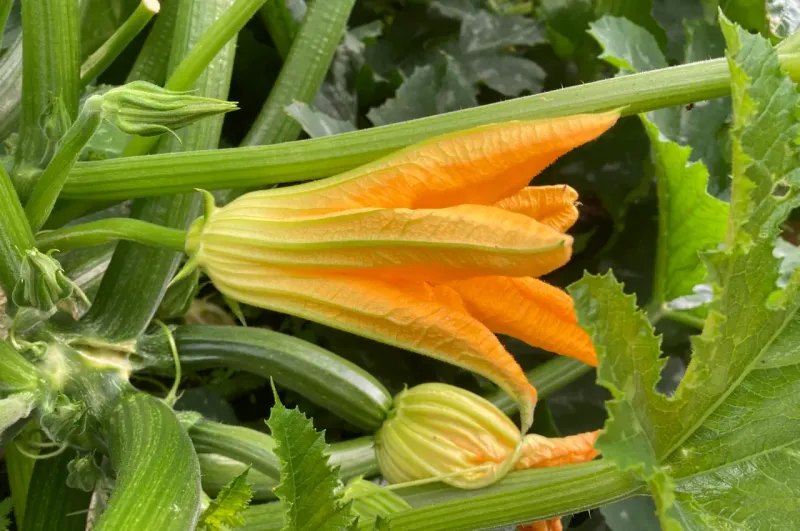
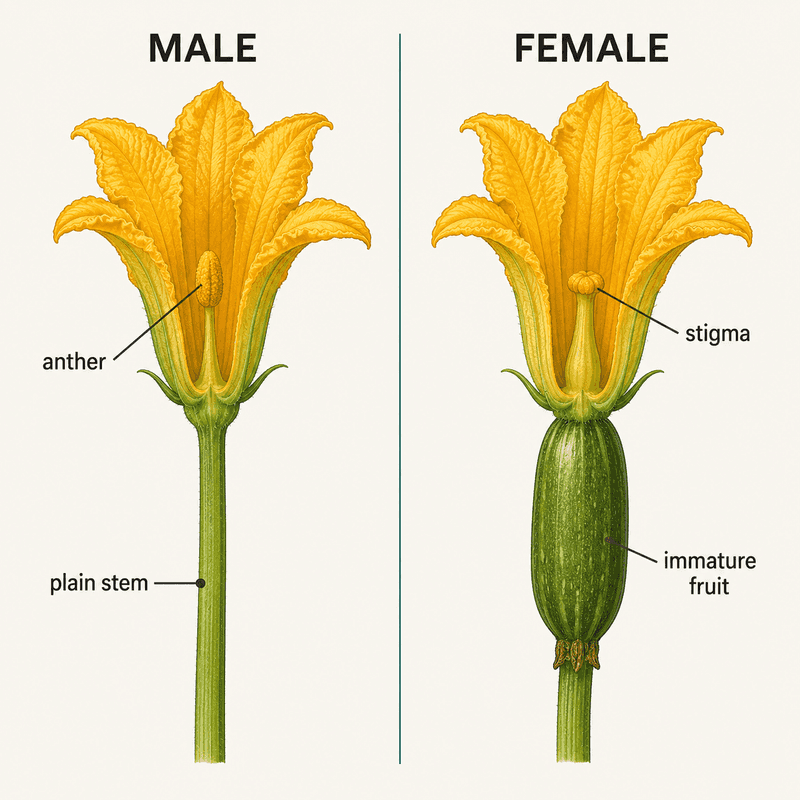
Before deciding that pollination failed, spend a few mornings actually watching the flowers. Zucchini produces separate male and female flowers on the same plant, and University of New Hampshire Extension explains how to tell them apart: the female flower has a miniature fruit or swollen ovary sitting right at its base, while the male flower grows on a slender, plain stem with no swelling beneath it. Both types need to be open at the same time for a bee to carry pollen from one to the other and complete fertilization.
Early in the season, a plant often produces a run of male flowers before any females appear, which can look alarming but is normal. The more telling sign of a pollination problem is when female flowers open, stay open for their short window, and then close and shrivel without setting fruit, especially if that happens repeatedly over several days. A single failed fruit on an otherwise productive plant is less meaningful than a string of aborted young fruits across multiple flowers.
Look for bees or other insects visiting the open flowers during the morning hours when flowers are receptive. Note whether male and female flowers are overlapping in their timing. Utah State University Extension points out that squash flowers are short-lived, so timing matters considerably. Repeated observations over three or four mornings give you a much clearer picture than a single glance at one wilted fruit.
August conditions can reduce successful pollination
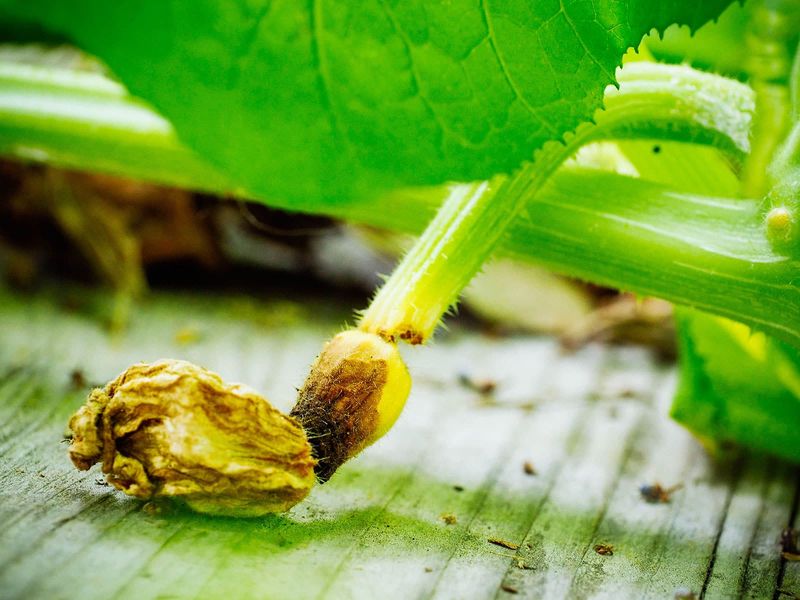
August can be a rough month for zucchini pollination, though the month itself is not the diagnosis. What matters is the combination of local conditions during that stretch. University of Maryland Extension guidance on vegetable pollination explains that high heat, hot nights, extended rainfall, and reduced light can all interfere with successful pollen transfer, whether by discouraging bee foraging, impairing pollen viability, or affecting the plant’s flower production and receptivity.
Heat stress can push the plant toward producing more male flowers than female ones, so fewer female flowers are available during a hot stretch. Bees tend to reduce foraging when temperatures climb well above 90 degrees Fahrenheit or when humidity and rain keep them in their hives. A string of overcast, rainy mornings can mean that the narrow window when a female flower is open and receptive passes without a single effective visit. Cool spells can have a similar effect by slowing bee activity.
None of those conditions alone proves that pollination failed for a specific fruit. Weather affects multiple flowers across several days, so the issue is rarely one quiet morning or one missing bee. UC IPM’s cucurbit pollination resource reinforces that inadequate pollen transfer to a particular female flower, repeated across several flowers during a difficult weather stretch, is the more accurate way to understand the problem. Track conditions over a week rather than pointing to a single day.
Hand-pollinate the next fresh female flower
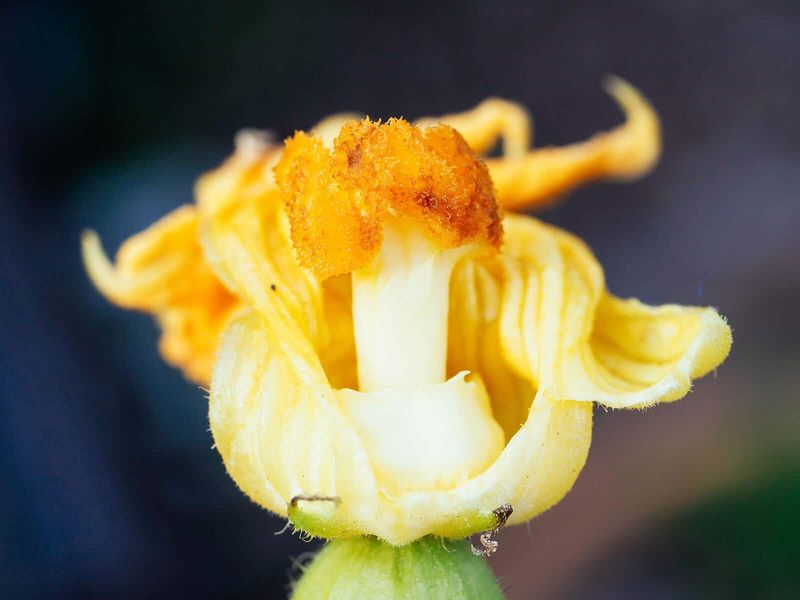
Hand-pollination is a practical step worth trying when repeated fruit abortion and limited bee activity suggest that inadequate pollen transfer is limiting fruit set. The timing is critical: work in the morning, shortly after flowers open, while pollen is fresh and the female stigma is still receptive. UNH Extension’s guide to zucchini flower problems describes the method clearly: find a freshly opened male flower, collect pollen from its central anther by either detaching the flower and rolling it gently against the female stigma, or by using a small, clean paintbrush to transfer the pollen directly onto the sticky surface inside the female flower.
The female stigma sits in the center of the female flower and usually looks slightly sticky or glistening when it is receptive. You are aiming to deposit a visible coating of yellow pollen on that surface. One well-pollinated female flower can set a full-sized fruit if conditions otherwise support it. If you have several female flowers open on the same morning, use a separate male flower or rinse and dry the brush between applications to avoid cross-contaminating spent pollen.
Hand-pollination makes the most sense after you have observed repeated aborted fruits, noticed very few bee visits over several mornings, or watched weather conditions that limited natural pollinator activity. It may improve fruit set when inadequate pollination is genuinely the limiting factor. Utah State University Extension notes that squash flowers are short-lived, which is why morning timing matters so much. Hand-pollination cannot reverse a fruit that is already shriveling, cure heat stress, fix blossom-end rot, or address a fungal disease, so it works best as a targeted response to a specific pollination gap rather than a blanket remedy.
Protect pollinators during the bloom period
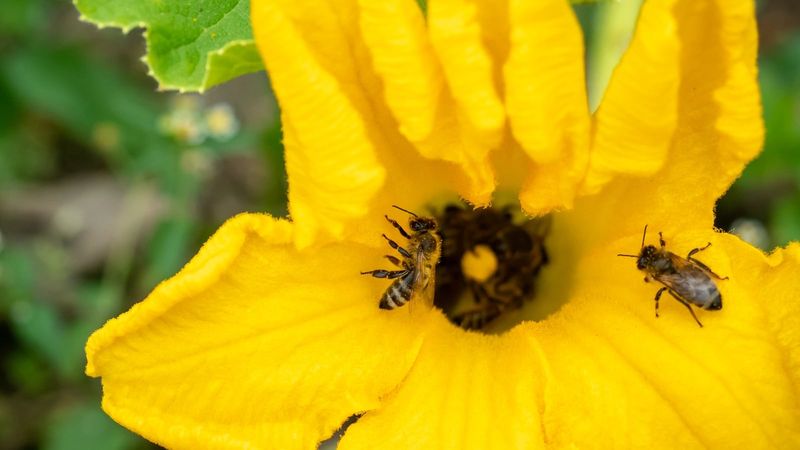
Hand-pollination can fill a gap, but the better long-term outcome comes from keeping natural pollinators active in the garden. Bees and other flower-visiting insects do the heavy lifting across an entire season, and protecting their presence during bloom is more efficient than hand-pollinating every female flower that opens. The clearest step is avoiding insecticide applications while squash are blooming or while bees are actively foraging, typically from mid-morning through mid-afternoon on warm sunny days.
EPA guidance on protecting pollinators from pesticides is direct about this: pesticide risk depends on the specific product, its formulation, residues left after application, potential drift, the bloom status of nearby plants, and the directions on the label. Spraying at night may reduce the number of bees present at the time of application, but it does not eliminate risk, because residues can persist on flowers and foliage into the next morning when bees return. Following the product label and any state pollinator-protection requirements is the baseline, not an optional add-on.
University of Maryland Extension reinforces that organic labeling does not automatically make a product harmless to pollinators. Some organically approved pesticides are acutely toxic to bees. The goal is not to avoid every garden treatment indefinitely, but to time necessary treatments carefully, read labels for pollinator-protection language, and give bees a safe window to do the work that hand-pollination can only partially replace.
Separate pollination failure from blossom-end rot
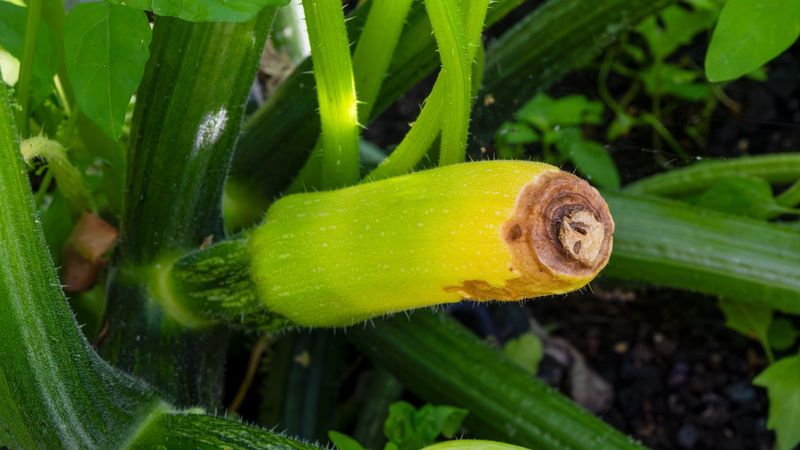
Brown, mushy tissue at the tip of a young zucchini does not automatically mean pollination failed. Blossom-end rot produces a strikingly similar appearance and is worth ruling out before settling on any single explanation. Unlike a fungal disease, blossom-end rot is a physiological disorder, meaning it is not contagious and cannot spread from plant to plant. UNH Extension’s blossom-end rot fact sheet explains that it develops when calcium availability in the rapidly growing tissue at the fruit tip becomes insufficient, often because of conditions that interrupt the plant’s ability to move calcium upward even when the soil contains adequate calcium.
The lesion typically begins as a small, dark, water-soaked patch at the blossom end of the fruit. Over time it expands, turns brown or black, and becomes leathery or sunken. Secondary organisms can enter that damaged tissue and make it soft and mushy, which is why blossom-end rot can look a lot like a rot disease at first glance. The fruit may be a reasonable size rather than the small, misshapen, seed-poor fruit more typical of a pollination problem, and that size difference is one useful clue.
North Carolina Cooperative Extension connects blossom-end rot risk to inconsistent soil moisture, drought, waterlogged roots, low soil pH, and nutrient imbalances that interfere with calcium uptake. A zucchini plant that received irregular watering during a hot August stretch, or one growing in compacted or waterlogged soil, has elevated risk. Pollination-failed fruit tends to be small and often absent of seeds; blossom-end-rot fruit may be larger but scarred at the tip. Both can turn mushy, which is why observing the full pattern across multiple fruits matters more than examining one damaged specimen in isolation.
Recognize Choanephora rot before using a spray
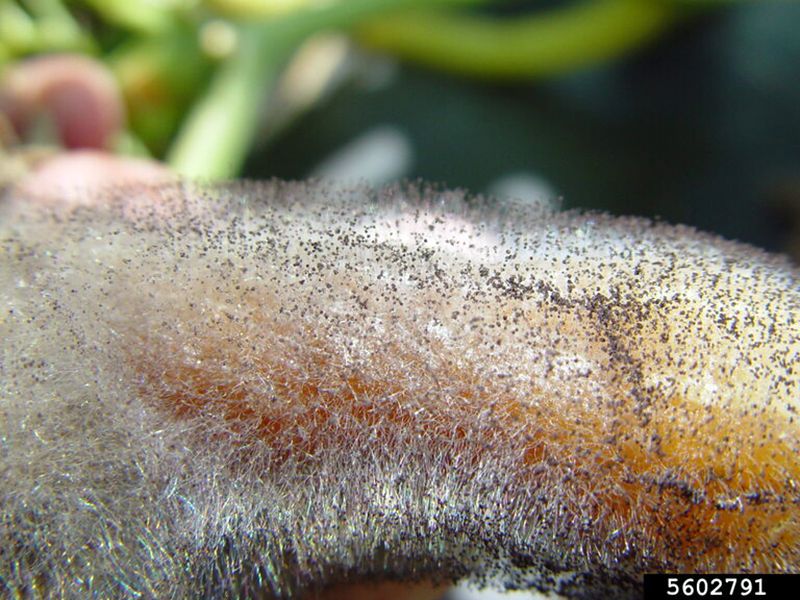
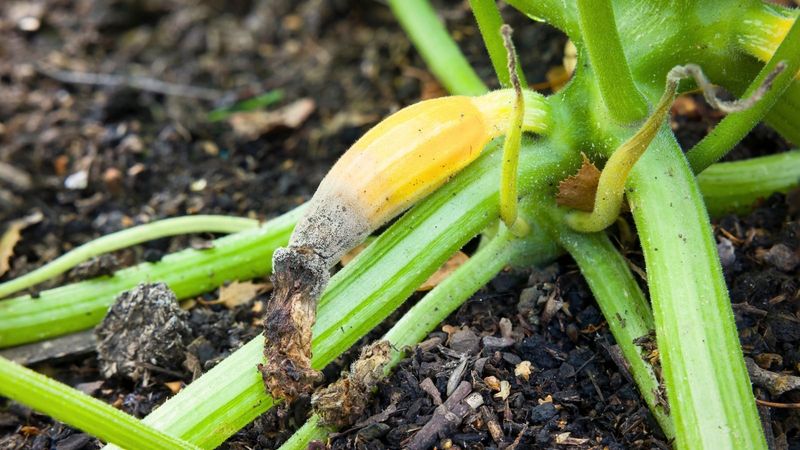
A third possibility deserves attention when the blossom end looks distinctly fuzzy rather than just brown or mushy. Choanephora rot is a genuine fungal disease, not a physiological disorder, and it tends to appear during warm, humid, wet stretches when old flower petals cling to developing fruit and give the fungus a foothold. The strongest visual clue is a fuzzy growth on the old blossom or on the rotting fruit tip that may appear white, gray, or purplish-black. University of Minnesota Extension’s Choanephora rot guide describes this growth as a key distinguishing feature that should not be attributed to pollination failure alone.
Seeing that fuzzy growth changes the picture considerably. Pollination failure does not produce visible fungal structures on the fruit. Blossom-end rot produces a leathery or sunken lesion, not a furry coating. If you see the characteristic fuzzy growth on several young fruits during a period of warm, wet weather, Choanephora rot is the more likely explanation for those specific fruits, even if poor pollination or blossom-end rot is also present elsewhere on the plant.
University of Maryland Extension’s resource on Choanephora rot in vegetables and the Minnesota guidance both make clear that fungicide applications are not an effective answer. New susceptible flowers continue to open throughout the season, so spraying cannot stay ahead of the infection cycle. Fungicides will not correct poor pollination, will not address blossom-end rot, and are not recommended as a routine response to every rotting baby zucchini. Removing affected fruit and improving air circulation around the plant are more practical steps when this disease is suspected.
Remove failed fruit and stabilize plant care
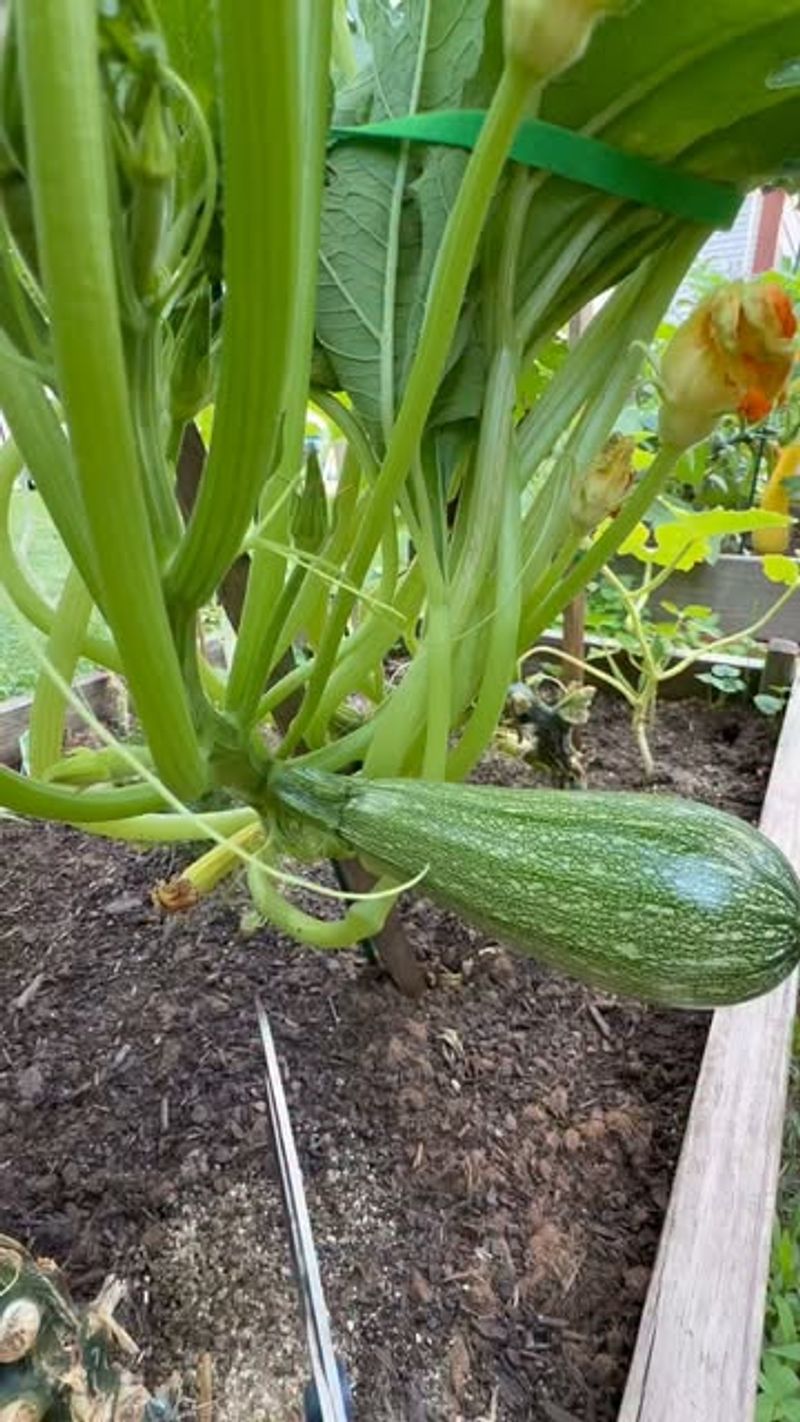
Once a young zucchini has shriveled, yellowed, or developed a brown or mushy blossom end, it will not recover. Removing it promptly is the right call regardless of which problem caused it. A failed fruit left on the plant draws energy without contributing to the harvest, and in the case of fungal rot, removing affected tissue may help limit continued spread, though that benefit is conditional rather than guaranteed. University of Minnesota Extension notes that sanitation has limited effectiveness against Choanephora because new susceptible tissue keeps appearing, so removal is a supportive measure rather than a cure.
Steady soil moisture is the most reliable cultural step you can take to reduce blossom-end rot risk going forward. Alternating between dry soil and saturated soil stresses roots and disrupts the plant’s ability to move calcium into developing fruit. Mulching around the base of the plant helps moderate soil temperature and moisture swings during hot August weather, and that consistency supports healthier fruit development across the remaining season. UNH Extension recommends steady watering and mulch as practical supportive care for blossom-end rot prevention.
Resist the urge to add calcium or lime to the soil without testing first. North Carolina Cooperative Extension explains that water stress, root damage, low or high soil pH, salinity, and nutrient imbalances can all interfere with calcium movement even when the soil contains enough calcium. Adding lime or calcium supplements without a soil test can create new nutrient problems rather than solving the original one. Consistent care reduces blossom-end rot risk, but it cannot substitute for adequate pollination or cure every type of rot on its own.
Use the next few flowers to confirm the pattern
One damaged zucchini tells you something went wrong, but it does not identify the problem across the whole plant. The clearest path forward is to watch the next several female flowers through their full cycle, noting male-flower availability, pollinator visits, recent weather, and how each developing fruit looks at two and four days after the flower closes. UC IPM’s pollination resource supports using repeated observations of flower timing, fruit development, and pollinator activity rather than a single snapshot to diagnose inadequate pollination.
If several consecutive female flowers abort into small, yellowing, seed-poor fruits during a stretch of limited bee activity or difficult weather, morning hand-pollination is a reasonable targeted response. If the damage appears as a leathery or sunken lesion on an otherwise developing fruit, UNH Extension’s blossom-end rot guidance points toward moisture consistency as the priority. Fuzzy growth on the blossom end during warm, wet weather suggests Choanephora rot rather than a pollination gap, and the response shifts to sanitation and air circulation rather than hand-pollination or watering adjustments.
Zucchini is a resilient plant that can recover its production rhythm once the underlying problem is addressed. Matching the response to the actual pattern, rather than applying one fix to every rotting fruit, is what separates a gardener who harvests abundantly in September from one who keeps spraying the wrong thing all month.