
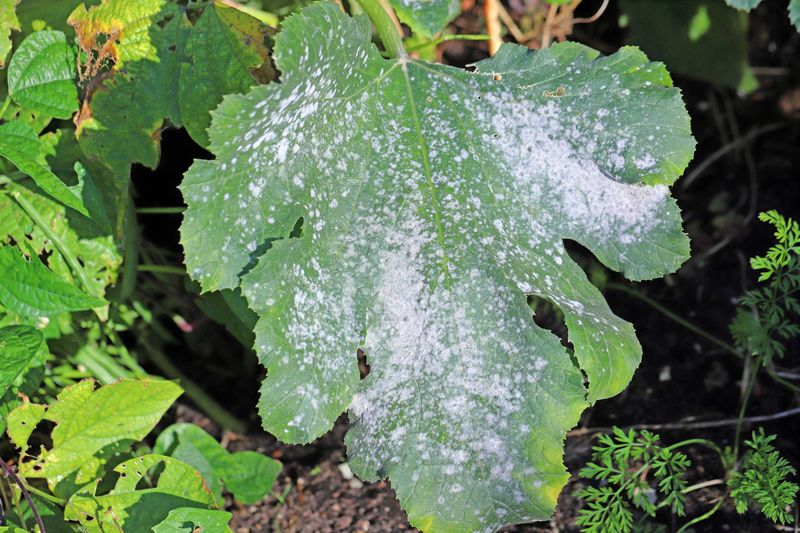
Seeing your zucchini leaves go from dusty white to brown and papery is one of those late-summer surprises that can stop a gardener cold. That flour-like coating is a strong signal that cucurbit powdery mildew has moved in, and as the disease advances, leaves can yellow, wither, and turn crispy even before the plant stops producing fruit.
For gardeners in Florida, Texas, and similar climates, this pattern shows up reliably once summer heat and humidity combine with dense plant growth. Knowing what you are actually looking at makes every next step clearer and more effective.
Powdery mildew can turn zucchini leaves from white to crisp
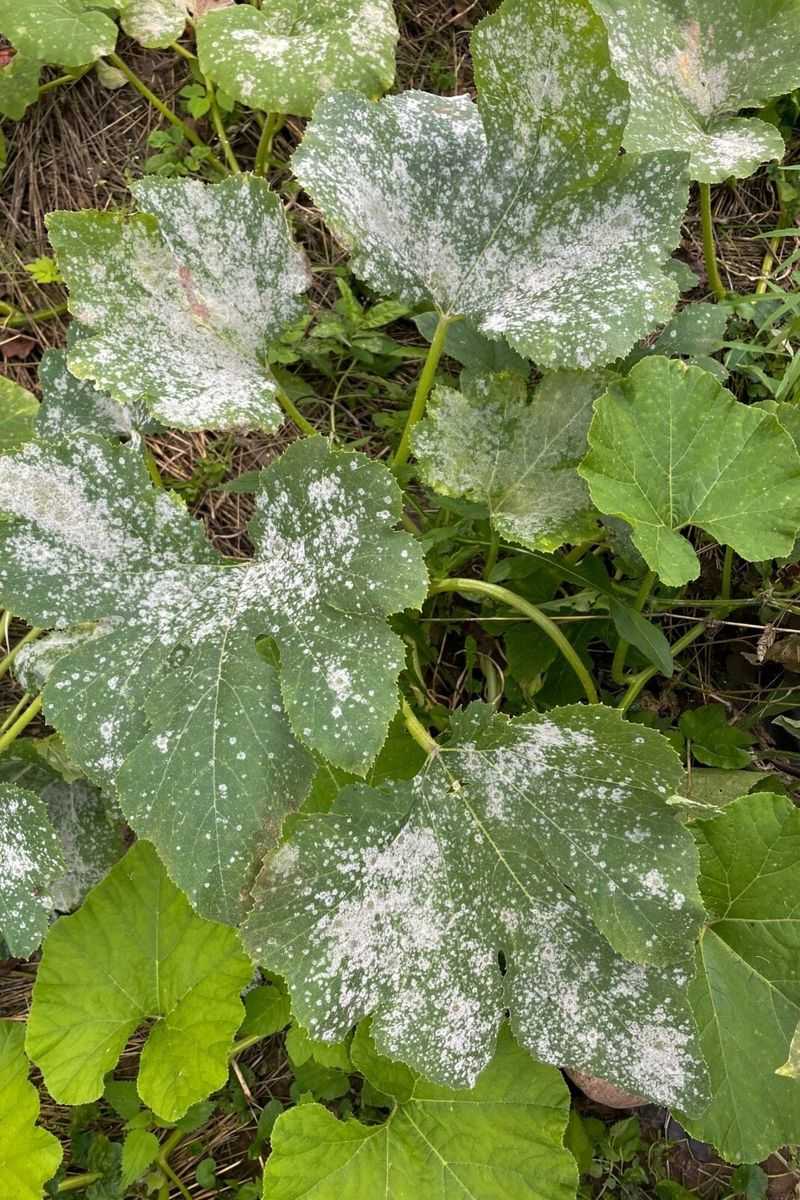
Flour-like white or gray patches on zucchini leaves are the signature sign of cucurbit powdery mildew, and the location of those first patches matters. University of Minnesota Extension’s cucurbit powdery mildew guide explains that the coating typically begins on older or shaded leaves, then spreads across the upper and lower surfaces, petioles, and stems as the infection intensifies.
The powdery layer is made up of fungal structures, not dust or residue, so wiping it off does not stop the problem.
As infection becomes severe, the affected leaves follow a predictable path: pale or yellow spots appear first, followed by browning, papery texture, and finally leaf death. Texas A&M AgriLife Extension’s cucurbit powdery mildew fact sheet confirms that this white-to-crisp progression is consistent with advanced mildew rather than heat damage alone.
Heat, drought, or high evaporative demand in late summer can speed up that collapse, but crisping does not prove a second stress is present.
The disease targets foliage rather than fruit directly, but the secondary consequences for the plant are real. When infected leaves die back, the remaining canopy shrinks, and exposed zucchini fruit can develop sunscald.
UF/IFAS reporting on cucurbit diseases in Florida notes that significant defoliation can also reduce fruit size and overall yield, which is why protecting the healthy green canopy matters as much as managing the disease itself.
Late-summer conditions can intensify mildew and leaf decline
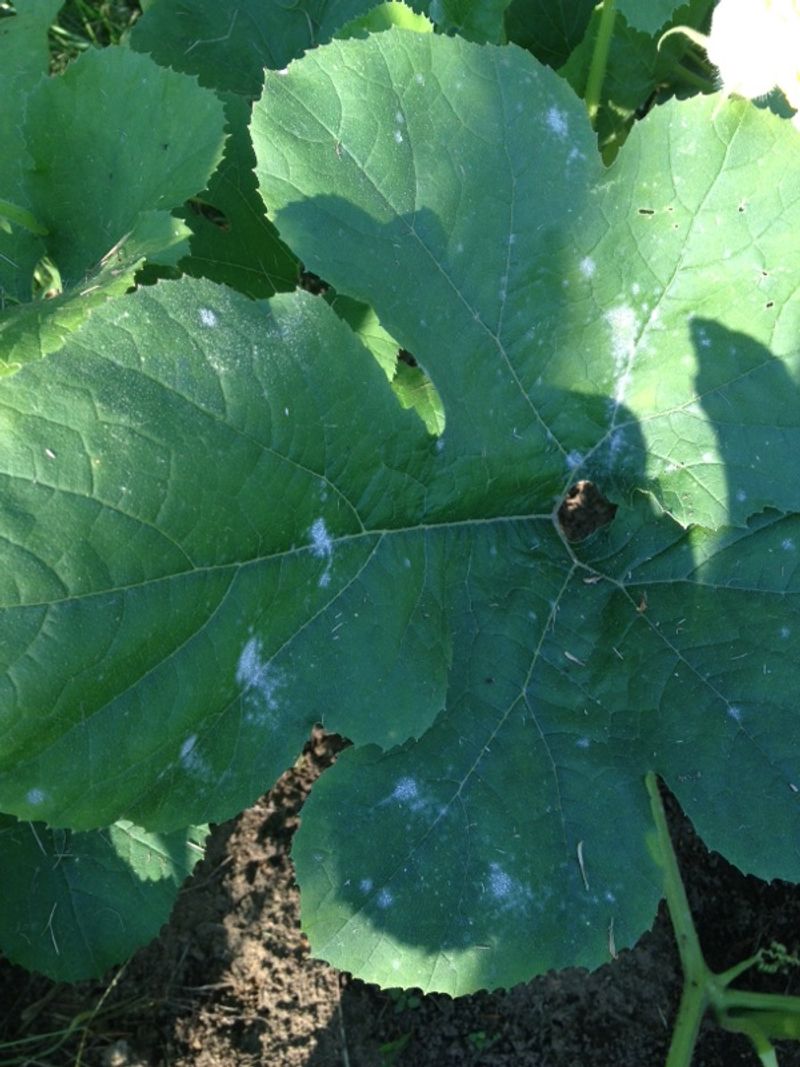
Powdery mildew does not simply appear because temperatures climb. Infection reflects the interaction of several factors at once: humidity levels, canopy density, leaf age, cultivar susceptibility, and pathogen strain all play a role.
Cornell Cooperative Extension’s cucurbit powdery mildew fact sheet notes that mean temperatures around 68 to 80 degrees Fahrenheit are generally favorable, and that temperatures approaching or exceeding 100 degrees may temporarily slow disease development without eliminating the pathogen or relieving plant stress.
Humid nights and dense canopies create the sheltered, moist microclimate that supports infection, while warm, dry daytime conditions promote spore formation and wind dispersal. Research published in Plant Pathology reinforces that dry air during the day does not prevent the disease when humidity is sufficient overnight.
Both stresses, mildew and heat, can be active at the same time, but one should not be assumed to cancel the other.
Regional timing varies. Texas A&M AgriLife Extension’s cucurbit production guide identifies powdery mildew as a common cucurbit disease that may be more problematic in fall, while UF/IFAS reports annual occurrence in south Florida during both humid and relatively dry seasons.
The same late-summer weather pattern that stresses plants and encourages spore spread can also intensify leaf collapse, but examining the plant and soil directly is the only reliable way to know which stresses are actually at work.
Inspect both leaf surfaces before choosing a treatment
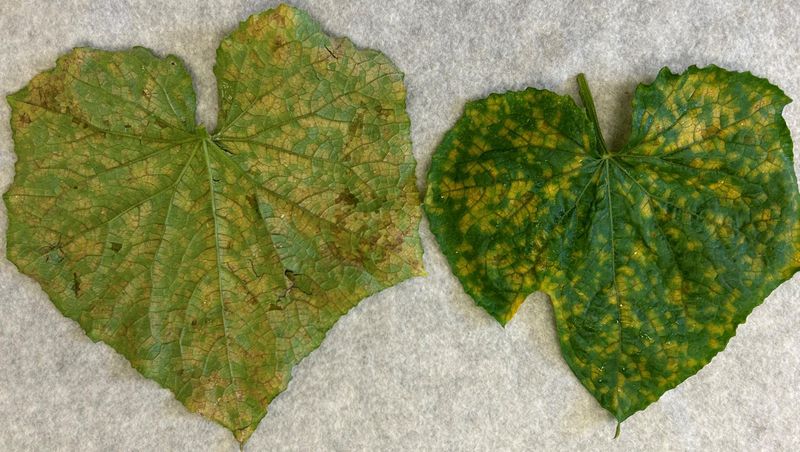
Before reaching for pruning shears or a spray bottle, spend a few minutes actually looking at the plant. Start with older leaves and any foliage that grows in shade under the canopy, since those are typically the first areas where powdery mildew takes hold.
The University of Minnesota’s summer squash diagnostic tool recommends checking both surfaces of the leaf carefully, because mildew can begin on the underside before becoming obvious on top.
Downy mildew is the most important look-alike to rule out. University of Minnesota Extension’s downy mildew guide describes its typical pattern as angular, vein-bounded pale or yellow spots on the upper leaf surface, paired with gray or purplish fuzzy growth underneath.
UF/IFAS guidance on cucurbit downy mildew explains that this pathogen generally requires free water or prolonged leaf wetness to begin infection, unlike typical powdery mildew, which can establish under dry surface conditions when humidity is present in the air or canopy.
Not every crisp or brown leaf points to disease. Colorado State University Extension’s overview of water’s role in plant growth notes that marginal browning and leaf scorch can result from heat, drought, salt accumulation, root damage, or spray injury when no visible white growth is present.
Wilting pattern offers another clue: Colorado State Extension’s cucurbit plant disorder guide and CSU’s cucurbit growing guide both indicate that temporary midday wilting that resolves by evening can be a normal heat response, while plants that remain wilted by morning deserve a closer look at soil moisture, root health, and possible disease.
Remove the worst leaves without stripping the canopy
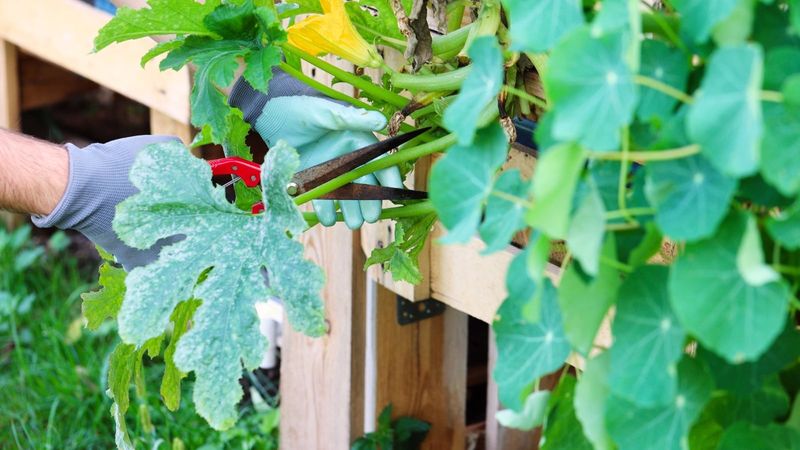
When powdery mildew is limited to a portion of the plant, removing the most heavily infected or completely dead leaves is a reasonable first physical step. Penn State Extension’s home-garden mildew guide recommends bagging or discarding diseased material rather than adding it to a home compost pile, since spores can survive composting conditions and reinfect future plantings.
The temptation to strip every suspicious leaf can backfire. University of Minnesota Extension emphasizes retaining as much healthy green canopy as possible, because those living leaves are still performing photosynthesis, shading the fruit from sunscald, and supporting continued production.
Removing too much foliage at once can shorten the harvest window more than the disease itself would have. The practical threshold depends on how much healthy tissue remains compared to the infected area.
Air movement is a useful preventive tool for future plantings and can help the current plant as well. The Texas Vegetable Growers Handbook’s disease management chapter highlights proper plant spacing, weed control, and avoiding dense, shaded growth as ways to reduce the humid microclimate that powdery mildew favors.
For this season, removing weeds crowding the base of the plant and thinning any overlapping foliage can open the canopy without sacrificing productive leaves.
Stabilize soil moisture while healthy leaves remain
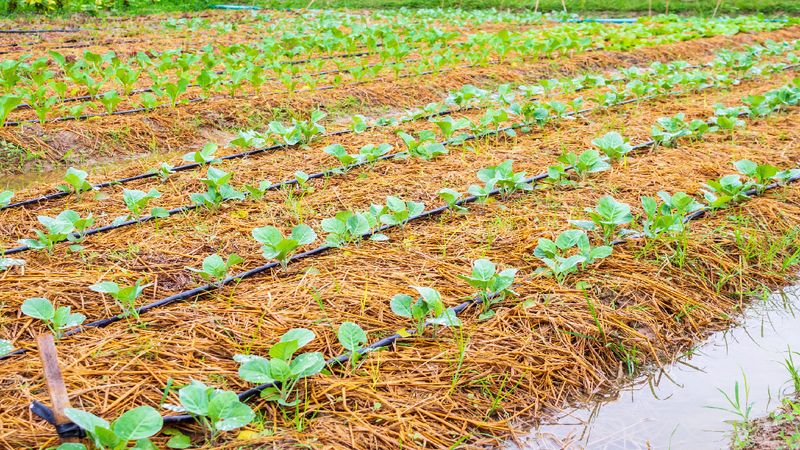
Once sanitation is done, shifting attention to the root zone can help the plant manage the rest of summer. Deep, consistent watering directed at the soil gives zucchini a steadier supply than shallow, frequent cycles that leave the plant oscillating between drought stress and brief recovery.
Utah State University Extension’s summer squash guide and USU’s vegetable water recommendations commonly cite roughly 1 to 2 inches of water per week as a starting point, adjusted for rainfall, soil type, plant size, and temperature.
Water demand rises meaningfully during flowering, fruit sizing, and ripening, so those are periods when consistent supply matters most. USU’s cucurbit irrigation guide recommends mulching around the base of the plant to reduce soil-moisture swings and keep the root zone more evenly supplied between waterings.
A 2- to 3-inch layer of organic mulch also helps moderate soil temperature, which is a real advantage during peak summer heat in Texas and Florida.
Overhead irrigation is worth avoiding when possible. University of Minnesota Extension’s summer squash growing guide and Penn State Extension both note that wet foliage can increase the risk of downy mildew and bacterial leaf spot.
If overhead watering is the only option, applying it in the morning gives leaves more time to dry before nightfall, reducing that risk somewhat.
Use treatment to protect new growth, not revive dead tissue
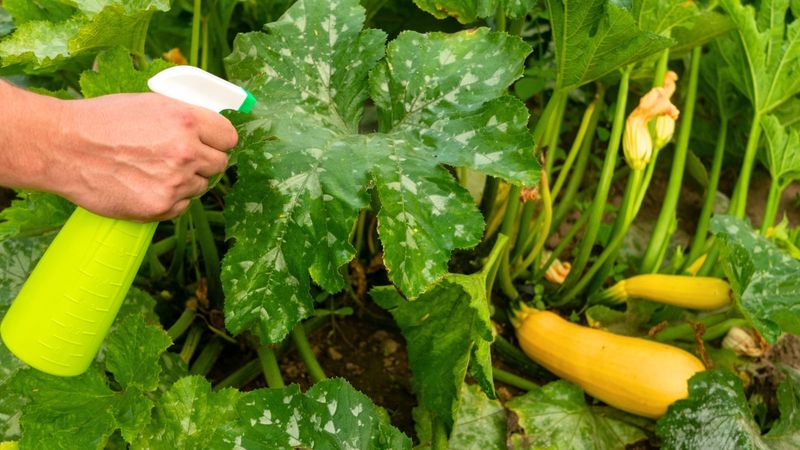
Fungicides and other disease-suppression products work best before infection takes hold or when the very first spots appear. UF/IFAS guidance on fungicides for home vegetable gardens is clear that thorough coverage may protect newer tissue or slow disease progression, but already brown, papery leaves will not turn green again.
The realistic goal of any treatment at this stage is preserving the healthy growth that remains, not undoing damage that is already done.
Several product types may provide suppression, including sulfur, potassium bicarbonate, and certain biological fungicides. Performance varies, and none should be presented as a guaranteed fix.
University of Minnesota Extension notes that product availability and registration can differ by state and change over time. Penn State Extension’s garden pest and disease strategies reinforce that early detection and complete leaf coverage matter more than the specific product chosen.
The product label is the legal and practical decision point. EPA guidance on pesticide labels explains that the label is a legally enforceable document, and EPA’s pesticide labeling Q&A confirms that the crop and target disease must both appear on the label before use.
Harvest intervals must be followed exactly. UF/IFAS also warns that sulfur can injure cucurbits in hot, dry conditions, especially when temperatures approach or exceed 90 degrees Fahrenheit, and should never be applied close to oil treatments.
Homemade bicarbonate mixtures offer limited protection at best and can burn foliage at stronger or repeated concentrations. Finally, zucchini flowers attract bees and other pollinators, so EPA pollinator protection guidance applies to any pesticide application timing and method.
Judge the plant by its remaining healthy canopy
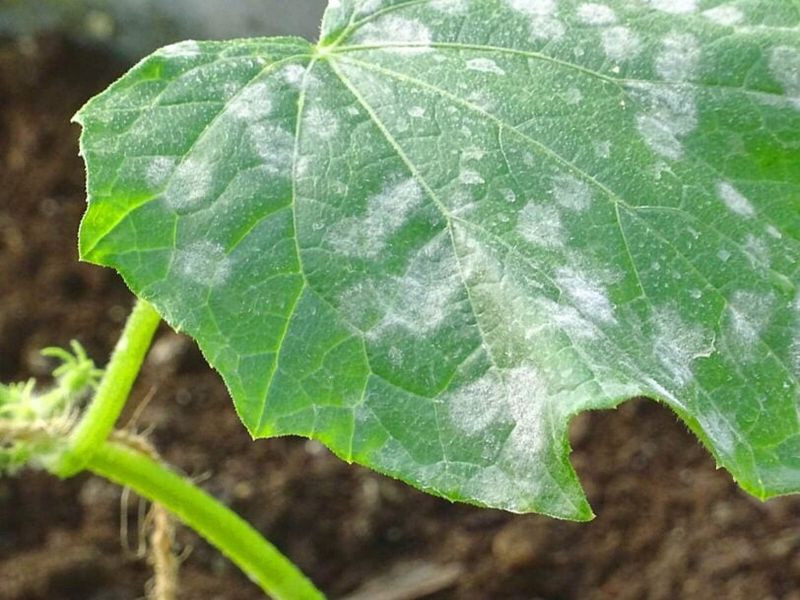
Mildew’s presence alone is not a signal to give up on the plant. Penn State Extension’s vegetable garden problem diagnosis guide notes that zucchini may continue producing while older leaves decline, so manageable cases can be monitored after sanitation, moisture correction, and canopy protection are in place.
The key question is how much healthy, photosynthetically active tissue remains compared to what has already been lost.
A plant that still has vigorous new growth at its center, active flowers, and developing fruit is worth continuing to support. University of Minnesota Extension and Texas A&M AgriLife Extension both acknowledge that the disease is often manageable rather than automatically fatal.
Conversely, a plant that is mostly bare stems and dead leaves with little green tissue remaining may not justify repeated treatment. At that point, harvesting whatever fruit is left and removing the plant is a practical option, not a failure.
Prevention for the next planting starts with variety selection. UF/IFAS notes that resistant or partially resistant varieties are a meaningful long-term tool, though resistance is less consistently available in squash than in some cucumber and melon varieties.
Pairing variety choice with proper spacing, weed management, avoiding severe soil drying, and checking older or shaded leaves early in the season gives any planting a better chance of staying ahead of the disease.
The practical verdict for a crisp late-summer zucchini
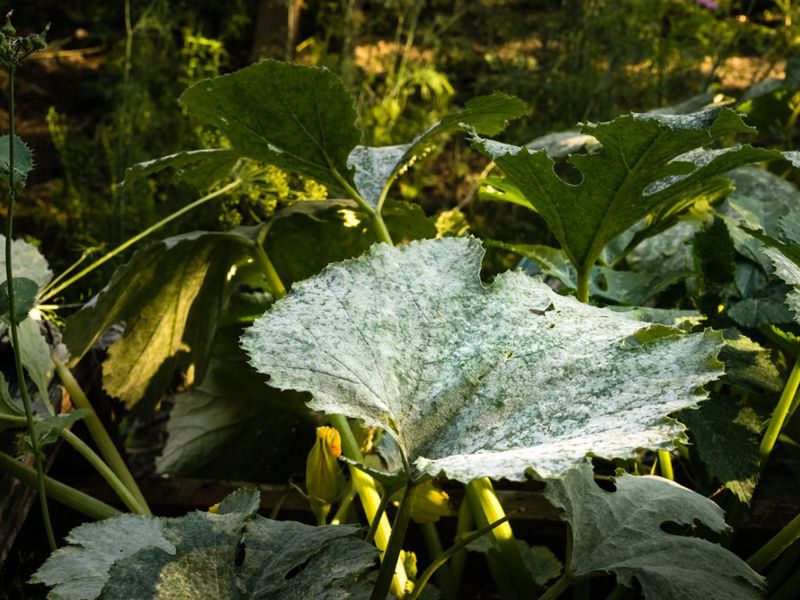
White, flour-like growth on the leaves combined with yellowing, browning, and crisping is a strong case for cucurbit powdery mildew, not heat damage alone. Confirm the diagnosis by checking both sides of older and shaded leaves, then separate that pattern from downy mildew’s angular lesions and fuzzy undersides, or from heat and drought injury that appears without any white coating.
Once mildew is confirmed, remove only the worst tissue, stabilize soil moisture with deep, soil-directed watering, and use mulch to reduce moisture swings. UF/IFAS fungicide guidance and University of Minnesota Extension agree that a properly labeled treatment applied early may slow disease progression and protect new growth, but dead leaves do not recover.
USU’s cucurbit irrigation guidance supports keeping the root zone consistently supplied as a foundation for whatever canopy remains.
The realistic goal is protecting what is still healthy and finishing the harvest, not restoring what the mildew has already taken. A plant that keeps growing from its center while older leaves fade is still working for you.