
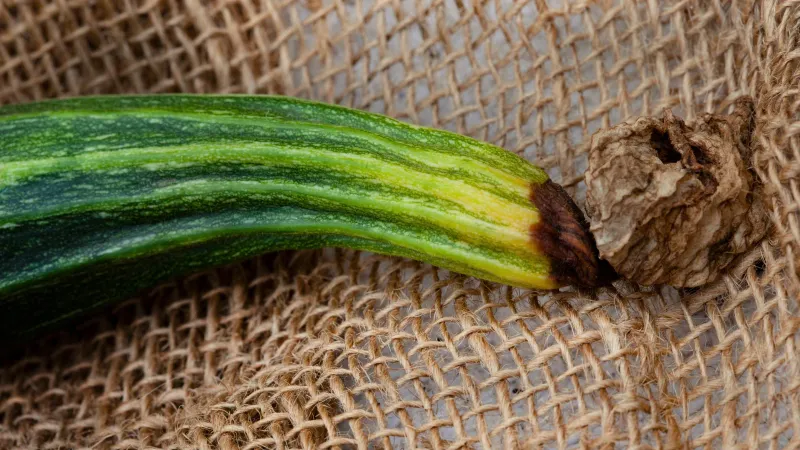
Watching a baby zucchini shrivel and brown at the tip before it ever gets going is one of the more frustrating moments in a summer garden. Many gardeners assume the worst and reach for a fungicide, but the culprit is often something far more fixable.
Understanding what is actually happening to that tiny fruit, and what it looks like compared to real disease, can save you a lot of worry and wasted effort.
Start with the symptom pattern, not the word “rot”
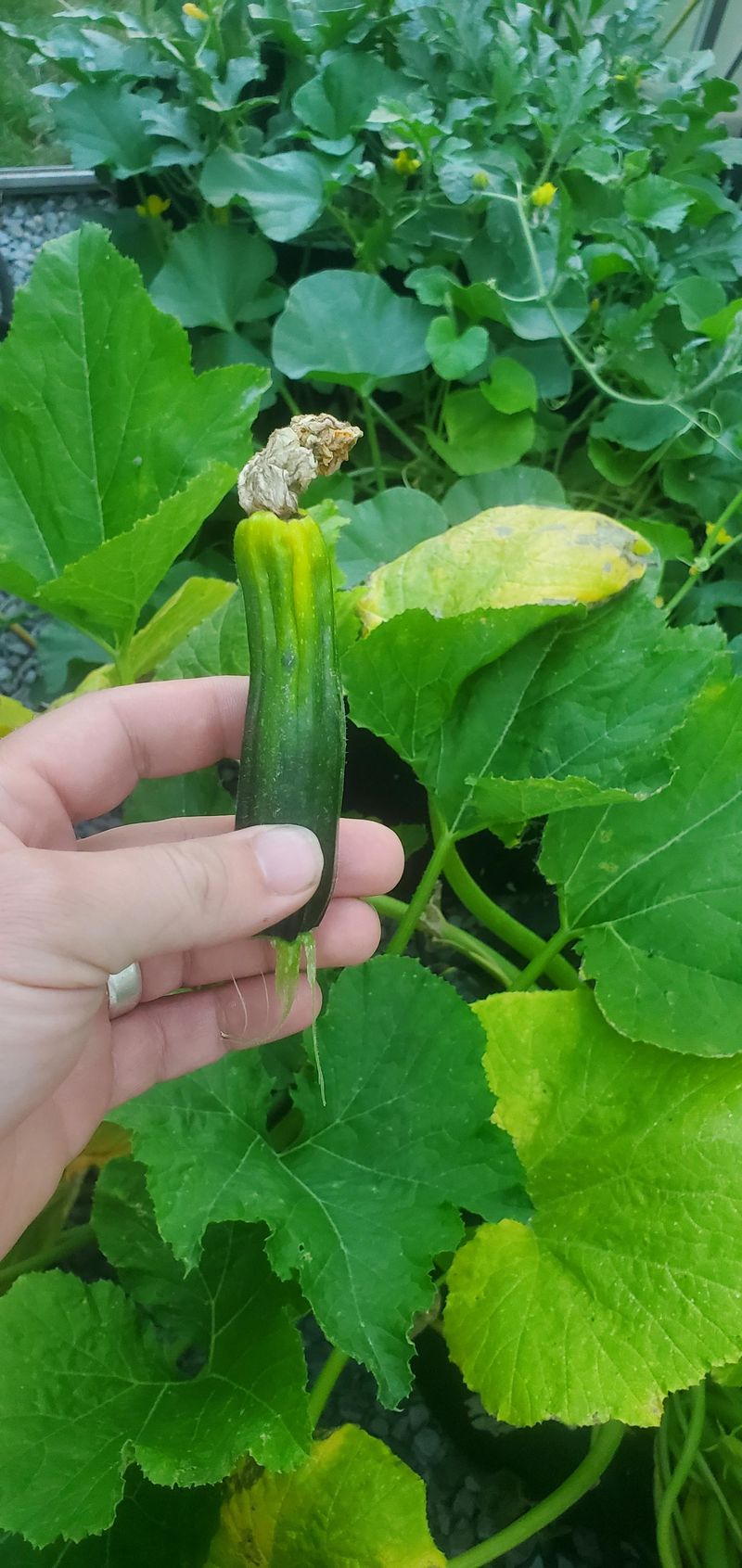
Calling the problem “rot” before examining it closely can send you chasing the wrong fix. What many gardeners actually see is a baby zucchini that begins to swell, stalls after a few days, then browns and collapses at the far end from the stem.
That pattern, where a young fruit stops enlarging and drops rather than continuing to grow, is the specific signature that Texas A&M AgriLife Extension associates with poor pollination in cucurbits. Browning at the blossom end alone, however, does not lock in that explanation.
Blossom-end rot and certain fungal diseases can produce discoloration in the same general area. Blossom-end rot creates a dark, leathery, or sunken lesion tied to calcium-delivery problems in the fruit.
Some diseases cause soft, water-soaked decay or visible fungal growth. Without looking carefully at the full picture, including texture, color, and whether any mold or lesions are present, it is easy to misread one problem as another.
One more reassurance worth keeping in mind: Purdue’s Vegetable Crops Hotline notes that zucchini plants sometimes produce more young fruit than they can successfully carry to maturity, so occasional abortion is not automatically a crisis. Persistent failure across many female flowers, though, is worth investigating more carefully.
Two flower types must exchange pollen
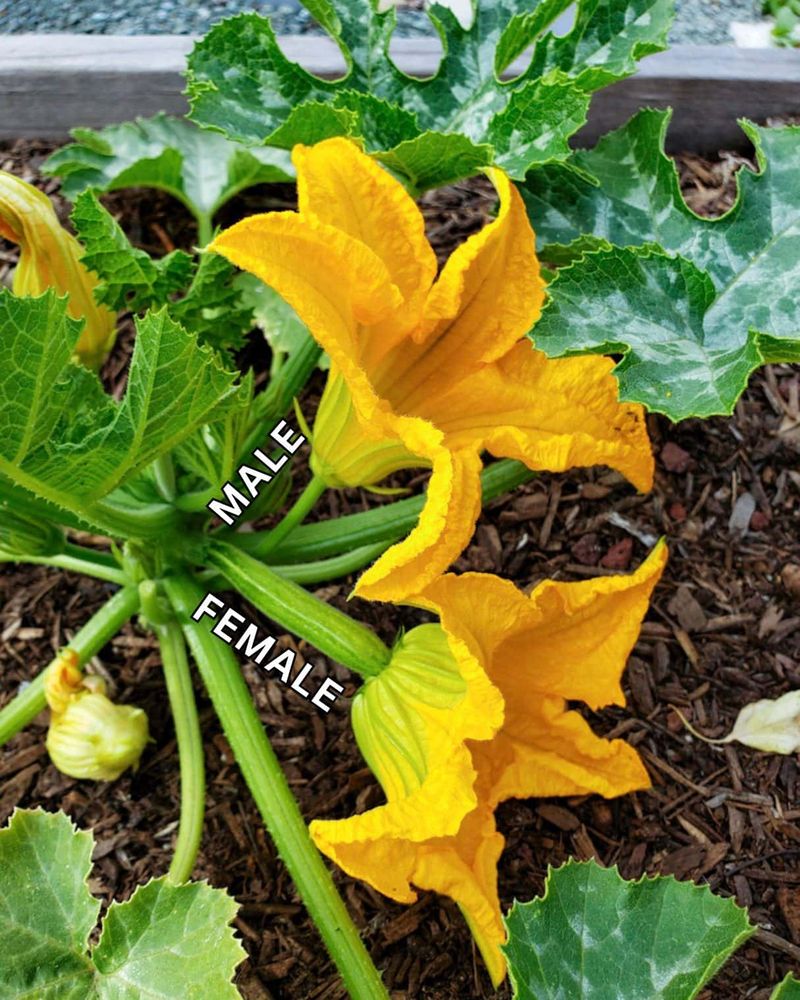
Zucchini does something that surprises first-time growers: it produces two completely different kinds of flowers on the same plant. Male flowers appear on a slender, straight stem with no swelling at the base.
Female flowers carry a tiny, unmistakable miniature fruit right beneath the petals. That small green bulge is the ovary, and it only develops into a full-size zucchini if pollen travels from a male flower to the female flower’s central stigma.
Bees and other insects handle that transfer in most gardens. UF/IFAS guidance on garden pollination explains that cucurbits depend on insect visits to move pollen between flower types, and that both flower types need to be open and available at the same time for normal fruit development.
If an insect visits only the male flower, or if the female flower opens on a day when no males are ready, the fruit has no chance to develop properly.
It is worth knowing that Michigan State University Extension notes that native bees, bumblebees, and other bee species all contribute to cucurbit pollination, not just honeybees. A yard with varied flowering plants nearby tends to attract a broader mix of pollinators, which gives zucchini more chances for successful pollen transfer across different weather and time-of-day conditions.
Heat and weather can interfere with fruit set
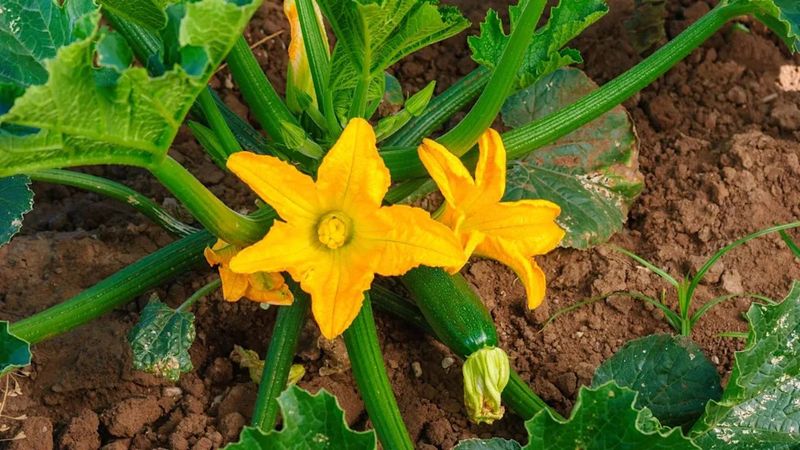
Late-summer heat gets blamed for a lot of zucchini problems, and it does play a real role, but the story is more layered than temperature alone. University of Minnesota Extension research on cucurbit fruit abortion reports that high daytime temperatures and warm nighttime temperatures can both contribute to flower and small-fruit drop in cucurbits.
Drought, flooding, and heavy rain that falls during the brief window when flowers are open can each interfere with fruit set as well, sometimes independently and sometimes all at once during a difficult stretch of summer weather.
Reduced pollinator activity during extreme heat can compound the problem. Bees often forage less during the hottest parts of the day, and if a female flower’s receptive window overlaps with a heat-driven lull in insect activity, fewer pollen grains may reach the stigma.
That does not mean heat automatically prevents pollination; it means heat can raise the odds that a flower is missed.
For Texas growers in particular, Texas A&M’s commercial squash production guide emphasizes that stress from heat and uneven moisture can combine to limit yields. Treating heat as one contributing factor rather than the single cause keeps the diagnosis honest and leaves room to address the other stresses that are often happening at the same time.
Try careful morning hand-pollination
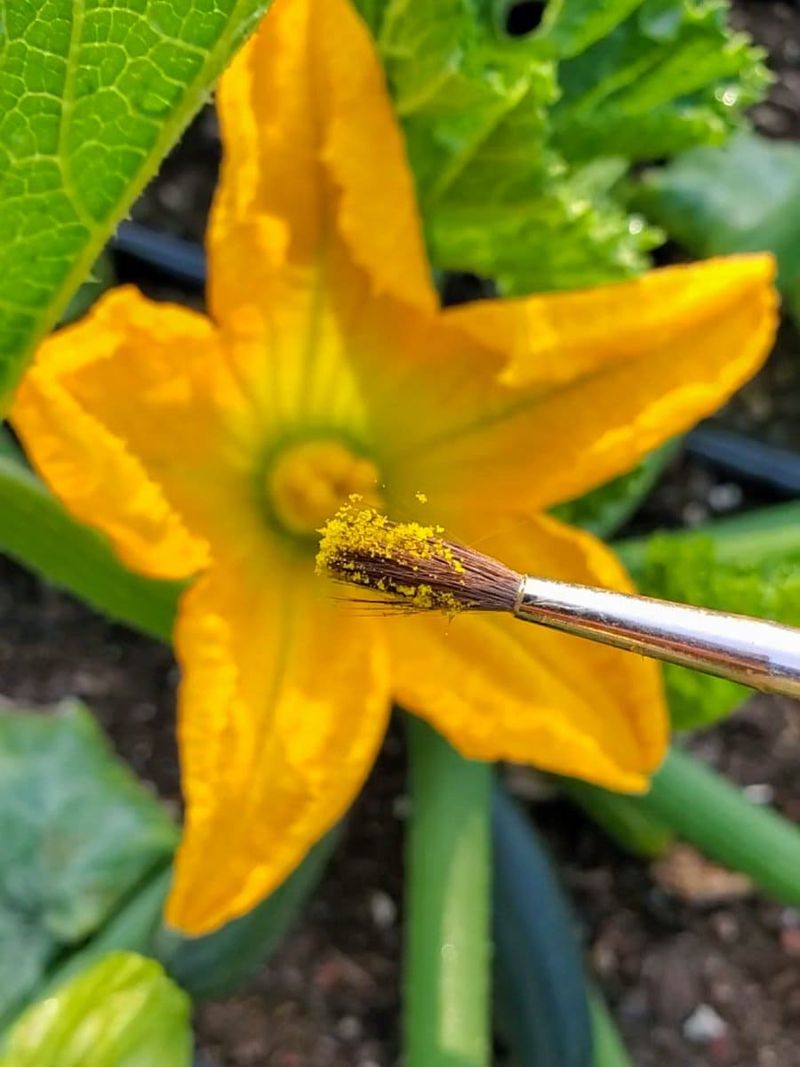
Morning is the right time to try hand-pollination because zucchini flowers open early and stay receptive for only a few hours. Once the heat of the day sets in, many flowers close or lose viability.
Catching them fresh gives you the best chance of transferring viable pollen.
The method itself is straightforward. Use a clean, small paintbrush to collect fresh yellow pollen from the center of an open male flower, then gently brush that pollen onto the sticky surface of the stigma inside an open female flower.
UF/IFAS pollination guidance recommends this approach when insect activity may be insufficient and notes that the pollen must be fresh and the flowers must be open simultaneously for the technique to work. Some gardeners skip the brush entirely and simply remove a male flower and dab its center directly against the female flower’s stigma.
Treat the results as one piece of evidence rather than a definitive answer. If hand-pollinated fruits begin to develop while others continue to abort, that pattern may suggest inadequate insect visits as a contributing factor.
However, University of Minnesota Extension cautions that fruit set varies with temperature, moisture, flower timing, and plant condition, so hand-pollination is a useful clue to consider alongside those other factors, not a guaranteed correction or a stand-alone test that rules everything else out.
Keep moisture steady without following a rigid schedule
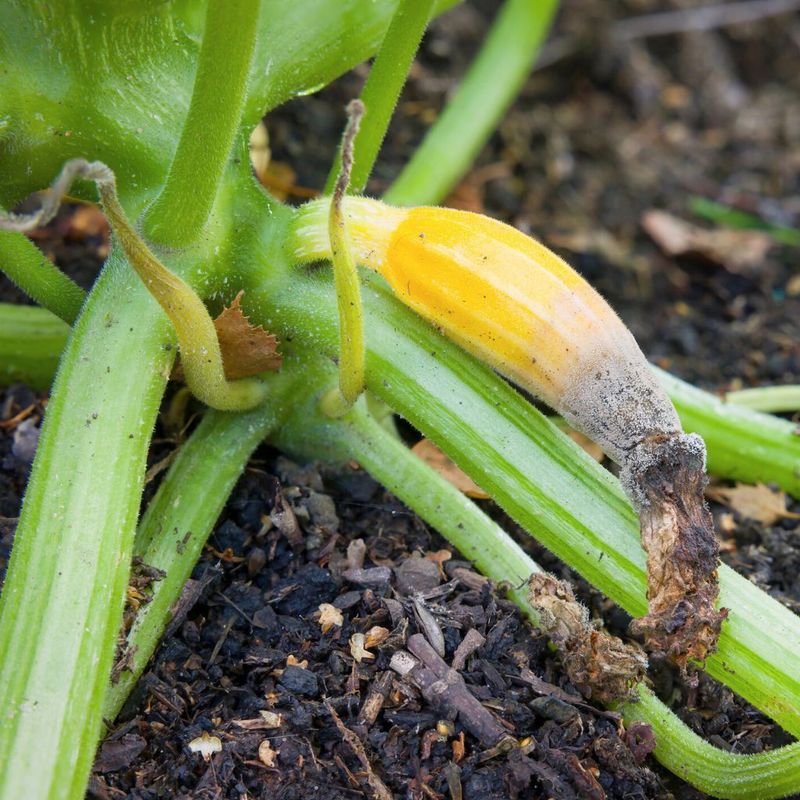
Moisture stress and pollination trouble can arrive together during hot weather, which makes it easy to confuse their effects. Blossom-end rot, for example, can cause dark, leathery discoloration at the fruit tip that resembles the browning from incomplete pollination.
The underlying mechanism is different: blossom-end rot reflects inadequate calcium availability or movement into developing fruit, which is often disrupted when drought or wildly fluctuating soil moisture limits the plant’s ability to take up and transport calcium. Penn State Extension’s home-garden diagnostic guide recommends regular irrigation and mulching as primary tools for managing the condition.
Mulch earns its place in the zucchini bed for two reasons. It buffers soil temperature and slows moisture evaporation between waterings, reducing the boom-and-bust cycles that stress roots.
It also keeps rain and irrigation water from splashing soil onto developing fruit, which can introduce pathogens. Utah State University Extension’s vegetable pest and disease guide highlights both benefits when discussing fruit rot management.
Before adding lime, gypsum, or foliar calcium sprays, consider whether consistent moisture might address the real problem. Those amendments are not automatically helpful, and some can shift soil chemistry in ways that create new imbalances.
A soil test is a more defensible starting point. Texas A&M’s squash production guide notes that squash roots concentrate in the upper soil layer, so irrigation frequency and depth should reflect your soil type, drainage, rainfall pattern, and whether you are gardening in the ground, a raised bed, or a container.
Protect pollinators during flowering
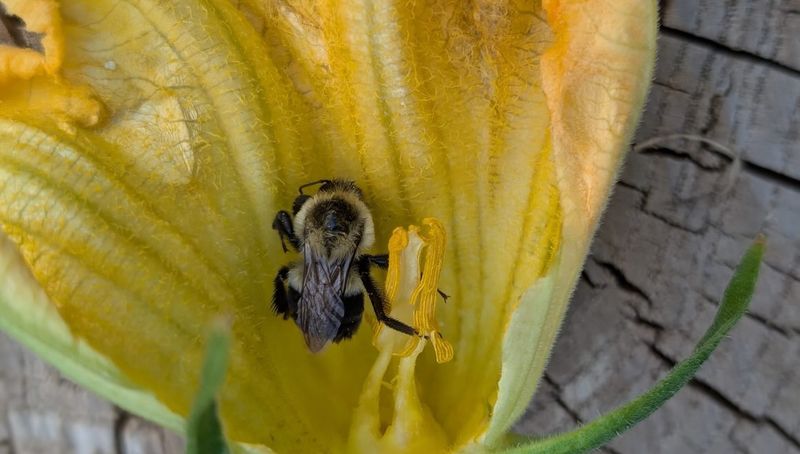
Row covers are a useful season-extension and pest-management tool, but they create a hidden problem when left on during flowering. Any fabric that excludes insects also excludes the bees and other pollinators that zucchini needs.
Penn State Extension advises removing row covers once plants begin to flower so that pollinators can reach the blooms. Gardeners who want to keep covers in place for pest protection can hand-pollinate deliberately each morning, but that requires consistent daily attention during the flowering period.
Pesticide timing matters just as much as pesticide choice. Spraying insecticides while flowers are open or while bees are actively foraging can reduce the pollinator visits your plant depends on, even when the product is labeled as relatively safe.
UF/IFAS pollination guidance specifically recommends applying any necessary pesticide when bees are less active, avoiding open flowers entirely, and following product labels carefully to minimize pollinator exposure.
Avoiding unnecessary insecticide applications altogether is the most straightforward protection. Many common garden pests on zucchini can be managed through physical removal, targeted treatments, or by tolerating minor damage rather than reaching for a broad-spectrum spray.
Keeping flowering plants nearby can also encourage a steadier supply of native bees and other beneficial insects that will visit zucchini blossoms more reliably through the season.
Look for signs that disease or rot is involved
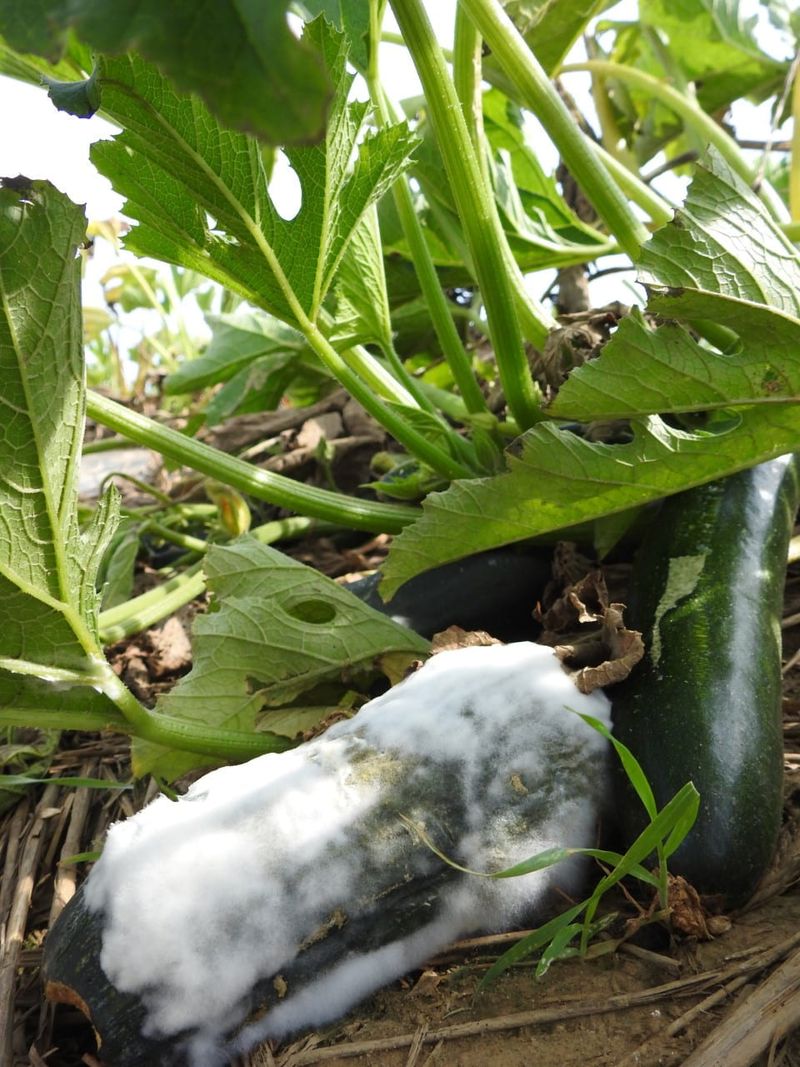
Some symptoms point away from pollination trouble and toward a disease or physiological problem that needs a different response. University of Minnesota Extension’s squash fruit-rot diagnostic tool lists several diseases that can affect fruit at or near the blossom end, including Choanephora rot, which produces soft decay and fluffy purple-black fungal growth, especially after wet weather.
Gummy stem blight, Phytophthora blight, anthracnose, and scab can also cause fruit to collapse in ways that look similar to pollination failure at first glance.
Blossom-end rot, the physiological disorder linked to calcium movement, produces a distinctly different texture than either incomplete pollination or fungal decay. The affected area is typically firm, dark, and sunken rather than soft or fuzzy.
Knowing that distinction helps narrow the possibilities, but visual diagnosis has real limits. University of Minnesota Extension cautions that fruit-abortion and disease symptoms can be difficult to distinguish, even from a close look, and recommends submitting a sample to a plant-disease clinic when symptoms spread, keep recurring, or are accompanied by mold, water-soaked lesions, leaf spots, stem lesions, or any sign of whole-plant decline.
Purdue’s Vegetable Crops Hotline recommends removing collapsed or aborted fruit from the garden when practical. Fruit left on the vine or soil surface can encourage secondary fungal growth that spreads to nearby healthy fruit, so clearing them out is a simple step that reduces that risk.
Use several clues before choosing a remedy
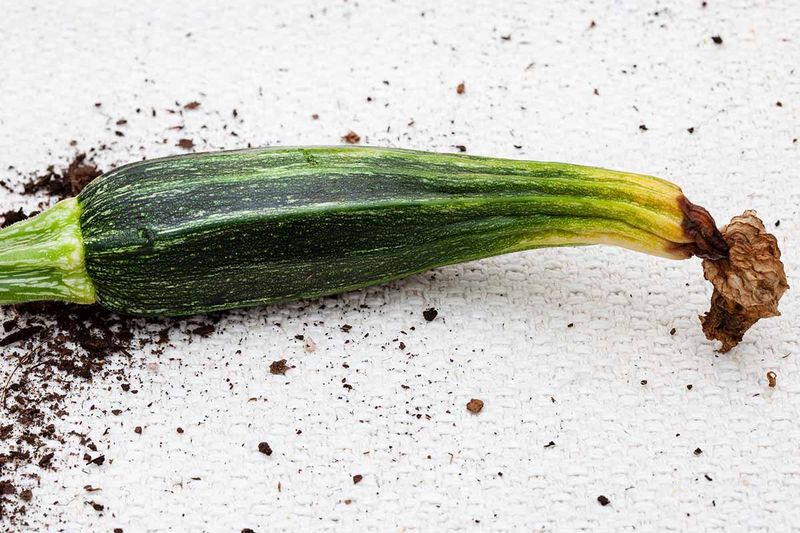
Good diagnosis starts with observation before action. Check whether both male and female flowers are open at the same time, and look for signs of bee activity during the morning hours when flowers are freshest.
Note whether recent weather brought unusual heat, drought, or heavy rain around the time the failures started. Inspect the collapsed fruit closely for texture, color, and any mold or lesions that might point toward disease rather than pollination gaps.
From there, hand-pollinate a few fresh female flowers over several mornings and track what happens. If those fruits begin developing while untouched ones continue to abort, that pattern can support inadequate insect pollination as a contributing factor, though it does not rule out heat, moisture stress, or early-stage disease.
Texas A&M AgriLife Extension and UF/IFAS both frame hand-pollination as a practical response to suspected insect shortfalls rather than a definitive diagnostic test. Meanwhile, keep soil moisture as steady as your conditions allow, maintain your mulch layer, and remove any collapsed fruit before it can encourage secondary problems.
Continued failure across many female flowers after you have addressed pollination access and moisture calls for a closer look at plant-wide symptoms, and possibly a sample sent to your local extension office or plant-disease clinic. University of Minnesota Extension and its fruit-rot diagnostic resource both recommend that step when symptoms spread or recur.
A few lost fruits on an otherwise healthy plant, though, is something zucchini does naturally during the stress of a Southern summer.