
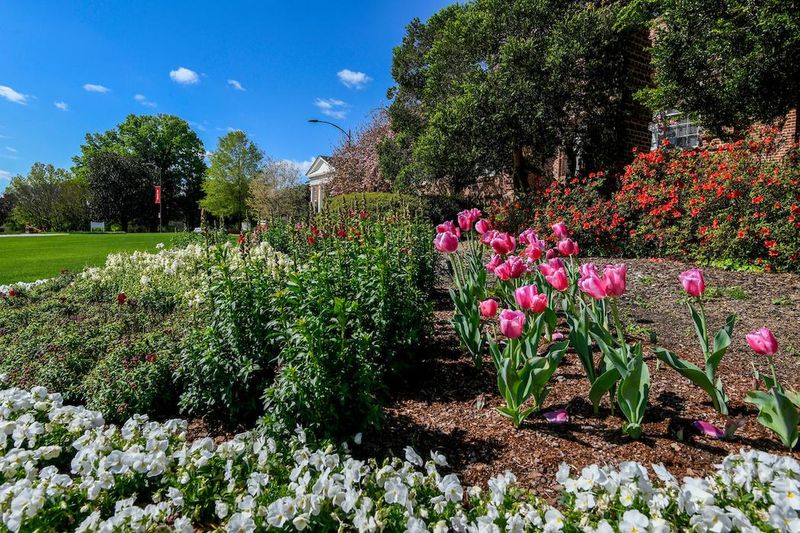
You found a bag of tulip and daffodil bulbs in the garage, and the calendar says late November. Is the season over?
Not necessarily. Cool soil is exactly what many spring bulbs want, and knowing what to check before you dig can save your spring color.
Late November can fit the usual planting window
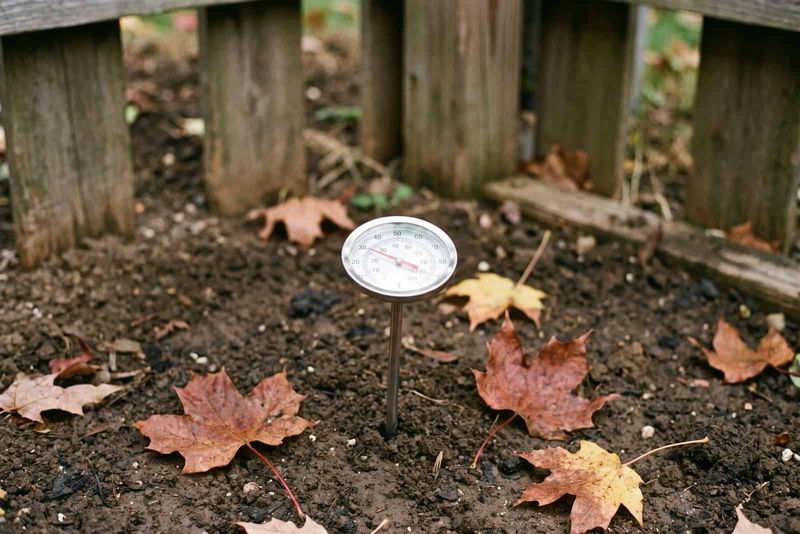
Late November is not automatically too late for spring bulbs. For USDA Zones 7 and 8, NC State Extension’s gardener handbook says November or early December is generally preferable, once the soil at planting depth drops below 60°F.
That makes late November a timely slot for many gardeners, not a risky one.
Let the soil, not the calendar, make the call. Push a soil thermometer down to the depth where the bulbs will sit and check it in the morning.
Then make sure the ground is workable, meaning you can dig it without hitting frozen clumps or a soggy mess. If it is still warmer than 60°F after a mild stretch, you can wait a little longer.
Keep in mind that North Carolina is not one uniform climate. The mountains, the Piedmont, and the coastal plain cool off at different times, and a given year can run warm or cold.
The handbook’s window is broad guidance for Zones 7 and 8, not a promise for every yard in every season.
Planting later in the season can still work. One Henderson County extension agent describes planting bulbs in December for spring blooms.
That shows a late window is viable. It does not show that planting late improves the flowers, so think of late November as acceptable, not as a trick.
Fall planting gives bulbs time to grow roots and meet cold needs
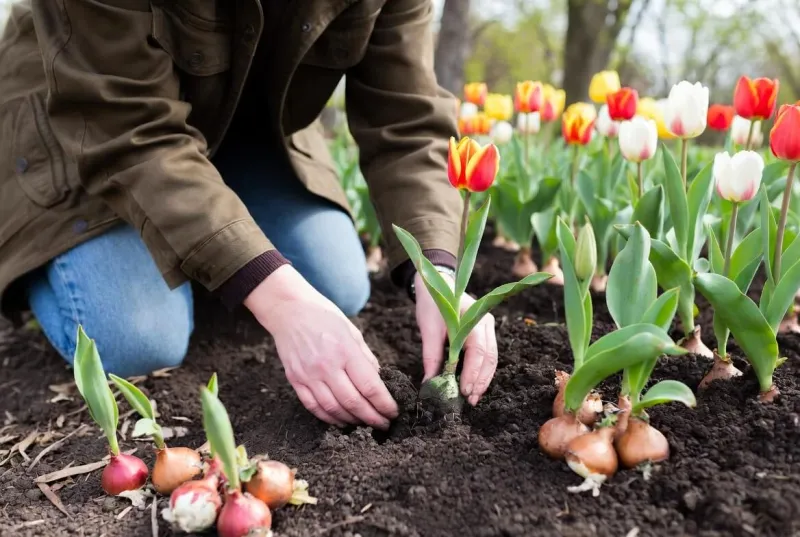
Under the soil, a lot happens before you ever see a green shoot. According to NC State Extension, root growth begins in fall and continues through winter.
Planting in the cool season gives bulbs that quiet stretch to settle in and anchor themselves.
Cold is the other piece. Many spring bulbs need a period of chilling before they bloom, and that need is not the same for every plant.
NC State describes cold requirements that vary by species or cultivar, anywhere from about six to 20 weeks. A daffodil and a tulip do not follow the same schedule, so no single number fits every bulb in your bag.
That is why a late-November planting can still be timely. Soil that has cooled gives roots a good place to work, and the winter ahead supplies the cold the bulbs need.
In much of Zones 7 and 8, there is usually enough winter left to cover both jobs.
A practical way to use this: check the package or the grower’s notes for each type of bulb you bought. If a label mentions chilling, take it seriously for that variety.
Root growth and chilling are part of a healthy start, but they do not guarantee flowers or large blooms. Bulb quality and growing conditions still matter.
Waiting later is not proven to make flowers bigger
Here is the honest answer to the question many gardeners have: nothing in the available guidance shows that holding bulbs until late November gives you bigger flowers or more of them. Late November is a good time to plant if the soil is cool enough.
It just is not a secret to better blooms.
What does matter is the bulb itself. NC State Extension notes that flower buds are already formed inside bulbs when they are sold, and that larger bulbs generally produce better flowers.
When you shop, pick bulbs that feel firm and plump, and pass on any that are soft, moldy, or shriveled.
Flower size and display impact are two different things. A single bloom is only as big as the bulb allows, but a planting can look bolder by how you arrange it.
University of Illinois Extension suggests planting in groups or drifts for more visual impact.
Try setting a dozen bulbs in one irregular cluster instead of lining them up one by one. From the street, the cluster reads as a swath of color.
The flowers are no larger, but the bed looks fuller. Give credit for that result to good bulbs and smart design, not to the date on your calendar.
Eastern North Carolina gardeners may need a different tulip plan
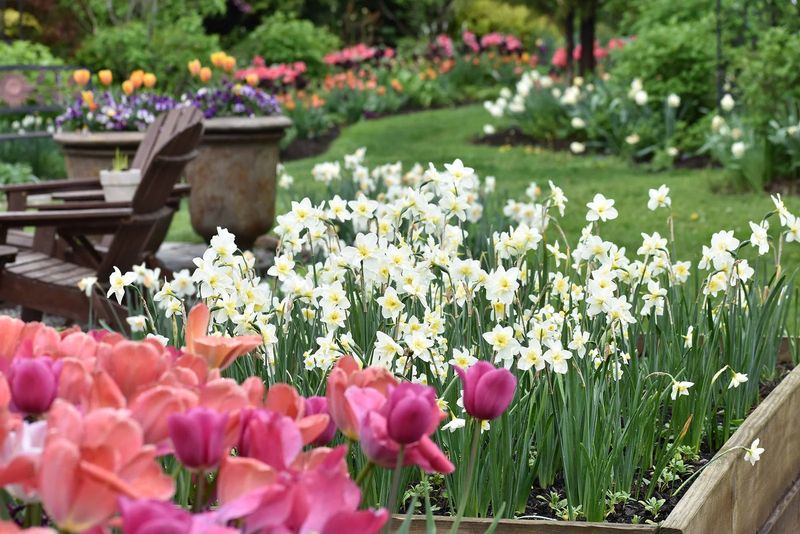
Statewide advice only goes so far, and gardeners near the coast know it. Winters in eastern North Carolina are mild and the soil stays warmer, which makes life harder for tulips.
Local guidance reflects that, and it does not apply the same way in the mountains or much of the Piedmont.
Daffodils are the safer pick in the east. A Pamlico County extension article says daffodils are generally more reliable for returning year after year, while tulips often need pre-chilling and are best treated as annuals there.
In other words, expect a tulip show one spring, and be pleasantly surprised if it repeats.
If you still want tulips, there is a local plan. A Beaufort County extension article recommends buying pre-chilled bulbs, or chilling your own in the refrigerator for 8 to 10 weeks away from fruit, then planting in December.
Treat that as eastern North Carolina advice, not a rule for every bulb or every region. Tulips and daffodils are not interchangeable, so give each its own plan.
A mixed bed of reliable daffodils with a fresh round of tulips each year is a sensible approach on the coastal plain.
Choose a sunny, well-drained planting site
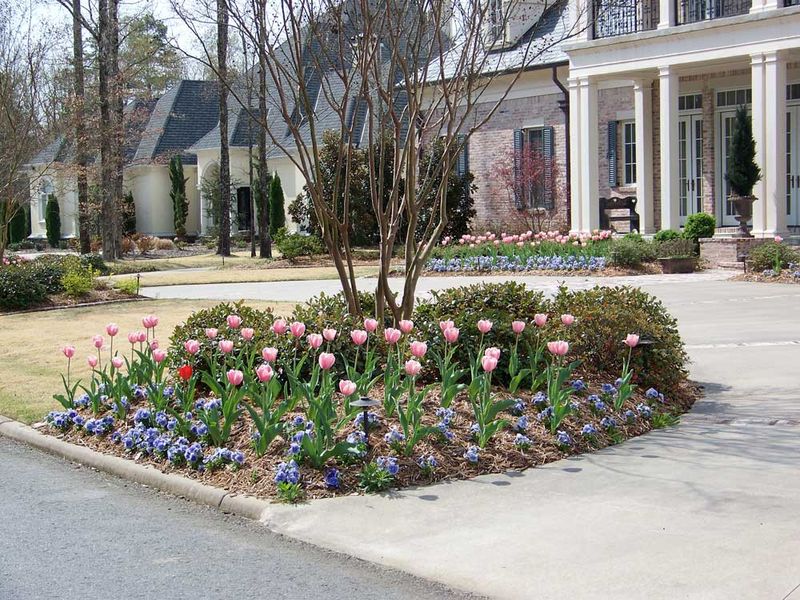
Where you plant counts as much as when. NC State Extension recommends at least five to six hours of direct sun for spring bulbs.
A spot that looks bright in November can be shaded by leaves come spring, so think about how it will look when trees fill out.
Bulbs you plan to leave in the ground year after year need even more sun for good flowering. Leaves feed the bulb for next year, so a shady bed may bloom once and then fade.
If you want returning daffodils, give them the sunniest ground you have.
Drainage is the other big factor. Poor drainage is especially problematic for tulips and hyacinths, which can rot in soil that stays wet.
After a heavy rain, watch your bed. If water pools for hours, pick a different spot or build a raised bed with loose soil.
A good site helps, but it is not a cure-all. It will not override the limits of your region, and it cannot promise a particular display.
Think of sun and drainage as removing problems so the bulbs can do their best.
Plant at the recommended depth and water the bulbs in
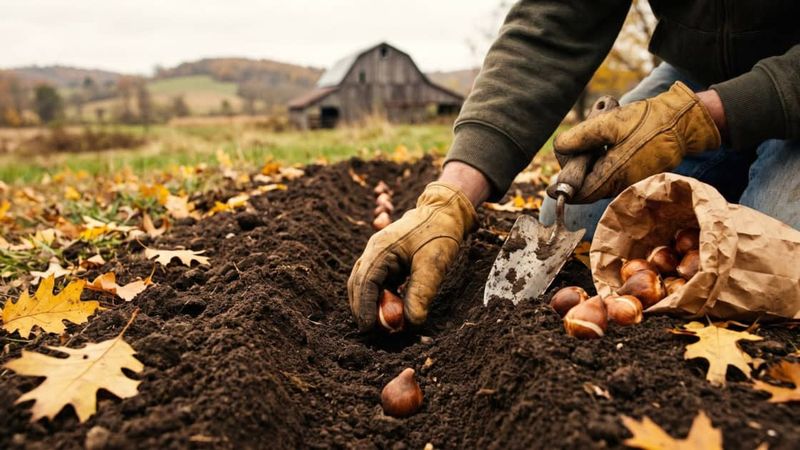
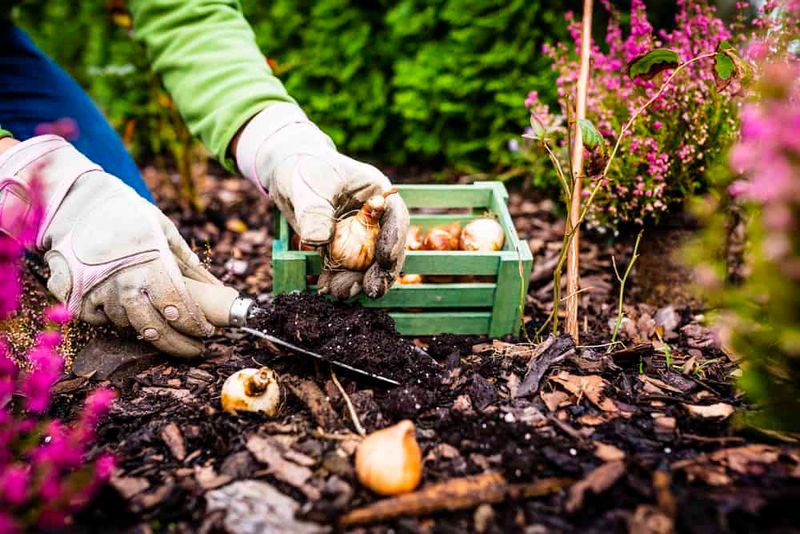
Once you have a good spot and sound bulbs, the planting itself is simple. Start with depth and spacing, and follow the recommendations for your species and bulb size.
They vary, so there is no single number that works for every bulb. A small crocus and a large daffodil go in at very different depths.
Set each bulb pointed end up, cover it with soil, and water well. Watering after planting settles the soil around the bulb and removes air pockets.
Pamlico County’s extension guidance on planting spring bulbs in November is a handy local reference.
If fall turns dry, keep watering. Illinois Extension advises continuing to water until the ground freezes.
In much of North Carolina the ground may rarely freeze solid, so use a simple check instead: if the soil a couple of inches down is dry, give the bed a drink.
As for fertilizer, skip the blanket approach. Sources disagree on whether bone meal or phosphorus helps, so a soil test is the safer way to decide if your bed needs anything.
The bulbs do not care about the exact date, only the conditions you give them.