
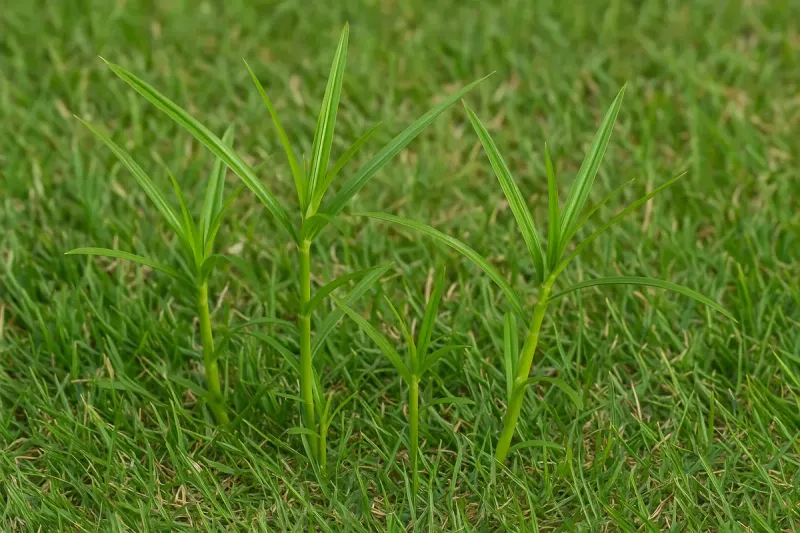
You pull a grassy-looking weed out of your lawn, and a few weeks later it is back like nothing happened. In Central Texas, that stubborn comeback may point to nutsedge, though you need to look closely before you decide.
The answer lies partly underground, and it affects when and how you tackle the problem. Knowing what you are dealing with can save you time, money, and a lot of damaged turf.
Check the plant before calling it nutsedge
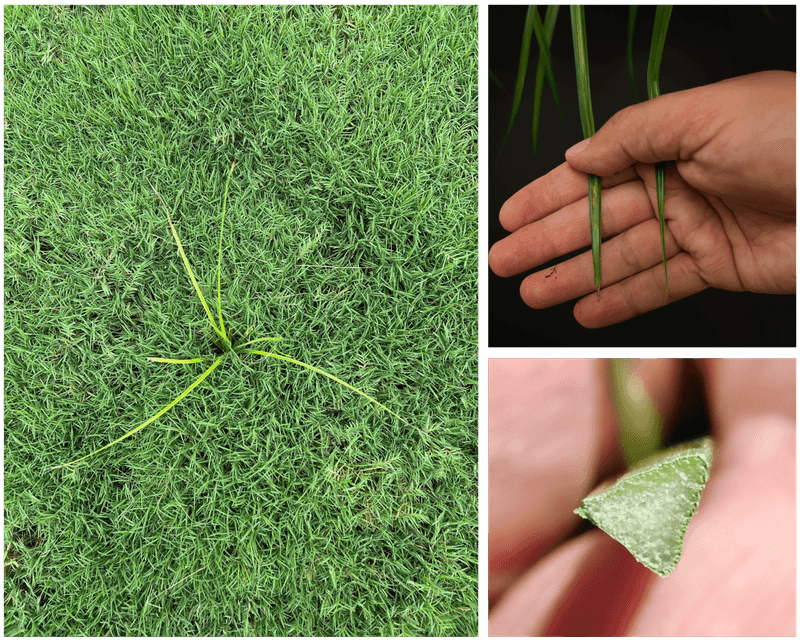
A grass-like weed that keeps coming back is a good reason to suspect nutsedge, but a title or a hunch cannot confirm it. Without a photo or a close look at the actual plant, the identification stays a possibility.
Start with the stem. Sedges often have solid, triangular stems, and their leaves grow in three ranks, which means three directions around the stem.
Grasses generally have rounder stems and leaves arranged in two ranks. Roll a stem between your fingers and look straight down at the plant from above to see the pattern.
Texas lawns host several lookalikes. Yellow nutsedge and purple nutsedge are the best known, but annual sedge and kyllinga turn up too.
Texas A&M AgriLife guidance on nutsedge and kyllinga treats them as separate plants, and that matters because they do not all behave alike. Yellow nutsedge is generally easier to control than purple nutsedge, and kyllingas are often harder.
If you are unsure, take clear photos of the whole plant, the base, and the seed head, then bring them to your county Extension office. A correct name guides every choice that follows, from pulling to products.
Underground reserves explain why the shoots return
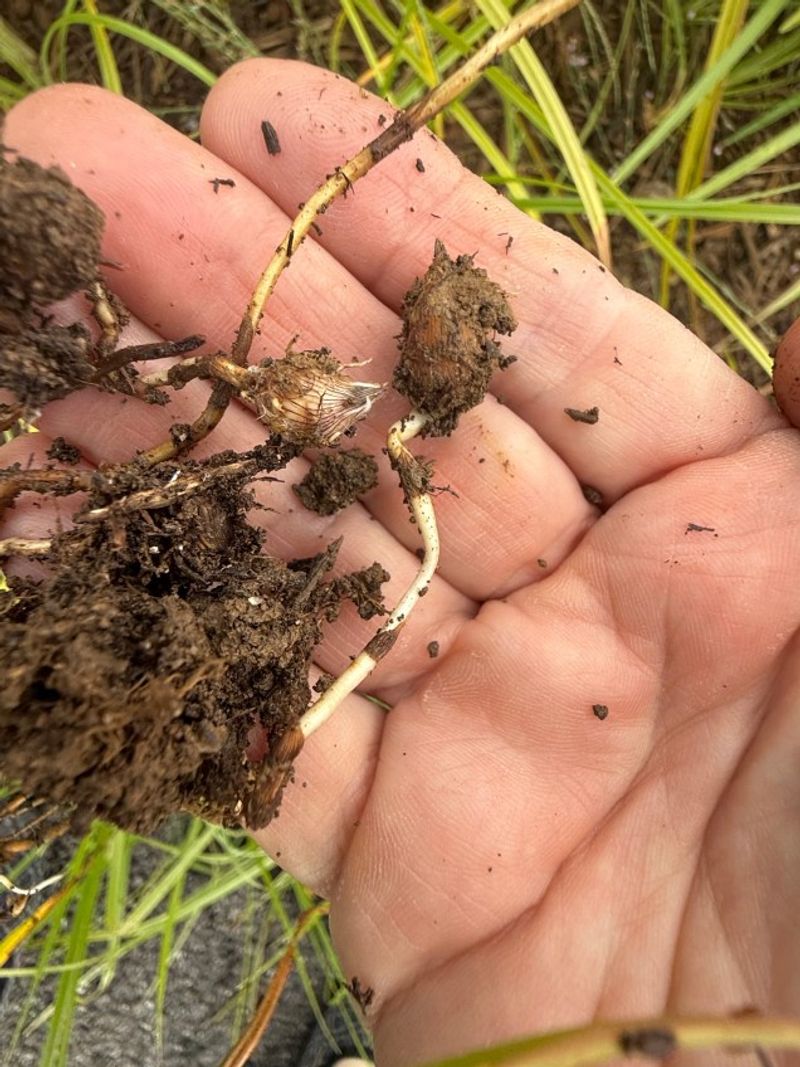
Picture an iceberg, with the green blades you see as only the tip. Nutsedge is a perennial, and it spreads through underground rhizomes, tubers, or both, according to Texas A&M AgriLife.
Rhizomes are underground stems, and tubers are small swollen storage structures.
Those structures hold energy. When you remove the leaves, the plant below ground is still alive and can use that stored energy to send up fresh shoots.
That is why a lawn can look clean on Saturday and patchy again within a few weeks. The weed did not magically reseed itself.
It simply restarted from parts you never saw.
Yellow nutsedge makes a handy example. Penn State Extension describes how it builds tubers that can sprout new plants later.
Each shoot you spot may connect to a network of buried structures, and new shoots can appear some distance from the original one.
This biology belongs to nutsedge, not to every grass-like weed. Kyllinga and annual sedge have their own habits, so confirm what you have before assuming the same underground story.
Once you know it is nutsedge, the stubborn comeback makes sense, and so does a plan built for the long haul.
Can pulling help, or can it backfire?
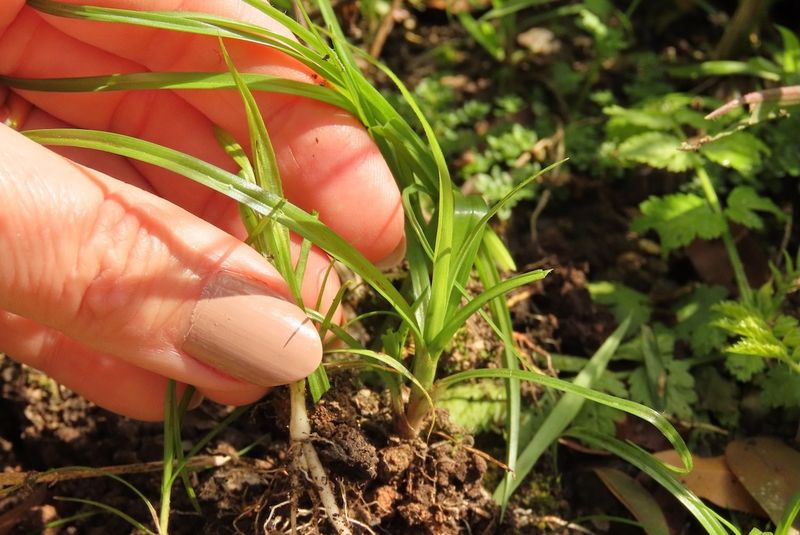
Advice about pulling nutsedge seems to point in two directions, and both can be right. The difference comes down to the plant’s age and species.
UC IPM suggests removing shoots when plants have fewer than about five to six leaves, and doing it repeatedly through the growing season. Each time a young plant loses its leaves, it has to spend stored energy to regrow, which can gradually shrink those reserves.
It takes persistence, so check often.
The caution comes from Texas A&M AgriLife. Pulling mature purple nutsedge rhizomes can stimulate dormant tubers, which then sprout.
Purple nutsedge also has a particularly extensive underground network, so a quick yank rarely gets everything.
So the useful rule is this: hand removal works best when you take the underground parts too. Use a trowel or a narrow digging tool, loosen the soil, and lift out tubers and rhizomes where you can.
Patches of young plants are the best candidates.
Do not expect to wipe out an established patch in one weekend. Treat pulling as one tool in a longer effort, and keep watching for new shoots after rain and warm spells.
Check whether persistently wet soil is helping it thrive
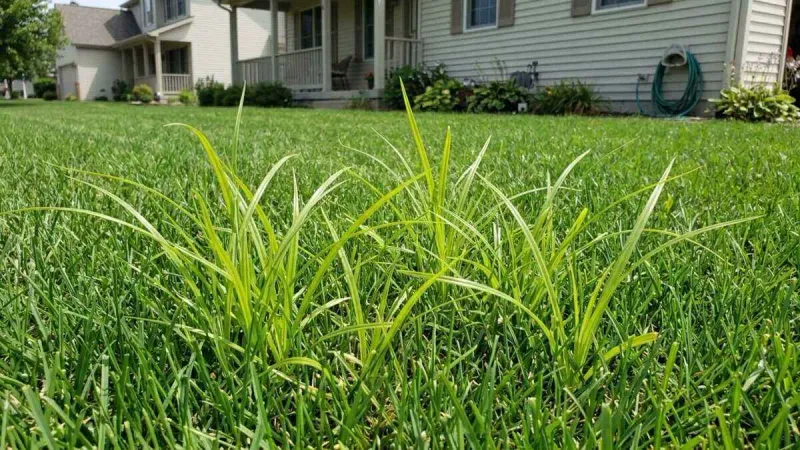
Walk your yard after a rain or a sprinkler cycle and notice where water lingers. Nutsedge often thrives where the soil stays excessively moist, according to Texas A&M AgriLife.
Those soggy spots can give it an edge over turf.
Look for common culprits. A sprinkler zone that runs too often, a downspout that dumps beside the lawn, a low corner, or compacted clay that drains slowly can all keep the ground wet for days.
Fixing these is worth the effort. You might shorten watering to fit what the turf needs, redirect a downspout, adjust a sprinkler head that soaks one area, or improve drainage in a low patch.
Keep expectations realistic, though. Wet soil does not explain every nutsedge infestation, and a patch can show up in a spot that drains just fine.
Drying out the area will not erase tubers already in the ground.
Think of moisture correction as a supporting step. It makes conditions less friendly to the weed while you use the other tools in your plan.
Fall can hide the weed without ending it
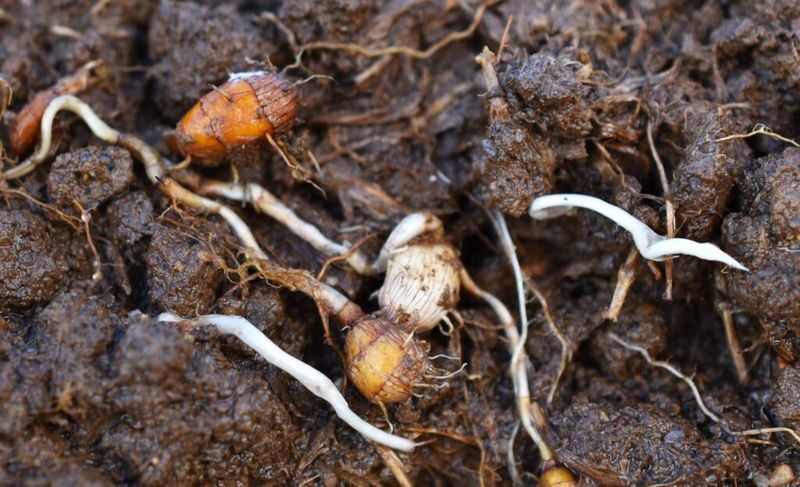
When cool weather arrives, nutsedge may look like it has given up. Frost can kill or suppress the leaves, but that describes what you see above ground.
Tubers and rhizomes can survive and send up growth later, as Texas A&M AgriLife and Penn State Extension both indicate.
A clean-looking lawn in December is not proof of success. Watch the same spots next spring and summer before you decide.
The sources used here do not support a universal fall treatment that breaks the cycle. They also do not show that an ordinary fall pre-emergent controls nutsedge, so skip that assumption.
You may come across an older Texas A&M suggestion, found in a 2013 nutsedge publication, to apply glyphosate four to five weeks before first frost so it can move into tubers. Treat that as older, conditional guidance, not a standard homeowner recommendation.
Glyphosate is nonselective, so it can injure desirable turf and plants.
Any use is governed by the current product label, so read it first, as the EPA label guidance advises. Fall is a good time to observe and plan, not a guaranteed reset.
Use herbicides only when the weed and turf match the label
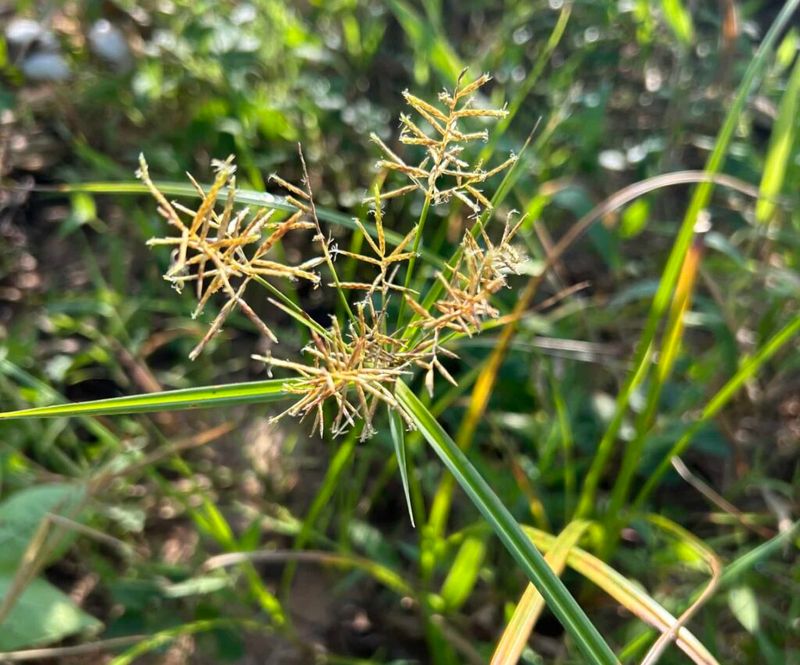
If digging and moisture fixes are not enough, a herbicide may be the next step. Choose carefully, because the wrong product can hurt your turf.
Texas A&M AgriLife advises applying herbicides to healthy, actively growing turf at the rate specified on the product label. Repeat applications may be needed, especially for purple nutsedge and kyllinga.
Before you buy anything, check two things. The label must list the weed you identified, and it must also list your specific turfgrass, such as St. Augustine, bermudagrass, or zoysia.
A product that is safe on one lawn can damage another.
This article does not name a product or a rate. The label for the product in your hand is the authority, and the EPA’s read-the-label guidance explains why.
Follow every direction and precaution on it. The EPA’s pesticide safety tips also call for keeping children and pets away for the period specified and avoiding windy or rainy conditions during application.
If you cannot match the weed and turf to a label with confidence, ask your county Extension office before spraying.
Treat it as a recurring problem, not a one-pull fix
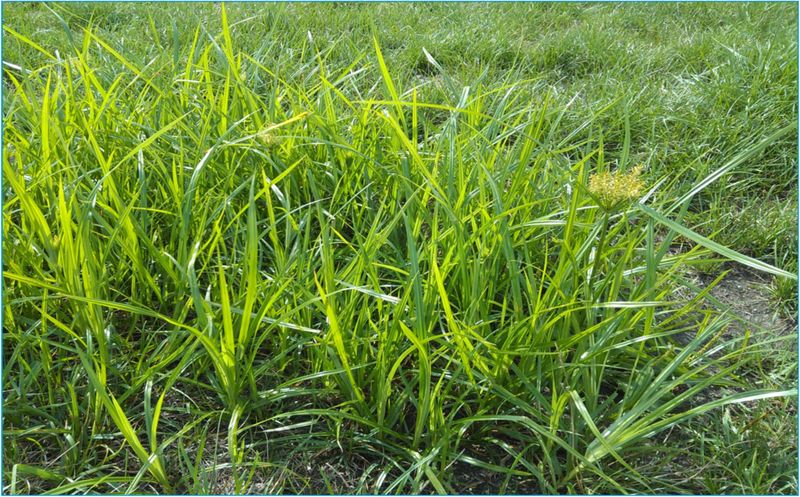
Start by confirming the plant, then plan around what lives underground. Where plants are young, UC IPM supports repeated removal of shoots, ideally digging out underground parts.
Fix soggy spots, and use only a product labeled for both the weed and your turfgrass, as Texas A&M AgriLife advises.
Winter may change what you see, but it does not prove the roots below are gone. A lawn that stays clear through a full growing season tells you far more.