
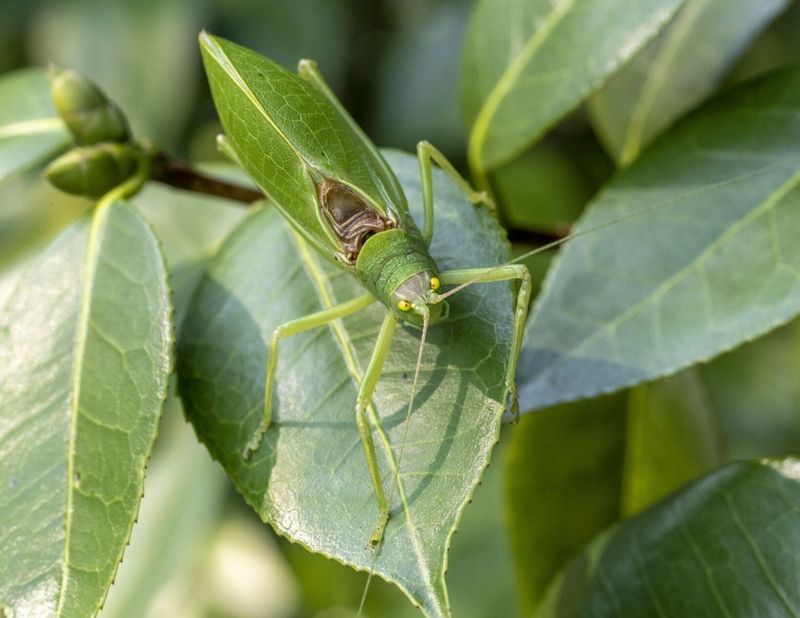
Every August and September, North Carolina yards fill with a loud, buzzing chorus that seems to come from everywhere at once. Those sounds belong to katydids, long-bodied insects that blend into foliage so well you might never spot one even when dozens seem to be calling.
Understanding why they gather near your shrubs and how to tell a harmless chorus from a real plant problem can save you a lot of unnecessary worry and work.
Why North Carolina yards sound busy in late summer
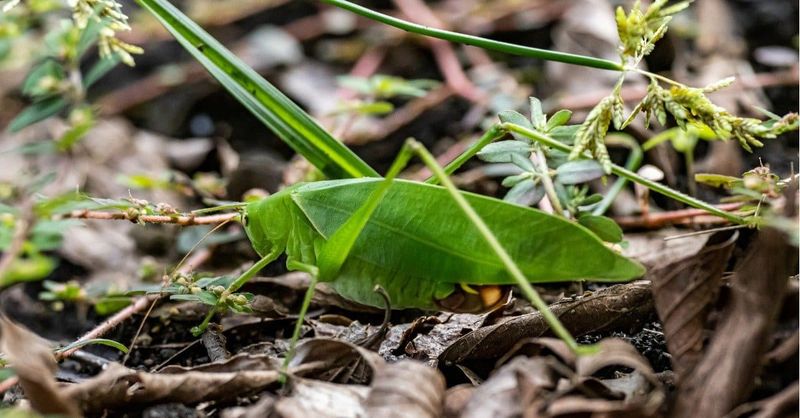
Late summer nights in North Carolina arrive with a soundtrack most homeowners recognize but few can fully explain. That steady, pulsing buzz rising from the shrubs and tree line belongs largely to katydids, a diverse group of insects that become seasonally conspicuous across the state from summer into early fall.
North Carolina’s Orthoptera database records many katydid species statewide, including bush katydids, meadow katydids, coneheads, and true katydids, so the chorus you hear likely blends several species calling at once.
Only the males sing. They produce sound by rubbing one forewing against the other in a behavior called stridulation, and that song is a mating signal directed at females, not a sign of how many insects are in your yard.
A single male can fill a quiet neighborhood with sound, which means a loud nighttime chorus is not a reliable measure of yard-wide abundance. Texas A&M Forest Service guidance on katydids confirms that males produce the familiar call while females remain silent, so volume alone tells you very little about population size.
No authoritative statewide count, outbreak bulletin, or NC Extension alert was located to confirm a 2026 katydid surge across North Carolina. What the evidence does support is that katydids are a normal and expected part of late-season insect life here, and that their calls become most noticeable when warm nights, peak adult populations, and dense vegetation all coincide.
The practical question worth asking is not whether katydids are present, because they almost certainly are, but whether they are actually damaging your plants enough to warrant a response.
Why dense shrubs can look like katydid hotspots
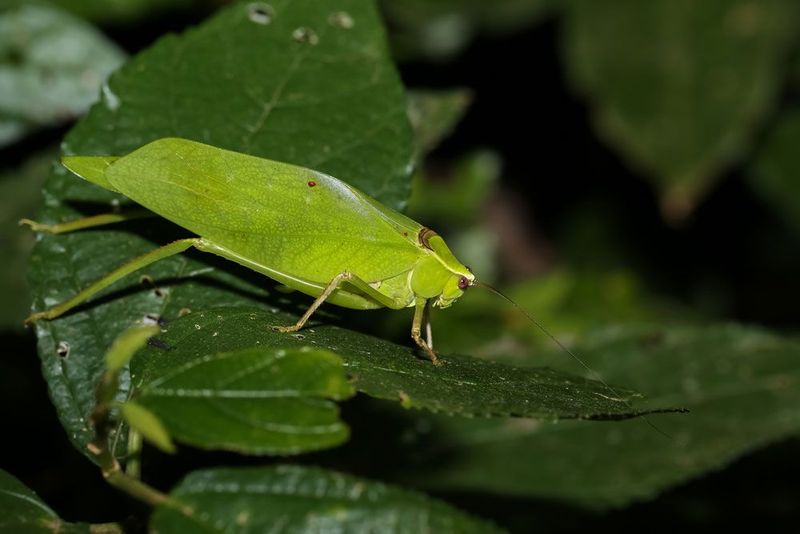
Walk past a thick, overgrown shrub on a warm August evening and you may hear the chorus intensify right at that spot. That concentration is real, but it does not mean the shrub manufactured a katydid population.
Dense shrubs offer food, cover, and a sheltered perch from which males can call, making them attractive places for katydids that are already present in the surrounding landscape to settle and be heard.
BugGuide records for the genus Scudderia, which includes the bush katydids commonly found in North Carolina, describe these insects as associated with deciduous forests, woodland edges, shrubbery, and rank herbaceous growth. Adults generally appear from late spring or early summer through autumn.
Other katydid groups recorded in North Carolina’s species checklist use different habitats, including tall grass, meadows, wetland margins, and open woodland canopy, so shrubs are one piece of a much larger habitat picture.
Species also differ in where they lay eggs. Some deposit eggs in leaf margins or stems, while others use tree bark or soil.
Calling a dense shrub a breeding ground oversimplifies how these insects actually use the landscape. What a thick shrub reliably does is provide concealment and feeding material, which can make katydids easier to notice there than in a more open part of the yard.
Texas A&M’s katydid resource notes that large outbreaks can develop under certain environmental conditions but typically decline quickly from natural causes. That pattern suggests population size is shaped by species, weather, reproduction cycles, predators, and surrounding habitat, not by the presence of a single shrub row.
When you hear katydids concentrated near your foundation plantings, that is a useful clue about where to look first, not a signal to start removing plants.
Use a flashlight to find out where the insects are
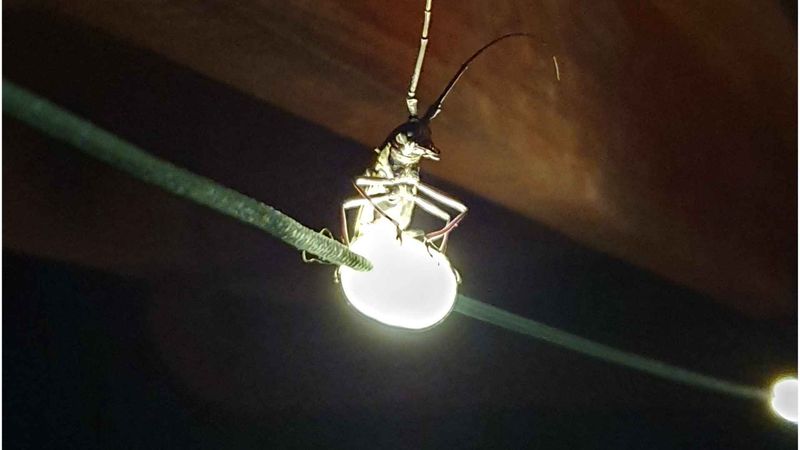
A quick walk around the yard after dark with a flashlight will tell you more about your actual katydid situation than a week of listening to the evening chorus. Katydids are generally more active at night, and UC IPM’s katydid guidance notes they are easier to spot on foliage after dark, though some individuals rest on plants during the day as well.
Checking at dusk or in the first hour after dark gives you the best chance of counting what is actually there.
Start at the shrubs where the sound seems loudest and work outward. Shine the light into the interior of dense branches, along outer foliage edges, and up into nearby small trees.
Katydids blend remarkably well with leaves, so move slowly and look for the distinctive long antennae, often longer than the body itself, and the flattened, leaf-shaped wings that give many species their camouflage. Nighttime calling is another reliable clue, since Texas A&M confirms that the stridulating call is unique to katydids among common backyard insects.
Check several representative plants rather than reacting to the first insect you see. As you go, note the approximate number of katydids, which plant species they are on, whether they are concentrated in one area or spread across the yard, and whether you see any chewed leaf edges nearby.
NC State Extension’s insect diagnosis guidance recommends identifying the pest and assessing its distribution and severity before drawing conclusions about control needs, so a few notes from your inspection will serve you well in the next step.
If you find an insect that does not quite match the description, do not assume it is a katydid. Cicadas, short-horned grasshoppers, and tree crickets can share the same shrubs and produce their own sounds.
A clear photograph submitted to your county Extension office or NC State’s Plant Disease and Insect Clinic can confirm what you found before you decide on any response.
Measure plant damage before deciding that katydids are a problem
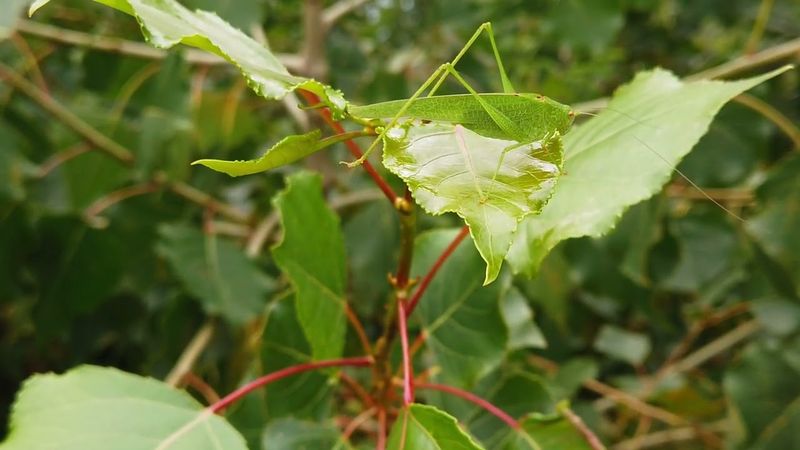
Sound and sight are not the same as damage. Before treating katydids as a yard problem, spend a few minutes actually looking at the plants they are visiting and measuring what they have done to the foliage.
Katydids have chewing mouthparts and leave recognizable signs: small irregular holes in leaf centers, ragged feeding along leaf edges, or occasional shallow scars on young fruit. Knowing what to look for keeps you from confusing their work with slug feeding, fungal spots, or hail damage.
UC IPM’s katydid resource explains that katydids typically chew only one or a few leaves before moving elsewhere, so foliage injury on ornamental shrubs is often minor and does not threaten plant health. A shrub with five or six chewed leaves out of hundreds is experiencing cosmetic feeding, not a health crisis.
That said, fruit is a different matter. A single bite on young fruit can produce a visible, enlarged scar as the fruit grows, which matters more if you are growing figs, apples, or other edible crops near the affected area.
UF/IFAS reporting on olive pests in Florida characterizes katydid injury on that crop as minor chewing and occasional defoliation, reinforcing the regional picture that most ornamental foliage damage stays in the manageable range. The more useful question is whether damage is increasing.
Check the same plants on three or four consecutive evenings and estimate the percentage of leaves showing new feeding each time.
NC State Extension’s insect management chapter recommends considering when the problem began, how many insects are present, how they are distributed across the plant, and what tissue is being damaged before deciding whether control is warranted. A stable situation with a handful of katydids and cosmetic leaf holes is very different from an increasing population working through fruit-bearing plants.
Let the plant’s condition, not the nighttime noise level, guide your next move.
Thin crowded shrubs selectively instead of clearing them
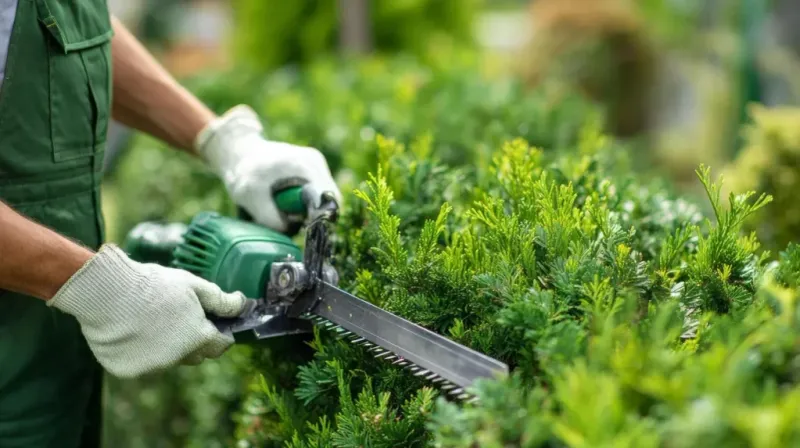
Pruning has a real role in katydid management, but that role is narrower than many homeowners expect. Selective thinning of an excessively crowded shrub can open the interior to better airflow, improve your ability to see insects during a flashlight inspection, and make hand removal easier along pathways, porch entries, or windows where close contact with the plants is frequent.
Those are practical, worthwhile reasons to pick up the pruners.
What thinning cannot reliably do is reduce the katydid population in your yard. The cited evidence does not establish pruning as a dependable control method.
Katydids are mobile insects that move through the landscape, and opening one shrub simply changes where they are visible, not how many exist. If the goal is inspection access and better air movement around a specific area, selective cuts make sense.
If the goal is eliminating katydids from your property, pruning will not deliver that outcome.
NC State Extension’s native plants chapter emphasizes that shrub and herbaceous layers contribute meaningfully to ecological function and wildlife habitat. Native shrubs supply nectar, fruit, nesting cover, and structural diversity for birds, pollinators, and other beneficial insects.
Removing an entire shrub row to address a katydid chorus trades real ecological value for a result that may not even follow.
A better approach is to create windows and accessible paths through the outer portions of crowded plantings while leaving the core of healthy native shrubs intact. Trim back branches that overhang a walkway or press against a screen door, and open a view into the shrub interior where you want to monitor.
That kind of targeted work gives you the visibility and access you need without dismantling the habitat layer that supports the rest of your yard’s wildlife. Think of it as editing, not clearing.
Match the response to the size of the problem

Proportional responses save time, money, and beneficial insects. When a nighttime inspection turns up only a few katydids and the plant damage is minor, hand removal is the most sensible starting point.
UC IPM recommends catching and removing the few katydids found on plants as a first-line response, and it works well when numbers are genuinely low. Wear gloves, work at dusk when the insects are active and easier to spot, and drop them into a bucket of soapy water or relocate them well away from plants you want to protect.
If damage stays minor and does not increase over several inspection nights, continued monitoring is often wiser than any treatment at all. Katydid populations are shaped by predators, weather, and reproduction cycles, and a chorus that feels overwhelming in late August may quiet naturally within a few weeks as the season shifts.
Patience is a legitimate strategy when the plants are holding their own.
Chemical control is rarely the right answer for katydids in a residential yard. Texas A&M states that broad insecticide treatment is seldom justified for katydids and that repeat applications may be needed for any reliable effect.
Broad spraying also puts non-target insects at risk, including the predatory beetles, spiders, and parasitic wasps that naturally suppress katydid numbers over time.
If a documented infestation with increasing damage creates a genuine need for chemical control, any product used must match a demonstrated need, must be applied strictly according to its label, and must account for pollinator safety. Some insecticides, including spinosad, carry specific restrictions around flowering plants and foraging bees.
EPA label language for spinosad-based products states clearly that the product should not be applied while bees are foraging and, for non-agricultural uses, should not be applied to flowering plants. When in doubt, contact your county Extension office before reaching for any spray.
Keep the habitat and monitor the plants
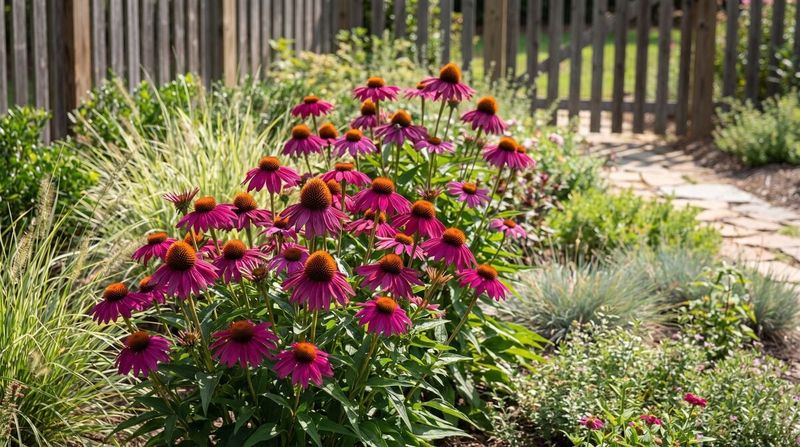
A late-season katydid chorus is a normal feature of North Carolina yards, not an emergency. The practical decision rule is straightforward: sound alone does not justify clearing shrubs, but documented feeding damage that is increasing or affecting fruit does justify a closer look, hand removal, or selective thinning for better access and visibility.
Species, weather patterns, reproduction timing, predator pressure, and the surrounding landscape all influence how many katydids end up in your yard in any given year. Texas A&M notes that katydid outbreaks generally decline rapidly from natural causes, which means the yard often corrects itself if given time.
Revisit the same plants after several nights and judge your results by reduced leaf damage and clearer visibility during inspections, not by whether every katydid has disappeared from the property.
NC State Extension’s native plant guidance and its insect management chapter together reinforce the same conclusion: preserve healthy vegetation layers, identify what you are dealing with before acting, and scale any response to the actual size of the problem. A yard with thriving native shrubs, layered plantings, and a resident population of predatory insects is better equipped to keep katydid numbers in check than one that has been cleared and sprayed.
The chorus outside your window is a sign that the late-season ecosystem is working exactly as it should.