
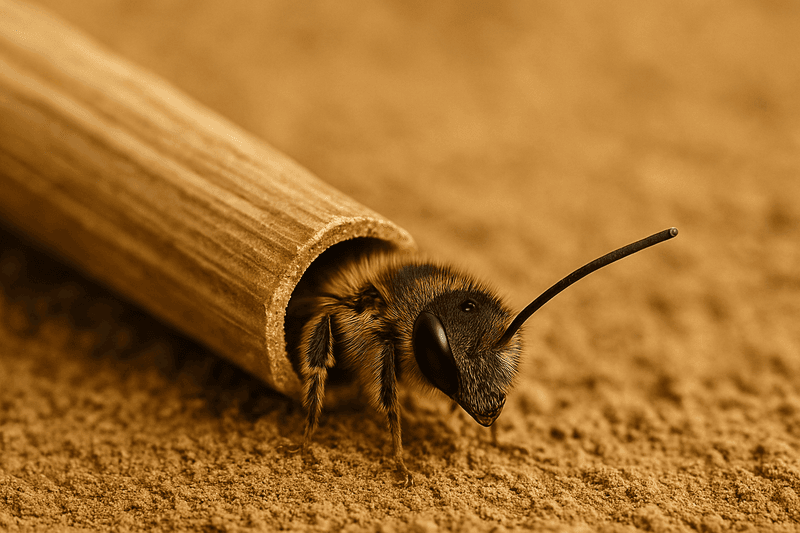
Every fall and winter, California homeowners grab their pruning shears and cut flower stalks to the ground, not realizing that some of those hollow or pithy stems may be used as nesting sites by certain native bees. Cutting everything back is a deeply ingrained yard habit, but for a small number of bee species, those old stalks are exactly the kind of shelter they need.
A smarter approach keeps your yard looking tidy while leaving a portion of stems standing where bees can potentially use them. You do not have to choose between a presentable yard and a wildlife-friendly one.
Some old stalks can provide habitat for California native bees
Cutting every old flower stalk to the ground is one of the most common cleanup habits in California yards, and it is also one of the most routine ways that potential nesting habitat quietly disappears. That does not mean every old stalk is a bee nursery.
Retaining a stalk does not guarantee bee use, and most stems in any given yard will simply remain empty. The more accurate framing is that some old, hollow, or pithy stems can serve as potential nesting or overwintering sites for a subset of California native bees.
California supports roughly 1,600 recorded native bee species, and that diversity alone makes it hard to generalize about what any single bee needs. A meaningful share of those species do use cavities, including hollow stems or stems with soft pith, but the majority of native bees nest in the ground rather than above it.
Stem retention helps a real but limited subset of the native bee community, not every species flying through your garden.
A 2026 residential-garden study reinforced how selective stem use actually is. Researchers found that only about 1.5% of sampled stems were occupied overall, even though 60% of participating gardens produced at least one occupied or recently vacated stem.
That result supports leaving some stems standing, but it also makes clear that every old stalk is not a guaranteed wildlife resource.
Bee activity in California also extends well beyond spring. Different native bee species emerge across spring, summer, and fall, and some may become active from February or even earlier in warmer parts of Southern California.
The practical takeaway is selective cleanup rather than abandoning yard care entirely, with a realistic understanding that some stems may eventually be used and many will not.
How some dead or pithy stems provide nesting habitat
Not every old stem works the same way as potential bee habitat, and the difference comes down to what is inside. Some plant stems are naturally hollow once they die and dry out, creating a ready-made tube that a bee can move into without any excavation.
Other stems have a soft, spongy core called pith, and certain bees can chew through that material to create their own cavity. Understanding which type of stem you have helps explain why some plants are more useful than others.
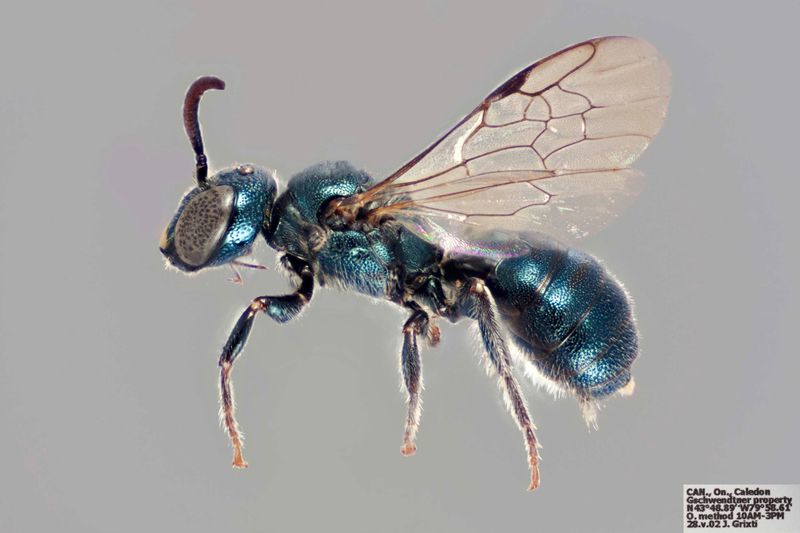
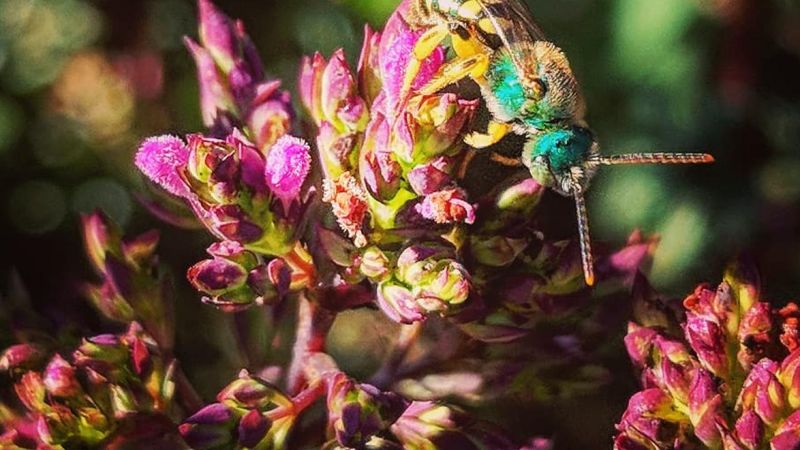
Small carpenter bees in the genus Ceratina are one of the best-documented California examples. A female Ceratina will excavate the soft pith from a dead or damaged stem, then construct a series of brood cells inside.
Each cell gets a small provision of pollen and nectar, and a single egg is laid before the cell is sealed. The female may remain at the entrance of the stem to guard the nest, and some Ceratina use the same stem to overwinter before their offspring emerge.
An important distinction worth keeping in mind: bees generally do not tunnel into healthy, living stems. The stem needs to be dead, damaged, or at least partially dried out before the pith becomes accessible or a hollow forms.
Research on stem-nesting pollinators confirms that it is the dead and dried portion of a stem that provides nesting opportunity, not the green, actively growing plant. Leaving living stems standing for this purpose is unnecessary; it is the old, dried material from previous seasons that matters.
Plants with pithy stems, such as elderberry, sunflower, coneflower, and some native sages, are among the types that can support this kind of use. Cutting them flush to the ground removes the very section of stem that a Ceratina or similar bee would investigate.
Leaving even a foot or more of dried stubble preserves that option without requiring you to keep a bed looking overgrown.
Why most old stalks will remain unoccupied
Before deciding how many stems to keep, it helps to calibrate expectations around what stem retention actually delivers. The evidence points to real but modest benefits.
A 2026 residential-garden study found at least 12 species of solitary bees and wasps using stems, yet only about 1.5% of all sampled stems were occupied at any one time. The fact that 60% of participating gardens produced at least one occupied or recently vacated stem is genuinely encouraging, but it also means that the vast majority of individual stems in any yard will simply go unused.
That selectivity is worth naming plainly because it shapes the right attitude toward stem retention. Keeping a patch of old stalks is a reasonable, low-effort gesture toward potential habitat, not a guaranteed outcome.
A stem that sits empty for two full seasons is not a failure. It may simply not match the dimensions, pith texture, or location preferences of the bees visiting your particular yard that year.
There is also the matter of who else might move in. The same study documented solitary wasps alongside solitary bees in stem cavities.
Wasps that nest in hollow stems are generally beneficial, preying on garden pests, and are not the aggressive colony-defending wasps most people picture. Still, a stem cavity does not exclusively belong to bees.
Retaining old stalks means providing habitat for a broader community of cavity-using insects, which is a reasonable trade-off for most gardeners but worth knowing about before you start.
Treat retained stems as habitat that may be used over time rather than as confirmed active nests. Check them periodically for signs of occupancy, and manage expectations accordingly.
A small grouped patch in a low-traffic part of the yard is a practical way to offer that potential without overcommitting space or sacrificing yard appearance for stems that may remain empty.
A grouped stubble patch keeps the yard usable and presentable
The single most useful shift a California homeowner can make is moving away from an all-or-nothing approach to stem cleanup. Keeping every old stalk throughout the yard is neither necessary nor practical for most households.
Instead, concentrate retained stems in one lower-visibility area, such as a rear border, a corner near a shrub, or a small grouped patch within a bed, and manage the rest of the yard as you normally would.
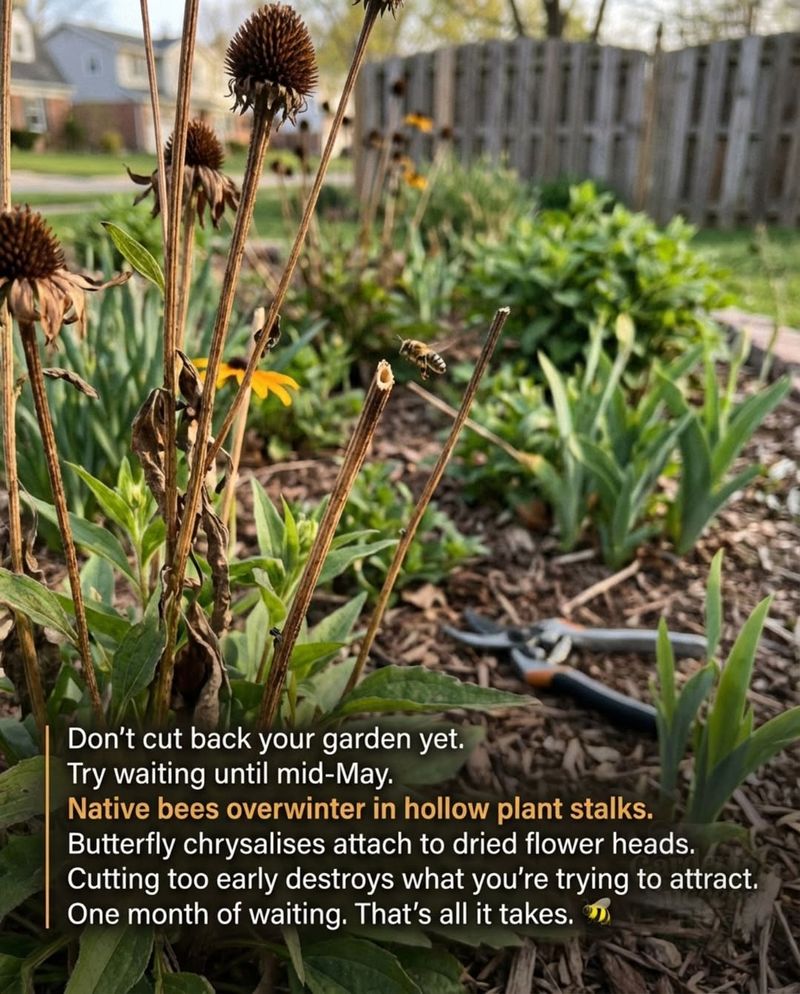
Extension guidance on stems for bees and Xerces Society habitat recommendations commonly suggest leaving roughly 8 to 24 inches of standing stem stubble, though the right height depends on the plant’s structure and your local conditions. Taller, sturdier stems from plants like sunflowers or elderberry can stand at the higher end of that range.
Shorter, more delicate stalks from perennial flowers may be cut closer to 8 inches and still offer usable cavity length.
USDA Natural Resources Conservation Service guidance supports grouping stems together in a visible but contained patch rather than scattering remnants throughout a bed. A cluster is easier to manage, easier to inspect, and easier to explain to a neighbor or HOA reviewer.
It also gives potential nesters a concentrated area to investigate rather than isolated stems spread across a large space.
New plant growth later in the season will often hide the remnants naturally, so a patch that looks rough in January may be nearly invisible by May. Clean up the most prominent, damaged, or obstructive stalks elsewhere in the bed and give yourself permission to be selective.
Gardening extension resources consistently note that a tidy-looking yard and a wildlife-friendly yard are not mutually exclusive goals.
One rule applies regardless of how many stems you keep: if a stem shows a nest entrance, chewed pith, sawdust-like material around the base, or visible bee activity, leave it completely undisturbed. The Xerces Society identifies chewed pith or fine sawdust beneath an entrance as a sign associated with small carpenter-bee nesting activity.
Cutting that stem, even with good intentions, removes an active nest.
When should California gardeners cut or leave stems?
Timing is one of the most confusing parts of stem management, partly because the advice available online often comes from studies or extension programs based in the Southeast or Midwest rather than California. The state’s Mediterranean climate and wide range of elevations and microclimates mean that a single pruning calendar does not apply everywhere.
What works in coastal San Diego in February may be weeks ahead of what makes sense in the Sacramento Valley or a hillside community in the Sierra foothills.
UC Agriculture and Natural Resources publications on California native bees describe species emerging across spring, summer, and fall, with some becoming active from February or even earlier in warmer parts of Southern California. That spread matters because it means there is no clean window when all bees are definitively inactive and all stems are safely empty.
A stalk that looks dormant and abandoned in late January may already be sheltering an overwintering bee or a nest laid the previous fall.
A recent study from North Carolina found that first-year dead stems were not occupied because they had not been available during the previous nesting season, and the researchers concluded that trimming first-year stems during winter can create future habitat while avoiding currently occupied material. That finding is useful context, but it comes from a different climate and a different study region.
Applying it as a California-specific pruning rule would be a mistake.
Separately, UCANR guidance on stem-nesting bees describes early-spring cutting as one way to expose cavities for potential nesting, while the 2026 residential-garden study cautions that spring cleanup can destroy active nests already established in older stems. Those two positions are not necessarily contradictory, but they do highlight why a blanket rule is risky.
The safest homeowner approach for California is to retain a portion of old stems through the dormant period, avoid a total cleanup once local bee activity is visible, and adjust the timing and scope of any cutting to what you actually observe in your specific yard and plant mix.
Stem habitat works best with flowers, soil, and fewer sprays
Old stems are one piece of a larger puzzle, and they cannot do the work of an entire bee-friendly yard on their own. UCANR resources on native bee habitat consistently emphasize that roughly 70% of California native bee species nest in the ground rather than in stems or wood cavities.
That means compacted soil, thick layers of bark mulch covering bare ground, and a yard without suitable nesting patches will limit the value of even the best-managed stem collection.
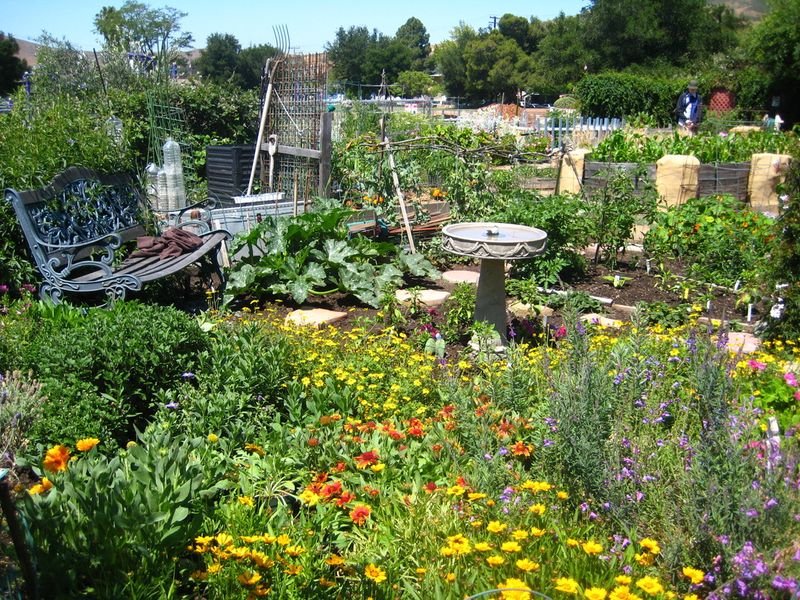
Flowering plants are equally central. Cavity-nesting bees still need pollen and nectar to provision their brood cells, and a yard with retained stems but no blooms offers shelter without sustenance.
Providing a continuous sequence of flowering plants across the seasons, favoring California natives where possible, gives stem-nesting bees a reason to stay in your yard and reproduce there rather than simply passing through. UC ANR pollinator habitat guidance recommends plants that bloom across multiple seasons to support the full range of native bee emergence times.
Pesticide use is the third factor that can undermine the other two. Routine insecticide applications in a garden with good stem habitat and abundant flowers can still reduce or eliminate local bee populations.
California’s Department of Pesticide Regulation recommends integrated pest management, which means using nonchemical controls whenever feasible, treating only the affected area when a pesticide is necessary, and reading and following label instructions carefully. Labels on many pesticides include specific restrictions around pollinators, and those directions are legally binding, not optional suggestions.
A tidy stem patch in one corner of the yard works best when the surrounding beds also offer blooms, some accessible bare or lightly mulched soil, and a yard-care routine that avoids routine broad-spectrum spraying. Each of those elements supports a different part of the native bee community, and together they create a yard that is genuinely more hospitable than any single change alone could deliver.
Keep the habitat patch outside California’s defensible-space priorities
Wildfire safety is not negotiable, and it takes priority over any habitat recommendation in this article. Dead and dry vegetation is a known fire hazard, and California homeowners in fire-prone areas are required by law to maintain defensible space around their structures.
Retaining a cluster of dried flower stalks for native bees is a reasonable yard practice in the right location, but the wrong location can create a genuine risk.
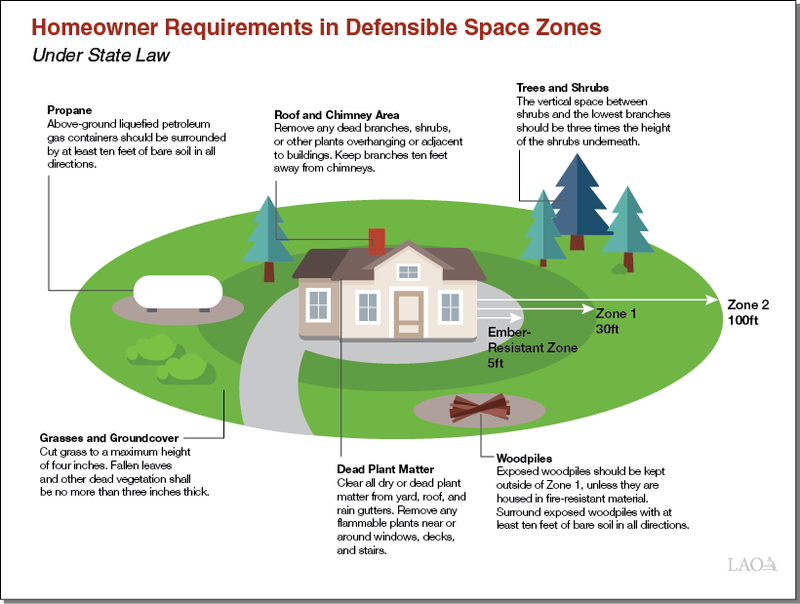
CAL FIRE’s defensible-space guidance requires removing dead or dry vegetation, especially in the zone immediately surrounding a structure. California Board of Forestry and Fire Protection rules describe Zone 0 as the first 0 to 5 feet around a building, where no combustible vegetation or materials should be present.
Dead stems, however small, fall into that category. A habitat patch should never be placed against a house wall, under a deck, beside a vent opening, near a propane tank, or anywhere within a required clearance zone.
Cal OES defensible-space framework documents also note that local fire districts, counties, municipalities, and homeowner associations may enforce rules that are stricter than statewide minimums. A patch that complies with state guidance might still violate a local fire-district ordinance or an HOA’s weed-abatement policy.
Check with your local fire department and review any HOA rules before deciding where to place retained stems.
The practical solution is straightforward: place the stem patch in an open area of the yard that is well away from structures, accessible for inspection, and outside any required clearance zones. A rear garden bed, an open border far from the house, or a corner near a water feature can serve the habitat purpose without creating a fire hazard.
A small, well-placed patch does more good than a large, poorly sited one.
Leave a useful portion standing, not everything standing
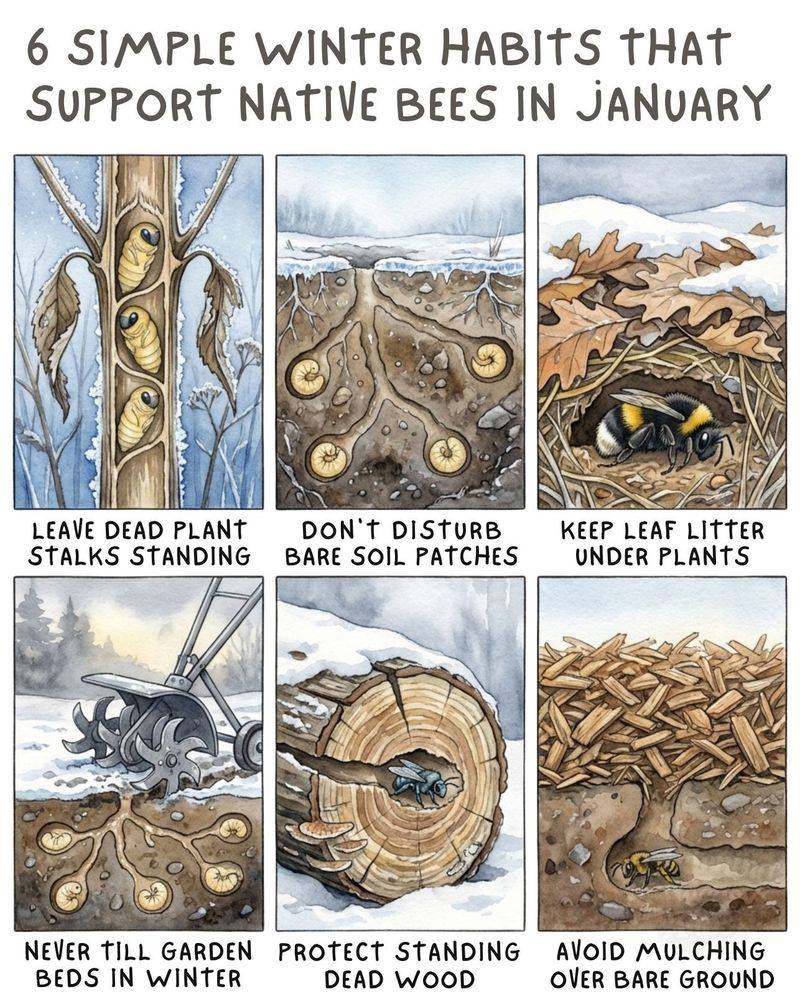
Putting this into practice does not require a complicated system. Start by identifying one safe, visually contained area of your yard, well away from structures and outside any required defensible-space clearance, where a small cluster of old stems can stand through the dormant period.
Aim for varied heights within that patch, generally somewhere between 8 and 24 inches depending on the plant, and leave the grouping in place rather than scattering remnants across the entire bed.
Before cutting anything, walk the patch and look for signs of occupancy: a small round entrance hole at the cut end of a stem, fine sawdust-like material near the base, chewed or hollowed pith, or a bee entering or exiting. The Xerces Society notes that these are the clearest field signs of stem-nesting bee activity, and any stem showing them should be left completely undisturbed.
Cut the remaining stalks selectively, focusing on the most prominent, damaged, or obstructive material elsewhere in the bed.
Beyond the stems themselves, keep flowers blooming across multiple seasons, maintain some open or lightly mulched soil for ground-nesting bees, and avoid routine broad-spectrum pesticide applications. UCANR guidance on native bee habitat treats stem retention as one part of a broader yard-stewardship approach rather than a standalone fix.
Fire rules come first, occupancy is never guaranteed, and bee activity runs well beyond spring. A yard that holds a small, tidy patch of old stems alongside good flowers and healthy soil gives California native bees something genuinely useful without turning yard care into an all-or-nothing proposition.
The bees that find it will use what they need.