
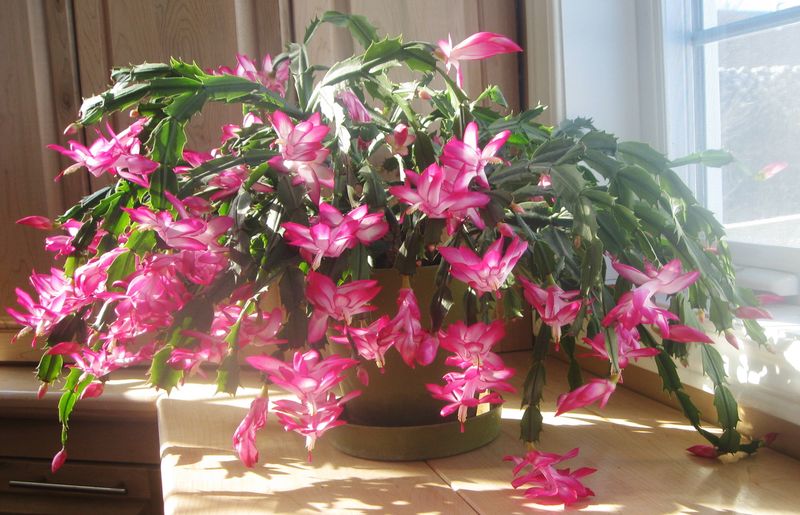
A Christmas cactus that is still all green in late November can feel like a plant that missed its cue. Holiday cacti pay close attention to how long the nights are, and a steady dark routine may nudge them toward making buds.
The catch is timing, because a late start leaves little room before December 25. Here is a calm, practical plan, along with honest expectations for what it can and cannot do.
Buds before Christmas are uncertain
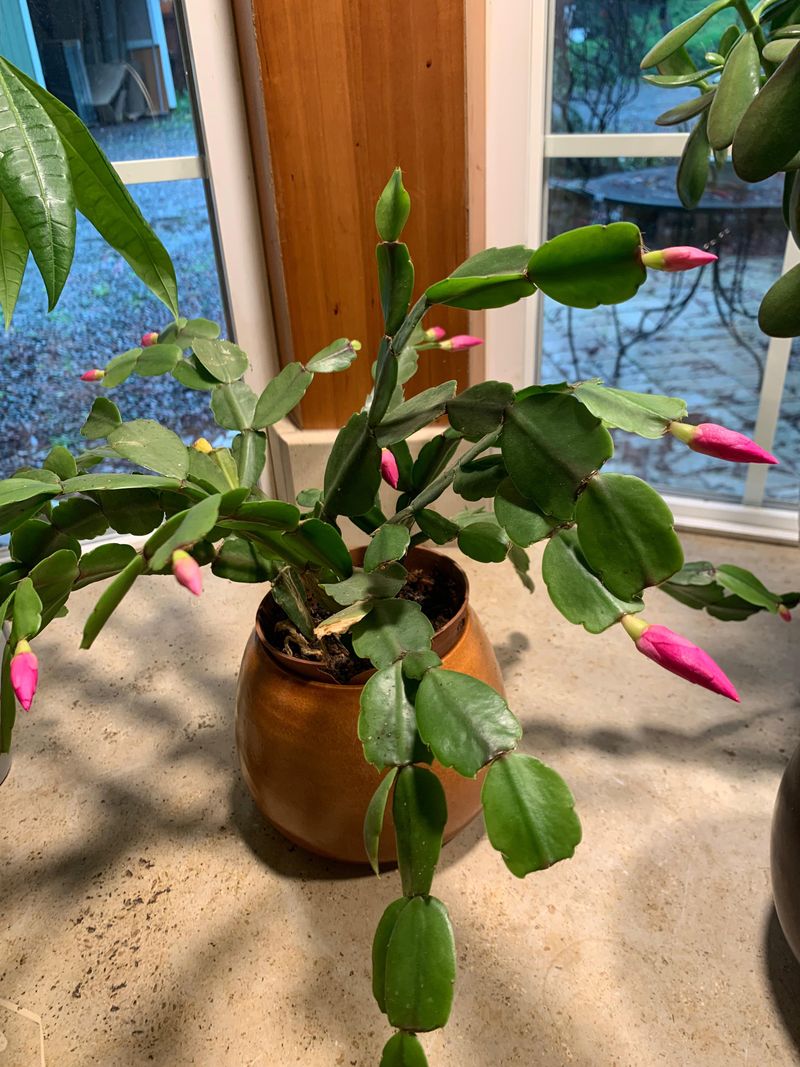
Starting a darkness routine the week of November 22 may encourage buds, but it cannot reliably produce them before Christmas, and open flowers by December 25 are especially unlikely. Buds and blooms are two different milestones, and the gap between them is where the calendar gets tight.
Wisconsin Extension says buds may begin appearing after about four weeks of short-day treatment. Even if that holds for your plant, four weeks from now lands right around the holiday.
Once buds do form, Kansas State reports another nine to ten weeks before they open into flowers.
UF/IFAS describes a six-week treatment and about ten weeks to bloom, with an October 14 start for flowers on December 23. A November 22 start is more than five weeks behind that example.
Still, the routine costs very little. If your plant responds, you may see buds in January and flowers into late winter, which is a fine reward for a few weeks of effort.
Why long nights can prompt buds
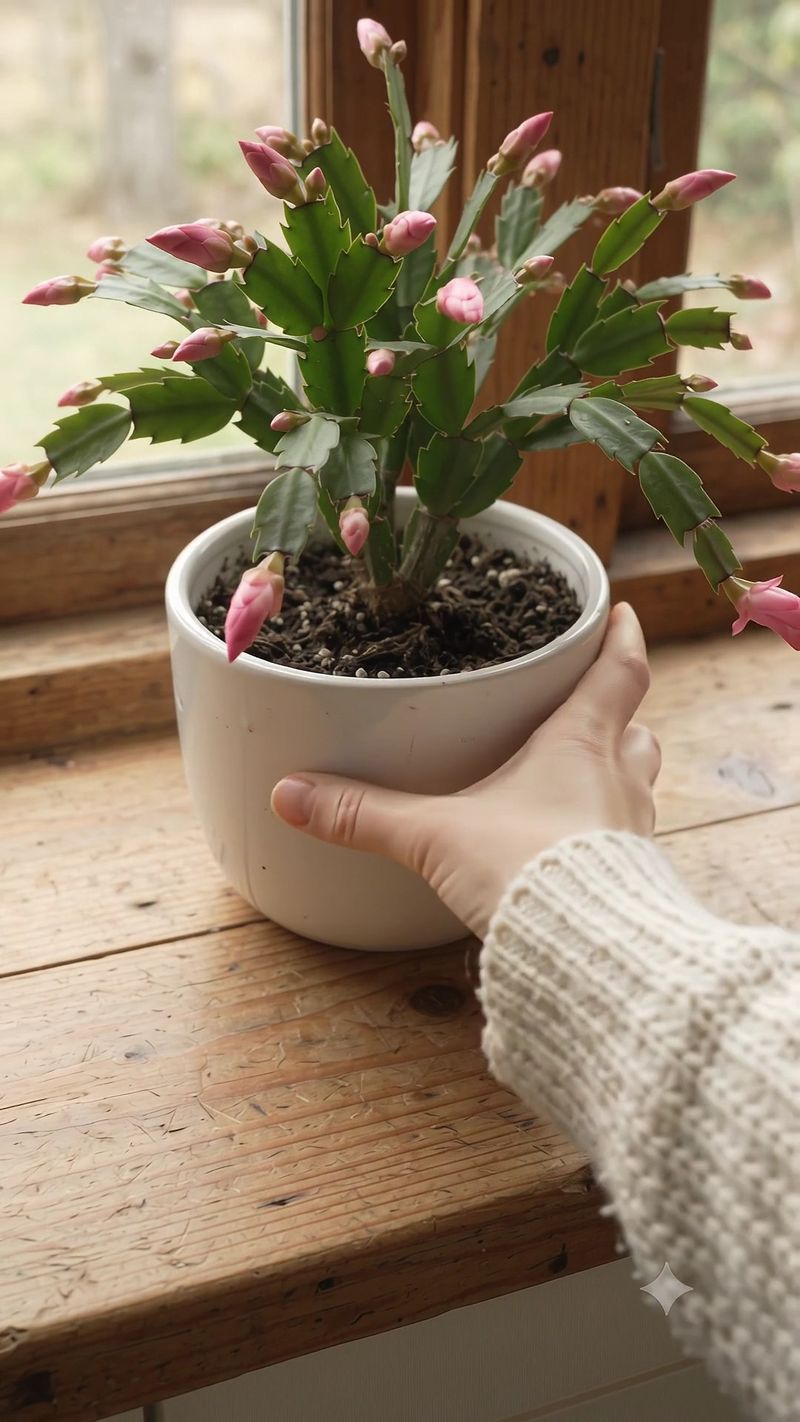
Holiday cacti read the seasons through day length. Short days, or long and uninterrupted nights, can help trigger flower buds, which is why a plant kept under a bright living room lamp every evening may stay green.
Darkness is a cue, not a magic switch. A UMass commercial production fact sheet shows that the response depends on temperature too.
Short days matter in warmer conditions, while cooler nights can help buds form on their own.
Cultivar plays a role as well. Wisconsin Extension notes that varieties respond differently, and that hitting a precise date may take some experimentation.
Research summarized by ISHS also points to light and temperature working together.
So think of long nights as one lever among several. The next sections turn that idea into a routine you can actually follow at home.
Give the plant consistent long nights
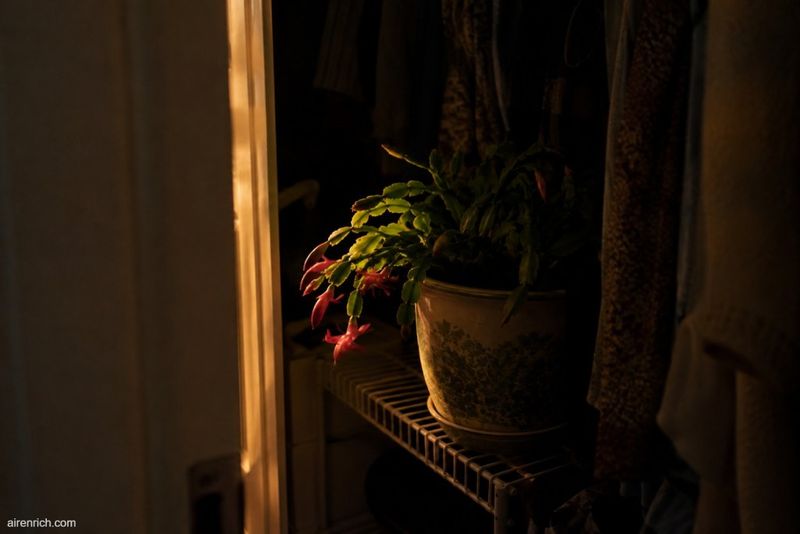
Aim for bright light during the day and about 12 to 14 hours of uninterrupted darkness each night. A spare room that nobody uses after dark works well, as does a closet or a box placed over the pot in the evening and lifted in the morning.
Interruptions matter, so skip the quick peek with the hallway light on. Even a short burst of light can chop up the dark period you are trying to build.
Guidance on length varies. Wisconsin Extension points to about four weeks before buds begin showing, while UMN Extension describes roughly six weeks of short days.
A UConn fact sheet offers similar home advice.
Pick a schedule you can keep, mark it on a calendar, and stay steady. Treat it as a routine that may encourage buds, not a formula with a guaranteed date.
Keep nights cool, not cold
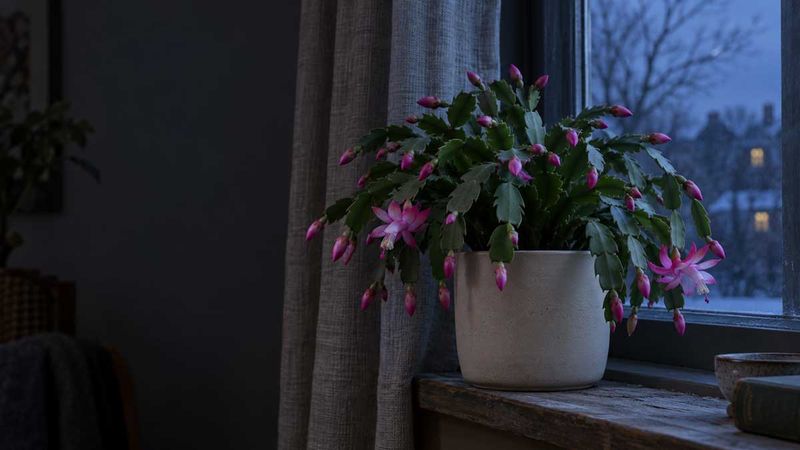
A cool night can support bud formation. A practical home target is roughly 55 to 65°F, paired with bright light during the day.
An unheated but frost-free spare room or a cooler spot near a bright window often fits.
UMN Extension recommends cool but not freezing nights for holiday cacti. Commercial research is a bit different.
The UMass fact sheet reports that short days are needed at 60 to 75°F, while 50 to 59°F can induce buds under long or short days. Those findings come from controlled greenhouses, so use them as background rather than a home recipe.
Colder is not a shortcut. NC State commercial guidance notes that buds may fail to form below 50°F.
Keep the plant away from cold glass, drafty doors, and anything near freezing. A steady, cool room beats a chilly experiment.
Protect buds with steady care
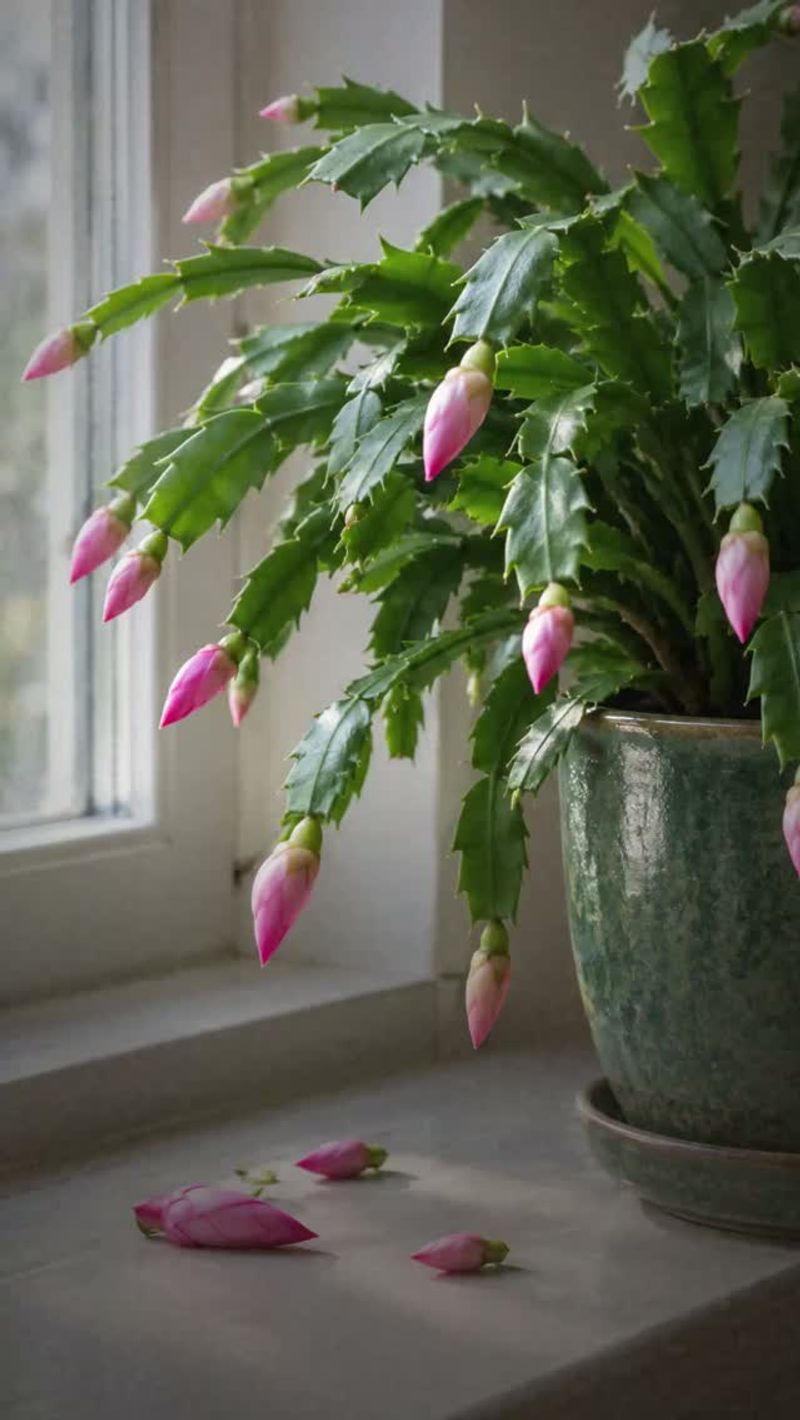
Once tiny buds show up, the best move is to leave things alone. Moving the pot, changing the light, or swinging the temperature can lead to bud drop, so pick a good spot and keep it there.
NC State Extension notes that both dryness and excess moisture can cause buds to fall.
Water by feel, not by the calendar. Check the top of the mix, and water when it begins to dry.
The goal is to keep the mix from drying out completely without leaving roots sitting in water.
A pot with drainage holes and a well-drained mix make that balance easier. UF/IFAS describes the same middle path.
Letting the plant go dry is not a bud-setting trick, and it can backfire.
Keep up bright daytime light as well. Wisconsin Extension also advises avoiding sudden changes once buds form.
Quiet consistency is the whole job at this stage.
Let the plant set its own timetable
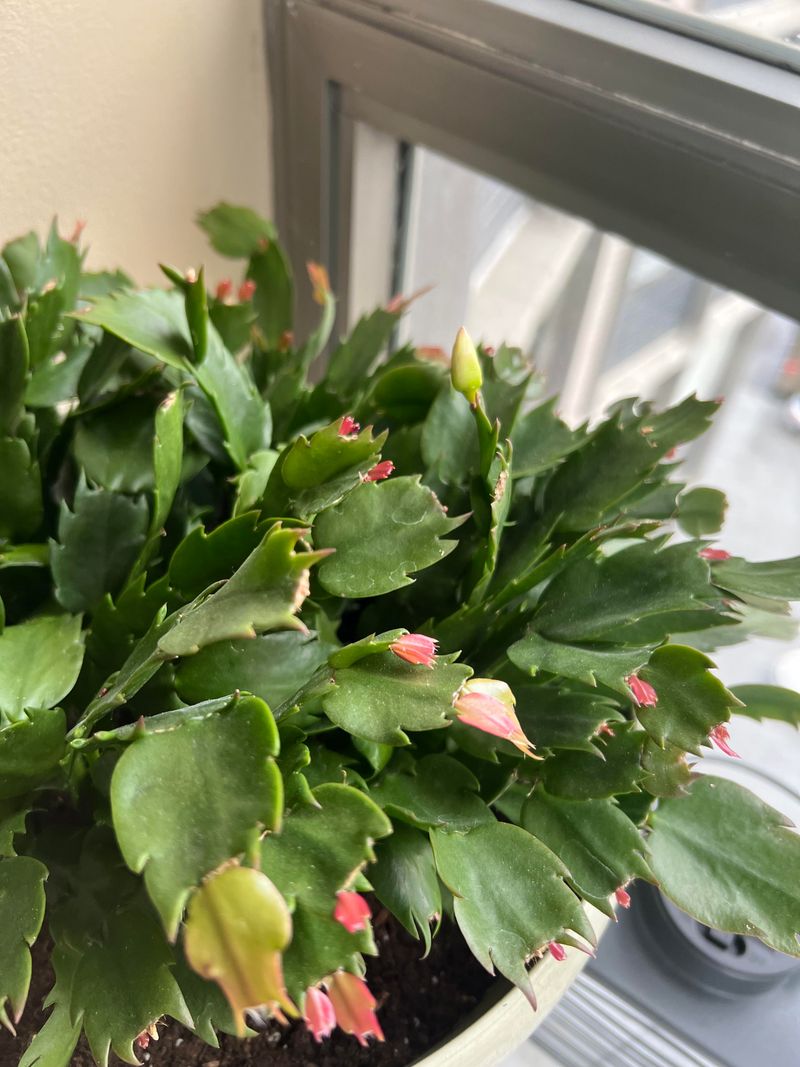
The plant sold as a Christmas cactus may not be one. The name is often used loosely for Thanksgiving cactus and other holiday-cactus hybrids, and UMN Extension explains that common names only point generally to bloom season.
Your plant’s label does not settle its exact type or flowering date.
Cultivars also differ. Wisconsin Extension notes that responses vary and that precise timing may take experimentation.
A grower’s schedule is not a promise for one pot on your windowsill.
So the honest outlook is this: a late start may encourage buds, but whether they appear before the holidays, and whether flowers open this season, is uncertain. If you want to try, keep the nights long, the days bright, and the care steady.
Some years the cactus simply blooms on its own clock, and a January bloom still counts.