
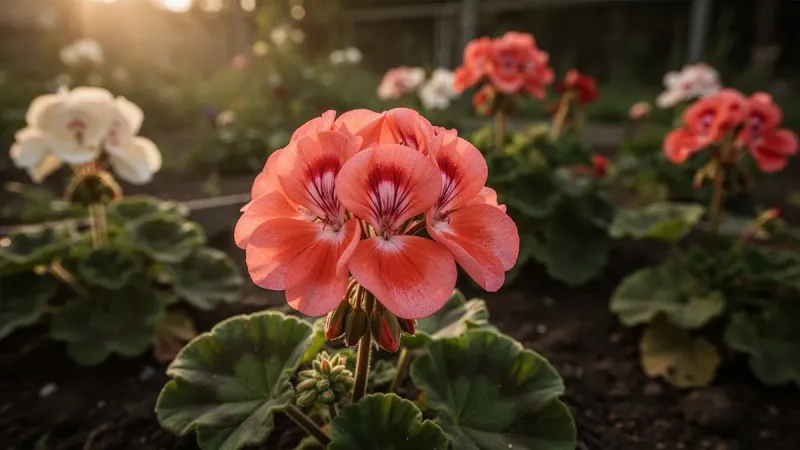
Watching your geraniums go quiet right when summer peaks is one of the more frustrating moments in a Southern garden. The plants look healthy enough, the leaves are green, but the flower clusters just stop coming.
For gardeners in Florida and Texas, this pattern shows up reliably once the heat really sets in, and the reasons behind it are worth sorting out carefully. Understanding what heat actually does to these plants, and what else might be going on, can help you make smarter adjustments before the season slips away.
Start by identifying the geranium you actually grow
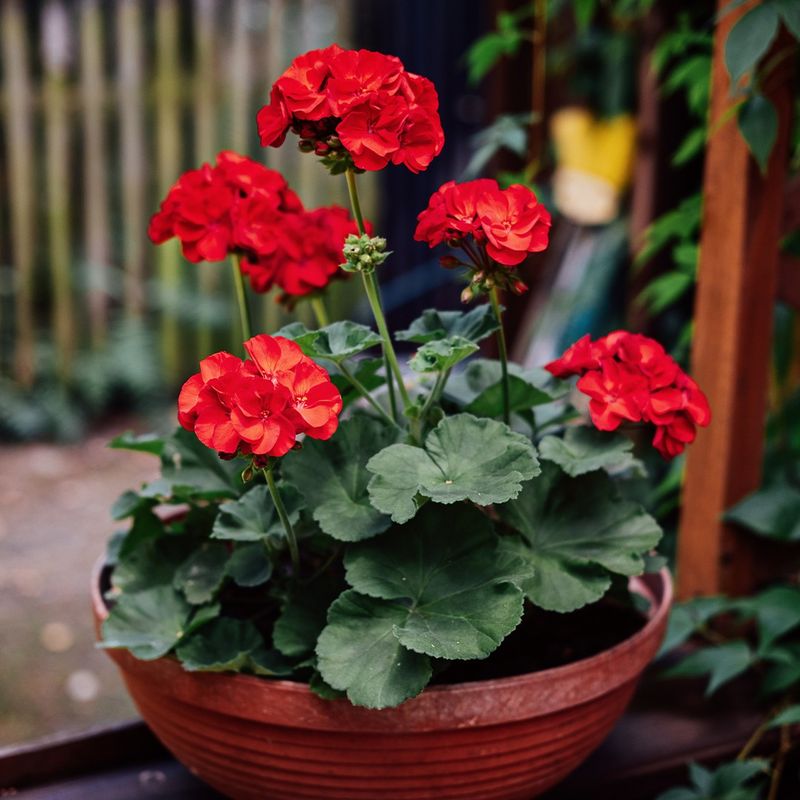
Most plants sold at Southern garden centers under the label “geranium” are not true geraniums at all. The common bedding type is Pelargonium x hortorum, a tender annual in most of the U.S. and the plant this guide focuses on.
True hardy geraniums, called cranesbills, belong to a separate genus and behave quite differently in heat, light, and dormancy.
Telling them apart matters before applying any care advice. Clemson Cooperative Extension’s annual geranium factsheet explains that zonal pelargoniums are the familiar bedding type with rounded leaves that often show a darker horseshoe-shaped band, while true cranesbills are perennial and hardier in cold climates.
The two plants share a common name but not much else in terms of summer performance.
Within the pelargonium group, there are also meaningful differences. Ivy-leaf types trail and tolerate somewhat different light than zonals.
Regal pelargoniums are particularly sensitive to heat and often stop flowering in warm weather earlier than zonal types. Scented and hybrid pelargoniums vary widely by variety.
For the purpose of this guide, the focus stays on zonal pelargoniums, which are by far the most common bedding choice across Florida and Texas. If your plant has thick, rounded leaves, upright stems, and clusters of small flowers in red, pink, salmon, white, or lavender, you are almost certainly working with a zonal pelargonium.
Starting from that identification keeps the rest of the troubleshooting grounded.
Heat can suppress new flowers without proving a care mistake
Zonal pelargoniums are warm-season plants, but they are not unlimited heat machines. Research from commercial greenhouse production shows that rising temperatures can slow geranium growth and reduce flower development noticeably.
UMass Amherst’s geranium production guide reports that mean daily temperatures above approximately 80 degrees Fahrenheit, or sustained daytime highs above about 85 degrees, can stress the plant and sharply cut back on growth and development.
Those figures come largely from controlled greenhouse or production research settings, not from backyard container studies. Cultivar, nighttime temperatures, pot size, exposure, and how long the heat persists all affect how a specific plant responds.
A number above 85 degrees does not guarantee that every geranium on every porch will stop flowering immediately. Think of those ranges as a signal worth paying attention to, not a hard cutoff.
What the research does support is that heat-related flowering slowdowns are a real and plausible explanation when a geranium that looked fine in spring or early summer starts producing fewer new clusters as peak heat arrives. That timing connection makes afternoon exposure and sustained high temperatures a sensible first thing to investigate.
It does not mean heat caused the problem in every case, or that heat plus afternoon sun explains most bloom failures across Southern households. Other factors, including water stress, poor drainage, nutrient issues, cultivar limits, and disease, can produce the same symptom and deserve equal consideration.
Try bright morning light before making drastic changes
General planting guides often recommend full sun for geraniums, and that advice works well in spring and fall across much of the South. Once summer heat peaks, though, full sun from a western or southern exposure can mean hours of intense afternoon radiation on a container plant with limited root volume.
That is where the guidance shifts for hot climates.
Texas Tech’s landscape plant database lists zonal geraniums as having medium heat tolerance and recommends afternoon shade. The Missouri Botanical Garden similarly notes that while these plants prefer full sun, they appreciate light shade during the hottest part of the day.
Neither source calls for moving the plant into deep shade, and that distinction matters: too little light weakens stems, reduces flowering on its own, and creates different problems.
For Florida gardeners, UF/IFAS guidance on Pelargonium x hortorum notes that plants receiving no more than about three hours of summer sun may continue forming flowers during the hottest months. That is a regional observation specific to Florida’s conditions, not a universal prescription for every Southern garden, but it gives a useful reference point for how dramatically light reduction can matter in an extreme climate.
The practical experiment is straightforward for container growers: move the pot to a spot with bright morning light and shelter from roughly midday onward. For in-ground plants, a shade cloth or nearby taller plant can provide similar relief.
Treat this as a first test, not a guaranteed fix, and give the plant at least two to three weeks before drawing conclusions.
Keep the root zone moderately moist and well drained
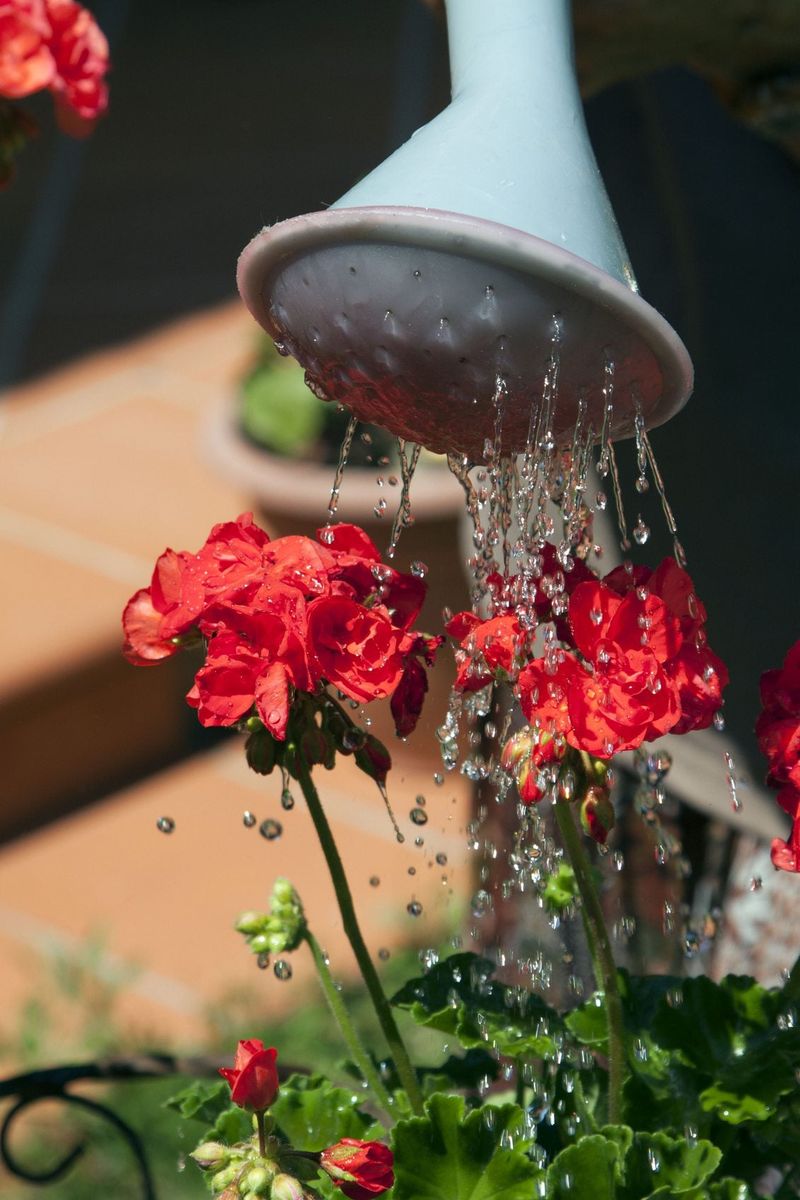
Container plants on a Southern porch or patio face heat stress from two directions at once: the air around the foliage and the soil around the roots. Pots sitting on concrete, brick, or dark surfaces can absorb and hold heat in ways that warm the root zone well beyond the surrounding air temperature.
UMass Amherst notes that container geraniums dry faster and experience more variable root conditions than in-ground plants, which is why a fixed watering schedule rarely works well.
The more reliable approach is to check the potting mix directly. Press a finger an inch or two into the soil; when the root zone has dried somewhat but is not completely bone dry, water thoroughly until excess drains freely from the bottom of the pot.
Then let it drain completely rather than leaving the container sitting in a saucer of standing water. NC State Extension’s pelargonium profile emphasizes that geraniums need moderate moisture but fast drainage, and that consistently wet soil around the roots invites problems including root rot and edema.
Overwatering and drought stress can look similar from a distance: both can produce wilting, yellowing leaves, and reduced vigor. A plant sitting in soggy soil that still wilts is not asking for more water.
How often you actually need to water depends on the pot size, the material it is made from, wind exposure, sun angle, and the potting mix itself. No single frequency covers all of those variables.
Deadhead normally and skip the heavy fertilizer rescue
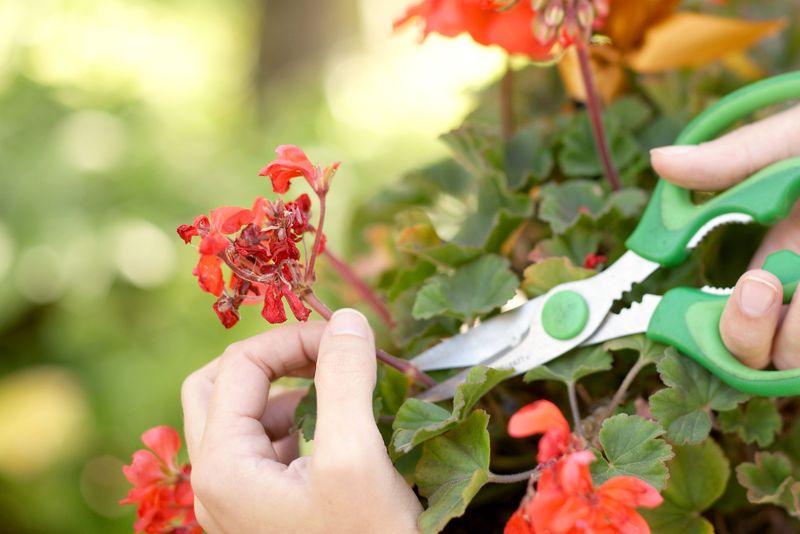
Removing spent flower clusters, a practice called deadheading, is worth doing on a regular basis through the season. Snipping off fading blooms before they go to seed can redirect the plant’s energy toward forming new flower buds rather than maturing seeds.
UF/IFAS recommends deadheading as part of standard geranium maintenance, and it does improve the plant’s appearance even when conditions are less than ideal.
What deadheading cannot do is override the flowering slowdown caused by severe heat stress or a cultivar that has reached its natural summer limit. If high temperatures are suppressing bud formation at the source, removing old flowers will not bring new ones back faster.
Keep deadheading as a routine habit, not as a primary rescue strategy.
The fertilizer question comes up often when a plant stops blooming, and the instinct to feed it more is understandable but potentially counterproductive. Excess nitrogen, in particular, pushes leafy vegetative growth at the expense of flowers.
Iowa State Extension’s hanging basket guidance cautions against overfertilizing, noting that it can create salt buildup in the soil and damage roots over time. Follow the product label, fertilize only when the plant’s condition and growth justify it, and resist the urge to pour on extra nutrients as a bloom booster during a heat-stressed stretch.
Use symptoms to check for disease or damaged roots
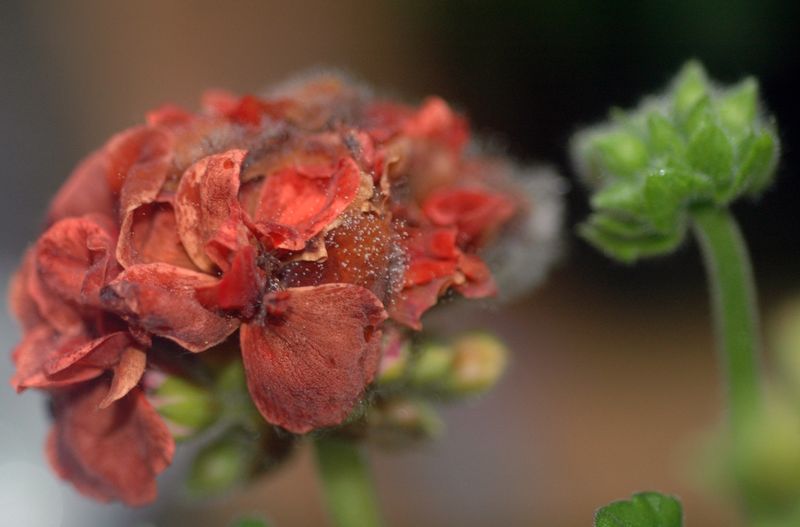
Reduced bud formation during hot weather looks different from visible damage to flowers or rapid whole-plant decline. Fewer new clusters appearing over several weeks is one thing; flowers turning brown, developing gray fuzzy patches, dropping prematurely, or stems going black near the soil line are something else entirely.
Those second-category symptoms call for a closer look rather than a simple adjustment in sun exposure.
Penn State Extension’s geranium disease guide identifies Botrytis blight as a common culprit when petals show brown spotting and gray mold, particularly in warm, humid conditions with poor air circulation or overhead watering. Bacterial diseases, including bacterial blight and bacterial stem rot, can produce blackened tissue, foul odors, and rapid collapse.
Root rot from persistently wet soil produces wilting that does not recover even when the soil is moist.
Several problems can look alike at first glance. A plant that wilts despite wet soil, drops leaves rapidly, or shows blackened or mushy stem tissue near the soil needs a drainage and disease investigation, not a change in afternoon light.
Check whether the potting mix drains freely, whether water is pooling around the crown, and whether any affected tissue shows discoloration, mold, or unusual odor.
Supportive steps that help regardless of the specific cause include removing fading or damaged flowers and leaves promptly, improving airflow around the plant by adjusting spacing, and switching from overhead watering to soil-directed watering. These actions reduce the conditions that favor fungal and bacterial problems without requiring a firm diagnosis first.
A single symptom is rarely enough to identify one specific disease, so look at the full picture before deciding on a response.
Expect cultivar and regional differences in late-summer color
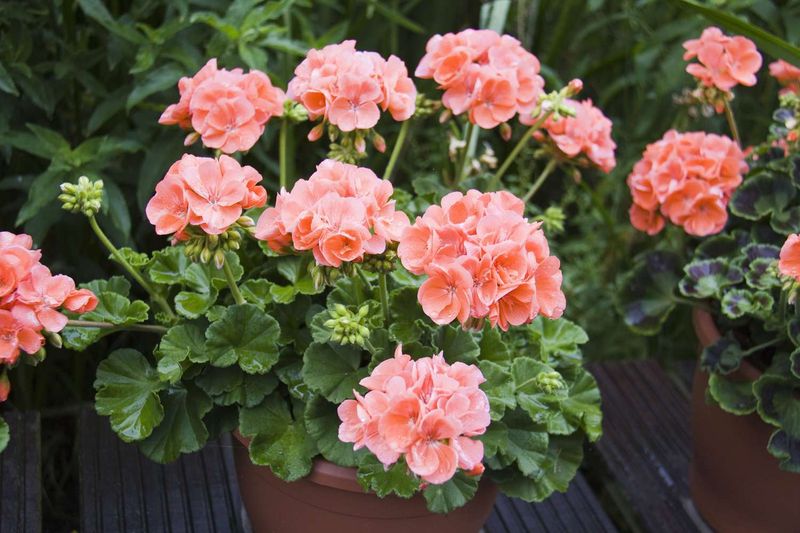
Even when care is adjusted thoughtfully, some geraniums simply reach their seasonal limit before summer ends. UF/IFAS is direct about this for Florida: geraniums perform best during cooler weather in central and southern Florida, and flowering commonly fades by mid-to-late summer regardless of how well the plants are managed.
That is a seasonal boundary, not a care failure.
Texas is a different story because conditions vary so much across the state. A gardener in the Hill Country faces different heat intensity, humidity, and nighttime temperatures than one in Houston or the Panhandle.
Performance in Texas also depends heavily on which cultivar is growing, how much afternoon exposure it receives, and what the soil and drainage situation looks like. Applying Florida’s specific seasonal timeline to all Texas gardens would overstate the case.
Cultivar selection makes a real difference. Texas A&M AgriLife Extension in Bexar County reported that zonal selections including ‘Strawberry Sizzle’ and ‘Violet’ outperformed ordinary geraniums during San Antonio’s intense summer heat, continuing to bloom when conventional types had stopped.
That result supports looking into heat-tolerant cultivars before assuming all zonal pelargoniums will behave identically.
After adjusting light exposure and moisture management, realistic signs of improvement include renewed bud formation, firmer and more upright foliage, and better overall plant color. Continuous, nonstop blooms through August in Florida or South Texas are not a reasonable expectation for most conventional selections, but a healthier, more resilient plant that flowers again when temperatures ease is a genuinely achievable outcome.
Make afternoon protection your first test, not your only answer
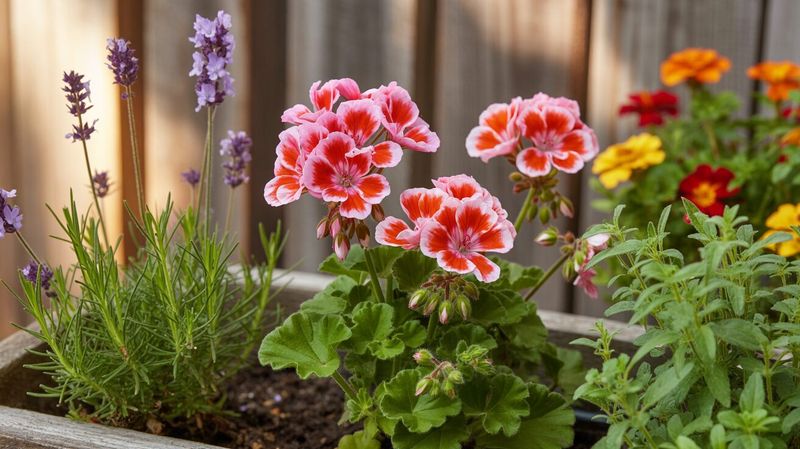
Pulling together the steps is straightforward once the plant is identified as a zonal pelargonium. Confirm that first, then look at where the harshest afternoon sun hits the container or bed.
Shifting exposure so the plant gets bright morning light with relief from the most intense afternoon heat is the most practical first adjustment when bloom loss lines up with peak summer temperatures.
From there, check the root zone moisture and drainage before watering again, deadhead spent clusters as a normal habit, and keep an eye out for any symptom that looks like disease or root damage rather than simple heat slowdown. UF/IFAS guidance and Texas Tech’s regional recommendations both point toward afternoon protection as a reasonable summer adjustment, not a guaranteed cure.
Heat and excessive afternoon exposure are a sensible first possibility when the timing fits, but they are not a proven universal cause for every plant in every yard. Florida’s seasonal limits and cultivar differences mean that even a well-managed plant may slow down before fall arrives.
Getting the conditions right gives the plant its best chance; the season and the cultivar handle the rest.