
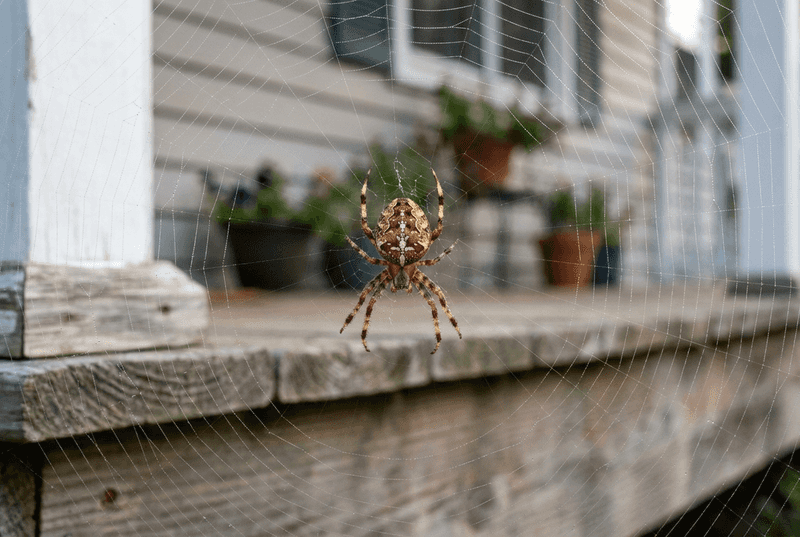
Walk out to your California porch on a warm evening and you might spot a large, wheel-shaped web strung between the light fixture and a nearby shrub, with a plump spider sitting right at the center. That spider is almost certainly an orb-weaver, and there is a good chance it has already snagged a few of the flying insects buzzing around your light.
The catch is that one spider near your door will not wipe out your mosquito problem, no matter how impressive the web looks. Understanding what this creature actually does, and what it cannot do, helps you make smarter choices about your yard, your family, and the wildlife sharing your outdoor space.
The porch spider is probably a generalist orb-weaver
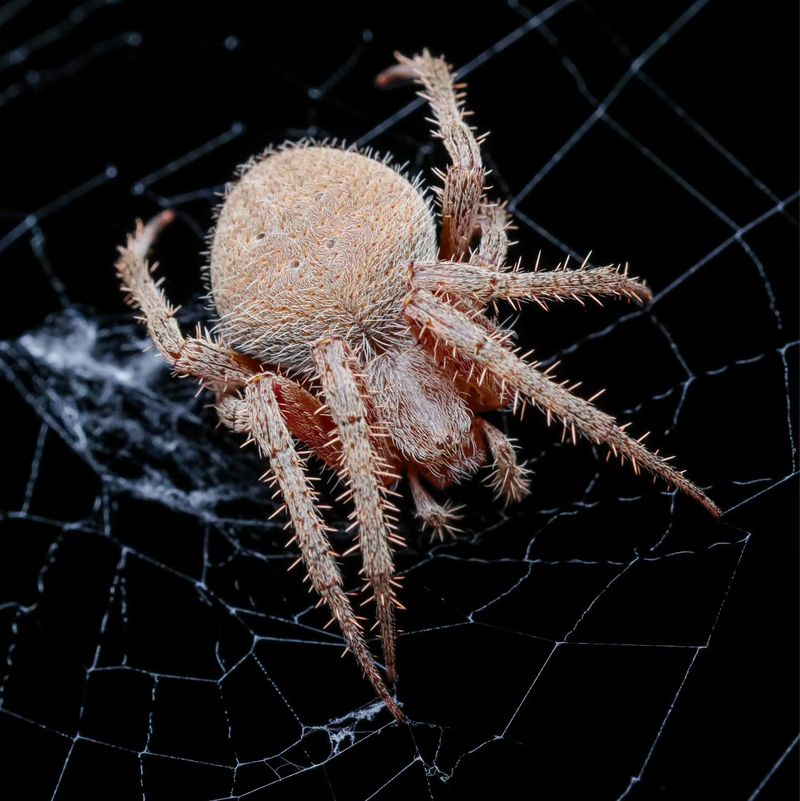
Spotting a large spider on a circular web near your front door or porch light is one of those late-summer moments that stops a lot of California homeowners in their tracks. The web itself is the first useful clue: a classic wheel shape, with evenly spaced spokes radiating from a central hub and a spiral of sticky silk connecting them.
That architecture points toward the orb-weaver family, a broad group that includes dozens of species living around California homes, ornamental plantings, building eaves, entryways, and exterior lights.
The phrase “California orb-weaver” does not name a single spider. UC IPM’s natural enemies gallery notes that California hosts more than 1,000 spider species, and several orb-weaver families and species can show up near a porch.
Two commonly seen examples are Neoscona crucifera and Neoscona oaxacensis, the western spotted orbweaver, but a confident species identification typically requires a clear photograph of the abdomen and web together, or a second opinion from a local extension office. Color patterns alone are not reliable enough to make a call.
What most of these spiders share is a beneficial role in the home landscape. UC IPM’s home and landscape spider guide describes spiders broadly as predators of pest insects, and orb-weavers fit that description well.
They are most noticeable from late summer into fall, when spiders have grown large enough to catch the eye and insect activity is still high. An orb-weaver sitting in an out-of-the-way web is doing useful work and poses no meaningful threat to people who leave it alone.
That is a reasonable starting point for any homeowner deciding what to do next.
The web’s circular shape is a helpful starting clue, not a guarantee of safe handling. If the spider is in an accessible spot and you cannot get a clear look at it, treat it as unidentified until you can confirm what you are looking at.
A porch light can create a prey-rich web site
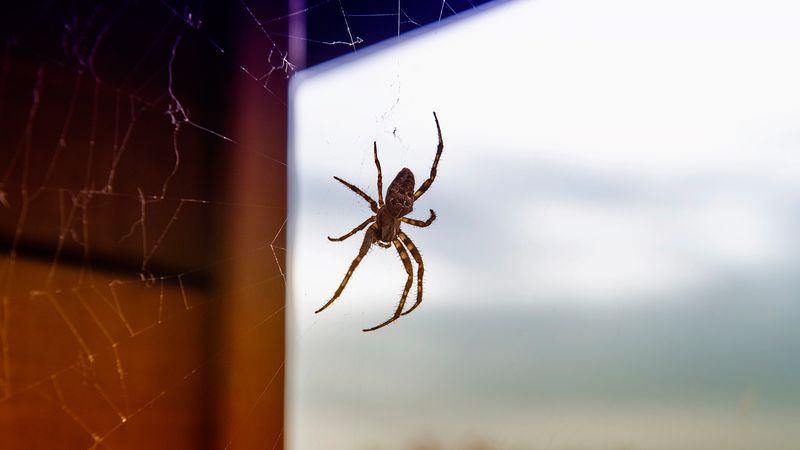
Orb-weavers do not chase prey. They build a web and wait for flying insects to blunder into the sticky spiral, then rush in to wrap and subdue the catch.
Positioning that web near a porch light is a smart move from the spider’s perspective, because artificial light changes insect behavior in ways that can funnel more flying prey toward a single spot.
A natural experiment on lit bridge panels found that orb-weaving spiders in illuminated areas were fewer in number but larger in body size and caught more prey per individual than spiders in unlit areas, suggesting that artificial light can meaningfully increase prey capture for the spiders that do choose to build there. A separate study on juvenile nocturnal orb-web spiders found that artificial light at night altered foraging responses, with some spiders showing preferences for lit conditions.
The spider near your light is likely exploiting exactly that effect.
What the light draws in is not a mosquito-only crowd. Utah State University Extension’s orb-weaver guide describes the diet as insects and spiders generally, and anyone who has watched a porch light on a summer night knows that moths, fungus gnats, small beetles, crane flies, midges, and wasps all show up alongside the occasional mosquito.
The exact mix shifts with season, weather, local vegetation, the type of bulb in the fixture, and which species happen to be active that night.
None of that variety is a problem. It means the orb-weaver is doing what generalist predators do: taking whatever flies into range.
The porch light creates a productive hunting ground, and the spider takes full advantage of it. Recognizing that the web intercepts a wide range of flying insects, rather than a targeted queue of mosquitoes, sets realistic expectations for what the spider can and cannot accomplish.
Mosquitoes can become prey, but they are not the whole meal
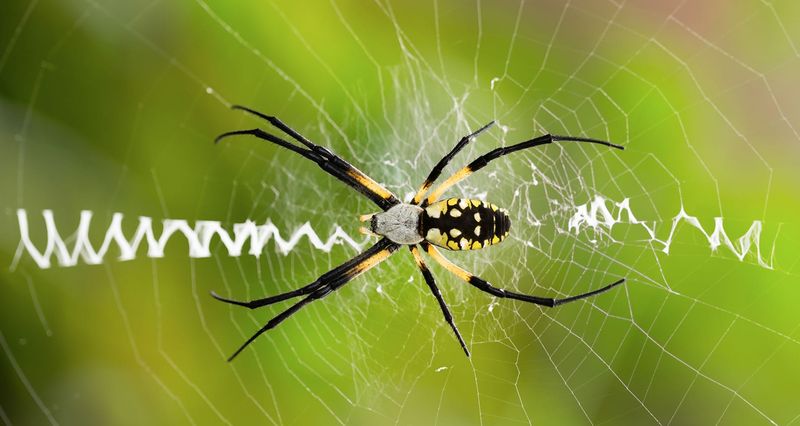
Published research does confirm that mosquitoes end up in orb-weaver webs. That is not a rumor or a gardening myth, and it is worth taking seriously as a real, if modest, ecological interaction.
A literature synthesis on predators of Aedes and Culex mosquitoes found documented cases of orb-weavers capturing Culex mosquitoes as they emerged from water and Aedes mosquitoes entering webs positioned near tree holes. Those are real observations from real field settings, not laboratory guesses.
The qualifications matter as much as the finding itself. The studies cited in that synthesis involved specific orb-weaver species in specific habitats, not the particular spider hanging outside a California homeowner’s front door.
Mosquito capture is biologically plausible for any orb-weaver building a web in a spot where mosquitoes fly, but “plausible” and “reliably happens in your yard at a meaningful rate” are different claims. The synthesis documents that mosquitoes can become prey; it does not establish that a typical California porch spider will catch enough of them to change how many mosquitoes are active in the surrounding yard.
Orb-weavers are generalists. On any given night, the insects wrapped in that web might be mostly moths, midges, or small flies, with a mosquito or two mixed in.
The spider does not select for mosquitoes, and there is no mechanism that would cause it to do so. What lands in the sticky spiral is a function of what happens to be flying at web height near the light, not a targeted hunting strategy.
That honest picture is still a positive one. A spider that occasionally catches a mosquito near your porch is providing a small, passive, real benefit.
Framing it as anything larger than that, though, sets up expectations the spider cannot meet. The next section addresses exactly where that ceiling sits and why it matters for homeowners who want practical results.
A few trapped mosquitoes do not equal mosquito control
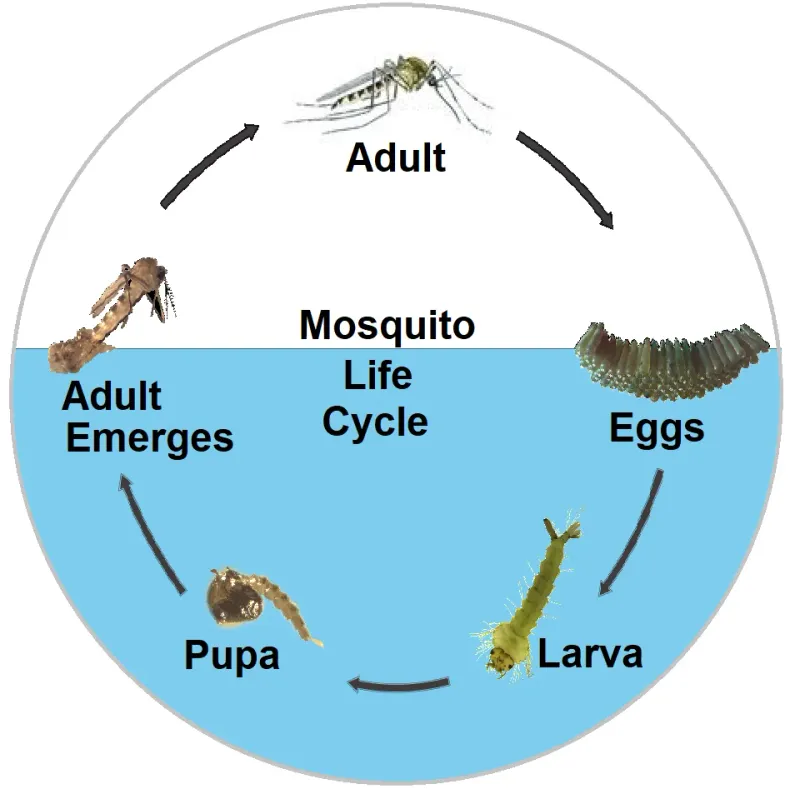
Here is the distinction worth holding onto: catching individual mosquitoes and controlling a mosquito population are two entirely different outcomes. An orb-weaver near your porch may remove a handful of adult mosquitoes over the course of a week, and that is a genuine contribution.
What it cannot do is reduce the number of mosquitoes breeding in your yard, lower the total adult mosquito population in your outdoor space, or reliably prevent bites.
The title of this article promises that leaving a California orb-weaver alone will clear the mosquitoes gathering by your porch light. That framing goes further than the evidence supports.
The same literature synthesis that documents mosquito capture treats spider predation as one ecological interaction among many, not a mosquito-suppression mechanism. No published research shows that a single orb-weaver, or even a cluster of them, reduces household mosquito pressure to a level that changes biting rates for the people living there.
Predation is also not repellency. The spider does not emit anything that drives mosquitoes away from the area.
Mosquitoes that avoid the web are still present, still biting, and still breeding wherever standing water exists nearby. The web functions as a passive trap for whatever flies into it, and the insects that miss it continue on unaffected.
Preserving an undisturbed orb-weaver still makes sense as a low-effort, no-cost choice that adds a small ecological benefit to your yard. CDC guidance on mosquito control at home focuses on source reduction, screens, repellents, and larvicides as the dependable measures, and those tools should carry the real control burden.
Think of the orb-weaver as a quiet bonus, not a substitute for any of them.
When should you leave the web alone?
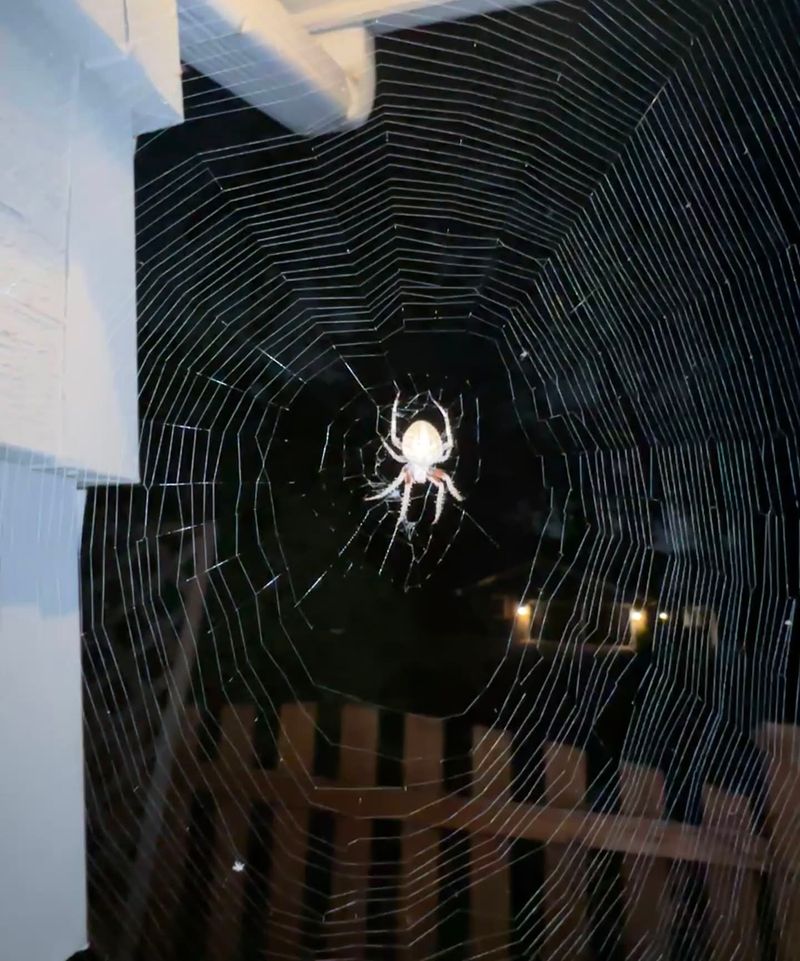
Most orb-weaver webs near a California porch fall into one of two categories: out of the way, or in the way. That simple distinction is the most useful decision rule a homeowner can apply, and it works without needing a species identification or a deep knowledge of spider biology.
When a web sits between a fence post and a shrub, spans a corner of the eave well above head height, or occupies a gap in ornamental plantings away from doors and seating, leaving it in place costs nothing and provides whatever modest benefit the spider offers. Extension guidance on spiders found near porches consistently supports a hands-off approach when the spider is not creating a hazard or blocking routine movement.
The web will eventually come down on its own as the season progresses and temperatures drop.
When the web blocks a doorway, stretches across a walkway at face height, or sits directly over a seating area where children or guests will brush against it, gentle removal is a reasonable choice. UC IPM recommends nonchemical removal methods such as sweeping the web away with a broom or using a vacuum to clear it without touching the spider.
If you want to relocate the spider rather than displace it entirely, a container and a piece of stiff cardboard can let you move it to a nearby shrub or garden bed without direct hand contact.
Bare-handed handling is not recommended for any spider you have not confidently identified, and even a confirmed orb-weaver can bite defensively if it feels trapped against skin. The goal is to resolve a practical problem, not to make close contact with a spider you cannot fully identify.
A broom, a vacuum wand, or a capture container keeps everyone comfortable and the spider unharmed.
An orb web is not a license to handle every spider
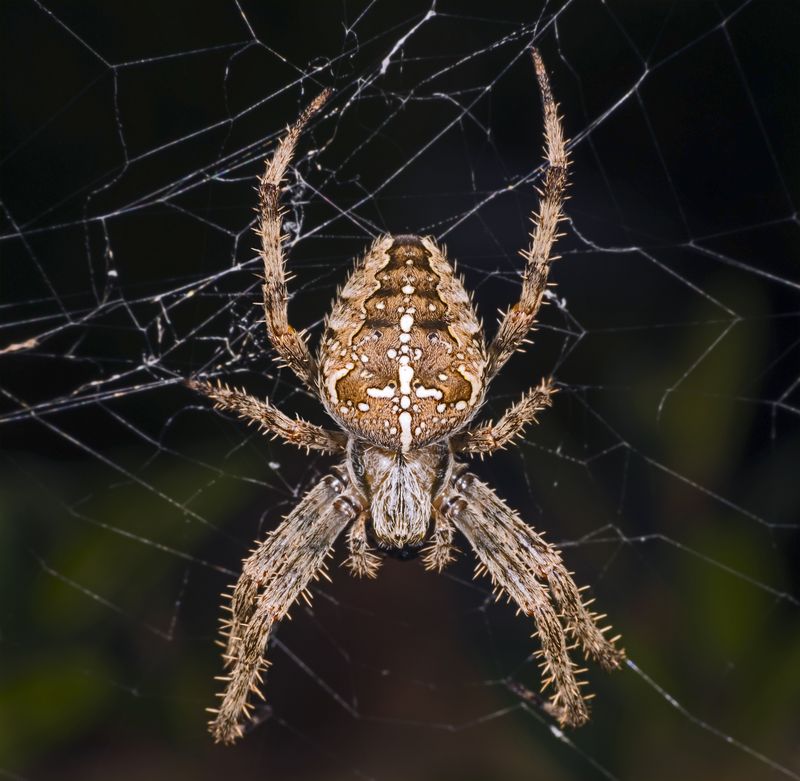
Circular webs are a genuinely useful identification clue, but they stop short of being a guarantee. Before acting on the assumption that any large spider near your porch is a harmless orb-weaver, a few safety distinctions are worth knowing.
California’s most medically significant spider is the western black widow. UC IPM’s widow spider guide describes their webs as irregular, tangled, and three-dimensional rather than the neat circular geometry of an orb-weaver.
Widows also favor sheltered, dry, undisturbed spaces: the inside of a woodpile, the underside of outdoor furniture, a gap behind a storage box, or a dark corner of a garage. An orb-weaver, by contrast, builds its web in open, exposed areas where flying insects will encounter it.
Those habitat differences are more reliable than color or size for ruling out a widow.
UC IPM’s general spider guidance cautions that identification from a single characteristic, whether color, body size, or web location, is not reliable enough to guarantee safety. A shiny black spider in an irregular web near a concealed spot should not be handled.
A large, patterned spider in a circular web in an open area is much more likely to be an orb-weaver, but even then, direct bare-handed contact is unnecessary.
Orb-weavers are generally considered low risk to people who leave them undisturbed. They are not aggressive, and a bite from one is unlikely to cause more than localized irritation in most healthy adults.
If you cannot get a clear look at a spider or feel uncertain about what you are seeing, your county’s cooperative extension office or local vector control district can help with identification. That step is always worth taking before reaching toward an unknown spider with your hands.
Skip the spray and use measures that reduce mosquito exposure

Reaching for a can of spray because a spider web appeared near your door is a common impulse, but it tends to cause more harm than the web ever would. Broad-spectrum insecticides applied outdoors do not discriminate between pest species and beneficial ones.
Spiders, parasitic wasps, lacewings, and other predators that help keep pest populations in check are all vulnerable to the same compounds used to knock down mosquitoes or ants.
Research on nonlethal pesticide effects on web-building spiders found that pesticide exposure can disrupt web construction and prey capture even when it does not immediately kill the spider. A spider building irregular or incomplete webs after chemical exposure catches fewer insects, which means that even a sublethal spray application can undermine the modest benefit the spider was providing.
Physical web removal with a broom or vacuum wand is a lower-impact first step that resolves the practical problem without those side effects.
For meaningful mosquito reduction, the steps that consistently make a difference are straightforward. CDC guidance on mosquito control at home recommends emptying, scrubbing, covering, or removing any container that holds water at least once a week.
Bird baths, saucers under potted plants, clogged gutters, tarps, and buckets are all common breeding sites. Tightly covering rain barrels and other stored water prevents mosquitoes from laying eggs on the surface.
Repairing or replacing damaged window and door screens keeps adult mosquitoes out of living spaces. EPA-registered repellents containing DEET, picaridin, IR3535, or oil of lemon eucalyptus applied to exposed skin provide reliable personal protection when you are outdoors.
Where standing water cannot be eliminated, appropriately labeled larvicides can kill mosquito larvae before they become biting adults. These measures address mosquito breeding and exposure at the source.
The spider near your light addresses neither; it simply intercepts a few adults that happen to fly within web range.
Let the porch orb-weaver do its small share
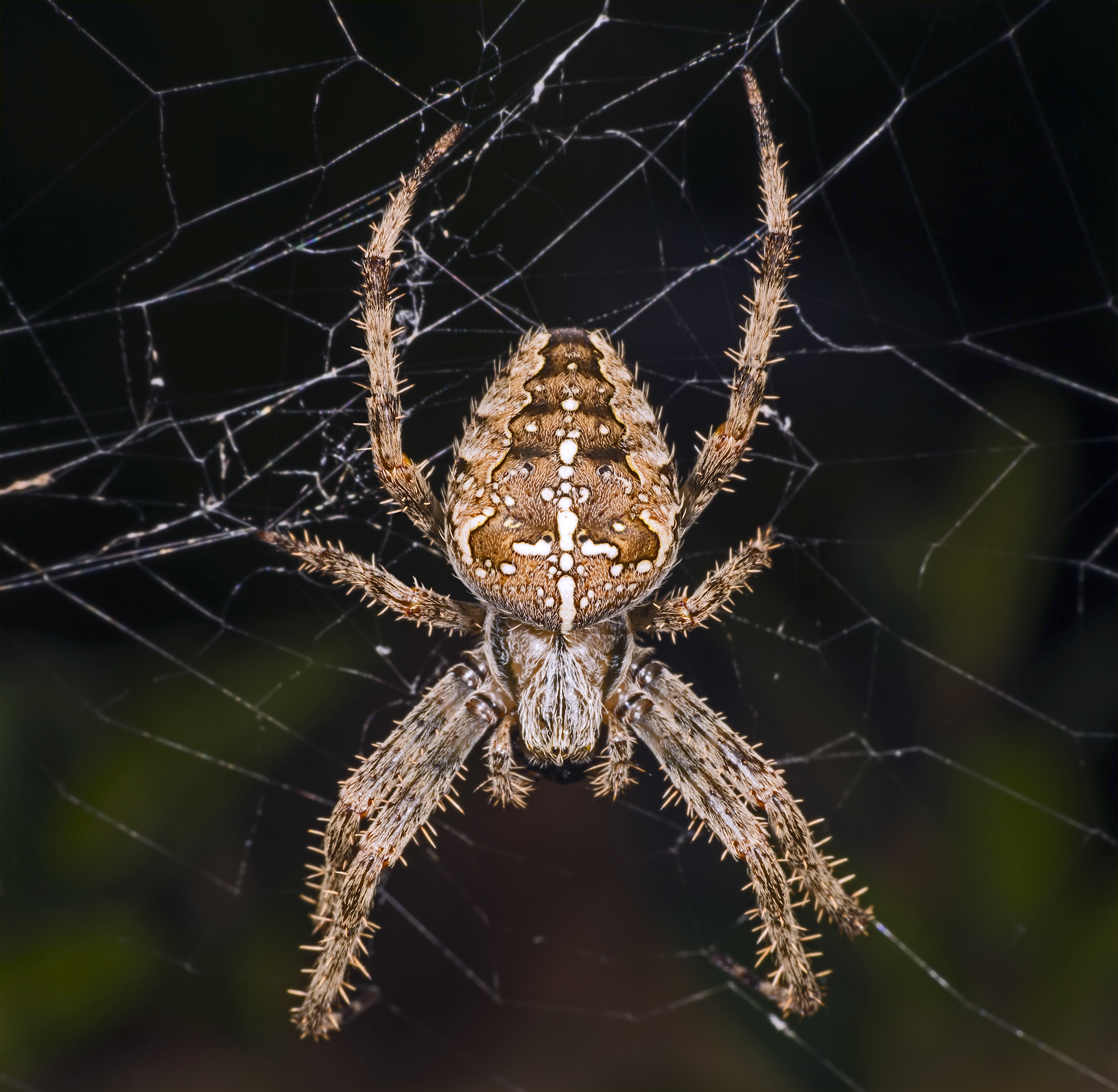
An orb-weaver near your California porch is worth keeping when it stays out of the way. UC IPM consistently describes spiders as beneficial predators in the home landscape, and that description fits the orb-weaver well.
Its web may intercept mosquitoes and other flying insects near the light on any given night, and that is a real, if modest, ecological contribution.
When the web blocks a doorway or walkway, sweep it away gently and move on. When the spider cannot be confidently identified, keep your hands clear and contact a local extension office if identification matters.
And when mosquitoes are genuinely bothering you or your family, rely on the measures that address breeding and exposure directly: source reduction, screens, repellents, and larvicides where needed, all consistent with CDC mosquito control recommendations.
The research on orb-weavers and mosquito capture supports treating this spider as a helpful generalist, not a reliable mosquito solution. Leave it to do its small share, handle the rest yourself, and you have a practical arrangement that works for both of you.
A spider that asks nothing of you except to be left alone is a pretty good neighbor.