
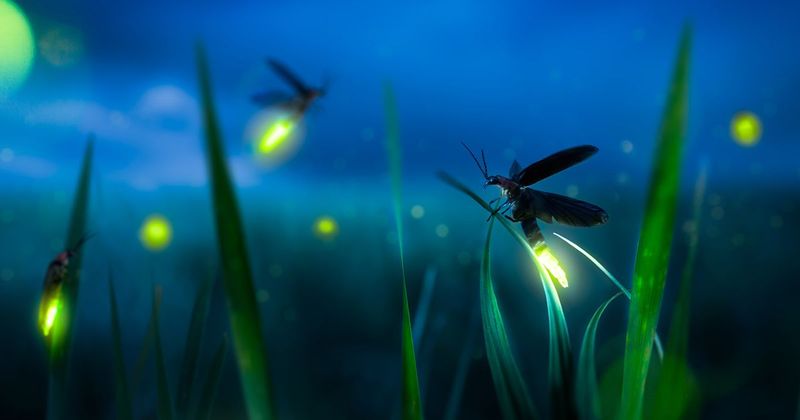
Most California homeowners rake every fallen leaf off their property without a second thought, but that habit may be quietly removing habitat that some local fireflies and glow-worms depend on. California has its own firefly species, and they often live in ways that surprise people who grew up watching lightning bugs flash across summer lawns in other states.
Leaving a small, undisturbed patch of naturally fallen leaves in the right spot could give those local species a better chance over time. Fire safety still comes first, and this article explains exactly where the line falls.
California’s fireflies may not look like lightning bugs
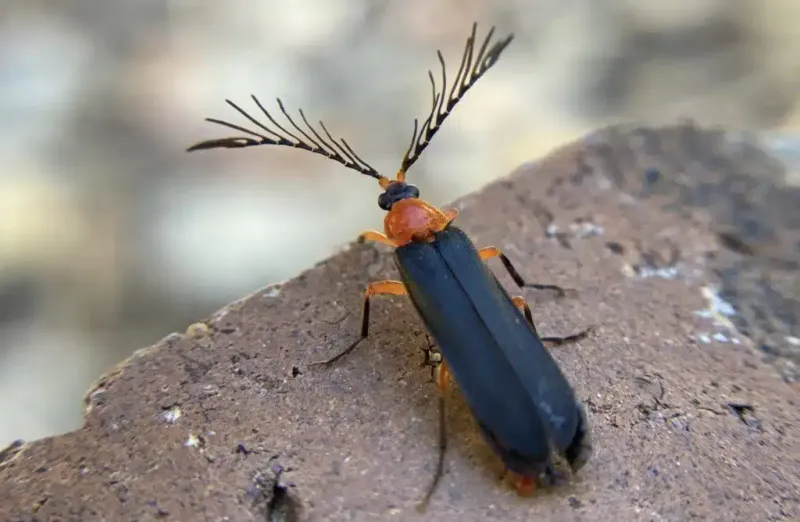
Most people picture fireflies as small beetles blinking yellow-green light across a humid summer evening, but that image comes almost entirely from the South and Midwest. California has its own firefly fauna, and it looks and behaves quite differently from those familiar displays.
The Firefly Atlas field guide to California species documents that the state’s fireflies include daytime dark fireflies, glow-worms, and species whose adults do not produce visible light at all. A California homeowner may never see a flashing beetle, yet still share a yard with firefly life stages that are active, feeding, and developing in the ground cover nearby.
Some California species do glow, but they tend to do it close to the ground rather than in the air. Glow-worms, for example, include flightless females that emit a steady glow to attract males.
The Guide to Fireflies of the Southwest covers several species found in California and adjacent states, and it makes clear that western firefly communities differ substantially from eastern ones. The Santa Barbara Museum of Natural History notes that glowing insects in the region often turn out to be glow-worms rather than the aerial flashers people expect.
Researchers are still working to fill in the gaps. The Xerces Society notes that several North American firefly species are poorly studied, and California is no exception.
For some state species, scientists do not yet have detailed information about larval habitat, population size, or precise management needs. Setting a realistic goal matters here: the aim of retaining a leaf-litter patch is to preserve or improve conditions for whatever local species or life stages may already be present, not to guarantee a visible summer light show.
Leaf litter can shelter a hidden life stage
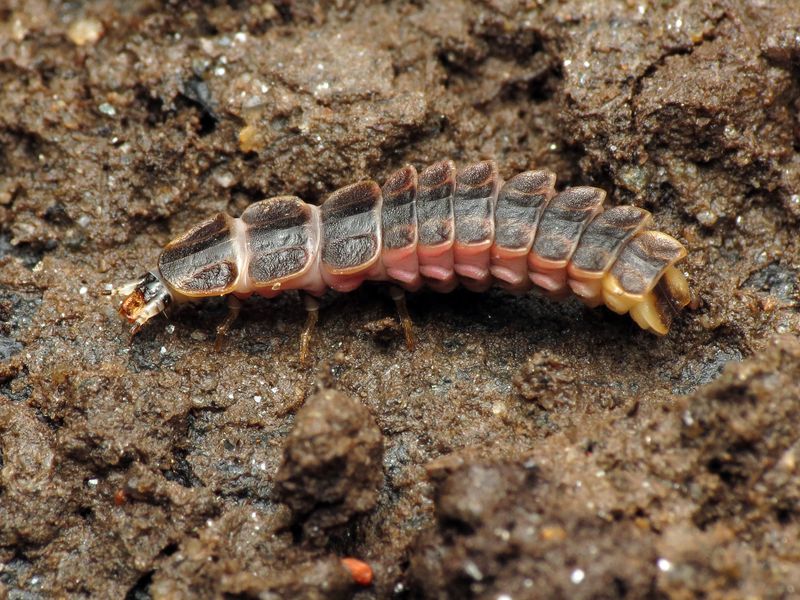
Fireflies spend the majority of their lives underground or in ground-level cover, not flying through the air. Larvae may live for one to several years depending on the species, and during that time they need shelter, moisture, and a reliable food source.
A comprehensive review of firefly larval biology found that larvae and flightless females use leaf litter, soil, rotting wood, bark, and other ground-level microhabitats for shelter, hunting, mating, and overwintering. Retaining natural leaf litter in one designated area preserves one potentially important feature of that habitat without requiring any special materials or major changes to how the rest of the yard is managed.
The food web connection matters as much as the shelter itself. Firefly larvae are predators, and they hunt small invertebrates such as snails, slugs, earthworms, and other soft-bodied organisms that thrive in moist, decomposing organic matter.
A patch of undisturbed leaf litter that stays relatively damp is more likely to support that prey base than a clean, dry surface. Xerces Society habitat guidelines recommend retaining leaf and needle litter, downed wood, and other undisturbed ground-level features because larvae and flightless females may use them throughout multiple life stages.
Research on North American firefly extinction risk also identifies habitat loss and degradation, including the removal of ground-level cover, as factors affecting firefly populations broadly.
Keeping one corner in a natural state does not mean abandoning the rest of the yard. Raking, mowing, and clearing can continue everywhere else.
The goal is to designate a specific area where naturally fallen local leaves remain undisturbed, giving larvae and other sensitive life stages a place to complete their development without being repeatedly disrupted. Leaf litter imported from elsewhere is not a substitute: moved material may carry pests, pathogens, or invasive organisms, and there is no evidence that transported leaves will establish firefly habitat or attract populations from nearby areas.
A leaf corner may help over time, not by next summer
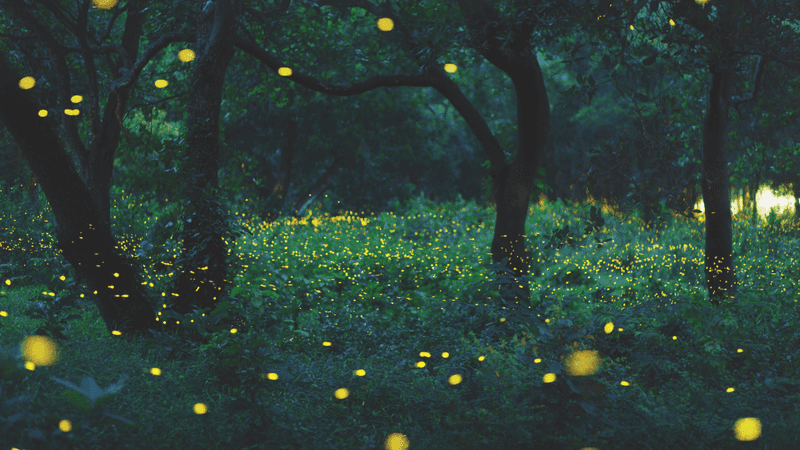
Patience is the least glamorous part of habitat gardening, and fireflies require a lot of it. Some species spend more than one year as larvae before they ever emerge as adults, which means that even a well-placed, well-maintained leaf patch may not produce any noticeable change in visible firefly activity the following summer.
Research on adult firefly abundance found that adult numbers are linked to weather conditions during earlier larval stages, sometimes from the year before. A habitat improvement today may take multiple seasons to show up as any change at all in what homeowners observe.
A leaf-litter patch also cannot create a firefly population where none exists. A broad review of firefly conservation trends and threats makes clear that adult abundance depends on a combination of factors: existing local populations, moisture availability, prey density, habitat connectivity, pesticide exposure, artificial light levels, weather, and the specific requirements of the species present.
If the surrounding landscape lacks suitable firefly habitat or source populations, a single yard patch is unlikely to reverse that deficit on its own. The patch is a supporting condition, not a recruitment tool.
Species specificity adds another layer of uncertainty. California’s documented firefly species vary considerably in their larval habitat requirements.
Some may use leaf litter and moist soil. Others depend on riparian corridors, wetland margins, forest floor conditions, or specific prey communities that a suburban yard simply cannot replicate.
Larval biology research confirms that habitat preferences differ by species, and a leaf pile may be irrelevant to a species that requires stream-bank conditions or a particular forest type. The honest framing is this: retaining natural leaf litter may support local fireflies or glow-worms over time when suitable conditions already exist nearby, but it cannot guarantee a population increase or a more visible display the next summer.
Choose a shaded, naturally moist habitat corner
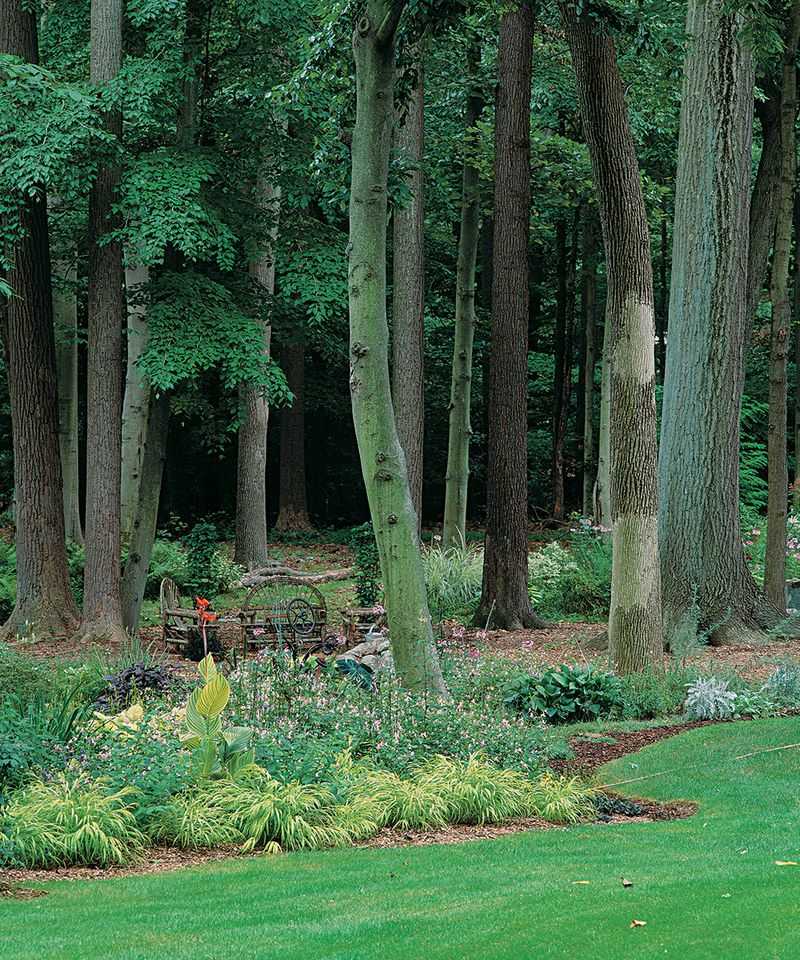
Location is the variable that separates a plausible habitat patch from a pile of dry leaves that does nothing. Shade and relative moisture are the two conditions most consistently associated with firefly-friendly ground cover, because both support the larvae themselves and the small invertebrates they hunt.
A spot under a native tree, along a shaded bed edge, or beside naturally damp ground is a far better candidate than an open, sun-baked corner where leaves dry out and blow away. Xerces Society firefly conservation guidance specifically points to moisture as a key requirement for many firefly species and for the invertebrates they eat.
Native vegetation nearby adds real value. Existing shrubs, groundcovers, or trees can provide shade, slow moisture loss, and support the broader invertebrate community that firefly larvae depend on for food.
North American firefly habitat research identifies diverse, intact vegetation cover as a feature of sites where firefly populations persist. That does not mean any particular California plant will attract fireflies, but retaining or adding native vegetation near the patch improves overall conditions.
Xerces firefly conservation outreach also emphasizes native plantings as part of a broader habitat-support approach.
Use what falls naturally in that spot rather than hauling leaves from elsewhere on the property or importing material from another yard. Firefly Conservation and Research habitat guidance supports retaining local natural material rather than constructing an artificial pile, and there is no evidence that moved leaves will establish firefly habitat or populations.
A practical starting point is simply to stop clearing one back corner or bed edge where leaves already accumulate under shade, and to let that area remain undisturbed through fall and winter. Avoid prescribing a universal leaf depth: what counts as appropriate will depend on local fire-district rules, property conditions, and what naturally accumulates in that spot.
Keep the refuge dark and lightly managed
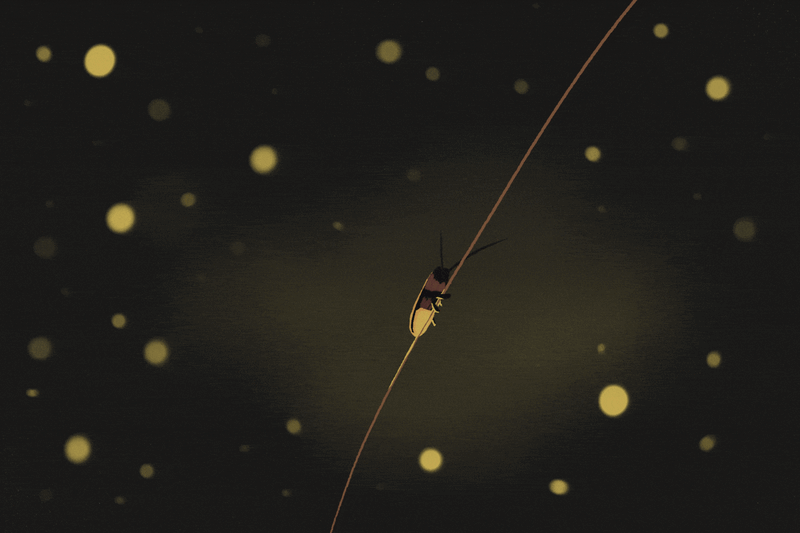
Ground disturbance is one of the fastest ways to undo whatever benefit a leaf patch provides. Eggs, larvae, pupae, and flightless adult females can all occupy the top few inches of soil and leaf litter at various points in the firefly life cycle.
Raking, blowing, digging, mowing over the patch, or walking through it repeatedly can physically damage those life stages or drive them away from an otherwise suitable spot. Xerces Society firefly habitat guidelines specifically recommend keeping designated areas undisturbed for exactly this reason.
Once the patch is established, the most effective management is to leave it alone.
Pesticide use near the patch deserves careful thought. Firefly larvae are predators, and broad-spectrum insecticides can harm them directly or reduce the snail, slug, and invertebrate populations they rely on for food.
Firefly conservation research identifies pesticide exposure as a contributing threat to firefly populations, and North American firefly extinction risk assessments list insecticide use among the habitat pressures affecting multiple species. The practical guidance is to avoid routine and broad-spectrum pesticide applications in or near the habitat patch.
When treatment becomes necessary elsewhere in the yard, use integrated pest-management practices, follow label directions, take appropriate safety precautions, and choose the most targeted option available.
Artificial light is the other major variable to address. Light pollution can disrupt courtship signaling in flashing fireflies and glow-worms, making it harder for adults to find mates.
Research on artificial light at night and firefly behavior documents interference with light-based communication, and broader studies on light pollution and insect communities confirm that nighttime illumination affects insect activity patterns more broadly. Switching off decorative or unnecessary exterior lights near the patch, fitting fixtures with motion sensors so they activate only when needed, and shielding lights so they do not spill into the habitat area are all low-cost changes that reduce this pressure without leaving the property in total darkness.
Wildfire safety sets the boundary
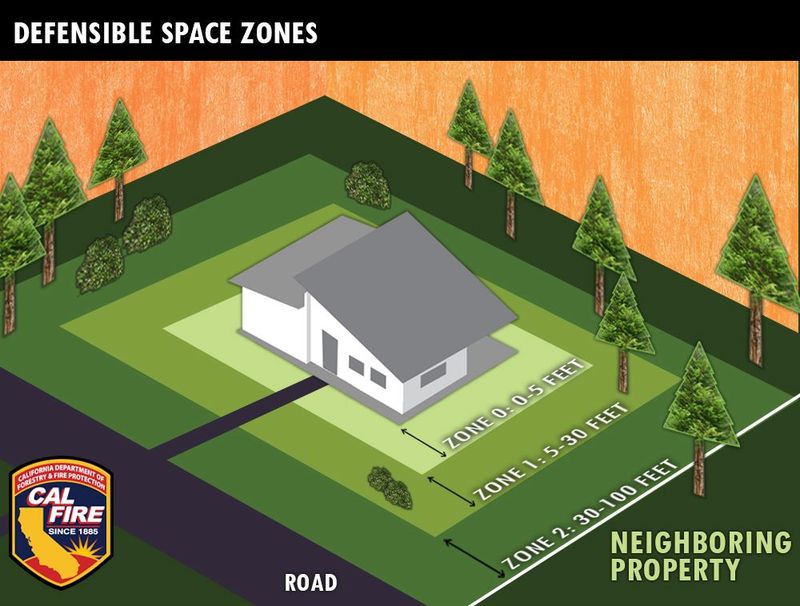
Habitat and fire safety are not in conflict as long as the habitat patch is placed correctly. The boundary is clear: leaves and debris must be removed from roofs, gutters, decks, porches, stairways, vents, and the area immediately surrounding any structure.
CAL FIRE’s defensible space guidance is explicit that combustible material near a home creates ignition risk, and no wildlife benefit justifies retaining leaves in those locations. Clear those areas completely, every fall, regardless of what else happens in the yard.
Beyond the immediate structure zone, California’s defensible space rules divide the surrounding land into zones with specific requirements. The California Board of Forestry and Fire Protection’s zone framework calls for reducing dead vegetation and surface fuel in the area extending outward from structures, with some limited allowance for natural material in wider zones depending on property conditions and local fire-district rules.
UC Integrated Pest Management guidance on fire hazards in landscapes reinforces that dead plant material near structures increases fire risk and should be managed accordingly.
University of California Cooperative Extension programs in multiple counties offer consistent advice: keep the first several feet around a home free of plants and wood-based materials, and manage leaf accumulation thoughtfully in the wider landscape. UC Master Gardener Program of Sonoma County wildfire preparedness guidance, UC ANR’s Los Angeles County wildfire protection landscaping advice, and UC Master Gardeners of San Luis Obispo County on wildfire-resilient landscaping all point in the same direction.
The habitat patch belongs in a back corner or bed edge that is genuinely away from the home, the roofline, any vents, and other ignition-prone features. No universal distance or debris depth applies everywhere; local fire-district rules and property-specific conditions take priority over any general recommendation.
Use this as one modest habitat step
The sequence is straightforward. Clear everything from roofs, gutters, decks, and the area around the house first, following CAL FIRE’s defensible space requirements and any local fire-district rules.
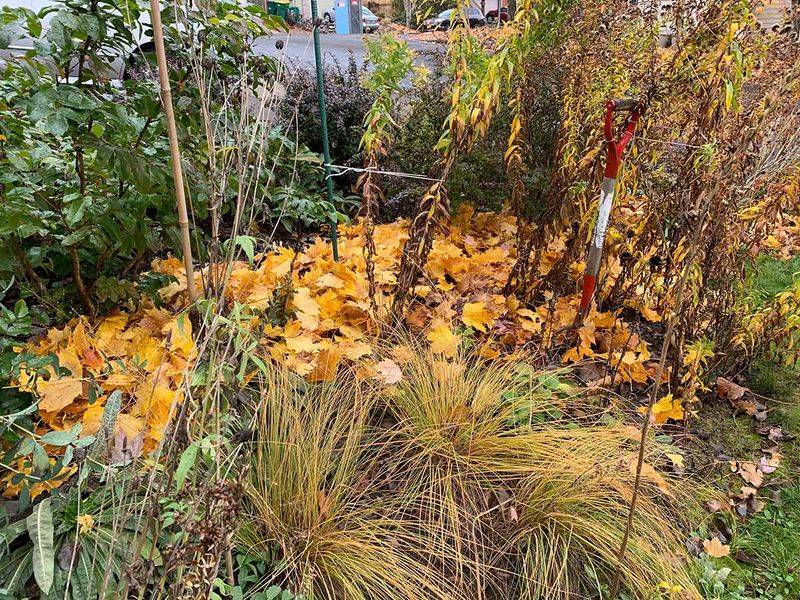
Then identify a shaded back corner or bed edge that is genuinely away from structures, and let naturally fallen local leaves stay there undisturbed through fall and winter. Avoid raking, blowing, or turning the soil in that spot.
Reduce unnecessary outdoor lighting nearby and limit routine or broad-spectrum pesticide use in and around the patch. When treatment is unavoidable, use integrated pest-management practices and follow label requirements.
Xerces Society firefly habitat guidelines and Firefly Conservation and Research habitat advice both support this general approach as one reasonable contribution to firefly conservation. California’s firefly species vary in their needs, and outcomes will depend on what species are present locally, what habitat already surrounds the yard, and how conditions develop over multiple seasons.
The patch gives some local fireflies or glow-worms a better chance over time. It does not create a new population, and it cannot promise more visible insects the following summer.
A yard that quietly supports a larva through a cold winter is doing something real, even if nobody sees it flash.